
Quantum Computing Market Size, Share, Trends Analysis, 2026-2034
REPORT DETAILS
Quantum Computing Market Summary
Quantum Computing Market size was valued at USD 1,675.15 million in 2025. The market is anticipated to grow from USD 1,990.74 million in 2026 to USD 8,138.26 million by 2034, exhibiting the CAGR of 19.2% during the forecast period. Quantum computing uses the principles of quantum mechanics to process and manipulate information in ways that differ fundamentally from those used by classical computers. This represents a revolutionary shift in computing. Quantum computers leverage phenomena such as superposition, entanglement, and quantum interference to perform complex calculations and solve problems that are currently intractable for classical computers.
Market Statistics
Key Takeaways
- Europe emerged as the dominant region with a 35.85% revenue share in 2025. This is due to the robust presence of academic institutions and research organizations in the region.
- The Asia Pacific region is anticipated to grow substantially with a 19.9% CAGR. This is because of its tech-savvy population and a growing emphasis on research and development.
- In 2025, the system segment emerged as the dominant segment with a 65.3% revenue share. Its due to its pivotal role in providing end-to-end quantum computing solutions contributes to the segment’s leading market position.
- The machine learning segment is poised to witness robust growth at a 19.5% CAGR, owing to the computational power offered by quantum computing.
- The BFSI segment led the market with a 23.6% revenue share in 2025. This is due to driven by the urgent need for rapid data processing in tasks such as risk modeling and portfolio optimization.
Industry Dynamics
- The rising demand for powerful computing solutions has led to increased usage of quantum computing.
- Advancements in quantum technology is another factor contributing to the market development.
- Increased emphasis on developing quantum-resistant encryption methods is expected to create several market opportunities.
- Technical complexity and scalability limitations are hindering the quantum computing market growth.
AI Impact on Quantum Computing Market
- AI technology plays a vital role in quantum computing by helping create and test different algorithms.
- Quantum error correction becomes possible due to AI that helps identify and correct errors during calculations.
- Quantum computer management is improved due to the use of AI technology since it works to optimize workloads.
- The utility of quantum computers increases through AI technology.
Source: Polaris Market Research Analysis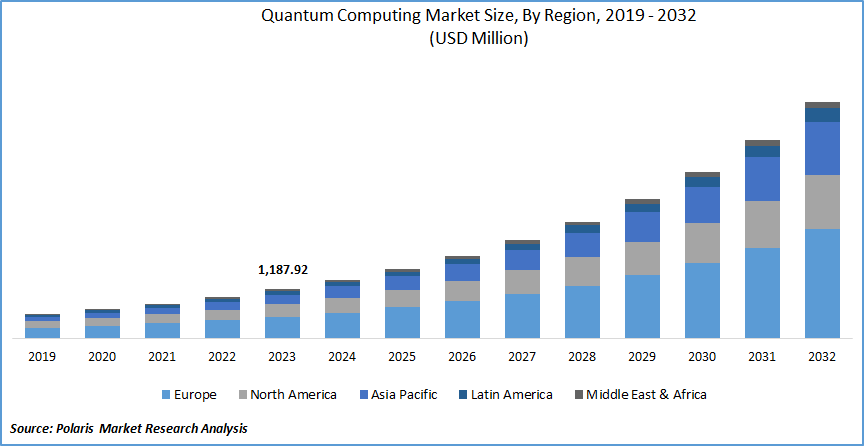
Want a Deeper Look at Key Market Players? Download Sample Report
Types of Quantum Computing Technologies
| Technology | Simplified Description | Main Benefit | Application Area |
| Superconducting Qubits | Involves circuits that operate at very low temperatures | Rapid calculation | Suitable for general quantum computation |
| Trapped Ions | Employs electrically charged particles held in position by an electromagnetic field | Extremely accurate and stable | Simulations requiring precision |
| Photonic Quantum Computing | Relies on photons to process information | Performs at normal temperatures and is networkable | Quantum communications |
| Quantum Annealing | Concentrates on identifying optimal solutions from several options | Most efficient for optimization tasks | Logistics and scheduling optimization |
Source: Polaris Market Research Analysis
The quantum computing market is witnessing rapid growth and innovation, driven by advancements in quantum technology and increasing demand for powerful computing solutions. As businesses and research institutions seek to tackle complex computational problems beyond the capabilities of classical computers, the market for quantum computing is poised for significant expansion. Market trends indicate a surge in investment from both public and private sectors, with major technology companies, governments, and startups dedicating resources to quantum research and development. This influx of investment has fueled breakthroughs in quantum hardware, software, and algorithms, propelling the market forward.
For instance, in March 2024, Google.org and Google Quantum AI are partnering with XPRIZE and the Geneva Science and Diplomacy Anticipator (GESDA) to launch a 3-year, $5 million global competition called XPRIZE Quantum Applications. The competition aims to promote the use of quantum computing in addressing real-world challenges.
There is a growing market trend toward computational power to address real-world challenges in fields such as cryptography, drug discovery, materials science, and optimization. Quantum computing has the potential to solve intricate problems at an exponential rate compared to classical computing, opening up new avenues for scientific exploration and innovative solutions. The growing concerns about data security and encryption vulnerabilities have triggered a surge in interest for quantum-resistant cryptographic solutions, which has further fueled the demand for quantum computing capabilities.
However, the market is hindered by the technical complexity and scalability limitations of current quantum hardware. Building reliable and scalable quantum processors remains a significant engineering challenge, with many practical hurdles to overcome, including noise, error rates, and qubit coherence times.
Real-World Use Cases and Industry Adoption
| Industry | Use Case | Application Benefits |
| Finance | Optimization and risk assessment of portfolio | Effective decision-making and fraudulent activity detection |
| Healthcare | Molecular modeling and drug discovery | Faster development of innovative medications |
| Logistics | Planning optimal routes and logistics | Minimizes transportation time and expenses |
| Defense | Simulation modeling and secure communications | Enhances system design and secure messaging capabilities |
| Energy | Molecular modeling of materials for batteries and fuel | Helps in creating efficient energy solutions |
Source: Polaris Market Research Analysis
What are the Market Drivers Driving the Demand for Market?
Growing Demand for Powerful Computing Solutions is Driving Quantum Computing Market Growth
In a period of increasingly complex computational challenges across various industries, traditional computing methods often need help to meet the demands for processing power and speed required to address these issues effectively. Quantum computing offers a revolutionary approach to computing by leveraging the principles of quantum mechanics to perform computations at an unprecedented scale and speed.
As industries grapple with problems ranging from drug discovery to optimization and cryptography, the need for quantum computing solutions becomes more pronounced. Quantum computers hold the potential to solve these challenges exponentially faster than classical computers, unlocking new avenues for innovation, scientific discovery, and problem-solving. Thus, the growing demand for powerful computing solutions is not only driving the development and advancement of quantum technology but also fueling the expansion of the quantum computing market as businesses and research institutions seek to harness its transformative capabilities.
Which Factor is Restraining the Demand for Quantum Computing?
Technical Complexity and Scalability Limitations are Hindering the Quantum Computing Market Growth
Despite remarkable progress in quantum hardware development, building reliable and scalable quantum processors remains a formidable engineering challenge. Issues such as error rates, noise, and qubit coherence times continue to impede the practical implementation of large-scale quantum computing systems required for real-world applications. As a result, the gap between theoretical potential and practical feasibility persists, hindering the widespread adoption and commercialization of quantum computing solutions.
Also, quantum hardware's scalability constraints limit the complexity and size of problems that can be effectively solved using current quantum algorithms, constraining the market's growth potential and delaying the realization of quantum advantage across industries. Addressing these technical hurdles is crucial to unlocking quantum computing's full potential and driving market growth in the future.
Source: Polaris Market Research Analysis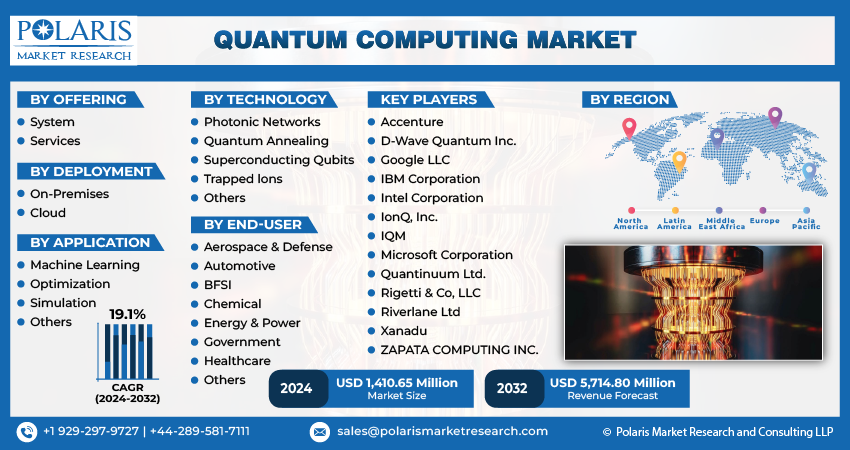
Get Full Segment-Level Forecasts & Insights: Download Sample Report
Report Segmentation
The market is primarily segmented based on offering, deployment, application, technology, end-user, and region.
| By Offering | By Deployment | By Application | By Technology | By End-User | By Region |
|
|
|
|
|
|
Source: Polaris Market Research Analysis
To Understand the Scope of this Report:Request Customization
Category Wise Insights
By Offering Insights
Based on offering category analysis, the market has been segmented on the basis of system and services. In 2025, the system segment has emerged as the dominant segment in the global market due to its pivotal role in providing end-to-end quantum computing solutions to businesses and research institutions. Quantum computing systems encompass hardware, software, and associated infrastructure required to perform quantum computations effectively.
As demand for quantum computing grows across various industries, including pharmaceuticals, finance, and cybersecurity, the system segment becomes increasingly vital in delivering comprehensive solutions tailored to meet diverse customer needs. These systems integrate advanced quantum processors, qubit control systems, cryogenic infrastructure, and software tools essential for programming, simulating, and executing quantum algorithms. As a result, the system segment is poised to maintain its dominance in the global quantum computing market as the adoption of quantum technology continues to accelerate.
By Application Insights
Based on application category analysis, the market has been segmented on the basis of machine learning, optimization, simulation and others. The machine learning applications segment within the market is poised for significant expansion, driven by the convergence of two technologies that revolutionize data processing and analysis. Machine learning, renowned for its ability to extract insights from vast datasets, finds new potential in the quantum realm due to the computational power offered by quantum computing.
Quantum algorithms exponentially accelerate machine learning tasks such as optimization, pattern recognition, and data classification, enabling the processing of massive datasets in record time. This synergy between machine learning and quantum computing opens up transformative opportunities across industries, from finance and healthcare to cybersecurity and logistics. As businesses recognize the potential for quantum-enhanced machine learning to drive innovation, improve decision-making, and unlock valuable insights, the machine learning applications segment is expected to experience growth with a significant CAGR over the forecast period.
Source: Polaris Market Research Analysis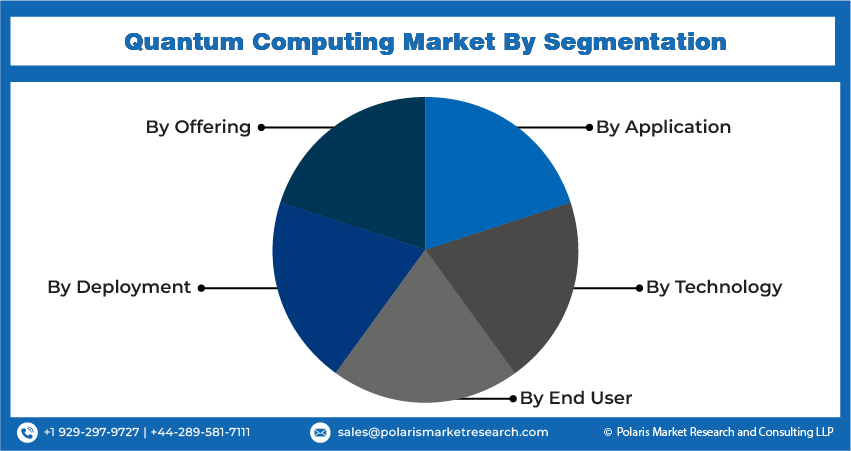
Need Granular Data Across All Market Segments? Request Customization
Regional Insights
Europe
In 2025, Europe emerged as the dominant region in the global quantum computing market, driven by the factors that propelled the region to the forefront of quantum technology innovation and adoption. European countries have long been at the forefront of scientific research and technological advancement, with robust academic institutions, research organizations, and government initiatives fostering a conducive ecosystem for quantum research and development. Further, strategic investments from both public and private sectors, coupled with supportive regulatory frameworks and collaborative partnerships, have accelerated the commercialization and adoption of quantum computing technology across various industries in Europe. Thus, Europe has emerged as a powerhouse in the quantum computing landscape, poised to drive innovation worldwide.
Asia Pacific
The Asia Pacific region is anticipated to grow substantially in the market because of a burgeoning tech-savvy population and a growing emphasis on research and development in countries across the Asia Pacific region. Governments in countries like India, China, Japan, and South Korea are actively promoting quantum research and development through strategic investments and collaboration with industry players. Along with this, the region boasts a robust ecosystem of technology companies, startups, and research institutions, fostering a fertile ground for innovation and entrepreneurship in quantum computing.
Source: Polaris Market Research Analysis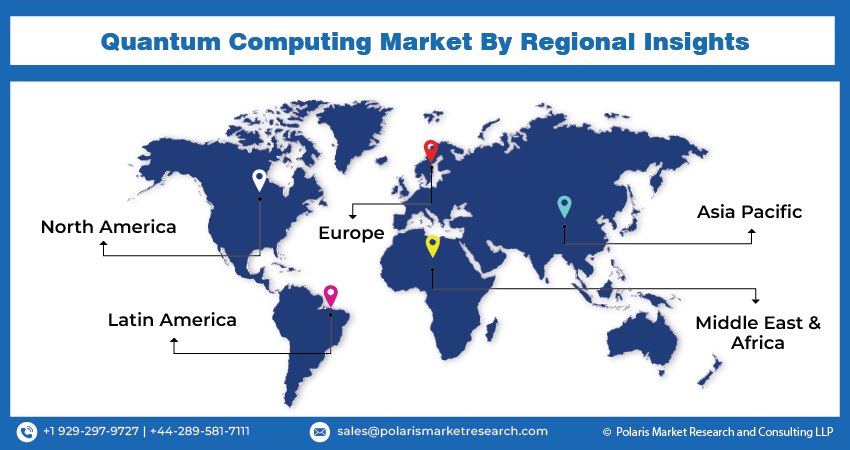
Curious About Regional Market Performance? Request Customization
Competitive Landscape
The market is identified by intense competition among key players vying for leadership positions in this rapidly evolving industry. Established technology giants such as IBM, Google, Microsoft, and Intel are engaged in fierce competition, leveraging their resources, expertise, and research capabilities to advance quantum hardware, software, and algorithms. Meanwhile, startups and emerging players, including Rigetti Computing, D-Wave Systems, IonQ, and Xanadu, are disrupting the market with innovative approaches and breakthrough technologies.
Some of the major players operating in the global market include:
- Accenture
- D-Wave Quantum Inc.
- Google LLC
- IBM Corporation
- Intel Corporation
- IonQ, Inc.
- IQM
- Microsoft Corporation
- Quantinuum Ltd.
- Rigetti & Co, LLC
- Riverlane Ltd
- Xanadu
- ZAPATA COMPUTING INC.
Recent Developments
- February 2026: IBM revealed that the Government of Andhra Pradesh began construction on Quantum Valley Tech Park in Amaravati. The company revealed that the tech park will host India’s first IBM quantum computer. (source: www.ibm.com)
- February 2026: Quantum Computing Inc. announced the competition of the acquisition of Luminar Semiconductor, Inc. According to Quantum Computing Inc., the acquisition will help expand its photonics manufacturing capabilities. (source: www.prnewswire.com)
- August 2025: D-Wave introduced a new set of tools to support innovation in quantum AI and machine learning. The release includes an open-source quantum AI toolkit and a demo project that helps developers easily connect quantum computing with modern ML models. The demo shows how D-Wave™ quantum systems can create simple images, marking an important step in the progress of quantum AI. (Source: www.dwavequantum.com)
- May 2025: QphoX, Rigetti, and the UK’s National Quantum Computing Centre partnered to improve optical readout technology for quantum processors. Their goal is to enable optical reading of all qubits in Rigetti’s 9-qubit Novera processor by scaling QphoX’s microwave-to-optical technology. This method reduces heat in cryogenic systems, helping address key challenges in expanding superconducting quantum computers. (Source: www.rigetti.com)
- January 2025: Microsoft launched the Quantum Ready Program to help organizations prepare for the future of quantum computing. The program provides business and government leaders with practical tools, insights, and guidance to understand and plan for the impact of quantum technologies. (Source: www.microsoft.com)
- August 2024: IBM’s quantum-safe encryption algorithms were included in the first post-quantum cryptography standards released by NIST. These standards aim to protect data from future quantum threats. IBM continues to embed these security advances into its products, supporting long-term data protection in a quantum-ready world. (Source: www.ibm.com)
Report Coverage
The quantum computing market report emphasizes on key regions across the globe to provide better understanding of the product to the users. Also, the report provides market insights into recent developments, trends and analyzes the technologies that are gaining traction around the globe. Furthermore, the report covers in-depth qualitative analysis pertaining to various paradigm shifts associated with the transformation of these solutions.
The report provides detailed analysis of the market while focusing on various key aspects such as competitive analysis, offering, deployment, application, technology, end-user, and their futuristic growth opportunities.
Quantum Computing Market Report Scope
| Report Attributes | Details |
| Market size value in 2025 | USD 1,675.15 million |
| Market size value in 2026 | USD 1,990.74 million |
| Revenue forecast in 2034 | USD 8,138.26 million |
| CAGR | 19.2% from 2026 – 2034 |
| Base year | 2025 |
| Historical data | 2021 – 2024 |
| Forecast period | 2026 – 2034 |
| Quantitative units | Revenue in USD million and CAGR from 2026 to 2034 |
| Segments covered | By Offering, By Deployment, By Application, By Technology, By End-User, By Region |
| Regional scope | North America, Europe, Asia Pacific, Latin America, Middle East & Africa |
| Customization | Report customization as per your requirements with respect to countries, region, and segmentation. |
Source: Polaris Market Research Analysis
Quantum Computing Market FAQ's
Quantum Computing Market report covering key segments are offering, deployment, application, technology, end-user, and region.
Quantum Computing Market Size Worth USD 8,138.26 Million by 2034
Quantum Computing Market exhibiting the CAGR of 19.2% during the forecast period.
Europe is leading the global market
The key driving factors in Quantum Computing Market 1. Growing demand for powerful computing solutions is driving quantum computing market growth
Download Sample Report of Quantum Computing Market
Please fill out the form to request a customized copy of the research report.


