
Modern data centers produce a significant amount of heat. This heat can cause thermal breakdown, lower performance, and waste energy if it is not handled precisely. A coolant distribution unit helps control heat by circulating coolant efficiently. This blog explains five important things engineers should know about a coolant distribution unit.
What Is a Coolant Distribution Unit and Why Does It Matter?
Core Definition: CDU as the interface between facility chilled water and IT equipment coolant loops
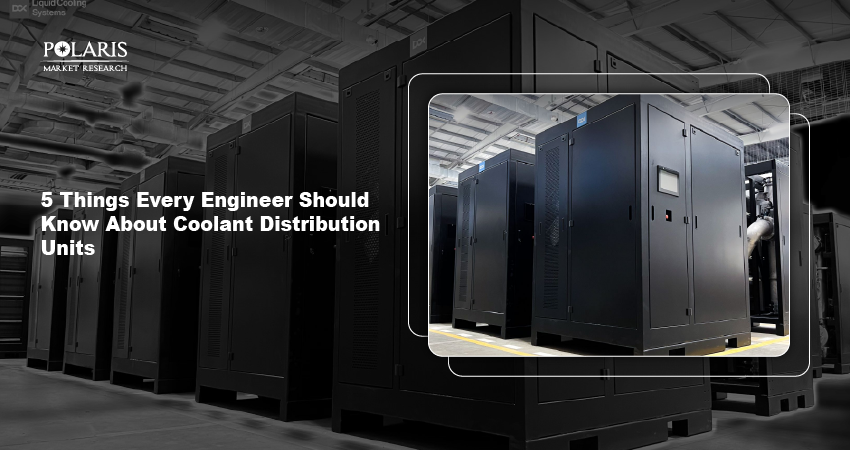
A coolant distribution unit is a structure that controls liquid cooling in a data center. It acts as the interface between the facility chilled water supply and the coolant loops inside IT equipment. The unit controls coolant temperature, pressure, and flow. This helps keep servers operating within safe temperature limits.
Where CDUs Fit in the Data Center Thermal Architecture
In a liquid-cooled data center, heat moves through a simple path. Heat from the server rack is transferred to the coolant. The coolant flows to the coolant distribution unit, which then transfers the heat to the facility water loop. This framework helps effective data center liquid cooling.
Why CDUs Matter for Modern Workloads
Traditional air cooling is often not enough for modern computing systems. AI and high-performance computing generate much higher heat levels. Because of this, many facilities are adopting HPC liquid cooling solutions supported by coolant distribution units.
How CDUs Work: The Thermodynamic Loop Explained
Primary vs secondary coolant loops
A coolant distribution unit works with two coolant loops called the primary and secondary coolant loops. The primary loop connects to the facility chilled water system. The secondary loop circulates coolant through liquid-cooled servers or racks. These loops remain independent from each other. Heat moves between them through a heat exchange process, which helps remove heat from IT equipment safely.
Key Internal Components
A CDU cooling system includes multiple key parts. The plate heat exchanger transfers heat from the IT coolant to the facility water loop. Pumps circulate coolant through the system. Sensors track temperature, pressure, and flow. Control valves regulate coolant movement to maintain stable operating conditions.
Coolant Types
Different coolant types can be used in the system. A water-glycol cooling mixture is common because it is stable and easy to maintain. Dielectric coolant is electrically non-conductive. It is safer for systems where liquid may come close to electronic components.
Key Performance Metrics Engineers Must Track
Cooling Capacity (kW)
Cooling capacity shows how much heat a coolant distribution unit can remove. It is measured in kilowatts (kW). Engineers must match CDU cooling capacity with rack cooling density. High-density racks need higher capacity. Incorrect sizing can lead to overheating or wasted energy.
Hydraulic and Thermal Performance Parameters
Flow rate defines how much coolant moves through the system. The supply and return temperature difference, called delta T cooling, shows how effectively heat is removed. A higher delta T usually means better performance. Pressure drop shows resistance in the system. Together, these parameters help engineers maintain stable and efficient cooling.
PUE (Power Usage Effectiveness) Impact
The efficacy of a coolant distribution unit significantly influences a data center's overall energy performance. By diminishing the energy requirements for cooling, it contributes to a reduction in Power Usage Effectiveness (PUE). Consequently, improved flow and temperature regulation boosts efficiency, ultimately lowering operational expenses.
Integration, Deployment, and Common Engineering Mistakes
Manifold Design and Quick-Disconnect Fittings
Effective coolant distribution hinges on proper CDU manifold design. A thoughtfully constructed manifold promises uniform flow throughout all racks. Engineers should prioritize high-quality quick-disconnect fittings to minimize leak potential during both connection and maintenance procedures. Sealing, proper alignment, and regular checks help support effective liquid cooling leak prevention.
Upgrading CDUs into Existing Air-Cooled Data Centers
CDU installation in existing facilities commonly requires a phased strategy. Engineers can start by adding liquid cooling to high-density racks while keeping air cooling for the rest. This creates a hybrid cooling setup. With time, more racks can shift to CDU-based cooling. This method reduces disruption and supports gradual CDU retrofit data center planning.
Top Deployment Mistakes
Some installation missteps with CDUs can lead to performance issues. Insufficient flow rates can hinder effective heat dissipation. Using unsuitable coolants can lead to damage to components or a decrease in overall efficiency. Unresolved issues can arise from insufficient oversight. To avoid these issues, engineers must carefully size components, choose the right coolant, and keep a close eye on the system's performance.
CDU Standards, Safety, and Future Trends Every Engineer Should Follow
Relevant Standards
Engineers should follow main standards when working with a coolant distribution unit. Guidelines such as ASHRAE liquid cooling, ISO 14644, and OCP CDU standards help ensure proper thermal management. They also support safety and system reliability. These standards define temperature ranges, cleanliness levels, and best practices for liquid cooling systems.
Where CDUs are Heading
Modern AI workloads and GPU clusters are increasing rack power density beyond 100 kW. Traditional cooling methods struggle at this level. This is fueling the adoption of AI server cooling and GPU liquid cooling solutions supported by CDUs. These solutions enhance performance and system constancy.
CDUs in Green Data Center Strategy
CDUs also support sustainability goals. They enable waste heat recovery cooling, where excess heat is reused for other activities. This helps build a sustainable data center with lower energy waste and improved entire efficiency. This also supports the shift toward a green data center.
Conclusion
A coolant distribution unit is essential for modern data center cooling. Engineers should know how it works and size it correctly for each rack. They must track key performance metrics and follow proper deployment steps. Following standards and future trends helps ensure efficient and reliable operations.
To optimize your cooling strategy, download our report on coolant distribution units or talk to a thermal engineer.
FAQs
-
What does a coolant distribution unit do?
A coolant distribution unit removes heat from IT equipment by circulating coolant and transferring it to the facility cooling system.
-
How is a CDU different from a CRAC unit?
A CDU uses liquid to remove heat from equipment, while a CRAC unit uses air to cool the room.
-
What coolant is used in CDUs?
CDUs use water-glycol mixtures or dielectric fluids based on system needs.
-
How does a coolant distribution unit transfer heat?
A coolant distribution unit transfers heat through a heat exchanger between two coolant loops.
-
How do I size a coolant distribution unit for my rack?
You size a coolant distribution unit based on rack heat load, cooling capacity, and flow requirements.
-
Can a CDU be added to an existing air-cooled data center?
A CDU can be added to an existing air-cooled data center using a phased or hybrid cooling approach.
-
What are the latest trends in coolant distribution for AI workloads?
The latest trends include high-density cooling, GPU liquid cooling, and advanced CDU systems for AI workloads.
-
Are there industry standards for CDU deployment?
There are industry standards for CDU deployment such as ASHRAE, ISO, and OCP guidelines.