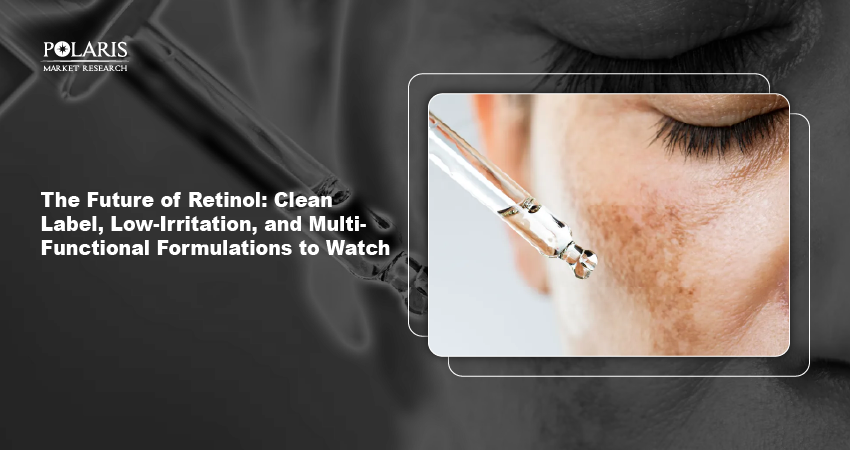
The retinol market, presently valued at USD 1.44 billion, is evolving. The focus is moving away from formulations that can be rough on the skin. Instead, the spotlight is on formulations that are stable, kind to the skin, and designed to address multiple concerns. This change mirrors the significant retinol formulation trends that are defining the future of retinol. The market is expected to expand at a compound annual growth rate of 3.9% from 2026 to 2034. The focus is now on clean label retinol, along with low-irritation and consumer-friendly solutions.
Why Retinol Formulation Is at a Turning Point in 2025
EU Regulation 2024/996
The retinol EU regulation 2025 sets a 0.3% retinol concentration limit. This rule is changing how brands make products. Companies now focus on safer levels and better stability. They also improve labeling and use gentler systems. The goal is to keep results while staying within limits.
The Consumer Pivot
Consumers now prefer low irritation retinol. Demand for retinol for sensitive skin is rising. Many users choose beginner retinol products. They want fewer side effects like dryness and redness. Brands are making formulas that support the skin barrier.
Market Context
The retinol market size 2025 is about USD 1.44 billion. It may reach USD 2.03 billion by 2034. According to Polaris Market Research, the retinol market forecast 2034 shows steady growth at a 3.9% CAGR. This is driven by better products and rising skincare awareness.
Clean Label Retinol
Defining Clean Label Retinol
Clean label retinol keeps things simple and easy to understand. Brands focus on clear ingredient lists and honest sourcing. They avoid harsh or unnecessary additives. Many products are now cruelty-free retinol, so they are not tested on animals. Companies also use sustainable retinol packaging, such as recyclable materials. This makes clean label retinol more trustworthy and aligns with the demand for safe and responsible skincare.
Bakuchiol and Plant-Based Retinol Alternatives
There is rising interest in bakuchiol vs retinol comparisons. Bakuchiol is a popular plant-based retinol option. It offers similar benefits with less irritation. Many brands are promoting natural retinol alternatives to attract clean beauty users. These options are especially useful for sensitive skin and first-time users.
How Clean-Label Positioning is Influencing Purchasing Decisions and Brand Loyalty in 2025
Clean beauty retinol trends are shaping how people choose skincare products. Consumers now pick brands that are transparent and ethical. Demand for vegan retinol skincare is also increasing. Brands are strengthening long-term customer loyalty through this shift in retinol demand.
Low-Irritation Technology: Encapsulation, Buffering & Slow-Release Systems
Microparticle and Liposomal Encapsulation
Encapsulated retinol uses small particles to protect the ingredient and release it slowly into the skin. This helps minimise common side effects like flaking and irritation. Liposomal retinol works in a similar way by using lipid layers to carry retinol deeper into the skin. These advanced retinol delivery systems improve absorption while keeping the formula gentle. As a result, users get steady results with less irritation.
Buffering with Niacinamide, Ceramides, and Peptides
Combining retinol with niacinamide helps calm the skin and reduce irritation. Components like retinol ceramides support the skin barrier and prevent moisture loss. Peptides also help improve skin repair and strength. This type of skin barrier retinol routine makes retinol easier to use, especially for sensitive skin. It allows better tolerance without reducing effectiveness.
Stabilized Retinol
Stabilized retinol is designed to stay effective for a prolong time. Retinol can break down when exposed to light and air. Improving retinol oxidation stability helps maintain product quality and performance. Businesses are increasingly prioritizing consistent formulas. They ensure consistent results and longer shelf life.
The Hybrid Skincare Revolution
Retinol + SPF, Retinol + Hyaluronic Acid, Retinol + Peptides
Brands are now creating multi-functional retinol products. These combine retinol with other useful ingredients. A retinol hyaluronic acid serum helps keep the skin hydrated and reduces dryness. This makes retinol easier to use in daily routines. Facial care products are also evolving with these multi-functional retinol formats. Retinol SPF formulation is gaining attention as it adds sun protection along with treatment. Retinol with peptides supports skin repair and improves firmness. These combinations make routines simpler and more effective for daily use.
Retinol Expanding into Acne, Hyperpigmentation, and Men’s Grooming
Retinol is no longer only for anti-aging. Retinol for acne helps control breakouts and improves skin texture. Many users now include it in regular skincare routines. Retinol hyperpigmentation treatment helps even out skin tone and reduce dark spots. The use of retinol is also growing in retinol men’s skincare. More men are choosing simple and effective products.
AI-Powered Personalization and Digital Diagnostics Reshaping how Retinol is Recommended
Technology is changing how people choose skincare. AI skincare personalization helps analyze skin type and concerns. This approach allows brands to offer personalized retinol formulation based on unique requirements. Digital tools and apps make product selection easier. These tools help users find the right routine with more confidence.
What Brands and Formulators Should Watch Next: 2026–2034 Outlook
Asia Pacific as the Next Frontier: China, India, and K-beauty’s Role in Retinol Innovation
The Asia Pacific retinol market is growing fast. China and India are key drivers of this growth. The retinol market China India is supported by rising awareness and strong online sales. K-beauty brands are introducing gentle and effective retinol products. These markets are becoming important for future launches and expansion.
Dermatology Partnerships, Clinical Validation, and the Premium Tier Acceleration
Brands are focusing more on dermatologist-validated retinol to build trust. Clinical proof is becoming important for product claims. Many companies are forming clinical retinol brand partnerships to support research. This is also driving demand for premium retinol skincare. Users are ready to pay more for safe and proven products.
Concentration Optimization, Gender-Neutral Formats, and Cross-Category Expansion
Companies are working on better concentration levels for safer use. There is growing demand for gender neutral retinol products. These products are designed for all users. New areas like retinol haircare trends are emerging for scalp care. Retinol lip care applications are also securing attention for smoother and healthier lips.
Conclusion
Retinol is shifting toward clean label, low-irritation, and multi-functional formulations. This change is influencing how brands develop and present their products. Both businesses and consumers are now focusing more on safer and more effective options.
Explore the complete retinol market report to understand upcoming trends and opportunities, or start with an encapsulated formula designed for your skin type.
People Also Ask
-
What is driving the shift in retinol formulation trends?
The shift in retinol formulation trends is fueled by demand for low irritation, clean label products, and multi-functional skincare.
-
How does the EU 2024 retinol regulation affect global skincare brands?
The EU 2024 retinol regulation affects global skincare brands by limiting retinol concentration to 0.3% and pushing safer formulations.
-
What is clean label retinol?
Clean label retinol is retinol made with simple ingredients, clear sourcing, and no harmful additives.
-
Is bakuchiol a good alternative to retinol?
Bakuchiol is a good alternative to retinol as it offers similar benefits with less irritation.
-
What is encapsulated retinol and is it better for sensitive skin?
Encapsulated retinol is retinol delivered in a slow-release system and it is better for sensitive skin.
-
Can I use retinol with niacinamide?
Retinol can be used with niacinamide to reduce irritation and support the skin barrier.
-
What ingredients work best combined with retinol?
Ingredients that work best combined with retinol are niacinamide, ceramides, peptides, and hyaluronic acid.
-
Can retinol be used for acne as well as anti-aging?
Retinol can be used for acne as well as anti-aging as it improves skin texture and reduces breakouts.
-
What are the biggest retinol market trends through 2034?
The biggest retinol market trends through 2034 are clean label, low irritation, and multi-functional formulations.
-
Which region will lead retinol market growth in the next decade?
Asia Pacific will lead retinol market growth in the next decade.