
Global Bubble Tea Market Size, Growth & Trend Analysis, 2026-2034
REPORT DETAILS
Market Statistics
Report Outlook
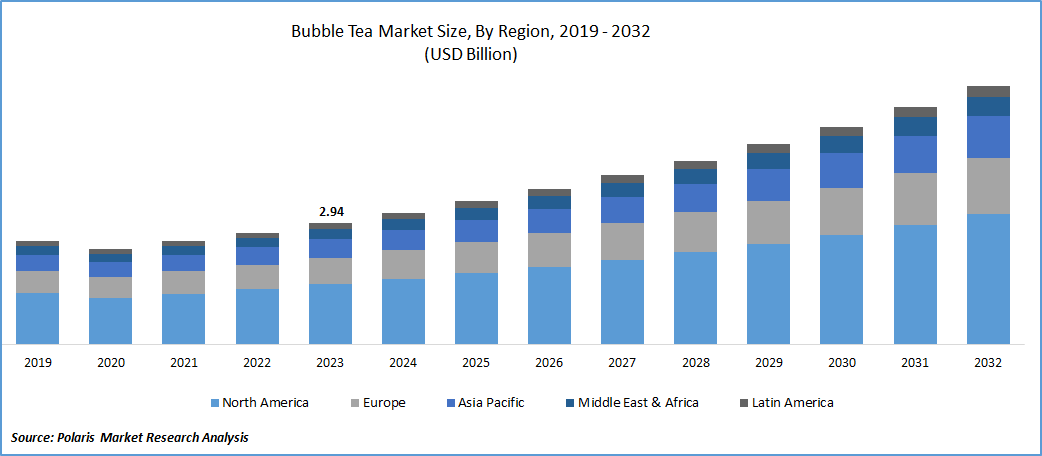
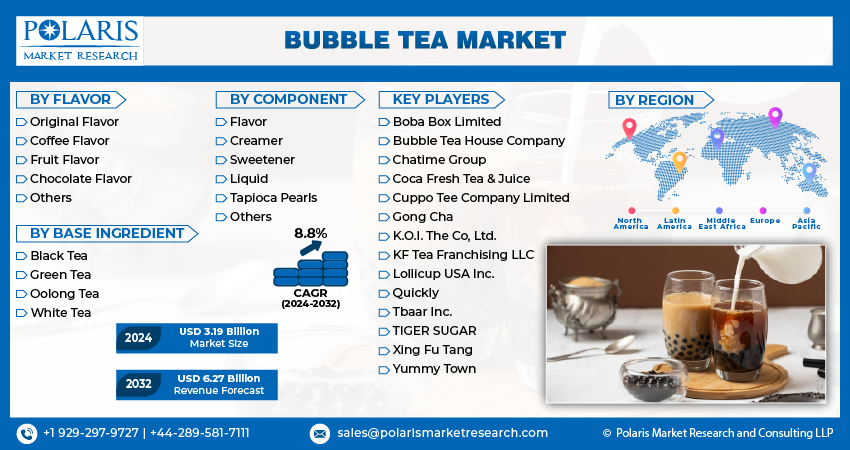
The global bubble tea market size was valued at USD 3.47 billion in 2025 and is expected to grow at a CAGR of 8.9% during the forecast period. The global market for bubble tea is on the rise, driven in part by increasing consumer demand for customizable drinks and premium options, as well as for new and creative flavour combinations. Changes in consumer tastes continue to support sustained growth in the bubble tea market in both developed and emerging regions, thereby strengthening its position as one of the fastest-growing segments of the global specialty beverage market.
The rising consumption of tea and coffee as nootropic beverages among working individuals and students worldwide, along with growing awareness of their low-calorie, zero-fat content, are major factors driving market growth.For instance, according to a report published by the Tea Association of the USA, U.S consumers consumed over 85 billion servings of tea, and on any given day, nearly half of the American population drinks tea.In addition, growing recommendations from health experts for the consumption of bubble tea, due to its potential to improve concentration and brain function and reduce cholesterol levels, are likely to further boost market growth.
According to industry trends, consumers are looking beyond bubble tea's functional aspects and are drawn to it for other reasons. More specifically, consumers are attracted to bubble tea because of perceived health benefits (e.g., perceived healthfulness), its lower fat content relative to desserts, and the ability to customize the sweetness level and ingredients according to personal preferences. The desire for "balance" between indulgence and control over one's personal experience with bubble tea will continue to shape the global development of the bubble tea market.
Key Insights
- In 2025, the fruit-flavored bubble tea segment dominated the bubble tea market, with leading flavors including pineapple, avocado, passion fruit, and banana.
- In the bubble tea sector, black tea accounted for one of the largest segments in 2025 due to its authentic flavor profile and health benefits, including supporting gut health and lowering cholesterol.
- For liquid product segments, this segment is anticipated to grow rapidly, owing to the ability of syrups/concentrates to enable faster product innovation while maintaining consistency and operational efficiency.
- In 2025, North America was the clear leader in this market segment, owing to high consumption of flavored tea, the number of bubble tea shops, and demand for healthier ingredients.
- In 2025, Asia Pacific was expected to grow at the fastest rate relative to other regions globally, owing to a strong tea-drinking culture, frequent purchases of bubble tea, and the scalability of franchise operations.
Industry Dynamics
- Bubble tea is becoming increasingly popular across the world; the fun of drinking bubble tea, the variety of flavors, and people's growing desire to experiment with new drinks mean that this beverage has a lot of opportunities to grow further.
- Some of the world's largest companies are developing new bubble tea flavours, developing ready-to-drink bubble tea products, launching innovative bubble tea products, and developing other new beverage products to meet consumer demand.
- Growing health awareness, changing lifestyles, and a preference for natural beverages are driving growth in the bubble tea market.
- Millennials and Gen Z are driving growth by customizing drinks, enjoying premium café experiences, and discovering new beverages on social media.
Market Statistics
2025 Market Size: USD 3.47 billion
2034 Projected Market Size: USD 7.46 billion
CAGR (2025-2034): 8.9%
North America: Largest market in 2025
Source: Polaris Market Research Analysis
To Understand More About this Research:Download Sample Report
Furthermore, boba tea has attracted significant global interest due to its rising appeal and novelty, coupled with growing consumer interest in innovative beverages with bold, distinctive flavors. Thus, major market players are compelled to invest significantly in developing new bubble tea flavors to meet emerging consumer demand, which, in turn, is likely to affect global market growth positively.
In April 2022, Bubluv Inc. launched a ready-to-drink bubble tea using tapioca starch and konjac that contains no added sugar. The newly launched product options are available directly to consumers on the company’s website for USD 34.99 per 6-pack.
However, the surging availability of alternative caffeinated beverages and limited consumer awareness of the potential health benefits of regular bubble tea consumption are major factors expected to hinder global market growth.
Industry Dynamics
Growth Drivers
Rising Consumer Shift Towards Healthy Alternatives
The growing prevalence of lifestyle disorders and increasing incidences of obesity and diabetes, which are mainly associated with consumers' hectic lifestyles, have led to a drastic shift towards the adoption of health and natural drinks like bubble tea, which drives the global market growth. For instance, as per a report by the World Health Organization, non-communicable diseases, of which lifestyle diseases are a part, result in 41 million lives annually, which accounts for over 70% of all deaths across the world.
Key companies in the bubble tea sector continue to introduce new beverage concepts to the market and to broaden their presence through business partnerships and acquisitions. Such strategies are expected to drive substantial growth in the bubble tea sector in the coming years.
CoCo Fresh Tea & Juice has stated that it plans to expand its operations into South Asia, citing increased global demand for beverages produced in the region. They announced this in August 2023.
In addition to raising awareness of health issues, other key influences on the bubble tea market include increasing demand for customized drinks, the appeal of a premium coffee-shop-style environment, and the discovery of beverages through social media. The largest volume of bubble tea drinking comes from both Millennials and Generation Z, who place a high value on drink customization options (e.g., type of sugar used to sweeten the drink, types of toppings added to the drink, and types of tea or coffee used for the beverage base). As a result, continued development of customized beverages will help sustain long-term trends in bubble tea consumption.
Leading bubble tea franchises are aggressively expanding their operations. In addition to producing innovative store formats and diversifying menus, franchisees are expanding into the urban and suburban markets. Reasons these trends contribute to the growth of the bubble tea market include improved access to bubble tea and increased consumer consumption.
Source: Polaris Market Research Analysis
Get Full Segment-Level Forecasts & Insights: Download Sample Report
Report Segmentation
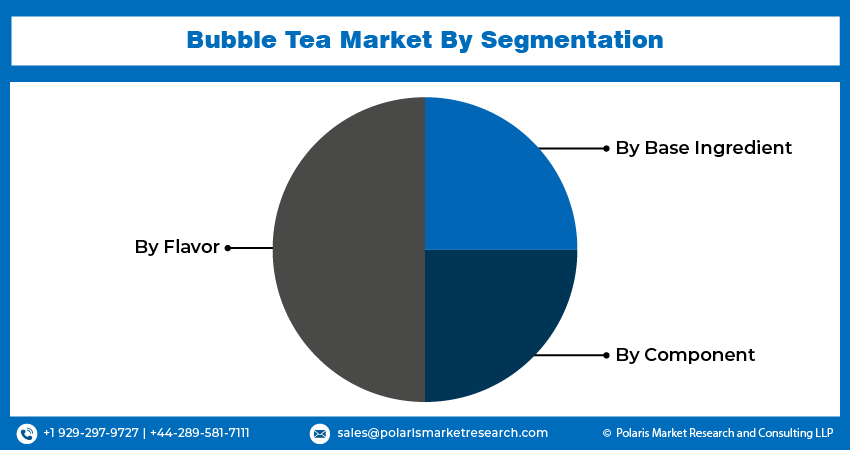
In addition to flavor and base ingredients, the development of bubble tea market segments is influenced by new formats, such as ready-to-drink bubble tea and at-home bubble tea kits. Additionally, the toppings segment for bubble tea (tapioca balls, popping boba, and jellies) is becoming a key value driver, enabling product differentiation and premium pricing strategies for brands in this category.
By Flavor Analysis
Fruit Flavor Segment Accounted For the Largest Market Share in 2025
The fruit flavor segment accounted for the largest market share. The segment’s growth is driven by the widespread availability of different fruit flavors such as pineapple, cantaloupe, avocado, passion fruit, peach, coconut, grape, honeydew, and banana, among many others, along with their rising consumption among people worldwide because they contain lots of antioxidants & vitamins and help in cleansing the toxins in the body.
Chocolate-flavored products are projected to be the fastest-growing segment, driven by high demand across all age groups for beverages with chocolate flavor and mouthfeel, and by a growing understanding that dark chocolate and cocoa offer several health benefits.
The fruit-flavored bubble tea industry is popular for several reasons: it can be consumed year-round; it appeals to a broad range of consumers; and it resonates with consumers who prioritize health. Meanwhile, as more consumers seek dessert-like beverages that combine indulgence with higher-end positioning, as evidenced by the rise in sales of chocolate bubble tea, there is a growing desire among younger generations for such drinks.
By Base Ingredient Analysis
Black Tea Segment Held a Significant Market Share in 2025
The black tea segment accounted for a significant share of revenue. Segment dominance is attributable to the authentic natural flavor of black tea and its ability to reduce blood glucose levels and low-density lipoprotein cholesterol and to improve gut health. Consequently, as the number of people with health conditions, including diabetes and high or low cholesterol levels, increases, demand for black tea is rising rapidly. It is a major driver of the segment's growth over the coming years.
For instance, according to a report published in The Lancet, the number of people with diabetes worldwide is projected to increase from 529 million in 2023 to approximately 1.3 billion by 2050, with every country experiencing an increase during this period.
The bubble tea black tea market remains the leading segment due to consumer trust in traditional tea bases. Furthermore, the market's success has enabled businesses that use bubble tea to build on their preferred flavor profiles and make functional claims. As a result, this loyal customer base sustains demand for high-quality, ethically produced ingredients used in bubble tea production.
By Component Analysis
Liquid Segment Is Expected to Witness Highest Growth
The liquid segment will grow at the highest growth rate. This segment’s growth is accelerated by the increasing availability of a range of liquid flavors and syrups and by rising consumer preference for liquid options, which enable customization and innovation to create new flavors that meet customer dietary needs.
The flavor segment accounted for the largest share. The segment’s growth is driven by increased consumer demand for diverse tea flavors and by major companies' growing focus on introducing innovative flavor combinations to attract customers and gain a competitive edge.
Syrups and concentrates used in bubble tea have become increasingly popular among bubble tea retailers because they can accelerate new product development, improve operational efficiency, and ensure consistent flavor across franchise locations.
Source: Polaris Market Research Analysis
Need Granular Data Across All Market Segments? Request Customization
Regional Insights
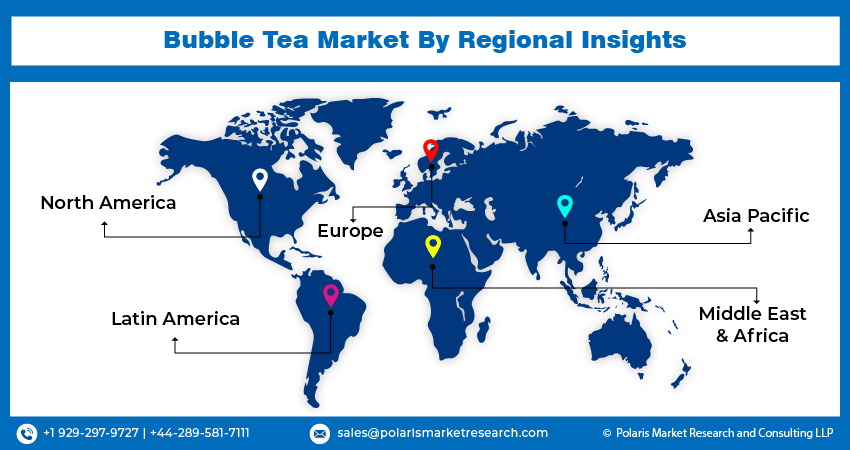
North America Region Dominated the Global Market in 2025
The global bubble tea market is growing rapidly; in particular, its popularity in North America is evident from the increasing number of locations selling bubble tea to satisfy customer demand and provide a unique consumer incentive. The number of bubble tea locations in the U.S. reached 3,096 in 2022, a 23.4% increase from 2021. Additionally, rising public interest in healthy products has created additional opportunities for bubble tea manufacturers to develop and offer healthier options, such as natural sweeteners and fruit in bubble tea, resulting in increased demand among health-oriented consumers.
Asia Pacific is expected to experience significant growth. The region’s significant growth is attributed to the presence of some of the world’s leading bubble tea consumers and to the increase in the number of product manufacturers and entrepreneurs establishing restaurants and cafes specializing in bubble tea.
An established culture of tea consumption, high purchase frequency, and the availability of a scalable franchise model influence the expansion of the bubble-tea market in the Asia-Pacific region. All these characteristics have helped to make this region the fastest-growing region in the bubble-tea market during the forecast period.
For instance, according to data from Asean Post & Grab, an average person in Thailand consumes nearly 6 cups of bubble tea per month, compared with other countries in the region.
Source: Polaris Market Research Analysis
Curious About Regional Market Performance? Request Customization
Key Market Players & Competitive Insights
The bubble tea industry’s competitive climate is becoming increasingly intense as brands place more emphasis on storytelling, scalable supply chains, and rapid flavor innovation. As a result, bubble tea brands are increasingly investing in production facilities and using local sourcing to help protect margins and ensure consistency.
The largest companies compete on the quality of ingredients, product texture, recipe creativity, flavor variety, and effective advertising. Loob Holding announced its future plans for its new bubble tea factory in Selangor in November 2023. This factory will be capable of producing 400 tons of tapioca pearls.
Some of the major players operating in the global market include:
- Boba Box Limited
- Bubble Tea House Company
- Chatime Group
- Coca Fresh Tea & Juice
- Cuppo Tee Company Limited
- Gong Cha
- K.O.I. The Co, Ltd.
- KF Tea Franchising LLC
- Lollicup USA Inc.
- Quickly
- Tbaar Inc.
- TIGER SUGAR
- Xing Fu Tang
- Yummy Town
Recent Developments
- June 2025: Gong Cha Korea launched two limited-edition taro milk teas inspired by Stray Kids’ Felix. The new Taro Jewelry Signature Milk Tea and Smoothie offer a triple-layer texture with chewy “jewelry” pearls, rich taro foam, and app-exclusive rewards.
- August 2023: Frazy, an emerging café-quality custom beverage start-up, announced the launch of its Frazy Boba Tea to its popular Frazy Bottles with 6 new boba flavours.
- June 2023: JOYBA announced the launch of the ‘Real Tea, Real Milk’ campaign and also said that they are partnering with Netflix’s Ginny & Georgia star. The company is bringing awareness with the launch of this new tea and is providing individuals with the knowledge, skills, and confidence.
The trend toward limited-edition releases, brand collaborations with celebrities, and ready-to-drink products represents an industry shift toward innovation in bubble tea through global brand differentiation.
Bubble Tea Market Segmentation
By Flavor Outlook (Revenue – USD Billion, 2021–2034)
- Original Flavor
- Coffee Flavor
- Fruit Flavor
- Chocolate Flavor
- Others
By Base Ingredient Outlook (Revenue – USD Billion, 2021–2034)
- Black Tea
- Green Tea
- Oolong Tea
- White Tea
By Component (Revenue – USD Billion, 2021–2034)
- Flavor
- Creamer
- Sweetener
- Liquid
- Tapioca Pearls
- Others
By Regional Outlook (Revenue-USD Billion, 2021–2034)
- North America
- US
- Canada
- Mexico
- Europe
- Germany
- France
- UK
- Italy
- Spain
- Netherlands
- Russia
- Rest of Europe
- Asia Pacific
- China
- Japan
- India
- Malaysia
- South Korea
- Indonesia
- Australia
- Vietnam
- Rest of Asia Pacific
- Middle East & Africa
- Saudi Arabia
- UAE
- Israel
- South Africa
- Rest of Middle East & Africa
- Latin America
- Brazil
- Argentina
- Rest of Latin America
Bubble Tea Market Report Scope
| Report Attributes | Details |
| Market Size in 2025 | USD 3.47 Billion |
| Market Size in 2026 | USD 3.77 Billion |
| Revenue Forecast by 2034 | USD 7.46 Billion |
| CAGR | 8.9% from 2026 to 2034 |
| Base Year | 2025 |
| Historical Data | 2021–2024 |
| Forecast Period | 2026–2034 |
| Quantitative Units | Revenue in USD billion, 2021–2034, and CAGR from 2026 to 2034 |
| Report Coverage | Revenue Forecast, Market Competitive Landscape, Growth Factors, and Trends |
| Segments Covered |
|
| Regional Scope |
|
| Competitive Landscape |
|
| Report Format |
|
| Customization | Report customization as per your requirements with respect to countries, regions, and segmentation. |
Source: Polaris Market Research Analysis
Bubble Tea Market FAQ's
The global bubble tea market is projected to reach around USD 7.46 billion by 2034, growing at a CAGR of 8.9% during the forecast period.
Fruit flavor accounts for the majority of the bubble tea market, driven by its nutritional value and consumer preference for fruity beverages.
Bubble tea is valued for its antioxidant properties, low-calorie content, and potential benefits for gut health and cognitive function, particularly when made with green or black tea bases, thereby appealing to health-conscious consumers.
Asia Pacific accounts for the largest market share in 2025, followed by North America, owing to cultural acceptance and widespread adoption.
Major players include Gong Cha, Chatime, CoCo Fresh Tea & Juice, Lollicup USA, Kung Fu Tea, and Tiger Sugar, all of which focus on global franchise expansion.
Download Sample Report of Bubble Tea Market
Please fill out the form to request a customized copy of the research report.


