
Personal Cooling Device Market Growth Trends, Global Forecast 2026-2034
REPORT DETAILS
Market Statistics
What is the Current Market Size?
The global personal cooling device market size and share was valued at USD 7.08 billion in 2025 and is expected to grow at a CAGR of 4.70% during the forecast period.
Market Statistics
- 2025 Market Size: USD 7.08 billion
- 2034 Projected Market Size: USD 10.7 billion
- CAGR (2026-2034): 4.70%
- North America: Largest market in 2025
The portability of these devices is a significant driver. Whether for commuting, outdoor activities, or even in the workplace, their mobility ensures that users can stay cool and comfortable wherever they go. Many personal cooling devices are designed with energy efficiency in mind. They are environmentally friendly, contribute to sustainability goals, and also help reduce electricity costs for consumers.
In addition, companies operating in the market are introducing new products with enhanced capabilities to cater to the growing consumer demand.
- For instance, in April 2021, Portacool, LLC expanded its extensive range of evaporative coolers with the introduction of the Portacool 510. This portable cooling solution is crafted to provide a comfortably cool environment in open spaces, utilizing the natural process of evaporation. The Portacool 510, despite its compact design, offers versatility, catering to a wide array of on-the-go and spot cooling requirements, from home and leisure applications to sports, outdoor activities, and compact workspaces.
Source: Polaris Market Research Analysis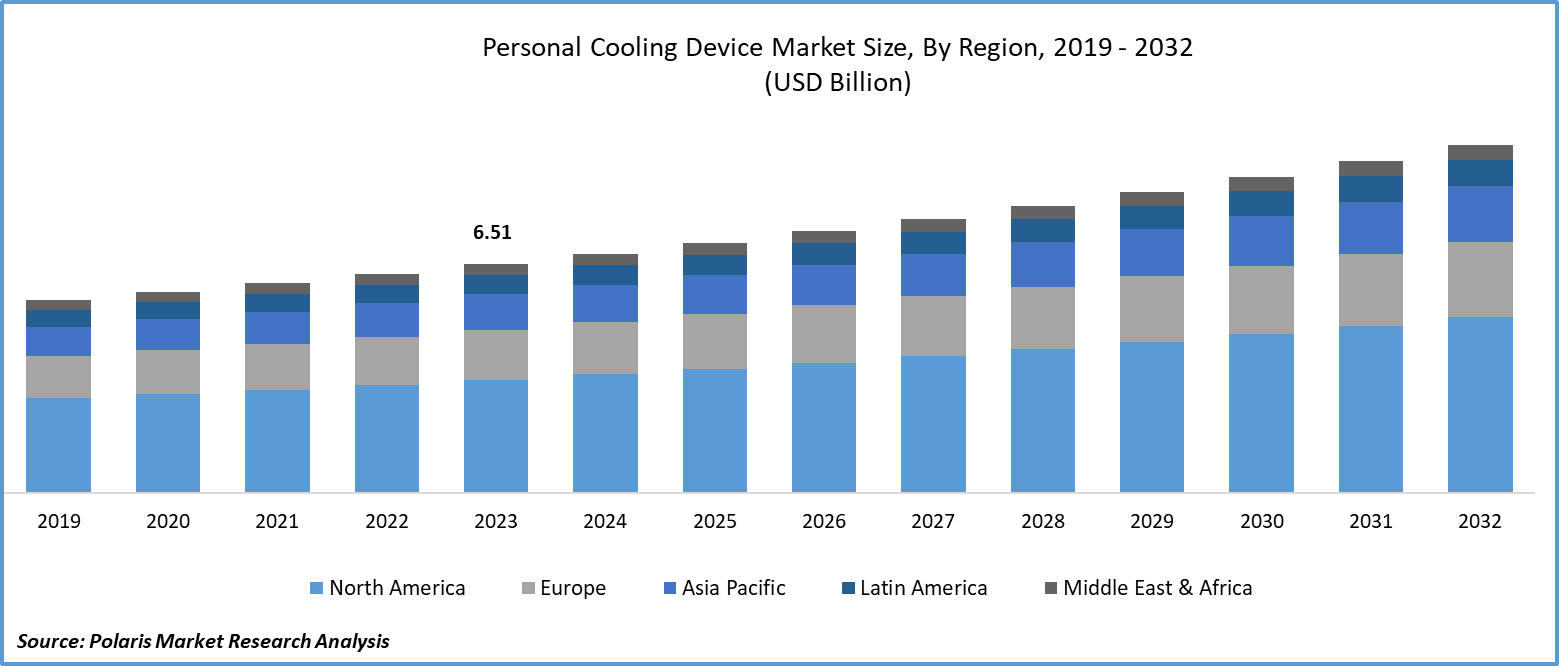
To Understand More About this Research: Download Sample Report
Continuous innovation in cooling technology has resulted in more efficient, quieter, and feature-rich personal cooling devices. These technological advancements enhance the attractiveness of these products to consumers, driving market growth. Personal cooling devices are versatile and adaptable for use in both home and office settings. They cater to the need for comfort and productivity across diverse environments. A diverse range of price points and product options ensures that personal cooling devices are accessible to consumers from various economic backgrounds. This affordability broadens the market's reach.
Post-COVID-19, the personal cooling device market has undergone significant changes. The pandemic heightened health awareness, driving the demand for these devices to address both comfort and heat-related health concerns. Remote work and home offices have become more prevalent, with individuals seeking comfortable environments for productivity. Sustainability has gained importance, leading to the development of energy-efficient and eco-friendly cooling solutions. Technological advancements have resulted in more efficient and feature-rich devices, including those with smart features. Medical applications and outdoor activities have also contributed to the market's growth. Adapting to supply chain challenges, personal cooling devices are enhancing home comfort and well-being in the post-pandemic world.
Source: Polaris Market Research Analysis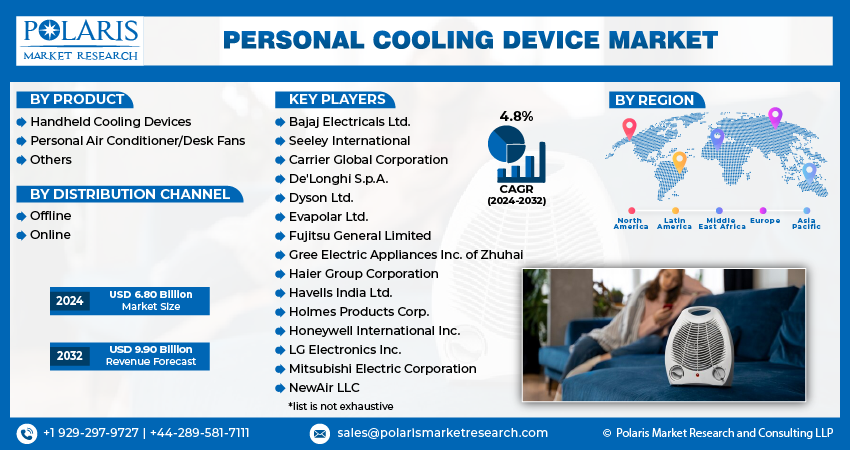
Get Full Segment-Level Forecasts & Insights: Download Sample Report
Growth Drivers
Rising temperatures, climate change awareness, and health concerns are factors projected to spur the market demand
As global temperatures continue to rise due to climate change, there is an escalating need for personal cooling devices. Heatwaves and extreme weather events are becoming more frequent, emphasizing the importance of these devices in mitigating heat-related discomfort and health issues.
With growing awareness of climate change and its repercussions, individuals are proactively seeking means to cope with changing weather patterns. This heightened awareness acts as a driving force for the adoption of personal cooling devices.
Personal cooling devices offer substantial health benefits. They are invaluable for individuals with heat sensitivity, medical conditions aggravated by heat, or menopausal symptoms. The health-conscious demographic is a substantial driver of this market.
Feature & Technology Breakdown
| Feature Category | Specific Feature | Description & Key Details |
| Product Type | Wearable Thermal Device | A wearable device that cools or warms the part of the body in contact (neck) using thermo-electric technology. |
| Core Technology | Thermo Modules | Equipped with dual independent thermo modules that alternate intensity for continuous cooling performance. |
| Core Technology | Cooling Technology | Utilizes thermo-electric cooling to remove heat directly at the contact point and dissipate it via a built-in airflow system. |
| Heat Management | Heat Dissipation System | Features a newly developed high-airflow cooling fan and optimized heat exhaust structure to extend performance and reduce internal heat build-up. |
| User Control | Cooling Modes | Offers multiple cooling levels (e.g., COOL 1–5) that can be manually selected. |
| User Control | Smart Controls | SMART COOL Mode uses environmental and body sensors to automatically adjust cooling intensity for comfort and efficiency. |
| Performance | Operating Time | Provides up to ~34 hours of runtime at lower cooling levels (e.g., COOL Level 1), depending on usage conditions. |
| Performance | Dual Functionality | Supports both cooling and warming modes with adjustable intensity settings. |
| Design | Wearability | Features an ergonomic curved main unit that fits comfortably around the neck, with a flexible neckband for a secure fit. |
| Design | Quiet Performance | Heat dissipation and thermal airflow design are optimized to reduce operating noise even during intense operation. |
Source: Polaris Market Research Analysis
Report Segmentation
The market is primarily segmented based on product, distribution channel, and region.
| By Product | By Distribution Channel | By Region |
|
|
|
Source: Polaris Market Research Analysis
To Understand the Scope of this Report: Request Customization
By Product Analysis
Personal air conditioners/desk fans emerged as the largest segment in 2025
The personal air conditioner/desk fans segment accounted for the largest market share in 2025 and is likely to retain its market position over the forecast period. A convergence of factors drives the surge in demand for personal air conditioners and desk fans. Escalating global temperatures, exacerbated by climate change, have intensified the need for cooling solutions to counteract discomfort and health risks associated with extreme heat. Urbanization and increased indoor and outdoor heat exposure in densely populated cities have further amplified the demand for personal cooling devices. These versatile, energy-efficient, and portable devices find applications in homes and offices, promoting comfort and productivity. Health benefits, technological innovations, affordability, and the ability to customize cooling experiences have played pivotal roles in propelling this market's growth.
By Distribution Channel Analysis
Online segment expected to experience significant growth during the forecast period
The online segment is expected to experience significant growth during the forecast period. The sale of personal cooling devices through online distribution channels has experienced substantial growth, revolutionizing how consumers access and purchase these products. E-commerce platforms have become the primary sales channel, offering a diverse array of cooling solutions, from wearable fans to cooling vests. Consumers appreciate the convenience of online shopping, global accessibility, and the ability to compare products and read reviews. This mode of distribution caters to a broad customer base, including outdoor enthusiasts, athletes, and those seeking relief from heat-related medical conditions. E-commerce platforms employ innovative marketing, often feature sales and promotions, and offer customer support, all contributing to the continued dominance of online sales in the Personal Cooling Device market.
Source: Polaris Market Research Analysis
Need Granular Data Across All Market Segments? Request Customization
Regional Insights
North America region dominated the global market in 2025
The North American region emerged as the dominant region in 2025. The North American personal cooling device market has witnessed substantial growth, driven by the increasing awareness of health risks associated with extreme heat and the demand for effective cooling solutions. This market caters to a broad range of consumers seeking relief from high temperatures, whether for outdoor activities, occupational purposes, or addressing medical conditions. Personal cooling devices encompass a diverse array of products, including portable fans, cooling vests, neck fans, and wearable air conditioners, offering versatility in meeting individual preferences and needs.
These devices are not only about comfort but also health and wellness. Individuals with medical conditions such as heat sensitivity, menopausal symptoms, and multiple sclerosis frequently utilize them. Furthermore, North America's outdoor enthusiasts rely on these devices for safety and comfort during sports, hiking, gardening, and more. Technological advancements have led to more efficient and eco-friendly solutions, with innovations like phase change materials and evaporative cooling. Key players compete by offering feature-rich and environmentally conscious products. The market's accessibility has been enhanced through various distribution channels, including online retail, physical stores, and specialty outlets. Additionally, medical applications, regulatory standards, and sustainability considerations continue to shape the North American personal cooling device market.
The Asia-Pacific region is anticipated to experience significant growth during the projected period. The Asia-Pacific personal cooling device market is rapidly expanding due to the region's diverse climate, increasing temperatures, and urbanization. This market caters to a broad range of consumers seeking relief from heat. A variety of personal cooling devices, such as wearable fans, cooling vests, and portable air conditioners, offer versatile solutions. The urban lifestyle and outdoor activities have fueled the demand for these devices among commuters, outdoor workers, and athletes. Technological advancements have led to lightweight and portable cooling options, including smart devices. Health and well-being concerns drive the adoption of these devices, especially among individuals with heat-related health issues. The market, with both established and startup players, is increasingly accessible through e-commerce platforms, and a focus on sustainability is on the rise.
Source: Polaris Market Research Analysis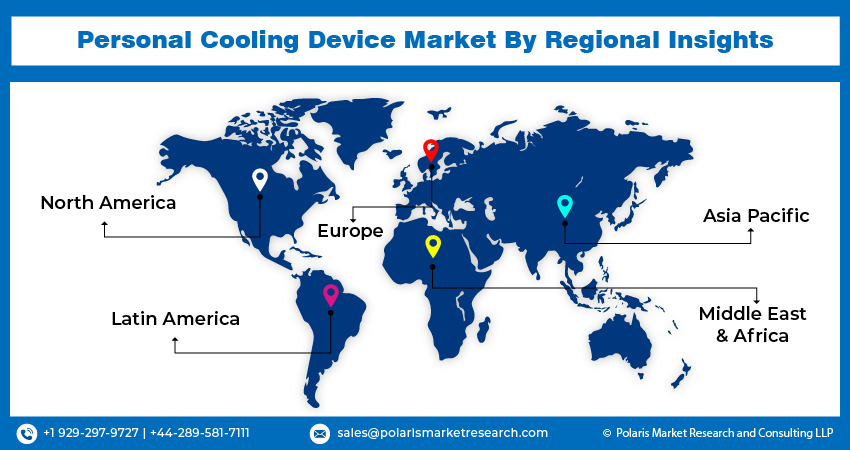
Curious About Regional Market Performance? Request Customization
Key Market Players & Competitive Insights
The personal cooling device market is fragmented and is anticipated to witness competition due to several players' presence. Major market players are constantly introducing new products to strengthen their position in the market. These players focus on partnership, product upgrades, and collaboration to gain a competitive edge over their peers and capture a significant market share.
Some of the major players operating in the global market include:
- Bajaj Electricals Ltd.
- Seeley International
- Carrier Global Corporation
- De'Longhi S.p.A.
- Dyson Ltd.
- Evapolar Ltd.
- Fujitsu General Limited
- Gree Electric Appliances Inc. of Zhuhai
- Haier Group Corporation
- Havells India Ltd.
- Holmes Products Corp.
- Honeywell International Inc.
- LG Electronics Inc.
- Mitsubishi Electric Corporation
- NewAir LLC
- O2COOL LLC
- Orient Electric Limited
- Panasonic Corporation
- Personal Cooling Technologies LLC
- Sunpentown International Inc.
- Symphony Limited
- The Coleman Company Inc.
- Vornado Air LLC
Recent Developments
- In April 2025, PAL Medical signed an exclusive agreement to distribute ColdVest in Japan.
- In December 2024, Fujitsu General unveiled its next-generation wearable air conditioner, featuring rapid cooling capabilities, with a planned rollout in spring 2025.
- In April 2023, TORRAS unveiled the COOLIFY 2S, a wearable air conditioner designed for outdoor activities. Leveraging its innovative COOLIFY technology and TORRAS Coology power supply, the COOLIFY 2S delivers an enhanced and immersive cooling experience.
Personal Cooling Device Market Report Scope
| Report Attributes | Details |
| Market Size Value in 2025 | USD 7.08 billion |
| Market Size Value in 2026 | USD 7.39 billion |
| Revenue Forecast in 2034 | USD 10.7 billion |
| CAGR | 4.70% from 2026 – 2034 |
| Base Year | 2025 |
| Historical Data | 2021-2024 |
| Forecast Period | 2026 – 2034 |
| Quantitative Units | Revenue in USD billion and CAGR from 2026 to 2034 |
| Segments Covered | By Product, By Distribution Channel, By Region |
| Regional Scope | North America, Europe, Asia Pacific, Latin America; Middle East & Africa |
| Customization | Report customization as per your requirements with respect to countries, regions, and segmentation. |
Source: Polaris Market Research Analysis
Uncover the dynamics of the personal cooling device sector in 2025 with detailed statistics on market share, size, and revenue growth rate meticulously curated by Polaris Market Research Industry Reports. This all-encompassing analysis extends to a forward-looking market forecast until 2034, complemented by a perceptive historical overview. Immerse yourself in the profound insights offered by this industry analysis through a Download Sample Report.
personal cooling device market FAQ's
The Personal Cooling Device Market report covering key segments are product, distribution channel, and region.
Personal Cooling Device Market Size Worth IUSD 10.7 Billion By 2034
The global personal cooling device market is expected to grow at a CAGR of 4.70% during the forecast period.
North American is leading the global market
key driving factors in Personal Cooling Device Market are rising temperatures, climate change awareness, and health concerns are factors projected to spur the market demand
Download Sample Report of personal cooling device market
Please fill out the form to request a customized copy of the research report.


