Policosanol Market Size, Demand, Growth Report, 2026-2034
REPORT DETAILS
Market Statistics
What is Policosanol Market Size?
Policosanol Market size was valued at USD 344.23 million in 2025 and is anticipated to exhibit the CAGR of 6.7% during the forecast period.
Market Statistics
- 2025 Market Size: USD 344.23 Million
- 2034 Projected Market Size: USD 617.05 Million
- CAGR (2026-2034): 6.7%
- Largest Market: Asia Pacific
Market Overview
The policosanol market is expected to witness higher growth during the forecast period, driven by a growing number of health problems related to heart disease among the population due to changing consumer eating habits, workplace pressure, and a lack of sleep. These rapid shifts in consumer health and wellness habits are driving the demand for preventive care in the global space, in a way driving the demand for policosanol as a dietary supplement. Additionally, the ongoing comparative studies by the researchers focusing on reviewing the health effects of policosanol extracted from multiple sources are playing vital role in promoting their awareness.
- For instance, in September 2023, a study published in MDPI conducted a comparative study on reconstituted high-density lipoproteins with policosanol from China (Shaanxi Pioneer), Cuba (Raydel, and the United States (Lesstanol). The study revealed that Cuban policosanol registered the highest anti-glycation, antioxidant, and anti-inflammatory properties.
Source: Polaris Market Research Analysis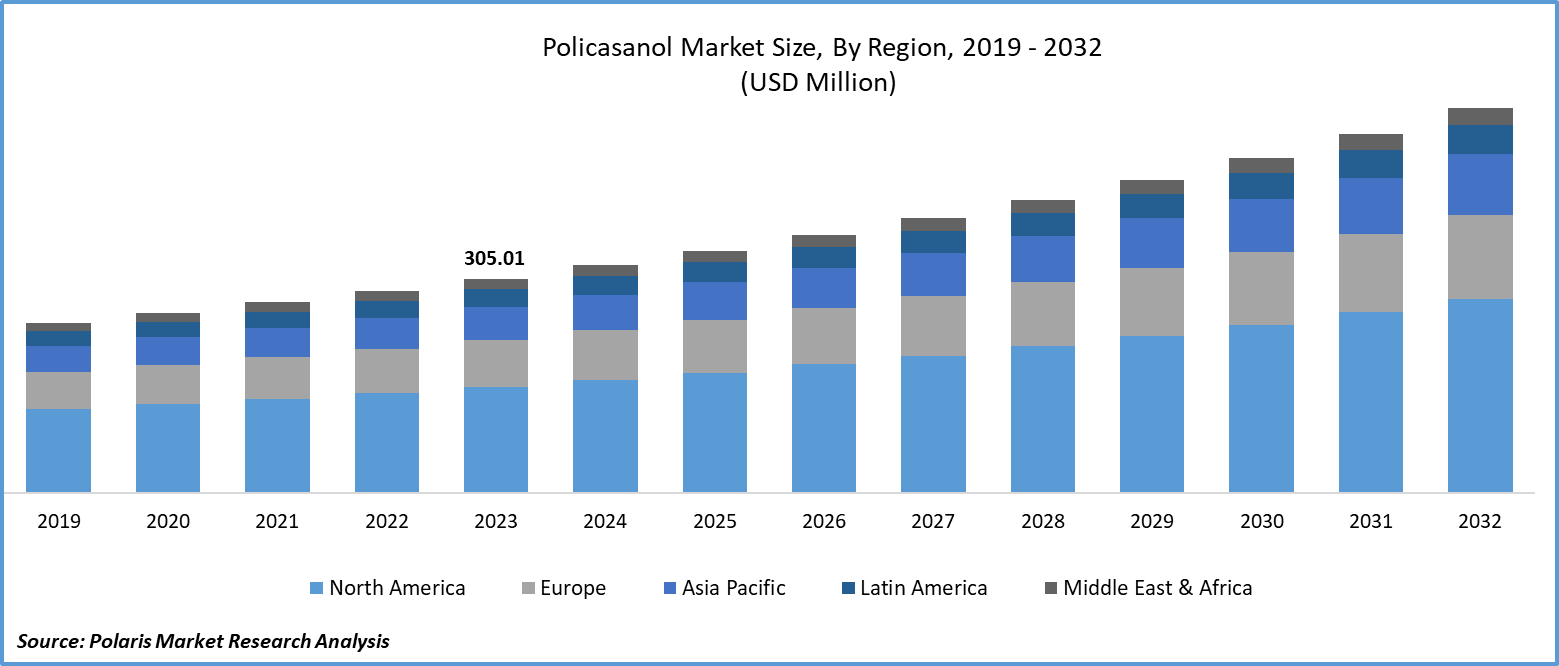
To Understand More About this Research: Download Sample Report
Moreover, the increasing government regulations on food and beverages industry are projected to boost demand for policosanol, as they focus on consumer safety. This is significantly stimulating the adoption of policosanol by manufacturers, because of its ability to help them in producing food products with lower fat and cholesterol levels.
However, the higher costs of policosanol in the marketplace compared to other dietary supplements and its lower availability are likely to hinder the demand for policosanol in the global market.
Growth Drivers
Rising demand for policosanol in the pharmaceutical industry
The presence of unique properties in the policosanol is expected to impact its adoption in pharmaceutical sector, particularly in drug formulations. For instance, as per the study published in the Nutrition and Food Research (NFR), policosanol has ability to lower the low-density lipoprotein (LDL) & helps in promoting high-density lipoprotein (HDL) cholesterol levels.
The increasing prevalence of cardiovascular diseases
The demand for policosanol in dietary supplements will grow substantially, as there are a greater number of people suffering with the incidence of the cardiac arrests, promoting awareness about the concerned diseases, & thereby necessitating the adoption of preventive health measures. According to the 2023 study published in the PubMed Central, the people suffering with at least 1 chronic health problems will grow at a rate of 99.5%, reaching 142.66, by 2050.The effectiveness of policosanol as an anti-hyperlipidemic, antioxidant, & anti-inflammatory agent, with presence of proteins such as CETP & PCSK9, are positively driving its usage.
Restraining Factors
Side-effects of policosanol are likely to limit market growth
Side effects of consuming the policosanol include nausea, stomach upset, headache, dizziness, and muscle pain are expected to lower the consumption rate of policosanol over the coming years. Moreover, lack of research studies showing its potential functioning in the human body is also hampering its adoption.
Key Trends in Policosanol
| Trend | Description | Examples/Drivers |
| Cardiovascular Supplements | Sugarcane wax-derived extracts lowering LDL cholesterol. | Preventive healthcare, 40% dietary supplement share |
| High-Purity Grades | 0.95-0.99 purity levels via supercritical CO₂ extraction (85% share). | Efficacy, clean-label preference |
| Nutraceutical Expansion | Functional foods, gummies, beverages with policosanol. | Convenience, mainstream adoption |
| Organic/Certified Sourcing | Blockchain-traced, non-GMO sugarcane/beeswax origins. | Consumer trust, premium positioning |
| Asia-Pacific Growth | Significant CAGR in India/China from pharma exports. | Rising hyperlipidemia prevalence |
Source: Polaris Market Research Analysis
Source: Polaris Market Research Analysis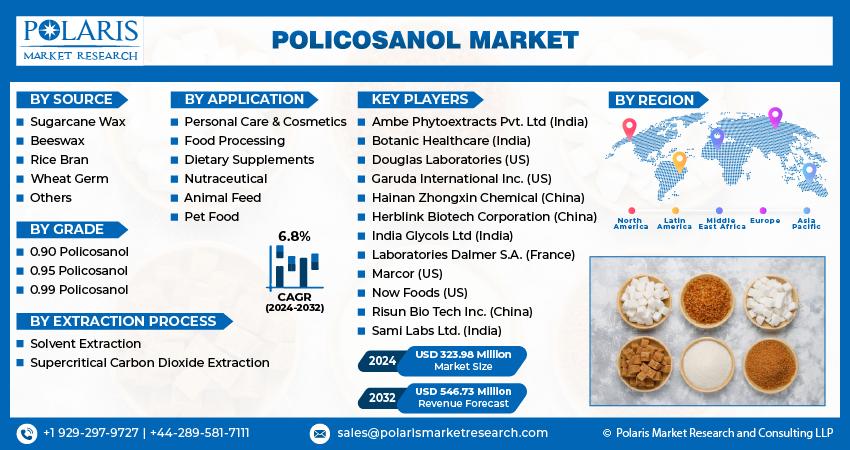
Get Full Segment-Level Forecasts & Insights: Download Sample Report
Report Segmentation
The market is primarily segmented based on source, grade, extraction process, application and region.
| By Source | By Grade | By Extraction Process | By Region |
|
|
|
|
Source: Polaris Market Research Analysis
To Understand the Scope of this Report: Request Customization
By Source Analysis
Sugarcane wax segment is anticipated to register the highest growth
The sugarcane wax segment is expected to grow at an optimal CAGR during the study period. This is due to the growing its adoption in the pharmaceutical space, driven by its effective characteristics. Furthermore, it is widely gaining utility in the production of dietary supplements by the manufacturers, as it reduces the bad cholesterol among individuals, promoting their well-being in the long run. Additionally, the increasing researchers focus on evaluating the benefits of policosanol derived from multiple sources will significantly support the market growth.
According to the 2019 study sugarcane wax can prevent cardiovascular, and age-related health issues, and the potential to promote lipid levels, hypercholesterolemia, hypertension, and antioxidant properties.
By Grade Analysis
0.95 policosanol segment accounted for the largest market share in 2025
The 0.95 policosanol segment accounted for the largest market share in 2025 and is likely to retain its market position throughout the forecast period. This is due to the rising its usage among the people, particularly does who exercise regularly as it can alleviate muscles, and leg pain caused by the inadequate blood circulation. Growing demand for preventive care, specifically cardiovascular disease is likely to stimulate the use of 0.95-grade policosanol in the coming years.
The 0.90 policosanol segment is expected to grow at significant rate over the next few years, driven by the rising demand for prominent dietary supplements owing to the increasing health consciousness among the population. Furthermore, its affordability and growing adoption of policosanol for the diverse health needs will certainly fuel its demand over the study period.
By Application Analysis
Dietary supplements segment is projected to register a dominant share
The dietary supplement segment is expected to register a dominant share in the coming years. The is mainly attributable to the rising consumer awareness about the benefits of policosanol as a dietary supplement and the increased accessibility through the online sales channels. This trend is likely to support the global policosanol market expansion during the forecast period.
Source: Polaris Market Research Analysis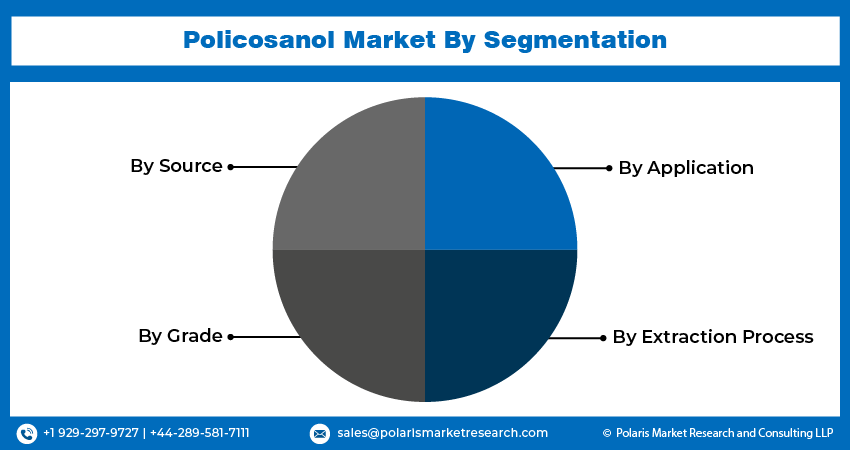
Need Granular Data Across All Market Segments? Request Customization
Regional Insights
Asia Pacific region registered the largest share of the global market in 2025
The Asia-Pacific region held the dominant share in 2025. Region’s growth is due to rising demand for dietary supplements in the region and the presence of a larger consumer base. According to the Ministry of Food Processing Industries, Indian dietary supplements market is expected to grow at a 22% reaching USD 10,198.57 million by 2026.
The North America region is expected to be the fastest-growing region with a healthy CAGR during the projected period, owing to the presence of rigid pharmaceutical infrastructure and the focus on research and development activities to combat cardiovascular diseases in the region. This is projected to stimulate the demand for policosanol in the next few years. According to the America’s Health Rankings by United Health Foundation, around 35.7% of the adults who have a check-up reported presence of higher level of cholesterol. Additionally, as per Centers for Disease Control and Prevention 2017-2020 Report, approximately 25 million adults are expected to have more than 240 mg/dL in the United States. This will substantially boost the demand for policosanol in the long run.
Source: Polaris Market Research Analysis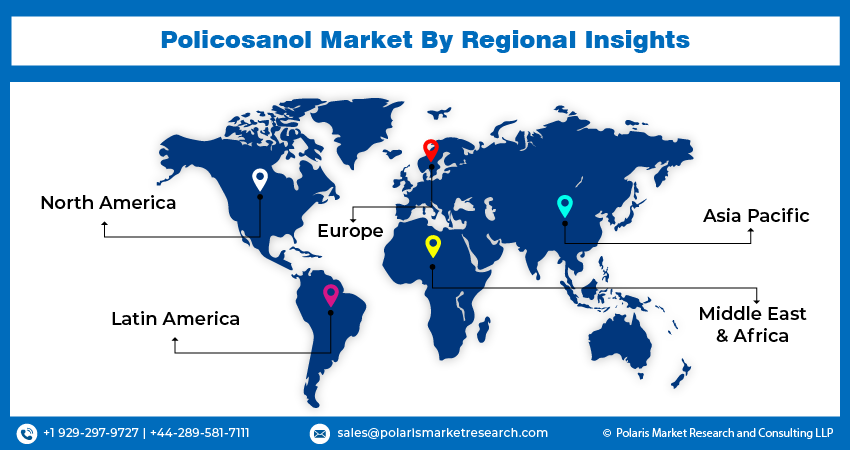
Curious About Regional Market Performance? Request Customization
Key Market Players & Competitive Insights
Growing research activities to fuel market growth
The policosanol market is a mix of consolidation and fragmentation, with the presence of several market players along with growing expansion activities such as partnerships, collaborations, and acquisitions in the marketplace. Growing research studies exploring the potential properties of policosanol are expected to widen market growth. For instance, in March 2023, a study published in PubMed Central focused on exploring the potential of Cuban policosanol on blood pressure.
Some of the major players operating in the global market include:
- Ambe Phytoextracts Pvt. Ltd (India)
- Botanic Healthcare (India)
- Douglas Laboratories (US)
- Garuda International Inc. (US)
- Hainan Zhongxin Chemical (China)
- Herblink Biotech Corporation (China)
- India Glycols Ltd (India)
- Laboratories Dalmer S.A. (France)
- Marcor (US)
- Now Foods (US)
- Risun Bio Tech Inc. (China)
- Sami Labs Ltd. (India)
Recent Developments in the Industry
- In 2023, a study published in the Journal Food Composition and Analysis explored the evaluation of policosanol and other bioactive compounds in various types of Thai rice varieties.
Report Coverage
The policosanol market report emphasizes on key regions across the globe to provide better understanding of the product to the users. Also, the report provides market insights into recent developments, trends and analyzes the technologies that are gaining traction around the globe. Furthermore, the report covers in-depth qualitative analysis pertaining to various paradigm shifts associated with the transformation of these solutions.
The report provides detailed analysis of the market while focusing on various key aspects such as competitive analysis, source, grade, extraction process, application, and their futuristic growth opportunities.
Policosanol Market Report Scope
| Report Attributes | Details |
| Market size in 2025 | USD 344.23 million |
| Market size in 2026 | USD 366.05 million |
| Revenue forecast in 2034 | USD 617.05 million |
| CAGR | 6.7% from 2026 – 2034 |
| Base year | 2025 |
| Historical data | 2021 – 2024 |
| Forecast period | 2026 – 2034 |
| Quantitative units | Revenue in USD million and CAGR from 2026 to 2034 |
| Segments covered |
|
| Regional scope |
|
| Competitive Landscape |
|
| Report Format |
|
| Customization | Report customization as per your requirements with respect to countries, region and segmentation. |
Source: Polaris Market Research Analysis
Policosanol Market FAQ's
The global policosanol market size is expected to reach USD 617.05 million by 2034
Key players in the market are Ambe Phytoextracts Pvt. Ltd, Botanic Healthcare, Douglas Laboratories
North America contribute notably towards the global Policosanol Market
Policosanol Market exhibiting the CAGR of 6.7% during the forecast period.
The Policosanol Market report covering key segments are source, grade, extraction process, application and region.
Download Sample Report of Policosanol Market
Please fill out the form to request a customized copy of the research report.


