

Overview
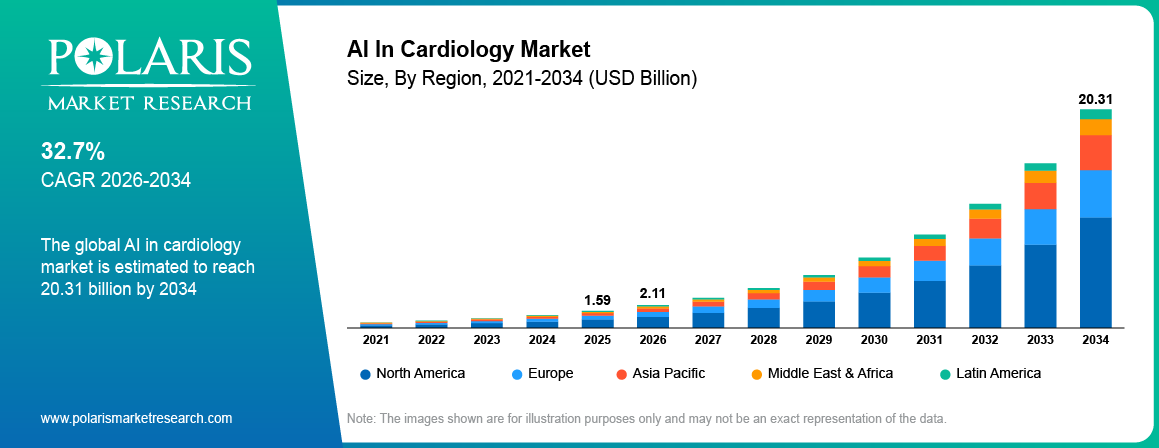
The global AI In Cardiology market is estimated around USD 1.59 Billion in 2025, with consistent growth anticipated during 2026–2034. Expansion is supported by rising cardiovascular disease prevalence, increasing demand for early diagnostic tools, and growing integration of artificial intelligence within cardiac imaging and monitoring systems. The market is projected to grow at a CAGR of 32.7% during the forecast period.
Key Takeaways:
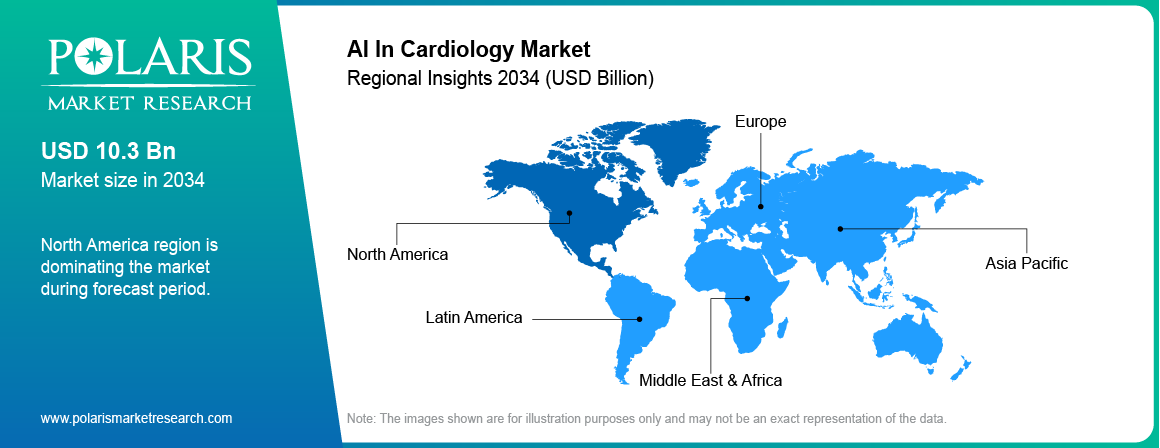
- North America accounted for the largest regional share of around 42.1% in 2025, driven by high healthcare IT adoption, increasing prevalence of cardiovascular diseases, and strong uptake of AI-based diagnostic solutions.
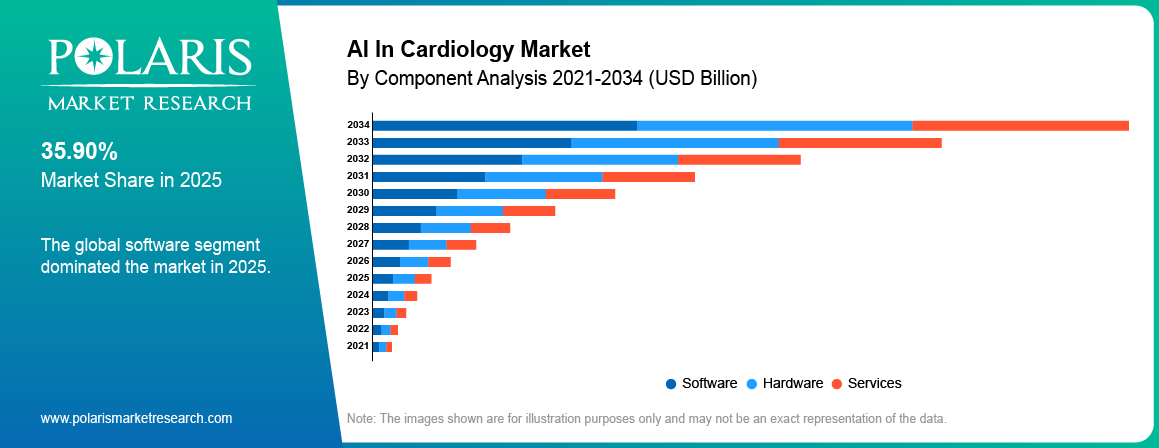
- By Component, Software segment accounted for the largest share of approximately 68.9% in 2025, supported by widespread integration of AI algorithms into diagnostic and imaging workflows and adoption of cloud-based AI platforms.
- By Medical Condition, Arrhythmia segment is projected to grow at a CAGR of 10.9%, driven by rising adoption of wearable ECG devices and AI-enabled continuous rhythm monitoring systems.
- By Application, Diagnosis segment accounted for the largest share of nearly 57.6% in 2025, supported by strong demand for AI-powered cardiovascular diagnostics and imaging analysis.
Market Statistics
- 2025 Market Size: USD 1.59 Billion
- 2034 Projected Market Size: USD 20.31 Billion
- CAGR (2026-2034): 32.7%
- North America: Largest market in 2025
Industry Dynamics
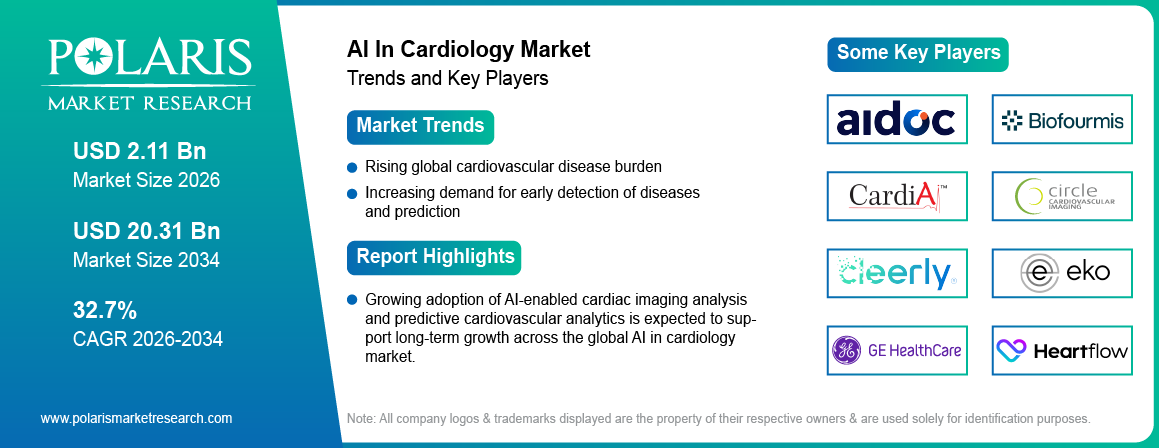
- Rising global cardiovascular disease burden are boosting demand for faster diagnostic solutions and cardiac data analysis automation.
- Increasing demand for early detection of diseases and prediction is significantly boosting the market growth.
- Regulatory hurdles and validation requirements create challenges in the swift implementation of new AI cardiology solutions.
- Improvements in AI cardiology and wearable devices are propelling future prospects for the global AI in cardiology market.
What is included in the AI In Cardiology market?
The AI in cardiology market refers to software solutions that utilize machine learning algorithms for the interpretation of data for diagnostic purposes. This kind of software is utilized in hospital settings, imaging facilities, and cardiology clinics for data analysis of ECG, echocardiograms, cardiac CT scans, cardiac MRI, cath labs, and remote monitoring systems. This helps AI in cardiology diagnostics by translating complex cardiac data into automated clinical insights for physicians to help them detect structural and functional heart conditions.
The market for AI in cardiology consists of AI-powered ECG analysis, AI echocardiography systems for automated cardiac measurements, and AI cardiac MRI software for cardiac assessments, including ventricular and tissue assessments. Other solutions include CT angiograms and cath labs, all of which fall under the AI cardiac imaging market. Other solutions for AI in cardiology include remote monitoring systems for cardiac rhythm and patient recovery outside of hospital settings.
To Understand More About this Research:Request a Free Sample Report
The AI in cardiology market is distinct from other segments of the healthcare AI space that are generally focused on general radiology or general analytics in a hospital setting. In general, radiology-based AI solutions are focused on multi-organ imaging, whereas operation-based solutions are focused on general management of a hospital setting. AI in Cardiology solutions are focused specifically on cardiovascular signal interpretation and cardiac imaging.
Drivers & Opportunities
Rising cardiovascular disease burden: Rising cardiovascular disease is boosting the need to AI in cardiology sector. WHO data indicate that cardiovascular diseases caused about 19.8 million deaths in 2021, representing nearly 32% of global mortality, with about 85% linked to heart attacks and strokes. This high disease burden increases the need for faster diagnosis and risk stratification. The AI heart disease detection and AI arrhythmia detection tools are helpful for healthcare professionals to evaluate images, ECG data, and other patient data effectively.
Increasing demand for early detection of diseases and prediction: The healthcare centers are changing their approach to focus more on the early detection of diseases to prevent cardiovascular diseases and reduce the cost of treatment. AI helps in recognizing patterns using ECG results, scan results, and patient records to detect heart diseases at an early stage. This helps AI in avoiding diagnostic errors. The development of AI decision support systems helps in the integration of AI with telecardiology and cardiac screening.
Restraints & Challenges
Regulatory complexity: The clinical software based on AI has to adhere to stringent and rigorous approval and validation criteria prior to deployed within clinical settings. The approval criteria are rigorous and involve extensive clinical validation, transparency of algorithms, and monitoring of system performance. The complexity of regulations has caused significant delays and increased costs in commercializing new AI-based cardiology software.
Opportunity
AI-enabled remote cardiac monitoring: The development and improvement of wearable devices are opening new avenues for AI-based remote cardiac monitoring and telecardiology services. vTitan launched vCardio, an AI-based wearable cardiac monitor, which tracks and monitor cardiac activity continuously in clinical and home-care settings. The wearable device monitor over 20 types of cardiac arrhythmias using real-time analytics and transmit data to healthcare practitioners via cloud-based platforms.
Segmental Insights
This report offers detailed coverage of the AI in cardiology market by component, medical condition, application to help readers identify the fastest expanding and most attractive demand segments.
By Component
-
Software Segment
The AI cardiology software segment accounts for the largest share of the market due to widespread integration of cardiology AI algorithms into diagnostic and imaging workflows. Cloud-based AI cardiology platforms and AI cardiology SaaS solutions allow hospitals and diagnostic labs to process cardiac imaging data, ECG signals, and patient records efficiently.
-
Services Segment
The AI cardiology services segment is expanding rapidly as healthcare providers require support for implementation and integration. AI implementation services healthcare providers deliver clinical workflow integration, model training, and system customization.
By Medical Condition
-
Ischemic Heart Disease / CAD
Ischemic heart disease AI segment holds the largest share of the global cardiovascular AI market due to the high incidence of coronary artery disease worldwide. CAD AI diagnostics is commonly used in cardiac imaging systems for analyzing coronary artery blockages. CAD imaging AI and AI interpretation of cardiac CT scans help in the automatic analysis of plaques in the heart.
-
Arrhythmia
The AI arrhythmia detection segment is growing rapidly due to the increasing use of wearable ECG devices and remote cardiac monitoring AI systems. AI ECG analysis platforms allow continuous rhythm monitoring and automated detection of abnormal heart rhythms.
By Application
-
Diagnosis
Diagnosis segment held the largest share of the global cardiovascular AI market due to high demand for cardiovascular diagnostics. AI in cardiovascular diagnostics helps in faster analysis of imaging data and ECG signals. AI ECG interpretation and AI echocardiography analysis help cardiologists in analyzing cardiovascular diseases.
-
Prediction
AI cardiovascular risk prediction is the fastest-growing application area. Predictive analytics for cardiology helps medical practitioners detect patients who are at higher risk of suffering from serious heart conditions. AI heart failure prediction systems and AI arrhythmia risk models use patient data to forecast heart failure and arrhythmia.
Regional Analysis
North America AI in Cardiology Market Assessment
North America maintained its position as the leading market for AI in cardiology, owing to the presence of robust diagnostic infrastructure and the increasing adoption of AI-enabled cardiology software. Hospitals and imaging centers are increasingly using AI-enabled cardiology software for echocardiogram analysis, CT scans, and ECG analysis to improve the accuracy and efficiency of cardiology services. Cardiology sector in the US crossed 200 FDA-cleared AI algorithms in December 2025, highlighting an increase in AI-enabled cardiology software platforms.
Asia Pacific AI in Cardiology Market Insight
Asia Pacific is projected to grow at a rapid pace during the forecast period driven by rising aging population and growing number of cardiovascular disease across the region. According to the United Nations Population Fund, it is estimated that the number of aging people in Asia Pacific is set to triple and reach 1.3 billion people by 2050. This has increased the need for scalable diagnostic solutions to facilitate the early detection of cardiovascular diseases. The healthcare system in countries such as China, Japan, India, and South Korea has witnessed increased adoption of AI-based imaging solutions and remote monitoring solutions.
Europe AI in Cardiology Market Overview
Europe was the second largest market in AI in cardiology, driven by increasing investments in digital health and robust academic-industry collaboration networks. There has been an increase in partnerships between universities, research hospitals, and medical technology companies to develop AI solutions for cardiac imaging, rhythm analysis, and workflow optimization. Innovation programs in Europe have achieved remarkable success in terms of developing translational research programs to create AI-based solutions for cardiology diagnostics and management systems.
Latin America AI in Cardiology Market Assessment
Latin America is growing steadily in AI-based solutions for cardiology. This is attributed to the development of diagnostic centers and new private hospitals. Large urban-based healthcare facilities have been at the core of expanding AI-based imaging solutions and digital cardiology systems to improve diagnostic accuracy and efficiency.
Middle East & Africa AI in Cardiology Market Assessment
In the Middle East and Africa, the market has grown through increasing investments in infrastructure for tertiary care and upgrades to diagnostic services. In the region, there has been significant emphasis on providing high-end cardiology care services through the establishment of specialty hospitals. The adoption of AI-assisted cardiology services has helped improve the infrastructure for cardiology care services through upgrades to diagnostic services and imaging services.
Key Players & Competitive Analysis Report
The competitive environment in the AI in cardiology market is influenced by factors such as rapid developments in artificial intelligence technology, increasing demand for early detection of cardiovascular conditions, and the increasing adoption of AI-assisted decision support systems for cardiology care services.
Some of the prominent players operating in cardiology market are Aidoc Medical Ltd., Arterys Inc. (Tempus AI, Inc.), Biofourmis Inc., CardiAI, Inc., Circle Cardiovascular Imaging Inc., Cleerly, Inc., Eko Health, Inc., GE HealthCare Technologies Inc., HeartFlow, Inc., IDOVEN, Koninklijke Philips N.V., RSIP Vision Ltd., Ultromics Limited, Ultrasight Ltd., and Viz.ai, Inc.
Key Players
- Aidoc Medical Ltd.
- Arterys Inc. (Tempus AI, Inc.)
- Biofourmis Inc.
- CardiAI, Inc.
- Circle Cardiovascular Imaging Inc.
- Cleerly, Inc.
- Eko Health, Inc.
- GE HealthCare Technologies Inc.
- HeartFlow, Inc.
- IDOVEN
- Koninklijke Philips N.V.
- RSIP Vision Ltd.
- Ultromics Limited
- Ultrasight Ltd.
- Viz.ai, Inc.
Future Outlook & Investment Trends
-
AI-Driven Digital Cardiology Transformation
The cardiology process has been gradually moving towards the incorporation of algorithms and decision support systems. The AI technology has become an integral part of cardiology, mainly in the analysis of images, ECG, and clinical risks. There has been an increase in the use of AI technology in cardiology, which helps in the faster diagnosis of patients and automation of processes. The future of AI technology in cardiology 2034 will be based on the development of AI incorporation in echocardiography, CT, and remote monitoring devices in the next ten years.
-
Multimodal & Foundation Models
The next generation of AI will include multimodal AI systems, which will be used for the analysis of various data streams. These systems integrate imaging analysis, ECG interpretation, electronic health records, and wearable sensor data for more comprehensive insights into cardiovascular diseases. Foundation models have emerged as potential solutions for more accurate disease predictions in multiple states.
-
Venture Capital & Investment Trends
Investment in cardiovascular AI is growing as healthcare providers incorporate digital diagnostic tools and remote monitoring solutions into their practices. Also, increase in venture capital investments in cardiovascular AI is a positive indicator of long-term scalability of digital cardiology solutions.
From a strategic point of view, investment opportunities in AI cardiology are high in imaging automation, remote cardiac monitoring solutions, and AI-based clinical decision tools. With a growing trend in early diagnosis and efficient delivery of healthcare, AI-based cardiology solutions are likely to attract long-term capital investments and partnerships in the coming years.
Industry Developments
- March 2026: HeartBeam and Icahn School of Medicine at Mount Sinai announced a strategic collaboration to create future generations of AI-based ECG solutions using large clinical datasets and HeartBeam’s multi-dimensional ECG technology..
- March 2026: Philips received FDA 510(k) clearance for SmartHeart, an AI-powered cardiac MR planning solution that automates complex MRI scan planning and generates multiple cardiac views in under 30 seconds.
AI In Cardiology Market Segmentation
By Component Outlook (Revenue, USD Billion, 2021-2034)
- Hardware
- Software
- Services
By Medical Condition Outlook (Revenue, USD Billion, 2021-2034)
- Ischemic heart disease/CAD
- Arrhythmia
- Heart failure
By Application Outlook (Revenue, USD Billion, 2021-2034)
- Diagnosis
- Prediction
- Drug discovery
By Regional Outlook (Revenue, USD Billion, 2021-2034)
- North America
- US
- Canada
- Europe
- Germany
- France
- UK
- Italy
- Spain
- Netherlands
- Russia
- Rest of Europe
- Asia Pacific
- China
- Japan
- India
- Malaysia
- South Korea
- Indonesia
- Australia
- Vietnam
- Rest of Asia Pacific
- Middle East & Africa
- Saudi Arabia
- UAE
- Israel
- South Africa
- Rest of Middle East & Africa
- Latin America
- Mexico
- Brazil
- Argentina
- Rest of Latin America
AI In Cardiology Market Report Scope
|
Report Attributes |
Details |
|
Market Size in 2025 |
USD 1.59 Billion |
|
Market Size in 2026 |
USD 2.11 Billion |
|
Revenue Forecast by 2034 |
USD 20.31 Billion |
|
CAGR |
32.7% from 2026 to 2034 |
|
Base Year |
2025 |
|
Historical Data |
2021–2024 |
|
Forecast Period |
2026–2034 |
|
Quantitative Units |
Revenue in USD Billion and CAGR from 2026 to 2034 |
|
Report Coverage |
Revenue Forecast, Competitive Landscape, Growth Factors, and Industry Trends |
|
Segments Covered |
|
|
Regional Scope |
|
|
Competitive Landscape |
|
|
Report Format |
|
|
Customization |
Report customization as per your requirements with respect to countries, regions, and segmentation. |
FAQ's
The global market size was valued at USD 1.59 Billion in 2025 and is projected to grow to USD 20.31 Billion by 2034.
North America dominates due to advanced digital health infrastructure, strong clinical adoption of AI-based diagnostics, and significant investment in healthcare AI technologies.
Major applications include cardiovascular diagnostics, arrhythmia detection, cardiac imaging analysis, predictive cardiovascular risk assessment, and remote cardiac monitoring.
Key companies include Aidoc Medical Ltd., Arterys Inc. (Tempus AI, Inc.), Biofourmis Inc., CardiAI, Inc., Circle Cardiovascular Imaging Inc., Cleerly, Inc., Eko Health, Inc., GE HealthCare Technologies Inc., HeartFlow, Inc., IDOVEN, Koninklijke Philips N.V., RSIP Vision Ltd., Ultromics Limited, Ultrasight Ltd., and Viz.ai, Inc.
Growth is fueled by increasing cardiovascular disease prevalence, rising demand for early detection technologies, expanding adoption of AI-enabled imaging analysis, and growth of remote patient monitoring systems.
Page last updated on:
Mar-2026
Research Methodology
A robust system of research, verification, and forecasting designed to ensure reliable and actionable market insights.
Polaris Market Research uses a clear and structured approach to deliver insights that clients can rely on. The process combines detailed primary and secondary research, including direct communication with industry experts. The detailed information helps build a complete picture of market trends and developments. Secondary data is gathered from credible sources such as industry reports, company filings, government source links, and trusted organization databases. It is then cross-checked through discussions with key stakeholders across the value chain. Market size and forecasts are developed using both bottom-up and top-down methods to ensure accuracy and consistency in the final results.
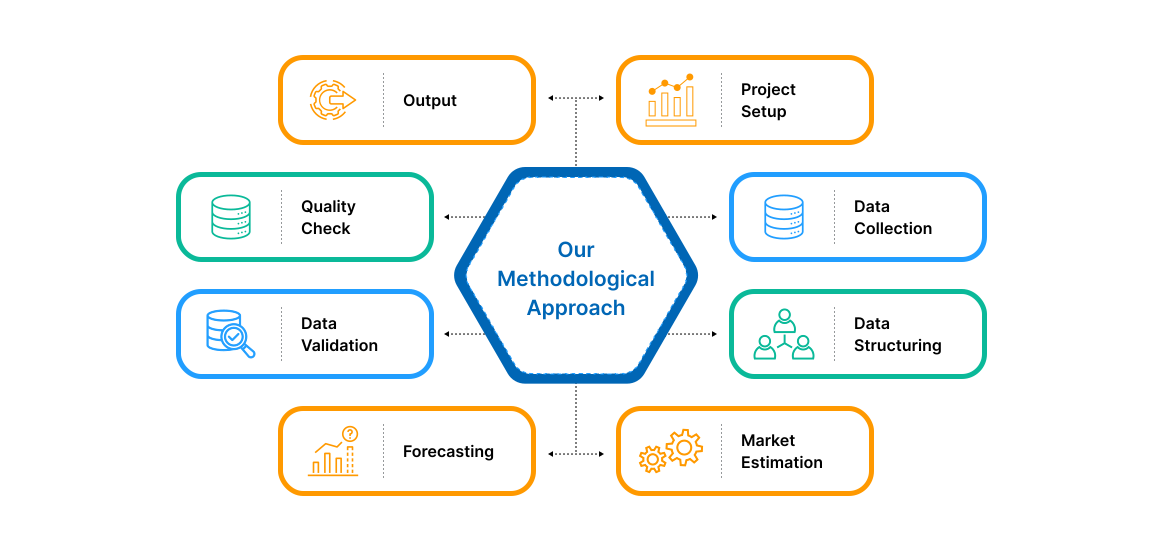
Project Setup
Step 1 & 2:
- We start every project by clearly understanding the client’s objective or goal, then defining the market scope, and aligning regions, segments, and timelines.
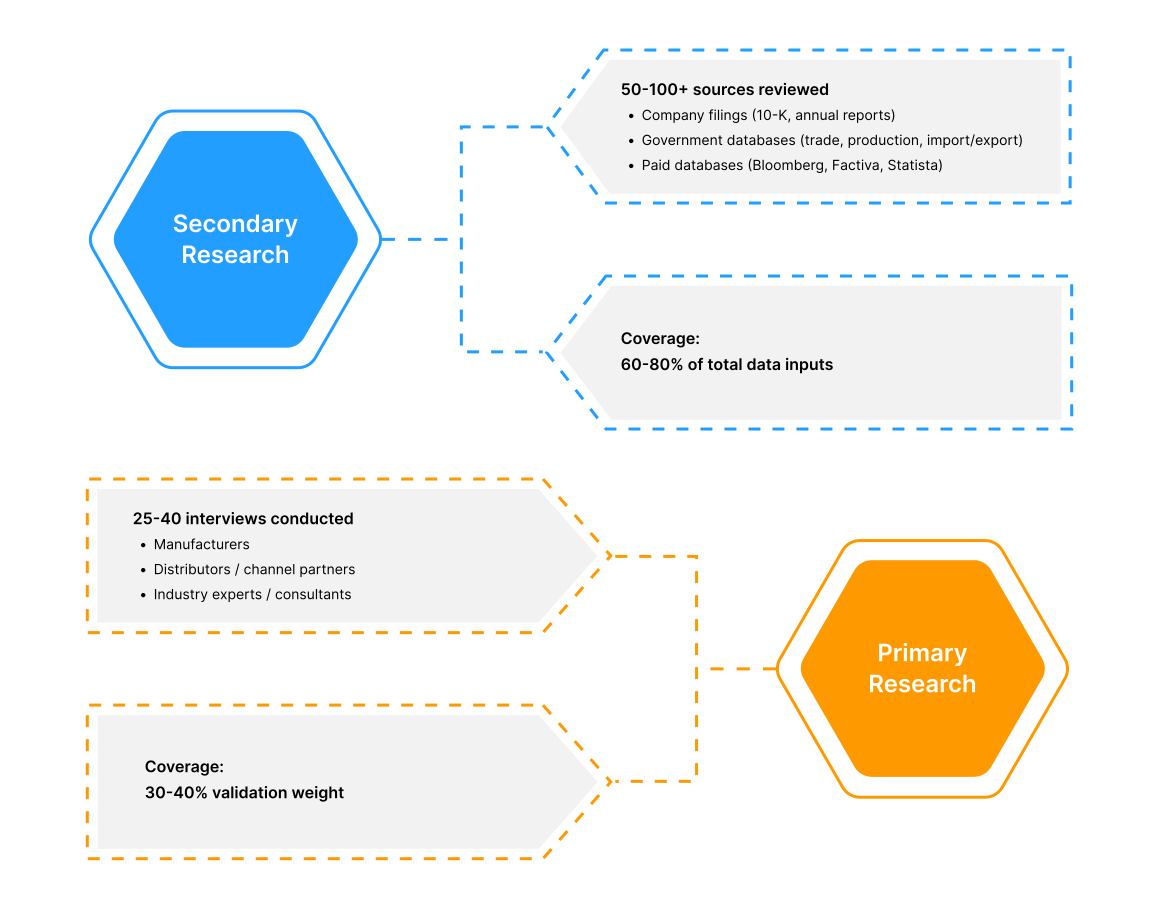
- Once the foundation is set, we collect data from all-around of sources, including company reports, government databases, and paid industry platforms.
- Our research is based on secondary data, which helps us build a strong understanding of the market across regions and industries. Then we validate this information through primary research by speaking directly with industry experts, companies, and stakeholders.
- By combining secondary and primary research, we ensure that our market insights are accurate, practical, and closely aligned with real market conditions.
Data Collection
We gather information from both public and verified sources:
Data Structuring
Step 3:
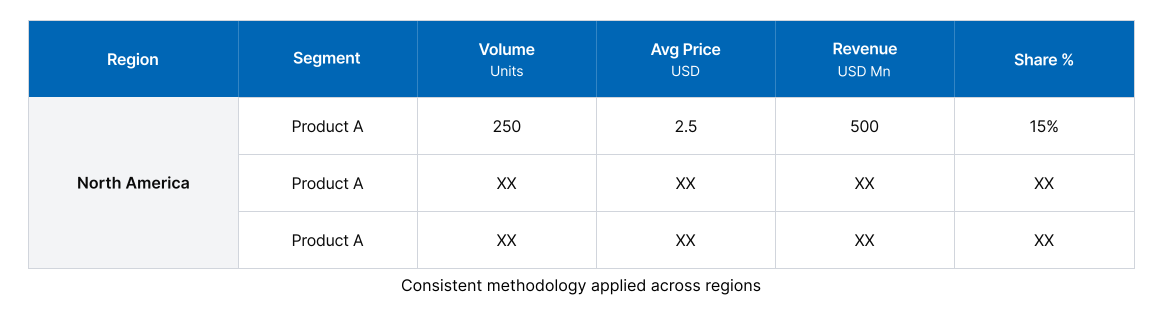
- All collected data is organized into a consistent format to ensure accurate analysis. Since inputs come from multiple sources, they are standardized and aligned before use.
- The data is segmented by product, application, and region, and mapped across a defined historical period (2020–2024). All values are converted into common units (USD Mn/Bn), and volume and pricing are aligned where required to estimate revenue.
- Any overlaps or inconsistencies are reviewed and adjusted to maintain accuracy (<5% variance threshold).
- The result is a structured dataset that allows for clear comparison across regions and supports reliable analysis and forecasting.
Structured Market Dataset, USD Mn/Bn
4. Data Structuring
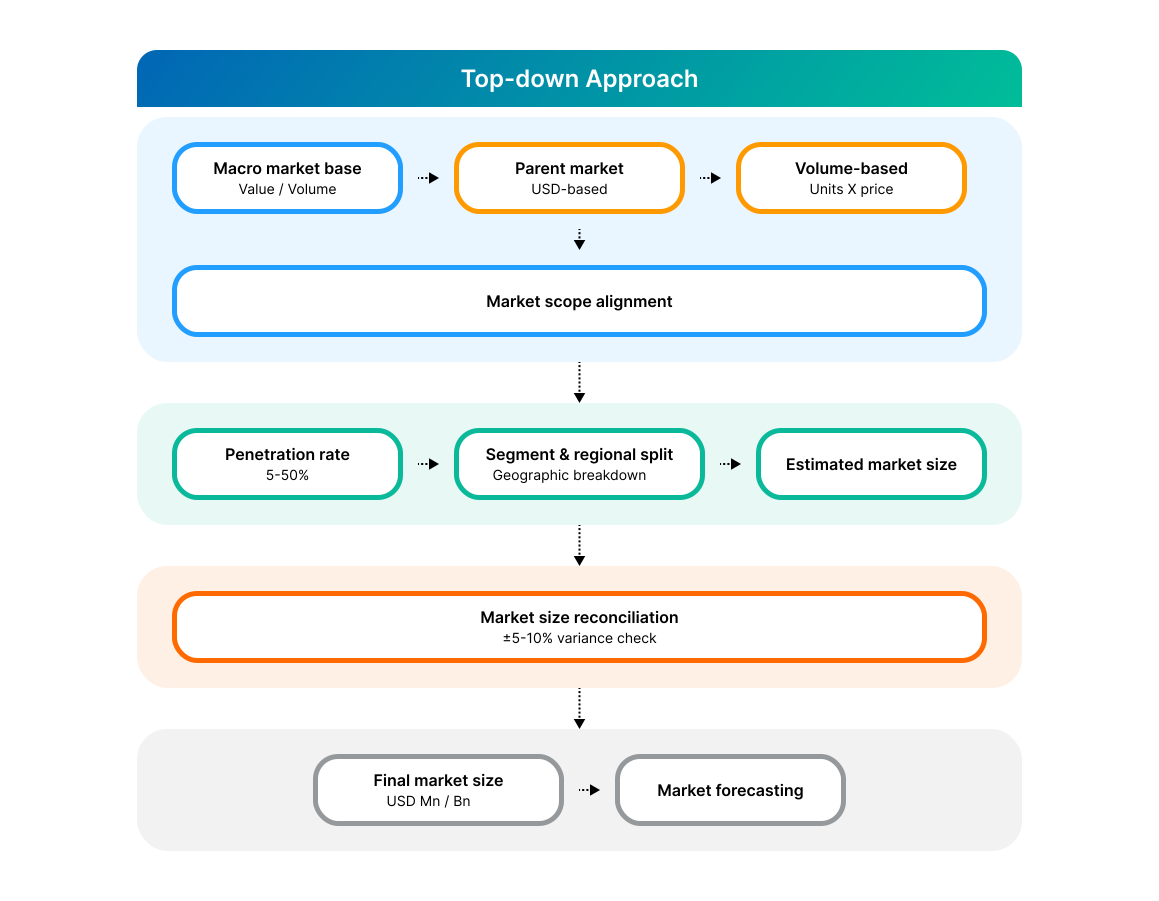
Step 4: TOP-DOWN APPROACH
- We start with the overall market size at a global or macro level.
- The market is then narrowed down based on scope and industry relevance.
- We apply penetration rates and split the data by region and segment.
- This helps us estimate the market size for specific segments.
- The numbers are validated through cross-checks to ensure accuracy.
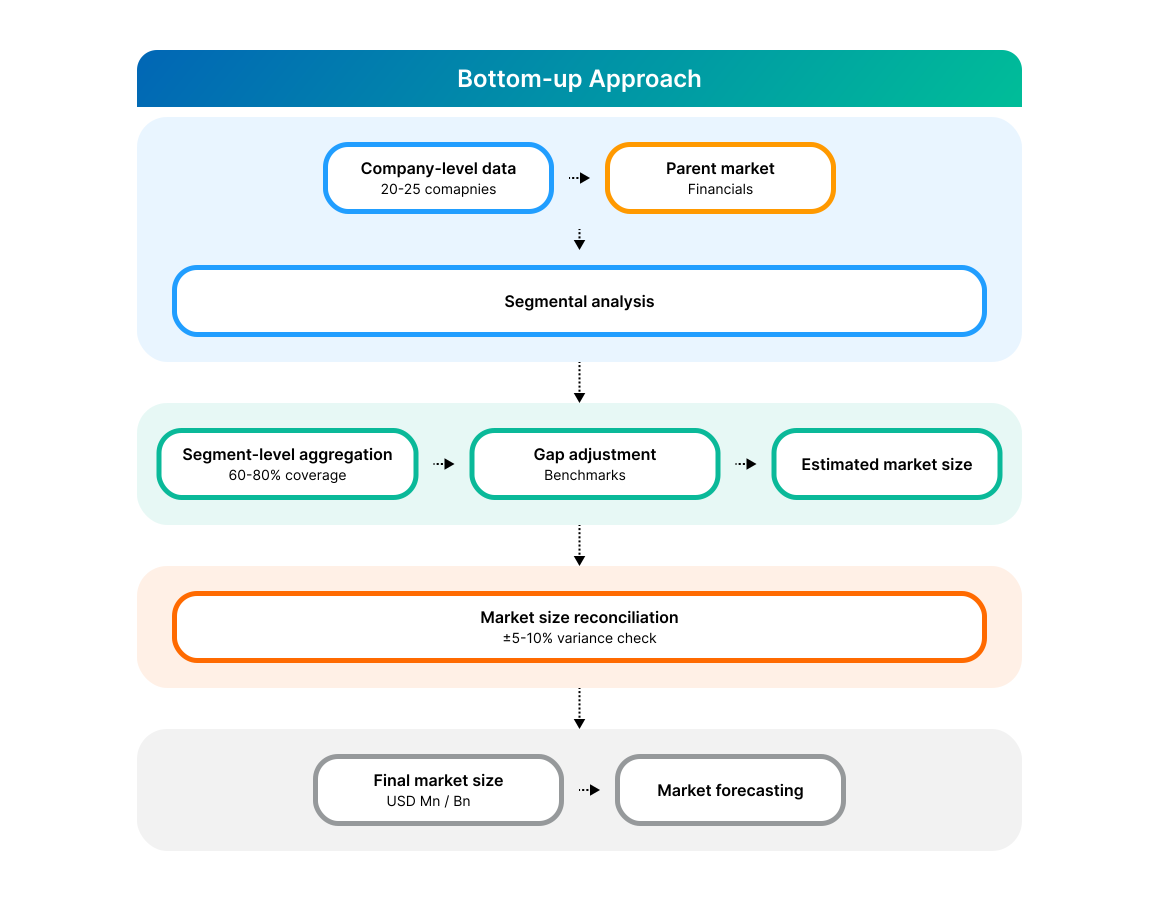
Step 5: BOTTOM-UP APPROACH
- We begin by analyzing data from leading companies in the market.
- Revenue data is collected and mapped across different segments.
- The data is then aggregated to estimate the total market size.
- To fill in any gaps, adjustments are made based on industry standards.
- Validation checks make sure that the results are correct.
5. Data Structuring
Step 6:
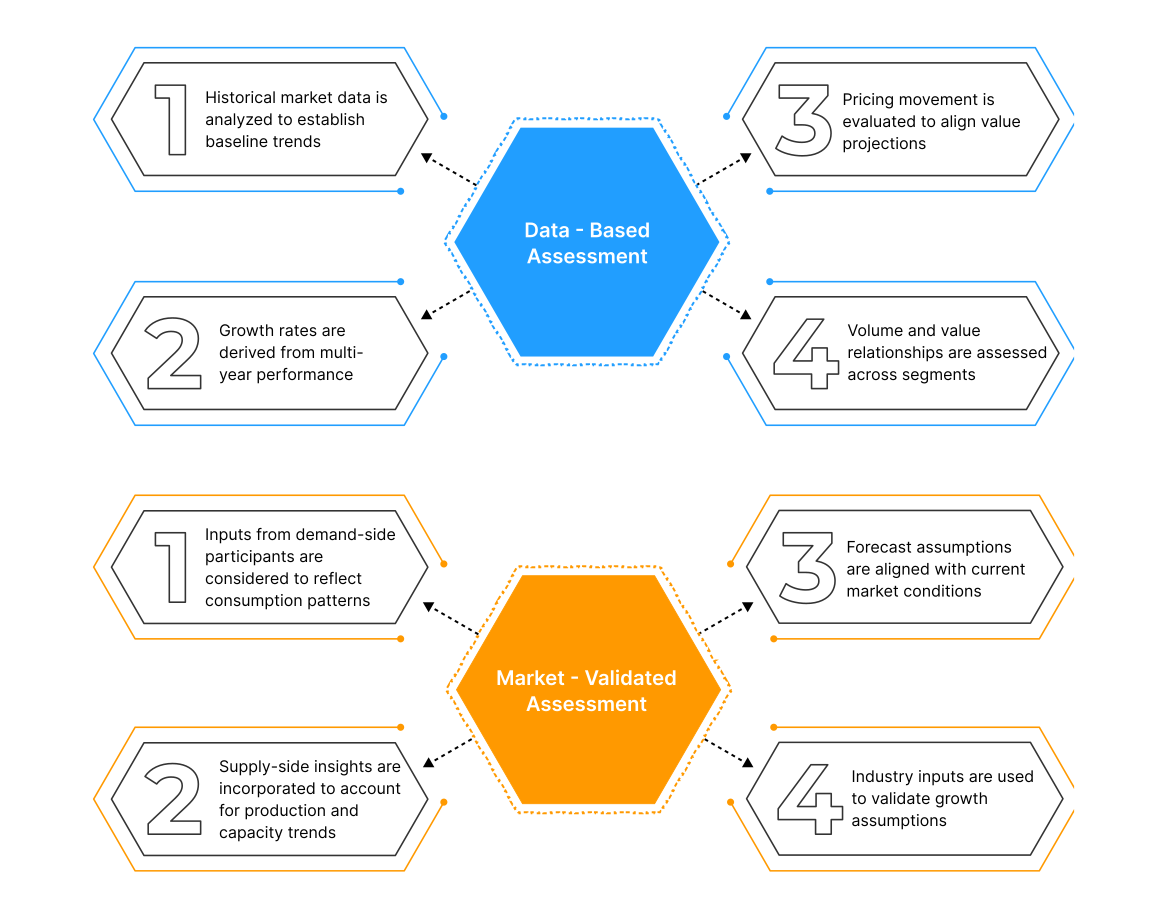
At Polaris Market Research, we employ a methodical forecasting strategy. This approach blends the analysis of historical data with real-time market validation. To forecast future trends with precision, we examine past patterns, pricing fluctuations, and the interplay of supply and demand. To ensure our conclusions reflect the present market landscape, we actively seek input from industry experts and key stakeholders.
To refine our predictions, we carefully consider critical elements such as market drivers and restraints, fluctuations in raw material costs, emerging technologies, and the production capabilities of various regions. Furthermore, we assess regulatory frameworks and potential policy shifts to gauge their potential impact on market expansion.
All this information is synthesized to generate precise forecasts for each segment and region. These forecasts illuminate the current state of the market and highlight forthcoming opportunities.
6. Data Structuring
Step 7:
In the final stage, we validate all our estimates using a triangulation method, where data is cross-checked from multiple reliable sources, like company data, primary interviews, and secondary research. This helps us make sure that our numbers are correct and fit with the rest of the market.
This process involves verifying data consistency across various segments and geographic areas. It also requires comparing historical trends with the assumptions support the forecast. Any discrepancies involve adjustments to ensure everything remains aligned and dependable.
Once the data is finalized, we prepare the final outputs, including market size estimates, segment-wise breakdowns, and growth metrics. These are delivered in structured formats such as tables, charts, and data files for easy analysis and use.
We collaborate closely with clients, ensuring the final products align with their requirements. This includes offering tailored adjustments, supplementary data analyses, and continuous assistance. Furthermore, we monitor market trends post-delivery, providing updates and refinements to maintain the insights' relevance as time passes.
Post-delivery, we continue to monitor market shifts, offering updates and adjustments to ensure the insights remain relevant over time.
Validation
Triangulation Framework
- Company-level data
- Primary inputs from industry participants
- Secondary benchmarks and published data
- Variance maintained within ±5-10%
- Adjustments applied to align estimates
- Segment values validated against overall market structure
Quality Check
Data Consistency & Integrity
- Segment totals validated to 100%
- Regional estimates aligned with global market size
- Historical trends compared against forecast outputs
- Assumptions reviewed for cross-segment and regional alignment
Output & Delivery
Final Outputs
- Market size estimates (USD Mn/Bn)
- Segment-wise distribution (%)
- Growth metrics (CAGR %)
- Structured tables and charts
- Segment-level datasets
- Excel-based data files for further analysis
Client Alignment & Support
- Deliverables are aligned with defined client requirements and scope
- Custom data cuts and segment splits are incorporated as required
- Post-delivery queries are addressed through analyst interactions
- Additional clarifications and data support are provided upon request
Client Continuity & Updates
- Market developments are tracked post-delivery to capture changes in key trends
- Updated data and revisions are provided based on new market inputs
- Additional refinements and data cuts are shared as required
- Continued analyst engagement supports evolving client requirements


