

What is the Current Market Size?
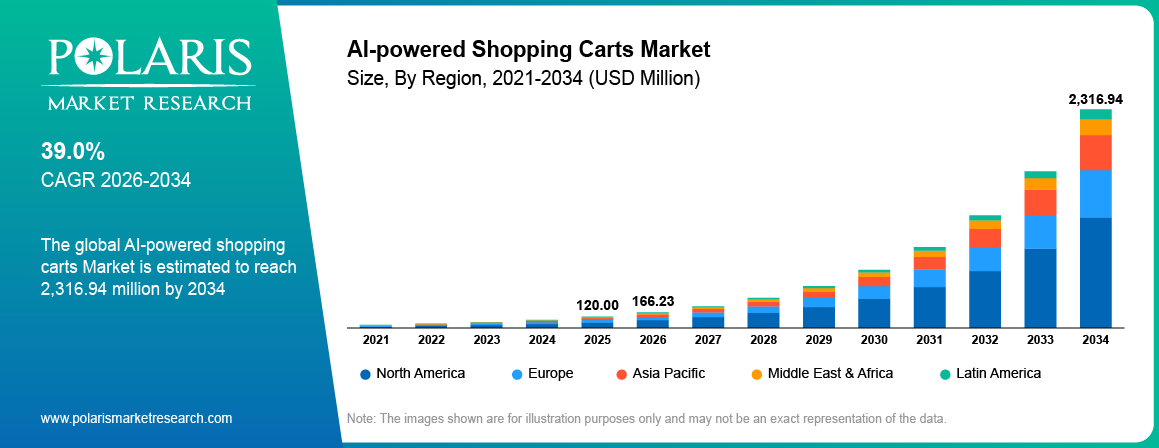
The global AI-powered shopping carts market size was valued at USD 120.0 million in 2025, growing at a CAGR of 39.0% from 2026–2034. Key factors driving demand include labor cost optimization and reallocation, agentic commerce and zero-click journeys, new transaction channels via conversational AI. .
Key Insights
- North America led the global market in 2025, holding a 49.80% revenue share driven by advanced technology adoption and strong retail ecosystem to support its adoption and high digital maturity.
- The AI-powered shopping carts landscape in Asia Pacific is projected to witness the fastest growth during the forecast period at a CAGR of 39.4% due to rapidly evolving retail environments, facilitated by the adoption of digital technologies and high levels of growth.
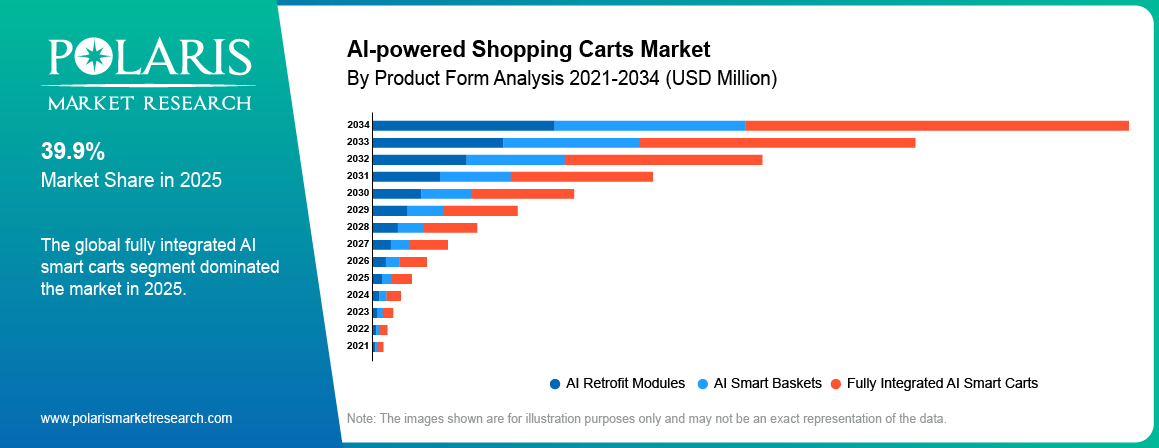
- Based on product form, the fully integrated AI smart carts segment accounted for 39.9% revenue share in 2025 due to the all-inclusive design and function seamlessly as a user.
- Based on checkout mode, the AI-assisted self-checkout is expected to witness the fastest growth during the forecast period at a CAGR of 33.66% due to its combination of automation and customer control.
Market Statistics
- 2025 Market Size: USD 120.0 million
- 2034 Projected Market Size: USD 2,316.9 million
- CAGR (2026-2034): 39.0%
- North America: Largest market in 2025
Industry Dynamics
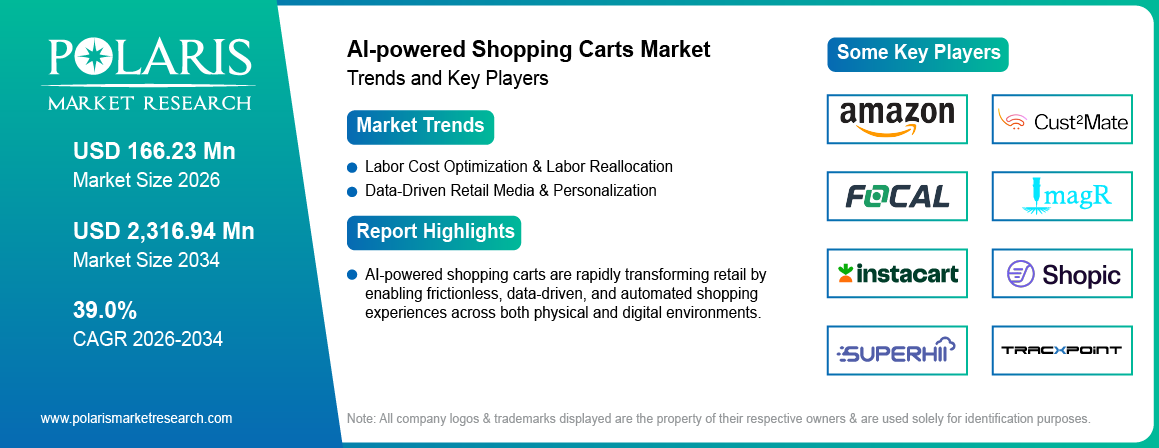
- Labor cost optimization & labor reallocation drives the market expansion
- Data-driven retail media & personalization boost the AI-powered shopping carts adoption
- Expansion of AI-driven personalized in-store shopping experiences create an opportunity to expand
- High initial deployment and infrastructure costs are barriers for the growth factors
What Does AI-Powered Shopping Carts Market Includes?
Intelligent digital purchasing systems that automate product recommendation and selection as well as the checkout process are AI shopping carts. The rise of zero-click journeys and agentic commerce are fueling the market growth. This evolution is how smart assistants are increasingly being used by consumers to anticipate their purchasing needs and provide product comparisons, then execute their purchase decisions with very little manual input on the consumer’s part. Therefore, there is reduced friction in the purchasing cycle and there is an increase in convenience to consumers, resulting in higher consumer engagement and conversion efficiency. Moreover, businesses are now leveraging refined machine-learning (ML) platforms, algorithms and behavioral analytics in their shopping cart systems to create contextual decision-making and real-time personalized experiences. Consequently, traditional carts are evolving into autonomous decision layers that optimize product discovery and transaction execution. Therefore, the evolution toward intent-driven automated purchasing workflows is changing the way consumers interact with digital commerce platforms.
To Understand More About this Research:Request a Free Sample Report
The growth is further driven by the appearance of innovative transaction / discovery channels such as GEOs (generative engine optimization) and instant checkout ecosystems. Increasingly, AI-powered shopping carts are being integrated into conversational interfaces, search engines, and content platforms to facilitate easy product discovery and purchase without having to click through various web pages to complete a purchase transaction. The result is a frictionless consumer experience where the consumers are able to purchase directly from AI-generated recommendations or social commerce feeds; or, use voice technology interfaces to complete their purchase transaction. For instance, in September 2025, Stripe is helping OpenAI launch instant checkout in ChatGPT. U.S. users can now purchase directly from Etsy sellers, with Shopify merchants like Glossier and SKIMS coming soon. The feature is powered by the agentic commerce protocol, an open standard co-developed by Stripe and OpenAI. The instant checkout capability greatly improves the transaction process by securely storing consumer preferences, payment information, and delivery information thereby reducing abandonment of the transaction significantly.
Retailers are using these integrated channels as a means to capture demand at the point of inspiration thereby shortening the time between product discovery and completion of a purchase. This integration of discovery/transaction within a unified, AI-driven environment will drive additional enhancements to the customer experience and provide retailers with the tools necessary to operate within increasingly fluid/dynamic and distributed digital marketplaces.
Drivers & Opportunities
What are the Factors Driving the Market Growth?
Labor Cost Optimization & Labor Reallocation: Retailers of all types (e-grocers, grocers, wholesalers, manufacturers) are focused on areas of improvement like the efficiency of labour cost and improved effectiveness in the allocation of their labour resources. Retailers want to streamline their in-store and online processes by reducing their reliance on manual processes (e.g., scanning items, processing payment, checking out customers), by using computer vision and intelligent systems. The intent is to provide automated processes through the integration of AI-powered shopping carts. Additionally, as retailers implement AI-powered shopping carts, they will be able to operate with fewer employees assigned to or supporting the checkout process and redirect those employees to higher-value activities (e.g., helping customers, merchandising, and managing stores).
The retailers will have a more productive workforce, operate more efficiently, and control their cost of doing business. Thus, through the use of automated shopping carts, retailers will have solutions to address current and future workforce shortages and varying availability of labour so they can provide the same level of service to their customers.
Data-Driven Retail Media & Personalization: The AI-powered shopping cart market is significantly influenced by the use of data-driven retail media and personalization, as retailers work to improve customer engagement and optimize revenue opportunities through targeted interactions.
AI-powered shopping carts can deliver highly customized product recommendations and promotional offers, with the ability to gather and assess customer's real-time data about how they are making purchases, selecting items, and navigating through stores. For instance, in March 2025, Instacart launched Smart Shop, a new feature that uses generative AI & machine learning to provide personalized experiences for online shoppers. Smart shop analyzes past user behavior (e.g., purchase frequency) and dietary restrictions (e.g., gluten-free) to display more relevant items on your shopping list quicker and provide a better, more user-friendly experience. The shopping cart becomes a dynamic retail media platform that show relevant advertisements and promotional offers based on the customer's journey in real time. Retailers can also utilize predictive analytics and AI models to influence the customer's purchasing decisions at the point of sale to increase the average basket size as well as the conversion rate. In addition to this, providing personalized experiences provides the opportunity for increased loyalty and satisfaction by aligning product recommendations to the individual consumer's needs. As retail media networks evolve into a high-margin revenue source, AI-powered shopping carts will be key enablers of data monetization and precision-targeted marketing in both the physical and digital retail landscapes.
Segmental Insights
Which Segments Contributed to the Market Expansion?
Product Form Analysis
Based on product form, the segmentation includes fully integrated AI smart carts, AI retrofit modules, AI smart baskets. The fully integrated AI smart carts segment accounted for 39.9% revenue share in 2025 due to the all-inclusive design and function seamlessly as a user. The design includes several types of sensors, cameras and an AI processor that provides real time product identification, automated billing and frictionless check-out; resulting in a design that does not require any additional infrastructure to be installed at retailers to facilitate their use. Retailers prefer fully-integrated systems because they provide end-to-end automation and allow for more control over the collection of data and analytics by the retailer. This integrated solution will help retailers to operate more efficiently and provide customers with a premium, cashier-less, shopping experience. In addition, these carts provide enhanced features for retailer personalization and capabilities for retail media which makes them an ideal solution for large format stores. They also have the ability to create an ideal balance of convenience, scalability, and enhanced shopper engagement which supports their ongoing high adoption rates among modern retailers.
Checkout Mode Analysis
In terms of checkout mode, the segmentation includes fully autonomous checkout, AI-assisted self-checkout, hybrid checkout. The AI-assisted self-checkout is expected to witness the fastest growth during the forecast period at a CAGR of 33.66%. This is due to its combination of automation and customer control. Compared to other forms of self-checkout, using AI technologies (such as computer vision and smart scanning) to assist customers through their checkout process while still allowing partial manual interaction will decrease errors and increase customer confidence. Retailers are becoming increasingly interested in investing in this type of system because they require much lower initial capital costs relative to full automation, but still provide a high level of efficiency. Retailers can improve operational efficiency and progressively automate their stores without investing in a lot of new technology. Furthermore, retailers can improve throughput during busy times by using AI-assisted checkout systems because customers' wait times at the point of sale will be reduced. Retailers total cost-effectiveness of the checkout systems, ease of integration, and customer experience are all reasons why they are rapidly transitioning to this type of model.
Regional Analysis
How Regions Affected the Overall Market Revenue?
North America AI-powered shopping carts Market
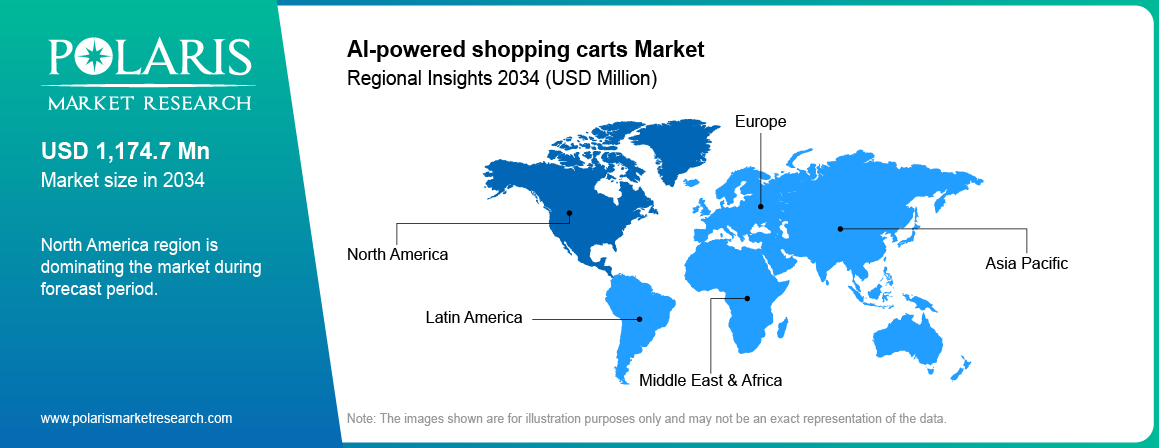
North America led the global market in 2025, holding a 49.80% revenue share. This is driven by several factors such as advanced technology which is a strong retail ecosystem to support its adoption; retailers within North America have high digital maturity, which has resulted in investments in AI, automation and smart store solutions to optimize operations and improve customer service. Retailers within North America also utilize well-developed retail infrastructure and were early adopters of cashierless/ frictionless checkout solutions to help grow the market. Retailers within North America also focus on utilizing data analytics and retail media solutions as a way to enhance personalized engagement, while increasing revenue per customer. Additionally, retailers have implemented self-service automated solutions that have driven widespread acceptance by consumers. Therefore, the technology solution for this market will be well-aligned with innovations, convenience and omni-channel strategies prevalent in North America, further establishing as the leader in this market.
Asia Pacific AI-powered shopping carts Market
The AI-powered shopping carts landscape in Asia Pacific is projected to witness the fastest growth during the forecast period at a CAGR of 39.4%. Rapidly evolving retail environments, facilitated by the adoption of digital technologies and high levels of growth across organized retailing in the region, allow for a more conducive environment for retailers to adopt new AI-enabled retail technologies. Retailers are also increasingly investing in automation technologies to improve their operations at all levels; therefore, customers have very high expectations regarding service quality and speed. The growth of digital payment and integrated mobile technology ecosystems have further supported the emergence of smart cart-based shopping systems. According to Ministry of Finance, in December 2024, Unified Payments Interface (UPI) reached 16.58 billion financial transactions in a single month, highlighting India’s digital transformation. Other factors such as changes to the urbanization rate and variability in consumer purchasing behaviour are also influencing retailers to adopt new technologies to improve in-store experiences for their customers. Therefore, due to these factors combined with ongoing advancements in technology, continued development of retail infrastructures and a strong commitment to innovation that focuses on meeting the needs of customers will accelerate the adoption of AI-enabled shopping carts within this region.
Key Players & Competitive Analysis Report
The AI-powered shopping cart market features a diverse competitive landscape spanning integrated hardware solutions, retrofit modules, and software-only platforms. Amazon is an integrated smart cart manufacturer in the US with the Dash Cart solution, which is found in their Fresh and Whole Food stores as well as the regional grocery retailer Kroger and the regional grocery retailer Wakefern. Caper Inc., a company recently acquired by Instacart, provides artificial intelligence-powered smart carts to regional grocers and has done so through strategic partnerships. Many retailers also use artificial intelligence retrofit modules to upgrade their existing fleet of grocery carts into smart alternatives at a minimal cost, as Shopic and Cust2Mate have led the market supplying clip-on and handle options. Tracxpoint and Focal Systems are dominant suppliers of computer vision-equipped software and hybrid models that can be utilized by retailers to provide accurate item detection at shelf and checkout, which enhances the overall shopping experience. Imagr utilizes artificial intelligence technology within their cart and kiosk offerings, while Retail AI and SuperHii historically focus on providing shoppers with self-service or assisted checkout solutions. Instacart is leveraging Caper and their Smart Shop AI capabilities to support online shopping personalization and integrate a unified digital and in-store strategy as part of its e-commerce strategy.
Some of the major corporations participating in the artificial intelligence-powered shopping cart industry include: Amazon, Instacart, Caper Inc., Shopic, Cust2Mate, Tracxpoint, Focal Systems, Retail AI, SuperHii, and Imagr. Amazon; Instacart; Caper Inc.; Shopic; Cust2Mate; Tracxpoint; Focal Systems; Retail AI; SuperHii; Imagr.
Key Players
Industry Developments
- January 2026: Kroger expanded its relationship with Google Cloud, deploying Gemini Enterprise for CX nationwide. The grocery chain will offer integrated Meal and Shopping assistants to simplify grocery planning while using Customer Experience Agent Studio to analyze customer calls, enhance associate productivity, and deliver a more seamless experience.
- October 2025: Amazon introduced the Help Me Decide feature, a shopping experience that uses AI to analyze a customer's browsing history and preferences before making personalized product recommendations based on their individual needs.
- September 2025: Instacart collaborated with Morrisons, to bring Caper Carts, Instacart's AI-powered smart trolleys to the UK. The AI-powered smart trolleys feature interactive screens, built-in scales, and sensors for scanning items, tracking totals, and weighing produce. Customers checkout by scanning a barcode at self-checkout.
AI-powered shopping carts Market Segmentation
By Product Form Outlook (Revenue, USD Million, 2021–2034)
- Fully Integrated AI Smart Carts
- AI Retrofit Modules
- AI Smart Baskets
By Capability Outlook (Revenue, USD Million, 2021–2034)
- Computer Vision-Based AI Systems
- Multi-Modal AI Systems
- Vision + Weight Sensor Systems
- Vision + RFID Systems
- Vision + Multi-Sensor Fusion Systems
By Checkout Mode Outlook (Revenue, USD Million, 2021–2034)
- Fully Autonomous Checkout
- AI-Assisted Self-Checkout
- Hybrid Checkout
By Deployment Architecture Outlook (Revenue, USD Million, 2021–2034)
- Edge AI
- Cloud AI
- Hybrid AI
By Retail Environment Outlook (Revenue, USD Million, 2021–2034)
- Supermarkets / Hypermarkets
- Convenience Stores
- Specialty Retail Stores
By Regional Outlook (Revenue, USD Million, 2021–2034)
- North America
- US
- Canada
- Europe
- Germany
- France
- UK
- Italy
- Spain
- Netherlands
- Russia
- Rest of Europe
- Asia Pacific
- China
- Japan
- India
- Malaysia
- South Korea
- Indonesia
- Australia
- Vietnam
- Rest of Asia Pacific
- Middle East & Africa
- Saudi Arabia
- UAE
- Israel
- South Africa
- Rest of Middle East & Africa
- Latin America
- Mexico
- Brazil
- Argentina
- Rest of Latin America
AI-powered shopping carts Market Report Scope
|
Report Attributes |
Details |
|
Market Size in 2025 |
USD 120.00 Million |
|
Market Size in 2026 |
USD 166.23 Million |
|
Revenue Forecast by 2034 |
USD 2,316.94 Million |
|
CAGR |
39.0% from 2026 to 2034 |
|
Base Year |
2025 |
|
Historical Data |
2021–2024 |
|
Forecast Period |
2026–2034 |
|
Quantitative Units |
Revenue in USD Million and CAGR from 2026 to 2034 |
|
Report Coverage |
Revenue Forecast, Competitive Landscape, Growth Factors, and Industry Trends |
|
Segments Covered |
|
|
Regional Scope |
|
|
Competitive Landscape |
|
|
Report Format |
|
|
Customization |
Report customization as per your requirements with respect to countries, regions, and segmentation. |
FAQ's
The global market size was valued at USD 120.00 million in 2025 and is projected to grow to USD 2,316.94 million by 2034.
The global market is projected to register a CAGR of 39.0% during the forecast period.
North America led the global market in 2025, holding a 49.80% revenue share.
A few of the key players in the market are Amazon; Instacart; Caper Inc.; Shopic; Cust2Mate; Tracxpoint; Focal Systems; Retail AI; SuperHii; Imagr.
The fully integrated AI smart carts segment accounted for 39.9% revenue share in 2025
The AI-assisted self-checkout is expected to witness the fastest growth during the forecast period.
Page last updated on:
Mar-2026
Research Methodology
A robust system of research, verification, and forecasting designed to ensure reliable and actionable market insights.
Polaris Market Research uses a clear and structured approach to deliver insights that clients can rely on. The process combines detailed primary and secondary research, including direct communication with industry experts. The detailed information helps build a complete picture of market trends and developments. Secondary data is gathered from credible sources such as industry reports, company filings, government source links, and trusted organization databases. It is then cross-checked through discussions with key stakeholders across the value chain. Market size and forecasts are developed using both bottom-up and top-down methods to ensure accuracy and consistency in the final results.
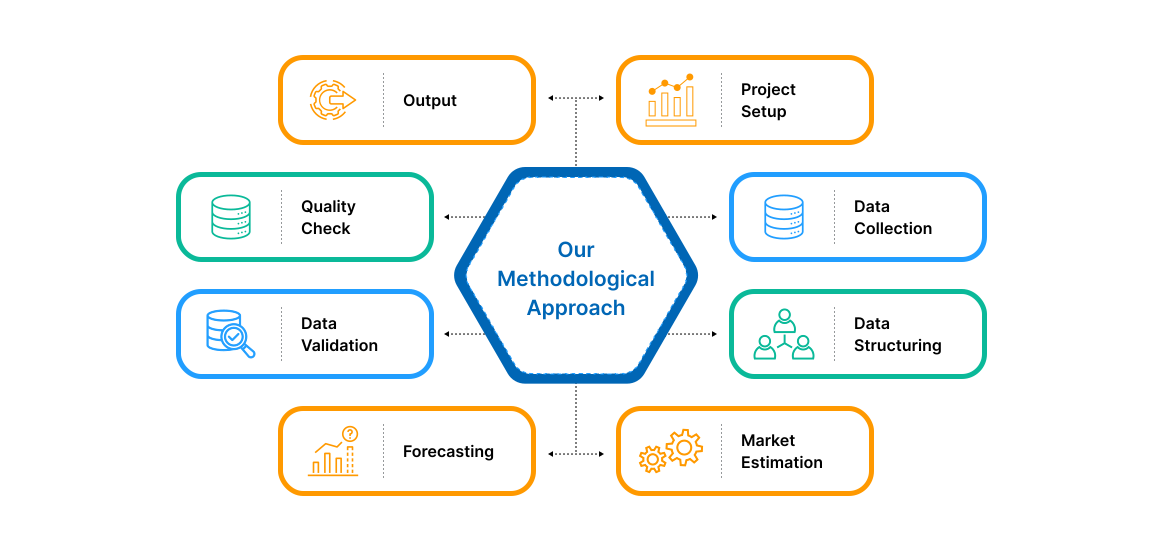
Project Setup
Step 1 & 2:
- We start every project by clearly understanding the client’s objective or goal, then defining the market scope, and aligning regions, segments, and timelines.
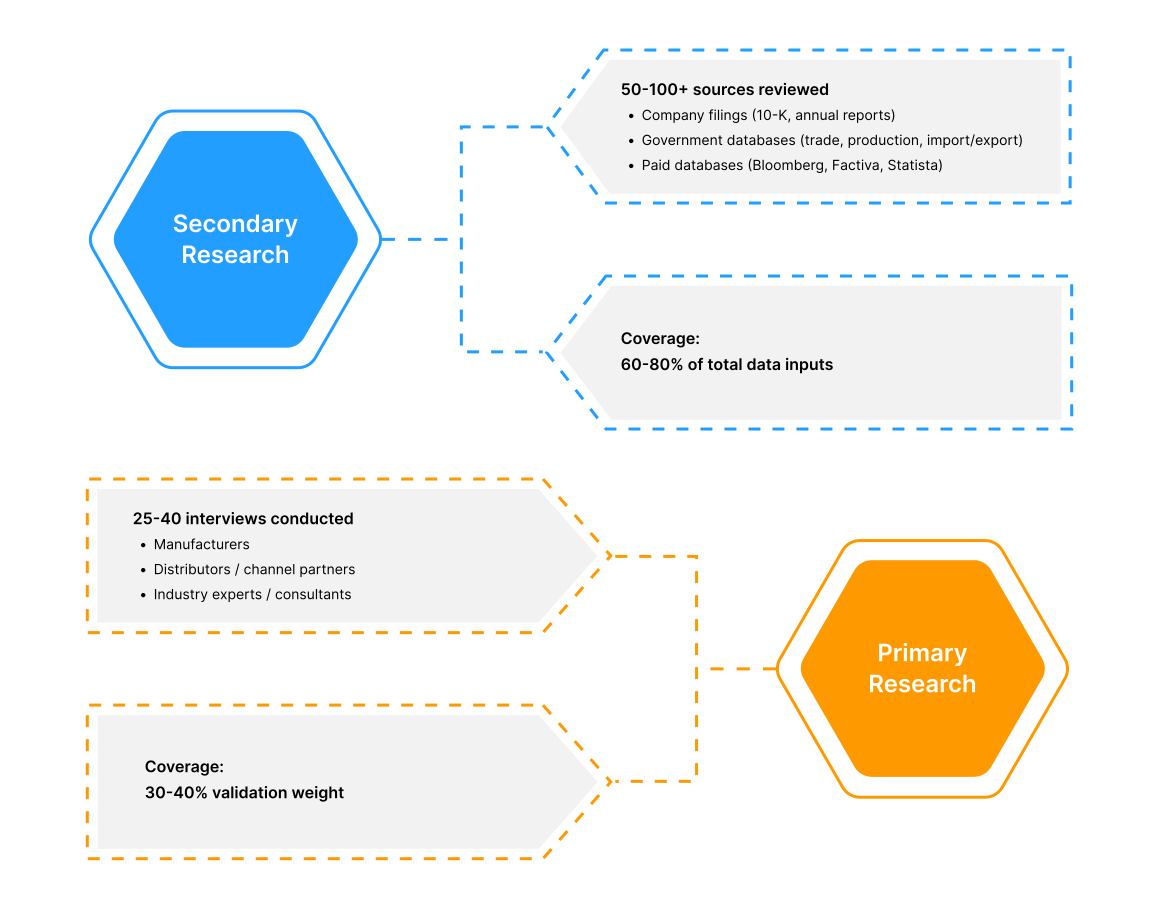
- Once the foundation is set, we collect data from all-around of sources, including company reports, government databases, and paid industry platforms.
- Our research is based on secondary data, which helps us build a strong understanding of the market across regions and industries. Then we validate this information through primary research by speaking directly with industry experts, companies, and stakeholders.
- By combining secondary and primary research, we ensure that our market insights are accurate, practical, and closely aligned with real market conditions.
Data Collection
We gather information from both public and verified sources:
Data Structuring
Step 3:
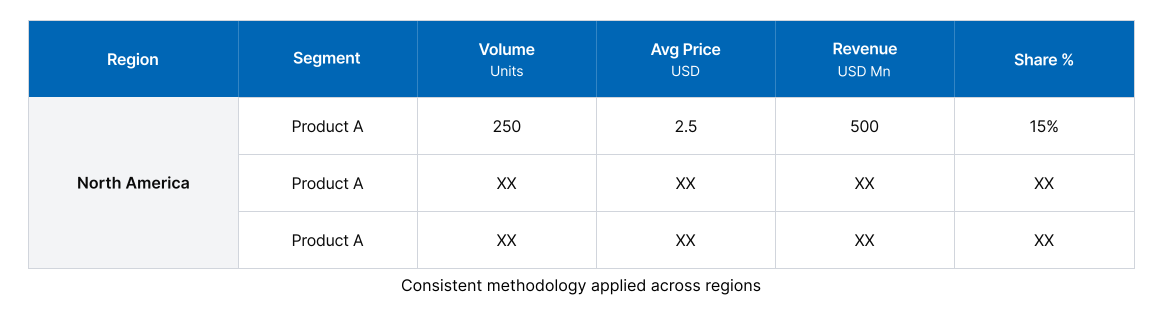
- All collected data is organized into a consistent format to ensure accurate analysis. Since inputs come from multiple sources, they are standardized and aligned before use.
- The data is segmented by product, application, and region, and mapped across a defined historical period (2020–2024). All values are converted into common units (USD Mn/Bn), and volume and pricing are aligned where required to estimate revenue.
- Any overlaps or inconsistencies are reviewed and adjusted to maintain accuracy (<5% variance threshold).
- The result is a structured dataset that allows for clear comparison across regions and supports reliable analysis and forecasting.
Structured Market Dataset, USD Mn/Bn
4. Data Structuring
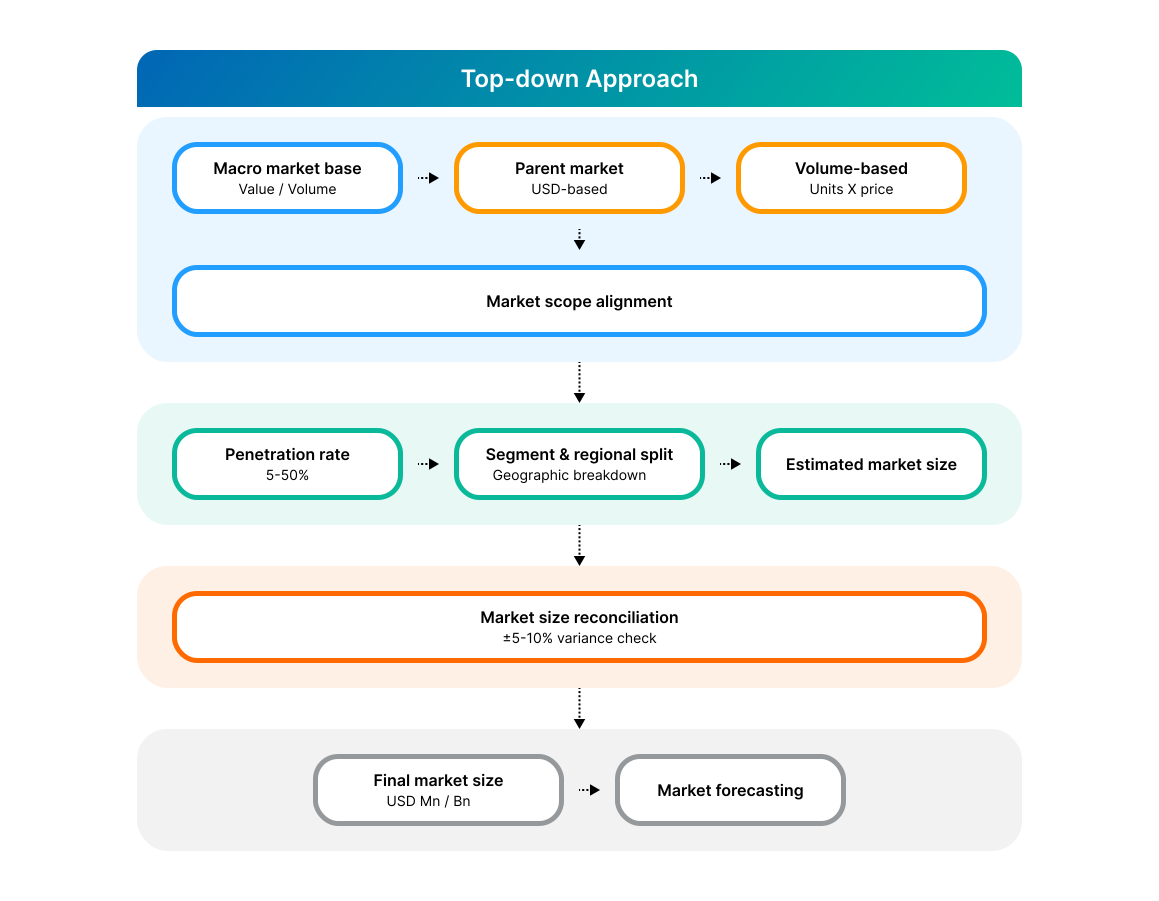
Step 4: TOP-DOWN APPROACH
- We start with the overall market size at a global or macro level.
- The market is then narrowed down based on scope and industry relevance.
- We apply penetration rates and split the data by region and segment.
- This helps us estimate the market size for specific segments.
- The numbers are validated through cross-checks to ensure accuracy.
Step 5: BOTTOM-UP APPROACH
- We begin by analyzing data from leading companies in the market.
- Revenue data is collected and mapped across different segments.
- The data is then aggregated to estimate the total market size.
- To fill in any gaps, adjustments are made based on industry standards.
- Validation checks make sure that the results are correct.
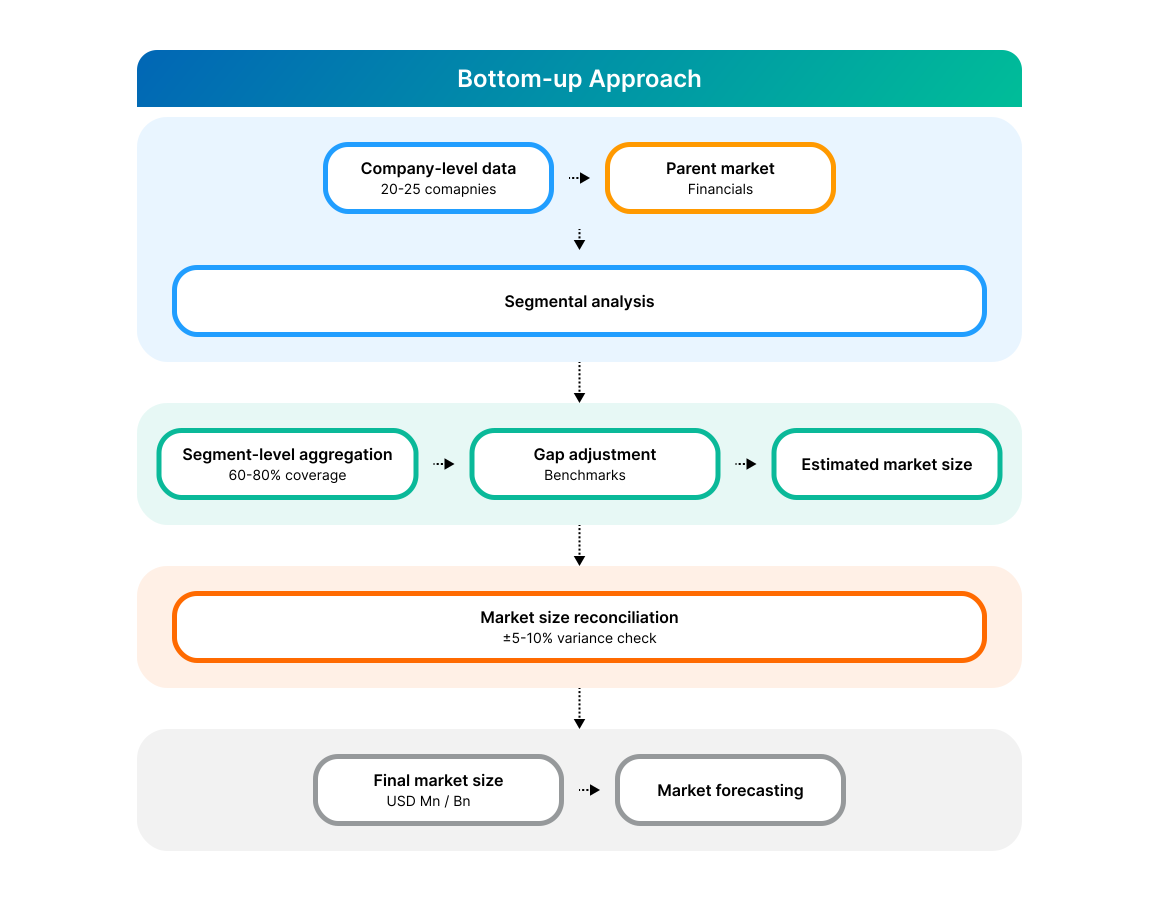
5. Data Structuring
Step 6:
At Polaris Market Research, we employ a methodical forecasting strategy. This approach blends the analysis of historical data with real-time market validation. To forecast future trends with precision, we examine past patterns, pricing fluctuations, and the interplay of supply and demand. To ensure our conclusions reflect the present market landscape, we actively seek input from industry experts and key stakeholders.
To refine our predictions, we carefully consider critical elements such as market drivers and restraints, fluctuations in raw material costs, emerging technologies, and the production capabilities of various regions. Furthermore, we assess regulatory frameworks and potential policy shifts to gauge their potential impact on market expansion.
All this information is synthesized to generate precise forecasts for each segment and region. These forecasts illuminate the current state of the market and highlight forthcoming opportunities.
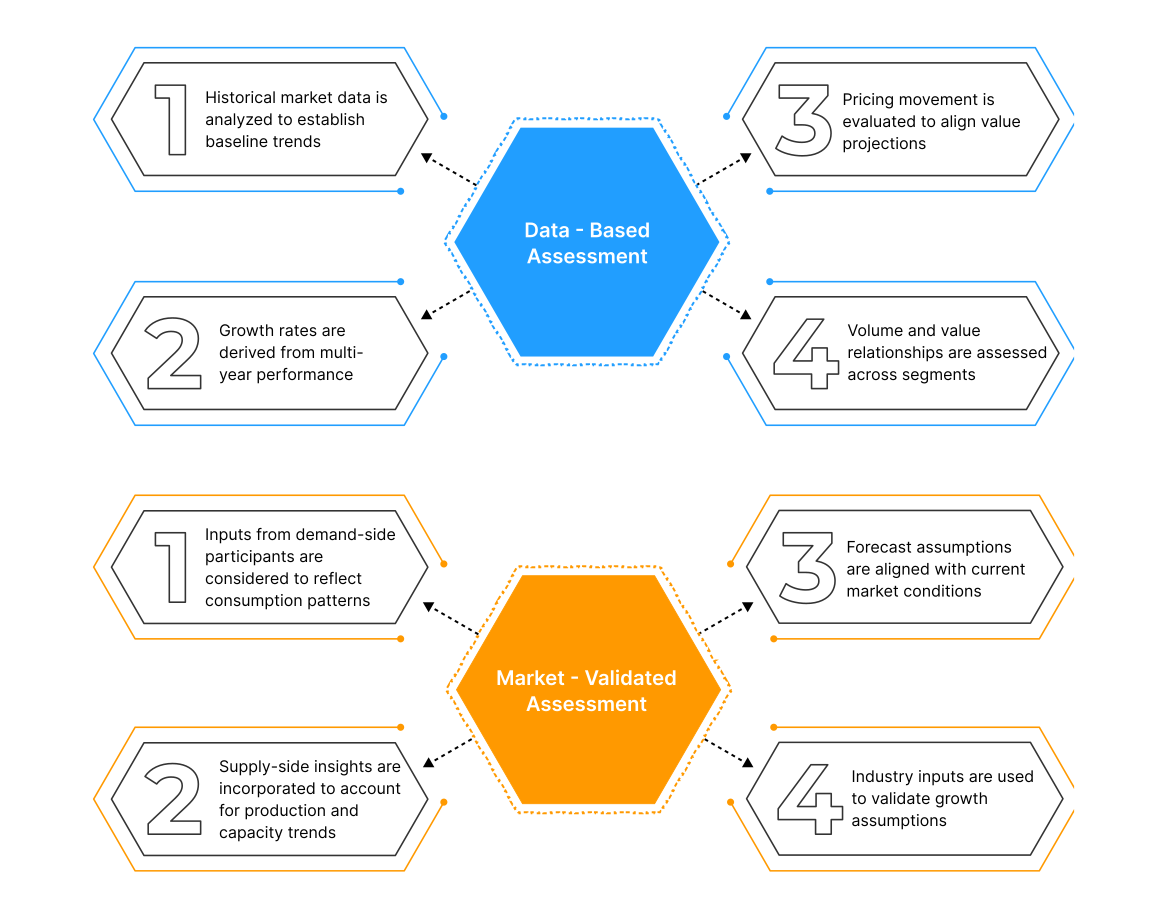
6. Data Structuring
Step 7:
In the final stage, we validate all our estimates using a triangulation method, where data is cross-checked from multiple reliable sources, like company data, primary interviews, and secondary research. This helps us make sure that our numbers are correct and fit with the rest of the market.
This process involves verifying data consistency across various segments and geographic areas. It also requires comparing historical trends with the assumptions support the forecast. Any discrepancies involve adjustments to ensure everything remains aligned and dependable.
Once the data is finalized, we prepare the final outputs, including market size estimates, segment-wise breakdowns, and growth metrics. These are delivered in structured formats such as tables, charts, and data files for easy analysis and use.
We collaborate closely with clients, ensuring the final products align with their requirements. This includes offering tailored adjustments, supplementary data analyses, and continuous assistance. Furthermore, we monitor market trends post-delivery, providing updates and refinements to maintain the insights' relevance as time passes.
Post-delivery, we continue to monitor market shifts, offering updates and adjustments to ensure the insights remain relevant over time.
Validation
Triangulation Framework
- Company-level data
- Primary inputs from industry participants
- Secondary benchmarks and published data
- Variance maintained within ±5-10%
- Adjustments applied to align estimates
- Segment values validated against overall market structure
Quality Check
Data Consistency & Integrity
- Segment totals validated to 100%
- Regional estimates aligned with global market size
- Historical trends compared against forecast outputs
- Assumptions reviewed for cross-segment and regional alignment
Output & Delivery
Final Outputs
- Market size estimates (USD Mn/Bn)
- Segment-wise distribution (%)
- Growth metrics (CAGR %)
- Structured tables and charts
- Segment-level datasets
- Excel-based data files for further analysis
Client Alignment & Support
- Deliverables are aligned with defined client requirements and scope
- Custom data cuts and segment splits are incorporated as required
- Post-delivery queries are addressed through analyst interactions
- Additional clarifications and data support are provided upon request
Client Continuity & Updates
- Market developments are tracked post-delivery to capture changes in key trends
- Updated data and revisions are provided based on new market inputs
- Additional refinements and data cuts are shared as required
- Continued analyst engagement supports evolving client requirements


