

What is Asia Pacific Organic Cereals Market Size?
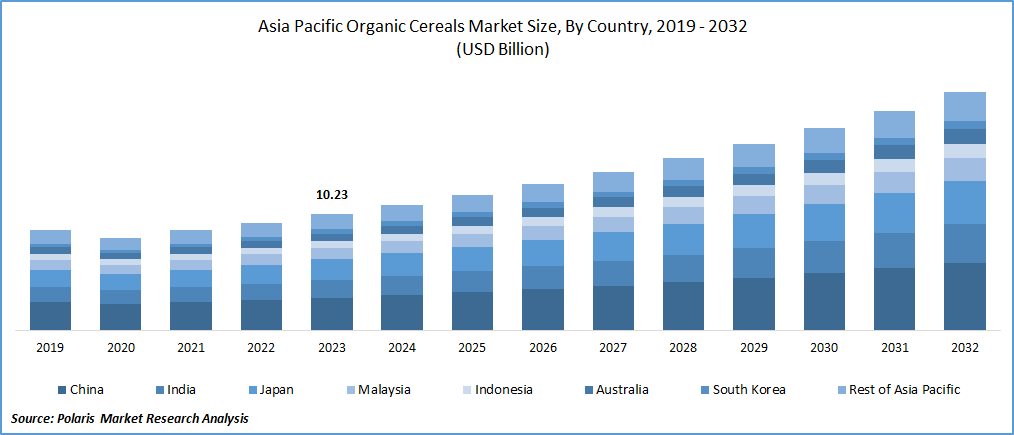
The Asia Pacific organic cereals market was valued at USD 11.94 Billion in 2025 and is expected to grow at a CAGR of 8.5% during the forecast period.
Market Statistics
- 2025 Market Size: USD 11.94 Billion
- 2034 Projected Market Size: USD 24.88 Billion
- CAGR (2026-2034): 8.5%
- Largest Market: China
The market dominated the global market owing to the increasing consumer demand for healthy and sustainable food options. The market includes a wide range of organic cereals, such as oats, barley, rice, wheat, and corn, which are grown without the use of synthetic fertilizers, pesticides, or genetically modified organisms (GMOs). The market is growing because of the rising health consciousness among consumers. As people become more aware of the health benefits associated with organic food consumption, they are seeking out nutritious and chemical-free food products, leading to increased demand for organic cereals. Similarly, the rising middle-class population in countries like China, India, and Indonesia has led to an increase in disposable income, enabling consumers to spend more on premium and healthier food products, including organic cereals.
To Understand More About this Research: Request a Free Sample Report
Supportive government policies have also played a role in the growth of the Asia-Pacific organic cereals market. Governments in various countries, such as India, have implemented policies that support the production and consumption of organic crops, including subsidies for farmers who convert to organic farming practices. These policies have encouraged more farmers to adopt organic methods, increasing the supply of organic cereals and contributing to market growth.
However, some restraining factors are affecting the growth of the market, such as the higher costs associated with organic cereals. Organic cereals are generally more expensive than conventionally grown cereals, making them less accessible to price-sensitive consumers. The higher cost of production, linked with the lack of economies of scale, contributes to the higher prices for organic cereals.
Growth Drivers
Increased awareness regarding the consumption of residue-free foods drives market growth
The increasing awareness about the importance of consuming residue-free foods has emerged as a significant driver for the growth of the Asia Pacific organic cereals market. As consumers become more health-conscious and informed about the potential harmful effects of synthetic pesticides, herbicides, and fertilizers used in conventional farming practices, they are seeking out organic alternatives that are free from such residues. Concerns about personal health and environmental sustainability drive this shift in consumer preferences.
Also, the growing population in countries like China, India, and Indonesia, who have greater disposable income and access to information, are willing to pay premium prices for organic products, including cereals, that meet their health and environmental expectations. This surging demand for organic cereals is encouraging manufacturers and farmers to invest in organic farming methods, thereby expanding the availability and variety of organic cereal options in the region, which in turn further propels market growth.
Key Trends in Organic Cereals
|
Trend |
Description |
Examples/Drivers |
|
Health-Focused Formulations |
Low-sugar, high-fiber cereals with ancient grains like quinoa, spelt, and millet. |
Meets demand for nutrient-dense, gluten-free, vegan options; appeals to Millennials/Gen Z. |
|
Functional Ingredients |
Addition of probiotics, prebiotics, superfoods (chia, berries), and plant-based proteins. |
Enhances gut health, immunity; aligns with preventative nutrition trends. |
|
Sustainability Emphasis |
Ethical sourcing, recyclable/compostable packaging, regenerative practices. |
Reduces GHG emissions 20-30%; boosts biodiversity and soil health. |
|
E-Commerce Growth |
Surge in online sales of ready-to-eat organic cereals. |
Double-digit growth; improves accessibility for urban consumers. |
|
Breeding for Organic Systems |
Varieties optimized for nutrient uptake, weed suppression, disease resistance. |
Improves yields in low-input systems; adapts to climate challenges. |
|
Market Expansion |
Growth in emerging regions (Asia-Pacific); 25% EU target by 2030. |
Rising incomes, policies like CAP subsidies drive adoption. |
Report Segmentation
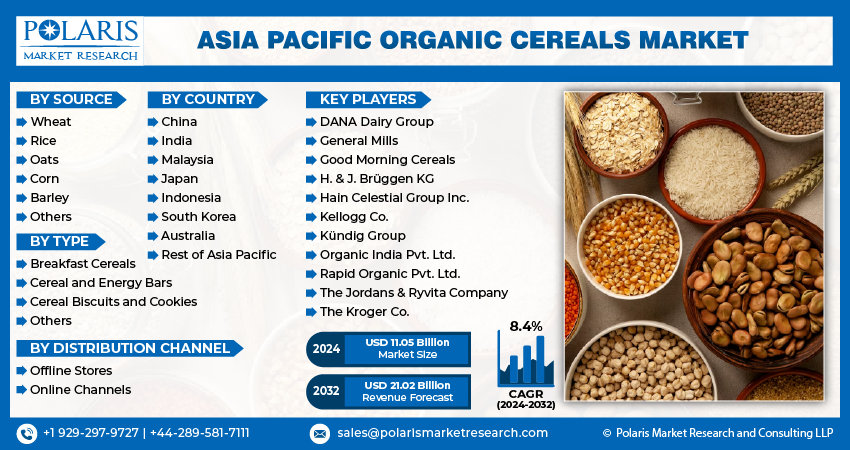
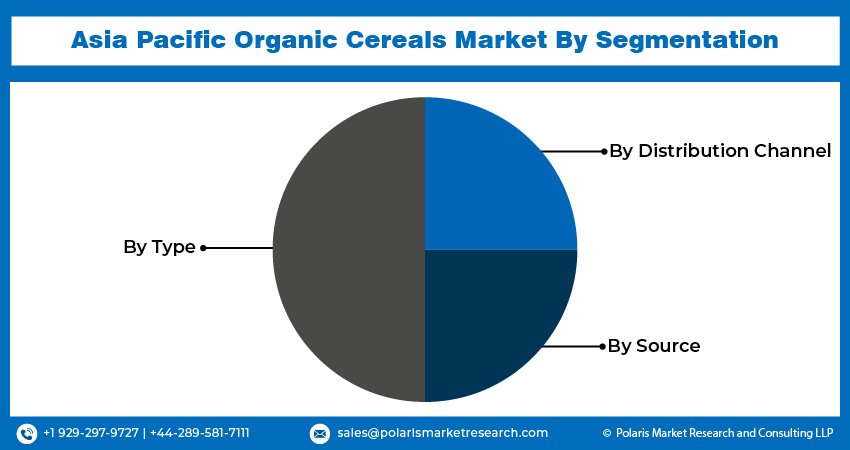
The market is primarily segmented based on source, type, distribution channel, and country.
|
By Source |
By Type |
By Distribution Channel |
By Country |
|
|
|
|
To Understand the Scope of this Report: Speak to Analyst
By Source Analysis
The oats segment dominated the market in terms of revenue share in 2025
The oats segment accounted for the largest revenue share in the Asia Pacific market in 2025, owing to the widespread consumption of cereal grains in the region, and their popularity has been increasing in recent years due to their high nutritional value and health benefits. Oats are rich in fiber, protein, and various vitamins and minerals, making them an attractive choice for health-conscious consumers.
Also, organic oats are relatively easy to cultivate and process compared to other cereal grains, which makes them more accessible and affordable for consumers. Similarly, the demand for organic oats has been fueled by the growing trend of plant-based diets, with a primary focus on organic food consumption. The availability of various flavored and instant oat products has also contributed to their increased adoption in the region.
By Distribution Channel Analysis
The offline stores segment dominated the market in 2025
The offline stores distribution channel dominated the Asia Pacific market in 2023, accounting for a significant share of the total market revenue. This is attributed to several factors, including the wide reach and convenience offered by physical retail stores, which allow consumers to inspect products before making a purchase.
Also, many consumers in the Asia Pacific region still prefer to shop in person, as they are able to get immediate assistance from sales staff and avoid lengthy delivery times associated with online shopping. Offline stores offer a positive shopping experience, allowing customers to explore different product options, compare prices, and make informed purchasing decisions.
Country Insights
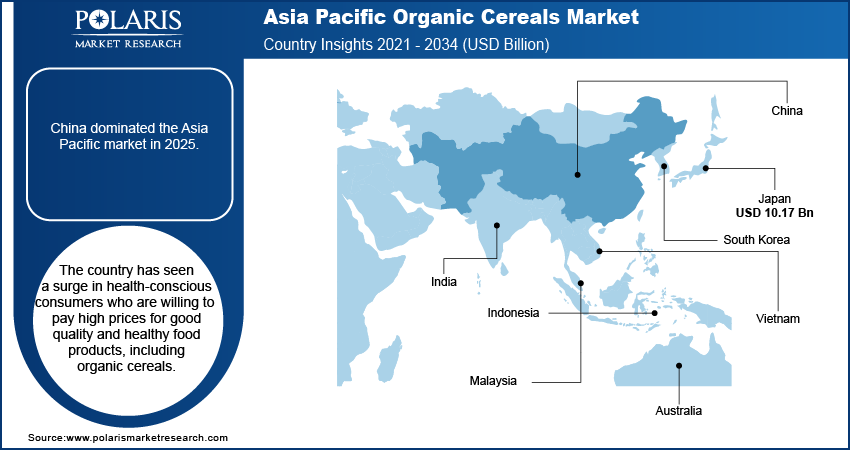
China dominated the Asia Pacific market in 2025
China's dominant position in the Asia Pacific market is attributed to its largest population in the region, which emphasizes organic food product consumption, which creates a huge demand for organic cereals. Also, the country has seen a surge in health-conscious consumers who are willing to pay high prices for good quality and healthy food products, including organic cereals. Similarly, China has a large agricultural sector, with many farmers shifting towards organic farming practices, which has increased the availability of organic cereals in the domestic market.
Also, the Chinese government has implemented policies, such as the China National Organic Standards, that support the development of the organic agriculture industry, such as providing subsidies and financial incentives to farmers who convert to organic farming. This has encouraged more farmers to adopt organic farming methods, leading to an increase in the supply of organic cereals.
Key Market Players & Competitive Insights
The Asia Pacific organic cereals market is highly competitive, with several key market players vying for market share. These players include well-established companies such as General Mills and Kellogg's. To gain a competitive edge, these companies are engaging in various strategies such as product innovation, expansion of distribution channels, and investment in sustainable and eco-friendly practices.
Some of the major players operating in the Asia Pacific market include:
- DANA Dairy Group
- General Mills
- Good Morning Cereals
- H. & J. Brüggen KG
- Hain Celestial Group Inc.
- Kellogg Co.
- Kündig Group
- Organic India Pvt. Ltd.
- Rapid Organic Pvt. Ltd.
- The Jordans & Ryvita Company
- The Kroger Co.
Recent Developments
- May 2025: Kellogg’s partnered with Bluey, a popular UK children’s brand, to launch a new cereal. The collaboration leverages Bluey’s expanding licensing business to attract young consumers with a fun, family-friendly breakfast option.
- In June 2019, Nestle India, a manufacturer of food and beverage products and a subsidiary of Nestle SA, Switzerland, announced the launch of organic products with its new range of organic cereals under the brand Nestlé CEREGROW.
Asia Pacific Organic Cereals Market Report Scope
|
Report Attributes |
Details |
|
Market size in 2025 |
USD 11.94 Billion |
| Market size in 2026 | USD 12.92 Billion |
|
Revenue Forecast in 2034 |
USD 24.88 Billion |
|
CAGR |
8.5% from 2026 – 2034 |
|
Base year |
2025 |
|
Historical data |
2021 – 2024 |
|
Forecast period |
2026 – 2034 |
|
Quantitative units |
Revenue in USD Billion and CAGR from 2026 to 2034 |
|
Segments Covered |
By Source, By Type, By Distribution Channel, By Country |
|
Country scope |
China, India, Malaysia, Japan, Indonesia, South Korea, Australia, Rest of Asia Pacific |
|
Customization |
Report customization as per your requirements concerning countries, regions, and segmentation. |
FAQ's
DANA Dairy Group, General Mills, Good Morning Cereals, H. & J. Brüggen KG, Hain Celestial Group Inc are the key companies in North Asia Pacific Organic Cereals Market.
The Asia Pacific organic cereals market is expected to grow at a CAGR of 8.5% during the forecast period.
Source, type, distribution channel, and country are the key segments covered.
Supportive government policies in the Asia Pacific region drive market growth are the key driving factors in North Asia Pacific Organic Cereals Market.
The Asia Pacific organic cereals market size is expected to reach USD 24.88 Billion by 2034
Page last updated on:
Feb-2024
Research Methodology
A robust system of research, verification, and forecasting designed to ensure reliable and actionable market insights.
Polaris Market Research uses a clear and structured approach to deliver insights that clients can rely on. The process combines detailed primary and secondary research, including direct communication with industry experts. The detailed information helps build a complete picture of market trends and developments. Secondary data is gathered from credible sources such as industry reports, company filings, government source links, and trusted organization databases. It is then cross-checked through discussions with key stakeholders across the value chain. Market size and forecasts are developed using both bottom-up and top-down methods to ensure accuracy and consistency in the final results.
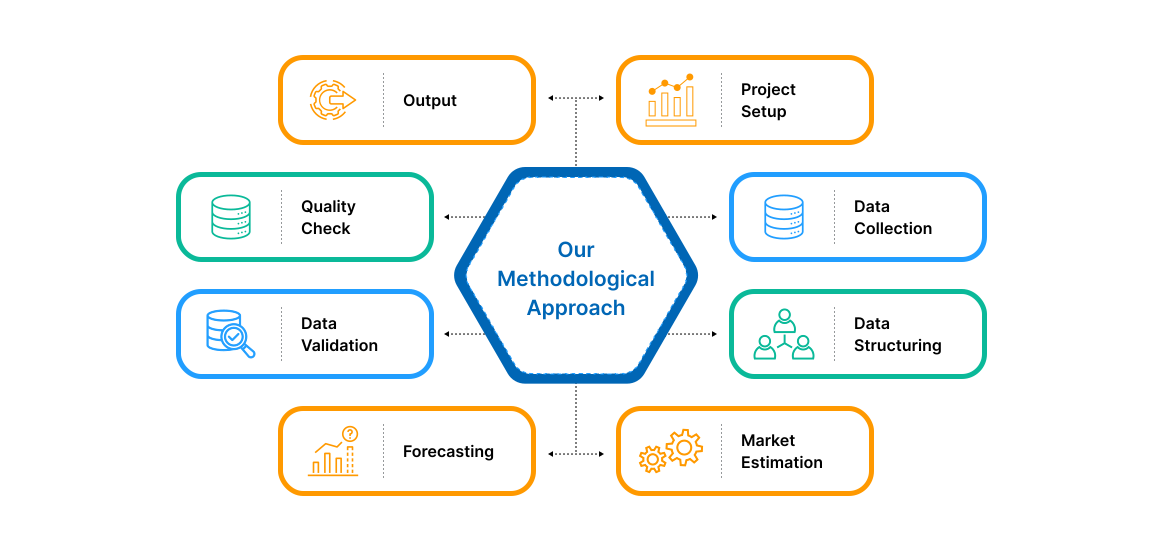
Project Setup
Step 1 & 2:
- We start every project by clearly understanding the client’s objective or goal, then defining the market scope, and aligning regions, segments, and timelines.
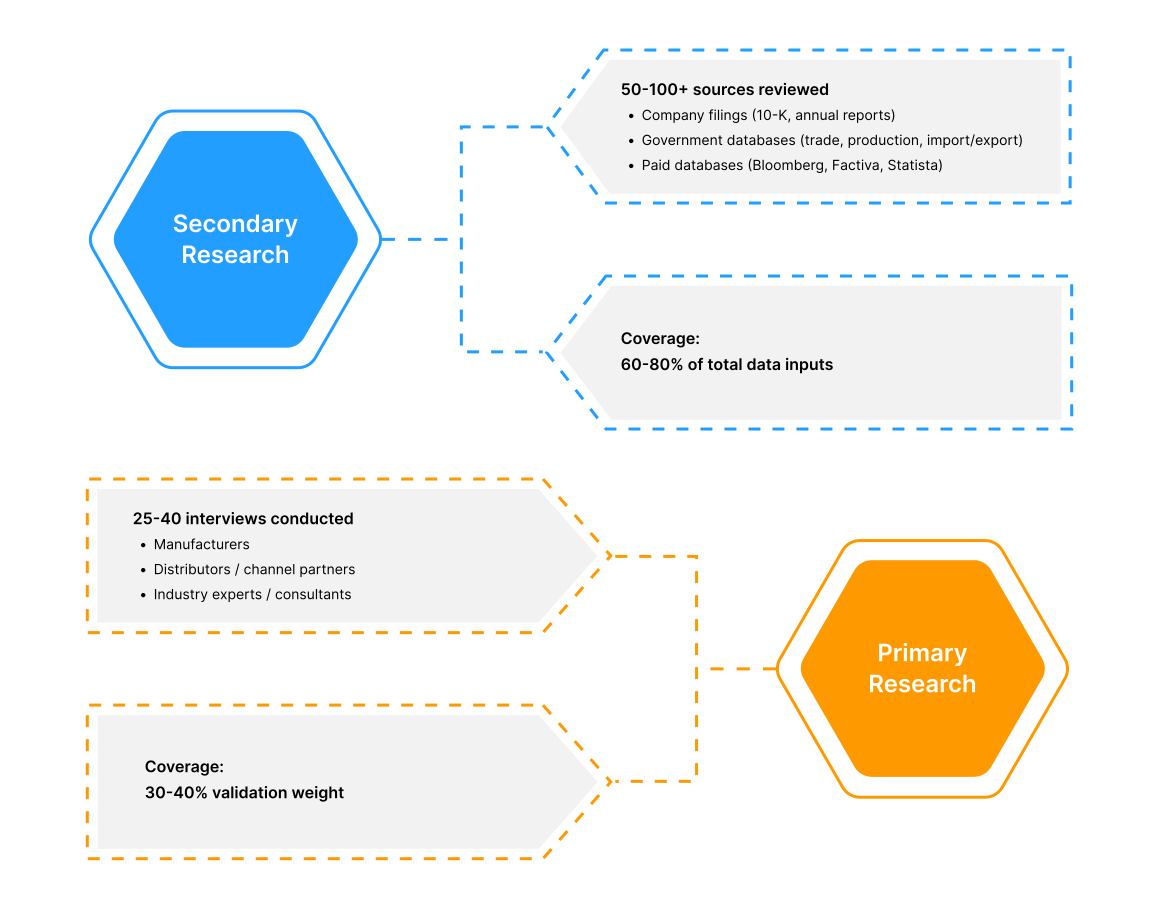
- Once the foundation is set, we collect data from all-around of sources, including company reports, government databases, and paid industry platforms.
- Our research is based on secondary data, which helps us build a strong understanding of the market across regions and industries. Then we validate this information through primary research by speaking directly with industry experts, companies, and stakeholders.
- By combining secondary and primary research, we ensure that our market insights are accurate, practical, and closely aligned with real market conditions.
Data Collection
We gather information from both public and verified sources:
Data Structuring
Step 3:
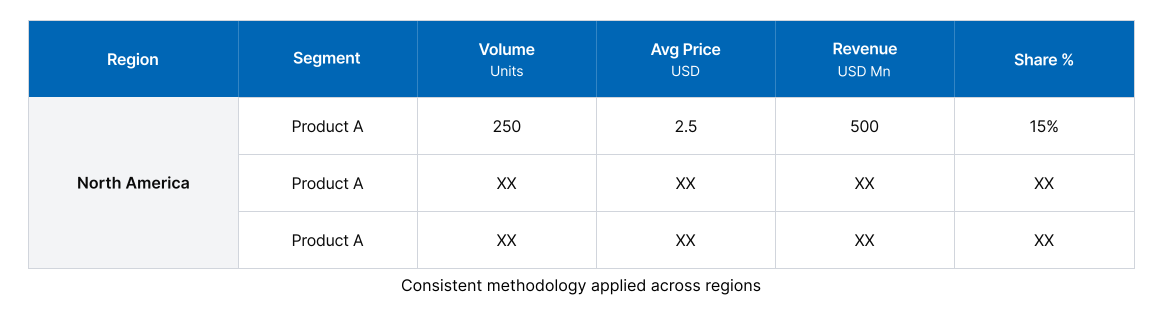
- All collected data is organized into a consistent format to ensure accurate analysis. Since inputs come from multiple sources, they are standardized and aligned before use.
- The data is segmented by product, application, and region, and mapped across a defined historical period (2020–2024). All values are converted into common units (USD Mn/Bn), and volume and pricing are aligned where required to estimate revenue.
- Any overlaps or inconsistencies are reviewed and adjusted to maintain accuracy (<5% variance threshold).
- The result is a structured dataset that allows for clear comparison across regions and supports reliable analysis and forecasting.
Structured Market Dataset, USD Mn/Bn
4. Data Structuring
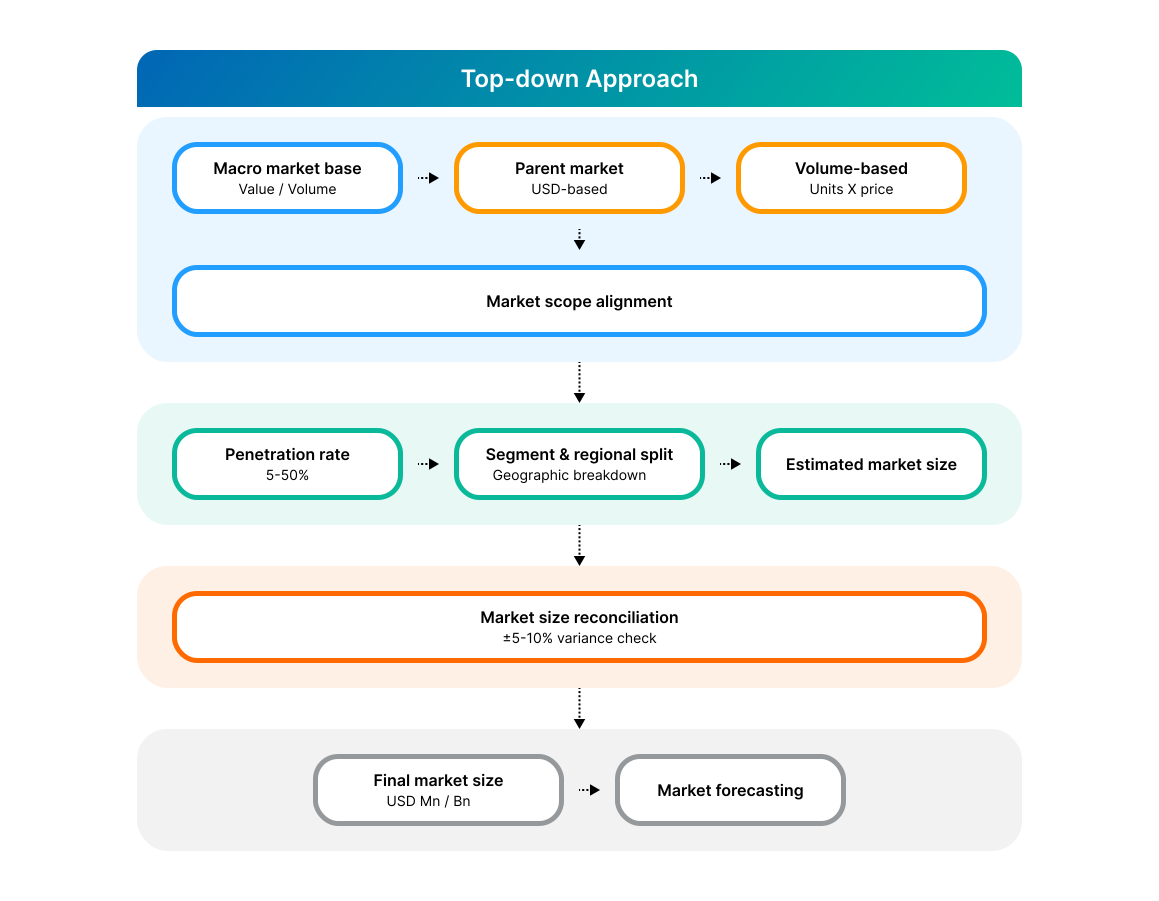
Step 4: TOP-DOWN APPROACH
- We start with the overall market size at a global or macro level.
- The market is then narrowed down based on scope and industry relevance.
- We apply penetration rates and split the data by region and segment.
- This helps us estimate the market size for specific segments.
- The numbers are validated through cross-checks to ensure accuracy.
Step 5: BOTTOM-UP APPROACH
- We begin by analyzing data from leading companies in the market.
- Revenue data is collected and mapped across different segments.
- The data is then aggregated to estimate the total market size.
- To fill in any gaps, adjustments are made based on industry standards.
- Validation checks make sure that the results are correct.
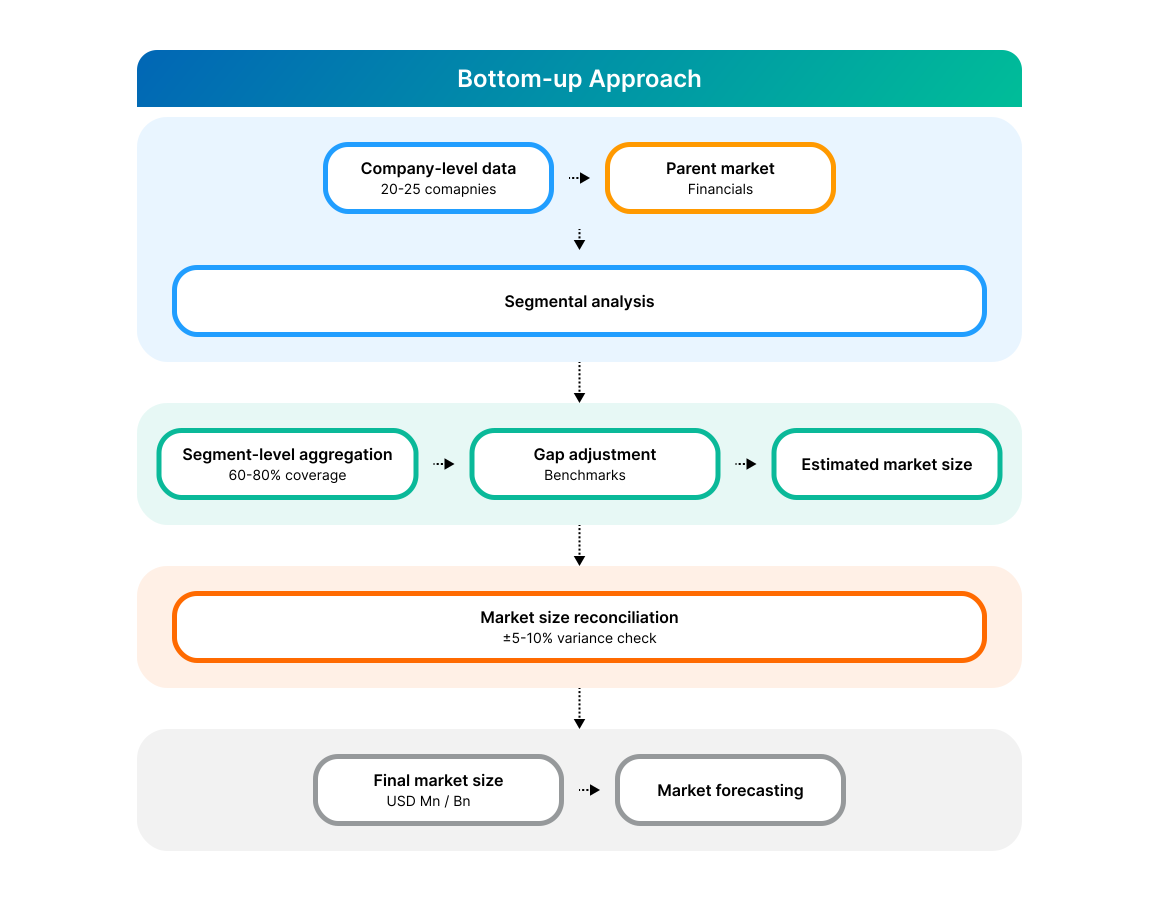
5. Data Structuring
Step 6:
At Polaris Market Research, we employ a methodical forecasting strategy. This approach blends the analysis of historical data with real-time market validation. To forecast future trends with precision, we examine past patterns, pricing fluctuations, and the interplay of supply and demand. To ensure our conclusions reflect the present market landscape, we actively seek input from industry experts and key stakeholders.
To refine our predictions, we carefully consider critical elements such as market drivers and restraints, fluctuations in raw material costs, emerging technologies, and the production capabilities of various regions. Furthermore, we assess regulatory frameworks and potential policy shifts to gauge their potential impact on market expansion.
All this information is synthesized to generate precise forecasts for each segment and region. These forecasts illuminate the current state of the market and highlight forthcoming opportunities.
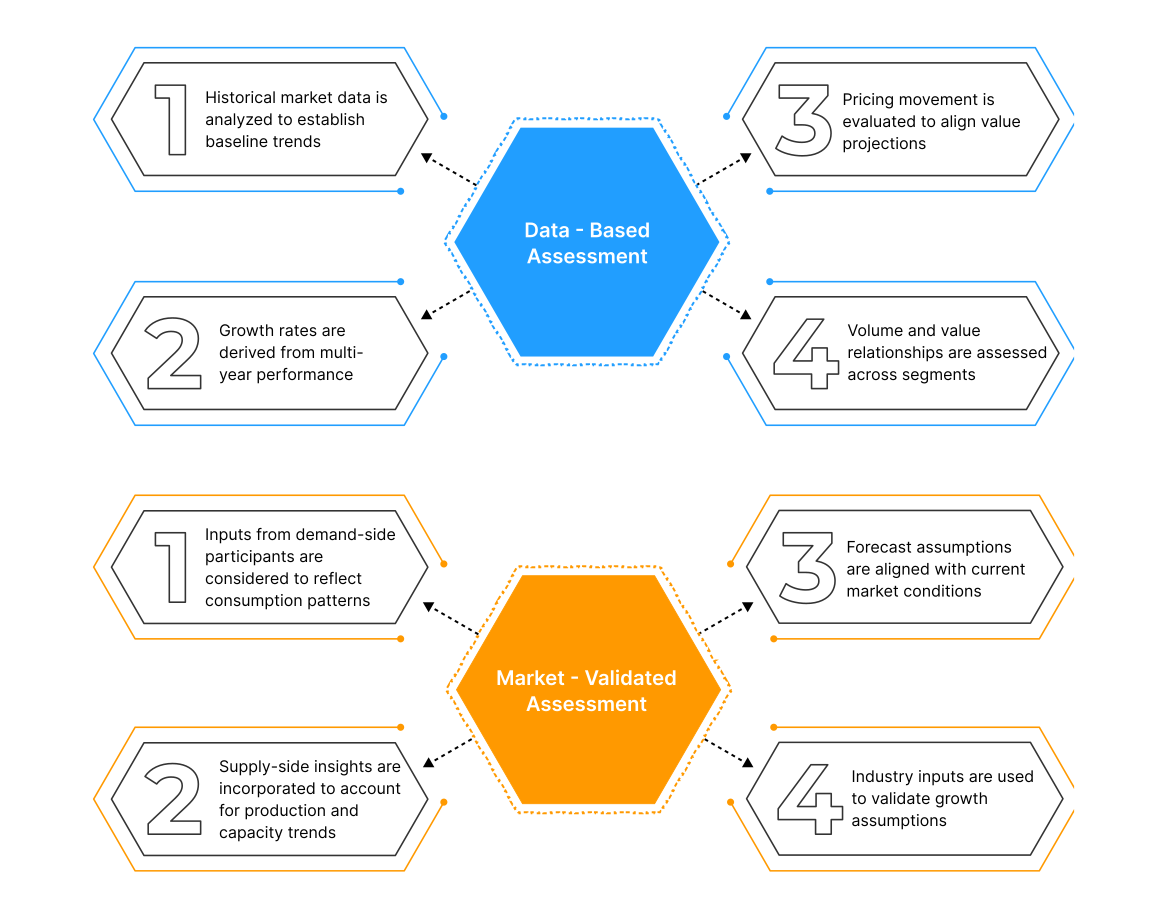
6. Data Structuring
Step 7:
In the final stage, we validate all our estimates using a triangulation method, where data is cross-checked from multiple reliable sources, like company data, primary interviews, and secondary research. This helps us make sure that our numbers are correct and fit with the rest of the market.
This process involves verifying data consistency across various segments and geographic areas. It also requires comparing historical trends with the assumptions support the forecast. Any discrepancies involve adjustments to ensure everything remains aligned and dependable.
Once the data is finalized, we prepare the final outputs, including market size estimates, segment-wise breakdowns, and growth metrics. These are delivered in structured formats such as tables, charts, and data files for easy analysis and use.
We collaborate closely with clients, ensuring the final products align with their requirements. This includes offering tailored adjustments, supplementary data analyses, and continuous assistance. Furthermore, we monitor market trends post-delivery, providing updates and refinements to maintain the insights' relevance as time passes.
Post-delivery, we continue to monitor market shifts, offering updates and adjustments to ensure the insights remain relevant over time.
Validation
Triangulation Framework
- Company-level data
- Primary inputs from industry participants
- Secondary benchmarks and published data
- Variance maintained within ±5-10%
- Adjustments applied to align estimates
- Segment values validated against overall market structure
Quality Check
Data Consistency & Integrity
- Segment totals validated to 100%
- Regional estimates aligned with global market size
- Historical trends compared against forecast outputs
- Assumptions reviewed for cross-segment and regional alignment
Output & Delivery
Final Outputs
- Market size estimates (USD Mn/Bn)
- Segment-wise distribution (%)
- Growth metrics (CAGR %)
- Structured tables and charts
- Segment-level datasets
- Excel-based data files for further analysis
Client Alignment & Support
- Deliverables are aligned with defined client requirements and scope
- Custom data cuts and segment splits are incorporated as required
- Post-delivery queries are addressed through analyst interactions
- Additional clarifications and data support are provided upon request
Client Continuity & Updates
- Market developments are tracked post-delivery to capture changes in key trends
- Updated data and revisions are provided based on new market inputs
- Additional refinements and data cuts are shared as required
- Continued analyst engagement supports evolving client requirements


