
Biotechnology Market Analysis, Trends, Industry Report, 2026-2034
REPORT DETAILS
Biotechnology Market Summary
The global biotechnology market size was valued at USD 1.85 trillion in 2025 and is expected to grow at a CAGR of 13.5% during 2026–2034. The drivers are developments in CRISPR-based gene therapy, AI drug discovery, heightened prevalence of chronic diseases, and government and R&D investments.
Market Statistics
Key Takeaways
-
The DNA sequencing segment dominated the market in 2025, accounting for 38.75% of the total market share due to growing government expenditures on genetic studies and development in the area.
-
The health segment is poised for strong expansion and is projected to register a CAGR of 9.60% as the global disease burden continues to rise.
-
The North America biotechnology market accounted for 42.30% of the market share in 2025, driven by leading players, strong R&D, and heavy healthcare spending.
-
The Asia Pacific biotechnology market is growing at a strong rate and is expected to witness a CAGR of 10.85%, supported by higher investment, improved healthcare infrastructure, beneficial government policies, and strategic expansion by leading players.
Note: Figures and projections outlined in this report are the result of Polaris Market Research’s proprietary analytical processes, grounded in the latest available datasets and market observations.
Industry Dynamics
- Expansion of biotechnology innovation is being fueled by the development of personalized medicine and orphan drug formulations, drawing new businesses and increasing revenue in the market.
- The rise in chronic diseases is being compounded by advancements in biotechnology and personalized medicine, prompting the industry to develop more specific and innovative remedies for genetic and chronic conditions.
- Rising demand for biotechnology devices in agriculture is propelling the market growth.
- High R&D expenses, strict and complicated regulatory requirements, and scalability challenges in the production stage can lead to delays in the commercialization of products.
- The major constraint on the biotechnology industry is the high cost and complexity of regulatory approvals for research and development. Commercialization challenges for new biotechnological products may also hinder market expansion.
AI Impact on Biotechnology Market
- Artificial intelligence (AI) enhances drug discovery by quickly searching across diverse datasets to identify the lead compounds.
- AI in biotechnology improves precision medicine by personalizing treatment programs based on an individual's genetic data.
- AI-driven predictive analytics help improve forecasts of disease outbreaks, and early interventions are also possible.
- AI is used in bioinformatics to analyze biological data to create new vaccines and treatments.
- Machine learning models make biotechnology clinical trials growth more efficient by identifying suitable participants and predicting outcomes.
- In addition to automation, the applications of generative AI in biotech are expanding into the realms of target identification, protein design, antibody design optimization, and biomarker exploration, making it possible to reduce the early-stage failure rates.
- AI is also enabling clinical trial optimization through intelligent site identification, patient stratification, and real-time safety signal monitoring, especially for difficult-to-treat conditions or orphan diseases.
Source: Polaris Market Research Analysis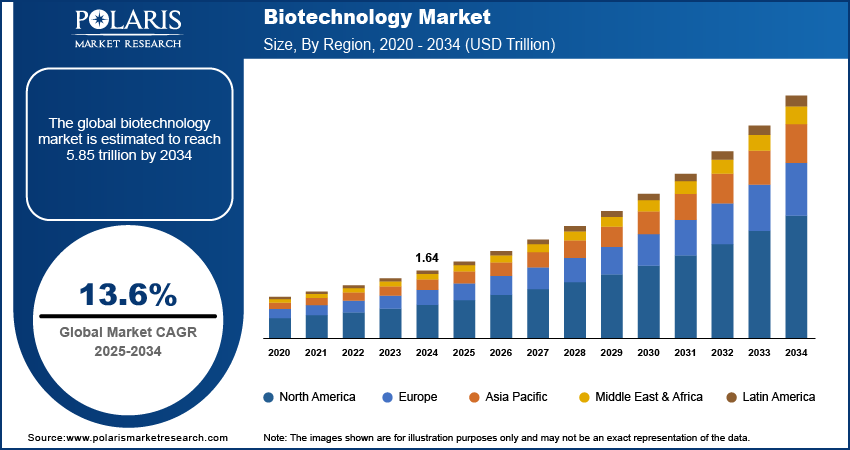
Want a Deeper Look at Key Market Players? Download Sample Report
Biotechnology is emerging as a key driver of advancement in the healthcare and bio-industrial sectors. Biotechnology facilitates the development of advanced care through cell and gene therapy and the establishment of next-generation diagnostics. Biotechnology supports the development of sustainable biotech platforms for the agricultural and industrial sectors. This factor has paved the way for expanding the market and developing business models in the biotech industry.
There have been important breakthroughs in gene therapies, especially those associated with CRISPR technology, which are opening avenues for curing genetic diseases. Moreover, AI technology is also driving faster drug discovery and development. So, the integration of AI in drug discovery is being increasingly done. The growth of chronic diseases has created the need for innovative biotechnology solutions.
What is Biotechnology Market?
Biotechnology is the application of biological systems, organisms, or their derivatives to develop products and technological solutions. Biotech combines expertise from several domains, including biology, chemistry, and engineering. It provides solutions in healthcare, agriculture, and environmental sustainability. These include biotechnology healthcare applications and innovative treatments.
Various government initiatives to modernize regulation and reimbursement are major market drivers. The growing use of personalized medicine and the availability of various orphan medicinal forms create biotechnology market opportunities. The entry of new, innovative players into the market also fuels this market's growth.
Biotechnology is emerging as a key driver of advancement in the healthcare and bio-industrial sectors. Biotechnology facilitates the development of advanced care through cell and gene therapy and the establishment of next-generation diagnostics. Biotechnology supports the development of sustainable biotech platforms for the agricultural and industrial sectors. This factor has paved the way for expanding the market and developing business models in the biotech industry.
A robust clinical trial pipeline and available funding opportunities in tissue engineering and regeneration technologies propel the biotechnology market. According to the Alliance for Regenerative Medicine, companies involved in cell and gene therapies received over USD 23.1 billion in global investments in 2021, marking a 16% increase from the previous year's total of USD 19.9 billion. The clinical success of key gene therapy players in 2021, such as positive outcomes from Intellia Therapeutics and Regeneron's in vivo CRISPR treatment for transthyretin amyloidosis, has contributed to market growth.
The biotechnology value chain typically ranges from discovery research (targets, platforms, and datasets) to preclinical validation and clinical development. It also includes GMP manufacturing for biologics/cell therapy, as well as downstream commercialization at the market access, reimbursement, and distribution levels. Value often concentrates in defensible platforms, scalable manufacturing capability, and late-stage pipelines with clear regulatory and reimbursement pathways.
Driver Analysis
Increasing Prevalence of Chronic Illnesses
There has been a rise in the prevalence of chronic diseases. This has been due to an increasingly sedentary lifestyle, the expansion of the middle class, and rising urbanization. This shift contributes to higher rates of obesity. It also results in increased occurrence of diseases such as malaria, HIV, diabetes, TB, and genetic abnormalities. In addition, the market is driven by the growing incidence of target diseases and genetic disorders; advancements in polymerase chain reaction technology; and rising investments, funds, and grants that fuel scientific research. The bio-pharma sector has played a crucial role in preventing chronic diseases by focusing on personalized care. This trend seems to lay the groundwork for individual procedural healthcare requirements and could be beneficial in the care of hereditary genetic disorders. Additionally, innovative concepts such as cell therapy are entering the marketplace, exhibiting the potential for effective care for certain cancers.
Growing Demand in Agriculture
The market is growing due to increasing demand for biotechnology products in agricultural sectors such as micropropagation, molecular breeding, tissue culture, traditional plant breeding, and the development of genetically modified crops. The increasing popularity of herbicide-tolerant and insect-resistant seeds also fuels the growth of the market. The use of tissue culture technology for the growth and development of new rice strains and disease- and pest-free banana plant species in South Asia and Africa, and for the creation of disease-free and nutritious plant species, fuels the use of biotechnology in agriculture, thereby fueling the industry’s value.
Source: Polaris Market Research Analysis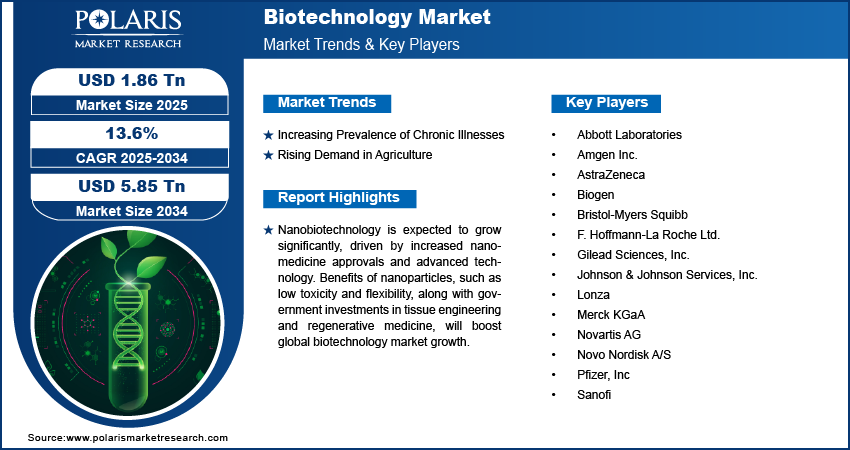
Get Full Segment-Level Forecasts & Insights: Download Sample Report
Segment Analysis
Assessment by Technology Outlook
The biotechnology market segmentation based on technology includes fermentation, tissue engineering and regeneration, chromatography, PCR technology, nanobiotechnology, cell-based assays, DNA sequencing, and others. The DNA sequencing segment accounted for the largest share in 2024 due to an increase in government funding for genetic research. Government funding in genetic research has facilitated the expanded applications of sequencing, facilitating a better understanding of diseases. For instance, in May 2021, the University of Pittsburgh Graduate School of Public Health and Washington University School of Medicine received a USD 10.7 trillion NIH grant for the exploration of the genetic foundation of Alzheimer's disease, showcasing an increase in funding for genetic research, thereby driving the segmental growth in the global industry. In addition, the increased uptake of next-generation sequencing (NGS) has been driven by large-scale population genomics projects, the growing number of companion diagnostics procedures in the precision oncology market, and the continued decline in sequencing costs.
Nanobiotechnology is also likely to register significant growth, driven by rising approvals in nanomedicine and the introduction of new technologies. Being less toxic, smaller in size, and more versatile in their chemical properties, nanoparticles offer advantages for overcoming the challenges posed by traditional delivery methods for generic versions of medications. These attributes support the development of targeted drug delivery systems. And the rising regulatory approvals of nanomedicines are accelerating their transition from clinical research to commercial therapeutics. In addition, the field of tissue engineering and regenerative medicine accounts for a noteworthy share. This is supported by government and private investments, as well as substantial healthcare expenditure. The presence of several established and new players also contributes to the growth.
Assessment by Application Outlook
The biotechnology market segmentation, based on application, includes bioinformatics, food and agriculture, health, industrial processing, natural resources and environment, and others. The health segment of the market is expected to experience significant growth due to the increasing burden of diseases worldwide. The global population is aging. And the prevalence of chronic conditions like cancer, diabetes, and heart disease is rising. As a result, there has been greater demand for sophisticated treatments and therapies. This is where biotechnology comes into play, with its main focus on developing new medicines, vaccines, and diagnostic solutions. Additionally, the growth of personalized medicine and gene therapy is driving the segment.
Source: Polaris Market Research Analysis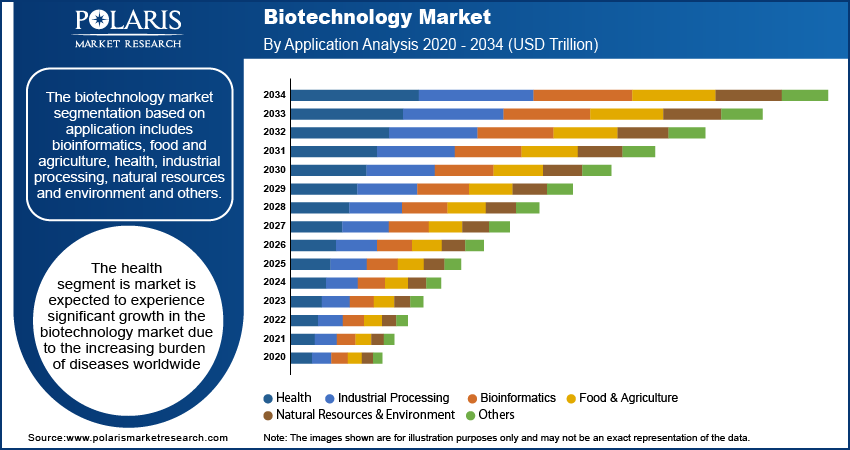
Need Granular Data Across All Market Segments? Request Customization
Regional Analysis
In 2025, the North America biotechnology market accounted for more than 40% of the global market share. The growth of the regional market is driven by various factors. They include the presence of key players, extensive research and development activities, and substantial healthcare expenditure. The region exhibits a notable penetration of genomics, proteomics, and cell biology-based platforms, thereby accelerating the adoption of life sciences tools. This is further reinforced by a dense network of academic medical centers, mature venture capital funding, a strong intellectual property ecosystem, and well-set-up regulatory pathways to enable the faster translation of research into commercial products. Additionally, the increasing prevalence of chronic diseases and the growing adoption of personalized medicine applications for treating life-threatening disorders are anticipated to have a positive impact on biotechnology market growth in the North American region.
The Asia Pacific biotechnology market is experiencing significant growth. This growth is due to increasing investments, enhancements in healthcare infrastructure, favorable government initiatives, and strategic expansion efforts by key market players. Notably, in February 2022, Moderna Inc. disclosed plans for a geographic expansion of its commercial network in Asia. It established new subsidiaries in Malaysia, Singapore, Hong Kong, and Taiwan. Furthermore, collaborations in the biopharmaceutical sector, such as the strategic partnership between Kiniksa Pharmaceuticals and Huadong Medicine for the development and commercialization of Kiniksa's ARCALYST and mavrilimumab in the Asia-Pacific region, showcase the strategic expansion efforts by key market players. At the same time, the region is focusing on the creation of a stronger biotechnology ecosystem. It is doing so through the expansion of biomanufacturing facilities and increasing the number of clinical trials. Together, these efforts help biotech companies accelerate scale up.
Source: Polaris Market Research Analysis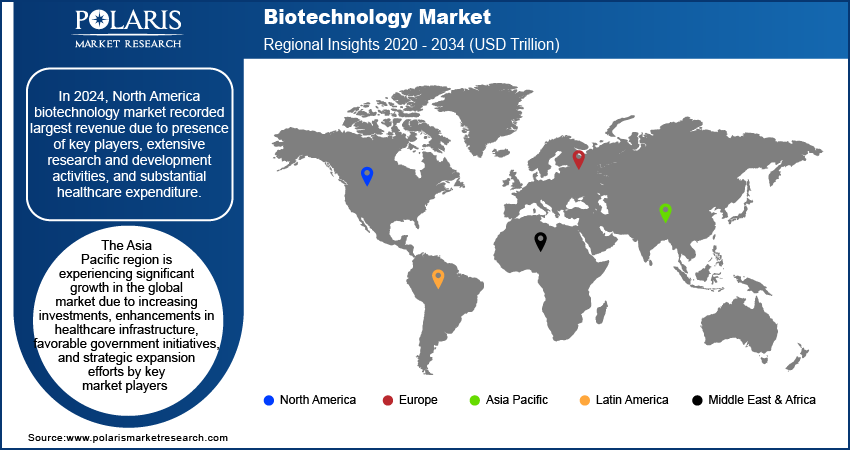
Curious About Regional Market Performance? Request Customization
Key Players & Competitive Analysis Report
The biotechnology industry is constantly evolving. There are many firms putting effort into innovating and emerging as distinct. The major international firms are controlling this industry through extensive research and development and advanced methods. The biotechnology market companies are pursuing strategies such as mergers and acquisitions, collaborations, and partnerships to enhance their product lines and expand into emerging markets.
New companies are impacting the industry by introducing innovative products to meet the demand of specific market sectors. This competitive landscape is amplified by continuous progress in product offerings. Major players in the biotechnology market include Abbott Laboratories, Amgen Inc., AstraZeneca, Biogen, Bristol-Myers Squibb, F. Hoffmann-La Roche Ltd., Gilead Sciences, Inc., Johnson & Johnson Services, Inc., Lonza, Merck KGaA, Novartis AG, Novo Nordisk A/S, Pfizer, Inc., and Sanofi.
F. Hoffmann-La Roche Ltd
Roche has been known for excellent integration between biologics and diagnostics, giving it a competitive edge in personalized healthcare. Roche has a deep commitment to oncology, driven by its complementary strengths in immunology, neuroscience, ophthalmology, and infectious diseases. An important strategic thrust area that Roche has maintained over the years has been to combine targeted medicines with companion diagnostics to enhance outcomes. In recent years, Roche has maintained its pipeline strength through its chosen partnerships and acquisitions. The focus of these strategic developments is to sustain its growth in specialties and personalized healthcare in the coming years.
Novartis AG
Novartis is a global innovator with strong R&D capabilities in small molecules and biologics, and a diverse clinical and manufacturing footprint. Its main therapeutic areas of interest lie in oncology, cardio-renal, immunology, neuroscience, hematology, and ophthalmology. In addition to restructuring its portfolio into higher-value offerings, Novartis has leveraged other partnerships. They include its alliance with Alnylam Pharmaceuticals to advance RNAi therapeutics. Simultaneously, Novartis is investing heavily in next-gen manufacturing and targeted acquisitions to further establish itself at the forefront of the speciality drugs segment.
Key Companies
- Abbott Laboratories
- Amgen Inc.
- AstraZeneca
- Biogen
- Bristol-Myers Squibb
- F. Hoffmann-La Roche Ltd.
- Gilead Sciences, Inc.
- Johnson & Johnson Services, Inc.
- Lonza
- Merck KGaA
- Novartis AG
- Novo Nordisk A/S
- Pfizer, Inc
- Sanofi
Industry Developments
- February 2025: Layn Natural Ingredients unveiled an upgraded biotechnology facility. The company revealed that the new facility specializes in enzyme-based technology and precision fermentation. It will enhance the large-scale production of sustainable bioactive ingredients. [Source: layncorp.com]
- January 2025: Biosphere introduced its new UV-sterilized bioreactor. According to Biosphere, the launch marks a major breakthrough in industrial biotech. It will enable a significant reduction in capital intensity that has hindered the sector for decades. [Source: globenewswire.com]
- May 2025: Nestlé announced a strategic reorganization in its global research and development activities. This included the enhancement of its biotechnology strength and the establishment of a new deep technology center in Orbe, located in Vaud canton. [Source: www.nestle.in]
- October 2024: The Unified Website for Biotechnology Regulation was launched by the USDA, EPA, and FDA. This biotechnology regulatory landscape website contains information regarding regulatory requirements for GM microorganisms. This move is aimed at improving transparency and coordination in biotech regulation. [Source: www.epa.gov/}
Future of Biotechnology Market
The growth of the biotechnology market is projected to be steady in the coming decade due to innovations in areas like gene therapy, AI in biotechnology, and personalized medicine. The sectors where growth in this industry is expected include biotechnology healthcare applications, agriculture, and industrial biotechnology. Investment and favorable government policies in this industry, coupled with the introduction of innovative products, will contribute significantly to its rapid development.
Research Methodology
The biotechnology market size analysis and forecasts for growth rate are obtained by combining secondary research methodology with primary research. The secondary research methodology involves company documents, press releases, and industry databases. Primary inputs include expert research network interviews pertaining to the biotechnology industry value chain. These findings are then validated through triangulation approaches, which involve bottom-up and top-down analysis.
Biotechnology Market Segmentation
By Technology Outlook (Revenue – USD Trillion, 2021–2034)
- Fermentation
- Tissue Engineering and Regeneration
- Chromatography
- PCR Technology
- Nanobiotechnology
- Cell-based Assays
- DNA Sequencing
- Others
By Application Outlook (Revenue – USD Trillion, 2021–2034)
- Bioinformatics
- Food & Agriculture
- Health
- Industrial Processing
- Natural Resources & Environment
- Others
By Regional Outlook (Revenue – USD Trillion, 2021–2034)
- North America
- US
- Canada
- Europe
- Germany
- France
- UK
- Italy
- Spain
- Netherlands
- Russia
- Rest of Europe
- Asia Pacific
- China
- Japan
- India
- Malaysia
- South Korea
- Indnesia
- Australia
- Vietnam
- Rest of Asia Pacific
- Middle East & Africa
- Saudi Arabia
- UAE
- Israel
- South Africa
- Rest of Middle East & Africa
- Latin America
- Mexico
- Brazil
- Argentina
- Rest of Latin America
Biotechnology Market Report Scope
| Report Attributes | Details |
| Market Size in 2025 | USD 1.85 trillion |
| Market Size in 2026 | USD 2.10 trillion |
| Revenue Forecast by 2034 | USD 5.80 trillion |
| CAGR | 13.5% |
| Base Year | 2025 |
| Historical Data | 2022–2024 |
| Forecast Period | 2026–2034 |
| Quantitative Units | Revenue in USD trillion, 2021–2034 and CAGR from 2026 to 2034 |
| Report Coverage | Revenue Forecast, Market Competitive Landscape, Growth Factors, and Trends |
| Segments Covered |
|
| Regional Scope |
|
| Competitive Landscape | Biotechnology Industry Trend Analysis (2025) Company profiles/industry participants profiling include company overview, financial information, product/service benchmarking, and recent developments |
| Report Format | PDF + Excel |
| Customization | Report customization as per your requirements with respect to countries, regions, and segmentation. |
Source: Polaris Market Research Analysis
biotechnology market FAQ's
The biotechnology market was valued at USD 1.85 trillion in 2025. It is projected to reach USD 5.80 trillion by 2034.
The market is driven by innovations in gene therapy and precision medicine. The market also benefits from rising government and R&D investments.
Increasing preference for personalized medicine will become a key market trend. The rising prevalence of chronic diseases is one of the important trends. Improvements in CRISPR-based gene therapy and AI-based drug discovery are significant trends in biotechnology.
DNA sequencing led with a 38.75% revenue share in 2025. Increased government funding for genetic research supported this dominance. The nanobiotechnology segment is growing rapidly. This is due to increasing approvals of nanomedicine products. Also, surging advances in targeted drug delivery boost the expansion.
North America dominated with over 42.30% market share in 2025. The leading position is driven by the presence of leading biotech players and strong R&D activities. Also, mature venture capital funding and substantial healthcare expenditure boost the dominance.
The health segment is poised for strongest growth with a CAGR of 9.60% during the forecast period. The growth is fueled by rising global disease burden and increasing aging populations. The growing demand for personalized medicine and gene therapy would boost the growth.
Download Sample Report of biotechnology market
Please fill out the form to request a customized copy of the research report.


