
Bisabolene Market Size, Share Global Analysis Report, 2023-2032
REPORT DETAILS
The global bisabolene market was valued at USD 2.86 million in 2022 and is expected to grow at a CAGR of 3.9% during the forecast period.
Bisabolene is a sesquiterpene, mostly found in essential oil extracts. Sesquiterpenoids, which are primarily generated from plants, animals, or microbes, are a broad class of terpenoid natural products having a variety of uses in medicine, cosmetics, fragrances, and biofuels. The widespread use in the pharmaceutical space is further propelling research and development activities, fueling the demand for bisabolene in the coming years.
Source: Polaris Market Research Analysis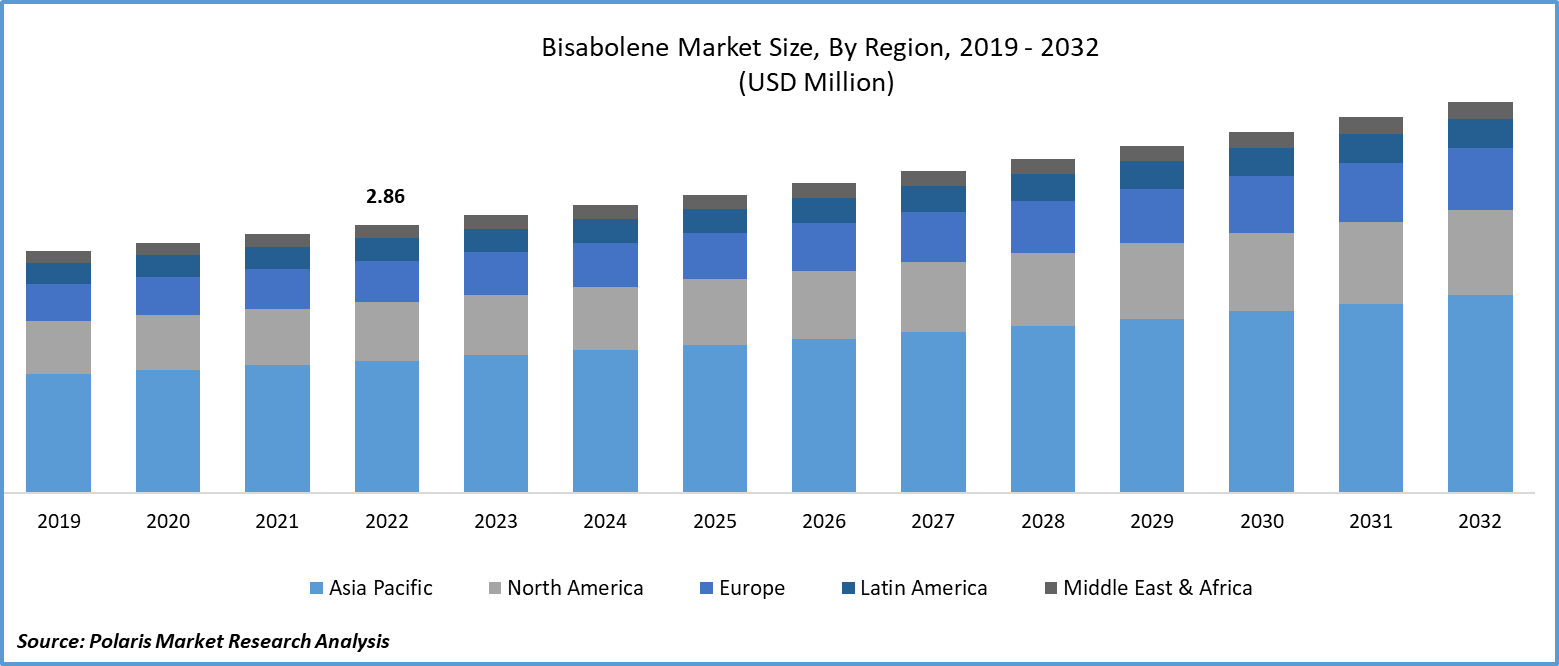
To Understand More About this Research: Download Sample Report
- For instance, in November 2021, a study published in PubMed Central focused on producing bisabolene with the use of synthetic biology. This study found a new method of production, which is from waste cooking oil, by metabolic engineering.
Moreover, the most fundamental monocyclic sesquiterpene, bisabolene, which is also a bioactive chemical, is frequently found in natural plant essential oils. Bisabolene has historically been widely utilized as a high-value fragrance and flavor ingredient in various sectors due to its pleasant fruity and balsamic perfume. This historical significance is further boosting the demand for bisabolene in the future.
However, the lower availability of bisabolene plants is hampering awareness among people due to their higher prices and the prevalence of lower production in the marketplace. Furthermore, producers are not coming forward due to the lower demand from consumers, restraining the growth of the market.
Source: Polaris Market Research Analysis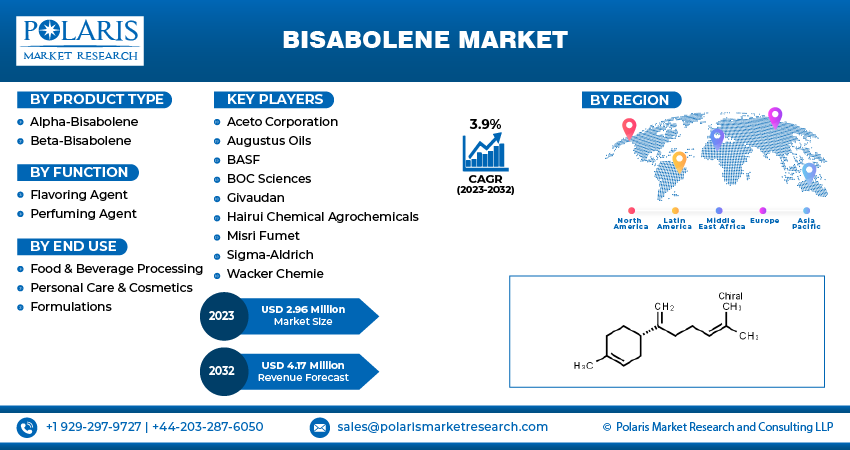
For Specific Research Requirements: Request for Customized Report
Growth Drivers
- Growing demand for natural fragrances and flavors
The bisabolene market is being significantly influenced by the increasing demand for natural fragrances and flavors. Consumers are increasingly searching for products that are free from synthetic or artificial additives. This trend applies to fragrances and flavors in a variety of consumer goods, including cosmetics, perfumes, and food products. Bisabolene is a naturally occurring compound found in certain plants' essential oils and provides a unique and pleasant aroma and taste. Because of its natural appeal, it is a desirable ingredient for the fragrance and flavor industry, where it can be used to replace synthetic alternatives.
Furthermore, Bisabolene aligns with the trend of sustainable and eco-friendly solutions, as environmental and health concerns continue to rise. It can be sourced from renewable plant materials, adding to its popularity in the market. The use of Bisabolene in the production of natural fragrances and flavors, which are increasingly utilized in a broad range of consumer products, is expected to boost the growth of the Bisabolene market in the coming years.
Report Segmentation
The market is primarily segmented based on product type, function, end use and region.
| By Product Type | By Function | By End Use | By Region |
|
|
|
|
Source: Polaris Market Research Analysis
To Understand the Scope of this Report: Request Customization
By Product Type Analysis
- Alpha-Bisabolene segment is expected to witness the highest growth during the forecast period
The Alpha-Bisabolene segment is projected to grow at a CAGR during the projected period, primarily driven by its wide range of applications in the pharmaceutical sector. This is frequently used in traditional medicine for potential health advantages and general well-being. Nutritional studies support Alpha-Bisabolol's positive effects on health. Numerous experimental research studies have shown that it has pharmacological features, including antibacterial, anticancer, antinociceptive, and neuroprotective effects.
According to the 2022 review on alpha-bisabolene properties, researchers comprehensively demonstrated its therapeutic and protective properties. It can be used for potential health benefits based on pharmacological effects, underlying molecular mechanisms, and advantageous pharmaceutical properties. The ongoing studies on applications of alpha-bisabolene are expanding its market.
The Beta-Bisabolene segment registered a substantial revenue share in 2022, largely attributable to its ability as a natural flavoring agent. This ingredient is highly incorporated in the food and beverage industry to meet ongoing shifts in consumer food preferences towards a healthy diet. The growing demand for fragrance is further enhancing the demand for beta-bisabolene due to its effective odor, driving a larger consumer base for the products.
By Function Analysis
- Perfuming Agent segment accounted for the largest market share in 2022
The perfuming agent segment witnessed the largest market share. This is primarily driven by the rising demand for perfuming agents in various consumer products, including soaps, shampoos, perfumes, locations, and more. Countries are witnessing demand for products with a higher fragrance, driven by rising disposable income in the population. The growing personal care industry at a rapid pace is driving the growth of perfuming agents, which in turn fuel the demand for bisabolene in the marketplace.
The flavoring agent segment is projected to grow at the fastest rate over the next few years due to the rising demand in the food processing industry. Consumers are highly showing preferences for food items with appealing flavors and organic flavoring ingredients. The growing awareness about chemical and conventional flavoring agents is further boosting the demand for bisabolene by food manufacturers to meet ongoing consumer demands.
By End Use Analysis
- Personal Care and Cosmetics segment held the significant market revenue share in 2022
The personal care and cosmetics segment witnessed a significant market share in revenue in 2022, which is highly attributable to the rising number of working professionals all over the world, driven by rising employment opportunities leading to rising disposable income among a larger number of people, driving personal care and cosmetics products. The prevalence of access to information through internet platforms is emphasizing the demand for natural ingredients like bisabolene. This trend is expected to continue in the next few years due to the growing female working population, which may fuel demand for beauty and personal care products.
Regional Insights
- Asia Pacific region dominated the global market in 2022
Asia Pacific held the largest share and is willingly to continue its dominance over the forecast period, due to the rising demand for natural fragrances and flavors. Bisabolene is derived from essential oils of certain plants and is gaining popularity as an ingredient in perfumes, cosmetics, and food products. The Asia Pacific region provides a significant market opportunity for Bisabolene manufacturers and suppliers. Additionally, Bisabolene is finding applications in traditional medicines and aromatherapy, which is further contributing to market growth. However, challenges such as the availability of natural sources, quality control, and cost of production need to be addressed.
The Europe region is expected to be the fastest growing region with a significant rate during the study period due to the higher nutritional content and applications of pharmaceutical products. Many other natural chemical compounds, including the natural sweetener hernandulcin, are biosynthesized using bisabolenes as intermediates. β-Bisabolene has a balsamic smell and is recognized in Europe as a food ingredient.
Key Market Players & Competitive Insights
The bisabolene market is expected to witness higher competition owing to the growing number of companies specializing in the essential oil industry to meet ongoing consumer demand in the marketplace. The growing partnerships, product upgrades, and mergers and acquisitions among the companies are enhancing their market share and fueling market expansion in the coming years.
Some of the major players operating in the global market include:
- Aceto Corporation
- Augustus Oils
- BASF
- BOC Sciences
- Givaudan
- Hairui Chemical Agrochemicals
- Misri Fumet
- Sigma-Aldrich
- Wacker Chemie
Recent Developments
- In November 2023, Escentric Molecules introduced Molecule 01 + Ginger, which is an aromatic spicy aroma for men as well as women made from ginger essential oil. It is made up of sesquiterpenes, including β-bisabolene.
Bisabolene Market Report Scope
| Report Attributes | Details |
| Market size value in 2023 | USD 2.96 million |
| Revenue forecast in 2032 | USD 4.17 million |
| CAGR | 3.9% from 2022 – 2032 |
| Base year | 2022 |
| Historical data | 2019 – 2021 |
| Forecast period | 2023 – 2032 |
| Quantitative units | Revenue in USD million and CAGR from 2023 to 2032 |
| Segments covered | By Product Type, By Function, By End Use, By Region |
| Regional scope | North America, Europe, Asia Pacific, Latin America, Middle East & Africa |
| Customization | Report customization as per your requirements with respect to countries, region and segmentation. |
Source: Polaris Market Research Analysis
Download Sample Report of Bisabolene Market Size, Share Global Analysis Report, 2023-2032
Please fill out the form to request a customized copy of the research report.


