
Blended Spices Market Size, Trends Analysis Report, 2026-2034
REPORT DETAILS
Market Statistics
What is the Current Market Size?
The global blended spices market was valued at USD 25.42 Billion in 2025 and is expected to grow at a CAGR of 5.30% during the forecast period.
Market Statistics
- 2025 Market Size: USD 25.42 billion
- 2034 Projected Market Size: USD 40.39 billion
- CAGR (2026-2034): 5.30%
- Asia Pacific: Largest market in 2025
Blended spices refer to a mixture of different spices that are combined to create a unique and complex flavor profile. This can be done by combining whole spices, ground spices, or a combination of both. The spices are typically mixed in specific proportions to achieve the desired flavor, and they can be used in a variety of dishes, such as curries, stews, soups, and marinades.
The market is rapidly growing since changing preferences, increasing disposable income, and a growing interest in international culinary meals are all contributing to the rising demand for blended spices. Busy consumers are seeking convenient ways to add flavor and variety to their meals, and blended spices offer a simple solution. The trend towards home cooking and experimentation with new recipes has further boosted the demand for blended spices. The market is also benefiting from the increasing focus on health and wellness, as many consumers view spices as a natural and healthy way to add flavor to their meals.
The research report offers a quantitative and qualitative analysis of the blended spices market to enable effective decision-making. It covers the key trends and growth opportunities anticipated to have a favorable impact on the market. Besides, the study covers segment and regional revenue forecasts for market assessment.
Source: Polaris Market Research Analysis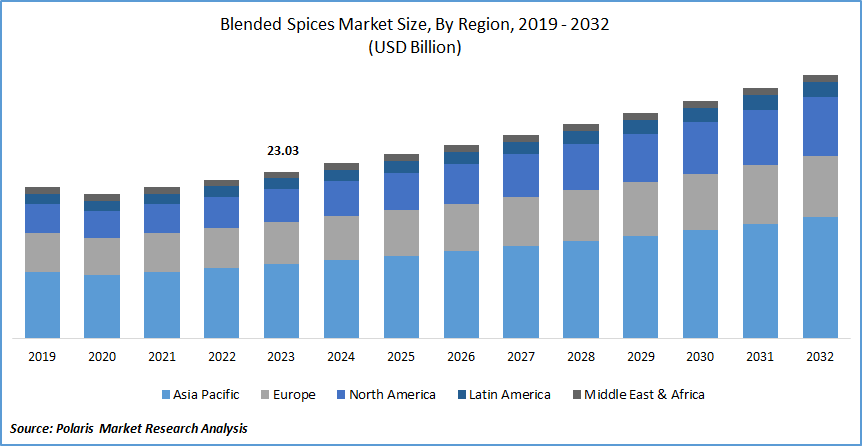
To Understand More About this Research: Download Sample Report
However, the market is hindered by the intensifying competition from local players who offer competitive products at lower prices, making it difficult for established brands to maintain their market share. Concerns about product quality and authenticity are also a challenge, as some consumers are doubtful about the quality and authenticity of blended spices compared to traditional whole spices. Also, fluctuating raw material prices, largely dependent on factors such as climate conditions, government policies, and geopolitical situations, affect the profitability of manufacturers and lead to price fluctuations.
Growth Drivers
Rising Use of Blended Spices as Flavor Enhancement in Meat Alternatives
The rising use of blended spices as flavor enhancement in meat alternatives is a significant driver for the growth of the blended spices market. With the increasing popularity of plant-based diets and veganism, the demand for meat alternatives has grown significantly. Blended spices play a crucial role in enhancing the flavor of these alternatives, making them more appealing to consumers.
Meat alternatives such as tofu, tempeh, and seitan can be dull in their taste, but the addition of blended spices adds depth and complexity to their flavor profiles. Blended spices such as curry powder, garam masala, and chili powder are commonly used to add warmth and depth to meat alternatives. In contrast, herbs like thyme, rosemary, and basil add a savory flavor. The use of blended spices in meat alternatives has become so popular that many companies are now offering pre-seasoned meat alternatives that are already infused with blended spices.
Source: Polaris Market Research Analysis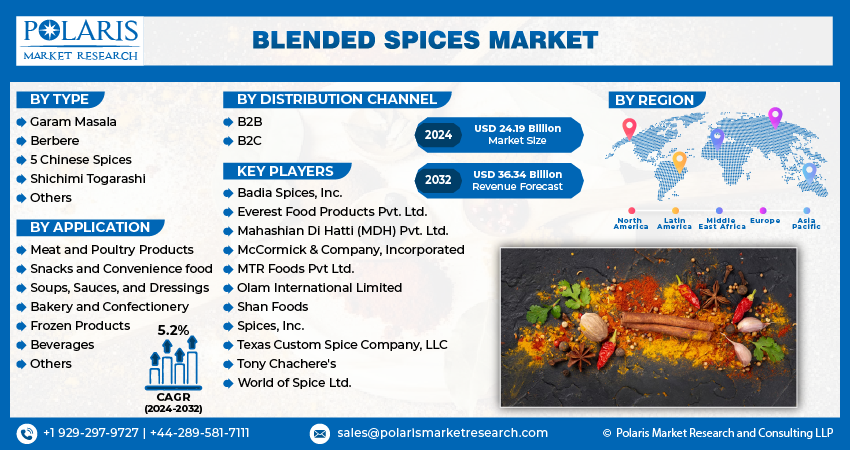
Get Full Segment-Level Forecasts & Insights: Download Sample Report
Functional Specifications
| Parameter | Limit | Notes |
| Moisture | ≤10-12% by weight | Varies by spice type; prevents mold |
| Extraneous Matter | ≤1-3% by weight | Dust, stems; max 2% overall |
| Total Ash (dry basis) | ≤5-10% by weight | Indicates purity |
| Acid Insoluble Ash | ≤1-2% by weight | Measures silica/sand |
| Volatile Oil | Varies (e.g., ≥2% v/w for some) | Flavor strength proxy |
Source: Polaris Market Research Analysis
Contaminant Limits
| Contaminant | Maximum Level |
| Total Aflatoxins | 30 µg/kg |
| Aflatoxin B1 | 15 µg/kg |
| Lead | 10 mg/kg |
| Arsenic | 5 mg/kg |
Source: Polaris Market Research Analysis
Report Segmentation
The market is primarily segmented based on type, application, distribution channel, and region.
| By Type | By Application | By Distribution Channel | By Region |
|
|
|
|
Source: Polaris Market Research Analysis
To Understand the Scope of this Report: Request Customization
By Type Analysis
The Garam Masala Segment Held the Dominating Revenue Share in 2025
The garam masala segment held the dominant revenue share in the global blended spices market in 2025, accounting for a significant portion of the total market revenue. This is owing to the increasing demand, as garam masala is a pre-blended mix of spices that eliminates the need for consumers to purchase and blend individual spices separately. It has a deep flavor with a rich brightness and peppery notes that warm the tongue.
Garam masala is widely used in various regional cuisines, particularly in Indian, Pakistani, and Middle Eastern dishes, which has contributed to its popularity and increased adoption among consumers. Moreover, garam masala offers a range of health benefits, such as improving digestion, boosting immunity, and providing anti-inflammatory properties, which has further fueled its demand in the market. The availability of garam masala in different forms, including powder, paste, and ready-to-use blends, has made it more accessible to consumers, thereby driving its sales and contributing to its dominant market share.
By Application Analysis
The Meat and Poultry Products Application Dominated the Global Market in 2025
The growing demand for convenience foods, processed meats, and ready-to-eat meals has contributed to the dominant share of the meat and poultry products segment in the global blended spices market. Blended spices are an important ingredient in many of these products, as they provide a consistent flavor profile that consumers have come to expect from processed meats and poultry products. Also, the increasing trend towards natural ingredients has led manufacturers to go for blended spices over artificial flavor enhancers, further boosting their adoption of this application.
The adaptability of blended spices allows them to be used in various meat and poultry products such as sausages, burgers, chicken nuggets, and other processed meats, making them an essential component in modern meat processing. This has resulted in a higher consumption of blended spices in the meat and poultry industry compared to other applications, thereby contributing to its largest share in the global flavor enhancers market.
Source: Polaris Market Research Analysis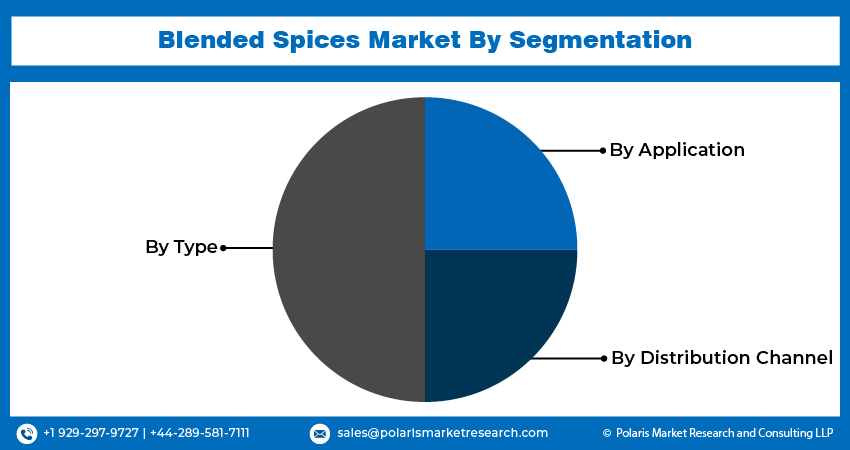
Need Granular Data Across All Market Segments? Request Customization
Regional Insights
Asia Pacific Region Dominated the Global Market in Terms of Share in 2025
The Asia Pacific region dominated the global market and this dominance is attributed to several factors, including the large population base, increasing urbanization, and changing dietary habits in countries such as China, India, and Indonesia. The region's diverse culinary culture, which emphasizes the use of a variety of spices and seasonings, has also contributed to the growth of the blended spices market. India, in particular, is known for its rich tradition of using blended spices in its cuisine, with garam masala being a staple in many Indian dishes. The country's massive agricultural land and favorable climatic conditions make it one of the largest producers of spices, including chilies, turmeric, coriander, and cumin, which are commonly used in blended spices. Also, the increasing popularity of Indian cuisine worldwide has created a demand for blended spices beyond the domestic market.
The North American region is expected to witness significant growth in the forecast period owing to the increasing popularity of foreign cuisines, the growing demand for preserved foods, and the rising interest in natural and organic flavors instead of artificial ones. The increasing popularity of Asian cuisines in the region is also responsible for the growth of the market. Consumers are becoming more excited about their food choices and are seeking out new and exciting flavors. Blended spices, such as curry powder and taco seasoning, allow consumers to easily add these flavors to their dishes without having to purchase and mix individual spices. Owing to these factors, the North American region is expected to experience significant growth in the assessment period.
Source: Polaris Market Research Analysis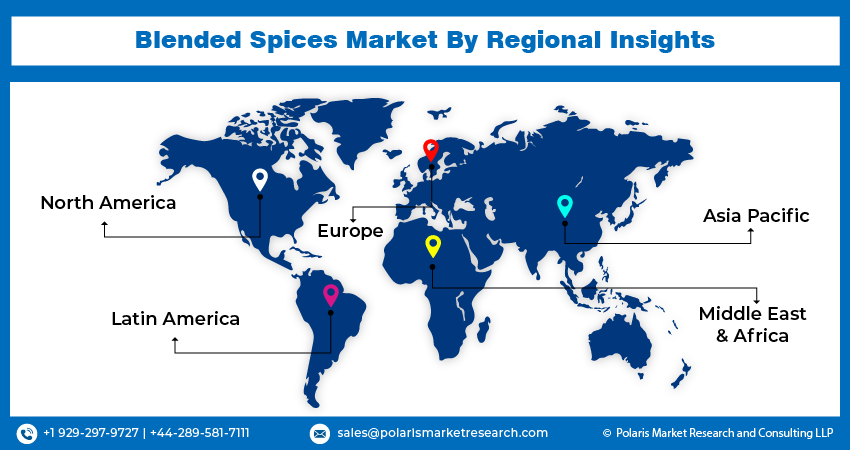
Curious About Regional Market Performance? Request Customization
Key Market Players & Competitive Insights
The market is highly competitive and fragmented since only a few major players are holding a significant share of the market. In India, manufacturers like MDH, Everest Food Products, and Suhana Masala led the market despite the presence of several local and small-scale manufacturers. In order to appeal to health-conscious consumers, players in the market are increasing the taste and quality of blended spices to remain competitive.
Some of the major players operating in the global market include
- Badia Spices, Inc.
- Everest Food Products Pvt. Ltd.
- Mahashian Di Hatti (MDH) Pvt. Ltd.
- McCormick & Company, Incorporated
- MTR Foods Pvt Ltd.
- Olam International Limited
- Shan Foods
- Spices, Inc.
- Texas Custom Spice Company, LLC
- Tony Chachere's
- World of Spice Ltd.
Recent Developments
- In September 2025, Orika, an Indian spice brand, introduced its Korean All Purpose Seasoning in India. Inspired by gochugaru, the launch brings authentic Korean flavors with a balanced mix of spicy, savory, and fermented umami notes to home cooking.
- In April 2023, Kraft Heinz announced the launch of Just Spices in the United States, one year after the completion of its majority of the stakes in the business.
- In August 2022, Burlap & Barrel, the spice company, launched a new line of spice blends named herbes de Provence, za’atar, köfte Baharat, etc., for various culinary applications.
Blended Spices Market Report Scope
| Report Attributes | Details |
| Market size value in 2025 | USD 25.42 Billion |
| Market size value in 2026 | USD 26.72 Billion |
| Revenue Forecast in 2034 | USD 40.39 Billion |
| CAGR | 5.30% from 2026 – 2034 |
| Base year | 2025 |
| Historical data | 2021 – 2024 |
| Forecast period | 2026 – 2034 |
| Quantitative units | Revenue in USD Billion and CAGR from 2026 to 2034 |
| Segments Covered | By Type, By Application, By Distribution Channel, By Region |
| Regional scope | North America, Europe, Asia Pacific, Latin America, Middle East & Africa |
| Customization | Report customization as per your requirements concerning countries, regions, and segmentation. |
Source: Polaris Market Research Analysis
Seeking a more personalized report that meets your specific business needs? At Polaris Market Research, we’ll customize the research report for you. Our custom research will comprehensively cover business data and information you need to make strategic decisions and stay ahead of the curve.
Blended Spices Market FAQ's
Badia Spices, Inc., Everest Food Products Pvt. Ltd., Mahashian Di Hatti (MDH) Pvt. Ltd., McCormick & Company, Incorporated are the key companies in Blended Spices Market.
The global blended spices market is expected to grow at a CAGR of 5.30% during the forecast period.
Type, application, distribution channel, and region are the key segments covered.
Rising use of blended spices as flavor enhancement in meat alternatives are the key driving factors in Blended Spices Market.
The global blended spices market size is expected to reach USD 40.39 billion by 2034.
Download Sample Report of Blended Spices Market
Please fill out the form to request a customized copy of the research report.


