

Cable Modem Termination System (CMTS) and Converged Cabel Access Platform (CCAP) Market size was valued at USD 5.87 billion in 2023. The market is anticipated to grow from USD 6.24 billion in 2024 to USD 12.19 billion by 2032, exhibiting the CAGR of 8.7% during the forecast period
Cable Modem Termination System (CMTS) and Converged Cabel Access Platform (CCAP) Market Overview
The Cable Modem Termination System (CMTS) is a crucial component in delivering high-speed data services, including voice-over-internet protocol (VoIP), to cable users. It serves a similar function to the digital subscriber line access multiplexer (DSLAM) in DSL systems. Cable operators use CMTSs to deliver services over their Hybrid Fiber-Coaxial (HFC) networks. On the other hand, the Converged Cable Access Platform (CCAP) provides the operational and technical capabilities of two distinct systems: a converged multiservice access platform (CMAP) and a converged edge services access router (CESAR). It serves as a unified platform for delivering video and IP-based broadband services. CCAP is instrumental in functions like traffic shaping and offering over-the-top (OTT) services, among others. In essence, while CMTS market development focuses on delivering high-speed data services, CCAP combines the functions of CMAP and CESAR to offer a more comprehensive solution for cable operators, enabling them to provide a wide range of services over their networks.
 and Converged Cabel Access Platform (CCAP) Market Share.png)
To Understand More About this Research: Download Sample Report
- For instance, in January 2024, Casa Systems launched the AurusXT 5G Industrial IoT Router Series, starting with the NTC-500 5G IIoT router. This router is the inaugural product in the AurusXT Series of 5G devices, featuring proprietary 5G Dynamic Network Slicing technology known for its cost-efficiency and reliability.
The increasing demand for broadband services has fueled significant investment in the market, driving its growth. Additionally, the rise of Over-the-Top (OTT) services like Amazon Prime and Netflix has played a crucial role in propelling market expansion. Furthermore, the adoption of Internet of Things (IoT) solutions by enterprises has added another layer of positive impact factors on the cable modem termination system and converged cable access platform market growth due to ongoing technological advancements.
Cable Modem Termination System (CMTS) and Converged Cabel Access Platform (CCAP) Market Dynamics
Market Drivers
Growing usage of Virtual CMTS
The burgeoning adoption of Virtual Cable Modem Termination Systems (CMTS) is propelled by several key factors driving growth within the Cable Modem Termination System (CMTS) and Converged Cable Access Platform (CCAP) market. One significant factor is the increasing demand for higher broadband speeds and bandwidth capacity to accommodate the ever-expanding data consumption habits of users. Virtual CMTS offers scalability and flexibility, enabling cable operators to efficiently manage network congestion and deliver faster internet speeds without the need for costly hardware upgrades. This scalability is particularly advantageous in urban areas where internet usage is dense and rapidly growing, as it allows cable operators to adapt to changing demands more dynamically.
Moreover, the virtualization trend in the CMTS and CCAP market is also fueled by the imperative for cost-effectiveness and operational efficiency. By deploying virtual CMTS solutions, cable operators can significantly reduce their capital expenditure on hardware infrastructure while streamlining network management and maintenance processes. Virtualization enables more efficient resource utilization, allowing operators to allocate network resources dynamically based on demand patterns. Additionally, the deployment of virtual CMTS facilitates easier integration with emerging technologies such as Software-Defined Networking (SDN) and Network Function Virtualization (NFV), paving the way for more agile and adaptive cable network architectures. As cable operators seek to optimize their networks for future growth and innovation, virtual CMTS solutions emerge as a pivotal enabler of cost-effective scalability and operational agility in the evolving broadband landscape.
 and Converged Cabel Access Platform (CCAP) Market.png)
Market Restraints
High expenses for deployment is likely to impede the market growth
One of the main barriers to the expansion of the (CMTS) and (CCAP) market is the high deployment costs involved. This includes acquiring new hardware, software, and licenses, as well as training costs for network engineers and technicians. Upgrading or replacing existing infrastructure can be costly. Also, integrating these systems with the legacy ones can add complexity and require additional investments in software development and customization.
Report Segmentation
The market is primarily segmented based on docsis standards, type and region.
|
By DOCSIS Standards |
By Type |
By Region |
|
|
|
To Understand the Scope of this Report: Request Customization
Cable Modem Termination System (CMTS) and Converged Cabel Access Platform (CCAP) Market Segmental Analysis
By DOCSIS Standards Analysis
- The DOCSIS 3.1 system standard segment is anticipated to hold the largest market share during the cable modem termination system (CMTS) and converged cabel access platform (ccap) market forecast period. DOCSIS 3.1 brings enhancements in spectral efficiency, enabling cable operators to utilize the available spectrum more effectively. With significantly higher speeds, reaching up to 10 Gbps downstream and 1 Gbps upstream, DOCSIS 3.1 becomes a crucial upgrade for cable operators to fulfill increasing demands. The rise of streaming platforms such as Hulu, Netflix, and Amazon Prime Video necessitates substantial bandwidth. DOCSIS 3.1's expanded capacity enables cable operators to smoothly deliver these services, improving user experience and potentially boosting customer satisfaction. This optimization increases overall network capacity and delivers higher data rates without the need for additional spectrum allocation.
By Type Analysis
- The virtual CMTS segment is expected to grow at highest CAGR during the market forecast period. The creation and implementation of vCMTS have been impacted by the broader trend of network virtualization and the acceptance of Software-defined Networking (SDN) principles. Increased adaptability, scalability, and effective resource use are made possible by virtualization. With it, cable operators can execute CMTS operations on conventional commercial off-the-shelf (COTS) hardware and maximize network resources. Because it does away with the requirement for specialized and proprietary hardware, this can result in cost reductions both in terms of capital and operating expenses.
- The converged cable access platform segment is expected to grow at the fastest growth rate over the next coming years. As video and data services become more integrated, CCAP allows for the convergence of these services onto one platform. This integration simplifies network architecture, decreases operational complexity, and improves the efficiency of delivering video and broadband services over cable networks. The cable industry's shift toward Distributed Access Architectures (DAA) involves moving the traditionally centralized functions of the CMTS (Cable Modem Termination System) closer to end-users. CCAP helps in this transition, enhancing scalability, network efficiency and reducing latency.
 and Converged Cabel Access Platform (CCAP) Market Seg.png)
Cable Modem Termination System (CMTS) and Converged Cabel Access Platform (CCAP) Market Regional Insights
The Asia Pacific region is expected to be the fastest growing region
The Asia Pacific region is expected to be the fastest growing region with a healthy CAGR during the projected period. Rapid population growth and urbanization across many Asia Pacific countries have led to a higher concentration of potential broadband subscribers. This region is undergoing a surge in demand for high-speed internet services, driven by the increasing use of bandwidth-intensive applications such as online gaming, streaming, and remote work. Additionally, Asia Pacific serves as a major hub for automotive, consumer electronics, and industrial sectors, attracting significant investments and business expansions. These factors collectively contribute to the growth of the CMTS and CCAP market opportunity in the region.
 and Converged Cabel Access Platform (CCAP) Market Reg.png)
Competitive Landscape
The Cable Modem Termination System (CMTS) and Converged Cabel Access Platform (CCAP) market is fragmented and is anticipated to witness competition due to several players' presence. Major service providers in the market are constantly upgrading their technologies to stay ahead of the competition and to ensure efficiency, integrity, and safety. These players focus on partnership, product upgrades, and collaboration to gain a competitive edge over their peers and capture a significant market share.
Some of the major players operating in the global market include:
- Blonder Tongue Laboratories
- Broadcom
- C9 Networks Inc.
- Casa Systems
- Cisco Systems, Inc.
- CommScope
- Harmonic Inc.
- Huawei Technologies Co., Ltd.
- Jinghong V & T technology Co., Ltd.
- Juniper Networks, Inc.
- Nokia
- Sumavision
- Teleste
- Vecima Networks Inc.
- Versa Technology Inc.
Recent Developments
In January 2024: Casa Systems introduced the AurusXT 5G Industrial IoT Router Series, including the NTC-500 router with 5G network slicing for low-cost and reliable industrial connectivity.
In March 2024: Vecima Networks launched the Entra virtual CMTS, designed to work smoothly with its Remote PHY devices to improve network scale and performance.
In May 2024: CommScope acquired Casa Systems’ cable assets, including virtual CMTS and QAM video solutions, to expand its cable network infrastructure offerings.
In January 2023: Cisco partnered with OTEGLOBE to enhance its network's capacity and performance, enabling faster and more efficient connections for customers. This collaboration includes deploying new Cisco 8800 series routers powered by Cisco Silicon One. OTEGLOBE aims to connect more people and businesses across Europe using this full-scale, 800G-ready infrastructure.
In May 2023: Harmonic Inc. expanded its fiber broadband portfolio by introducing the new Wharf hardened switch designed for high-density remote optical line termination (R-OLT) applications. This switch enhances the delivery of reliable, ultra-fast broadband speeds to high-density service areas. It also speeds up the time to market for XGS-PON or 10G-EPON fiber-to-the-home (FTTH) services, along with 25/40/100G business-class services from outdoor cabinetry.
Report Coverage
The Cable Modem Termination System (CMTS) and Converged Cabel Access Platform (CCAP) market report emphasizes on key regions across the globe to provide better understanding of the product to the users. Also, the report provides market insights into recent developments, trends and analyzes the technologies that are gaining traction around the globe. Furthermore, the report covers in-depth qualitative analysis pertaining to various paradigm shifts associated with the transformation of these solutions.
The report provides detailed analysis of the market while focusing on various key aspects such as competitive analysis, docsis standards, type and their futuristic growth opportunities.
Cable Modem Termination System (CMTS) and Converged Cabel Access Platform (CCAP) Market Report Scope
|
Report Attributes |
Details |
|
Market size value in 2024 |
USD 6.24 billion |
|
Revenue forecast in 2032 |
USD 12.19 billion |
|
CAGR |
8.7% from 2024 – 2032 |
|
Base year |
2023 |
|
Historical data |
2019 – 2022 |
|
Forecast period |
2024 – 2032 |
|
Quantitative units |
Revenue in USD billion and CAGR from 2024 to 2032 |
|
Segments covered |
By DOCSIS Standards, By Type, By Region |
|
Regional scope |
North America, Europe, Asia Pacific, Latin America; Middle East & Africa |
|
Customization |
Report customization as per your requirements with respect to countries, region and segmentation. |
FAQ's
The Cable Modem Termination System (CMTS) and Converged Cabel Access Platform (CCAP) Market report covering key segments are docsis standards, type and region.
The global Cable Modem Termination System (CMTS) and Converged Cabel Access Platform (CCAP) market size is expected to reach USD 12.19 billion by 2032
Cable Modem Termination System (CMTS) and Converged Cabel Access Platform (CCAP) Marketexhibiting the CAGR of 8.7% during the forecast period
Asia Pacific is leading the global market
key driving factors in Cable Modem Termination System (CMTS) and Converged Cabel Access Platform (CCAP) Market are • Growing usage of Virtual CMTS
Page last updated on:
Mar-2024
Research Methodology
A robust system of research, verification, and forecasting designed to ensure reliable and actionable market insights.
Polaris Market Research uses a clear and structured approach to deliver insights that clients can rely on. The process combines detailed primary and secondary research, including direct communication with industry experts. The detailed information helps build a complete picture of market trends and developments. Secondary data is gathered from credible sources such as industry reports, company filings, government source links, and trusted organization databases. It is then cross-checked through discussions with key stakeholders across the value chain. Market size and forecasts are developed using both bottom-up and top-down methods to ensure accuracy and consistency in the final results.
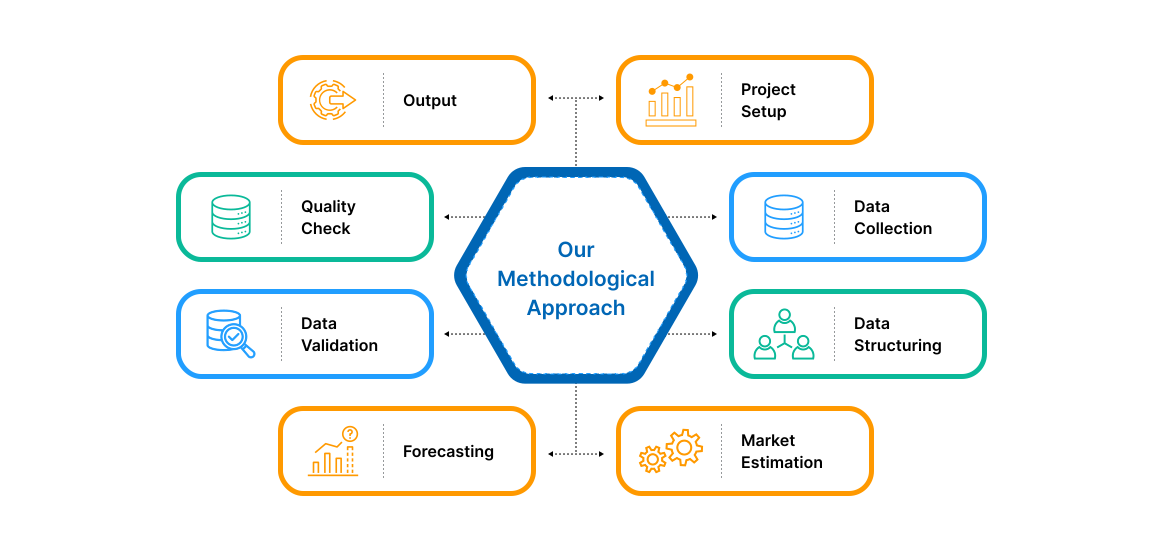
1. Project Setup
Step 1 & 2:
- We start every project by clearly understanding the client’s objective or goal, then defining the market scope, and aligning regions, segments, and timelines.
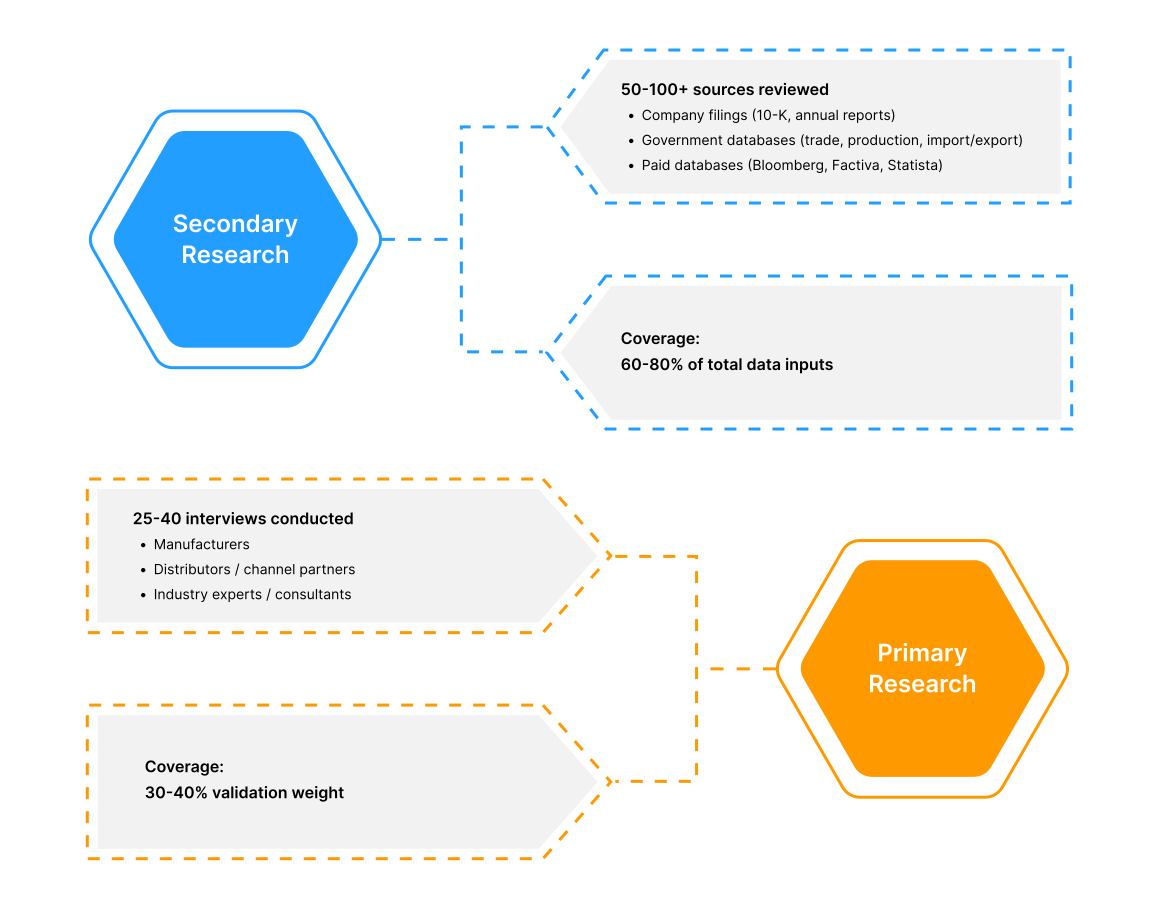
- Once the foundation is set, we collect data from all-around of sources, including company reports, government databases, and paid industry platforms.
- Our research is based on secondary data, which helps us build a strong understanding of the market across regions and industries. Then we validate this information through primary research by speaking directly with industry experts, companies, and stakeholders.
- By combining secondary and primary research, we ensure that our market insights are accurate, practical, and closely aligned with real market conditions.
2. Data Collection
We gather information from both public and verified sources:
3. Data Structuring
Step 3:
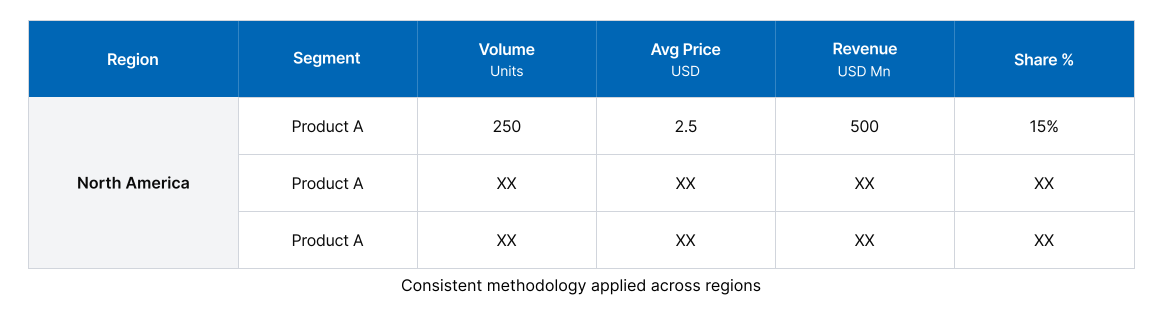
- All collected data is organized into a consistent format to ensure accurate analysis. Since inputs come from multiple sources, they are standardized and aligned before use.
- The data is segmented by product, application, and region, and mapped across a defined historical period (2020–2024). All values are converted into common units (USD Mn/Bn), and volume and pricing are aligned where required to estimate revenue.
- Any overlaps or inconsistencies are reviewed and adjusted to maintain accuracy (<5% variance threshold).
- The result is a structured dataset that allows for clear comparison across regions and supports reliable analysis and forecasting.
Structured Market Dataset, USD Mn/Bn
4. Data Structuring
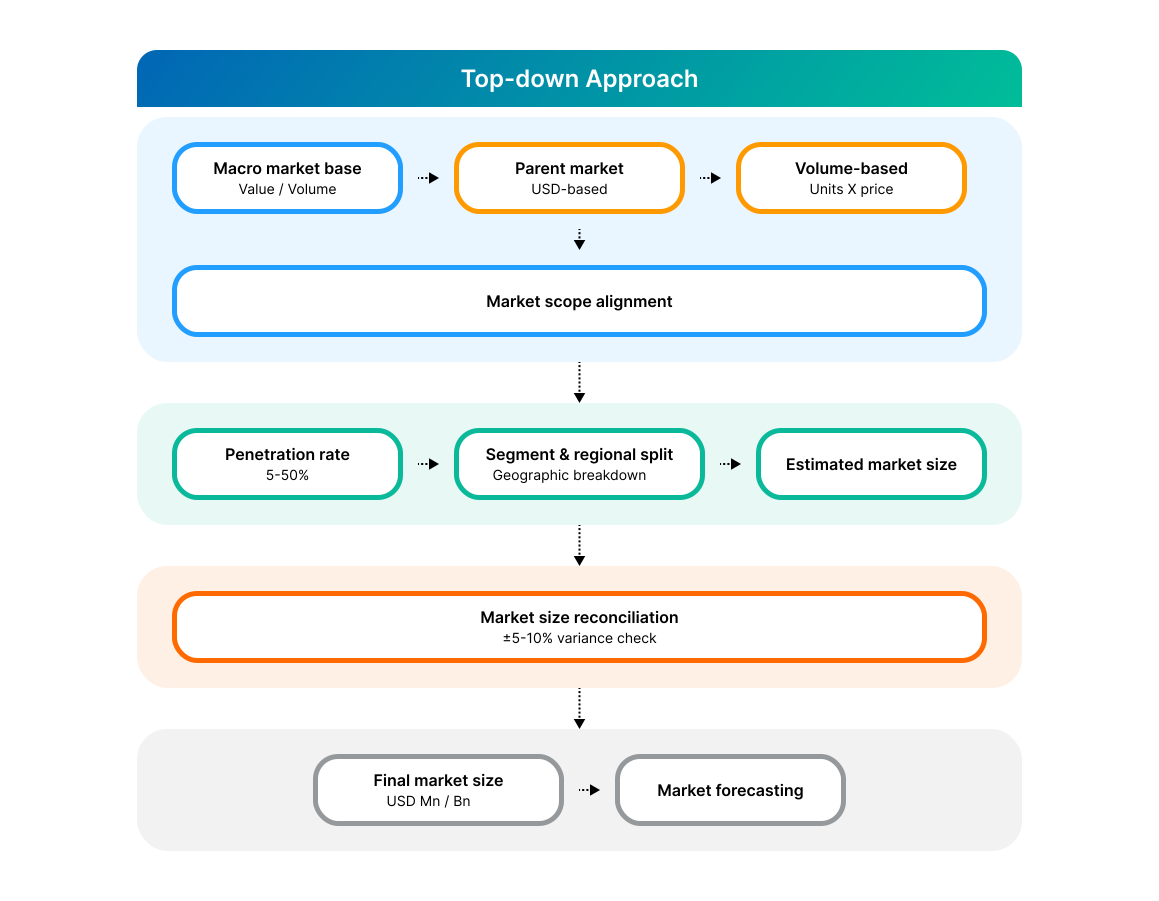
Step 4: TOP-DOWN APPROACH
- We start with the overall market size at a global or macro level.
- The market is then narrowed down based on scope and industry relevance.
- We apply penetration rates and split the data by region and segment.
- This helps us estimate the market size for specific segments.
- The numbers are validated through cross-checks to ensure accuracy.
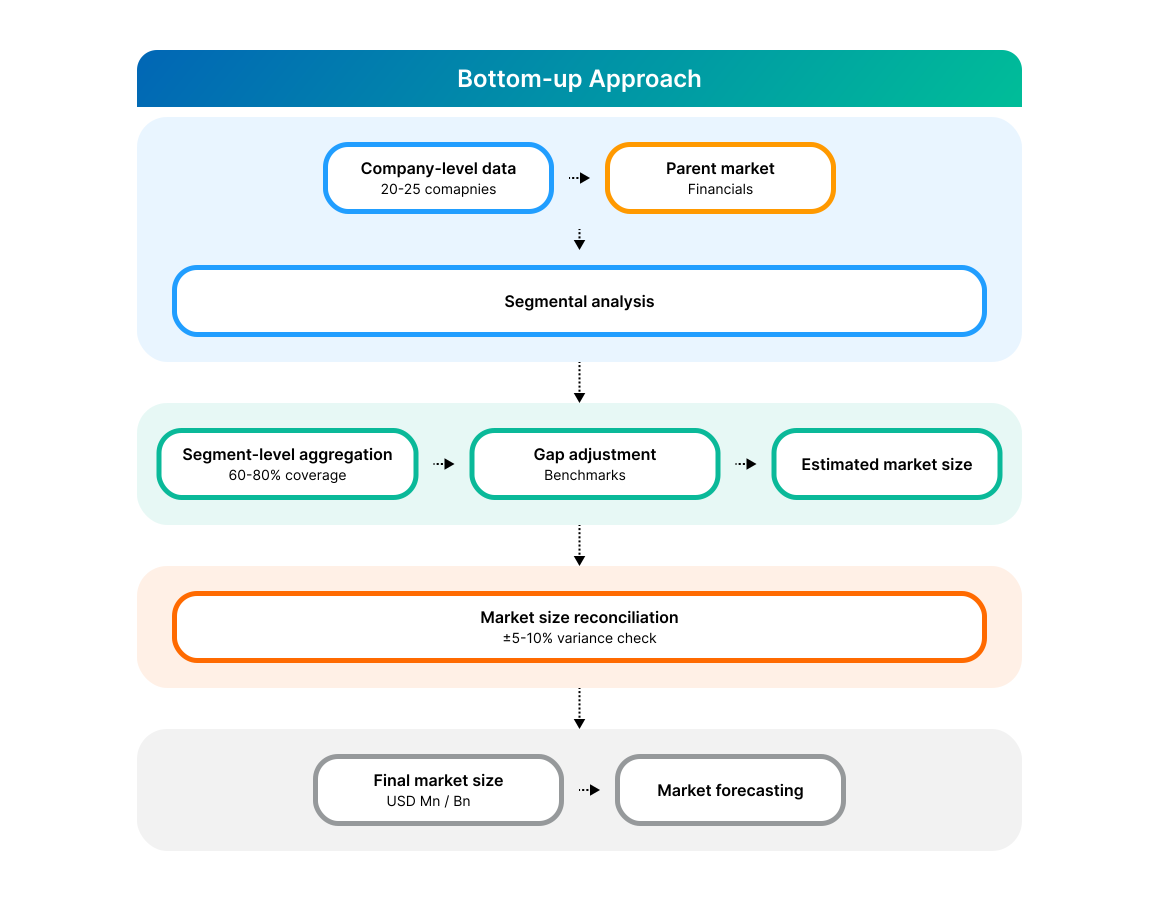
Step 5: BOTTOM-UP APPROACH
- We begin by analyzing data from leading companies in the market.
- Revenue data is collected and mapped across different segments.
- The data is then aggregated to estimate the total market size.
- To fill in any gaps, adjustments are made based on industry standards.
- Validation checks make sure that the results are correct.
5. Data Structuring
Step 6:
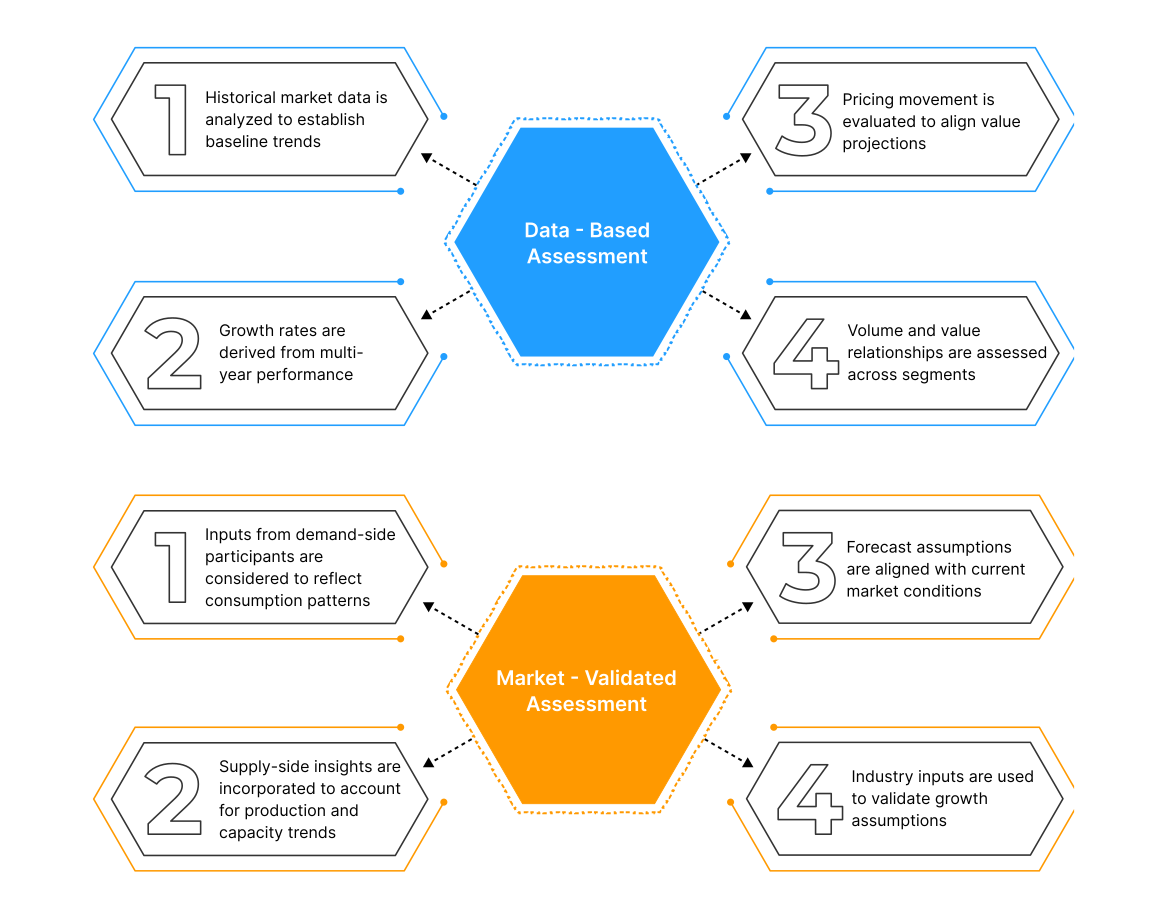
At Polaris Market Research, we employ a methodical forecasting strategy. This approach blends the analysis of historical data with real-time market validation. To forecast future trends with precision, we examine past patterns, pricing fluctuations, and the interplay of supply and demand. To ensure our conclusions reflect the present market landscape, we actively seek input from industry experts and key stakeholders.
To refine our predictions, we carefully consider critical elements such as market drivers and restraints, fluctuations in raw material costs, emerging technologies, and the production capabilities of various regions. Furthermore, we assess regulatory frameworks and potential policy shifts to gauge their potential impact on market expansion.
All this information is synthesized to generate precise forecasts for each segment and region. These forecasts illuminate the current state of the market and highlight forthcoming opportunities.
6. Data Structuring
Step 7:
In the final stage, we validate all our estimates using a triangulation method, where data is cross-checked from multiple reliable sources, like company data, primary interviews, and secondary research. This helps us make sure that our numbers are correct and fit with the rest of the market.
This process involves verifying data consistency across various segments and geographic areas. It also requires comparing historical trends with the assumptions support the forecast. Any discrepancies involve adjustments to ensure everything remains aligned and dependable.
Once the data is finalized, we prepare the final outputs, including market size estimates, segment-wise breakdowns, and growth metrics. These are delivered in structured formats such as tables, charts, and data files for easy analysis and use.
We collaborate closely with clients, ensuring the final products align with their requirements. This includes offering tailored adjustments, supplementary data analyses, and continuous assistance. Furthermore, we monitor market trends post-delivery, providing updates and refinements to maintain the insights' relevance as time passes.
Post-delivery, we continue to monitor market shifts, offering updates and adjustments to ensure the insights remain relevant over time.
Validation
Triangulation Framework
Estimates are cross-verified across three sources:
Company-level data
• Primary inputs from industry participants
• Secondary benchmarks and published data
Variance maintained within +5-10%
Adjustments applied to align estimates
Segment values validated against overall market structure
Quality Check
Data Consistency & Integrity
Segment totals validated to 100%
Regional estimates aligned with global market size
Historical trends compared against forecast outputs
Assumptions reviewed for cross-segment and regional alignment
Output & Delivery
Final Outputs
Market size estimates (USD Mn/Bn)
Segment-wise distribution (%)
Growth metrics (CAGR %)
Final Outputs
Structured tables and charts
Segment-level datasets
Excel-based data files for further analysis
Client Alignment & Support
- Deliverables are aligned with defined client requirements and scope
- Custom data cuts and segment splits are incorporated as required
- Post-delivery queries are addressed through analyst interactions
- Additional clarifications and data support are provided upon request
Client Continuity & Updates
- Market developments are tracked post-delivery to capture changes in key trends
- Updated data and revisions are provided based on new market inputs
- Additional refinements and data cuts are shared as required
- Continued analyst engagement supports evolving client requirements


