

What is the Current Market Size?
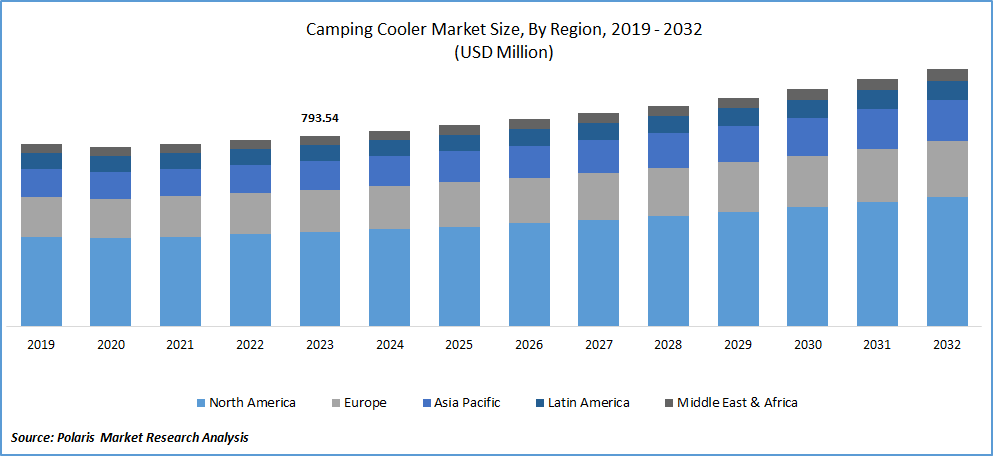
The global camping cooler market size and share was valued at USD 836.32 million in 2025 and is expected to grow at a CAGR of 3.90% during the forecast period.
Market Statistics
- 2025 Market Size: USD 836.32 million
- 2034 Projected Market Size: USD 1165.72 million
- CAGR (2026-2034): 3.90%
- North America: Largest market in 2025
The increasing preference for outdoor recreational activities like off-roading and hiking among travelers is a significant factor propelling market growth. Furthermore, the adoption of advanced technologies in manufacturing lightweight coolers capable of retaining ice for extended periods will be a contributing factor to market expansion in the upcoming years.
Going camping is one of the most exciting and enjoyable things to do. Campaigns are a way for people to connect with nature and recharge their batteries. When planning a camping trip, there are some essentials that individuals need to carry with themselves to make their days in the wilderness more comfortable and enjoyable. One such piece of equipment that’s now a staple of people's camping gear is the camping cooler. Also referred to as outdoor cooler boxes, campaign coolers are portable containers specifically designed to keep beverages and food cool in outdoor environments.
Campaign coolers are insulated to keep the food at the storage temperature, even when the outside temperature goes over 30 degrees Celsius. When choosing campaign coolers, several attributes come into play, including storage life, cooler capacity, cooler compactness, storage accessories, and ease of carrying. These coolers can be used for several camping activities, including dry camping, backpacking, and off-road/RV camping. The growing preference for outdoor recreational activities is one of the primary factors driving the camping cooler market demand. The camping cooler market report is a comprehensive assessment of all the opportunities and challenges in the industry. It covers all the recent innovations and major events in the industry while shedding lights on the key market features such as CAGR, supply/demand, cost, production rate and consumption. Along with that, the study offers a thorough analysis of the key market dynamics and latest trends to help businesses develop strategies that will drive camping cooler market growth.
To Understand More About this Research: Request a Free Sample Report
Outdoor recreational activities encompass a wide range of experiences, including mountain expeditions like hiking, forest-based pursuits such as hunting and camping, and water-related activities like fishing and rafting. Among the most prevalent outdoor activities are running, camping, hunting, fishing, and off-roading. These activities offer more than just leisure; they contribute to various social benefits. Engaging in outdoor recreation has been linked to positive impacts on both mental and physical well-being, including stress reduction and combating obesity. Recognizing these advantages, there has been a notable increase in investments directed toward promoting and enhancing outdoor activities, fostering economic opportunities, and promoting personal satisfaction and community well-being.
Innovations in camping equipment have led to the replacement of outdated models with more advanced alternatives. Notable developments include the MPOWERED Luci, a solar-based lantern capable of producing up to 80 lumens of light, covering a 15 square feet area; the Sawyer Squeeze Water Filter System, filtering water by filling a water bag & squeezing it through the attached filter; the Powertraveller Powermonkey Extreme, a rugged, water-proof, & small solar charger; and the Yeti Tundra 35 coolers, equipped with the T-Rex lid latches, AnchorPoint tie-down slots, & NeverFail hinge system featuring 2 hinge pins & an interlocking design. These technologically advanced camping equipment models are anticipated to drive demand for newer and more sophisticated products.
Industry Dynamics
Growth Drivers
Increasing preference for outdoor recreational activities
Camping and outdoor cooler suppliers are adapting their product development strategies to align with evolving consumer trends. Traditionally, these suppliers have outsourced the manufacturing of cooler chests to low-cost destinations like China, the Philippines, Japan, or India. However, there has been a noticeable shift in this trend. Suppliers are now opting to collaborate with raw material manufacturers in onshore locations. This shift is driven by the need to meet the increasing demand from consumers, possibly due to factors like a desire for locally sourced products, reduced shipping times, or a focus on supporting domestic industries.
Manufacturer Sustainability & Material Innovations
|
Manufacturers |
Sustainability Initiatives |
|
YETI |
Scope 1/2 emissions -50%, Scope 3 -27% by 2030 (FY20 baseline); 100% renewable U.S. electricity by 2022; zero PVC by 2025; circular design for all new products by 2025. |
|
Igloo |
Recycle 30M post-consumer bottles by 2025; ECOCOOL collection saves 88% energy vs. virgin plastic; 1M RECOOL biodegradable units sold since 2019. |
|
Coleman |
Pre-consumer recycled fabric in soft coolers; antimicrobial liners to reduce waste/odor. |
Report Segmentation
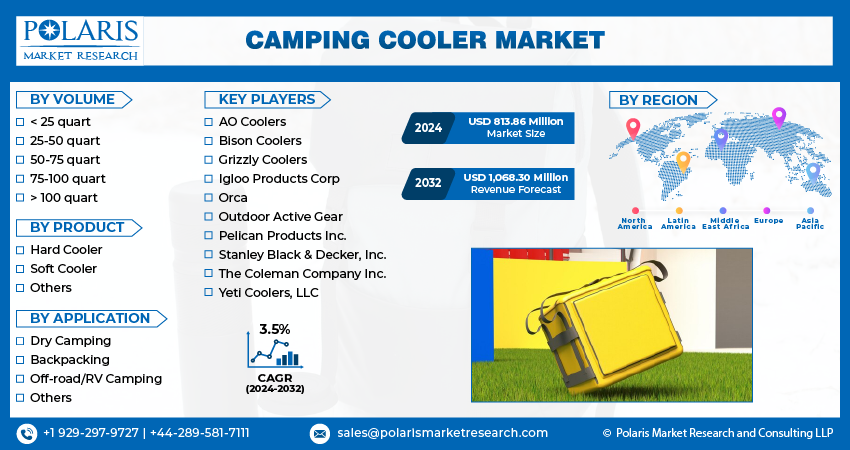
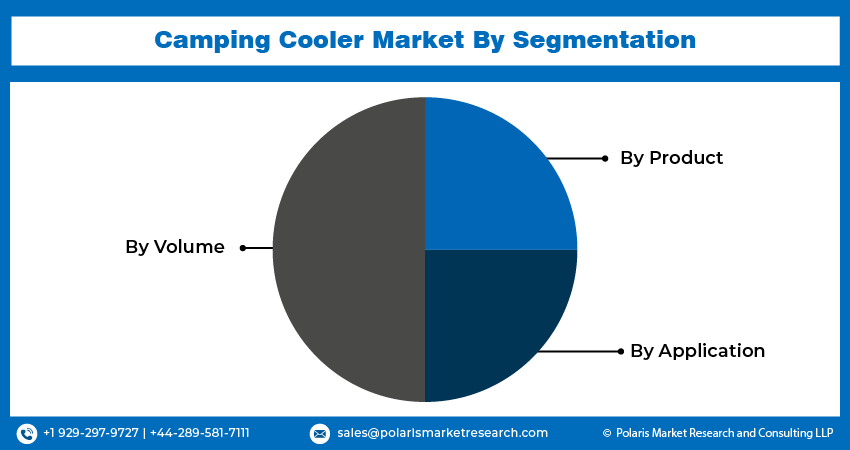
The market is primarily segmented based on volume, product, application, and region.
|
By Volume |
By Product |
By Application |
By Region |
|
|
|
|
To Understand the Scope of this Report: Speak to Analyst
By Volume Analysis
50 to 75 quarts segment held the largest share in 2025
50 to 75 quarts segment held the largest share. The growing enthusiasm for outdoor activities such as camping, hiking, and fishing has spurred the demand for camping coolers. With more individuals and families participating in outdoor adventures, there is a heightened requirement for dependable and spacious cooling solutions, leading to increased sales in the segment.
<25-quart segment is projected to grow at the fastest rate. There is expected to be a substantial rise in consumer demand for coolers in this size category, given their compact, lightweight nature and the availability of both soft and hard product variants. Soft iceboxes, particularly those in sling and backpack styles, are compact and convenient to carry, making them more appealing compared to larger-sized hard coolers.
By Product Analysis
Hard coolers segment registered the largest market share in 2025
The hard coolers segment accounted for the largest share. This dominance is primarily driven by the increasing demand for hard coolers in the developed regions. The prominence of outdoor recreational activities is identified as a key factor contributing to the growth of this segment.
The adoption of soft coolers is experiencing rapid growth, driven by various advantages such as lower cost and a lightweight structure compared to hard coolers. The availability of soft coolers in diverse variants, including lunch boxes, carry bags, & backpacks, is anticipated to contribute to increased sales during the study period.
By Application Analysis
Dry camping segment held the significant market revenue share in 2025
The dry camping segment held the largest share. There is a significant increase in the popularity of off-roading, particularly in developed countries, where there is a higher demand for heavy-engine cars designed specifically for off-road adventures.
In the U.S., national parks & forests, including destinations like Congaree National Park, Ocala National Forest, & Bankhead National Forest, attract a considerable number of dry campers. The growing influx of travelers to these areas is anticipated to increase the demand for coolers in the region substantially. As more individuals choose solo hiking and trekking adventures, there is an expected rise in the demand for compact soft coolers and drinkware.
The backpacking segment is projected to grow at a rapid pace. The growing popularity of backpacking coolers can be attributed to the heightened interest in outdoor activities, advancements in technology, affordability, and convenience. The latest models are lighter, more robust, and more effective at maintaining the temperature of food and beverages. Additionally, they are cost-effective and easier to pack and carry, making them a convenient and practical choice for storing provisions while on the trail.
Regional Insights
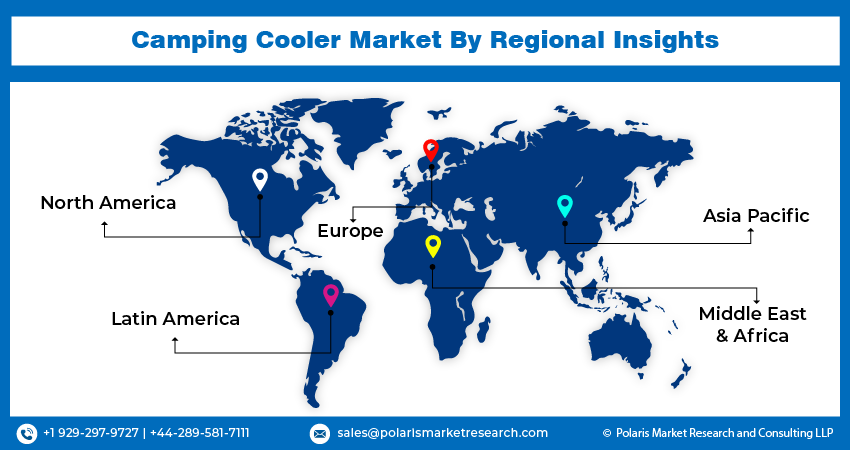
North America region held the largest share of the global market in 2025
The North America region dominated the market. The United States stands out as the largest market due to the consistent rise in the number of travelers choosing hiking and recreational pursuits. The presence of the majority of chiller and related product manufacturers in the U.S. facilitates easier marketing and sales within the country compared to promoting brands in other regions. The familiarity of consumers with well-known chiller brands is a contributing factor to the robust market in the U.S.
As per the Bureau of Economic Analysis, the annual consumer expenditure on outdoor recreational activities in the region totals approximately USD 887 billion. This spending surpasses that on various essential commodities & services. Outdoor recreational activities are highly prevalent in the U.S., with individuals allocating a significant portion of their time and financial resources to pursuits such as water sports, camping, trail sports, & skate-boarding, prioritizing these activities over expenditures on items like movie tickets, video games, & home entertainment.
Latin America is projected to grow at a rapid pace. The rising popularity of backpacking coolers in the region can be attributed to the region's warm climate, expanding tourism industry, cost-effectiveness, and convenience. Countries such as Mexico, Costa Rica, & Peru, known for their scenic landscapes & outdoor activities, particularly favor the use of backpacking coolers.
Key Market Players & Competitive Insights
The camping cooler market is highly fragmented in nature, with the robust presence of global market players. The key players operating in the market are heavily investing in research & development activities in order to improve their product offerings continuously and also focusing on several business development and expansion strategies, including partnerships, collaborations, and acquisitions.
Some of the major players operating in the global market include:
- AO Coolers
- Bison Coolers
- Grizzly Coolers
- Igloo Products Corp
- Orca
- Outdoor Active Gear
- Pelican Products Inc.
- Stanley Black & Decker, Inc.
- The Coleman Company Inc.
- Yeti Coolers, LLC
Recent Developments
- In June 2023, Polaris introduced a Patriot Northstar Cooler as a limited edition in collaboration with 2 foundations dedicated to supporting the military, namely Wounded Warriors Canada & the Gary Sinise Foundation.
- In April 2023, Igloo expanded its Eco Collection with the launch of recycled coolers, featuring collaborations with peanuts and park projects. The pioneering ECOCOOL hard side coolers from Igloo are the first of their kind, crafted in the U.S. using recycled resin compound derived from discarded plastic yogurt cups and milk jugs.
Camping Cooler Market Report Scope
|
Report Attributes |
Details |
|
Market size value in 2025 |
USD 836.32 million |
| Market size value in 2026 | USD 861.07 million |
|
Revenue forecast in 2034 |
USD 1165.72 million |
|
CAGR |
3.90% from 2026 – 2034 |
|
Base year |
2025 |
|
Historical data |
2021 – 2024 |
|
Forecast period |
2026 – 2034 |
|
Quantitative units |
Revenue in USD million and CAGR from 2026 to 2034 |
|
Segments covered |
By Volume, By Product, By Application, By Region |
|
Regional scope |
North America, Europe, Asia Pacific, Latin America, Middle East & Africa |
|
Customization |
Report customization as per your requirements with respect to countries, region, and segmentation. |
Explore the landscape of the camping cooler in 2025 through detailed market share, size, and revenue growth rate statistics meticulously organized by Polaris Market Research Industry Reports. This expansive analysis goes beyond the present, offering a forward-looking market forecast till 2034, coupled with a perceptive historical overview. Immerse yourself in the depth of this industry analysis by acquiring a complimentary PDF download of the sample report.
Browse Our Bestselling Reports:
Ready Mix Concrete Market Size, Share Research Report
Medical Foods Market Size, Share Research Report
Location Based Advertising Market Size, Share Research Report
FAQ's
AO Coolers, Bison Coolers, Grizzly Coolers, Igloo Products are the key companies in Camping Cooler Market.
The global camping cooler market is expected to grow at a CAGR of 3.90% during the forecast period.
Volume, product, application, and region are the key segments covered.
Rising Camping and RV Culture are the key driving factors in Camping Cooler Market.
The global camping cooler market size is expected to reach USD 1165.72 million by 2034.
Page last updated on:
Jan-2024
Research Methodology
A robust system of research, verification, and forecasting designed to ensure reliable and actionable market insights.
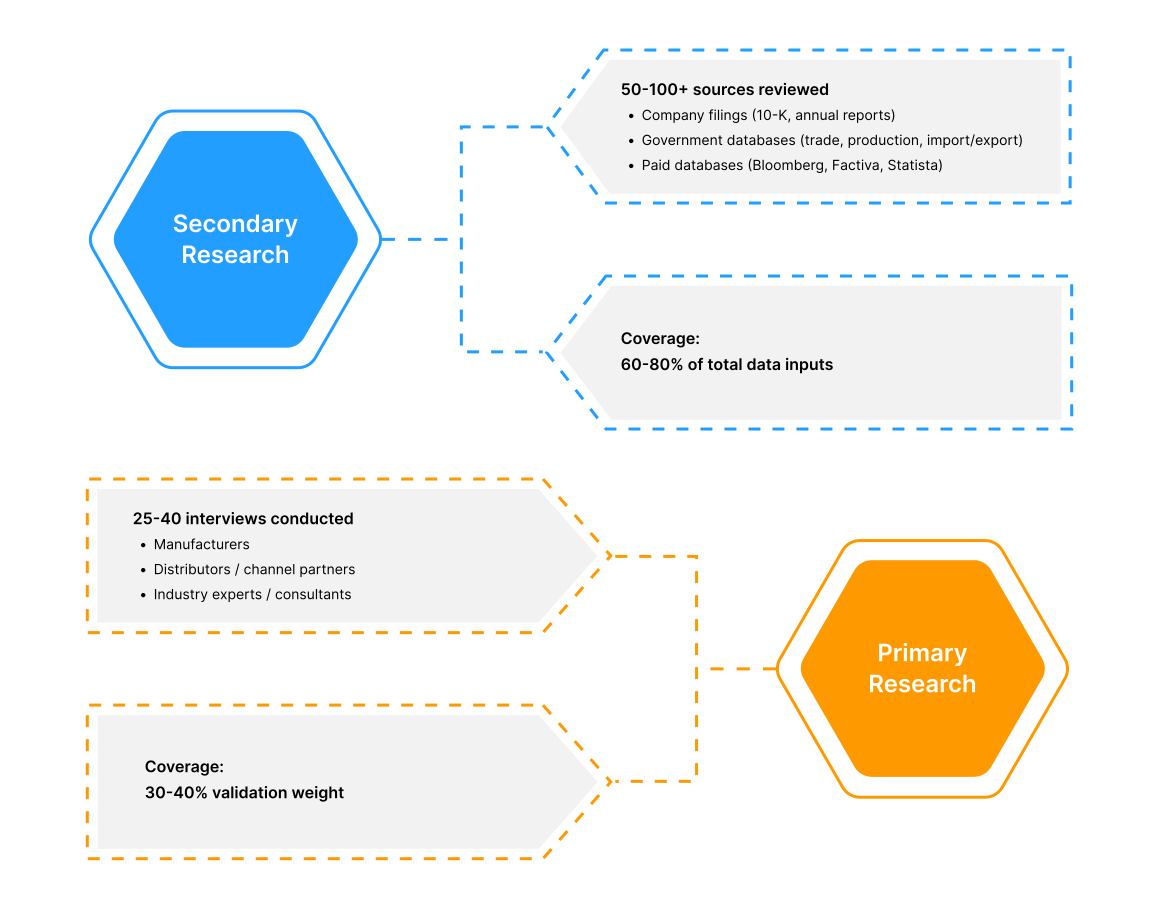
Polaris Market Research uses a clear and structured approach to deliver insights that clients can rely on. The process combines detailed primary and secondary research, including direct communication with industry experts. The detailed information helps build a complete picture of market trends and developments. Secondary data is gathered from credible sources such as industry reports, company filings, government source links, and trusted organization databases. It is then cross-checked through discussions with key stakeholders across the value chain. Market size and forecasts are developed using both bottom-up and top-down methods to ensure accuracy and consistency in the final results.
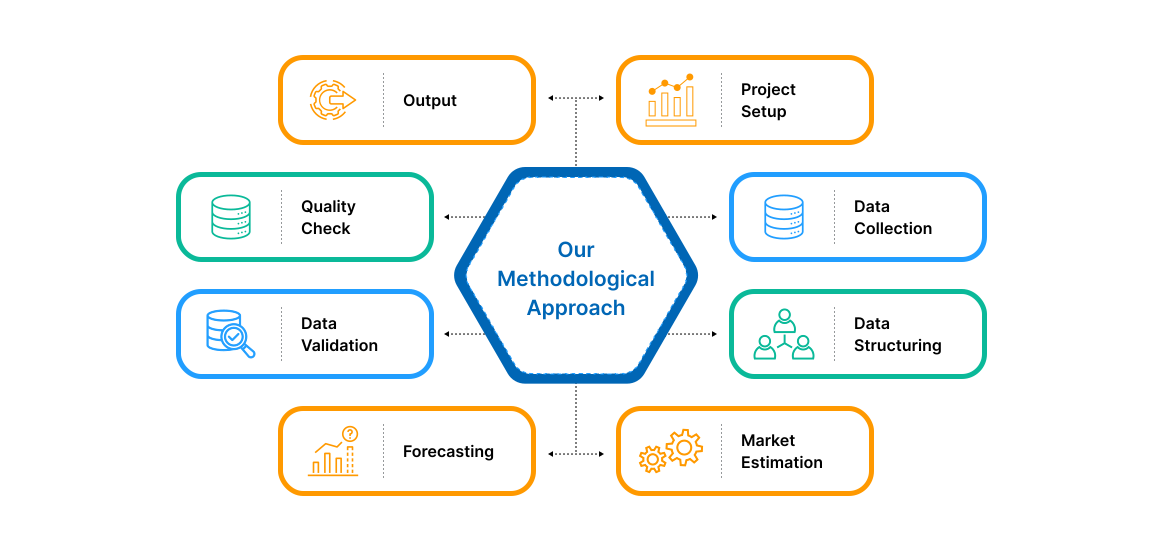
Project Setup
Step 1 & 2:
- We start every project by clearly understanding the client’s objective or goal, then defining the market scope, and aligning regions, segments, and timelines.
- Once the foundation is set, we collect data from all-around of sources, including company reports, government databases, and paid industry platforms.
- Our research is based on secondary data, which helps us build a strong understanding of the market across regions and industries. Then we validate this information through primary research by speaking directly with industry experts, companies, and stakeholders.
- By combining secondary and primary research, we ensure that our market insights are accurate, practical, and closely aligned with real market conditions.
Data Collection
We gather information from both public and verified sources:
Data Structuring
Step 3:
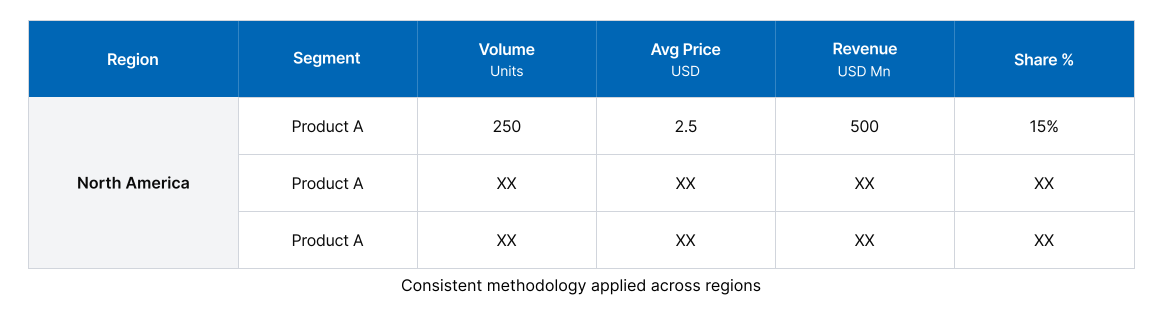
- All collected data is organized into a consistent format to ensure accurate analysis. Since inputs come from multiple sources, they are standardized and aligned before use.
- The data is segmented by product, application, and region, and mapped across a defined historical period (2020–2024). All values are converted into common units (USD Mn/Bn), and volume and pricing are aligned where required to estimate revenue.
- Any overlaps or inconsistencies are reviewed and adjusted to maintain accuracy (<5% variance threshold).
- The result is a structured dataset that allows for clear comparison across regions and supports reliable analysis and forecasting.
Structured Market Dataset, USD Mn/Bn
4. Data Structuring
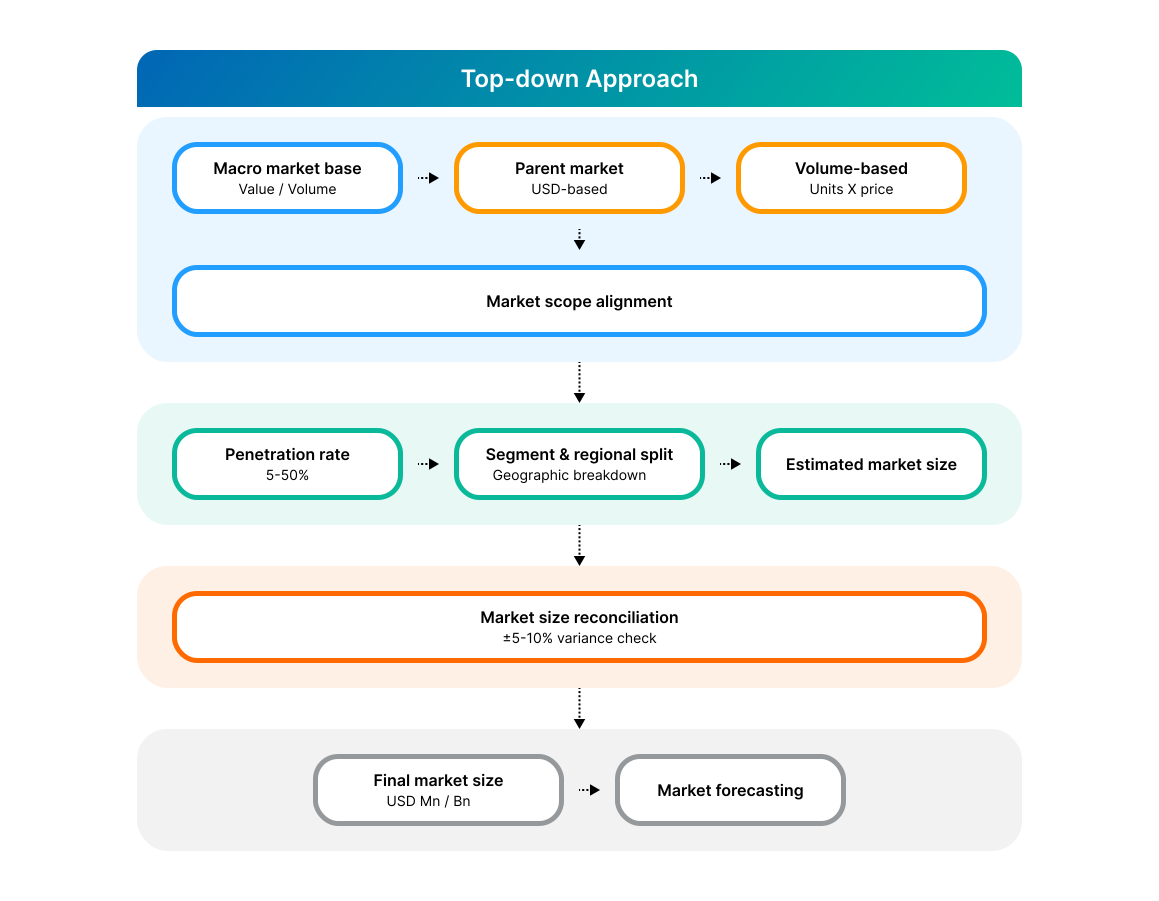
Step 4: TOP-DOWN APPROACH
- We start with the overall market size at a global or macro level.
- The market is then narrowed down based on scope and industry relevance.
- We apply penetration rates and split the data by region and segment.
- This helps us estimate the market size for specific segments.
- The numbers are validated through cross-checks to ensure accuracy.
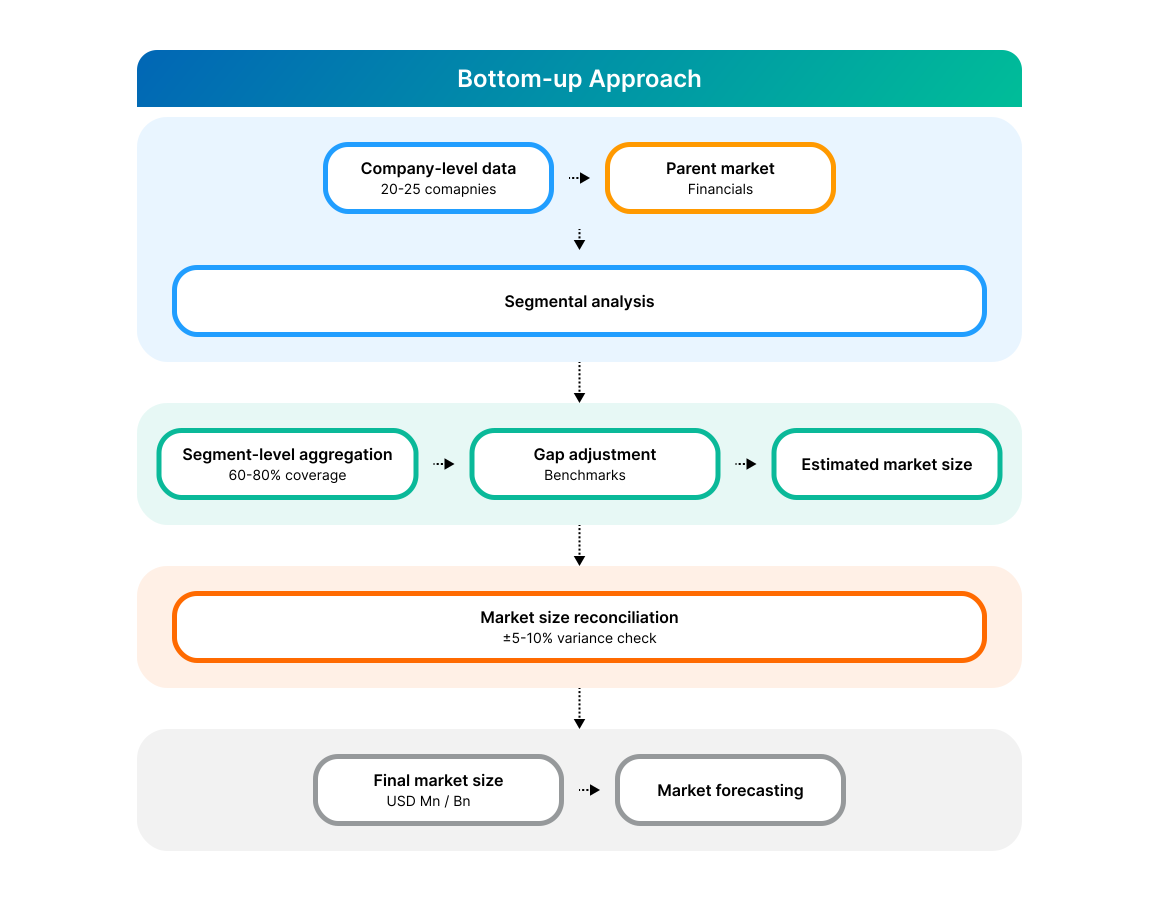
Step 5: BOTTOM-UP APPROACH
- We begin by analyzing data from leading companies in the market.
- Revenue data is collected and mapped across different segments.
- The data is then aggregated to estimate the total market size.
- To fill in any gaps, adjustments are made based on industry standards.
- Validation checks make sure that the results are correct.
5. Data Structuring
Step 6:
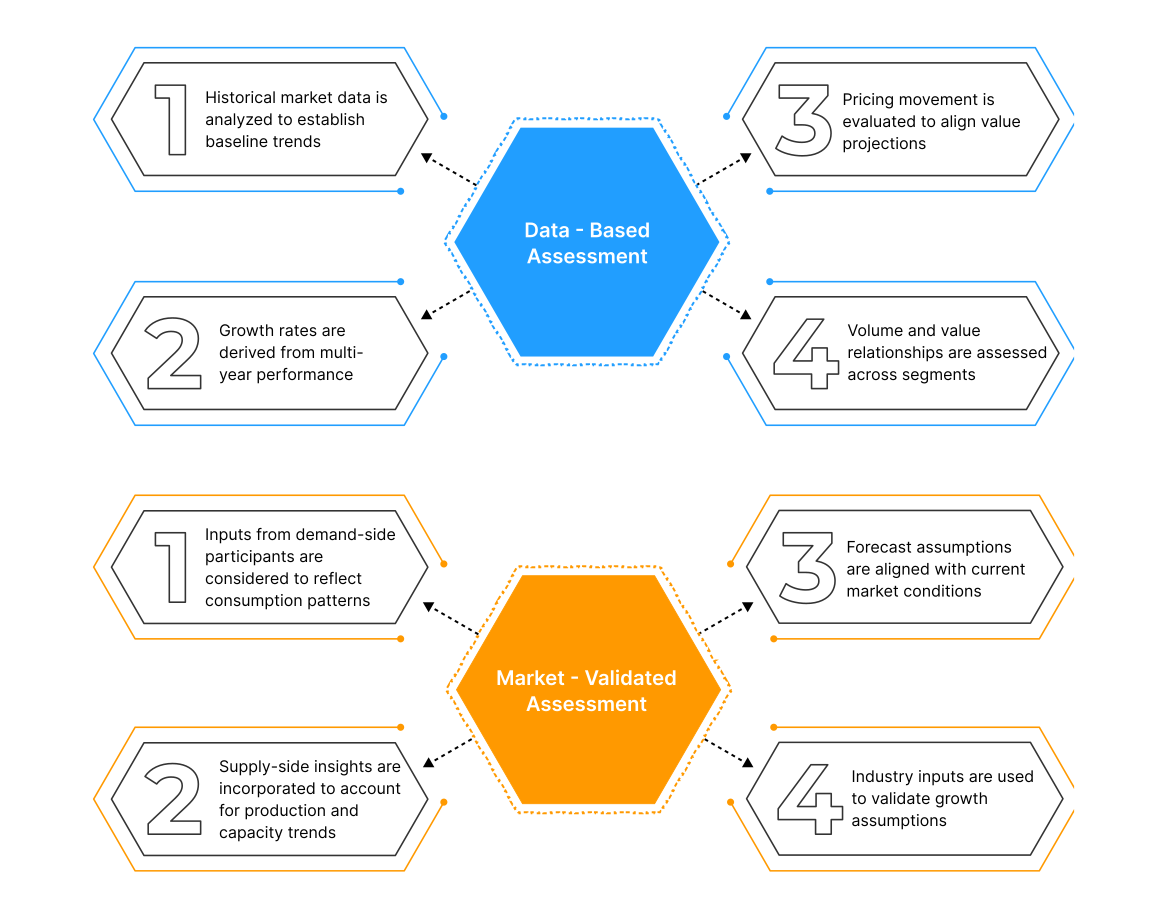
At Polaris Market Research, we employ a methodical forecasting strategy. This approach blends the analysis of historical data with real-time market validation. To forecast future trends with precision, we examine past patterns, pricing fluctuations, and the interplay of supply and demand. To ensure our conclusions reflect the present market landscape, we actively seek input from industry experts and key stakeholders.
To refine our predictions, we carefully consider critical elements such as market drivers and restraints, fluctuations in raw material costs, emerging technologies, and the production capabilities of various regions. Furthermore, we assess regulatory frameworks and potential policy shifts to gauge their potential impact on market expansion.
All this information is synthesized to generate precise forecasts for each segment and region. These forecasts illuminate the current state of the market and highlight forthcoming opportunities.
6. Data Structuring
Step 7:
In the final stage, we validate all our estimates using a triangulation method, where data is cross-checked from multiple reliable sources, like company data, primary interviews, and secondary research. This helps us make sure that our numbers are correct and fit with the rest of the market.
This process involves verifying data consistency across various segments and geographic areas. It also requires comparing historical trends with the assumptions support the forecast. Any discrepancies involve adjustments to ensure everything remains aligned and dependable.
Once the data is finalized, we prepare the final outputs, including market size estimates, segment-wise breakdowns, and growth metrics. These are delivered in structured formats such as tables, charts, and data files for easy analysis and use.
We collaborate closely with clients, ensuring the final products align with their requirements. This includes offering tailored adjustments, supplementary data analyses, and continuous assistance. Furthermore, we monitor market trends post-delivery, providing updates and refinements to maintain the insights' relevance as time passes.
Post-delivery, we continue to monitor market shifts, offering updates and adjustments to ensure the insights remain relevant over time.
Validation
Triangulation Framework
- Company-level data
- Primary inputs from industry participants
- Secondary benchmarks and published data
- Variance maintained within ±5-10%
- Adjustments applied to align estimates
- Segment values validated against overall market structure
Quality Check
Data Consistency & Integrity
- Segment totals validated to 100%
- Regional estimates aligned with global market size
- Historical trends compared against forecast outputs
- Assumptions reviewed for cross-segment and regional alignment
Output & Delivery
Final Outputs
- Market size estimates (USD Mn/Bn)
- Segment-wise distribution (%)
- Growth metrics (CAGR %)
- Structured tables and charts
- Segment-level datasets
- Excel-based data files for further analysis
Client Alignment & Support
- Deliverables are aligned with defined client requirements and scope
- Custom data cuts and segment splits are incorporated as required
- Post-delivery queries are addressed through analyst interactions
- Additional clarifications and data support are provided upon request
Client Continuity & Updates
- Market developments are tracked post-delivery to capture changes in key trends
- Updated data and revisions are provided based on new market inputs
- Additional refinements and data cuts are shared as required
- Continued analyst engagement supports evolving client requirements


