
Cytosine Market Size, Share & Growth Analysis Report, 2026-2034
REPORT DETAILS
Market Statistics
What is Cytosine Market Size?
The global cytosine market was valued at USD 404.59 million in 2025 and is expected to grow at a CAGR of 9.6% during the forecast period. The growth is driven by growth of pharmaceutical industry, increase in use in agriculture, and advancement in formulation.
Market Statistics
- 2025 Market Size: USD 404.59 Million
- 2034 Projected Market Size: USD 923.20 Million
- CAGR (2026-2034): 9.6%
- Largest Market: North America
This growth is primarily driven by the increasing utilization of cytosine in key end-use sectors, notably agriculture, pharmaceuticals, and chemicals. Within the pharmaceutical industry, cytosine plays a pivotal role, influencing the demand dynamics and shaping trends within the global market. Pharmaceutical companies are consistently in pursuit of novel molecules and compounds with therapeutic potential, and cytosine serves as a crucial component in the synthesis of various pharmaceutical products. Its applications extend to the creation of antiviral drugs, anticancer agents, and nucleoside analogues, contributing significantly to the pharmaceutical sector's diverse product portfolio.
Source: Polaris Market Research Analysis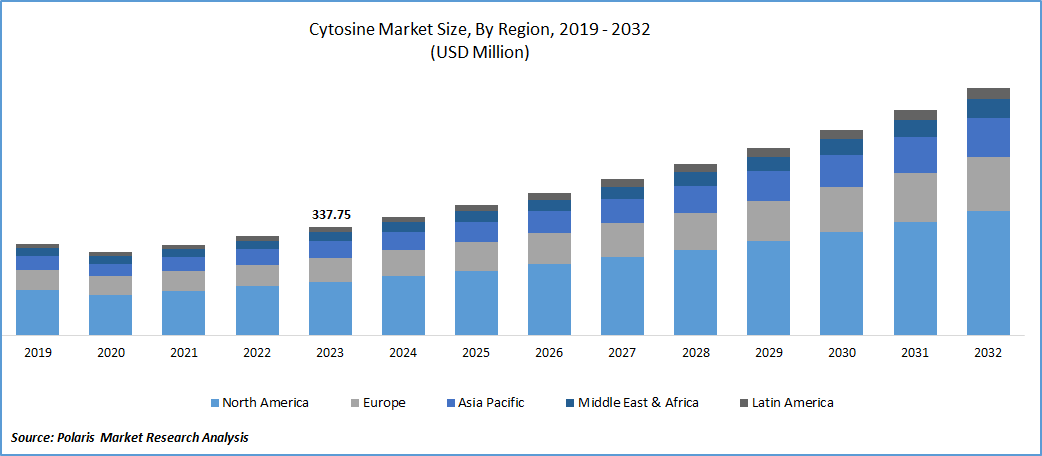
To Understand More About this Research, Download Sample Report
The emphasis on genomics and personalized medicine further amplifies the demand for cytosine within the pharmaceutical industry. As advancements in genomics continue to drive the exploration of tailored medical treatments, the importance of cytosine in this landscape is expected to grow. This aligns with the industry's quest for innovative solutions, thereby propelling the demand for cytosine in the global market.
Agencies such as the European Medicines Agency (EMA) in Europe and the Food and Drug Administration (FDA) in the United States, imposes stringent guidelines on pharmaceutical products. These regulations ensure the safety, efficacy, and quality of cytosine-based pharmaceuticals, emphasizing the need for rigorous testing, clinical trials, and adherence to established standards. The dynamic interplay between pharmaceutical companies, regulatory bodies, and the versatile applications of cytosine underscores its critical role in advancing medical research and therapeutic solutions in the pharmaceutical landscape, particularly in the U.S.
The sourcing and utilization of raw materials for cytosine production are intricately tied to compliance with safety standards and stringent quality control measures. Regulatory expectations and established quality control standards exert a considerable influence on the dynamics of the cytosine market, shaping trends and determining market trajectories. The escalating demand for cytosine, a pivotal nucleotide base integral to DNA and RNA, has spurred a notable increase in both domestic and international markets. This surge in product demand has prompted manufacturers to respond by expanding their production capacities and overall output. For instance, in 2020, Reno Pharmaceuticals demonstrated a proactive approach to this growing demand by augmenting their production capacity with the addition of 1,200 tons of cytosine.
Source: Polaris Market Research Analysis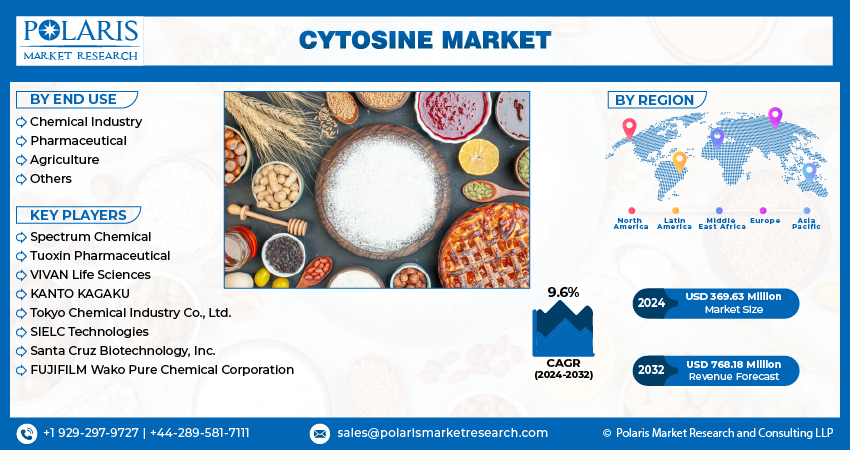
Get Full Segment-Level Forecasts & Insights: Download Sample Report
Industry Dynamics
Growth Drivers
Growth of pharmaceutical industry
Cytosine holds significant importance within the pharmaceutical industry in the United States, finding diverse applications ranging from fundamental drug discovery processes to the development of precision-targeted therapies. The versatility of cytosine-based compounds and nucleoside analogs is harnessed to modulate genetic processes, address specific diseases, and enhance overall treatment outcomes.
In the U.S., pharmaceutical companies are actively engaged in comprehensive research and development endeavors focused on cytosine-based nucleoside analogs. These compounds play a crucial role in combating various viral infections, including but not limited to HIV and hepatitis. Additionally, their application extends to the development of therapies designed to selectively target cancer cells, showcasing the broad spectrum of utility that cytosine offers in the realm of pharmaceutical innovation.
Key Trends in Cytosine
| Trend | Description | Technical / application focus | Examples from Practice |
| Epigenetic anticancer agents | 5-aza-2'-deoxycytidine (decitabine) and 5-azacytidine incorporate into DNA, trap DNMTs, and demethylate genes for MDS/AML therapy. | Hypomethylation reactivates tumor suppressors; S‑phase specific; more potent than cytarabine in models. | Decitabine half‑life 15–25 min; approved for AML/MDS; resistance via DCK/CDA changes. |
| Antiviral nucleoside analogs | Cyclopentenylcytosine, 2'-fluorinated cytosine analogs inhibit viral polymerases in HCV, HSV, HBV. | Chain termination or polymerase inhibition; broad‑spectrum potential. | 2'-FdC EC90 5 μM vs HCV replicon; Troxacitabine antitumor too. |
| Nano‑delivery systems | Nanoparticles encapsulate cytosine analogs (decitabine, doxorubicin hybrids) for targeted release and protection. | Overcome degradation/rapid clearance; ligands for active targeting; sustained release >72 h. | 92% encapsulation; 30 nm particles bypass barriers; doxorubicin/indometacin examples. |
| Resistance mechanisms | Adaptive pyrimidine metabolism shifts (DCK↑, CDA↑) reduce activation of decitabine/5-azacytidine. | Off‑target dNTP imbalances trigger compensatory enzyme changes in AML relapse. | Bone marrows at relapse show adverse enzyme expression; predicts clinical resistance |
Source: Polaris Market Research Analysis
Report Segmentation
The market is primarily segmented based on end use, and region.
| By End Use | By Region |
|
|
Source: Polaris Market Research Analysis
To Understand More About this Research, Request Customization
By End Use Analysis
Pharmaceutical segment accounted for the largest market share in 2025
Pharmaceutical segment accounted for the largest share. This prominence is attributed to the widespread utilization of cytosine bases, particularly in the realm of genetic testing and analysis. Within the pharmaceutical sector, cytosine plays a pivotal role in DNA sequencing and genomics, facilitating the precise identification of specific genetic variations and mutations that can significantly impact an individual's response to various medications.
Cytosine's involvement extends beyond genetic analysis to encompass drug discovery and development processes. Pharmaceutical companies leverage cytosine, in conjunction with other nucleotide bases, in crucial stages such as target identification, lead optimization, and preclinical studies. This underscores the integral role that cytosine plays in advancing pharmaceutical research and the pursuit of novel therapeutic solutions.
The significance of genetic variations and mutations in cytosine, along with other nucleotide bases, extends to traditional crop breeding methods, facilitating the creation of improved crop varieties endowed with desirable traits. These traits encompass crucial aspects such as disease resistance, heightened yield, and enhanced nutritional content. The widely employed molecular biology and genetics technique, Polymerase Chain Reaction (PCR), leverages cytosine and other nucleotide bases for the targeted amplification of specific DNA segments.
In the realm of in vitro diagnostics, cytosine holds substantial importance in the development of nucleic acid-based tests. These tests utilize the specific pairing of cytosine with guanine and adenine with thymine to detect and analyze genetic information accurately. The precise matching of nucleotide bases enables the identification and interpretation of genetic data, contributing to the advancement of diagnostic capabilities and molecular testing methodologies.
Source: Polaris Market Research Analysis
Need Granular Data Across All Market Segments? Request Customization
Regional Insights
North America region dominated the global market in 2025
North America region’s growth is attributed to the widespread utilization of the product across diverse industries, particularly in agriculture and pharmaceuticals. The pharmaceutical sector has exhibited a keen awareness of the significant role that cytosine plays in various crucial processes, driving its adoption in drug discovery, development, and personalized medicine.
In drug discovery, it serves as a fundamental component in the synthesis of nucleoside analogs, contributing to the creation of innovative pharmaceutical products. These products, including antiviral drugs, anticancer agents, and other therapeutics, are developed with the aim of addressing specific diseases and enhancing treatment outcomes. Additionally, cytosine is integral to the field of personalized medicine, where a focus on genomics and individualized treatment approaches has surged in recent years. Its role in modulating genetic processes and targeting specific diseases aligns with the personalized medicine paradigm, making it a valuable asset in tailoring treatments to individual patients.
The Asia Pacific will grow with substantial pace. Region’s growth is driven by favorable government regulations that facilitate the pharmaceutical industry's operations in the region. The regulatory landscape is conducive to the production and distribution of cytosine, supporting the growth of the market. Additionally, the availability of low-cost labor and raw materials in the region plays a crucial role in making the production processes more cost-effective. This cost advantage enhances the competitiveness of the regional market, making it an attractive destination for pharmaceutical manufacturing activities.
Region is characterized by the presence of numerous small-scale players with in-line manufacturing capabilities. This distinguishes the regional market from Western markets and contributes to its unique dynamics. The combination of regulatory support, cost advantages, government initiatives, and a diverse range of players operating in the region as a significant growth hub for the cytosine market in the coming years.
Source: Polaris Market Research Analysis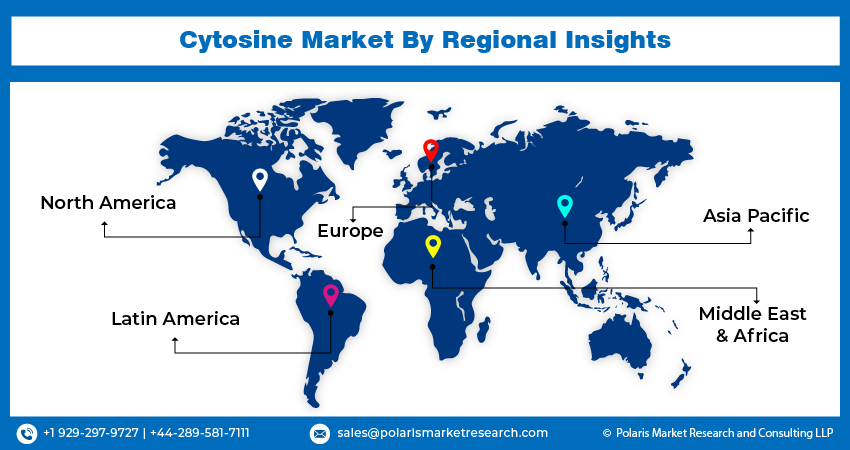
Curious About Regional Market Performance? Request Customization
Key Market Players & Competitive Insights
Companies in this emerging region are strategically focusing on new product development to meet the rising consumer needs. This proactive approach allows businesses to cater to evolving market demands, stay ahead of the competition, and capture a larger market share. By innovating and introducing new cytosine-based products, companies can position themselves as leaders in the dynamic and growing market.
Abundant availability of raw materials provides a solid foundation for manufacturing processes, ensuring a stable and consistent supply of cytosine. Cheap labor is another significant factor contributing to market growth. The availability of cost-effective labor resources enables companies to manage production costs efficiently, enhancing their competitiveness in the market.
Some of the major players operating in the global market include:
- Spectrum Chemical
- Tuoxin Pharmaceutical
- VIVAN Life Sciences
- KANTO KAGAKU
- Tokyo Chemical Industry Co., Ltd.
- SIELC Technologies
- Santa Cruz Biotechnology, Inc.
- FUJIFILM Wako Pure Chemical Corporation
Recent Developments
- November 2023: Merck KGaA partnered with leading German academic institutions to develop next-generation sequencing technologies with advanced cytosine analysis, improving accuracy, speed, and cost efficiency while supporting wider adoption of cytosine-based products across Europe’s biotech and pharma sectors.
- May 2023, HuidaGene Therapeutics, has achieved a breakthrough in converting guanine into cytosine, a process known as G-to-Y. It has applied for global patent for the guanine base editor (gGBE) and holds exclusive rights.
Cytosine Market Report Scope
| Report Attributes | Details |
| Market size in 2025 | USD 404.59 million |
| Market size in 2026 | USD 441.97 million |
| Revenue forecast in 2034 | USD 923.20 million |
| CAGR | 9.6% from 2026 – 2034 |
| Base year | 2025 |
| Historical data | 2021 – 2024 |
| Forecast period | 2026 – 2034 |
| Quantitative units | Revenue in USD million/billion and CAGR from 2026 to 2034 |
| Segments covered | By End Use, By Region |
| Regional scope | North America, Europe, Asia Pacific, Latin America; Middle East & Africa |
| Customization | Report customization as per your requirements with respect to countries, region and segmentation. |
Source: Polaris Market Research Analysis
Cytosine Market FAQ's
end use, and region are the key segments in the Cytosine Market
The global cytosine market size is expected to reach USD 923.20 million by 2034
expected to grow at a CAGR of 9.6% during the forecast period.
North America regions is leading the global market.
Growth in pharmaceutical industry are the key driving factors in Cytosine Market
Download Sample Report of Cytosine Market
Please fill out the form to request a customized copy of the research report.


