
Global Digital Artwork Market Size, Share Analysis Report, 2025-2034
REPORT DETAILS
What is the Current Market Size?
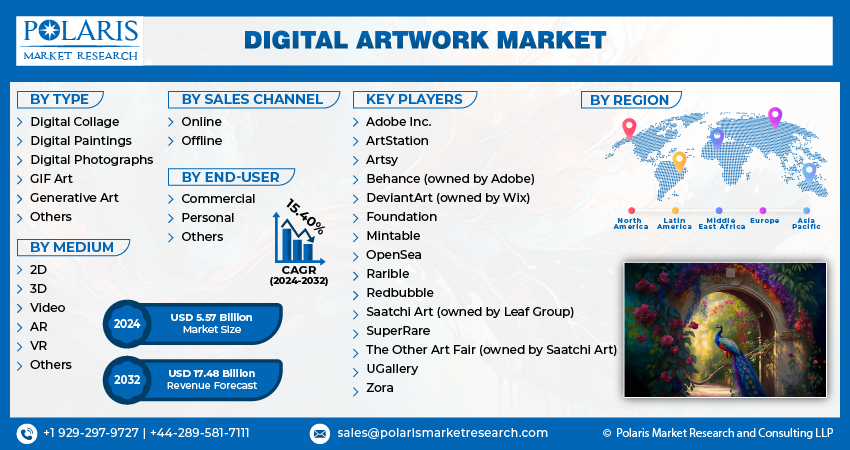
The global digital artwork market was valued at USD 5.57 billion in 2024 and is expected to grow at a CAGR of 15.4% during the forecast period. Key factors drigving the market demand includes increasing popularity of digital platforms, rising interest in virtual and augmented reality art.
Key Insights
- The digital paintings segment is projected to grow at the highest CAGR during the projected period. This is due to the evolving landscape of artistic expression.
- In 2024, the augmented reality (AR) segment of the digital artwork market held the largest share, driven by digital elements in the real world that create interactive, immersive experiences.
- The North America region dominated the global market, accounting for the largest share in 2024. This is due to technological advancements and a strong artistic community.
- The Asia Pacific region is expected to witness the fastest growth during the forecast period due to the surge in digital innovation and a rich cultural heritage.
Industry Dynamics
- The increasing popularity of digital platforms is projected to boost the product demand.
- Rising interest in virtual and augmented reality art drives the market growth.
- Establishing provenance and authenticity for digital art ownership creates challenges to expand.
- New revenue streams from programmable digital assets create growth opportunities.
Market Statistics
- 2024 Market Size: USD 5.57 billion
- 2034 Projected Market Size: USD 23.34 billion
- CAGR (2025-2034): 15.4%
- North America: Largest market in 2024
AI Impact on the Industry
- It boost creative workflows and ideation for human artists.
- Introduces new artistic mediums like generative and algorithmic art.
- The tools lower technical barriers, democratizing digital art creation.
- Raises complex questions regarding intellectual property and artistic originality.
Source: Polaris Market Research Analysis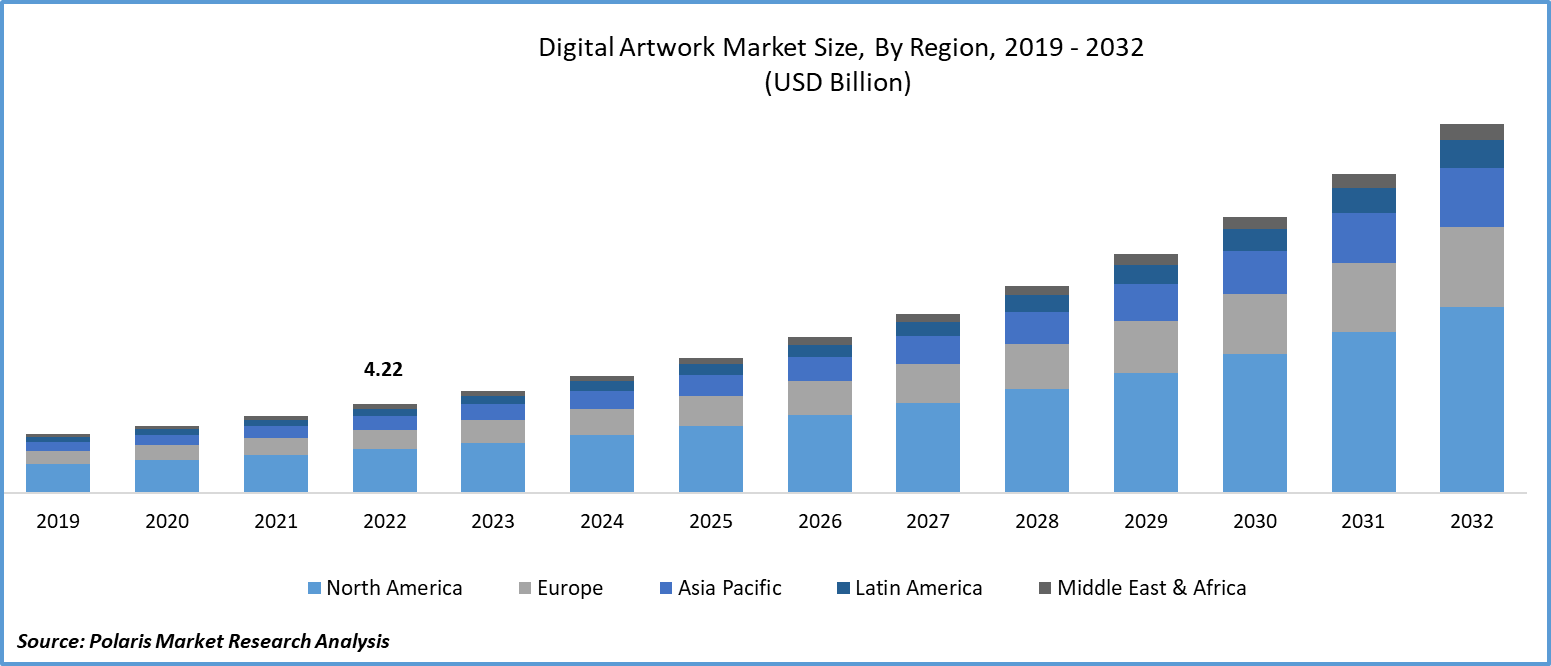
To Understand More About this Research: Download Sample Report
What Does the Digital Artwork Market Includes?
The digital artwork contain artistic works created or presented using digital technology. This is an important component of the creative process. The market is driven by increase in the infusion of digital art into commercial advertising and branding. Companies and brands are hiring digital artists for the purposes of marketing campaigns, social media content, and immersive brand experiences. This is due to the need to grab consumer attention in an oversaturated digital landscape with visually engaging and shareable content. Digital art can easily be adapted to different forms of media, from web banners to large scale digital installations. This market embraces an extensive range of creative endeavors, extending from 2D illustrations to immersive virtual reality experiences, propelled by progress in software, hardware, and the widespread accessibility of online platforms. Therefore, this commercial adoption provides a steady revenue stream for digital artists. This moves the market beyond a niche community and into the mainstream economy.
However, digital piracy and copyright protection are factors hampering the growth of the digital artwork market. The ethereal quality of digital art gives rise to apprehensions regarding unauthorized replication and dissemination. Both artists and platforms wrestle with safeguarding intellectual property rights in the digital domain, emphasizing the imperative need for robust methods of copyright enforcement. Despite the increased availability of digital tools, there persists a requirement for user-friendly and cost-effective technologies to guarantee broad engagement in the process of creating digital art. Closing the technological gap is pivotal in cultivating an all-encompassing and varied community of digital creators.
Source: Polaris Market Research Analysis
Get Full Segment-Level Forecasts & Insights: Download Sample Report
Growth Drivers
Why the Increasing Popularity of Digital Platforms is Projected to Spur Product Demand?
The advent of digital art has democratized the creative process, shattering traditional barriers that once limited artistic expression to a select few. Accessible digital tools and platforms empower artists of all backgrounds to channel their imaginative energies, revolutionizing the art-making process. This inclusivity has led to a flourishing community of digital creators, spanning from seasoned professionals to emerging talents. Non-fungible tokens (NFTs) have emerged as a revolutionary force within the digital artwork market. These unique digital certificates, secured by blockchain technology, authenticate ownership of a specific piece of digital art. NFTs have redefined ownership and monetization in the digital realm, enabling artists to tokenize their creations and participate in an entirely new economic model. This development has triggered a paradigm shift, creating a direct link between the value of digital art and its scarcity and provenance.
What are the Factors for Rising Interest in Virtual and Augmented Reality Art?
The incorporation of AR and VR technologies has propelled digital art into a realm beyond traditional screens, ushering in an era of truly immersive experiences. AR enables the overlay of digital artworks onto the physical world, offering viewers an interactive encounter with art in their immediate surroundings. VR, on the other hand, immerses users in entirely virtual art spaces, transcending traditional notions of artistic presentation. This shift towards immersive experiences has expanded the creative possibilities for artists, unlocking uncharted territories of sensory engagement. For instance, in May 2023, Art de Finance, a pioneer in constructing a blockchain-powered Digital Renaissance art framework, forged a strategic alliance with Beosin, a leading blockchain security firm. This collaboration aims to propel the development of a secure Web 3.0 Art ecosystem, setting forth stringent security benchmarks for the art sector through the innovative q blockchain. Together, they seek to fortify the foundations of a trusted and resilient digital art landscape.
Report Segmentation
The market is primarily segmented based on type, medium, sales channel, end-user, and region.
| By Type | By Medium | By Sales Channel | By End-User | By Region |
|
|
|
|
|
Source: Polaris Market Research Analysis
To Understand the Scope of this Report: Request Customization
Segment Insights
Why Digital Paintings segment is expected to witness the highest growth during the forecast period?
The digital paintings segment is projected to grow at the highest CAGR during the projected period, mainly driven by the surge in the evolving landscape of artistic expression, where digital tools and techniques have gained prominence. Digital paintings offer artists a versatile canvas to explore boundless creative possibilities, from hyper-realistic renderings to abstract and conceptual art. Additionally, the accessibility and affordability of digital painting software and hardware have democratized the medium, enabling a wider pool of artists to delve into this form of expression. The ability to easily edit, manipulate, and experiment with various styles and techniques has further fueled the popularity of digital paintings. Moreover, the rise of NFTs has provided a platform for digital painters to tokenize and monetize their creations, opening up new avenues for revenue and recognition. As technology continues to advance, the digital paintings segment is poised for sustained growth and innovation within the digital artwork market.
Which Segment by Medium Held the Largest Share in 2024?
The Augmented Reality (AR) segment in the digital artwork market held the largest share in 2024. AR technology overlays digital elements in the real world, creating interactive and immersive experiences. Artists are leveraging AR to blur the lines between physical and digital art, offering viewers a dynamic and engaging encounter. Museums and galleries are increasingly incorporating AR-enhanced exhibits, enhancing the visitor experience. Moreover, AR-powered art applications allow users to interact with art in their environments, democratizing access to cultural experiences. The commercial sector has also embraced AR art, with brands using it for marketing campaigns and product displays. As AR technology continues to advance and become more accessible through smartphones and AR glasses, the segment is poised for sustained growth, revolutionizing the way art is experienced and consumed in the digital era.
Which Segments by Sales Channel Contributed to the Growth Opportunities?
The online segment is projected to grow at the highest CAGR during the projected period. Digital art platforms, marketplaces, and galleries have flourished, providing artists with a virtual stage to showcase and sell their creations to a vast online audience. This surge in online engagement has democratized access to art, allowing enthusiasts and collectors from around the world to explore and acquire digital artworks. Additionally, the rise of NFTs has further catalyzed this growth, revolutionizing the way digital art is bought and sold. With continuous technological advancements and increasing digital connectivity, the online segment is poised for continued expansion in the digital artwork market.
Source: Polaris Market Research Analysis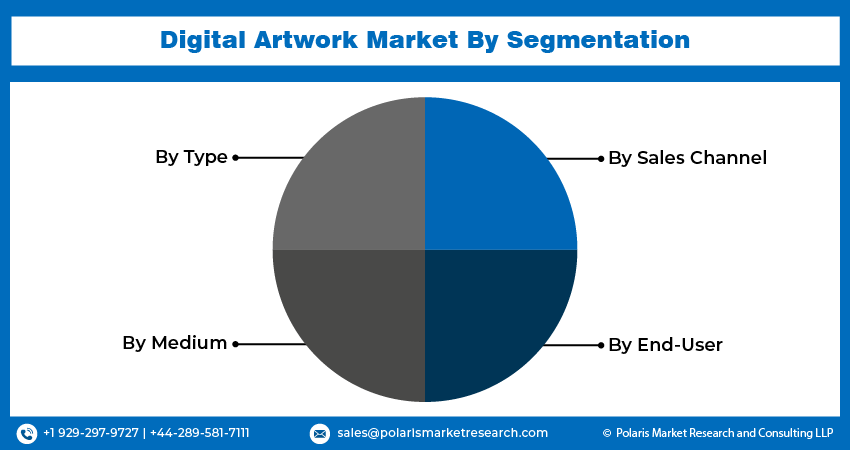
Need Granular Data Across All Market Segments? Request Customization
Regional Insights
What is the Reason for the North America Market Largest Revenue Share?
The North American region dominated the global market with the largest market share in 2024 and is expected to maintain its dominance over the anticipated period. The growth of the segment market can be largely attributed due to technological advancements and a strong artistic community; the region has embraced digital art across various forms. With the rise of NFTs, North America has played a leading role in pioneering the tokenization and monetization of digital creations.
Why Asia Pacific is Expected to Witness the Fastest Growth During the Forecast Period?
The Asia Pacific region is expected to witness the fastest growth during the forecast period. The digital artwork market in Asia Pacific is rapidly evolving, reflecting the region's dynamic blend of tradition and technology. With a surge in digital innovation and a rich cultural heritage, Asia Pacific has become a melting pot of artistic experimentation. The growing tech-savvy population, digital art collaborations, and the exploration of augmented and virtual reality experiences fuel the market. Additionally, the rise of NFTs has garnered considerable attention, with artists and collectors actively participating. As the region continues to embrace digital art as a medium for creative expression and investment, the Asia Pacific digital artwork market is poised for substantial growth and transformative artistic exploration.
Source: Polaris Market Research Analysis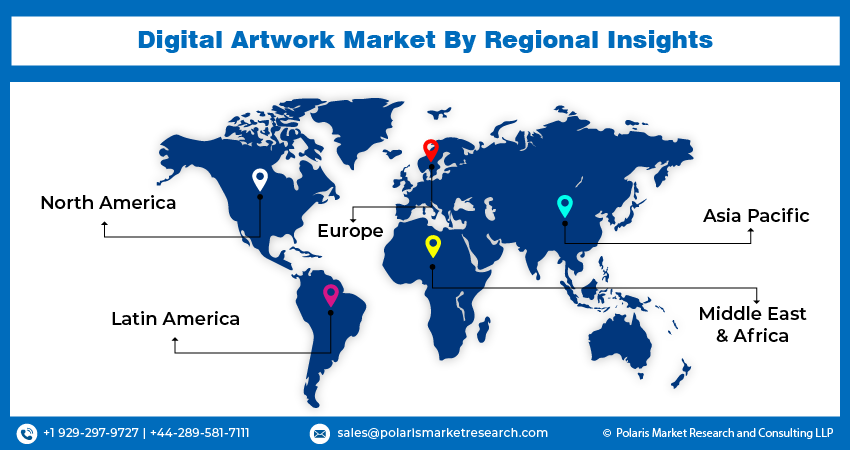
Curious About Regional Market Performance? Request Customization
Key Market Players & Competitive Insights
The digital artwork market is fragmented and is anticipated to witness competition due to several players' presence. Major service providers in the market are constantly upgrading their technologies to stay ahead of the competition and to ensure efficiency, integrity, and safety. These players focus on partnership, product upgrades, and collaboration to gain a competitive edge over their peers and capture a significant market share.
Some of the major players operating in the global market include:
- Adobe Inc.
- ArtStation
- Artsy
- Behance (owned by Adobe)
- DeviantArt (owned by Wix)
- Foundation
- Mintable
- OpenSea
- Rarible
- Redbubble
- Saatchi Art (owned by Leaf Group)
- SuperRare
- The Other Art Fair (owned by Saatchi Art)
- UGallery
- Zora
Recent Developments
- In September 2025, Samsung Electronics Co., Ltd. collaborated with British design house Liberty to curate a collection for the Samsung Art Store. Samsung Art TV users around the world can now display 20 new designs from Liberty’s rich archive of timeless art and patterns from the comfort of their own homes.
- In March 2023, Coca‑Cola Invited Digital Artists to ‘Create Real Magic’ Using a New AI Platform. This was built for Coca‑Cola by OpenAI and Bain & Company to combine the capabilities of GPT-4, which generates human-like text from search queries, and DALL-E, which generates images from text.
- In August 2023, Adidas Studio, also known as Three Stripes Studio, revealed its worldwide introduction of a digital artist residency initiative named "Residency by Adidas" on Thursday. This program by the renowned streetwear brand will shine a spotlight on artists from around the world
Digital Artwork Market Report Scope
| Report Attributes | Details |
| Market size value in 2024 | USD 5.57 billion |
| Market size value in 2025 | USD 6.41 billion |
| Revenue Forecast in 2034 | USD 23.34 billion |
| CAGR | 15.4% from 2025– 2034 |
| Base year | 2024 |
| Historical data | 2020 – 2023 |
| Forecast period | 2025 – 2034 |
| Quantitative units | Revenue in USD billion and CAGR from 2025 to 2034 |
| Segments Covered | By Type, By Medium, By Sales Channel, By End-User, By Region |
| Regional scope | North America, Europe, Asia Pacific, Latin America; Middle East & Africa |
| Customization | Report customization as per your requirements with respect to countries, regions, and segmentation. |
Source: Polaris Market Research Analysis
Digital Artwork Market FAQ's
• The global market size was valued at USD 5.57 billion in 2024 and is projected to grow to USD 23.34 billion by 2034.
• The global market is projected to register a CAGR of 15.4% during the forecast period.
• North America dominated the market in 2024.
• A few of the key players in the market are Adobe Inc., ArtStation, Artsy, Behance (owned by Adobe), DeviantArt (owned by Wix), Foundation, Mintable, OpenSea, Rarible, Redbubble, Saatchi Art (owned by Leaf Group), SuperRare, The Other Art Fair (owned by Saatchi Art), UGallery, Zora.
• In 2024, the augmented reality (AR) segment of the digital artwork market held the largest share.
• The digital paintings segment is projected to grow at the highest CAGR during the projected period.
Download Sample Report of Digital Artwork Market
Please fill out the form to request a customized copy of the research report.


