

Market Overview
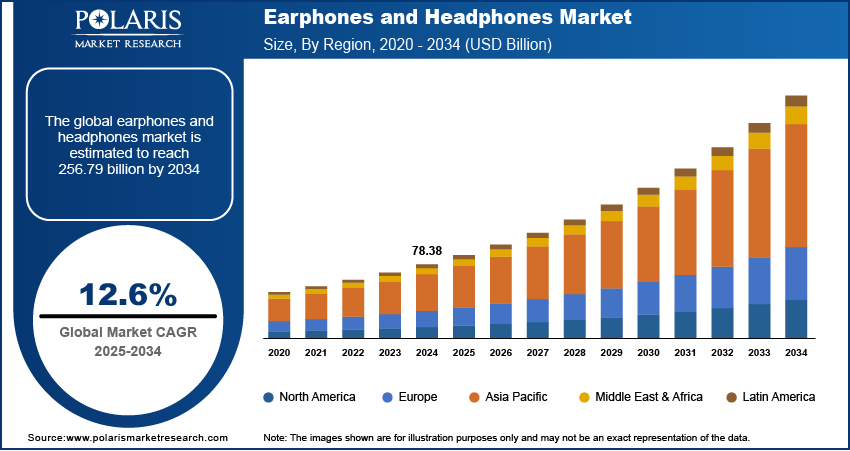
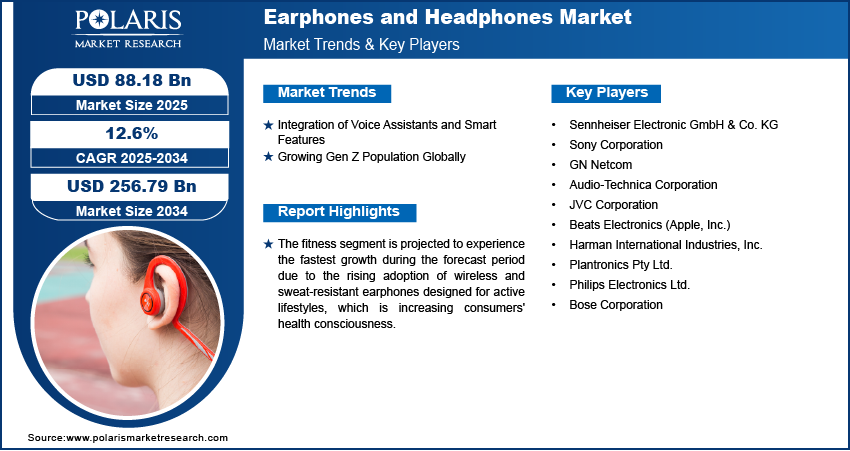
The earphones and headphones market size was valued at USD 88.31 billion in 2025 and is expected to register a CAGR of 12.9% from 2026 to 2034. The strong growth of the market is being driven by rising fitness trends and a tech-savvy Gen Z population. Also, increasing demand for smart wireless features and the widespread use of smartphones fuel the market expansion.
Key Insights
- Asia Pacific dominated the market with 36.7% revenue share in 2025. Rising consumer base, rapid industrialization, and growing disposable income of middle class drive the regional market.
- The North America market is expected to record a significant CAGR of 14.8% during the forecast period. The adoption of audio technologies and surging demand for wireless headphones drive the growth.
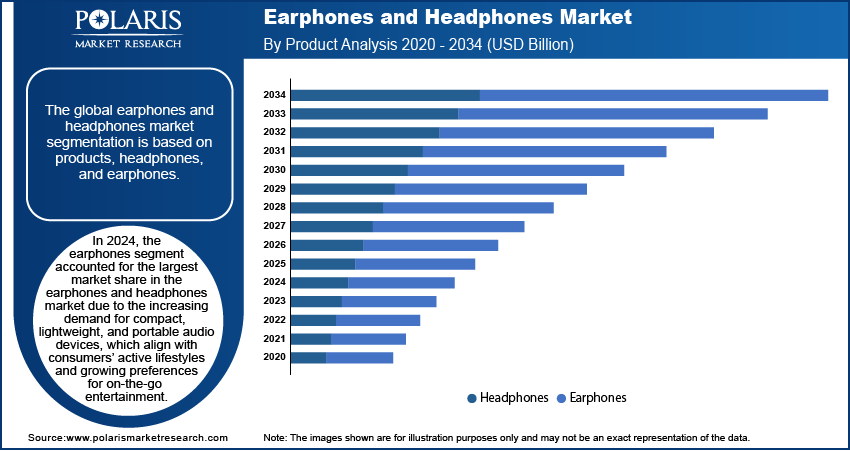
- The earphones segment had the largest revenue share of 61.4% in 2025. Rising demand for compact and portable audio solutions drives growth in the segment.
- The fitness segment is expected to have the highest growth rate of 16.5% from 2026 to 2034. The increasing popularity of wireless earphones and headphones meant for active lifestyles is driving this growth.
- The wireless headphones segment led with 65.6% market share in 2025. The strong market presence of TWS earbuds and the rising demand for Bluetooth-enabled devices support this dominance..
- The >$100 price segment is projected to have the highest CAGR of 18.2% from 2026 to 2034. The rising interest in premium audio devices drives this segment's dominance.
Market Statistics
- 2025 Market Size: USD 88.31 billion
- 2034 Projected Market Size: USD 262.81 billion
- CAGR (2026–2034): 12.9%
- Asia Pacific: Largest market in 2025
Industry Dynamics
- The rising integration of voice assistants with earphones and headphones boosts the market growth.
- The increasing demand for headphones and earphones from the rising Gen Z population drives the market expansion.
- The growing use of wireless headphones and earphones among fitness enthusiasts fuels market penetration.
- Consumers are refraining from spending on nonessential products, which restrains the industry growth.
AI Impact on Earphones and Headphones Market
- Artificial intelligence is used for adaptive noise cancellation. It adjusts surroundings in real time.
- AI use enables personalized audio tuning based on user preferences and listening habits.
- The technology supports real-time language translation for smooth communication.
- It improves voice assistant performance with better speech recognition accuracy.
- Adoption of AI allow for context-aware audio that adapts to the environment and activities.
- AI-driven spatial and immersive audio experiences leads to better sound quality.
- AI is used to develop smart features like automatic volume control and conversation awarene
To Understand More About this Research:Request a Free Sample Report
Earphones and headphones are essential audio devices that enhance people listening experience by providing private sound delivery. Headphones usually have two speakers linked by a band that rests on the head. This design provides an immersive audio experience. They come in different styles, such as over-ear, on-ear, and in-ear. Earphones, often called earbuds, are smaller and made to fit directly into the ear canal. This makes them portable and perfect for using while on the move.
The increasing fitness activities globally is propelling the earphones and headphones market growth. 2023 Tracking the Fitness Movement Report by the Sports & Fitness Industry Association (SFIA) stated that participation in fitness activities has grown an impressive 5.3%, or by 10.4 million people, since 2017 in the U.S. The total number of fitness participants increased by 800,000 from the previous year in 2022, reaching 205.8 million in the country. Fitness fans use audio devices to enhance their workout experience. They listen to music and podcasts to stay motivated while exercising. This pushes them to purchase wireless earbuds and noise-canceling headphones. These devices offer freedom of movement, great sound quality, and comfort during high-intensity workouts.
Market Dynamics
Integration of Voice Assistants and Smart Features
The integration of voice assistants like Alexa and Google Assistant with earphones and headphones has become a popular trend. It gives users hands-free control and easy interaction with their devices. Users can control playback, adjust the volume, check notifications, or manage smart home devices using simple voice commands. This hands-free convenience improves the user experience, especially for people who are exercising or multitasking when manual control isn’t practical. Additionally, AI-powered headphones and spatial audio technology are changing the user experience. They create adaptable sound environments and personalized audio tuning. Companies are using machine learning to improve sound output based on user behavior and surroundings.
Smart features like touch controls have become popular. They offer easy ways to manage audio playback, answer calls, and activate voice assistants without physical buttons. These controls usually respond well, allowing users to swipe or tap on the earphones to skip tracks or adjust the volume, which makes them easy to use. Another important trend is the use of adaptive sound technology. This technology changes the audio output according to the environment. When in a loud area, the earphones automatically increase the volume or activate noise-canceling features. Such features enhance the hearables experience.
Growing Gen Z Population Globally
The growing Gen Z population globally is propelling the earphones and headphones market expansion. According to the World Economic Forum report, Generation Z population across the world is more than 2 billion. This group is tech-savvy. They value high-quality audio experiences on various platforms, such as music streaming, gaming, content creation, and social media. Gen Z consumers prefer wireless, stylish audio devices that match with their digital-first lifestyles. This demand pushes manufacturers to keep innovating, which drives market growth. This generation is boosting the demand for gaming headphones and audio devices for content creation, as social media, esports, and streaming platforms become essential parts of daily life.
Consumer Behavior Analysis
|
Segment |
Category |
Key Insight |
|
By Age
|
||
|
Gen Z (18–26) |
TWS earbuds |
Style-driven, budget-conscious, heavy streaming & gaming usage |
|
Millennials (27–42) |
Premium wireless |
Work-from-home, ANC preference, brand-loyal buyers |
|
Gen X (43–58) |
Over-ear headphones |
Audio quality & comfort priority, audiophile inclination |
|
>59 |
Wired/hearing-aid hybrid |
Ease of use, clarity, health monitoring features |
|
By Usage
|
||
|
Casual |
Budget TWS (<$50) |
Daily commute, music & podcast streaming |
|
Professional |
Enterprise headsets ($80–$400) |
Call clarity, ANC, UC-certified devices |
|
Audiophile |
Premium (>$200) |
Lossless audio, LDAC/aptX, high-fidelity sound |
|
By Region
|
||
|
North America |
Premium & enterprise |
Highest per-capita spend, brand-driven purchases |
|
Asia-Pacific |
Mid-range & budget |
Largest volume market, price-sensitive, fastest growing |
|
Europe |
Premium & sustainable |
Quality-focused, sustainability-conscious buyers |
|
MEA & LATAM |
Budget (<$50) |
Affordability-driven, emerging market adoption |
Segment Insights
By Product Outlook
The segmentation includes headphones and earphones. In 2025, the earphones segment held a larger. It was driven by the rising demand for compact, lightweight, and portable audio devices that fit consumers’ active lifestyles and preference for entertainment on the go. The growth of wireless and true wireless stereo (T3WS) earphones, fueled by improvements in Bluetooth technology and the removal of traditional audio jacks in smartphones, fueled the segment dominance. Furthermore, earphones have gained popularity due to their versatility for commuting, exercising, and remote work, along with enhancements in sound quality and battery life. The segment's strength is reinforced by significant growth in the true wireless earbuds market, especially in emerging economies where affordability and portability boost adoption.
By Application Outlook
The global market segmentation, based on application, includes fitness, virtual reality, gaming, and music & entertainment. The fitness segment is expected to grow the fastest during the forecast period. This is due to the rising popularity of wireless and sweat-resistant earphones made for active lifestyles. More people care about their health. Activities such as running, gym workouts, and yoga are gaining popularity. These factors drive growth in this area. Also, adding features like heart rate monitoring, voice assistant apps, and AI coaching in earphones makes them more attractive to fitness enthusiasts. However, the gaming headphones market and the enterprise headset market are also becoming significant growth areas. Increasing remote work adoption and esports industry expansion boost the growth of these segments.
Earphones & Headphones: Use Case Matrix
|
Use Case |
Dominant Type |
Key Technology |
Growth Driver |
|
Gaming |
Over-ear closed-back |
Spatial audio, low latency |
E-sports & multiplayer online gaming expansion |
|
Fitness/Sports |
In-ear TWS earbuds |
Biometric sensors, IPX ratings |
Wearable health integration |
|
Enterprise/Remote Work |
On-ear/over-ear with mic |
ANC, ENC, UC-certified |
Hybrid & remote work adoption |
|
AR/VR Audio |
Spatial audio headset |
360° spatial, head tracking |
Metaverse & immersive content |
By Technology Outlook
The wireless segment held the largest market share in 2025. It is driven by the widespread adoption of True Wireless Stereo (TWS) technology and enhanced Bluetooth capabilities. The Bluetooth connectivity segment dominated wireless earphones in the same year. Bluetooth earphones and headphones are compatible with many devices. Also, they are easy to use. NFMI (Near Field Magnetic Induction) technology provides a stable connection with low interference. This is crucial for true wireless earbuds, which need precise syncing between the left and right units. ANC (Active Noise Cancellation) is now a standard feature in high-end models. It facilitates clear listening while commuting or traveling. Smart headphones are the next step forward. They work with voice assistants. They allow to adjust audio settings and use biometric sensing. This technology turns earphones into smart wearable devices that provide more than just basic sound.
Are wireless headphones better than wired ones?
Wireless headphones offer undeniable convenience. They provide freedom of movement, tangle-free usage, and seamless Bluetooth connectivity. These features make them ideal for commuting, workouts, and everyday listening. Modern wireless models deliver advanced ANC, spatial audio, and smart features. These benefits match wired performance. However, audiophiles and professionals favor wired headphones. They deliver lossless audio, eliminate latency, and do not depend on batteries. These advantages make wired headphones the better option for studio use and critical listening. The best choice varies based on personal use, lifestyle, and audio preferences.
What is the Difference Between TWS and Bluetooth Earphones?
|
Parameter |
TWS (True Wireless Stereo) Earphones |
Bluetooth Earphones (Neckband/Wired Wireless) |
|
Design |
Completely wire-free (no cables) |
Connected via wire/neckband between earbuds |
|
Portability |
Highly portable, compact charging case |
Less compact due to neckband or cable |
|
Battery Life |
Moderate; depends on case recharging |
Longer continuous playback per charge |
|
Convenience |
Fully wireless, easy to carry and use |
Slightly less convenient due to wires |
|
Connectivity |
Independent earbuds, seamless pairing |
Single unit connection via Bluetooth |
|
Audio Performance |
Advanced features like spatial audio, ANC |
Stable audio, fewer advanced features |
|
Price Range |
Generally higher |
More affordable options available |
|
Use Case |
Ideal for travel, workouts, daily use |
Suitable for long calls, office, extended use |
|
Risk Factor |
Easy to misplace individual buds |
Lower risk due to connected design |
|
Charging |
Case-based charging system |
Direct charging via cable |
Regional Insights
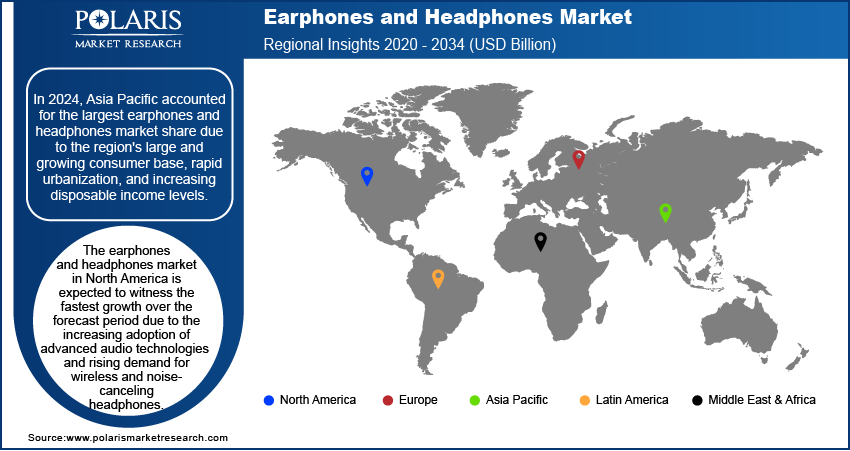
By region, the study gives insights into North America, Europe, Asia Pacific, Latin America, and the Middle East and Africa. In 2025, Asia Pacific held the largest market share. Its large and growing consumer base and rapid urbanization propel the dominance. Also, higher disposable incomes drive the regional market growth. The rising use of smartphones and other portable smart devices accelerates the market expansion. Stronger preference for wireless audio solutions has greatly increased demand. Furthermore, the presence of major manufacturers and investments in technological advancements drive the North America earphones and headphones market growth. The rise of e-commerce platforms that offer a variety of affordable and premium products has enhanced the market. In April 2024, Shenzhen Grandsun Electronic Co., Ltd, a company based in Shenzhen, launched the world’s first zero-carbon open-ear earbuds. This marked a significant step forward in audio technology, aligning with China’s "dual carbon goals" and showing the industry's move toward sustainable innovation. Countries like China and India are experiencing rapid growth in the earphones market. This is due to rising smartphone penetration and affordable TWS earbuds demand. The India earphones market growth is particularly driven by domestic brands offering competitive pricing.
The North America earphones and headphones market is expected to witness the fastest growth over the forecast period due to the increasing adoption of advanced audio technologies, rising demand for wireless and noise-canceling headphones, and a growing consumer base with higher disposable incomes. The popularity of fitness and gaming apps propels the demand for earphones and headphones in the regions. The adoption of smart features such as voice assistants and augmented reality has boosted demand in the region. The strong presence of top industry players and quick advancements in product innovation also play a major role in market growth in North America. For instance, Silynxcom Ltd. has received a new order from the United States Air Force for its tactical communication headsets designed for demanding military applications.
Key Players and Competitive Analysis Report
The market is very competitive, with both global and regional players. Intense competition among key companies shapes the market. Rapid technological advancements and shifting consumer preferences influence this rivalry. Major market players concentrate on innovation. They offer features like noise cancellation and wireless connectivity. They also emphasize better sound quality to increase their market share. Prominent players are Apple Inc.; Sony Corporation; Bose Corporation; Samsung Electronics Co., Ltd.; and Sennheiser Electronic GmbH & Co. KG, and others. These companies emphasize strategies such as mergers and acquisitions, partnerships, and product launches. It helps them strengthen their positions.
The market sees significant contributions from emerging players and regional manufacturers, particularly in Asia Pacific. They provide budget-friendly options. The rising popularity of true wireless stereo (TWS) earbuds and smart headphones with built-in AI features increases competition.
List of Key Companies
- Audio-Technica Corporation
- Beats Electronics (Apple, Inc.)
- Bose Corporation
- GN Netcom
- Harman International Industries, Inc.
- JVC Corporation
- Philips Electronics Ltd.
- Plantronics Pty Ltd.
- Sennheiser Electronic GmbH & Co. KG
- Sony Corporation
Pricing & Supply Chain Dynamics
The earphones and headphones supply chain analysis shows a strong reliance on semiconductor components, lithium-ion batteries, and acoustic drivers. This makes the industry vulnerable to global supply disruptions. Additionally, pricing trends for audio devices indicate that average selling prices (ASPs) are rising in premium segments. The budget segments remain very competitive because of regional manufacturers. The earphones and headphones market experiences intense price competition. Vendors are using tiered pricing across budget, mid-range, and premium segments. It helps them manage both margins and volume. Bulk buying by companies leads to discounts and lowers average selling prices. Increasing component costs, especially for chips, batteries, and active noise canceling (ANC) technology, affect pricing strategies. On the supply side, a strong reliance on Asian component suppliers poses risks from disruptions and changes in currency values. Companies are moving toward localized manufacturing and contract assembly to improve resilience. Additionally, short product lifecycles and strong e-commerce channels need supply chains that are quick, affordable, and flexible.
Earphones and Headphones Industry Developments
- January 2026: Apple unveiled AirPods Pro 3 with an H2 chip handling 48,000 samples per second for adaptive ANC and added USB-C charging to comply with revised European port regulations.
- January 2025: Shokz launched the OpenMeet UC headset at CES 2025. It was honored at the CES Innovations Awards for its lightweight 78g design and dual-microphone bone conduction technology with Qualcomm cVc noise reduction.
- September 2024: Apple launched the AirPods 4 and AirPods Pro 2. They feature improved audio technology and a hearing health solution. The Pro model offers adaptive audio, customizable sound profiles, and real-time hearing assessments. It leads the way in managing auditory health.
- November 2022: Zebronics launched a combination product called Zeb-Sound Bomb X1 3-in-1, which includes a truly wireless headset, Bluetooth speaker, and Torch. The earbuds, which come in white, blue, and black, have a battery life of up to five hours per charge, support voice assistants, and are available in three colors.
- September 2022: Sony launched the WH-1000XM5 noise-canceling headphones in India, expanding its range of wireless headphones. The WH-1000XM5 has a unique design with sliding headphones. It also features better Active Noise Cancellation (ANC) with two processors and eight microphones, along with other improvements. It is the successor to the popular WH-100XM4 headphones.
Earphones and Headphones Market Segmentation
By Product Outlook (Revenue, USD Billion; 2021–2034)
- Headphones
- Earphones
By Technology Outlook (Revenue, USD Billion; 2021–2034)
- Wireless
- ANC
- Bluetooth
- NFMI
- Smart Headphones
- Others
- Wired
- ANC
- Others
By Price Band Outlook (Revenue, USD Billion; 2021–2034)
- <50
- 50-100
- >100
By Application Outlook (Revenue, USD Billion; 2021–2034)
- Fitness
- Virtual Reality
- Gaming
- Music & Entertainment
By Regional Outlook (Revenue, USD Billion; 2021–2034)
- North America
- U.S.
- Canada
- Europe
- Germany
- France
- UK
- Italy
- Spain
- Netherlands
- Russia
- Rest of Europe
- Asia Pacific
- China
- Japan
- India
- Malaysia
- South Korea
- Indonesia
- Australia
- Vietnam
- Rest of Asia Pacific
- Middle East & Africa
- Saudi Arabia
- UAE
- Israel
- South Africa
- Rest of Middle East & Africa
- Latin America
- Mexico
- Brazil
- Argentina
- Rest of Latin America
Earphones and Headphones Market Report Scope
|
Report Attributes |
Details |
|
Market Size in 2025 |
USD 88.31 billion |
|
Market Size in 2026 |
USD 99.45 billion |
|
Revenue Forecast in 2034 |
USD 262.81 billion |
|
CAGR |
12.9% from 2026 to 2034 |
|
Base Year |
2025 |
|
Historical Data |
2022–2024 |
|
Forecast Period |
2026–2034 |
|
Quantitative Units |
Revenue in USD billion, 2021–2034 and CAGR from 2026 to 2034 |
|
Report Coverage |
Revenue Forecast, Market Competitive Landscape, Growth Factors, and Trends |
|
Segments Covered |
|
|
Regional Scope |
|
|
Competitive Landscape |
|
|
Report Format |
|
|
Customization |
Report customization as per your requirements with respect to countries, regions, and segmentation. |
FAQ's
The global market size was valued at approximately USD 88.31 billion in 2025 and is forecast to reach USD 262.81 billion by 2034, growing at a CAGR of 12.9%.
Growth is driven by rapid adoption of wireless audio, adaptive noise cancellation, spatial audio processing, and biometric sensing integrated into modern earphones and headphones.
The wireless segment captured the largest market share in 2025 due to strong TWS earbuds market penetration.
Asia Pacific dominated the global market in 2025. The widespread use of smartphones in China, India, and Indonesia increases their dominance.
Key trends include True Wireless Stereo (TWS) earbuds and AI-enhanced call clarity. Smart assistant integration, sustainability-focused designs using recycled materials, and fitness-oriented health monitoring features are another trends.
The average lifespan of earphones is 1 to 5 years. Material quality and usage frequency affect the product life. Additionally, its maintenance influences their lifespan.
Latest earbud innovations include adaptive ANC, spatial audio, biometric health sensors, and lossless wireless codecs. AI-powered sound tuning and technologies for longer battery life are also new developments.
Headphone prices depend on the quality of the audio drivers, the technology used for active noise canceling, the brand's reputation, wireless capabilities, the materials used in construction, smart features, and support after the sale.
AI will change audio devices by improving noise cancellation, creating personalized sound profiles, enabling real-time translation, providing voice assistance, and offering smart health monitoring features.
Page last updated on:
May-2023
Research Methodology
A robust system of research, verification, and forecasting designed to ensure reliable and actionable market insights.
Polaris Market Research uses a clear and structured approach to deliver insights that clients can rely on. The process combines detailed primary and secondary research, including direct communication with industry experts. The detailed information helps build a complete picture of market trends and developments. Secondary data is gathered from credible sources such as industry reports, company filings, government source links, and trusted organization databases. It is then cross-checked through discussions with key stakeholders across the value chain. Market size and forecasts are developed using both bottom-up and top-down methods to ensure accuracy and consistency in the final results.
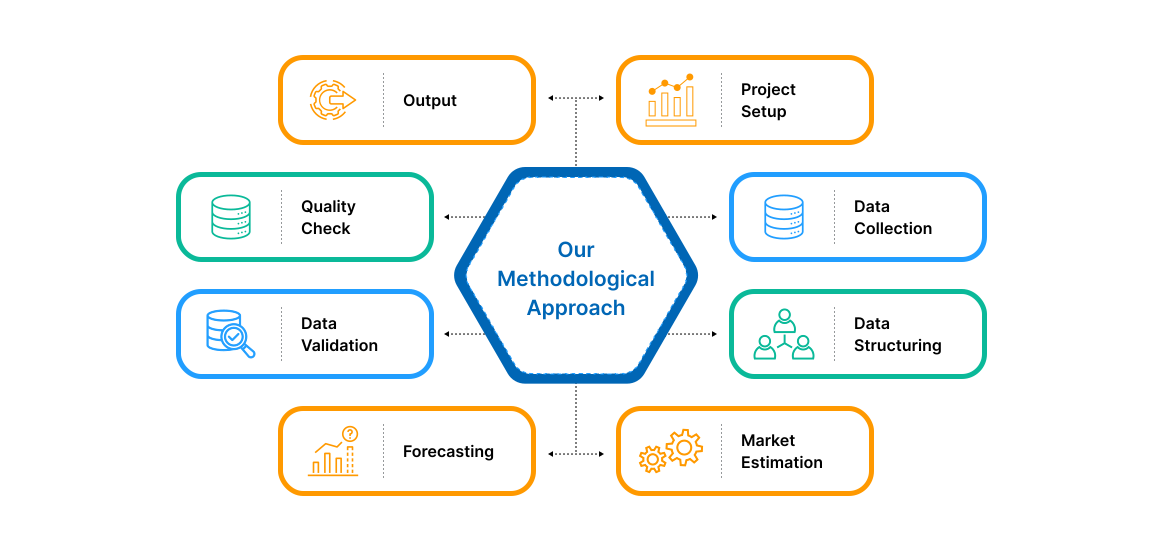
Project Setup
Step 1 & 2:
- We start every project by clearly understanding the client’s objective or goal, then defining the market scope, and aligning regions, segments, and timelines.
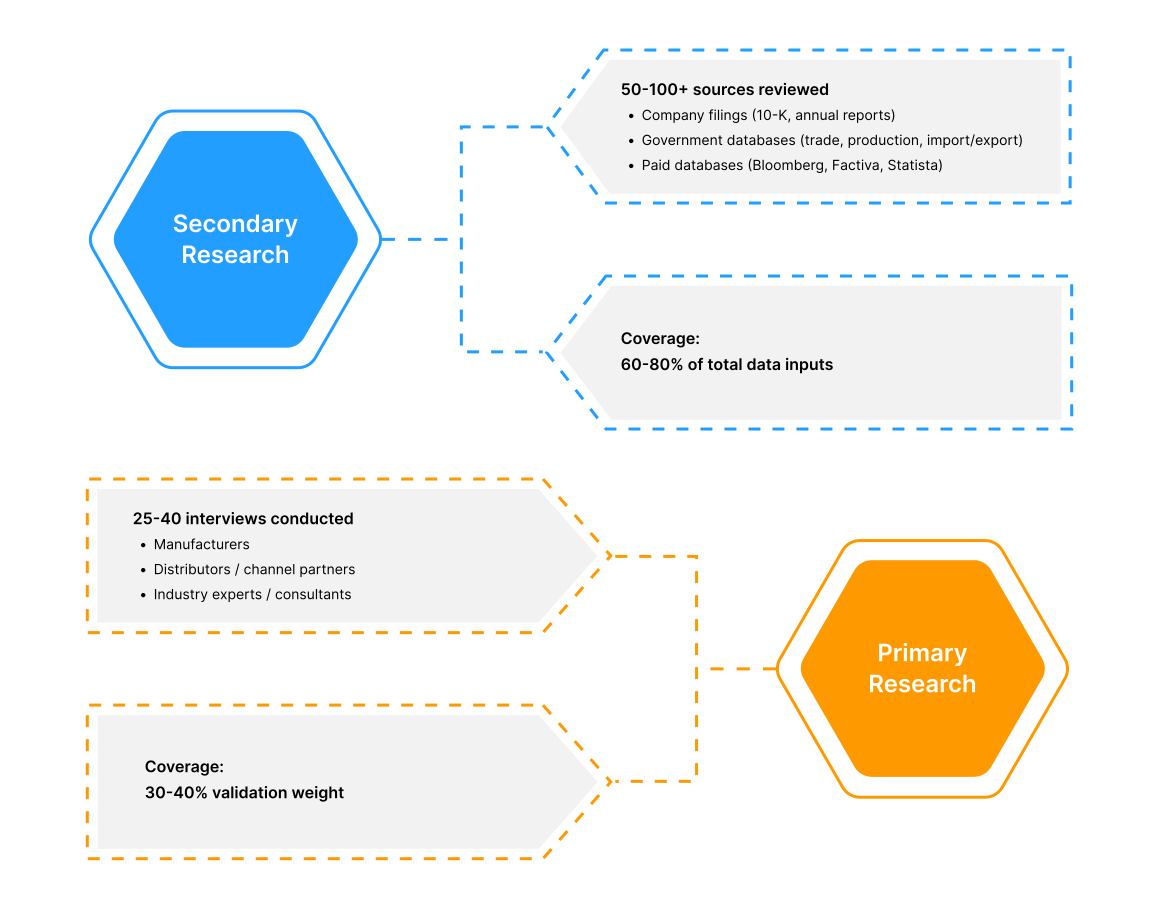
- Once the foundation is set, we collect data from all-around of sources, including company reports, government databases, and paid industry platforms.
- Our research is based on secondary data, which helps us build a strong understanding of the market across regions and industries. Then we validate this information through primary research by speaking directly with industry experts, companies, and stakeholders.
- By combining secondary and primary research, we ensure that our market insights are accurate, practical, and closely aligned with real market conditions.
Data Collection
We gather information from both public and verified sources:
Data Structuring
Step 3:
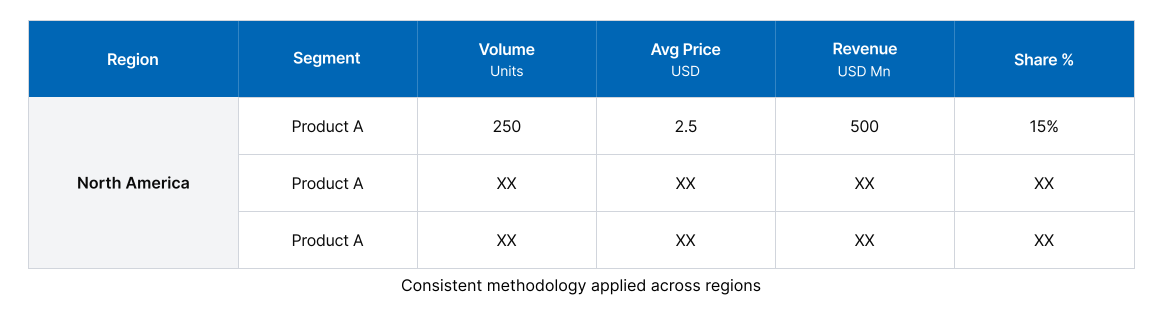
- All collected data is organized into a consistent format to ensure accurate analysis. Since inputs come from multiple sources, they are standardized and aligned before use.
- The data is segmented by product, application, and region, and mapped across a defined historical period (2020–2024). All values are converted into common units (USD Mn/Bn), and volume and pricing are aligned where required to estimate revenue.
- Any overlaps or inconsistencies are reviewed and adjusted to maintain accuracy (<5% variance threshold).
- The result is a structured dataset that allows for clear comparison across regions and supports reliable analysis and forecasting.
Structured Market Dataset, USD Mn/Bn
4. Data Structuring
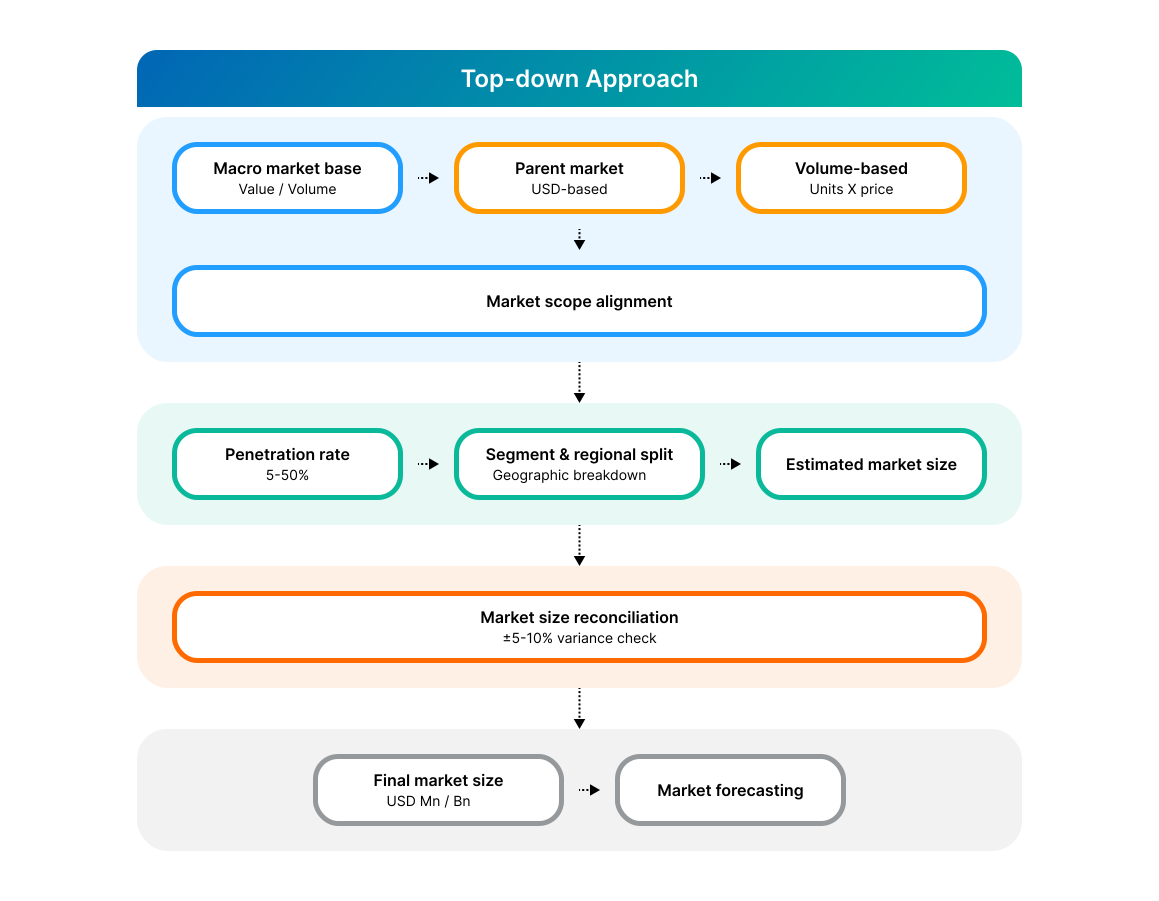
Step 4: TOP-DOWN APPROACH
- We start with the overall market size at a global or macro level.
- The market is then narrowed down based on scope and industry relevance.
- We apply penetration rates and split the data by region and segment.
- This helps us estimate the market size for specific segments.
- The numbers are validated through cross-checks to ensure accuracy.
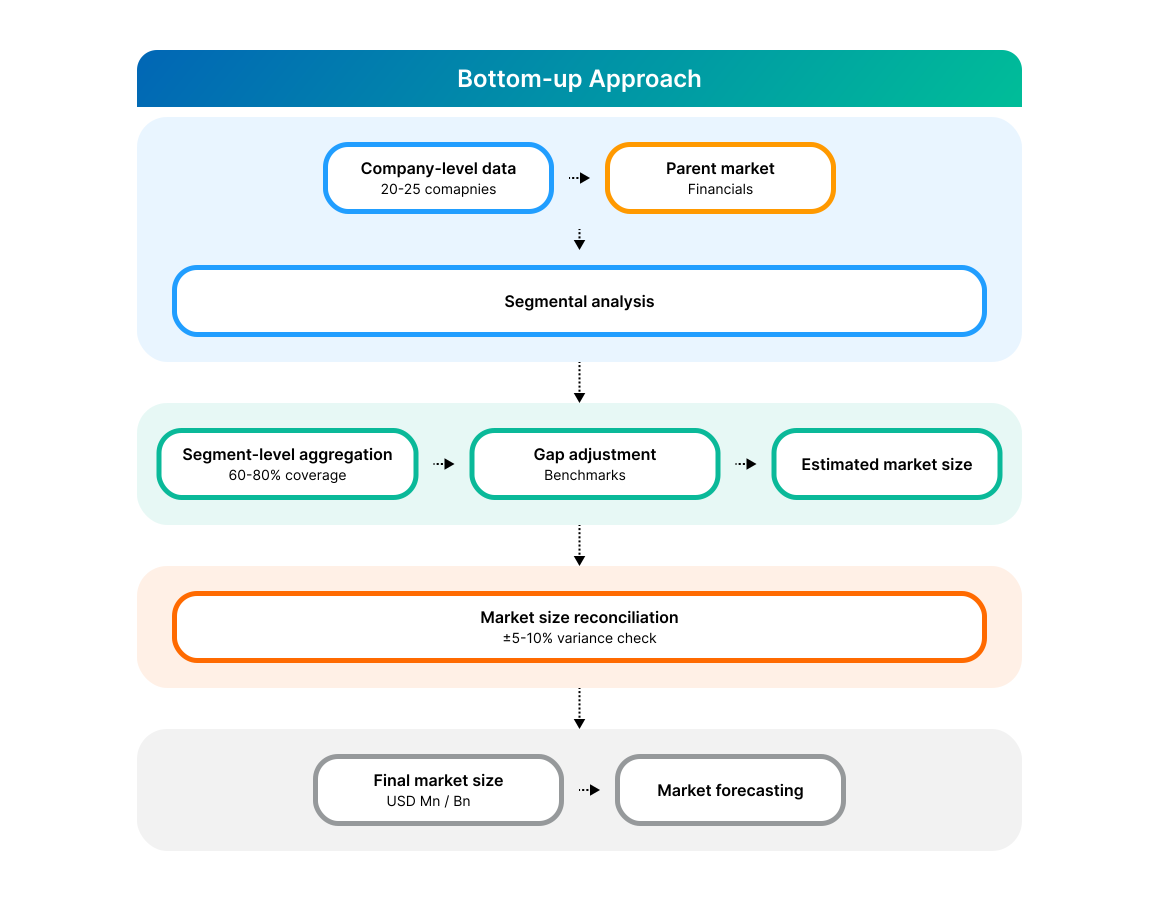
Step 5: BOTTOM-UP APPROACH
- We begin by analyzing data from leading companies in the market.
- Revenue data is collected and mapped across different segments.
- The data is then aggregated to estimate the total market size.
- To fill in any gaps, adjustments are made based on industry standards.
- Validation checks make sure that the results are correct.
5. Data Structuring
Step 6:
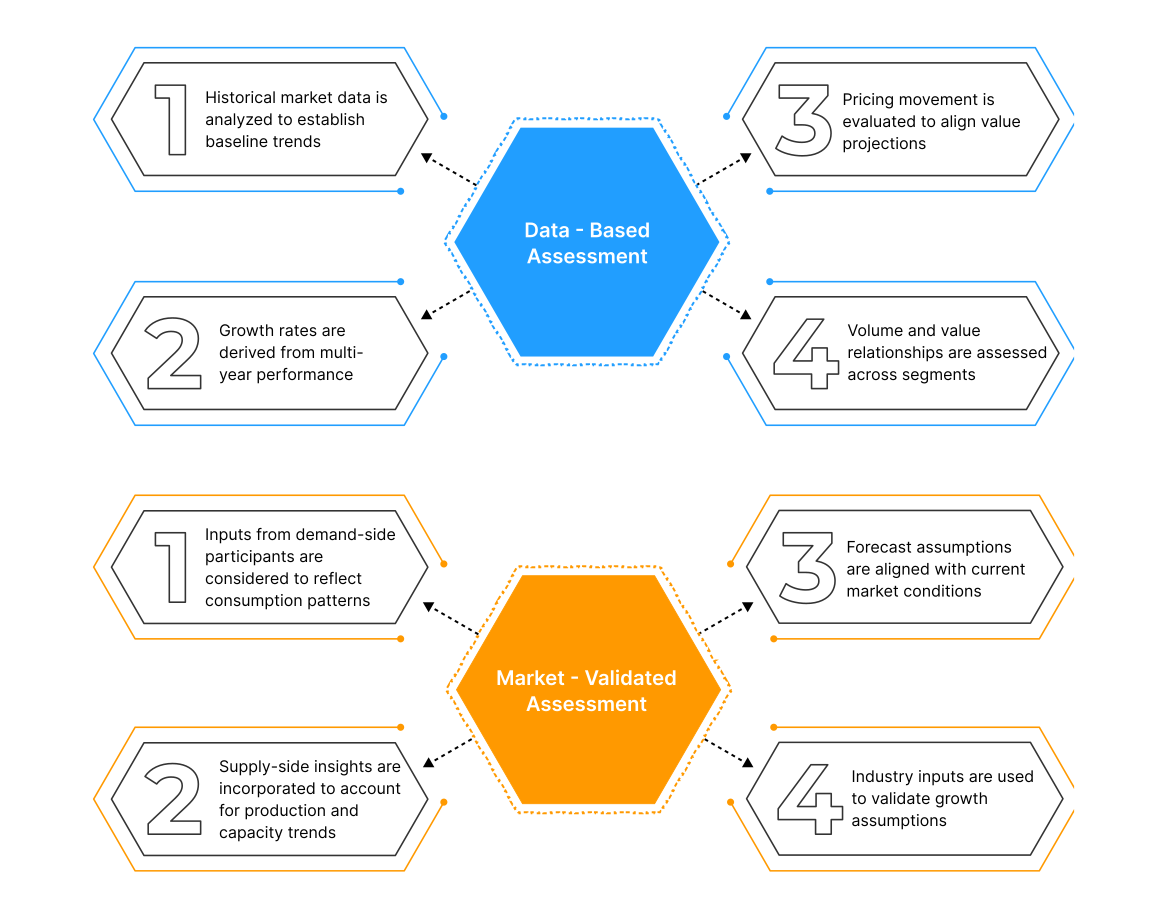
At Polaris Market Research, we employ a methodical forecasting strategy. This approach blends the analysis of historical data with real-time market validation. To forecast future trends with precision, we examine past patterns, pricing fluctuations, and the interplay of supply and demand. To ensure our conclusions reflect the present market landscape, we actively seek input from industry experts and key stakeholders.
To refine our predictions, we carefully consider critical elements such as market drivers and restraints, fluctuations in raw material costs, emerging technologies, and the production capabilities of various regions. Furthermore, we assess regulatory frameworks and potential policy shifts to gauge their potential impact on market expansion.
All this information is synthesized to generate precise forecasts for each segment and region. These forecasts illuminate the current state of the market and highlight forthcoming opportunities.
6. Data Structuring
Step 7:
In the final stage, we validate all our estimates using a triangulation method, where data is cross-checked from multiple reliable sources, like company data, primary interviews, and secondary research. This helps us make sure that our numbers are correct and fit with the rest of the market.
This process involves verifying data consistency across various segments and geographic areas. It also requires comparing historical trends with the assumptions support the forecast. Any discrepancies involve adjustments to ensure everything remains aligned and dependable.
Once the data is finalized, we prepare the final outputs, including market size estimates, segment-wise breakdowns, and growth metrics. These are delivered in structured formats such as tables, charts, and data files for easy analysis and use.
We collaborate closely with clients, ensuring the final products align with their requirements. This includes offering tailored adjustments, supplementary data analyses, and continuous assistance. Furthermore, we monitor market trends post-delivery, providing updates and refinements to maintain the insights' relevance as time passes.
Post-delivery, we continue to monitor market shifts, offering updates and adjustments to ensure the insights remain relevant over time.
Validation
Triangulation Framework
- Company-level data
- Primary inputs from industry participants
- Secondary benchmarks and published data
- Variance maintained within ±5-10%
- Adjustments applied to align estimates
- Segment values validated against overall market structure
Quality Check
Data Consistency & Integrity
- Segment totals validated to 100%
- Regional estimates aligned with global market size
- Historical trends compared against forecast outputs
- Assumptions reviewed for cross-segment and regional alignment
Output & Delivery
Final Outputs
- Market size estimates (USD Mn/Bn)
- Segment-wise distribution (%)
- Growth metrics (CAGR %)
- Structured tables and charts
- Segment-level datasets
- Excel-based data files for further analysis
Client Alignment & Support
- Deliverables are aligned with defined client requirements and scope
- Custom data cuts and segment splits are incorporated as required
- Post-delivery queries are addressed through analyst interactions
- Additional clarifications and data support are provided upon request
Client Continuity & Updates
- Market developments are tracked post-delivery to capture changes in key trends
- Updated data and revisions are provided based on new market inputs
- Additional refinements and data cuts are shared as required
- Continued analyst engagement supports evolving client requirements


