

Overview
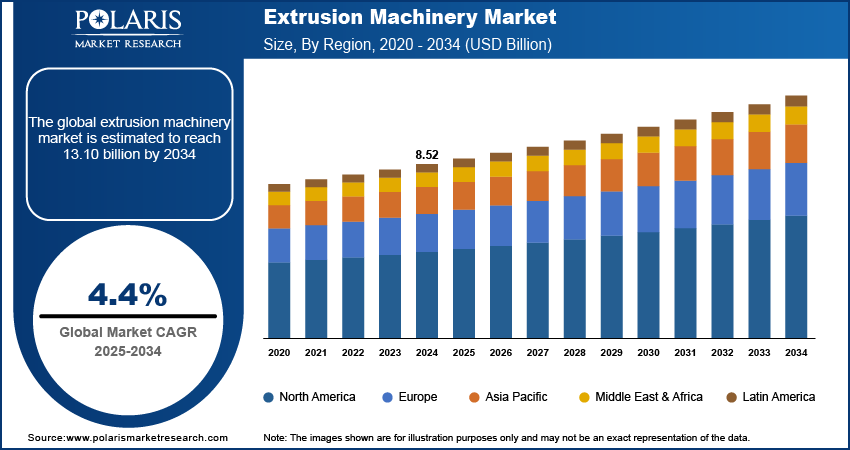
The global extrusion machinery market size was valued at USD 8.52 billion in 2024, growing at a CAGR of 4.4% from 2025 to 2034. Industrialization and urbanization coupled with expansion of manufacturing investments in emerging economies is propelling the market growth.
Key Insights
- Plastics dominated the market in 2024, led by increasing plastic component demand in packaging, construction, and automotive industries.
- Single-screw extrusion machinery led the market share, driven by its simplicity, flexibility, and economical production of normal plastic profiles, sheets, and films.
- Asia Pacific dominated the global market in 2024, driven by fast industrialization, urbanization, and the growth of manufacturing bases in China, India, and Southeast Asia.
- India played a major role in regional development, driven by increasing investments in packaging, automobile, and construction sectors demanding high-volume extrusion manufacturing.
- North America expected to grow at a high rate, fueled by the use of sophisticated, high-accuracy extrusion equipment in packaging, automotive, and consumer goods sectors.
- The U.S. led the North America market due to upgradation of production plants, integration of automation, and increased demand for high-quality extruded products.
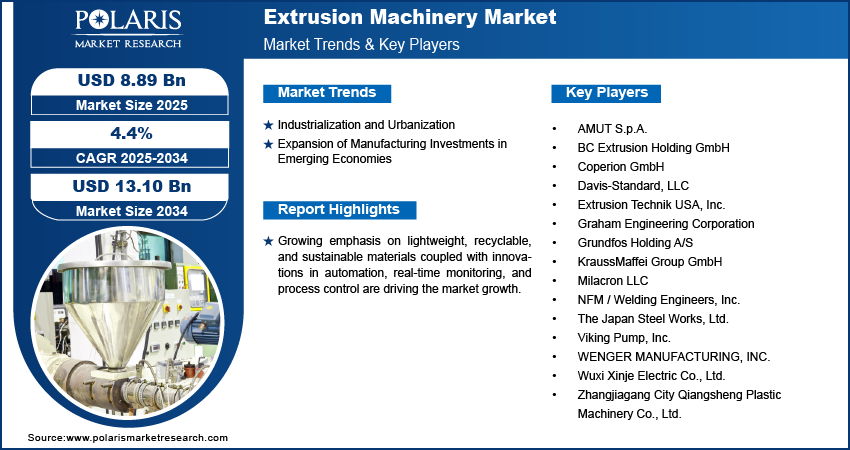
- Key players operating in the market include AMUT S.p.A., BC Extrusion Holding GmbH, Coperion GmbH, Davis-Standard, LLC, Extrusion Technik USA, Inc., Graham Engineering Corporation, Grundfos Holding A/S, KraussMaffei Group GmbH, Milacron LLC, NFM / Welding Engineers, Inc., The Japan Steel Works, Ltd., Viking Pump, Inc., WENGER MANUFACTURING, INC., Wuxi Xinje Electric Co., Ltd., and Zhangjiagang City Qiangsheng Plastic Machinery Co., Ltd.
Industry Dynamics
- Industrialization and urbanization continue to fuel demand for extrusion equipment in the manufacturing, construction, and packaging sectors.
- Expansion of manufacturing investments in emerging economies is boosting installation of advanced extrusion systems to meet rising production needs.
- Operational and maintenance costs are still major constraints, with machines needing skilled labor, constant maintenance, and high-power consumption.
- Cloud-connected and IoT-enabled systems are creating market opportunities with remote monitoring, process optimization, and predictive maintenance, improving productivity and decreasing downtime.
Market Statistics
- 2024 Market Size: USD 8.52 Billion
- 2034 Projected Market Size: USD 13.10 Billion
- CAGR (2025–2034): 4.4%
- Asia Pacific: Largest Market Share
The extrusion equipment market includes strong and accurate devices used to form materials like plastics, metals, and composites into constant profiles that are utilized for industrial purposes. They are extensively utilized across packaging, automotive, construction, and consumer goods industries to provide consistency, efficiency, and maximum production levels. Innovations in automation, energy efficiency, and modular configurations are improving the operation performance and material wastage.
Increasing focus on light-weight, recyclable, and green materials is fueling the use of extrusion equipment, in automotive and packaging applications. Industry makers are increasingly seeking to substitute traditional materials with plastics and polymers that are lighter in weight and similar in strength and durability.
Advancement in automation, real-time monitoring, and process control are optimizing operating efficiency and minimizing downtime in extrusion processes. In April 2025, Bausano, launched the E-GO R series of single-screw extruders at the GREENPLAST exhibition in Milan. The systems are designed to enhance recycling efficiency for polyolefins like HDPE, LDPE, and PP, obtained from industrial and post-consumer waste, keeping pace with the increased interest in circular economy programs.
Drivers & Opportunities
Industrialization and Urbanization: High industrial production and rapid global urbanization are driving high demand for extrusion equipment-made products, such as plastics, polymers, and metals. The UN estimates that 55% of the world's population resides in cities with projection to reach 68% by 2050. This shift is driving infrastructure growth and manufacturing, thus increasing the demand for extrusion systems.
Expansion of Manufacturing Investments in Emerging Economies: Increasing investments in manufacturing units in emerging economies are boosting the use of advanced, high-capacity extrusion equipment. In India, manufacturing sector FDI crossed USD 165.1 billion during the last decade under production-linked incentive (PLI) programs, rising by 69% over the decade. During the last five years, overall FDI inflows totalled USD 383.5 billion, which helped in the modernization of manufacturing assets and increasing the demand for higher-end extrusion systems.
Segmental Insights
By Material
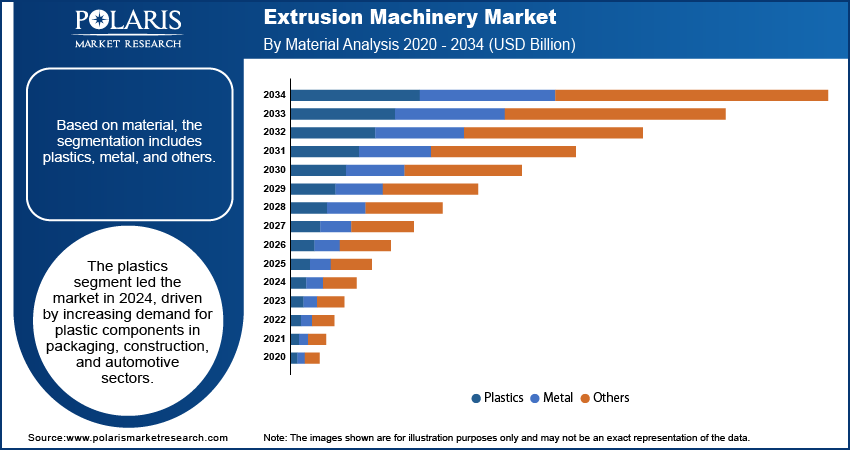
On the basis of material, the extrusion machinery market is categorized into plastics, metal, and others. The plastics segment led the market in 2024, driven by increasing demand for plastic components in packaging, construction, and automotive sectors.
Metal extrusion machinery is anticipated to experience steady growth over the forecast period, due to growing production of aluminum and steel components for automotive, aerospace, and construction uses.
By Type
Based on type, the market is divided into single-screw, twin-screw, and others. Single-screw extrusion equipment accounted for a significant share in 2024 due to its simplicity, versatility, and cost advantage in manufacturing generic plastic profiles and sheets.
Twin-screw extrusion equipment anticipated to grow at a rapid pace over the forecast period driven by its effective mixing, high output, and application for compounding, reactive extrusion, and specialty polymer applications.
By End-Use
On the basis of end-use, the market for extrusion machinery is divided into construction, consumer goods, automotive, packaging, and others. The construction segment dominated the market in 2024, due to high demand for pipes, profiles, and insulation materials used in residential and commercial construction.
The packaging sector is expected to register robust growth during the forecast period due to increasing use of flexible and green packaging solutions.
Regional Analysis
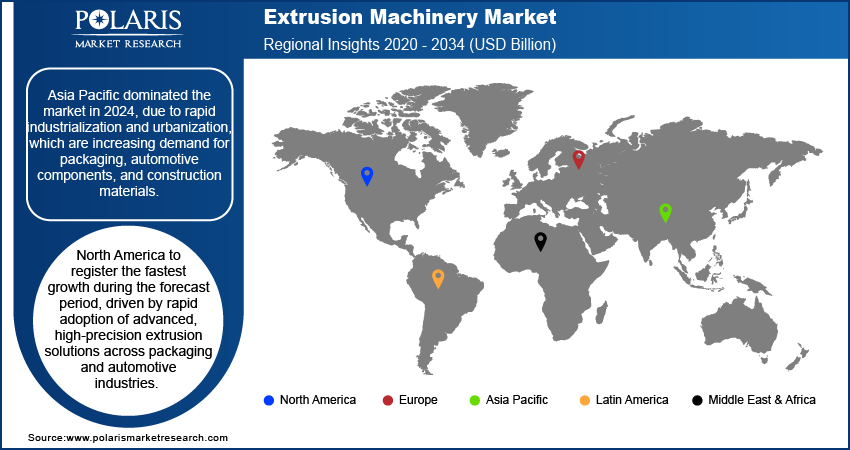
Asia Pacific dominates the global extrusion machinery market, driven by fast-paced industrialization and urbanization, which is raising demand for packaging, automotive parts, and construction materials. Plastic and polymer-based manufacturing clusters expanding in China, India, and Southeast Asia are also promoting machinery use.
China Extrusion Machinery Market Overview
China dominated the Asia Pacific market share with increasing exports of consumer products, giving rise to a demand for high-volume extrusion manufacturing. China's total imports and exports stood at USD 854 billion in 2023, with exports totaling USD 3.44 trillion, an increase of 0.6% year over year, according to customs data. Such robust manufacturing activity is promoting demand for advanced, high-performance extrusion equipment.
North America Extrusion Machinery Market Insights
North America is anticipated to grow at a fast rate over the forecast period, due to the rapid growth of sophisticated, high-precision extrusion equipment in packaging and automotive sectors. Firms are more frequently incorporating twin-screw, co-extrusion, and automated systems to enhance productivity and ensure uniformity of product quality.
The U.S. Extrusion Machinery Market Analysis
The U.S. is leading the North America market, owing to the rising construction and infrastructure activities are driving demand for plastic pipes, profiles, and other extruded parts. In January 2025, the U.S. government announced private sector investment of up to USD 500 billion into infrastructure projects for AI and intelligent technologies, indirectly boosting expansion in industrial equipment, including extrusion machinery.
Europe Extrusion Machinery Market Assessment
Europe held significant market share driven by strong emphasis on green and recyclable materials, fueling demand for enhanced extrusion technologies. Organizations are adopting automation, real-time monitoring, and industry 4.0 connectivity to enhance efficiency, minimize waste, and achieve strict environmental regulations.
Key Players & Competitive Analysis
The global market of extrusion machinery is extremely competitive, fueled by ongoing innovation in polymer processing, precision manufacturing, and automation techniques. High-efficiency, energy-efficient, and flexible extrusion systems with a broad material handling capability are the focus areas for leading players. Market expansion is accelerated by increasing demand in packaging, automobile, building, and consumer goods sectors, as manufacturers require dependable machinery to enhance productivity and product quality.
Key players in the global extrusion machinery market include AMUT S.p.A., BC Extrusion Holding GmbH, Coperion GmbH, Davis-Standard, LLC, Extrusion Technik USA, Inc., Graham Engineering Corporation, Grundfos Holding A/S, KraussMaffei Group GmbH, Milacron LLC, NFM / Welding Engineers, Inc., The Japan Steel Works, Ltd., Viking Pump, Inc., WENGER MANUFACTURING, INC., Wuxi Xinje Electric Co., Ltd., and Zhangjiagang City Qiangsheng Plastic Machinery Co., Ltd.
Key Players
- AMUT S.p.A.
- BC Extrusion Holding GmbH
- Coperion GmbH
- Davis-Standard, LLC
- Extrusion Technik USA, Inc.
- Graham Engineering Corporation
- Grundfos Holding A/S
- KraussMaffei Group GmbH
- Milacron LLC
- NFM / Welding Engineers, Inc.
- The Japan Steel Works, Ltd.
- Viking Pump, Inc.
- WENGER MANUFACTURING, INC.
- Wuxi Xinje Electric Co., Ltd.
- Zhangjiagang City Qiangsheng Plastic Machinery Co., Ltd.
Extrusion Machinery Industry Developments
In October 2025, Davis-Standard (US) completed the acquisition of a leading European extrusion technology firm, which is expected to expand its market reach and enhance its technological capabilities. This acquisition reflects a broader trend of consolidation within the industry, as companies aim to enhance their competitive positioning through strategic partnerships and acquisitions. Such moves may lead to a more concentrated market structure, where a few key players dominate the landscape.
In October 2025, the competitive trends in the Extrusion Machinery Market are increasingly defined by digitalization, sustainability, and the integration of artificial intelligence. Strategic alliances are becoming more prevalent, as companies recognize the need to collaborate in order to innovate and meet evolving customer demands. Looking ahead, it is anticipated that competitive differentiation will increasingly pivot from price-based strategies to a focus on innovation, technological advancements, and supply chain reliability, thereby reshaping the market landscape.
In September 2025, Reifenhäuser (DE) unveiled a new digital platform aimed at optimizing extrusion processes through real-time data analytics. This initiative underscores the increasing importance of digitalization in the extrusion machinery sector, as manufacturers seek to leverage data for improved operational efficiency and product quality. By adopting such advanced technologies, Reifenhäuser is likely to strengthen its competitive edge and appeal to a tech-savvy customer base.
In August 2025, Coperion (DE) announced the launch of a new line of high-performance twin-screw extruders designed for the food industry. This strategic move is significant as it aligns with the growing demand for sustainable food processing solutions, thereby positioning Coperion as a leader in this niche market. The introduction of these extruders is likely to enhance their product portfolio and attract new customers seeking innovative processing technologies.
In January 2024, Davis-Standard complete the acquisition of Extrusion Technology Group (ETG), such as battenfeld-cincinnati, exelliq, and Simplas, expanding its worldwide market share through the merger of sophisticated technologies and industry experience.
In November 2023, KraussMaffei re-introduced the ZE 28 BluePower laboratory extruder at the Fakuma fair, adding its extrusion machine lineup. The twin-screw extruder features greater efficiency and ease-of-use, specific to customer needs.
Extrusion Machinery Market Segmentation
By Material Outlook (Revenue, USD Billion, 2020–2034)
- Plastics
- Metal
- Others
By Type Outlook (Revenue, USD Billion, 2020–2034)
- Single-Screw
- Twin Screw
- Others
By End-Use Outlook (Revenue, USD Billion, 2020–2034)
- Construction
- Consumer Goods
- Automotive
- Packaging
- Others
By Regional Outlook (Revenue, USD Billion, 2020–2034)
- North America
- U.S.
- Canada
- Europe
- Germany
- France
- UK
- Italy
- Spain
- Netherlands
- Russia
- Rest of Europe
- Asia Pacific
- China
- Japan
- India
- Malaysia
- South Korea
- Indonesia
- Australia
- Vietnam
- Rest of Asia Pacific
- Middle East & Africa
- Saudi Arabia
- UAE
- Israel
- South Africa
- Rest of Middle East & Africa
- Latin America
- Mexico
- Brazil
- Argentina
- Rest of Latin America
Extrusion Machinery Market Report Scope
|
Report Attributes |
Details |
|
Market Size in 2024 |
USD 8.52 Billion |
|
Market Size in 2025 |
USD 8.89 Billion |
|
Revenue Forecast by 2034 |
USD 13.10 Billion |
|
CAGR |
4.4% from 2025 to 2034 |
|
Base Year |
2024 |
|
Historical Data |
2020–2023 |
|
Forecast Period |
2025–2034 |
|
Quantitative Units |
Revenue in USD Billion, Volume in Kilotons and CAGR from 2025 to 2034 |
|
Report Coverage |
Revenue Forecast, Competitive Landscape, Growth Factors, and Industry Trends |
|
Segments Covered |
|
|
Regional Scope |
|
|
Competitive Landscape |
|
|
Report Format |
|
|
Customization |
Report customization as per your requirements with respect to countries, regions, and segmentation. |
FAQ's
The global market size was valued at USD 8.52 billion in 2024 and is projected to grow to USD 13.10 billion by 2034.
The global market is projected to register a CAGR of 4.4% during the forecast period.
Asia Pacific dominated the market in 2024.
A few of the key players in the market are AMUT S.p.A., BC Extrusion Holding GmbH, Coperion GmbH, Davis-Standard, LLC, Extrusion Technik USA, Inc., Graham Engineering Corporation, Grundfos Holding A/S, KraussMaffei Group GmbH, Milacron LLC, NFM / Welding Engineers, Inc., The Japan Steel Works, Ltd., Viking Pump, Inc., WENGER MANUFACTURING, INC., Wuxi Xinje Electric Co., Ltd., and Zhangjiagang City Qiangsheng Plastic Machinery Co., Ltd.
The plastics segment dominated the market revenue share in 2024.
The twin-screw extrusion machinery segment is projected to witness the fastest growth during the forecast period.
Page last updated on:
Oct-2025
Research Methodology
A robust system of research, verification, and forecasting designed to ensure reliable and actionable market insights.
Polaris Market Research uses a clear and structured approach to deliver insights that clients can rely on. The process combines detailed primary and secondary research, including direct communication with industry experts. The detailed information helps build a complete picture of market trends and developments. Secondary data is gathered from credible sources such as industry reports, company filings, government source links, and trusted organization databases. It is then cross-checked through discussions with key stakeholders across the value chain. Market size and forecasts are developed using both bottom-up and top-down methods to ensure accuracy and consistency in the final results.
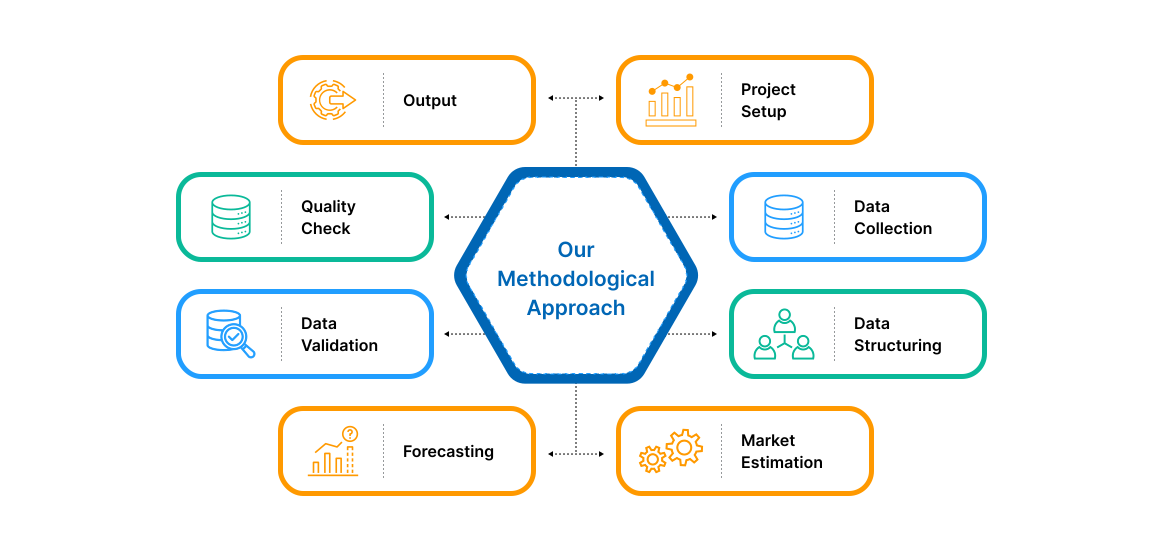
Project Setup
Step 1 & 2:
- We start every project by clearly understanding the client’s objective or goal, then defining the market scope, and aligning regions, segments, and timelines.
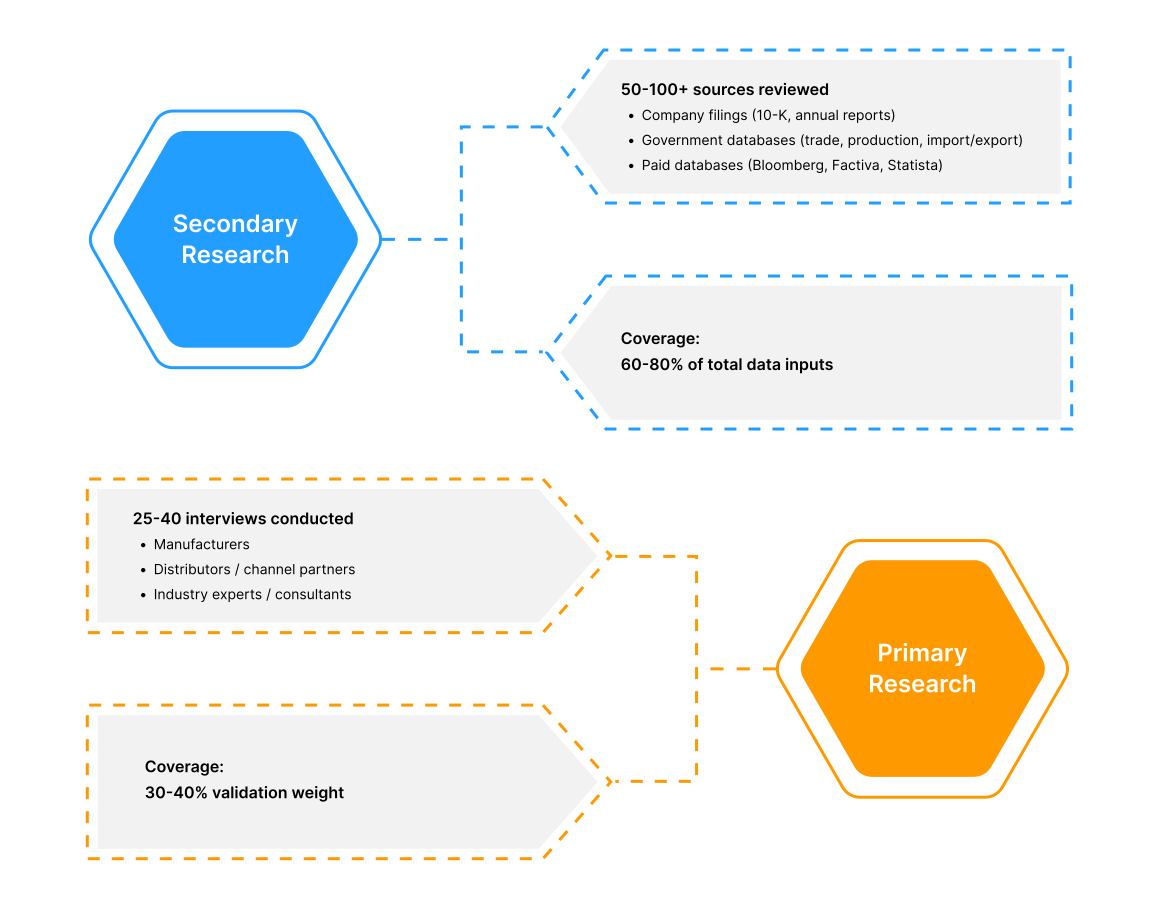
- Once the foundation is set, we collect data from all-around of sources, including company reports, government databases, and paid industry platforms.
- Our research is based on secondary data, which helps us build a strong understanding of the market across regions and industries. Then we validate this information through primary research by speaking directly with industry experts, companies, and stakeholders.
- By combining secondary and primary research, we ensure that our market insights are accurate, practical, and closely aligned with real market conditions.
Data Collection
We gather information from both public and verified sources:
Data Structuring
Step 3:
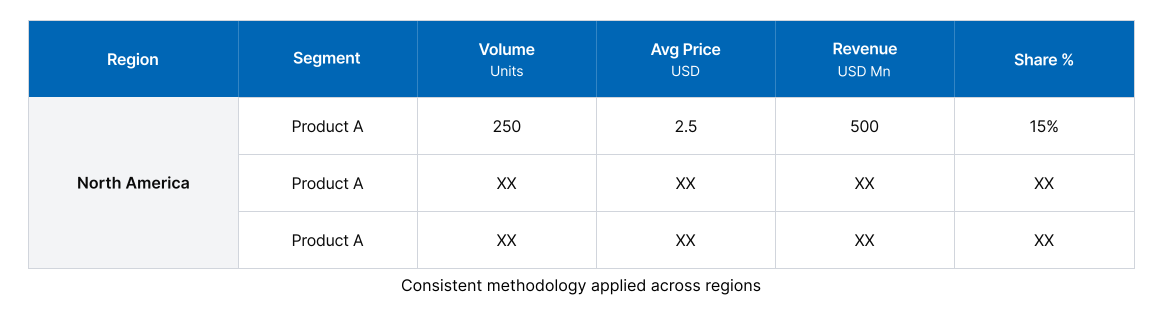
- All collected data is organized into a consistent format to ensure accurate analysis. Since inputs come from multiple sources, they are standardized and aligned before use.
- The data is segmented by product, application, and region, and mapped across a defined historical period (2020–2024). All values are converted into common units (USD Mn/Bn), and volume and pricing are aligned where required to estimate revenue.
- Any overlaps or inconsistencies are reviewed and adjusted to maintain accuracy (<5% variance threshold).
- The result is a structured dataset that allows for clear comparison across regions and supports reliable analysis and forecasting.
Structured Market Dataset, USD Mn/Bn
4. Data Structuring
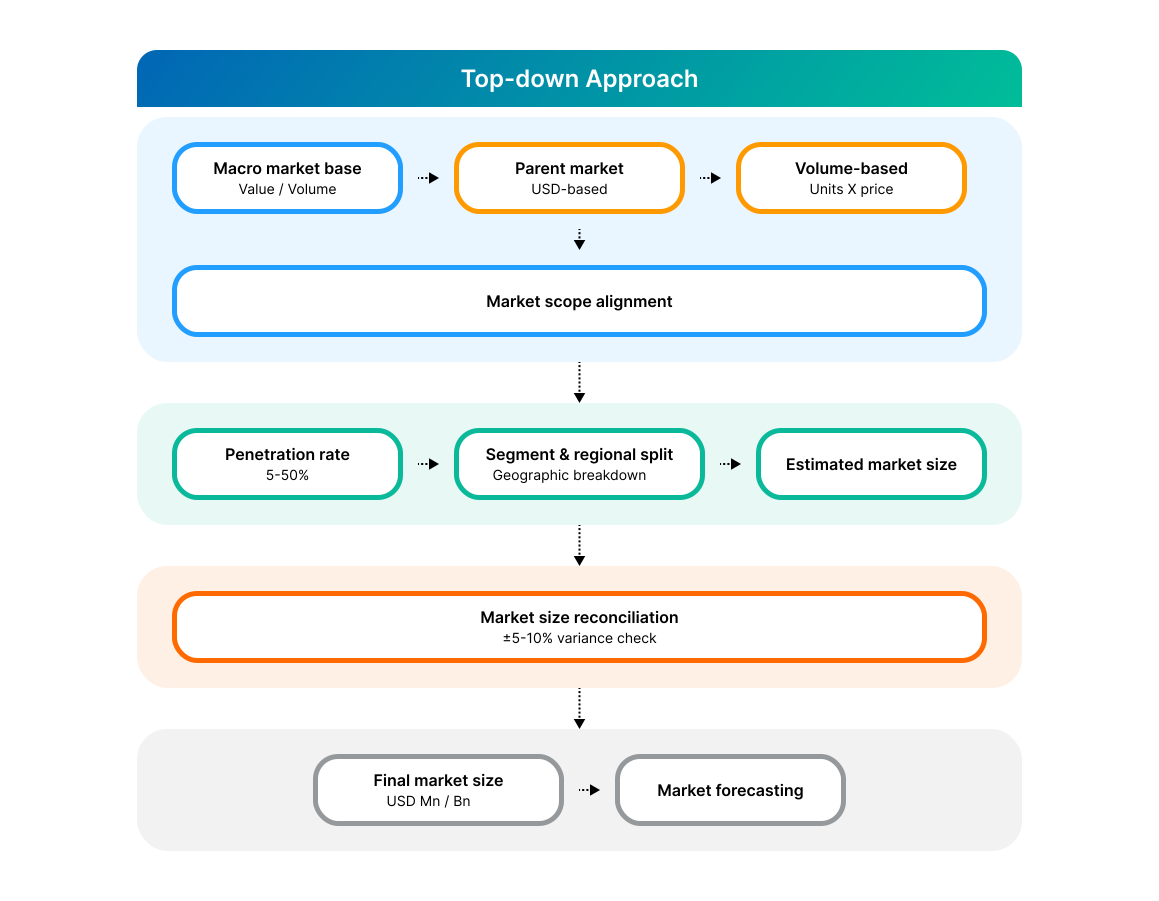
Step 4: TOP-DOWN APPROACH
- We start with the overall market size at a global or macro level.
- The market is then narrowed down based on scope and industry relevance.
- We apply penetration rates and split the data by region and segment.
- This helps us estimate the market size for specific segments.
- The numbers are validated through cross-checks to ensure accuracy.
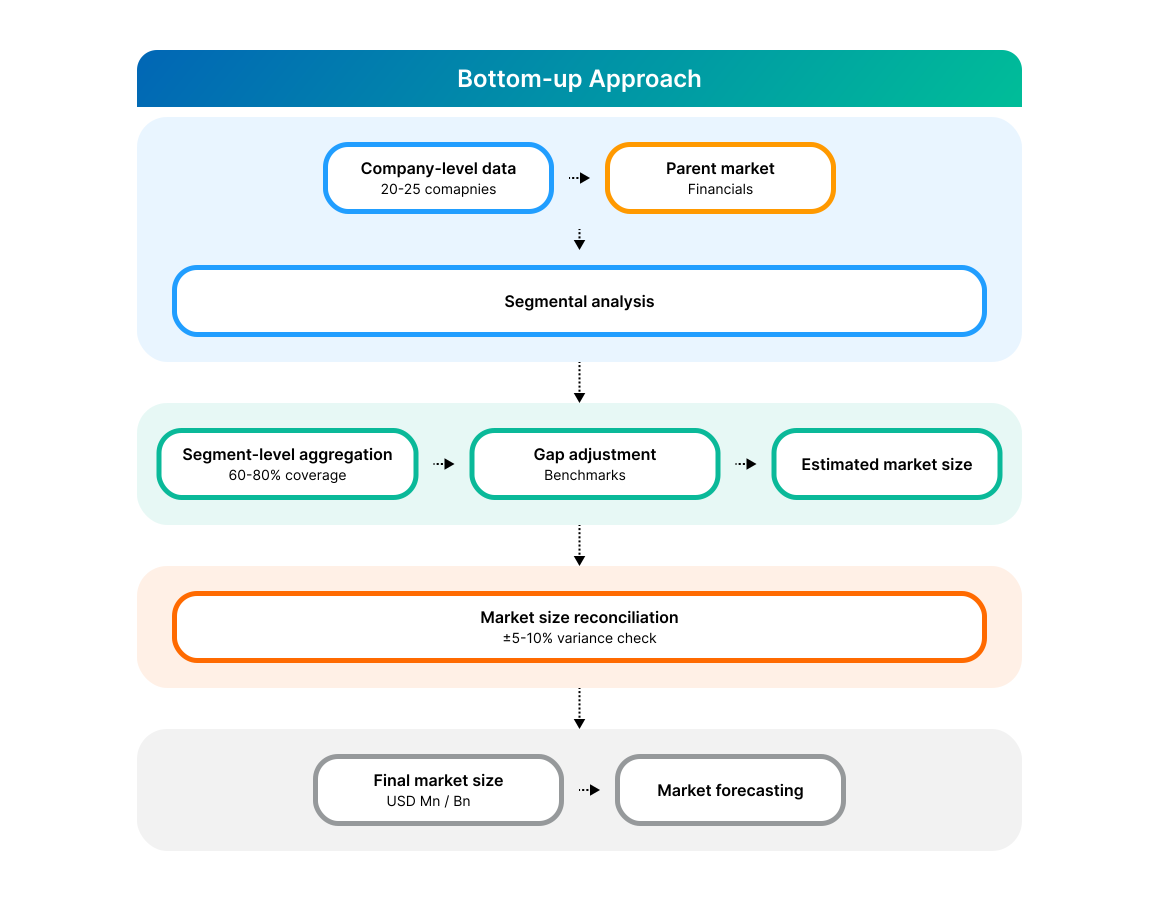
Step 5: BOTTOM-UP APPROACH
- We begin by analyzing data from leading companies in the market.
- Revenue data is collected and mapped across different segments.
- The data is then aggregated to estimate the total market size.
- To fill in any gaps, adjustments are made based on industry standards.
- Validation checks make sure that the results are correct.
5. Data Structuring
Step 6:
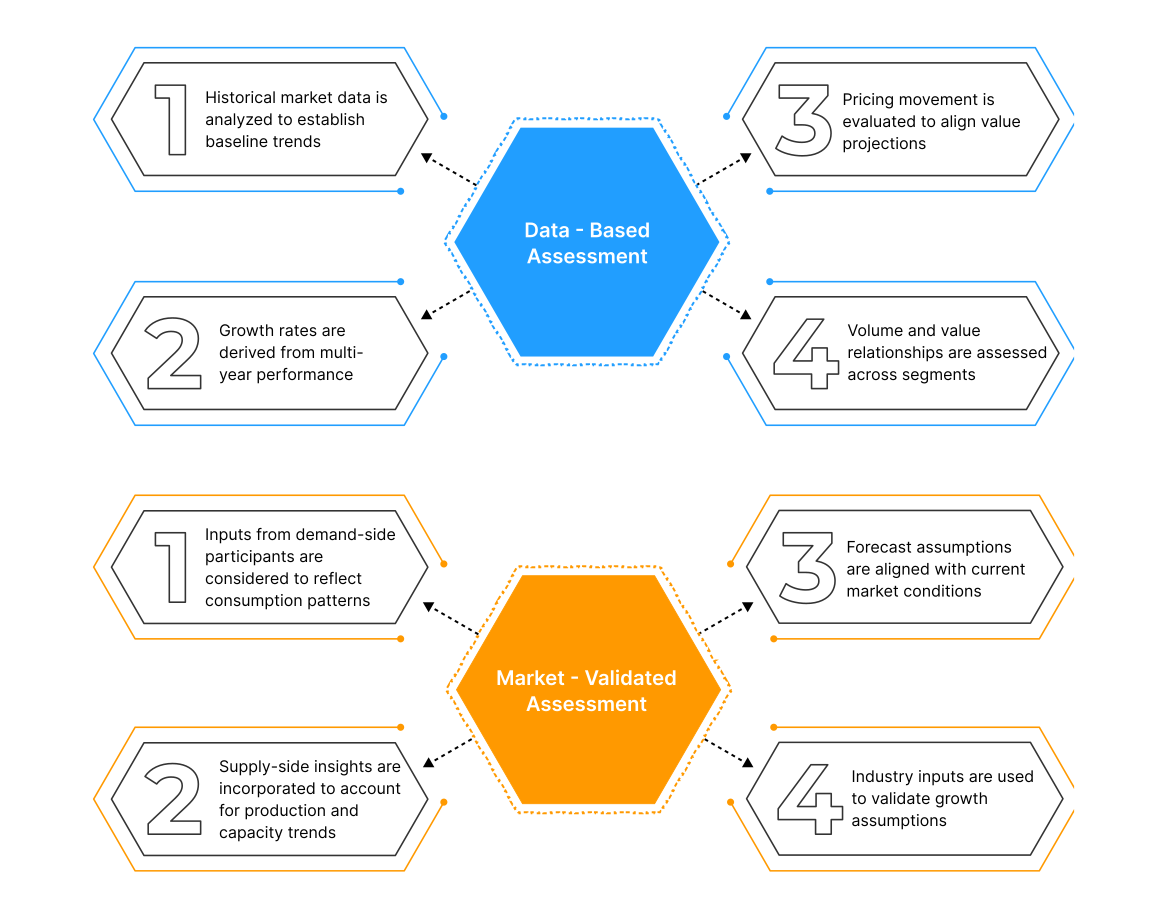
At Polaris Market Research, we employ a methodical forecasting strategy. This approach blends the analysis of historical data with real-time market validation. To forecast future trends with precision, we examine past patterns, pricing fluctuations, and the interplay of supply and demand. To ensure our conclusions reflect the present market landscape, we actively seek input from industry experts and key stakeholders.
To refine our predictions, we carefully consider critical elements such as market drivers and restraints, fluctuations in raw material costs, emerging technologies, and the production capabilities of various regions. Furthermore, we assess regulatory frameworks and potential policy shifts to gauge their potential impact on market expansion.
All this information is synthesized to generate precise forecasts for each segment and region. These forecasts illuminate the current state of the market and highlight forthcoming opportunities.
6. Data Structuring
Step 7:
In the final stage, we validate all our estimates using a triangulation method, where data is cross-checked from multiple reliable sources, like company data, primary interviews, and secondary research. This helps us make sure that our numbers are correct and fit with the rest of the market.
This process involves verifying data consistency across various segments and geographic areas. It also requires comparing historical trends with the assumptions support the forecast. Any discrepancies involve adjustments to ensure everything remains aligned and dependable.
Once the data is finalized, we prepare the final outputs, including market size estimates, segment-wise breakdowns, and growth metrics. These are delivered in structured formats such as tables, charts, and data files for easy analysis and use.
We collaborate closely with clients, ensuring the final products align with their requirements. This includes offering tailored adjustments, supplementary data analyses, and continuous assistance. Furthermore, we monitor market trends post-delivery, providing updates and refinements to maintain the insights' relevance as time passes.
Post-delivery, we continue to monitor market shifts, offering updates and adjustments to ensure the insights remain relevant over time.
Validation
Triangulation Framework
- Company-level data
- Primary inputs from industry participants
- Secondary benchmarks and published data
- Variance maintained within ±5-10%
- Adjustments applied to align estimates
- Segment values validated against overall market structure
Quality Check
Data Consistency & Integrity
- Segment totals validated to 100%
- Regional estimates aligned with global market size
- Historical trends compared against forecast outputs
- Assumptions reviewed for cross-segment and regional alignment
Output & Delivery
Final Outputs
- Market size estimates (USD Mn/Bn)
- Segment-wise distribution (%)
- Growth metrics (CAGR %)
- Structured tables and charts
- Segment-level datasets
- Excel-based data files for further analysis
Client Alignment & Support
- Deliverables are aligned with defined client requirements and scope
- Custom data cuts and segment splits are incorporated as required
- Post-delivery queries are addressed through analyst interactions
- Additional clarifications and data support are provided upon request
Client Continuity & Updates
- Market developments are tracked post-delivery to capture changes in key trends
- Updated data and revisions are provided based on new market inputs
- Additional refinements and data cuts are shared as required
- Continued analyst engagement supports evolving client requirements


