
Floral Tea Market Share, Demand & Growth Analysis by 2026-2034
REPORT DETAILS
Market Statistics
What is the Current Market Size?
The global floral tea market was valued at USD 463.54 million in 2025 and is expected to grow at a CAGR of 5.80% during the forecast period.
Market Statistics
- 2025 Market Size: USD 463.54 million
- 2034 Projected Market Size: USD 769.93 million
- CAGR (2026–2034): 5.80%
- Asia Pacific: Largest market in 2025
Increase in the number of consumers globally seeking healthier beverage options and opting for floral tea as a natural and highly nutritious choice, as they are rich in antioxidants and other beneficial compounds along with the easy availability of floral tea in a wide range of unique and exotic flavors, appealing to consumers looking for novel taste experiences, are among the leading factors influencing the growth of the market. Additionally, the rising proliferation of effective marketing and promotion strategies in the market with several leading brands and retailers has been highlighting the unique qualities of floral teas, such as their aroma, taste, and potential health benefits, which is likely to foster global market growth. For instance, in June 2023, Bigelow Tea introduced three new tea flavors, expanding the Signature Line of teas. It includes Peak Energy Black Tea, Whispering Wildflowers Herbal Tea, & Ginger Honey Herbal Tea, which offers exceptional flavor and features ingredients and nutrients with functional benefits.
Source: Polaris Market Research Analysis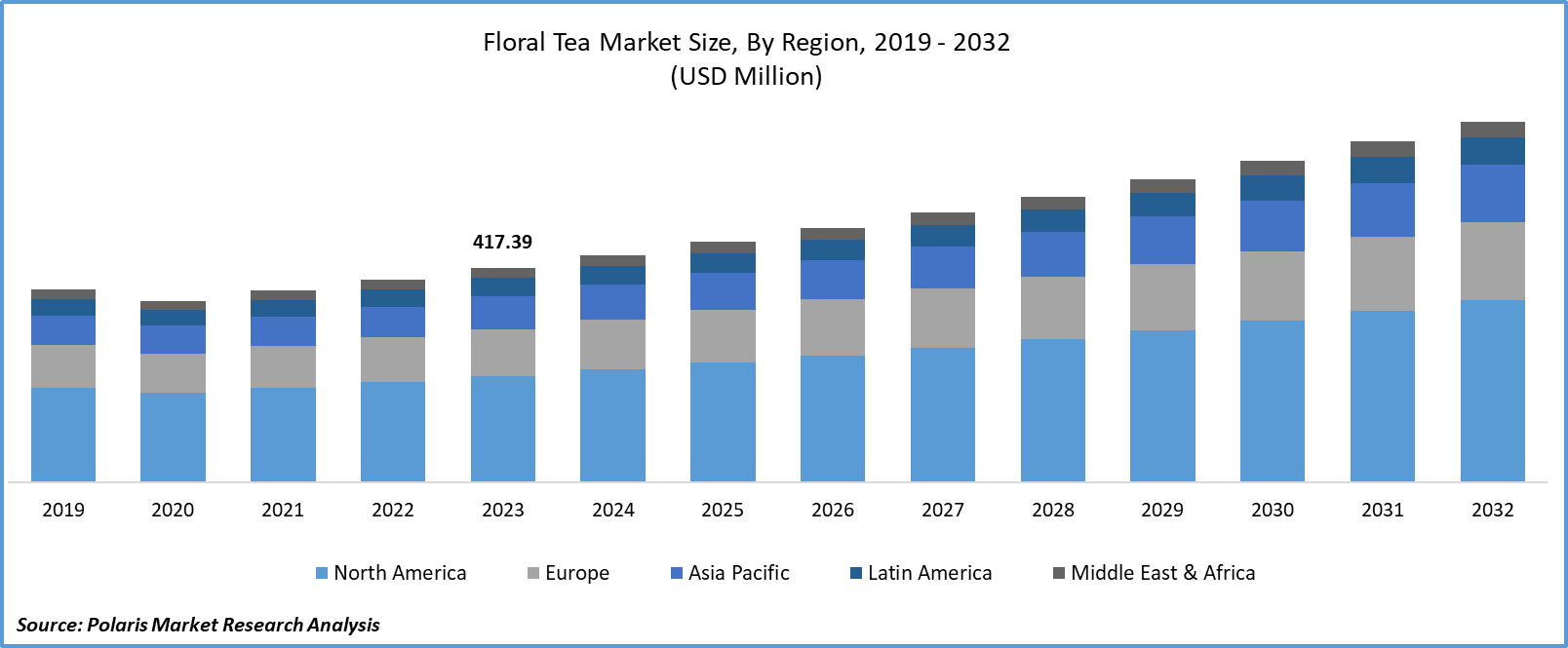
To Understand More About this Research: Download Sample Report
Moreover, there are numerous innovations in the functional beverage space worldwide, which have led to the development of floral teas with several specific health benefits, such as teas containing adaptogens like lavender or elderflower for stress relief or digestion-enhancing floral blends, among many others, which in turn, anticipated to open up new growth avenues for the market over the coming years.
However, the limited shelf life of floral teas, especially those that are made up of natural ingredients, limited awareness among low-income and under-developed countries, and their high prices compared to traditional teas are the factors expected to hamper the market growth.
Industry Dynamics
Growth Drivers
Growing demand for herbal products and prevalence for clean label and natural additives driving the market growth
In recent years, the demand for herbal products has emerged drastically with a growing number of individuals becoming aware of numerous potential health benefits of herbal products, including floral teas, as they are widely known as caffeine-free and considered herbal infusions that, makes them suitable for the broader audience especially among health-conscious, which are among the primary factors propelling the global market growth.
Furthermore, the continuous increase in clean label trends across the world, which typically have short ingredient lists with easily recognizable and familiar components and are free from artificial flavors and additives, makes them a highly suitable option for consumers who want a more natural and purer beverage, is further influencing the demand for floral tea worldwide.
Source: Polaris Market Research Analysis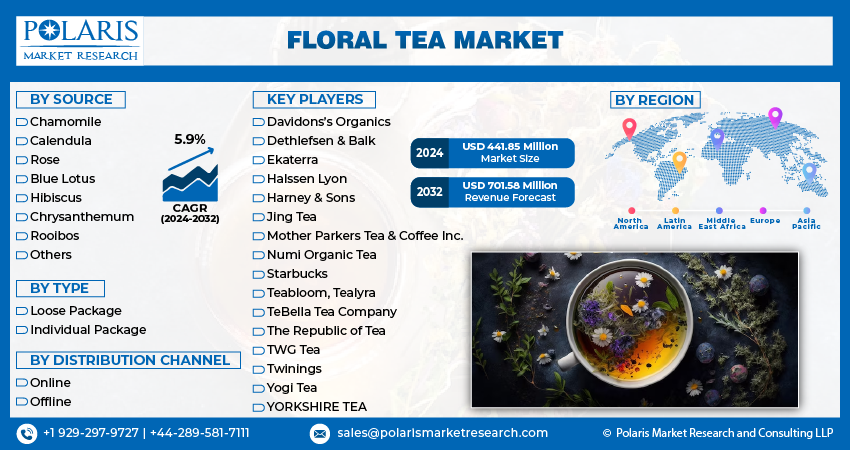
Get Full Segment-Level Forecasts & Insights: Download Sample Report
Major Floral Tea Ingredients: Agricultural & Regulatory Status (EU/US Focus)
| Ingredient | EU Status (EFSA/EC) | US Status (FDA/USDA) | Agricultural Notes |
| Chamomile (Matricaria chamomilla) | Traditional herbal medicinal product (30+ years use); EFSA botanical compendium entry | GRAS flavoring (21 CFR 182.20, FEMA 2273); food use approved | Widely cultivated; organic eligible |
| Chamomile Roman (Anthemis nobilis) | Botanical health claims pending/on-hold | GRAS flavoring (21 CFR 182.20, FEMA 2274) | EU organic flavors require 95% organic content |
| Hibiscus (Hibiscus sabdariffa) | EFSA residue limits apply (Reg. EC 396/2005); | GRAS as food ingredient/colorant (21 CFR Parts 73/182); common in teas | Major export crop; USDA organic certified varieties available |
| Rose Petals (Rosa spp.) | Allowed in herbal teas; traditional use recognized | GRAS flavoring via FEMA; no specific restrictions | Organic cultivation common in EU/US; flavoring limits apply |
| Jasmine Flowers (Jasminum spp.) | Botanical compendium monitored; safe for infusions | GRAS flavor extract (FEMA listings) | Greenhouse/perennial crop; EU organic compliant |
Source: Polaris Market Research Analysis
Report Segmentation
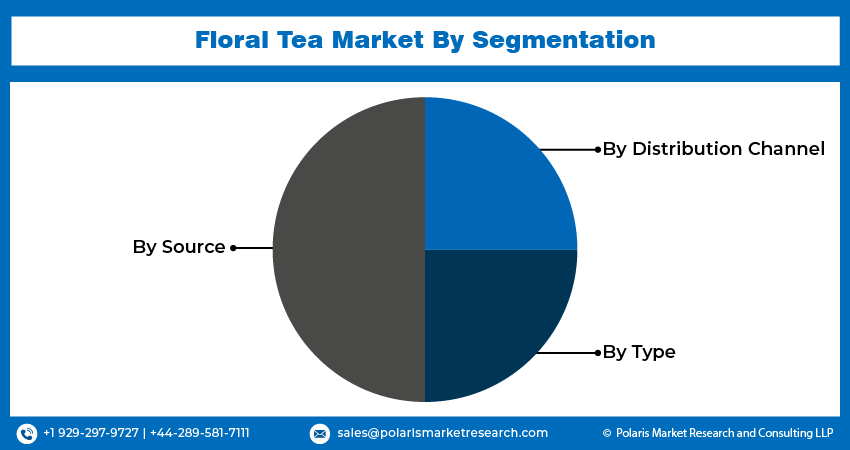
The market is primarily segmented based on source, type, distribution channel, and region.
| By Source | By Type | By Distribution Channel | By Region |
|
|
|
|
Source: Polaris Market Research Analysis
To Understand the Scope of this Report: Request Customization
By Source Analysis
Blue lotus segment accounted for the notable market share in 2025
The blue lotus segment accounted for the notable market on account of its ability to impart a unique and exotic flavor and aroma to floral tea blends that make it a highly attractive option for tea enthusiasts seeking novel taste experiences. Along with this, blue lotus is known for its rich history of use in several different cultures, such as ancient Egyptian and South Asian traditions, which resulted in its increased interest and could drive sales for the segment product.
The chamomile segment is projected to witness a significant growth rate over the next coming years, mainly attributable to its widespread adoption across the globe due to its potential health benefits, including relaxing as well as calming properties, anti-inflammatory effects, and ability to aid in digestion. Moreover, there are several companies in the market focusing on introducing several new blends and formulations that incorporate chamomile with other flowers, flavors, and herbs, which help them to cater to wider consumer preferences.
By Type Analysis
The loose packaged segment held the significant market share in 2025
The loose packaged segment held a significant revenue share in 2025, which is majorly driven by growing consumer awareness about its capabilities to allow consumers to experiment with the blending and brewing process along with the surging preference for herbal infusions and botanical ingredients that can be easily incorporated by loose package.
Additionally, with consumers worldwide becoming more environmentally conscious, there is penetration for loose teas packaged in sustainable and eco-friendly materials that include biodegradable or compostable packaging options, which resonate with environmentally conscious consumers and align with sustainability standards set by governments.
By Distribution Channel Analysis
The online segment is expected to witness the highest growth over the forecast period.
The online segment is expected to grow at the highest growth rate during the anticipated period, mainly due to the rising number of online shoppers worldwide and the rapid emergence of online shopping platforms across the globe as they offer a convenient way for consumers to purchase floral teas without any need to visit physical stores along with several other beneficial characteristics including easy accessibility from all over the world, a wider range of products, convenient payment methods, and home delivery, among others.
- For instance, according to a recent report, the number of online shoppers in the United States stood at around 268 million in 2022, and the number of online shoppers is projected to reach 285 million by 2025.
Source: Polaris Market Research Analysis
Need Granular Data Across All Market Segments? Request Customization
Regional Insights
Asia Pacific region dominated the market with considerable share in 2025
Asia Pacific dominated the floral tea market by 2025, owing to a deep and diverse set of cultural, economic, and production-related factors. Essentially, the region has a rich history and culture of using flowers both for health and culinary uses, thus there is already a natural and broad user base. This tacit permission played on an emerging global health and wellness movement and allowed floral teas to become a premium natural beverage with a health component that aligned with preventive care. Moreover, the supremacy of the Asia Pacific region also lies in the fact that it is the largest producer of essential floral ingredients such as jasmine, chrysanthemum, etc. The market was also boosted by innovative products from domestic manufacturers with the traditional herbs mixed with new flavor profiles and packaging, which attracted demand from both home and foreign markets. Therefore, this combination of deep cultural tradition, agricultural dominance, and adaptive innovation allowed the region to cement unprecedented market dominance.
North America growth is mainly attributable to owing to growing consumer interest in natural and herbal products over artificial and heavily processed options available in the market, along with the surging concerns about sustainability and environmental impact that make consumers aware of products that promote eco-friendly practices. As people across the region have high spending capacity and disposable income, which allows them to spend more on unique and premium beverage options such as floral teas with exotic and aromatic profiles, the demand for such products has grown drastically.
Source: Polaris Market Research Analysis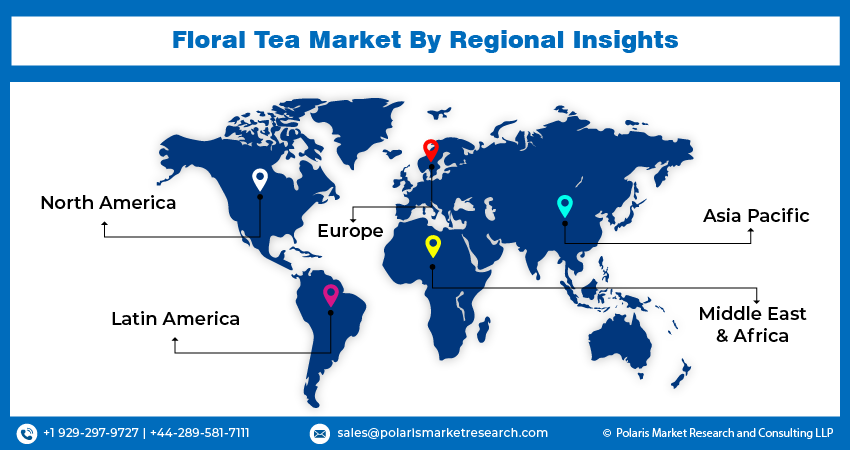
Curious About Regional Market Performance? Request Customization
Key Market Players & Competitive Insights
The floral tea market is moderately competitive, with several companies competing to gain market share and be ahead of their competitors. As a result, companies are significantly focusing on various business expansion and development strategies, including partnerships, collaborations, acquisitions, mergers, and new product developments, allowing them to expand their market and differentiate their products from their competitors.
Some of the major players operating in the global market include:
- Davidons’s Organics
- Dethlefsen & Balk
- Ekaterra
- Halssen Lyon
- Harney & Sons
- Jing Tea
- Mother Parkers Tea & Coffee Inc.
- Numi Organic Tea
- Starbucks
- Teabloom
- Tealyra
- TeBella Tea Company
- The Republic of Tea
- TWG Tea
- Twinings
- Yogi Tea
- YORKSHIRE TEA
Recent Developments
- In February 2025, Tea Forté launched The Demoiselle Collection in collaboration with The New York Botanical Garden. The line features a series of tropical-inspired herbal tea blends. The collection is designed to impart a calming experience, aligning with botanical and wellness themes.
- In September 2023, Organic India introduced new flavors of tea, including sweet rose & Assam black tea. The newly developed tea flavors offer benefits, including antioxidants, energizing, cognitive clarity, and many others.
- In October 2023, Nepal Tea Collective introduced new tea bags that are plant-based & made of 100% non-GMO sugarcane fiber. It will also allow tea drinkers to enjoy the delicious flavors of the tea more conveniently.
Floral Tea Market Report Scope
| Report Attributes | Details |
| Market Size Value in 2025 | USD 463.54 million |
| Market Size Value in 2026 | USD 488.76 million |
| Revenue Forecast in 2034 | USD 769.93 million |
| CAGR | 5.80% from 2026 – 2034 |
| Base Year | 2025 |
| Historical Data | 2021 – 2024 |
| Forecast Period | 2026 – 2034 |
| Quantitative Units | Revenue in USD million and CAGR from 2026 to 2034 |
| Segments Covered | By Product, By Treatment, By End User, By Region |
| Regional Scope | North America, Europe, Asia Pacific, Latin America; Middle East & Africa |
| Customization | Report customization as per your requirements with respect to countries, region and segmentation. |
Source: Polaris Market Research Analysis
Floral Tea Market FAQ's
key companies in Floral Tea Market are TeBella Tea Company, TWG Tea, Numi Organic Tea
The global floral tea market is expected to grow at a CAGR of 5.80% during the forecast period.
The Floral Tea Market report covering key segments are source, type, distribution channel, and region.
key driving factors in Floral Tea Market are Growing demand for herbal products and prevalence for clean label and natural additives driving the market growth
The global floral tea market size is expected to reach USD 769.93 million by 2034.
Download Sample Report of Floral Tea Market
Please fill out the form to request a customized copy of the research report.


