Fortified Salts Market Share, Trends, Growth Report, 2026-2034
REPORT DETAILS
Market Statistics
What is the Current Market Size?
The global fortified salts market size and share was valued at USD 6.8 billion in 2025 and is expected to grow at a CAGR of 7.70% during the forecast period.
Market Statistics
- 2025 Market Size: USD 6.8 billion
- 2034 Projected Market Size: USD 13.26 billion
- CAGR (2026-2034): 7.70%
- Asia Pacific: Largest market in 2025
Fortified salts are gaining traction nowadays, primarily attributable to the rising anemia and iodine deficiency among the population, specifically women. Iron deficiency is one of the most prevalent nutritional deficiencies, affecting around 5 billion people globally. The increasing research activities on fortification are creating awareness among the population about its benefits and importance. A study addressed the issue of iron deficiency anemia through iron water fortification. The rising demand for fortification in various disciplines is driving the demand and growth of fortification salts, driven by rising consumer acceptance of fortification.
- For instance, in January 2023, a study published in PubMed Central surveyed the consumer acceptability of fortified salts in Tanzania. The results showcased equalized acceptance of quadruple-fortified salts and double-fortified salts and pertained to similar sensory scores compared to standard iodized salt.
Moreover, the growing government initiatives to promote health and wellness among its population are propelling the growth of the global market. The Indian government initiated the supply of double-fortified salts in the public distribution systems with a view to promoting the availability of fortified salts to a wider consumer base at subsidized prices.
Source: Polaris Market Research Analysis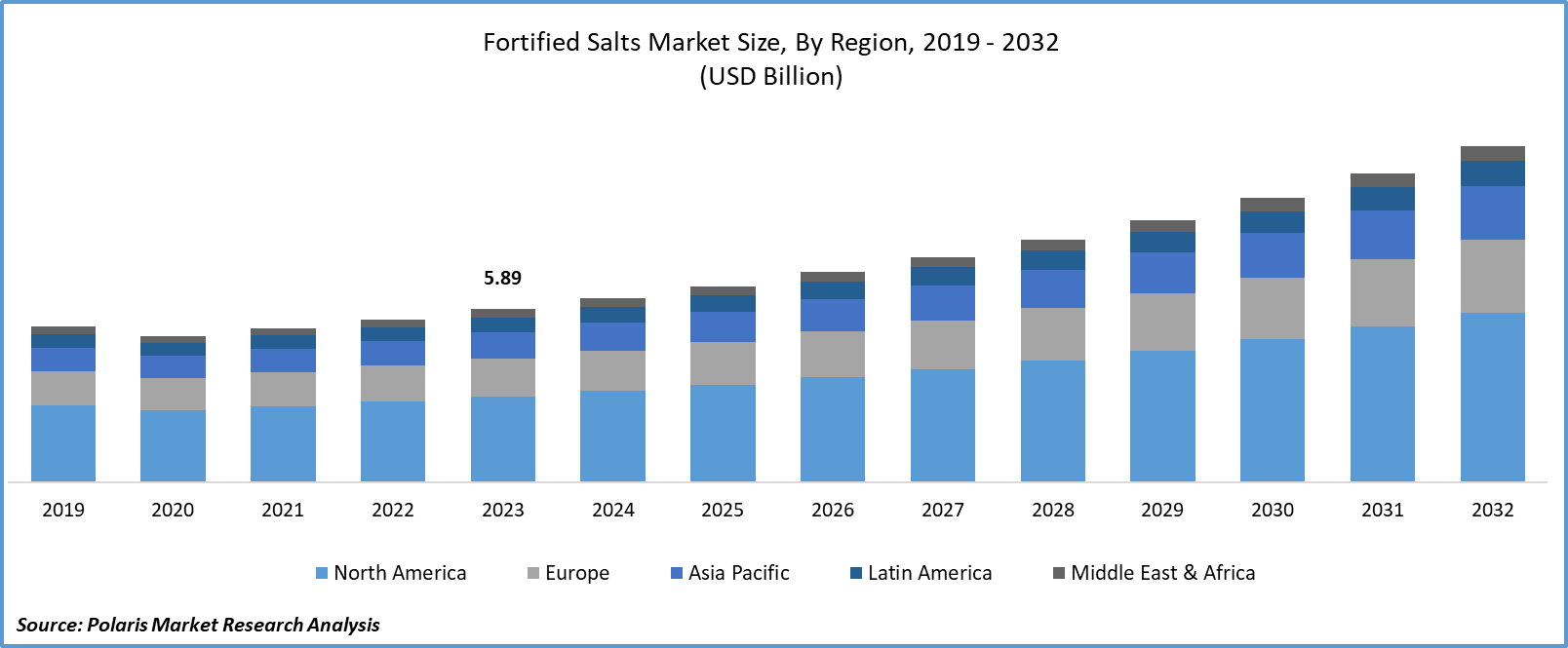
To Understand More About this Research: Download Sample Report
However, the lower awareness about fortified salts, along with the prevalence of iron and iodine supplement intake among the population, may hinder the demand for fortified salts in the next few years.
Industry Dynamics
Growth Drivers
Rising Importance of Iodine and Iron Among the Consumers
Growing anemia disorders among females are a rising concern for governments. Females at reproductive age require higher amounts of iron and iodine for healthy maternal and fetal outcomes. According to a study, iron and iodine deficiency among pregnant women may affect infant growth and development. Iodized salt and iron supplements showed a positive impact on thyroid status among newborns and mothers in the study.
Furthermore, according to a study published in Lancet Hematology conducted by the Institute for Health Metrics and Evaluation (IHME) and its Global Burden of Disease anemia collaborators, the dietary deficiency of iron will constitute 66.2% of the total anemia cases in 2021, while 825 million women and 444 million men will be affected globally. This demonstrates that rising anemia cases are highly influenced by the lower intake of iron in food. The rising awareness and importance of micronutrients, including iron and iodine, will strengthen the growth of the market.
Source: Polaris Market Research Analysis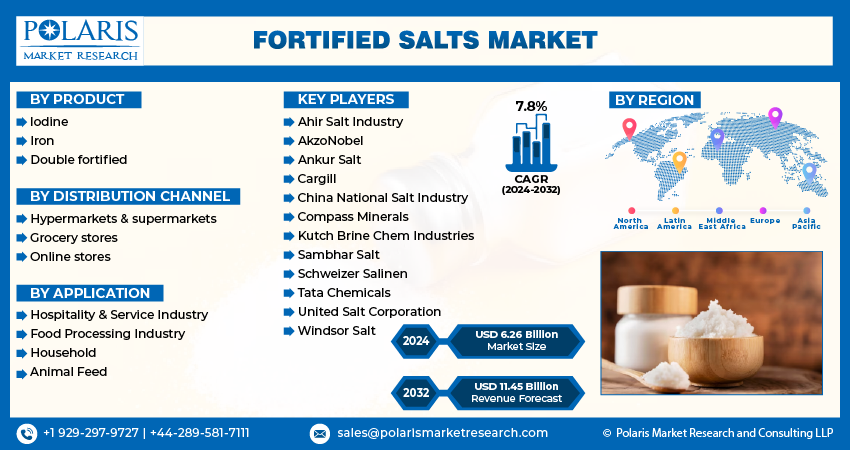
Get Full Segment-Level Forecasts & Insights: Download Sample Report
International Fortified Salt Programs (Global Alliance for Improved Nutrition – GAIN)
| Programme/Country | Government Implementing Body | Programme Objective | Key Features / Legislation | Status / Coverage |
| National Iodine Deficiency Disorders Control Programme (India) | Ministry of Health & Family Welfare, Government of India | Prevent, control & eliminate iodine deficiency disorders; ensure >90% households use adequately iodized salt | Universal Salt Iodization (USI) mandated; ban on sale of non-iodized salt reinstated | Household adequately iodized salt coverage ~78% (goal 100%) – DGHS MOHFW |
| Universal Salt Iodization (General – WHO/UNICEF guidance) | World Health Organization & UNICEF (guidelines for governments) | Ensure all food-grade salt is fortified with iodine to prevent IDDs | Governments set national standards, regulations and enforcement for iodized salt | Salt iodization is implemented in >120 countries worldwide and is effective in reducing IDD burdens – World Health Organization |
| Universal Salt Iodization – Country Legislation (e.g., Cambodia) | Government ministries (Health, Industry etc.) | National decree requiring all salt for consumption to be iodized | Legal requirement for iodization at production/import levels | Substantial increase in iodized salt consumption over time – UNICEF DATA |
| Universal Salt Iodization (Lebanon) | Ministry of Public Health | Mandate addition of iodine to table salt | 1971 law (later amended) requiring iodization and monitoring | Initial high coverage (e.g., ~92% households) but experienced program setbacks due to legislative gaps – UNICEF |
| Universal Salt Iodization (Ghana) | Government (Public Health Act / Standards Authority) | Control iodine deficiency through salt iodization | Salt standard mandates minimum iodine content at production and retail | Iodization standards established; legal source for iodine fortification – UNICEF |
| UNICEF/WHO National Support for USI | UNICEF/WHO partnerships with national governments | Strengthen national USI programmes with policy, regulatory, and monitoring | Governments adopt USI into national health strategy, standards & monitoring | Countries show high variation; many have strong government commitments documented – UNICEF |
Source: Polaris Market Research Analysis
Report Segmentation
The market is primarily segmented based on product, application, distribution channel, and region.
| By Product | By Application | By Distribution Channel | By Region |
|
|
|
|
Source: Polaris Market Research Analysis
To Understand the Scope of this Report: Request Customization
By Product Analysis
Double Fortified Segment is Expected to Witness the Highest Growth During the Forecast Period
The double-fortified segment is expected to grow rapidly, mainly driven by its ability to stabilize iodine and iron. It was developed by Ember India's National Institute of Nutrition (NIN) to tackle ongoing health issues related to the lower intake of iodine and iron. Double-fortified salts are expected to provide 100% of daily dietary iodine, which constitutes 30–60% of the daily dietary iron requirement. This is enforcing government agencies to formulate suitable policies to increase the availability and acceptance of double-fortified salts among their citizens, driving the growth of the market in the coming years.
By Application Analysis
Hospitality & Service Industry Segment Accounted for the Largest Market Share in 2025
The hospitality & service segment held the largest share. The increasing concerns about ingredient quality among the population are forcing restaurants and hotels to incorporate healthy and quality ingredients in making various dishes and recipes. This trend is likely to stimulate the use of fortified salts in the food industry, as it is healthy and adds additional nutrition to consumers.
The household segment will grow rapidly, owing to a rapid increase in awareness programs about the health benefits associated with fortified salts by government agencies. The increasing anemia cases are contributing to the adoption of fortified salts by households. Furthermore, the use of fortified salts in animal feedstock is gaining importance due to the outbreak of cattle diseases, driving the growth of the global market.
By Distribution Channel Analysis
Online Stores Segment Held a Significant Market Revenue Share in 2025
The online stores segment garnered the largest share due to the development of specialized online stores. The evolution of specialized online stores, particularly for grocery items, is contributing to the expansion of the global market. For instance, Zepto and Big Basket provide grocery items through their online e-commerce portals. These companies are enabling consumers to access a wide range of grocery items, including fortified salts, by various brands, enforcing convenience among the people to place an order with one click and reducing transaction costs.
Source: Polaris Market Research Analysis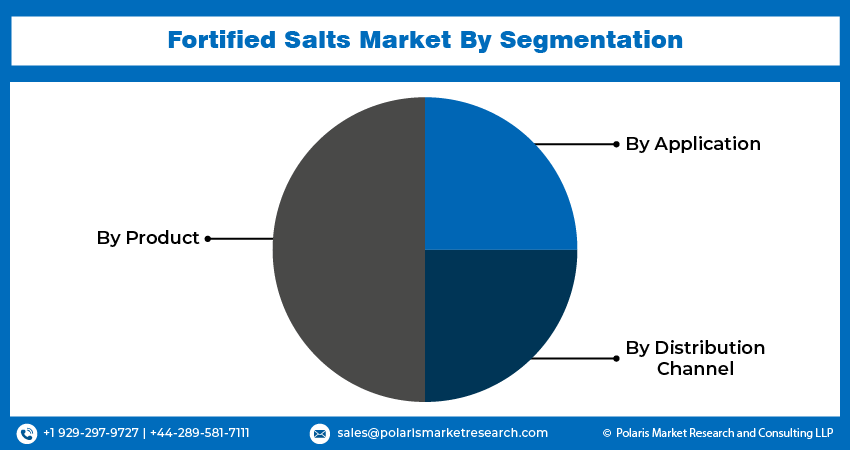
Need Granular Data Across All Market Segments? Request Customization
Regional Insights
Asia Pacific Region Registered the Largest Share in the Global Market in 2025
The Asia Pacific region held the global market with the largest market share in 2025 and is expected to continue its dominance over the study period. The lower presence of iodine in soil among the countries in this region, primarily India, is leading to lower levels of iodine in their diets, necessitating the need for fortified salts. According to the 5th National Family Health Survey (2019–21), 58.4% of children (6–59 months) and 53.1% of women of reproductive age are anemic. This is one of the rising health concerns in the country, as the nation's largest number of children are born at risk of iron deficiency disorder. 92% of the population in India consumes iodized salt currently. This trend is expected to continue in the coming years, driven by the growing adoption of fortified salts in the region.
The North America region will grow at a healthy CAGR due to the rising demand for healthy food additives. The prevalence of fortified salts in the region is expected to witness a rapid surge in the coming years, attributable to the rising micronutrient deficiency. Furthermore, 90% of the population in the US has access to iodized salt, considering this region is self-sufficient in iodine concentration.
Source: Polaris Market Research Analysis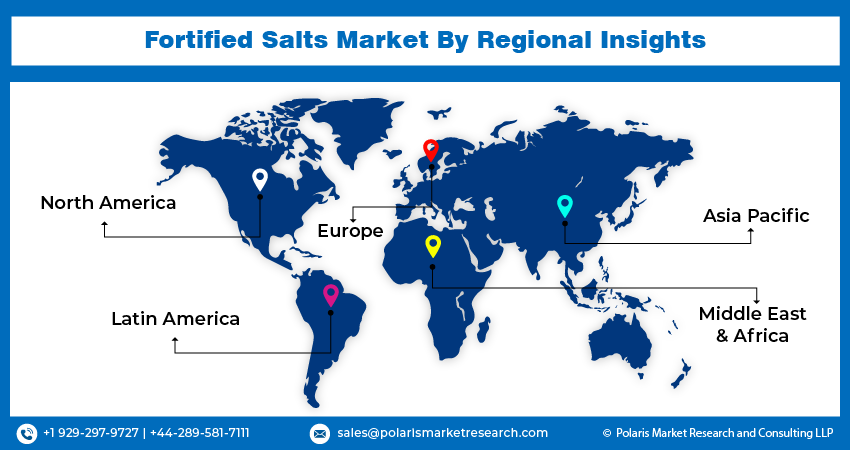
Curious About Regional Market Performance? Request Customization
Key Market Players & Competitive Insights
The fortified salts market is expected to witness competition in the marketplace driven by rising demand for fortified salts. This is forcing companies to increase their production and gain a competitive edge over others through collaborations and partnerships. For instance, Hindustan Salts and the National Federation of Farmers' Procurement (NACOF) entered a partnership in association with RKJ Agro and Foods with the aim of improving the availability of high-quality salt to the residents of Uttar Pradesh.
Some of the major players operating in the global market include:
- Ahir Salt Industry
- AkzoNobel
- Ankur Salt
- Cargill
- China National Salt Industry
- Compass Minerals
- Kutch Brine Chem Industries
- Sambhar Salt
- Schweizer Salinen
- Tata Chemicals
- United Salt Corporation
- Windsor Salt
Recent Developments
- October 2024: Kutch Brine Chem Industries operated its automated refinery in Kutch at a production capacity of 750 metric tons per day of refined iodized salt in 2024, strengthening large-scale supply capabilities and supporting domestic and industrial demand.
- In April 2022, a study published in PubMed Central focused on finding the effectiveness of double fortified salts compared to iodized salt by measuring the level of iron and iodine among all age groups. The random control treatment revealed that double fortified salts are capable of slightly improving hemoglobin concentration compared to iodized salt.
Fortified Salts Market Report Scope
| Report Attributes | Details |
| Market Size Value in 2025 | USD 6.8 billion |
| Market Size Value in 2026 | USD 7.3 billion |
| Revenue Forecast in 2034 | USD 13.26 billion |
| CAGR | 7.70% from 2026 – 2034 |
| Base Year | 2025 |
| Historical Data | 2021 – 2024 |
| Forecast Period | 2026 – 2034 |
| Quantitative Units | Revenue in USD billion and CAGR from 2026 to 2034 |
| Segments Covered | By Product, By Application, By Distribution Channel, By Region |
| Regional Scope | North America, Europe, Asia Pacific, Latin America, Middle East & Africa |
| Customization | Report customization as per your requirements with respect to countries, regions, and segmentation. |
Source: Polaris Market Research Analysis
Explore the landscape of fortified salts in 2025 through detailed market share, size, and revenue growth rate statistics meticulously organized by Polaris Market Research Industry Reports. This expansive analysis goes beyond the present, offering a forward-looking market forecast till 2034, coupled with a perceptive historical overview. Immerse yourself in the depth of this industry analysis by acquiring a Download Sample Report.
Fortified Salts Market FAQ's
key companies in Fortified Salts Market are Ahir Salt Industry, AkzoNobel, Ankur Salt, Cargill, Compass Minerals
The global fortified salts market is expected to grow at a CAGR of 7.70% during the forecast period.
The Fortified Salts Market report covering key segments are product, application, distribution channel, and region.
key driving factors in Fortified Salts Market are Rising importance of iodine and iron among the consumers
The global fortified salts market size is expected to reach USD 13.26 billion by 2034
Download Sample Report of Fortified Salts Market
Please fill out the form to request a customized copy of the research report.


