

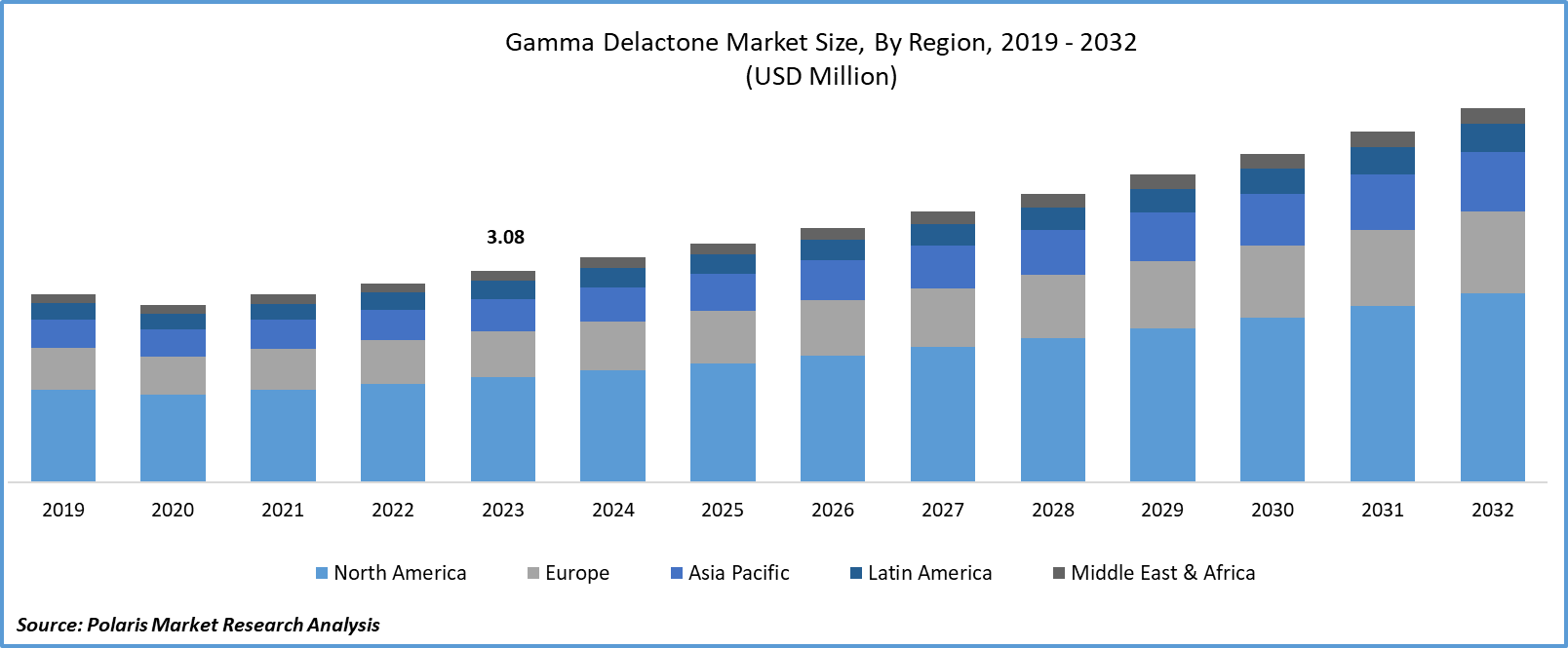
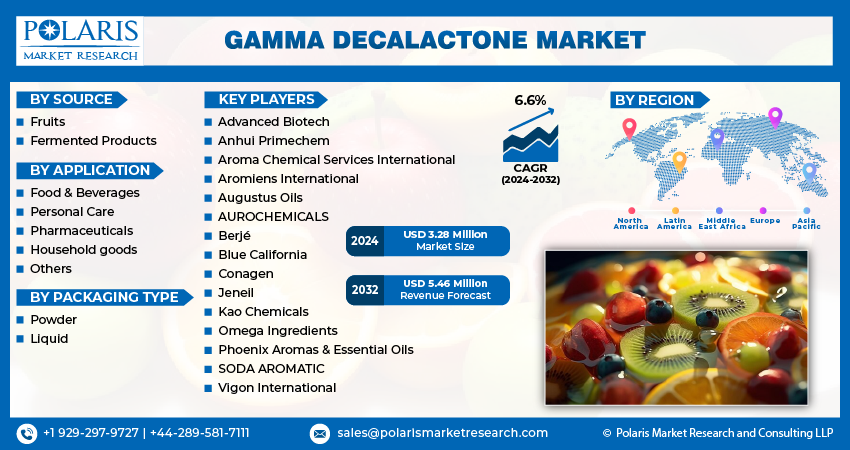
The global gamma decalactone market was valued at USD 3.08 million in 2023 and is expected to grow at a CAGR of 6.6% during the forecast period.
Gamma-decalactone is a natural compound present in most fruits, and it gives peaches and ripening fruits a unique flavor. This compound is incorporated in formulations of peach, strawberry, and apricot flavors, which are essential in pharmaceutical applications, personal care products, and beverages. In addition, it has applications in the food industry due to its ability to improve the flavors, texture, taste, aroma, and appearance of recipes. The increasing technological innovations in the gamma decalactone extraction process are further boosting the expansion of the market.
- For instance, in November 2019, Conagen, a biotechnology company focused on research and development, expanded its product portfolio and production of gamma decalactone, a natural aromatic compound, using its proprietary technology from natural substrates.
Moreover, the increased consumption of artificial flavors poses a huge health risk to its consumers as it may lead to food allergies and can make one hypersensitive to some foods. The rising awareness about the health issues associated with artificial food additives among the population is making them keep an eye on the ingredients used in food products before consumption. This is driving companies to innovate new product lines with natural flavors. This may further fuel the demand for gamma-decalactone use in the food and beverage industry.
To Understand More About this Research: Request a Free Sample Report
However, the creation of artificial flavors is economical for food scientists compared to natural flavors as it requires natural resources; creating this ingredient will be costlier. The availability of lower-cost substitutes in the marketplace may shift cost-sensitive customers, primarily small and medium food and beverage manufacturers, from gamma decalactone to its alternatives like artificial flavor and aroma enhancers.
Industry Dynamics
Growth Drivers
Ongoing research activities to create optimal technology to extract gamma decalactone
Gamma-decalactone is extracted directly from real fruits. It is essential to create effective technologies and methods according to the ongoing food and beverage manufacturing requirements. A study published in MDPI focused on the synthesis of gamma decalactone with the use of the statistical Taguchi design method by Yarrowia lipolytica yeast. This extraction method achieved 2.93 ± 0.33 g/L of aroma. It identified that the intensity and speed of lactone biosynthesis have increased with the gamma decalactone concentration in the medium. This may further assist ongoing research activities, contributing to the growth of the market. Furthermore, it is crucial for flavor and fragrance industrialists to create an effective way for the extraction process, as it enables them to minimize their costs and maximize extraction quantity, which may further propel the demand for gamma decalactone by food and beverage producers for the flavor and fragrance needs with the lower costs.
Key Physicochemical Properties
|
Property |
Value |
Source/Citation |
|
Molecular Formula |
C₁₀H₁₈O₂ |
FDA, PubChem |
|
Molecular Weight |
170.25 g/mol |
Kao Chemicals, PubChem |
|
CAS Number |
706-14-9 |
FDA |
|
Boiling Point |
281 °C |
PubChem, Kao |
|
Density/Specific Gravity (25°C) |
0.948-0.967 g/mL |
Kao, Vigon, Tilley |
|
Refractive Index (20°C) |
1.447-1.451 |
Tilley, Kao |
|
Vapor Pressure (25°C) |
<0.005 mmHg or 0.72 Pa |
Kao, others |
|
Flash Point |
>110 °C (230 °F) |
Various specs |
|
Melting Point |
< -20 °C to 11-12 °C |
Reported ranges |
|
LogP/cLogP |
2.57-3 |
Kao |
|
Solubility (Water, 20°C) |
1.26 g/L |
Reported |
|
FEMA Number |
2360 |
FDA |
|
JECFA Number |
231 |
FDA |
Analytical Standards
|
Parameter |
Specification |
Test Method/Source |
|
Purity (Assay) |
≥95-99% |
Tilley QC, FCC |
|
Acid Value |
≤1.0-2.0 |
Tilley FCC, Elan |
|
Solubility |
Soluble in 1 ml 95% ethanol |
FCC, Tilley |
|
Optical Activity |
[α]²⁴/D +34° (neat, natural) |
Reported for natural |
|
GRAS Status |
Approved as flavoring agent (21 CFR 172.515) |
FDA official |
Report Segmentation
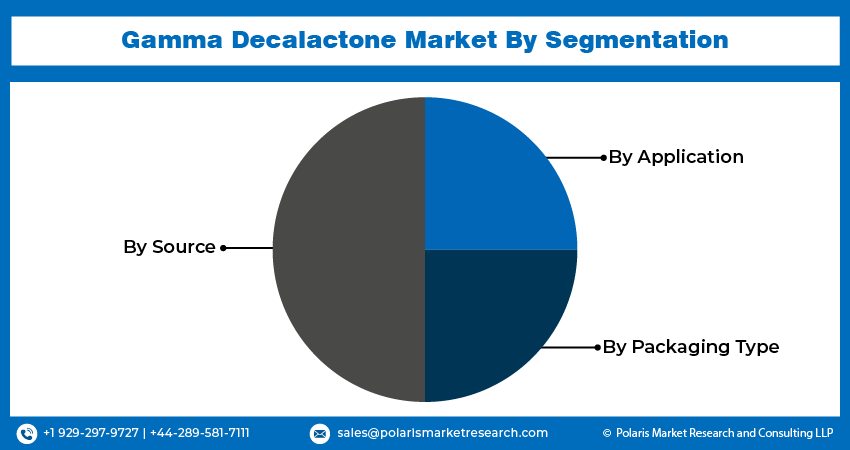
The market is primarily segmented based on source, application, packaging type, and region.
|
By Source |
By Application |
By Packaging Type |
By Region |
|
|
|
|
To Understand the Scope of this Report: Speak to Analyst
By Source Analysis
Fruits segment is expected to witness the highest growth during the forecast period
The fruits segment is projected to grow rapidly, mainly driven by the growing demand for natural food ingredients by manufacturers. Gamma decalactone is extracted from real fruits, such as strawberries, peaches, apricots, and mangoes. The rising concerns about health issues due to chemical flavors and fragrances are fostering the demand for gamma decalactone from natural fruits.
Furthermore, cleanly labeled products are gaining traction nowadays among manufacturers, enabling them to gain a competitive advantage and withstand their products from competitors. The willingness of customers to pay an additional price for products with no artificial flavors, colors, preservatives, or synthetic additives is forcing food and beverage producers to adopt the natural flavors and aroma compounds of gamma decalactone, which is derived from real fruits.
The fermented products segment led the industry market with a substantial revenue share in 2022, largely attributable to its cost-effectiveness compared to fruits. The lower concentration of gamma decalactone in fruits is driving flavor and fragrance producers to adopt biotechnological synthesis as it enables them to increase their supply to cater to ongoing consumer demand for personal care, food, and beverages. Furthermore, this will assist producers in stabilizing price levels, which will enhance affordability among small and medium enterprises.
By Application Analysis
Food and Beverages segment accounted for the largest market share in 2022
The food and beverage segment accounted for the largest share. Flavors play a crucial role in food making as they are extensively used in food production and innovation processes. The growing popularity of chocolate, strawberry, and vanilla flavors in cakes, baked goods, and desserts is stimulating the demand for gamma decalactone, as they are widely used in creating flavors. These factors are contributing to the growth of the market soon.
By Packaging Type Analysis
The liquid segment held a significant market revenue share in 2022
The liquid segment held a significant market share in revenue in 2022, which is highly influenced by the ease of application in beverages, mainly cool drinks and alcoholic beverages. Furthermore, gamma decalactone is used in cosmetics and personal care products due to its intense flavor and fragrance profile. The liquid form works effectively for skincare and haircare products, including body lotion and shampoo formulations, due to the liquidity nature of the end products.
Regional Insights
North American region dominated the global market in 2022
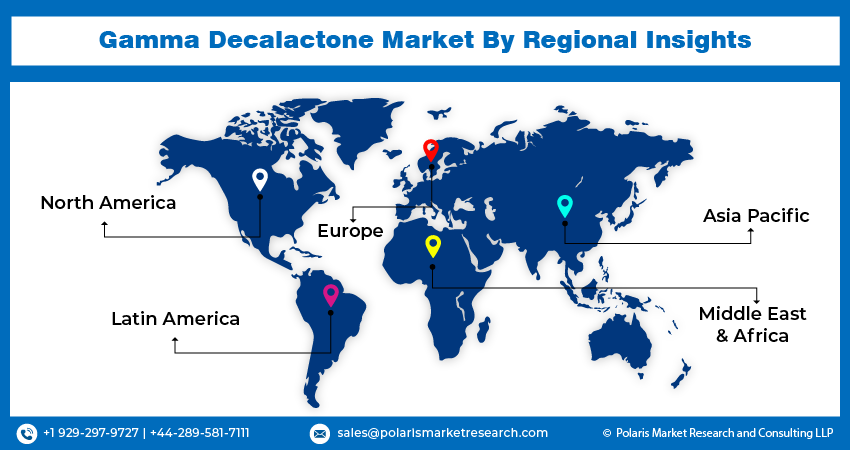
The North American region dominated the global market. The growing demand for snacking in the region is creating new growth potential for gamma decalactone. According to a study published in PubMed Central, snacks contribute to 20% of energy intake in American diets. This is encouraging producers to innovate new food and beverages, which may create a need for flavors and fragrances, driving demand for damma decalactone in the coming years.
The Europe region is expected to be the fastest-growing region due to the rising popularity of flavors, primarily vanilla. According to the article published in the European Flavours Association, people in Germany show a preference for creamy notes along with Bourbon vanilla flavors, while Scandinavians prefer clean vanilla-type flavors in addition to creamy, powdery, and sweet flavors. This demonstrates the increasing trend of flavors in Europe, which will facilitate the demand for gamma decalactone as it is highly incorporated in flavor formulations. Furthermore, manufacturers and bakeries are producing cakes and desserts with these flavors to meet changing consumer interests, in a way driving the growth of the gamma decalactone market in the study period.
Key Market Players & Competitive Insights
The gamma decalactone market is anticipated to witness competition on account of ongoing research activities on new flavors & fragrances. Major players are constantly upgrading their product portfolios to stay ahead of the competition and cater to ongoing flavor needs in food and beverages. These players focus on partnerships, product formulations, and collaboration to gain a competitive edge over their peers and capture a significant market share.
Some of the major players operating in the global market include:
- Advanced Biotech
- Anhui Primechem
- Aroma Chemical Services International
- Aromiens International
- Augustus Oils
- AUROCHEMICALS
- Berjé
- Blue California
- Conagen
- Jeneil
- Kao Chemicals
- Omega Ingredients
- Phoenix Aromas & Essential Oils
- SODA AROMATIC
- Vigon International
Recent Developments
- In January 2022, a study published in Science Direct focused on finding the process optimization and purification of gamma decalactone using Yarrowia lipolytica NCIM 3590 from ricinoleic acid. The result of the study showed 80% pure gamma decalactone.
Gamma Decalactone Market Report Scope
|
Report Attributes |
Details |
|
Market Size Value in 2024 |
USD 3.28 million |
|
Revenue Forecast in 2032 |
USD 5.46 million |
|
CAGR |
6.6% from 2024 – 2032 |
|
Base Year |
2023 |
|
Historical Data |
2019 – 2022 |
|
Forecast Period |
2024 – 2032 |
|
Quantitative Units |
Revenue in USD million and CAGR from 2024 to 2032 |
|
Segments Covered |
By Source, By Application, By Packaging Type, By Region |
|
Regional Scope |
North America, Europe, Asia Pacific, Latin America, Middle East & Africa |
|
Customization |
Report customization as per your requirements with respect to countries, region and segmentation. |
FAQ's
The global gamma decalactone market size is expected to reach USD 5.46 million by 2032
Key players in the market are Advanced Biotech, Anhui Primechem, Aroma Chemical Services International, Aromiens International
North American contribute notably towards the global Gamma Decalactone Market
The global gamma decalactone market is expected to grow at a CAGR of 6.6% during the forecast period.
The Gamma Decalactone Market report covering key segments are source, application, packaging type, and region.
Page last updated on:
Feb-2024
Research Methodology
A robust system of research, verification, and forecasting designed to ensure reliable and actionable market insights.
Polaris Market Research uses a clear and structured approach to deliver insights that clients can rely on. The process combines detailed primary and secondary research, including direct communication with industry experts. The detailed information helps build a complete picture of market trends and developments. Secondary data is gathered from credible sources such as industry reports, company filings, government source links, and trusted organization databases. It is then cross-checked through discussions with key stakeholders across the value chain. Market size and forecasts are developed using both bottom-up and top-down methods to ensure accuracy and consistency in the final results.
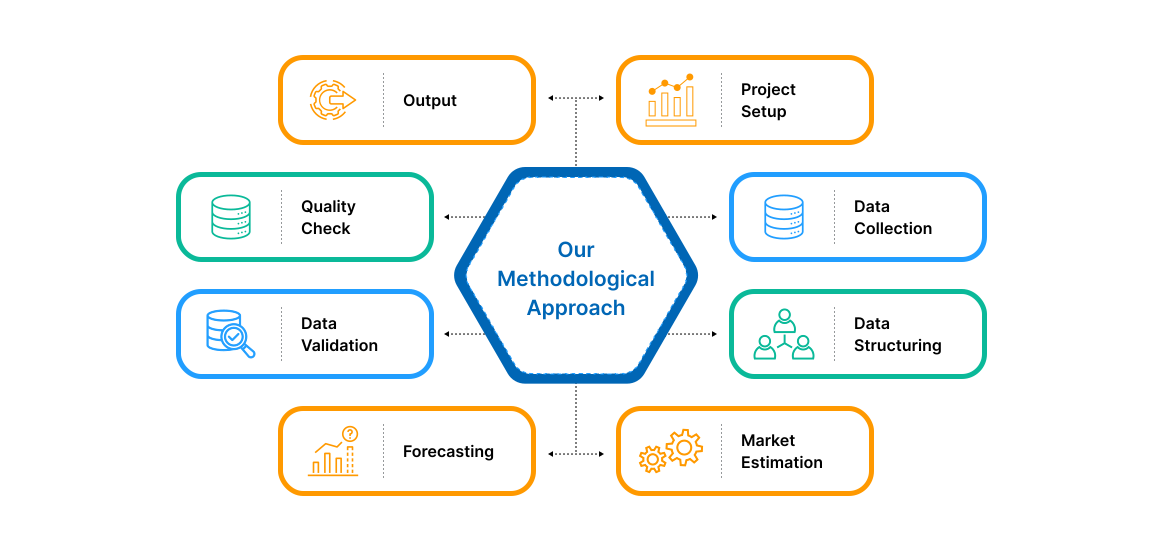
Project Setup
Step 1 & 2:
- We start every project by clearly understanding the client’s objective or goal, then defining the market scope, and aligning regions, segments, and timelines.
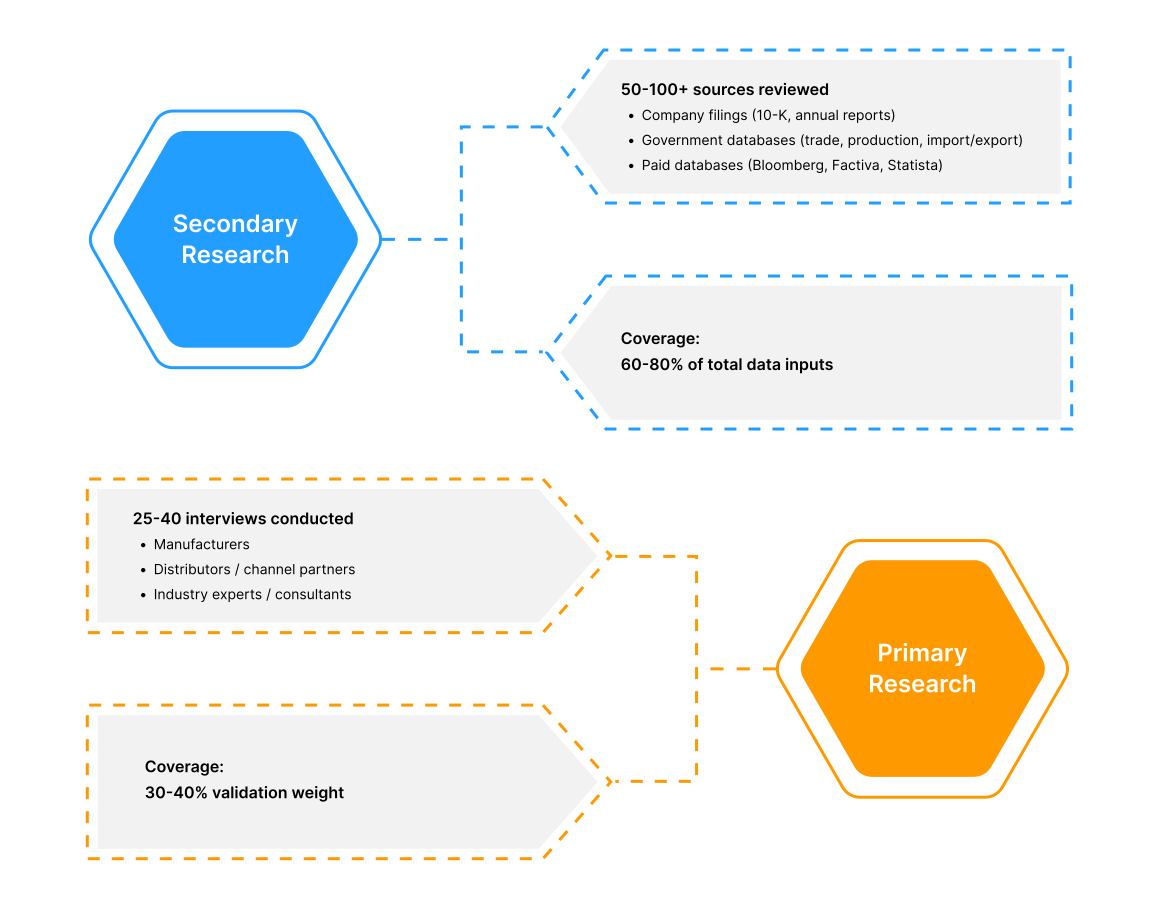
- Once the foundation is set, we collect data from all-around of sources, including company reports, government databases, and paid industry platforms.
- Our research is based on secondary data, which helps us build a strong understanding of the market across regions and industries. Then we validate this information through primary research by speaking directly with industry experts, companies, and stakeholders.
- By combining secondary and primary research, we ensure that our market insights are accurate, practical, and closely aligned with real market conditions.
Data Collection
We gather information from both public and verified sources:
Data Structuring
Step 3:
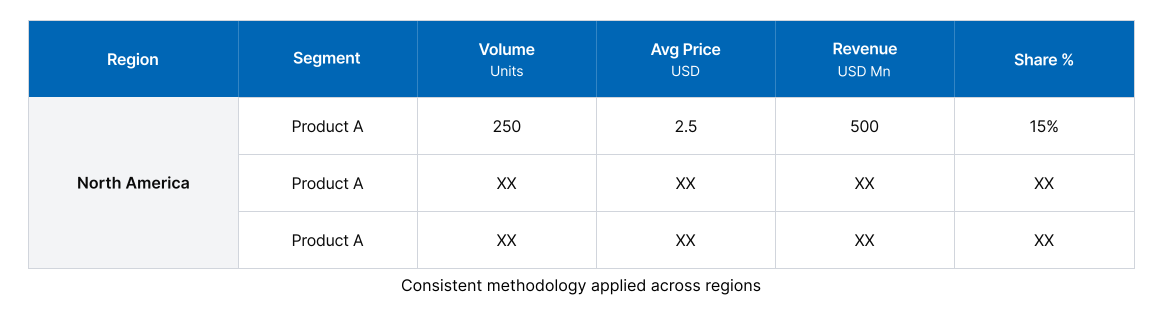
- All collected data is organized into a consistent format to ensure accurate analysis. Since inputs come from multiple sources, they are standardized and aligned before use.
- The data is segmented by product, application, and region, and mapped across a defined historical period (2020–2024). All values are converted into common units (USD Mn/Bn), and volume and pricing are aligned where required to estimate revenue.
- Any overlaps or inconsistencies are reviewed and adjusted to maintain accuracy (<5% variance threshold).
- The result is a structured dataset that allows for clear comparison across regions and supports reliable analysis and forecasting.
Structured Market Dataset, USD Mn/Bn
4. Data Structuring
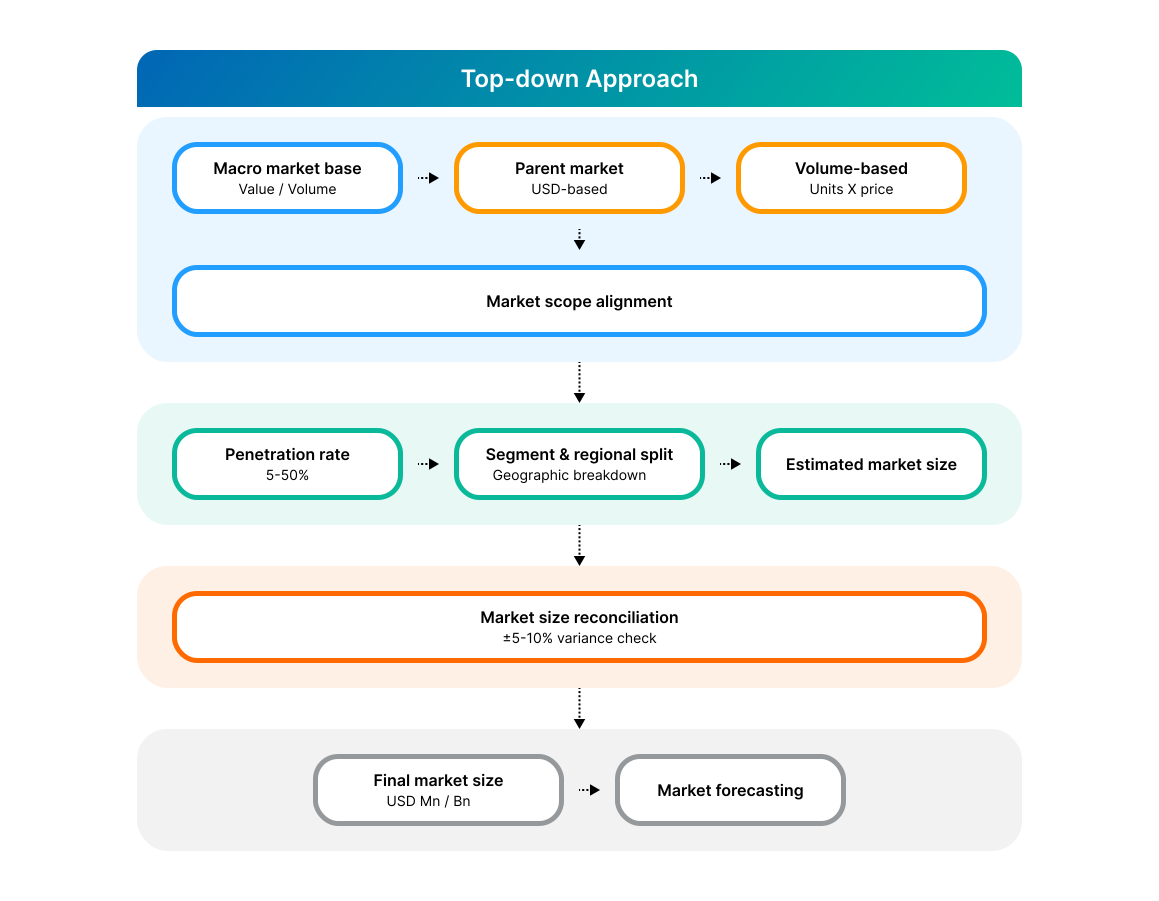
Step 4: TOP-DOWN APPROACH
- We start with the overall market size at a global or macro level.
- The market is then narrowed down based on scope and industry relevance.
- We apply penetration rates and split the data by region and segment.
- This helps us estimate the market size for specific segments.
- The numbers are validated through cross-checks to ensure accuracy.
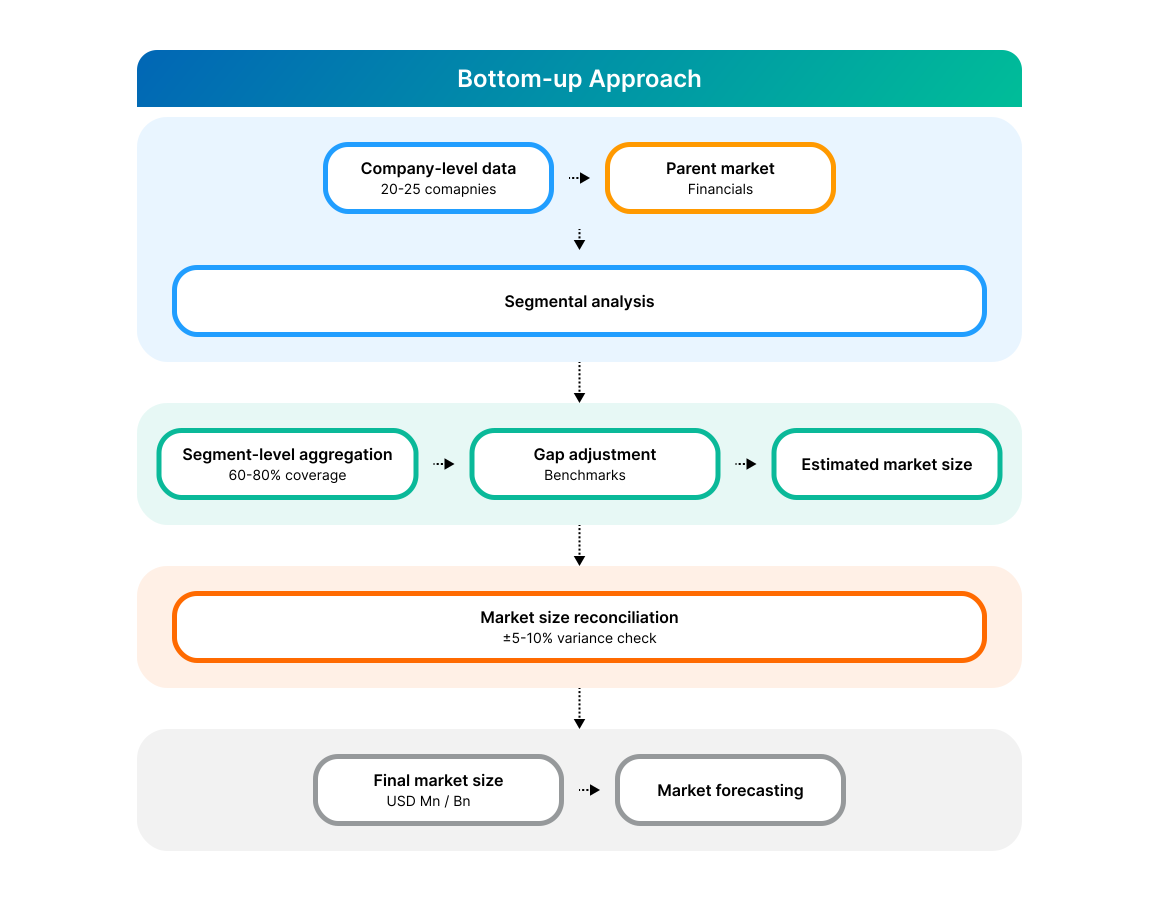
Step 5: BOTTOM-UP APPROACH
- We begin by analyzing data from leading companies in the market.
- Revenue data is collected and mapped across different segments.
- The data is then aggregated to estimate the total market size.
- To fill in any gaps, adjustments are made based on industry standards.
- Validation checks make sure that the results are correct.
5. Data Structuring
Step 6:
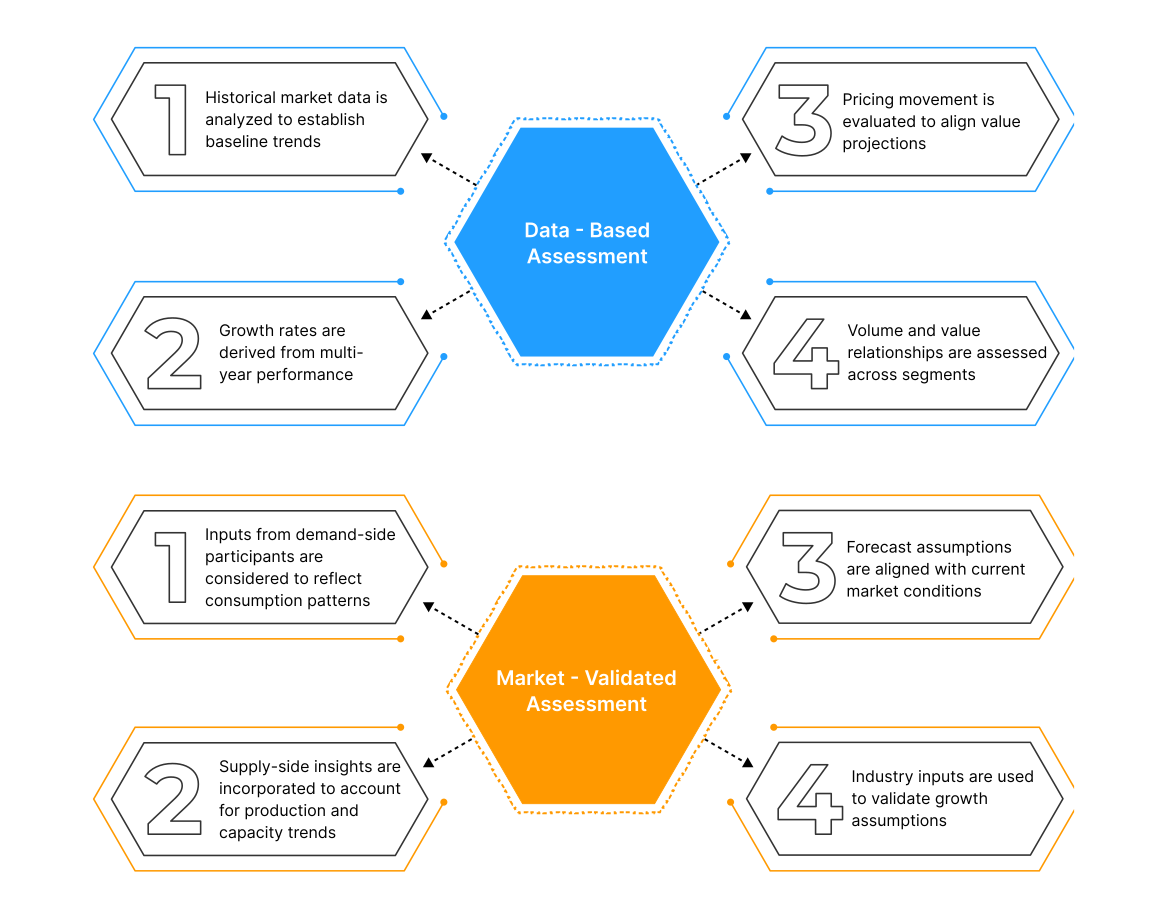
At Polaris Market Research, we employ a methodical forecasting strategy. This approach blends the analysis of historical data with real-time market validation. To forecast future trends with precision, we examine past patterns, pricing fluctuations, and the interplay of supply and demand. To ensure our conclusions reflect the present market landscape, we actively seek input from industry experts and key stakeholders.
To refine our predictions, we carefully consider critical elements such as market drivers and restraints, fluctuations in raw material costs, emerging technologies, and the production capabilities of various regions. Furthermore, we assess regulatory frameworks and potential policy shifts to gauge their potential impact on market expansion.
All this information is synthesized to generate precise forecasts for each segment and region. These forecasts illuminate the current state of the market and highlight forthcoming opportunities.
6. Data Structuring
Step 7:
In the final stage, we validate all our estimates using a triangulation method, where data is cross-checked from multiple reliable sources, like company data, primary interviews, and secondary research. This helps us make sure that our numbers are correct and fit with the rest of the market.
This process involves verifying data consistency across various segments and geographic areas. It also requires comparing historical trends with the assumptions support the forecast. Any discrepancies involve adjustments to ensure everything remains aligned and dependable.
Once the data is finalized, we prepare the final outputs, including market size estimates, segment-wise breakdowns, and growth metrics. These are delivered in structured formats such as tables, charts, and data files for easy analysis and use.
We collaborate closely with clients, ensuring the final products align with their requirements. This includes offering tailored adjustments, supplementary data analyses, and continuous assistance. Furthermore, we monitor market trends post-delivery, providing updates and refinements to maintain the insights' relevance as time passes.
Post-delivery, we continue to monitor market shifts, offering updates and adjustments to ensure the insights remain relevant over time.
Validation
Triangulation Framework
- Company-level data
- Primary inputs from industry participants
- Secondary benchmarks and published data
- Variance maintained within ±5-10%
- Adjustments applied to align estimates
- Segment values validated against overall market structure
Quality Check
Data Consistency & Integrity
- Segment totals validated to 100%
- Regional estimates aligned with global market size
- Historical trends compared against forecast outputs
- Assumptions reviewed for cross-segment and regional alignment
Output & Delivery
Final Outputs
- Market size estimates (USD Mn/Bn)
- Segment-wise distribution (%)
- Growth metrics (CAGR %)
- Structured tables and charts
- Segment-level datasets
- Excel-based data files for further analysis
Client Alignment & Support
- Deliverables are aligned with defined client requirements and scope
- Custom data cuts and segment splits are incorporated as required
- Post-delivery queries are addressed through analyst interactions
- Additional clarifications and data support are provided upon request
Client Continuity & Updates
- Market developments are tracked post-delivery to capture changes in key trends
- Updated data and revisions are provided based on new market inputs
- Additional refinements and data cuts are shared as required
- Continued analyst engagement supports evolving client requirements


