Gelatin Market Share, Opportunity, Trends, Industry Analysis Report, 2026 - 2034
REPORT DETAILS
Market Statistics
Gelatin Market Summary
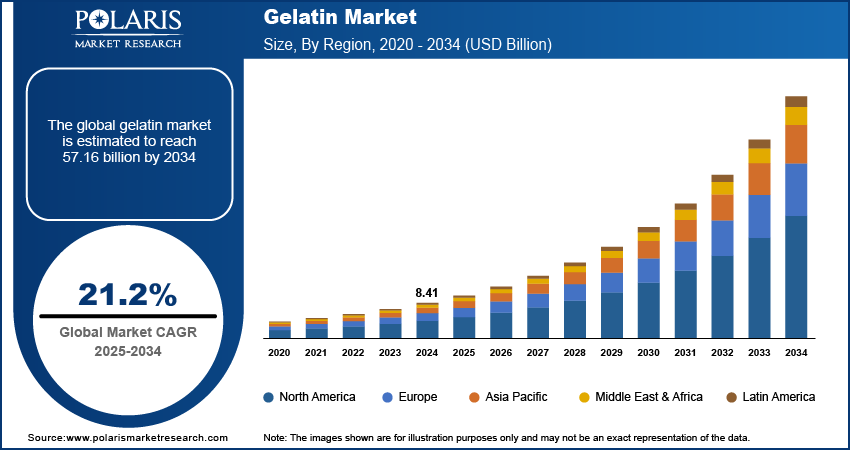
The global gelatin market size was valued at USD 10.42 billion in 2025. It is projected to exhibit a CAGR of 21.9% from 2026 to 2034. Their gelling properties support wide use in food products such as jellies, gummy sweets, marshmallows, and desserts. This expanding usage is contributing to overall market growth.
Key Takeaways
- In 2025, Europe held a 49.80% revenue share of the worldwide gelatin market. This was fueled by robust demand across the food, cosmetics, and healthcare sectors.
- Asia Pacific's market is projected to expand at a compound annual growth rate of roughly 22.3% from 2026 to 2034. This growth is fueled by a surge in demand for convenience foods and a growing presence in pharmaceutical applications.
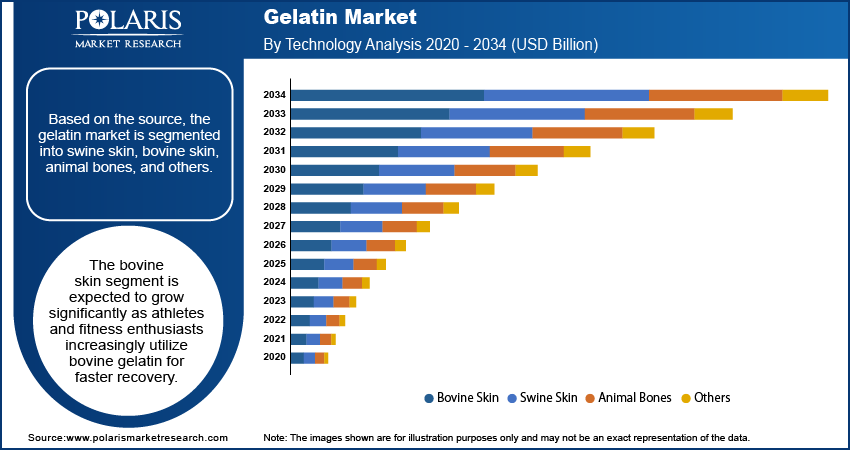
- The bovine skin segment held a share of 35.6% of the global gelatin market in 2025, supported by its increasing use in sports nutrition and recovery products.
- Type A gelatin is projected to grow at a CAGR of around 22.1% during the forecast period, supported by its better storage stability and growing use in pharmaceutical and functional food applications.
- The stabilizer segment dominated the gelatin market in 2025, supported by its wide use in maintaining product consistency and stability.
Market Statistics
- 2025 Market Size: USD 10.42 billion
- 2034 Projected Market Size: USD 61.88 billion
- CAGR (2026-2034): 21.9%
- Europe: Largest Market in 2025
Industry Dynamics
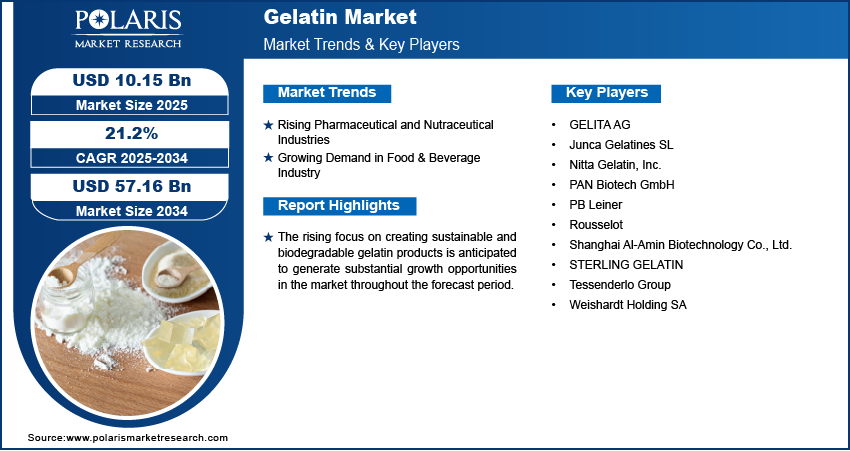
- There is an extensive usage of gelatin in pharmaceutical and nutraceutical industries for making capsules and drug delivery systems, driving the market demand.
- The market is rising, driven by the increasing need within the food and beverage sector. Gelatin, a key ingredient, serves as a gelling agent, stabilizer, and thickener, finding its way into products like desserts, yogurts, and candies.
- The growing inclination towards clean label commodities and their rising usage in cosmetics is creating market opportunities.
- The growing consumer’s requirement for organic and green components is encouraging manufacturers to move from animal-dependent to several plant-based alternatives, which is restraining the market growth.
What is Gelatin?
Gelatin is a colorless and translucent protein made from collagen market, usually taken from the bones and skin of pigs or cattle. When it is mixed with hot water and then cooled, it forms a gel-like texture. This makes it useful for giving a smooth consistency in different products. It is commonly used in food items such as jellies, gummy sweets, marshmallows, and desserts. It is also used in pharmaceuticals, cosmetics, and photography, showing its large gelatin applications.
The global gelatin market size is growing due to rising demand for functional foods, beverages, and pharmaceutical uses. The shift toward clean-label products and their increasing use in cosmetics is also supporting gelatin industry growth. In addition, better production methods and the development of alternative gelatin types are helping the market expand.
The growing use of gelatin in gummy supplements shows that companies are focusing on health-oriented products. This trend reflects changing market trends and is helping the market expand into new areas. Companies are also working with pharmaceutical firms to support the need for personalized medicine, better nutrition products, and improved drug delivery methods.
The market is gradually moving beyond traditional food uses into pharmaceutical, nutraceutical, and biomedical areas. The demand for encapsulation and functional proteins is increasing. At the same time, developments in hydrolyzed gelatin and collagen peptides are creating new opportunities in nutrition and treatment-related products.
From a supply side, the gelatin supply chain depends on collagen from bovine and porcine sources. This makes it sensitive to livestock availability, regulations, and trade policies. Because of this, companies are exploring alternative and fermentation-based gelatin, especially in regions with dietary or religious restrictions.
Comparison of Food Grade, Pharmaceutical, and Industrial Gelatin
| Parameter | Food Grade Gelatin | Pharmaceutical Grade Gelatin | Industrial Gelatin |
| Primary Use | Food processing, confectionery, dairy, desserts, gummies | Hard capsules, softgels, tablets, coatings, hemostats | Photography, adhesives, matches, paper, textiles, technical applications |
| Purity Level | Moderate to high; safe for food consumption | Very high; strict pharmacopeia standards (USP/EP/JP) | Lower compared to pharma grade; application-specific |
| Regulatory Standards | Food safety regulations (FSSAI, FDA, EFSA) | Pharmaceutical compliance (USP, EP, GMP) | Industrial manufacturing standards |
| Functional Properties | Gelling, thickening, stabilizing, emulsifying | Film-forming, binding, controlled dissolution, encapsulation | Adhesion, binding, coating, film formation |
| Bloom Strength | Medium to high depending on food application | Precisely controlled for dosage consistency | Varies depending on industrial use |
| Raw Material Source | Bovine, porcine, fish, poultry | Mainly bovine, porcine, marine with traceability | Animal by-products and collagen sources |
| Cost Level | Moderate | Highest due to purification and compliance | Lowest among the three |
| Key Buyers | Food manufacturers, confectionery brands | Pharma companies, nutraceutical firms, CMOs | Industrial manufacturers, adhesive producers |
Source: Polaris Market Research Analysis
Source: Polaris Market Research Analysis
To Understand More About this Research:Download Sample Report
Market Dynamics
Rising Pharmaceutical and Nutraceutical Industries
The pharmaceutical and nutraceutical industries are seeing rising demand for gelatin. It is widely used in capsules and drug delivery systems. This supports the growth of the pharmaceutical gelatin market. Gelatin is used to produce both soft and hard capsules. These help in effective drug encapsulation. This is also driving the gelatin capsules market. Its use in dietary supplements makes it easier to consume vitamins and minerals. The growing emphasis on preventive healthcare is driving the demand for nutraceutical gelatin, particularly in collagen-based products designed to promote joint, skin, and bone health. Furthermore, gelatin is used in advanced drug delivery systems, including controlled-release capsules and improved formulations. These advancements are increasing its use in both pharmaceuticals and nutraceuticals.
Growing Demand in Food & Beverage Industry
Demand for gelatin in the gelatin food industry is increasing due to its wide use. It serves as a gelling agent, stabilizer, and thickener in products like desserts, yogurts, and candies. Gelatin helps create the desired texture in marshmallows and gummy candies. It also improves the creaminess and stability of yogurt. These uses reflect current gelatin demand trends in food products.
The hustle of modern life is driving people toward convenience foods. This is driving the use of food-grade gelatin across many products. Desserts and jellies are becoming popular as quick and easy options. Demand for confectionery, functional beverages, and high-protein snacks is also rising. Manufacturers use gelatin to enhance texture, shelf life, and mouthfeel, supporting its wider use in the food segment.
Supply Chain Volatility and Raw Material Dependency
The gelatin market depends on animal-based collagen, so the gelatin supply chain relies on raw material availability. Changes in livestock production, disease outbreaks, and regulations can affect supply. This also impacts prices across regions. Changes in gelatin raw material cost can affect overall gelatin production and profits. These factors make sourcing and planning difficult. Businesses are focusing on dependable supply chains and better planning to maintain consistent production levels.
Rising Competition from Plant-Based Alternatives
The shift toward vegan and plant-based diets is increasing demand for alternatives such as agar, pectin, and carrageenan. This supports the gelatin alternatives market. These plant-based gelatin substitutes are being used more in food and pharmaceutical products. Their use is increasing due to changing dietary choices and label preferences. This creates pressure on traditional gelatin demand and may affect long-term growth in some markets.
Source: Polaris Market Research Analysis
Get Full Segment-Level Forecasts & Insights: Download Sample Report
Segment Insights
Based on Source
The market is segmented by source into swine skin, bovine skin, animal bones, and others. This gelatin segmentation reflects its wide use across industries. The bovine skin segment accounted for 35.6% share of the global market in 2025. Growth in the bovine gelatin market is supported by rising use in sports nutrition and recovery products. Athletes and fitness users prefer bovine gelatin for better recovery and performance. Its amino acids support endurance during physical activity.
Bovine gelatin is available in capsules, tablets, and powder forms. It is easy to consume and does not have a bitter taste. Its high collagen content and versatility support its use across food, pharmaceuticals, and cosmetics. At the same time, fish gelatin demand is increasing in some regions. This is due to regulatory and religious factors, especially in the Asia Pacific and the Middle East.
Based on Type
The gelatin market, based on type, is segmented into Type A and Type B. The Type A segment is projected to witness the fastest growth during the projection period, at a CAGR of around 22.1%. Type A gelatin, mainly derived from pig skin, provides better storage stability than Type B gelatin, which is generally obtained from beef skin. This excellent storage stability of Type A gelatin makes it the favored option for many end users. Also, Type A gelatin is experiencing significant demand from the food industry, where it is used for its functional attributes and flexibility. The gelatin type A market is also seeing growing demand from pharmaceutical formulations and functional foods. This is due to its better clarity, lower viscosity, and strong performance in encapsulation. At the same time, gelatin type B analysis shows steady demand in applications where different functional properties are required.
Based on Function
The gelatin market, based on function, is segmented into gelling agent, stabilizer, and thickener. Gelatin is widely used across industries. Its role in the gelatin functionality market is growing due to its ability to improve texture and product consistency. It is used in confectionery, dairy, and pharmaceutical products where stability is important. These uses highlight expanding gelatin applications. Its multifunctional nature makes it a dependable choice for manufacturers across different end-use segments.
Source: Polaris Market Research Analysis
Need Granular Data Across All Market Segments? Request Customization
Regional Analysis
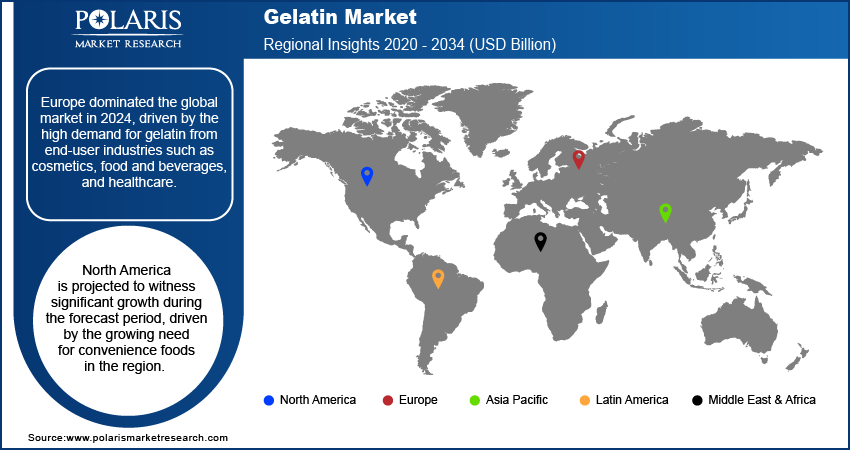
By region, the report offers gelatin market insights into North America, Europe, Asia Pacific, Latin America, and the Middle East & Africa. Europe led the global gelatin market with a revenue share of 49.80% in 2025. This was driven by strong demand from end-use industries such as cosmetics, food & beverages, and healthcare. In addition, the presence of major gelatin producers, including Biogel AG, Prowico, and Gelita, supports the region’s leading position in the global market. The region also has a well-developed gelatin value chain. It uses advanced processing methods to support production. These methods help maintain consistent product quality.
North America
North America is expected to witness steady growth during the forecast period. This is mainly due to the rising demand for convenience foods in the region. The personal care and pharmaceutical industries are also growing in North America. This is further supporting the regional market demand.
Asia Pacific
Asia Pacific is expected to grow at a CAGR of around 22.3% during the forecast period.It is emerging as the fastest-growing region due to increasing demand from China and India. This reflects strong growth in the gelatin market in Asia Pacific. China leads gelatin production due to the availability of raw materials and large-scale manufacturing. This helps steady supply and cost advantages in the region. India is witnessing increasing demand from the pharmaceutical and nutraceutical sectors. The rising focus on healthcare and supplements is backing this demand. These factors are helping the Asia Pacific strengthen its position in the global gelatin market.
Russia & Eastern Europe Insight
Russia and Eastern Europe are gaining importance in the Russia gelatin market due to their expanding meat processing industries. These industries provide a steady supply of collagen-based raw materials. This supports consistent gelatin production in the region. Growing local demand and improving production capacity are also contributing to market development. These factors are helping the region strengthen its role in the global gelatin market.
Value Chain Analysis
The gelatin value chain includes raw material sourcing, processing, manufacturing, distribution, and end-use industries. This structure helps provide a clear gelatin industry analysis across different stages. Leading companies are focusing on integration strategies to improve cost control and ensure a stable supply. These strategies assist in reducing risks and improving overall efficiency. As a result, companies gain a competitive advantage in the gelatin market.
Pricing Analysis
Gelatin prices are impacted by raw material availability, production costs, and global demand-supply dynamics. Gelatin pricing trends vary across regions based on sourcing and supply conditions. Price changes are more common in regions that depend on imports. This increases uncertainty in the market. In gelatin cost analysis, companies are focusing on supply diversification to reduce risk. This approach supports maintaining price stability and helps better planning for market players.
Source: Polaris Market Research Analysis
Curious About Regional Market Performance? Request Customization
Key Players and Competitive Insights
The leading players in the market are emphasizing research and development initiatives to improve their product offerings. Key market players are also undertaking various strategic initiatives, such as mergers and acquisitions and collaborations, to expand their global reach. To expand and survive in a more competitive and rising market environment, market participants must offer innovative and sustainable solutions.
Manufacturing locally is one of the key business strategies used by manufacturers to benefit clients and increase the market share. In recent years, the market for gelatin has witnessed several technological and innovation breakthroughs. The gelatin market report offers a market assessment of all the key players, including STERLING GELATIN, PAN Biotech GmbH, Rousselot, Shanghai Al-Amin Biotechnology Co., Ltd., Junca Gelatines SL, Tessenderlo Group, Nitta Gelatin, Inc., GELITA AG, Weishardt Holding SA, and PB Leiner.
In the gelatin competitive analysis, gelatin market key players are focusing on sustainable production methods and alternative protein technologies to meet changing consumer preferences.
GELITA AG is one of the leading companies in the global gelatin market. The company offers a wide range of gelatin and collagen peptide products for food, pharmaceutical, and nutraceutical applications. Its products are widely used in gummies, dairy, capsules, and functional foods. The company focuses on product innovation and clean-label solutions to meet changing consumer demand.
Rousselot is a key player in gelatin and collagen-based solutions. The company provides gelatin for pharmaceutical, food, and biomedical uses. Its products are used in capsules, medical applications, and nutrition products. Rousselot focuses on quality, product performance, and innovation to support advanced applications in healthcare and nutrition.
List of Key Companies
- GELITA AG
- Junca Gelatines SL
- Nitta Gelatin, Inc.
- PAN Biotech GmbH
- PB Leiner
- Rousselot
- Shanghai Al-Amin Biotechnology Co., Ltd.
- STERLING GELATIN
- Tessenderlo Group
- Weishardt Holding SA
Gelatin Industry Developments
- July 2025: GELITA introduced new collagen-based ingredients for snacks and beverages. SOLUFORM is used for low-sugar, high-protein gummy products. The company also launched OPTIBAR® to improve texture and taste in nutrition bars. Bioactive Collagen Peptides (BCP) were also presented for functional beverages. (Source: nutraceuticalbusinessreview.com)
- August 2024: Zydus Lifesciences acquired a 50% stake in Sterling Biotech from Perfect Day Inc., forming a joint venture. The focus is on fermented, animal-free proteins. This supports the rising demand for sustainable and ethically sourced nutrition. (Source: zyduslife.com)
- May 2024: GELITA launched OptiBar, a collagen-based ingredient for high-protein and sugar-free bars. It helps deliver high protein content while maintaining a soft texture. It also works as a sugar-free binder and supports clean-label claims. (Source: nutraingredients.com)
Future of Gelatin Market
The gelatin market is expected to witness steady growth in the coming years. Rising demand for clean-label ingredients and protein-rich functional foods will drive the market expansion. Increasing consumption of gummies, fortified beverages, and nutraceutical supplements will expand gelatin applications across food and healthcare industries. Pharmaceutical demand for capsules and softgels will continue to support market expansion globally. At the same time, the emergence of plant-based and vegan alternatives such as pectin, agar, and carrageenan may create competitive pressure. It will encourage manufacturers to innovate in sustainable and specialty gelatin products.
Gelatin Market Segmentation
By Source Outlook (Revenue, USD Billion, 2021-2034)
- Swine Skin
- Bovine Skin
- Animal Bones
- Others
By Application Outlook (Revenue, USD Billion, 2021-2034)
- Food & Beverages
- Pharmaceuticals
- Health & Nutrition
- Cosmetics
- Personal Care
- Animal Feed
By Type Outlook (Revenue, USD Billion, 2021-2034)
- Type A
- Type B
By Function Outlook (Revenue, USD Billion, 2021-2034)
- Thickener
- Stabilizer
- Gelling Agent
By Regional Outlook (Revenue, USD Billion, 2021-2034)
- North America
- US
- Canada
- Europe
- Germany
- France
- UK
- Italy
- Spain
- Netherlands
- Russia
- Rest of Europe
- Asia Pacific
- China
- Japan
- India
- Malaysia
- South Korea
- Indonesia
- Australia
- Rest of Asia Pacific
- Middle East & Africa
- Saudi Arabia
- UAE
- Israel
- South Africa
- Rest of Middle East & Africa
- Latin America
- Mexico
- Brazil
- Argentina
- Rest of Latin America
Gelatin Market Report Scope
| Report Attributes | Details |
| Market Size Value in 2025 | USD 10.42 Billion |
| Market Size Value in 2026 | USD 12.68 Billion |
| Revenue Forecast by 2034 | USD 61.88 Billion |
| CAGR | 21.9% from 2026 - 2034 |
| Base Year | 2025 |
| Historical Data | 2021-2034 |
| Forecast Period | 2026-2034 |
| Quantitative Units | Revenue in USD billion and CAGR from 2026 to 2034 |
| Report Coverage | Revenue Forecast, Market Competitive Landscape, Growth Factors, and Trends |
| Segments Covered |
|
| Regional Scope |
|
| Competitive Landscape |
|
| Report Format | PDF + Excel |
| Customization | Report customization as per your requirements with respect to countries, regions, and segmentation. |
Source: Polaris Market Research Analysis
Gelatin Market FAQ's
The gelatin market stood at USD 10.42 billion in 2025. It is expected to reach USD 61.88 billion by 2034, at a CAGR of 21.9% during 2026–2034.
Demand from pharmaceuticals, nutraceuticals, and functional foods is increasing. Use in drug delivery systems is also rising.
Gelatin is used in food products, pharmaceuticals, cosmetics, and biomedical applications.
Europe accounts for the largest market share. It is driven by strong industrial needs and the concentration of significant manufacturers.
Indeed, the need is growing in the food, healthcare, and nutraceutical industries.
Agar, pectin, and carrageenan are widely used substitutes.
Download Sample Report of Gelatin Market
Please fill out the form to request a customized copy of the research report.


