

What is High Purity Silica Sand for Solar Cell Market Size?
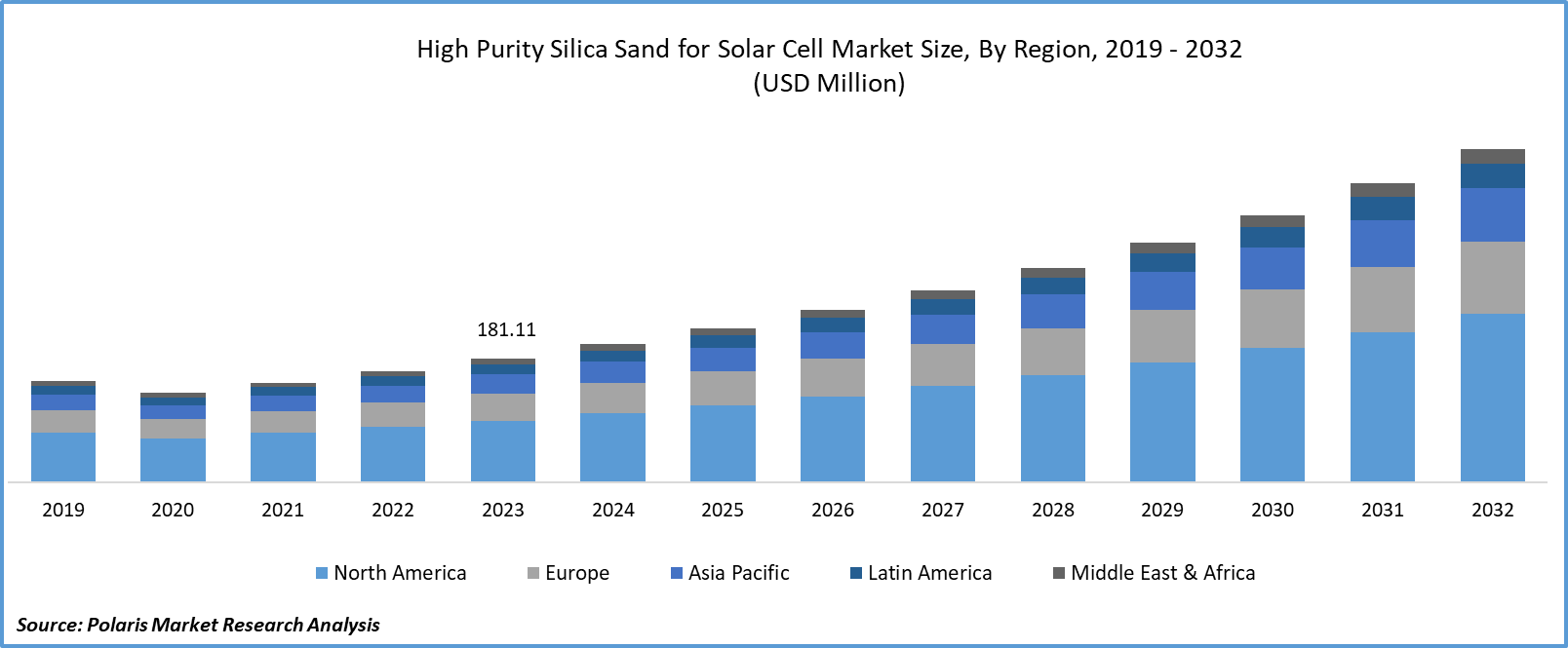
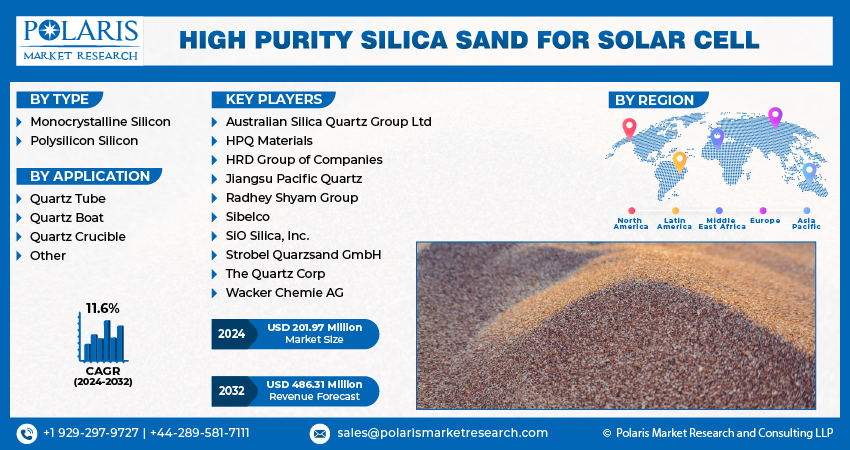
Global high purity silica sand for solar cell market size was valued at USD 224.29 million in 2025 and is anticipated to exhibit a CAGR of 11.5% during the forecast period.
Market Statistics
- 2025 Market Size: USD 224.29 Million
- 2034 Projected Market Size: USD 597.41 Million
- CAGR (2026-2034): 11.5%
- Largest Market: Asia Pacific
Industry Trend
The high purity silica sand for solar cell market refers to the industry associated with the production, processing, and supply of high-purity silica sand specifically designed for use in the manufacturing of solar cells. Silica sand is a key raw material in the production of solar panels or photovoltaic (PV) cells. The characteristics of high-purity silica sand make it suitable for use in the solar industry. High purity is essential to ensure the optimal performance of solar cells. The sand is used in the manufacturing of silicon, which is a critical component of solar cells. The semiconductor-grade silicon derived from high-purity silica is crucial for the production of efficient and high-performance solar panels.
The surge in demand for superior materials in solar photovoltaic (PV) manufacturing propels the high purity silica sand for solar cell market. This specialized silica sand plays a crucial role in producing silicon wafers, essential components in the fabrication of solar cells. The rising embrace of solar energy shapes the market's expansion as a sustainable and renewable power solution. The quest for dependable and high-purity silica sand for solar cells significantly contributes to the upward trajectory of this market.
To Understand More About this Research: Request a Free Sample Report
Solar cell manufacturing requires high-quality materials to ensure the efficiency and reliability of the solar panels. High-purity silica sand meets the stringent quality standards necessary for solar applications. The semiconductor industry demands silica with very low impurity levels, as impurities can affect the electrical properties of silicon. High-purity silica ensures the desired chemical composition and electrical characteristics required for solar cells.
The expansion of the solar energy sector, driven by the global push for renewable energy sources, significantly contributes to the scope of the high purity silica sand for solar cell market. The increasing installation of solar power systems and the growing demand for efficient solar panels create a substantial market opportunity. Ongoing advancements in solar cell technology often necessitate higher-purity materials. The scope of the market is influenced by the industry's need for silica sand that meets evolving technological requirements. Innovations in solar cell design and efficiency improvements contribute to the demand for high-purity silica.
Furthermore, government initiatives and policies promoting renewable energy adoption contribute to the demand of the market. Supportive regulations and incentives for solar energy projects create a favorable environment for the growth of the high purity silica sand for solar cell market.
The rising awareness of environmental sustainability and the desire for clean energy sources amplify the demand for solar power. High-purity silica sand, which plays a vital role in the production of environmentally friendly solar panels, benefits from the increasing focus on sustainable energy solutions.
Key Takeaway
- Asia Pacific dominated the largest market and contributed to more than 35% of share in 2025.
- North America expected to witness the fastest growing CAGR during the forecast period.
- By type category, the polysilicon silicon held the largest market share in 2025.
- By application category, the quartz tube segment is expected to be the fastest-growing CAGR during the forecast period.
What are the market drivers driving the demand for the high purity silica sand solar cell market?
Rapid Urbanization and Electrification
Rapid urbanization and electrification require substantial energy resources to power infrastructure, buildings, transportation systems, and industries. Additionally, the electrification of rural areas helps to improve the quality of life for residents by enabling access to modern amenities such as lighting, cooking facilities, communication devices, and healthcare services. However, traditional energy sources such as coal, oil, and natural gas are often associated with environmental pollution, greenhouse gas emissions, and limited availability. As a result, there is growing interest in renewable energy sources like solar power, which offer a cleaner, more sustainable alternative. As a result, high purity silica sand for solar cell market share is expected to grow in the upcoming years.
Solar energy, with its decentralized and scalable nature, is particularly well-suited to meet the energy needs of rapidly urbanizing and electrifying regions. Solar power systems can be installed on rooftops, in urban areas, or remote locations, providing electricity directly to consumers without the need for extensive grid infrastructure. Solar cells, which convert sunlight into electricity, are the building blocks of solar power systems. High-purity silica sand is a critical component in the manufacturing of solar cells, as it is used to produce the silicon wafers that form the basis of photovoltaic cells.
As urbanization and electrification drive up the demand for energy, particularly in developing regions, solar energy emerges as a viable solution to meet these growing needs sustainably. This increased demand for solar power systems, in turn, fuels the demand for solar cells and the high-purity silica sand market, driving growth in the solar energy industry.
Which factor is restraining the demand for high-purity silica sand for solar cells?
The availability and cost of alternative materials
The availability and cost of alternative materials. While high-purity silica sand is a crucial component in the manufacturing of solar cells, advancements in technology may lead to the development of alternative materials that could replace or supplement silica sand in certain applications. For instance, researchers and manufacturers may explore alternative semiconductor materials or thin-film technologies that require less silica sand or utilize different materials altogether. Additionally, innovations in solar cell design and manufacturing processes could reduce the reliance on high-purity silica sand while maintaining or improving performance. Hence, these factors may restrain the growth of the high purity silica sand for solar cell market.
Another factor that could impact demand is fluctuations in the cost of high-purity silica sand. While silica sand is abundant, the extraction and processing of high-purity silica sand suitable for solar cell production may require specialized techniques, due to potential cost fluctuations. Economic factors such as changes in labor costs, energy prices, and transportation expenses could also affect the overall cost of silica sand, potentially impacting its demand in the solar cell industry.
Furthermore, environmental and sustainability concerns surrounding the extraction and processing of silica sand may lead to regulatory challenges or public scrutiny, influencing demand patterns. Overall, while high-purity silica sand remains a critical material in the solar cell manufacturing process, factors such as technological advancements, cost considerations, and environmental factors may impact its demand in the future. As a result, the growth of high purity silica sand solar cell market can be slower in upcoming years.
Key Trends in High Purity Silica Sand
|
Trend |
Description |
Examples/Drivers |
|
Solar PV Expansion |
Polysilicon production for panels consuming 107K tons in China by 2032. |
Renewable energy policies, 8% solar growth |
|
Semiconductor Demand |
Ultra-pure grades for wafer fabrication. |
Device miniaturization, electronics boom |
|
Purification Innovations |
Advanced beneficiation reducing impurities to <10ppm. |
Meets ASTM C150 specs, cost efficiency |
|
Sustainable Mining |
Eco-friendly processing, recycling initiatives. |
Regulations, reduced water/chemical use |
|
Nanotechnology Applications |
Nano-silica for advanced materials/optics. |
Emerging electronics, optical fibers |
Report Segmentation
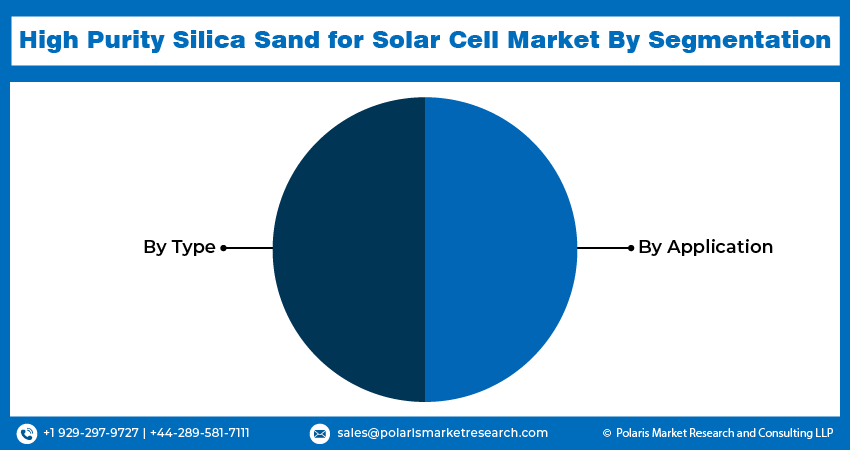
The market is primarily segmented based on type, application, and region.
|
By Type |
By Application |
By Region |
|
|
|
To Understand the Scope of this Report: Speak to Analyst
Category Wise Insights
By Type Insights
Based on type analysis, the market is segmented into monocrystalline silicon and polysilicon silicon. The polysilicon silicon held the largest market share in 2025. Polysilicon, or polycrystalline silicon, is favored for its cost-effectiveness compared to monocrystalline silicon. It involves a simpler production process, allowing for higher yields at a lower cost. The fabrication of polysilicon silicon is less energy-intensive and more economically viable for large-scale solar cell production.
Additionally, technological advancements in polysilicon silicon production have improved its efficiency, making it a competitive choice for many solar applications. Ultimately, the cost-efficiency, scalability, and technological advancements associated with polysilicon silicon contribute to its widespread adoption, due to the demand for high-purity silica sand for the solar cell market.
By Application Insights
Based on application analysis, the market has been segmented based on quartz tubes, quartz boats, quartz crucibles, and others. The quartz tube segment is expected to be the fastest-growing CAGR during the forecast period. Quartz tubes are crucial components used in various stages of solar cell manufacturing processes, including the deposition of thin films, doping, and annealing. As the demand for solar cells continues to rise and manufacturing processes become more sophisticated, there is a corresponding increase in the demand for quartz tubes. These tubes offer excellent thermal stability, high purity, and transparency, making them essential in ensuring the efficiency and reliability of solar cell production. Therefore, the quartz tube segment is expected to experience rapid growth compared to other components in the high purity silica sand for solar cell market.
Regional Insights
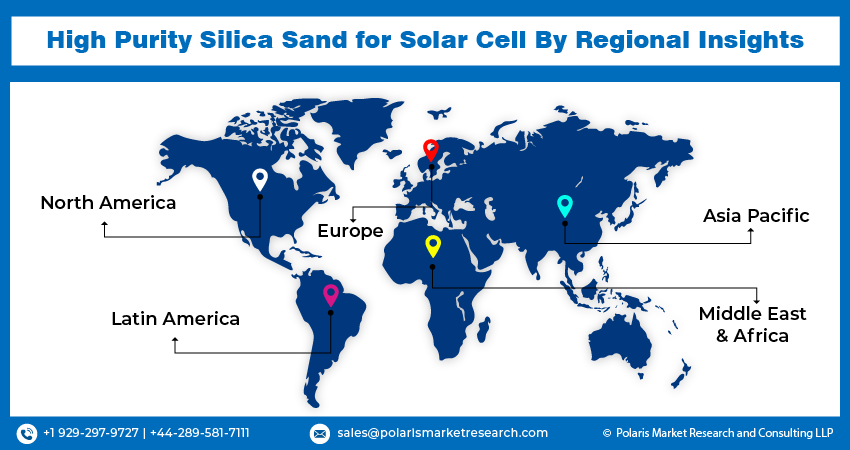
Asia Pacific
Asia Pacific accounted for the largest market share in 2025. The Asia Pacific region has witnessed rapid growth in the solar energy sector, driven by increasing energy demand, government initiatives to promote renewable energy sources, and declining costs of solar power technologies. This growth has spurred the demand for high-purity silica sand, which is a key raw material in the production of solar cells. The Asia Pacific region has witnessed rapid growth in the solar energy sector, driven by increasing energy demand, government initiatives to promote renewable energy sources, and declining costs of solar power technologies. This growth has spurred the demand for high-purity silica sand, which is a key raw material in the production of solar cells.
North America
North America region is expected to grow at the fastest CAGR during the forecast period. North America has been witnessing a significant increase in the adoption of solar energy, driven by factors such as environmental concerns, government incentives, and declining costs of solar technology. As solar energy becomes more mainstream, the demand for high-purity silica sand for solar cell manufacturing is expected to grow rapidly. Governments at the federal, state, and local levels in North America have been implementing supportive policies and incentives to promote renewable energy sources, including solar power. These policies include tax incentives, rebates, renewable energy targets, and net metering programs, which are driving the demand for solar installations and, consequently, high purity silica sand market share. Governments at the federal, state, and local levels in North America have been implementing supportive policies and incentives to promote renewable energy sources, including solar power. These policies include tax incentives, rebates, renewable energy targets, and net metering programs, which are driving the demand for solar installations and, consequently, high-purity silica sand. Governments at the federal, state, and local levels in North America have been implementing supportive policies and incentives to promote renewable energy sources, including solar power. These policies include tax incentives, rebates, renewable energy targets, and net metering programs, which are driving the demand for solar installations and, consequently, high-purity silica sand.
Competitive Landscape
The high purity silica sand for solar cell market is characterized by fragmentation, with numerous players vying for market share. In this competitive landscape, key service providers consistently prioritize technological advancements to retain their edge, focusing on improving efficiency, reliability, and safety. As they strive for significant market presence, these entities underscore the importance of forging strategic partnerships, continually enhancing their products, and engaging in collaborative efforts to outpace industry competitors.
Some of the major players operating in the global market include:
- Australian Silica Quartz Group Ltd
- HPQ Materials
- HRD Group of Companies
- Jiangsu Pacific Quartz
- Radhey Shyam Group
- Sibelco
- SiO Silica, Inc.
- Strobel Quarzsand GmbH
- The Quartz Corp
- Wacker Chemie AG
Recent Developments
- In March 2022, Wacker Chemie AG expanded its polysilicon capacity for semiconductor applications, reinforcing its commitment to producing materials for solar cells with particularly high efficiency.
Report Coverage
The high purity silica sand for solar cell market report emphasizes on key regions across the globe to provide better understanding the product to the users. Also, the report provides market insights into recent developments, trends and analyzes the technologies that are gaining traction around the globe. Furthermore, the report covers in-depth qualitative analysis pertaining to various paradigm shifts associated with the transformation of these solutions.
The report provides a detailed analysis of the market while focusing on various key aspects such as competitive analysis, type, application and their futuristic growth opportunities.
High Purity Silica Sand for Solar Cell Market Report Scope
|
Report Attributes |
Details |
|
Market size in 2025 |
USD 224.29 Million |
| Market size in 2026 | USD 249.27 Million |
|
Revenue forecast in 2034 |
USD 597.41 Million |
|
CAGR |
11.5% from 2026 – 2034 |
|
Base year |
2025 |
|
Historical data |
2021 – 2024 |
|
Forecast period |
2026 – 2034 |
|
Quantitative units |
Revenue in USD million and CAGR from 2026 to 2034 |
|
Segments covered |
By Type, By Applications, and By Region |
|
Regional scope |
North America, Europe, Asia Pacific, Latin America; Middle East & Africa |
|
Customization |
Report customization as per your requirements with respect to countries, regions and segmentation. |
FAQ's
key companies in High Purity Silica Sand for Solar Cell Market are Australian Silica Quartz Group Ltd, HPQ Materials, Jiangsu Pacific Quartz, The Quartz Corp, SiO Silica, Inc.
High purity silica sand for solar cell market exhibiting the CAGR of 11.5% during the forecast period.
The High Purity Silica Sand for Solar Cell Market report covering key segments are type, application, and region.
key driving factors in High Purity Silica Sand for Solar Cell Market are Rapid Urbanization and Electrification
The global high purity silica sand for solar cell market size is expected to reach USD 597.41 Million by 2034
Page last updated on:
Feb-2024
Research Methodology
A robust system of research, verification, and forecasting designed to ensure reliable and actionable market insights.
Polaris Market Research uses a clear and structured approach to deliver insights that clients can rely on. The process combines detailed primary and secondary research, including direct communication with industry experts. The detailed information helps build a complete picture of market trends and developments. Secondary data is gathered from credible sources such as industry reports, company filings, government source links, and trusted organization databases. It is then cross-checked through discussions with key stakeholders across the value chain. Market size and forecasts are developed using both bottom-up and top-down methods to ensure accuracy and consistency in the final results.
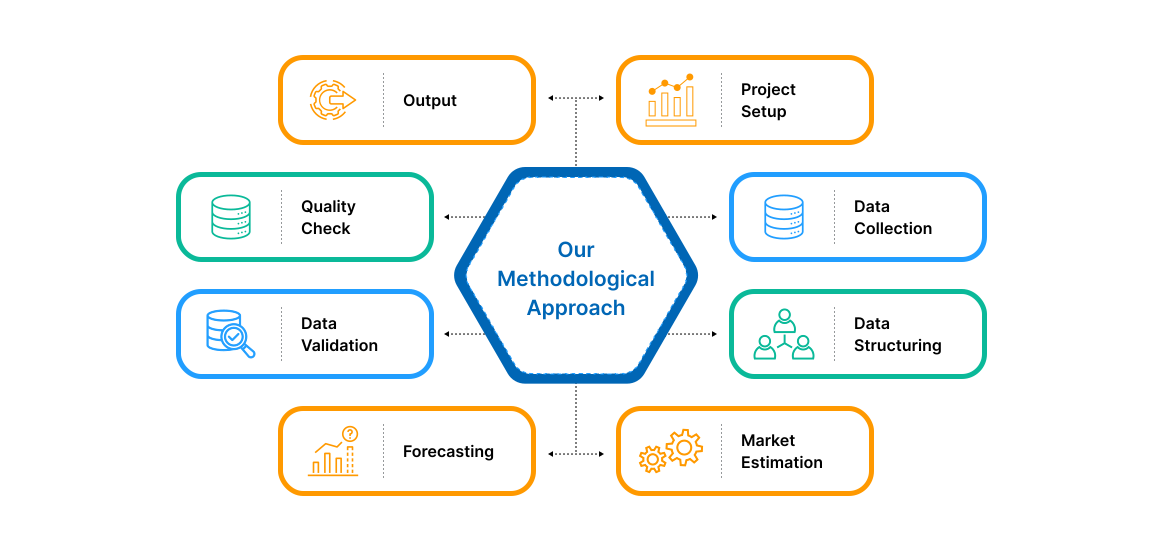
Project Setup
Step 1 & 2:
- We start every project by clearly understanding the client’s objective or goal, then defining the market scope, and aligning regions, segments, and timelines.
- Once the foundation is set, we collect data from all-around of sources, including company reports, government databases, and paid industry platforms.
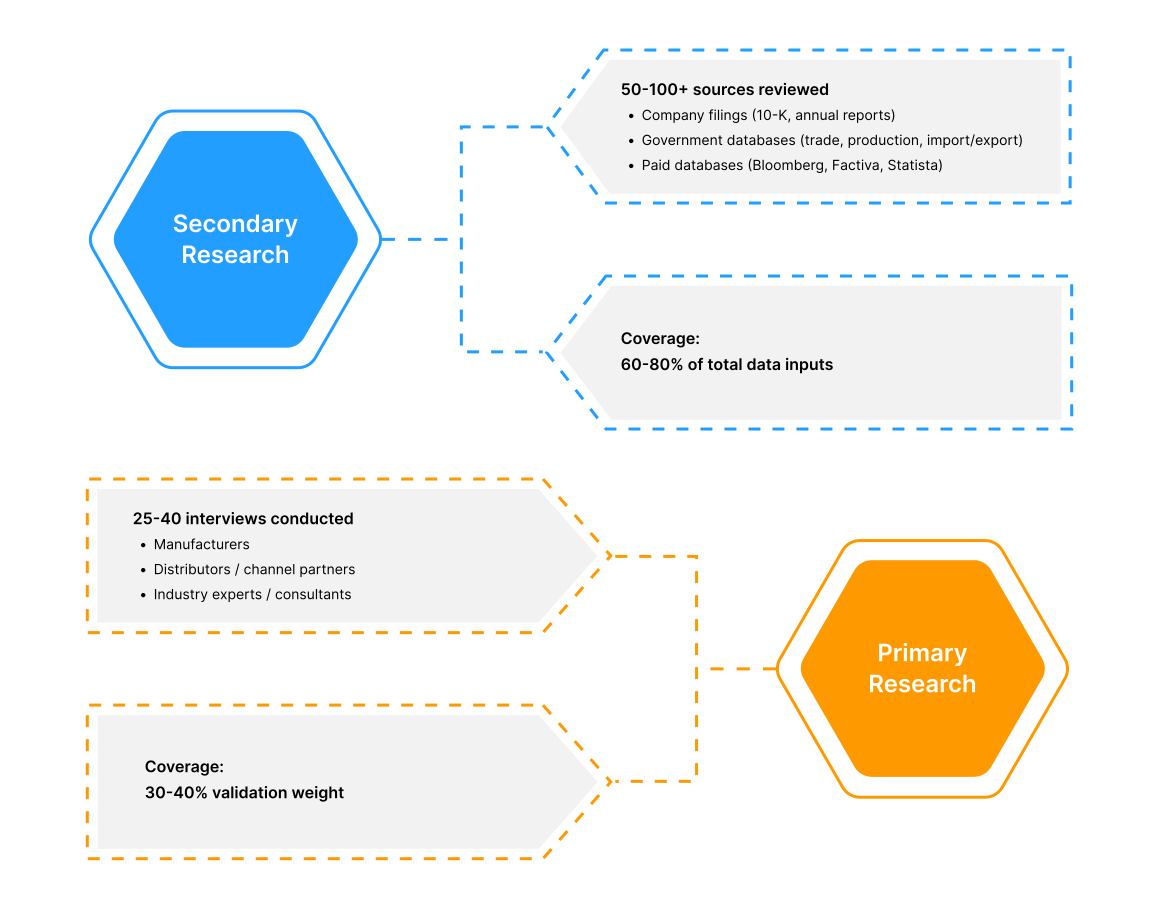
- Our research is based on secondary data, which helps us build a strong understanding of the market across regions and industries. Then we validate this information through primary research by speaking directly with industry experts, companies, and stakeholders.
- By combining secondary and primary research, we ensure that our market insights are accurate, practical, and closely aligned with real market conditions.
Data Collection
We gather information from both public and verified sources:
Data Structuring
Step 3:
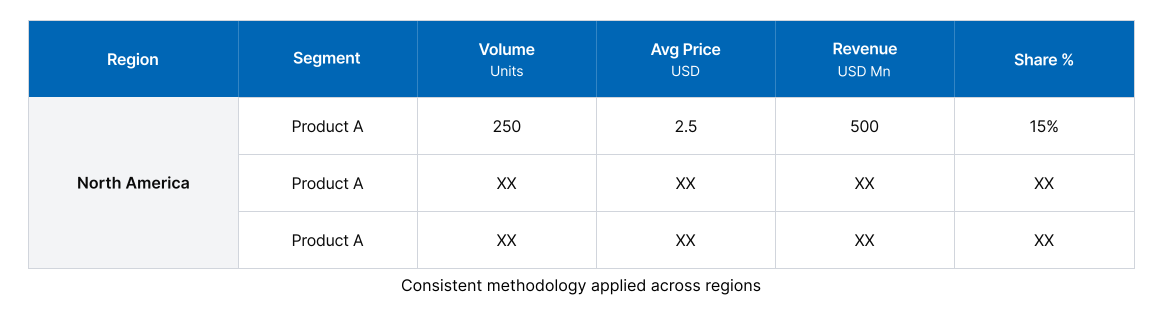
- All collected data is organized into a consistent format to ensure accurate analysis. Since inputs come from multiple sources, they are standardized and aligned before use.
- The data is segmented by product, application, and region, and mapped across a defined historical period (2020–2024). All values are converted into common units (USD Mn/Bn), and volume and pricing are aligned where required to estimate revenue.
- Any overlaps or inconsistencies are reviewed and adjusted to maintain accuracy (<5% variance threshold).
- The result is a structured dataset that allows for clear comparison across regions and supports reliable analysis and forecasting.
Structured Market Dataset, USD Mn/Bn
4. Data Structuring
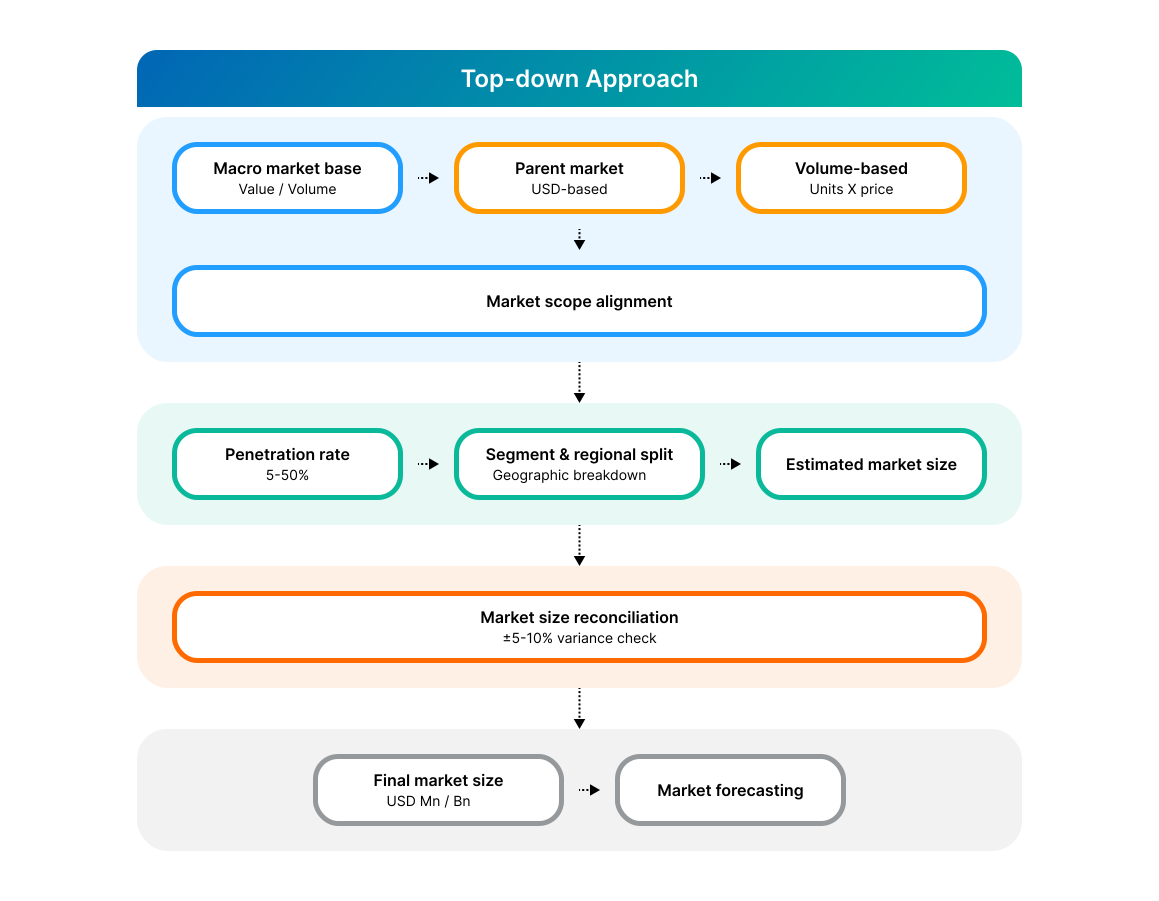
Step 4: TOP-DOWN APPROACH
- We start with the overall market size at a global or macro level.
- The market is then narrowed down based on scope and industry relevance.
- We apply penetration rates and split the data by region and segment.
- This helps us estimate the market size for specific segments.
- The numbers are validated through cross-checks to ensure accuracy.
Step 5: BOTTOM-UP APPROACH
- We begin by analyzing data from leading companies in the market.
- Revenue data is collected and mapped across different segments.
- The data is then aggregated to estimate the total market size.
- To fill in any gaps, adjustments are made based on industry standards.
- Validation checks make sure that the results are correct.
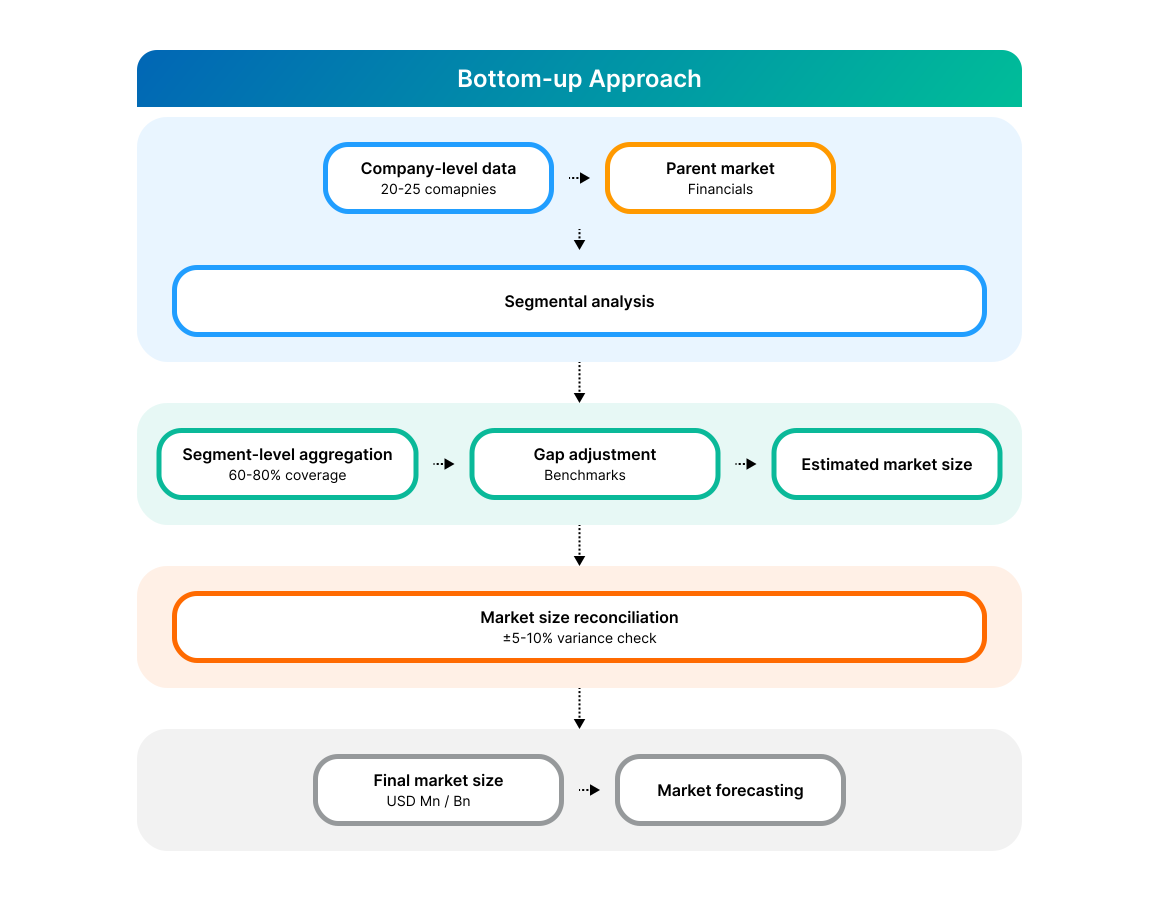
5. Data Structuring
Step 6:
At Polaris Market Research, we employ a methodical forecasting strategy. This approach blends the analysis of historical data with real-time market validation. To forecast future trends with precision, we examine past patterns, pricing fluctuations, and the interplay of supply and demand. To ensure our conclusions reflect the present market landscape, we actively seek input from industry experts and key stakeholders.
To refine our predictions, we carefully consider critical elements such as market drivers and restraints, fluctuations in raw material costs, emerging technologies, and the production capabilities of various regions. Furthermore, we assess regulatory frameworks and potential policy shifts to gauge their potential impact on market expansion.
All this information is synthesized to generate precise forecasts for each segment and region. These forecasts illuminate the current state of the market and highlight forthcoming opportunities.
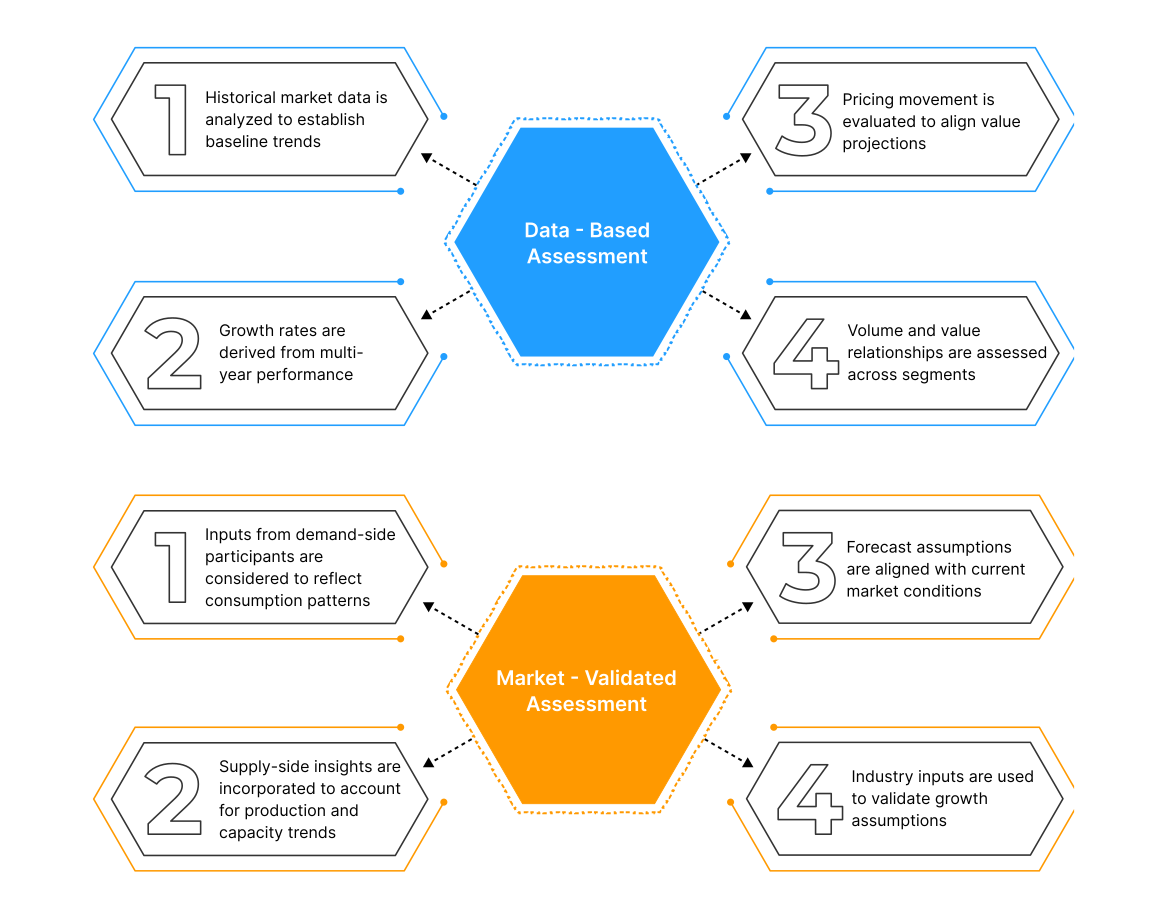
6. Data Structuring
Step 7:
In the final stage, we validate all our estimates using a triangulation method, where data is cross-checked from multiple reliable sources, like company data, primary interviews, and secondary research. This helps us make sure that our numbers are correct and fit with the rest of the market.
This process involves verifying data consistency across various segments and geographic areas. It also requires comparing historical trends with the assumptions support the forecast. Any discrepancies involve adjustments to ensure everything remains aligned and dependable.
Once the data is finalized, we prepare the final outputs, including market size estimates, segment-wise breakdowns, and growth metrics. These are delivered in structured formats such as tables, charts, and data files for easy analysis and use.
We collaborate closely with clients, ensuring the final products align with their requirements. This includes offering tailored adjustments, supplementary data analyses, and continuous assistance. Furthermore, we monitor market trends post-delivery, providing updates and refinements to maintain the insights' relevance as time passes.
Post-delivery, we continue to monitor market shifts, offering updates and adjustments to ensure the insights remain relevant over time.
Validation
Triangulation Framework
- Company-level data
- Primary inputs from industry participants
- Secondary benchmarks and published data
- Variance maintained within ±5-10%
- Adjustments applied to align estimates
- Segment values validated against overall market structure
Quality Check
Data Consistency & Integrity
- Segment totals validated to 100%
- Regional estimates aligned with global market size
- Historical trends compared against forecast outputs
- Assumptions reviewed for cross-segment and regional alignment
Output & Delivery
Final Outputs
- Market size estimates (USD Mn/Bn)
- Segment-wise distribution (%)
- Growth metrics (CAGR %)
- Structured tables and charts
- Segment-level datasets
- Excel-based data files for further analysis
Client Alignment & Support
- Deliverables are aligned with defined client requirements and scope
- Custom data cuts and segment splits are incorporated as required
- Post-delivery queries are addressed through analyst interactions
- Additional clarifications and data support are provided upon request
Client Continuity & Updates
- Market developments are tracked post-delivery to capture changes in key trends
- Updated data and revisions are provided based on new market inputs
- Additional refinements and data cuts are shared as required
- Continued analyst engagement supports evolving client requirements


