

Market Overview
The high throughput screening market was valued at USD 35.79 billion in 2025. It is projected to grow at a CAGR of 11.3% during 2026–2034. The widespread use of high throughput screening (HTS) in drug discovery and research to test genes, chemicals, and antibodies is one of the key HTS market growth drivers.
From an industry perspective, the market for high throughput screening is growing at a fast pace due to increased R&D investments in the pharmaceutical industry, the growing need for targeted therapies, and the adoption of automated laboratory workflows. HTS enables the identification of active compounds faster, which reduces the time and cost involved in early-stage drug development.
Key Insights
- The consumables segment dominated the high throughput screening market in 2025, owing to the widespread use of HTS reagents and assay kits, which are essential throughout the screening process.
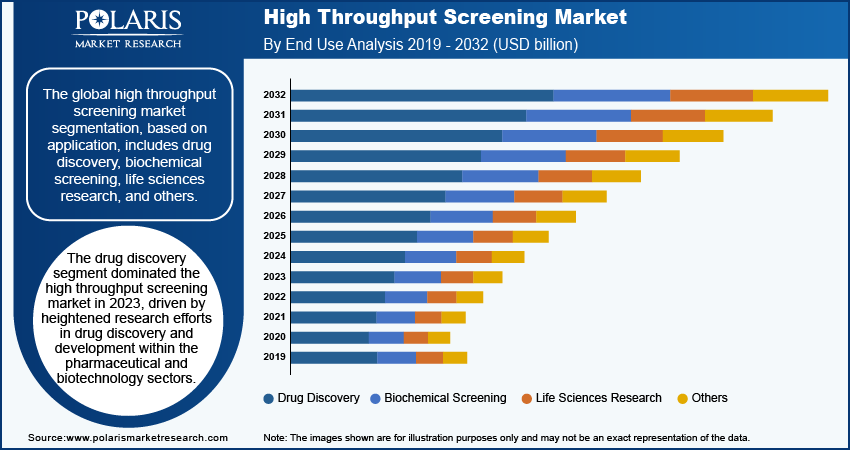
- The drug discovery high throughput screening segment accounted for the largest market share in 2025. The segment’s dominance is primarily attributed to increased research efforts in drug discovery and development within the biotechnology and pharmaceutical sectors.
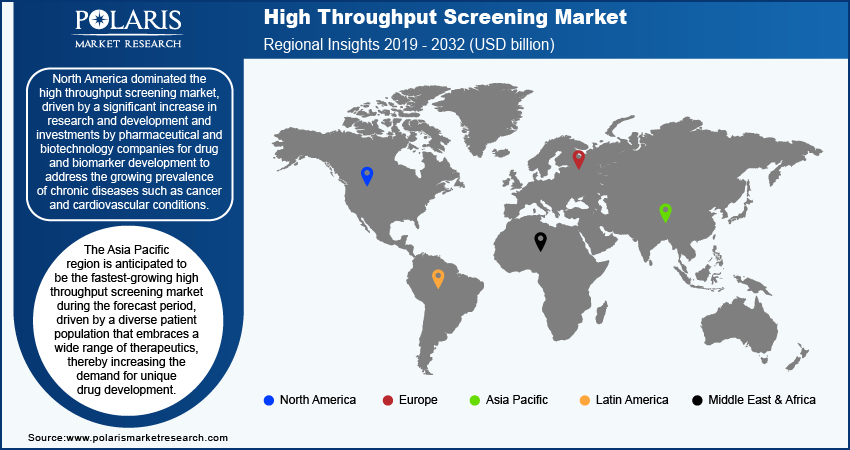
- The HTS market in 2025 was led by North America, mainly because of the major increase in R&D investments by pharmaceutical and biotech companies for the development of biomarkers and drugs.
- The Asia Pacific high throughput screening market is expected to grow at the highest rate because of the diverse patient population in the region accepting a wide variety of drugs.
Industry Insights
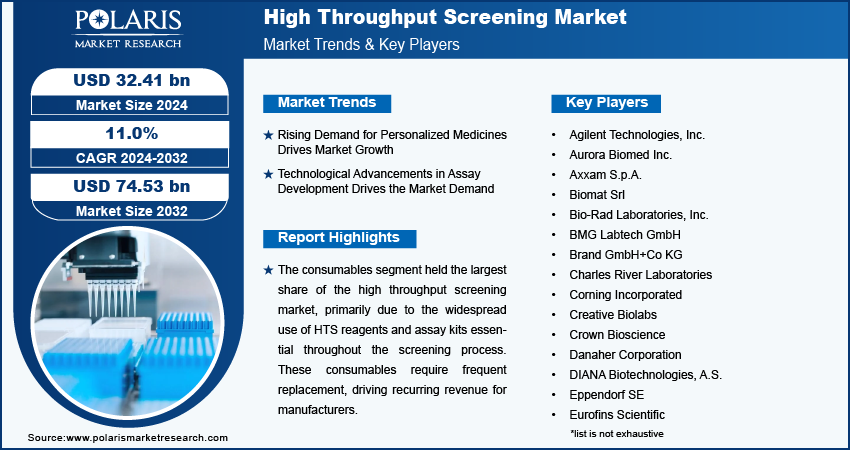
- The increasing demand for screening technologies in personalized medicine is fueling the demand for high throughput screening. HTS helps in the rapid detection of biomarkers associated with the disease and treatment processes.
- HTS helps in large-scale phenotypic and biomarker-based screening, which enables more accurate drug development strategies that can be matched to individual patient profiles. This is a feature that is becoming increasingly important in the fields of oncology, rare diseases, and immunotherapy.
- Technological advancements in assay development, including the miniaturization of assays, are fueling market expansion.
- The rising demand for HTS consumables is expected to create several market opportunities in the coming years.
- Data management and analysis challenges may hinder high throughput screening market growth.
Market Statistics
- 2025 Market Size: USD 35.79 billion
- 2034 Projected Market Size: USD 93.11 billion
- CAGR (2026-2034): 11.3%
- North America: Largest Market in 2025
AI Impact on High Throughput Screening Market
- Artificial intelligence is transforming the high throughput screening market by the way in which large amounts of biological data are being analyzed and interpreted. AI tools help in the rapid screening of compounds by analyzing complex data quickly. That way, researchers can identify promising drug candidates faster.
- Machine learning in drug discovery screening enhances the accuracy of screening by reducing the number of false positives and false negatives, making the subsequent validation process more efficient. The use of AI, robotics, and cloud technology in automated HTS systems also enables pharmaceutical companies to expand their screening processes while maintaining consistent and reliable data.
- As the data required in drug discovery pipelines increases, the integration of AI in high throughout screening is becoming a major differentiating factor, which is helping the team make quicker go/no-go decisions and reduce overall R&D risk.
- AI integration with robotics and cloud technology allows for the process of screening on a large scale and at lower costs. This promotes innovation and helps pharmaceutical companies launch new therapies in the market.
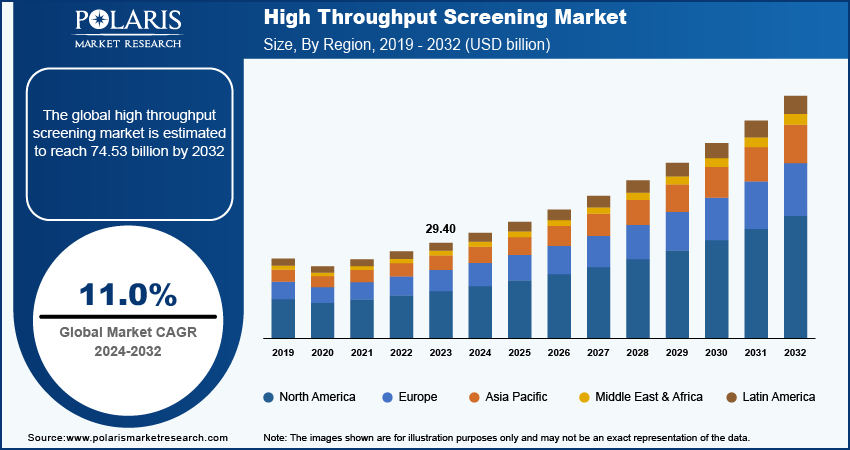
The high throughput screening market is developing at a rapid pace, mainly due to the rise in the incidence of chronic diseases. There has been a rise in the number of drug discovery service initiatives, stimulated by the continuous need for effective treatments. HTS is a technique that finds broad application in drug discovery. It is employed to speedily evaluate millions of chemicals, genes, or pharmacological agents. The prime objective is to detect the active compounds, antibodies, or genes that influence particular biomolecular pathways. High throughput screening employs automated machines or software that assist significantly in analyzing huge quantities of samples. According to the WHO, non-communicable diseases (NCDs) result in the death of 41 million people each year, with 17 million early deaths occurring primarily in low- and middle-income nations. Here, cardiovascular diseases account for 17.9 million deaths, cancer causes 9.3 million deaths, chronic obstructive pulmonary disease results in 4.1 million deaths, and diabetes causes 2 million deaths. This increases the demand for high throughput screening tests.
HTS has become a technology in the healthcare industry that has revolutionized the rate of discovery of potential drug candidates. By automating the evaluation of large amounts of chemical compounds against target diseases, it has greatly accelerated the early stages of drug discovery. This technology has become critical in the development, treatment, and management of many diseases, especially those that would require traditional methods that are labor-intensive. For example, HTS has helped researchers identify potential drug candidates by speeding up the evaluation process, allowing thousands or even millions of compound evaluations. Therefore, this faster evaluation process has helped researchers discover potential lead compounds that contain pharmacological properties. Moreover, this technology increases the likelihood of discovering such potential compound properties. For this reason, many pharmaceutical companies and institutions are using HTS to enhance their pipelines with potential drug candidates. For example, Bruker's Sierra introduced its SPR-32 Pro platform in February 2022. The platform enables high-throughput multiplexed assays for precise insights into molecular interactions in drug discovery.
Continuing developments in robotics, automation, and software technology have also impacted HTS platforms, improving their efficiency and capabilities. For instance, these technologies automate processes such as sample handling, compound screening, and data analysis, thereby optimizing screening workflows and speeding up the assessment of vast compound sets. Additionally, developments in software technology have improved the interfacing between HTS data and analysis tools. This, in turn, has accelerated the drug discovery and development process.
Market Dynamics
Rising Demand for Personalized Medicines
The high throughput screening market is driven by the shift to personalized medicine. It represents a revolutionary concept in healthcare, providing tailored medicine to each patient according to their unique genetic base, environmental characteristics, and lifestyle. HTS plays an instrumental role in the revolution in health care by helping to identify the personalized medicine biomarkers related to disease and treatment responses.
Through HTS, various genetic analyses, proteins, and other molecular targets are filtered in large numbers to ensure accurate information for each patient's profile. This not only enables better comprehension and analysis of disease at the molecular level, but can also be used to develop targeted therapy approaches and personalize medications through overall process analysis. For example, in February 2024, SCIEX announced that its Echo MS system can enhance HTS in drug discovery, enabling personalized medicine therapy on an accurate qualitative and quantitative basis. Similarly, HTS can be used to validate biomarkers related to disease because of its ability to serve as a diagnostic and predictive tool. Healthcare providers can make effective decisions about personalized care strategies using HTS data analysis and thereby improve overall healthcare efficiency.
Increasing Advancements in Assay Development
Significant advances in assay development technology have revolutionized high-throughput screening (HTS), which has become the cornerstone of the pharmaceutical, biotechnology, and academic sciences. High throughput screening involves miniaturizing existing assays, enabling researchers to conduct screenings at much lower cost. In this way, the process has become much more streamlined for testing compound libraries against specific disease targets. In addition, the ability to use multiple molecular targets within a single assay is enabled by multiplexing technologies. This is vital for understanding biological processes and identifying potential therapeutic candidates.
High content screening (HCS) is the next level of advancement and encompasses all the features of HTS with the capabilities of imaging and data analysis. HCS allows scientists to evaluate cellular morphology, protein expression, and other complex phenotypic traits in large-scale assays. These technologies are the forerunners of advancing HTS capabilities and help scientists tackle various challenges in the biomedical field, developing treatments for a variety of diseases and providing personalized medicine.
Segment Insights
Assessment by Offering
The high throughput screening market by offering includes consumables, instruments, services, and software. The consumables segment accounted for the largest share in 2025, mainly attributed to the usage of HTS reagents and kits, which are required throughout the screening process. Consumables also need to be replaced regularly, thereby generating steady revenue for companies.
The growing demand for HTS consumables is also contributing to the growth opportunities in the market. The factors that are driving this demand include the growing pharmaceutical R&D and government funding for life sciences research and drug discovery. For instance, in July 2022, the Council of Scientific and Industrial Research (CSIR) in India invested USD 6.73 million in research and development (R&D) for drug discovery and development.
Evaluation by Application
The global high throughput screening market segmentation, based on application, includes drug discovery, biochemical screening, life sciences research, and others. The drug discovery segment represented the largest market share in 2025. This is because there has been an increase in research activities in drug discovery and development. The combination of HTS with genomics, proteomics, and computational biology makes HTS more efficient in target discovery and validation. In addition, the increasing support from government bodies and research institutions to facilitate drug discovery has also contributed to the growth of this market segment.
Regional Insights
By region, the report provides the high throughput screening market insights into North America, Europe, Asia Pacific, Latin America, and the Middle East & Africa. North America accounted for the highest revenue share in the high throughput screening market in 2025, driven by a substantial rise in research and development expenditures by pharmaceutical and biotech companies to develop drugs and biomarkers to address the growing number of patients with chronic diseases such as cancer and cardiovascular diseases. According to the International Agency for Research on Cancer, in 2022, there were 20 million new cases of cancer and 9.7 million cancer deaths worldwide, with estimates for 2040 to reach 29.9 million new cases and 15.3 million deaths. The increasing number of cancer patients in North America is thus fueling the growth opportunities. In addition, the high healthcare expenditure in North America supports the usage of advanced screening technologies.
The Asia Pacific high throughput screening market is expected to register the fastest growth rate during the forecast period, owing to a diverse patient base adopting a broad spectrum of treatments and digital therapeutics, thereby fueling demand for novel drug development. In addition, the market is fueled by the rapid expansion of the pharmaceutical and biotech sectors, investments, cost competitiveness, government support, and the rising burden of diseases. As per the Government of India initiatives projections, in January 2024, the Pharma-MedTech industry in India is working towards improving its position in the global arena through its strong R&D and innovation efforts, with the aim of growing the pharmaceutical industry from USD 50 billion to USD 120-130 billion and the medical technology industry from USD 11 billion to USD 50 billion by 2030. In addition, improvements in HTS technology are increasing the efficiency of drug discovery. All of these factors have made Asia Pacific a key region for pharmaceutical innovation.
Key Players and Competitive Analysis Report
The high throughput screening competitive landscape is undergoing evolution, mainly fueled by technological innovation in automation, miniaturization, and artificial intelligence integration. Analysis of the industry shows that major players, such as Thermo Fisher Scientific, Danaher Corporation, and Agilent Technologies, have established themselves in the market through comprehensive product offerings. The product offerings include reagents, equipment, and software solutions. The high throughput screening market leaders are now focusing on developing the partner & customer ecosystem to sustain their competitive edge. The industry is experiencing significant disruptions and trends in assay formats. Phenotypic screening is emerging as a new approach alongside conventional target-based screening. Small and medium-scale enterprises are creating their own unique niches by offering innovative assay development services and artificial intelligence-based data analysis solutions. Partnerships between instrument companies and reagent vendors are redefining value chains, especially in pharmaceutical discovery.
Opportunities are emerging in the applications of precision medicine. In precision medicine, the capability of HTS in high-content analysis allows complex drug development. Future approaches to development are centered on integrated workflows, reduced sample sizes, and enhanced data analysis tools. Digitalization of the drug development process is expanding the total addressable market, but the regulatory framework for clinical validation is a strategic challenge. A few key high throughput screening market players are Agilent Technologies, Inc., Aurora Biomed Inc., Axxam S.p.A., Biomat Srl, Bio-Rad Laboratories, Inc., BMG Labtech GmbH, Brand GmbH+Co KG, Charles River Laboratories, Corning Incorporated, Creative Biolabs, Crown Bioscience, Danaher Corporation, DIANA Biotechnologies, A.S., Eppendorf SE, Eurofins Scientific, Gilson Incorporated, Greiner AG, Hamilton Company, HighRes Biosolutions, Lonza, Merck KGaA, Mettler-Toledo International Inc., Porvair Plc, Revvity, Inc., Sartorius AG, Sygnature Discovery Limited, Tecan Group Ltd., Thermo Fisher Scientific Inc., Waters Corporation.
Agilent Technologies, Inc. operates in the life sciences, diagnostics, and applied markets. With its headquarters in Santa Clara, California, the company serves over 110 countries. Established in 1999 as a spin-off of Hewlett-Packard, Agilent Technologies has established a strong reputation for providing innovative instruments, software, consumables, and services that facilitate research, diagnostics, and quality assurance in the pharmaceutical, biotech, and environmental science sectors. In the HTS industry, Agilent Technologies is recognized as an innovator with highly customizable and flexible solutions that optimize complex screening processes in drug discovery, genomics, and functional biology. Agilent's HTS systems, including the BioCel System, integrate automation, liquid handling, and environmental control to accommodate a wide range of assay formats and protocols, ensuring high accuracy and speed in compound screening and analysis. Agilent’s systems provide seamless sample preparation, data acquisition, and analysis. In this regard, scientists can easily analyze large libraries of compounds or genetic material. Strategic investments in R&D and technology collaborations have enabled Agilent to continue to improve its HTS product lines. Agilent is a trusted partner for laboratories seeking to accelerate scientific discovery and innovation in a high-throughput environment.
Thermo Fisher Scientific Inc., based in Waltham, Massachusetts, is a science-solutions provider. Established in 2006 through the merger of Thermo Electron and Fisher Scientific, the company offers a broad range of analytical instruments, laboratory equipment, specialty diagnostics, and life sciences solutions for pharmaceutical, biotechnology, clinical diagnostics, and research markets. In the area of HTS, Thermo Fisher Scientific supplies automation platforms, detection systems, and assay solutions that are aimed at speeding up drug discovery and biological research. Their HTS solutions allow researchers to quickly screen large libraries of compounds or biological materials, facilitating the identification of potential drug leads and biomarkers. The HTS offering from Thermo Fisher Scientific integrates precision robotics, liquid handling, high-content imaging, and data analysis software. This allows for scalability and reproducibility across different assay types. The company’s emphasis on innovation makes it a dependable partner for laboratories seeking to improve productivity and facilitate scientific discovery in high-throughput settings. Thermo Fisher Scientific is also the parent company of famous brands such as Thermo Scientific, Applied Biosystems, and Invitrogen.
List of Key Companies
- Agilent Technologies, Inc.
- Aurora Biomed Inc.
- Axxam S.p.A.
- Biomat Srl
- Bio-Rad Laboratories, Inc.
- BMG Labtech GmbH
- Brand GmbH+Co KG
- Charles River Laboratories
- Corning Incorporated
- Creative Biolabs
- Crown Bioscience
- Danaher Corporation
- DIANA Biotechnologies, A.S.
- Eppendorf SE
- Eurofins Scientific
- Gilson Incorporated
- Greiner AG
- Hamilton Company
- HighRes Biosolutions
- Lonza
- Merck KGaA
- Mettler-Toledo International Inc.
- Porvair Plc
- Revvity, Inc.
- Sartorius AG
- Sygnature Discovery Limited
- Tecan Group Ltd.
- Thermo Fisher Scientific Inc.
- Waters Corporation
High Throughput Screening Industry Development
September 2025: Axxam announced a strategic collaboration with B’SYS. According to Axxam, the collaboration aims to provide access to tested ion channel cell lines for identifying potential drug candidates using high-throughput electrophysiology.
April 2025: CytoTronics launched its Neural application for Pixel systems, enabling high-throughput drug screening for neurological diseases. The platform combines electrical imaging and electrophysiology in multiplexed assays. It supports 2D/3D cultures and scaling to 384-well plates for large-scale HTS workflows.
March 2025: HORIBA launched the PoliSpectra Rapid Raman Plate Reader (RPR) for high-throughput screening. The RPR enables non-destructive, real-time analysis of 96 wells in just 1 minute. The automated platform is compatible with liquid handlers. It allows real-time process monitoring using patented rapid Raman technology.
May 2024: Twist Bioscience launched Twist Multiplexed Gene Fragments (MGFs). The new fragments enable high-throughput screening with pools of directly synthesized DNA fragments up to 500 base pairs in length.
December 2023: Piramal Pharma enhanced its drug discovery services by opening a new high-throughput screening facility in Ahmedabad, India. The firm announced that the new screening facility will improve in vitro biology services to offer comprehensive client support in research and development.
November 2022: Metrion Biosciences expanded its capabilities with a new high-throughput screening (HTS) platform and enlarged facilities in Cambridge, UK. According to Metrion Biosciences, the strategic move will improve its ion channel drug discovery services for global clients.
High Throughput Screening Market Segmentation
By Offering Outlook (Revenue, USD Billion, 2021–2034)
- Consumables
- Reagents & Assay Kits
- Laboratory Consumables
- Instruments
- Liquid Handling Systems
- Detection Systems
- Imaging Systems
- Others
- Services
- Software
By Technology Outlook (Revenue, USD Billion, 2021–2034)
- Cell-based Assays
- 2D Cell Culture
- 3D Cell Culture
- Scaffold-based Technology
- Scaffold-free Technology
- Reporter-based Assays
- Perfusion Cell Culture
- Lab-on-a-Chip Technology (LOC)
- Label-free Technology
By Application Outlook (Revenue, USD Billion, 2021–2034)
- Drug Discovery
- Biochemical Screening
- Life Sciences Research
- Others
By End User Outlook (Revenue, USD Billion, 2021–2034)
- Pharmaceutical & Biotechnology Companies
- Academic & Research Institutes
- Contract Research Organizations (CROs)
- Others
By Regional Outlook (Revenue, USD Billion, 2021–2034)
- North America
- US
- Canada
- Europe
- Germany
- France
- UK
- Italy
- Spain
- Netherlands
- Russia
- Rest of Europe
- Asia Pacific
- China
- Japan
- India
- Malaysia
- South Korea
- Indonesia
- Australia
- Vietnam
- Rest of Asia Pacific
- Middle East & Africa
- Saudi Arabia
- UAE
- Israel
- South Africa
- Rest of Middle East & Africa
- Latin America
- Mexico
- Brazil
- Argentina
- Rest of Latin America
High Throughput Screening Market Report Scope
|
Report Attributes |
Details |
|
Market Size in 2025 |
USD 35.79 billion |
|
Market Size in 2026 |
USD 39.57 billion |
|
Revenue Forecast by 2034 |
USD 93.11 billion |
|
CAGR |
11.3% |
|
Base Year |
2025 |
|
Historical Data |
2021–2024 |
|
Forecast Period |
2026–2034 |
|
Quantitative Units |
Revenue in USD billion, and CAGR from 2026 to 2034 |
|
Report Coverage |
Revenue Forecast, Market Competitive Landscape, Growth Factors, and Trends |
|
Segments Covered |
|
|
Regional Scope |
|
|
Competitive Landscape |
High Throughput Screening Industry Trend Analysis (2025) Company profiles/industry participants profiling include company overview, financial information, product/service benchmarking, and recent developments |
|
Report Format |
PDF + Excel |
|
Customization |
Report customization as per your requirements with respect to countries, regions, and segmentation. |
FAQ's
The high throughput screening market size is projected to reach USD 93.11 billion by 2034. It is anticipated to account for a CAGR of 11.3% between 2026 and 2034.
HTS screening is primarily used in drug discovery and biochemical screening. It also finds applications in life sciences research, compound testing, and biomarker identification.
The consumables segment accounted for the largest share in 2025. This is due to the usage of HTS reagents and kits, which are required throughout the screening process.
AI accelerates compound screening. The technology is capable of analyzing vast datasets rapidly and identifying molecular interactions with precision.
North America leads the market for high throughput screening. This is due to growing R&D investments by pharmaceutical and biotech companies.
The drug discovery segment dominated the market in 2024.
Page last updated on:
Oct-2024
Research Methodology
A robust system of research, verification, and forecasting designed to ensure reliable and actionable market insights.
Polaris Market Research uses a clear and structured approach to deliver insights that clients can rely on. The process combines detailed primary and secondary research, including direct communication with industry experts. The detailed information helps build a complete picture of market trends and developments. Secondary data is gathered from credible sources such as industry reports, company filings, government source links, and trusted organization databases. It is then cross-checked through discussions with key stakeholders across the value chain. Market size and forecasts are developed using both bottom-up and top-down methods to ensure accuracy and consistency in the final results.
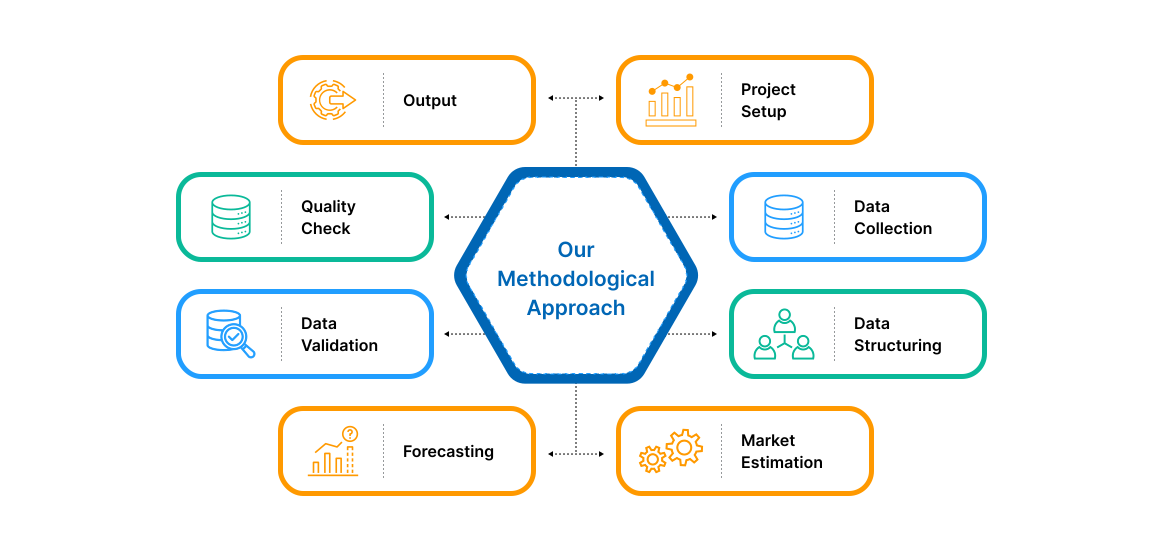
Project Setup
Step 1 & 2:
- We start every project by clearly understanding the client’s objective or goal, then defining the market scope, and aligning regions, segments, and timelines.
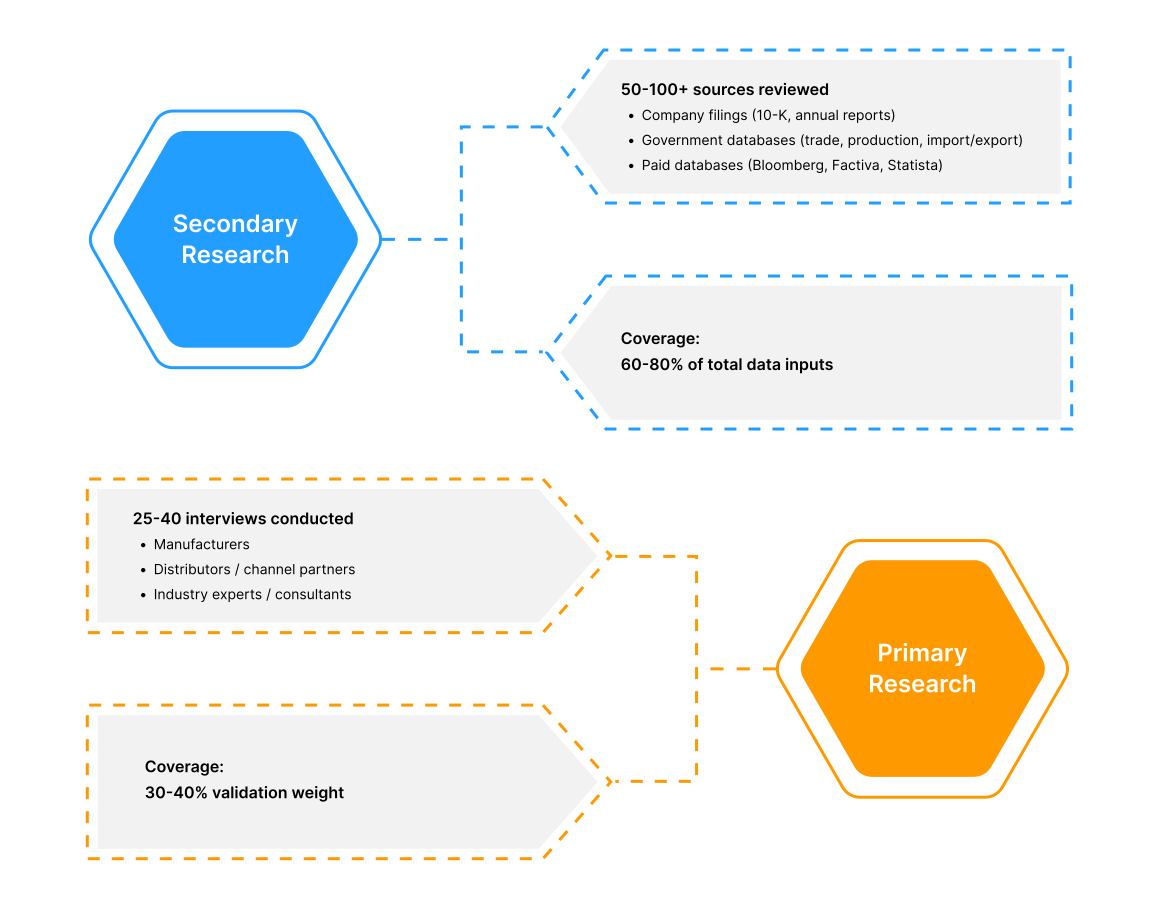
- Once the foundation is set, we collect data from all-around of sources, including company reports, government databases, and paid industry platforms.
- Our research is based on secondary data, which helps us build a strong understanding of the market across regions and industries. Then we validate this information through primary research by speaking directly with industry experts, companies, and stakeholders.
- By combining secondary and primary research, we ensure that our market insights are accurate, practical, and closely aligned with real market conditions.
Data Collection
We gather information from both public and verified sources:
Data Structuring
Step 3:
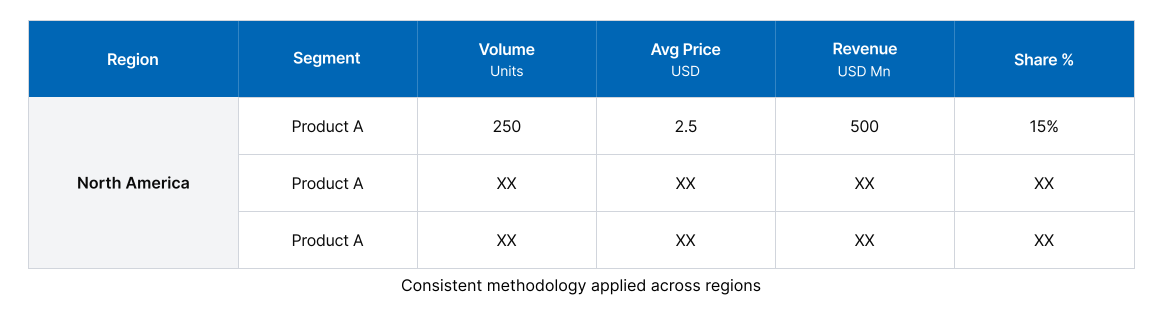
- All collected data is organized into a consistent format to ensure accurate analysis. Since inputs come from multiple sources, they are standardized and aligned before use.
- The data is segmented by product, application, and region, and mapped across a defined historical period (2020–2024). All values are converted into common units (USD Mn/Bn), and volume and pricing are aligned where required to estimate revenue.
- Any overlaps or inconsistencies are reviewed and adjusted to maintain accuracy (<5% variance threshold).
- The result is a structured dataset that allows for clear comparison across regions and supports reliable analysis and forecasting.
Structured Market Dataset, USD Mn/Bn
4. Data Structuring
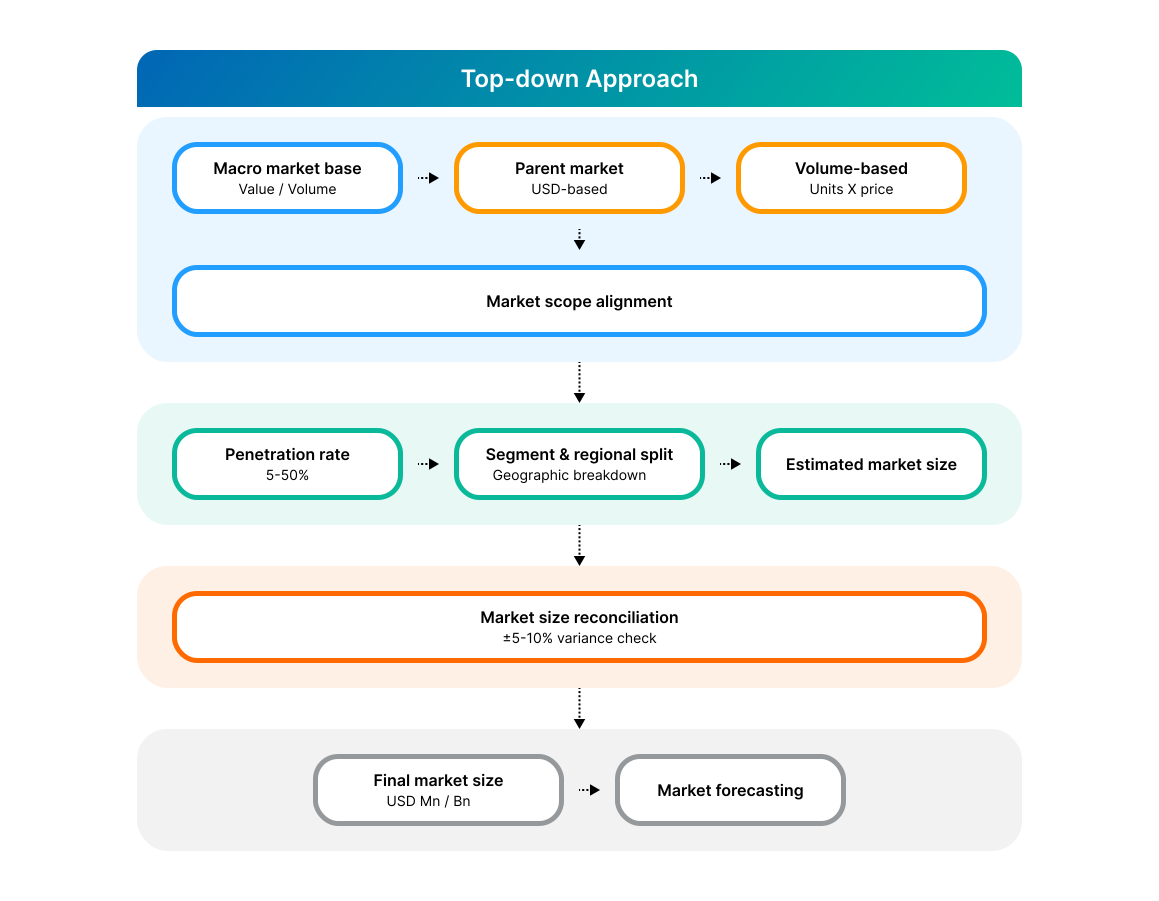
Step 4: TOP-DOWN APPROACH
- We start with the overall market size at a global or macro level.
- The market is then narrowed down based on scope and industry relevance.
- We apply penetration rates and split the data by region and segment.
- This helps us estimate the market size for specific segments.
- The numbers are validated through cross-checks to ensure accuracy.
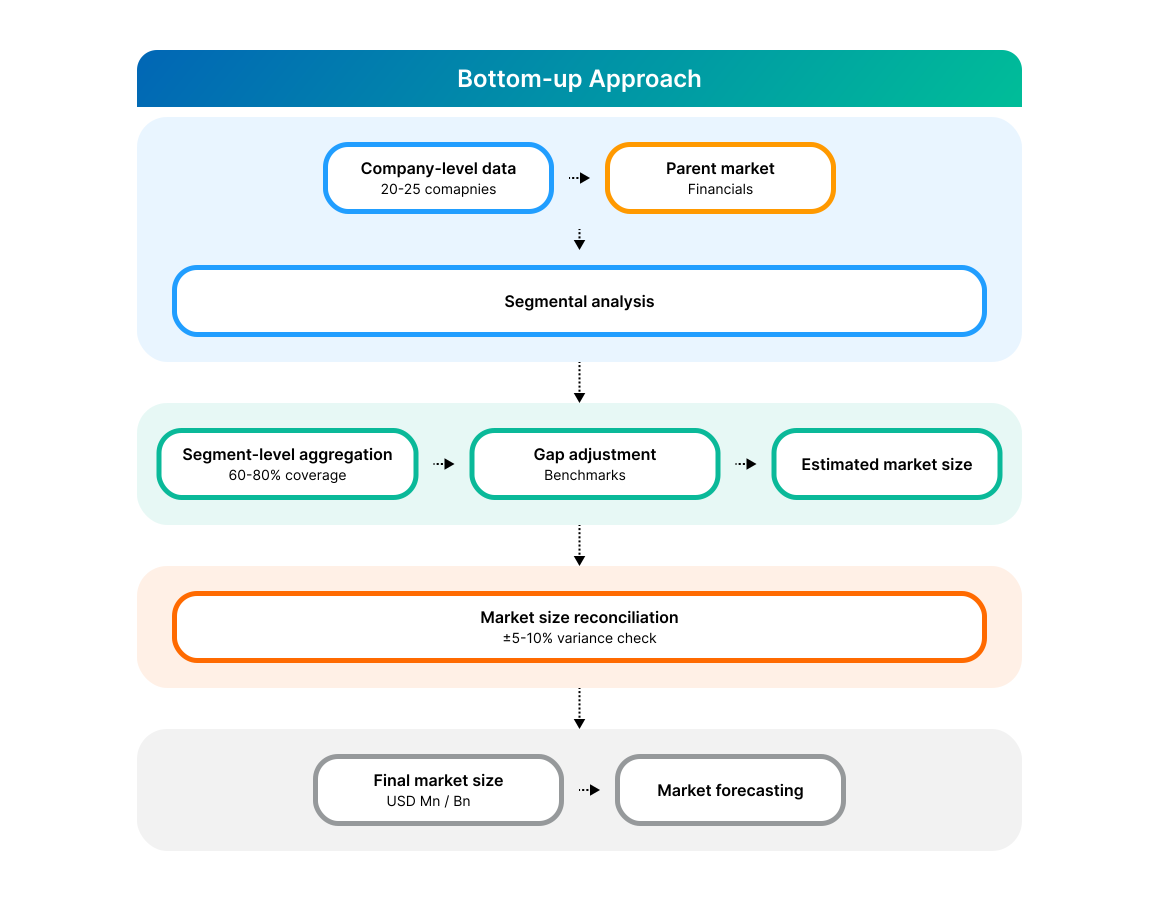
Step 5: BOTTOM-UP APPROACH
- We begin by analyzing data from leading companies in the market.
- Revenue data is collected and mapped across different segments.
- The data is then aggregated to estimate the total market size.
- To fill in any gaps, adjustments are made based on industry standards.
- Validation checks make sure that the results are correct.
5. Data Structuring
Step 6:
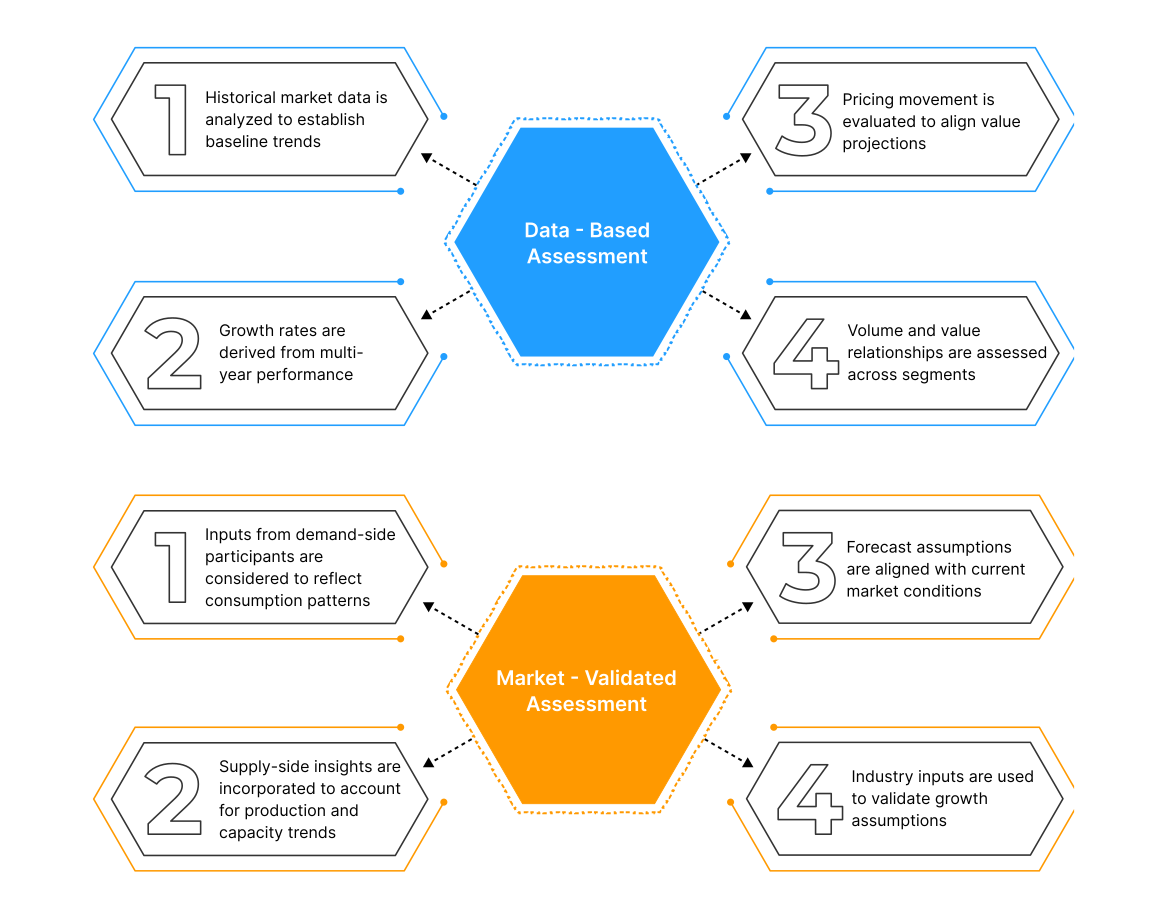
At Polaris Market Research, we employ a methodical forecasting strategy. This approach blends the analysis of historical data with real-time market validation. To forecast future trends with precision, we examine past patterns, pricing fluctuations, and the interplay of supply and demand. To ensure our conclusions reflect the present market landscape, we actively seek input from industry experts and key stakeholders.
To refine our predictions, we carefully consider critical elements such as market drivers and restraints, fluctuations in raw material costs, emerging technologies, and the production capabilities of various regions. Furthermore, we assess regulatory frameworks and potential policy shifts to gauge their potential impact on market expansion.
All this information is synthesized to generate precise forecasts for each segment and region. These forecasts illuminate the current state of the market and highlight forthcoming opportunities.
6. Data Structuring
Step 7:
In the final stage, we validate all our estimates using a triangulation method, where data is cross-checked from multiple reliable sources, like company data, primary interviews, and secondary research. This helps us make sure that our numbers are correct and fit with the rest of the market.
This process involves verifying data consistency across various segments and geographic areas. It also requires comparing historical trends with the assumptions support the forecast. Any discrepancies involve adjustments to ensure everything remains aligned and dependable.
Once the data is finalized, we prepare the final outputs, including market size estimates, segment-wise breakdowns, and growth metrics. These are delivered in structured formats such as tables, charts, and data files for easy analysis and use.
We collaborate closely with clients, ensuring the final products align with their requirements. This includes offering tailored adjustments, supplementary data analyses, and continuous assistance. Furthermore, we monitor market trends post-delivery, providing updates and refinements to maintain the insights' relevance as time passes.
Post-delivery, we continue to monitor market shifts, offering updates and adjustments to ensure the insights remain relevant over time.
Validation
Triangulation Framework
- Company-level data
- Primary inputs from industry participants
- Secondary benchmarks and published data
- Variance maintained within ±5-10%
- Adjustments applied to align estimates
- Segment values validated against overall market structure
Quality Check
Data Consistency & Integrity
- Segment totals validated to 100%
- Regional estimates aligned with global market size
- Historical trends compared against forecast outputs
- Assumptions reviewed for cross-segment and regional alignment
Output & Delivery
Final Outputs
- Market size estimates (USD Mn/Bn)
- Segment-wise distribution (%)
- Growth metrics (CAGR %)
- Structured tables and charts
- Segment-level datasets
- Excel-based data files for further analysis
Client Alignment & Support
- Deliverables are aligned with defined client requirements and scope
- Custom data cuts and segment splits are incorporated as required
- Post-delivery queries are addressed through analyst interactions
- Additional clarifications and data support are provided upon request
Client Continuity & Updates
- Market developments are tracked post-delivery to capture changes in key trends
- Updated data and revisions are provided based on new market inputs
- Additional refinements and data cuts are shared as required
- Continued analyst engagement supports evolving client requirements


