
India Anime Market Size, Share, Trends Analysis Report, 2024-2032
REPORT DETAILS
Market Statistics
India anime market size was valued at USD 1,642.5 million in 2023. The market is anticipated to grow from USD 1,855.4 million in 2024 to USD 5,036.0 million by 2032, exhibiting a CAGR of 13.3% during the forecast period.
Industry Trends
The Indian anime market has witnessed exponential growth in recent years, fueled by a burgeoning fan base, increasing internet penetration, and a growing appetite for Japanese pop culture. Usually, anime enjoys a niche following primarily among manga enthusiasts and otaku communities. However, with the proliferation of streaming platforms like Netflix, Amazon Prime Video, and Crunchyroll, anime has entered the mainstream Indian entertainment scene. These platforms offer a diverse range of anime titles, catering to various genres and demographics, thereby expanding the reach of Japanese animation across the country.
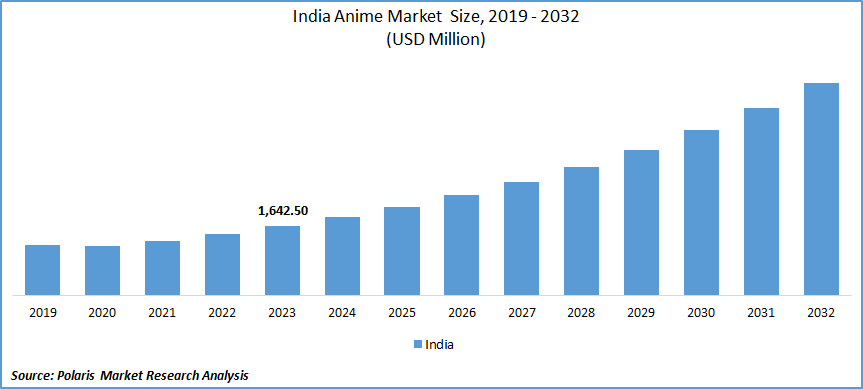
Source: Polaris Market Research Analysis
To Understand More About this Research:Download Sample Report
The popularity of anime in India is further amplified by social media platforms like Instagram, Twitter, and YouTube, where fans engage in discussions, share fan art, and participate in cosplay events. Anime conventions and events such as Comic Con India provide platforms for enthusiasts to celebrate their love for anime, fostering a vibrant community of fans and creators. Also, the rise of local anime fan clubs and online communities has contributed to the growth of the anime subculture in India, providing avenues for networking, collaboration, and content creation.
The Indian anime market presents significant opportunities for both domestic and international stakeholders. While Japanese anime remains a dominant force, there is a growing demand for Indian-produced anime content, reflecting a fusion of local cultural elements with the distinctive style of Japanese animation. Indian studios and animators are increasingly venturing into the production of original anime series and films, catering to the preferences and sensibilities of the Indian audience while leveraging the global appeal of anime.
Key Takeaways
- By type category, the merchandising segment accounted for the largest market share in 2023
- By genre category, the sci-fi & fantasy segment is expected to grow with a significant CAGR over the market forecast period
What are the market drivers driving the demand for India anime market?
Increased Popularity of Anime Content in India
The increased popularity of anime content across India is a significant driving force behind the growth of the Indian anime market. As more Indian viewers discover and embrace anime, fueled by factors such as easier access through streaming platforms, social media exposure, and word-of-mouth recommendations, the demand for anime content continues to rise. This surge in popularity has several implications for the market. Firstly, the growing audience base translates into increased revenue opportunities for streaming platforms and content creators. Streaming platforms are investing in acquiring licenses for popular anime series and movies to cater to the expanding viewer demand, leading to a wider variety of anime content being made available to Indian audiences. Secondly, the popularity of anime is driving the localization efforts in the Indian anime market. Streaming platforms are investing in dubbing popular anime series into regional languages, making them more accessible and relatable to Indian viewers. Additionally, there is a rise in the production of original anime content with Indian themes, characters, and settings, further engaging the local audience.
Furthermore, the increased popularity of anime is fostering a vibrant community of anime enthusiasts in India. This community actively participates in fan activities, conventions, and online forums, further fueling the growth of the market and creating opportunities for engagement and collaboration within the industry. Overall, the increased popularity of anime content across India is a significant driver of the Indian anime market, contributing to its expansion and development in various.
Which factor is restraining the demand for India anime market?
Low Budget and Shortage of Skilled Animators
The Indian anime market faces challenges due to low budgets and a shortage of skilled animators, hindering the growth and development of the industry. With limited financial resources allocated to anime productions in India, animators often work with constrained budgets, leading to compromises in animation quality, production values, and overall creativity. This can result in Indian anime productions being perceived as inferior compared to their Japanese counterparts, impacting their competitiveness in the global market.
Additionally, the shortage of skilled animators poses a significant challenge to the Indian anime industry. While India boasts a large pool of talent in the animation field, there is a scarcity of experienced animators with specialized expertise in anime-style animation. The intricate artistry and meticulous attention to detail required for producing high-quality anime demand a level of skill and proficiency that is not always readily available in the Indian animation workforce. Furthermore, the lack of formal training programs and educational institutions specializing in anime animation exacerbates the shortage of skilled animators in India. Without adequate training opportunities and mentorship programs tailored to anime production, aspiring animators struggle to acquire the necessary skills and knowledge to excel in this niche field. Addressing these challenges requires investment in talent development, infrastructure, and resources to nurture a robust ecosystem for anime production in India.
Source: Polaris Market Research Analysis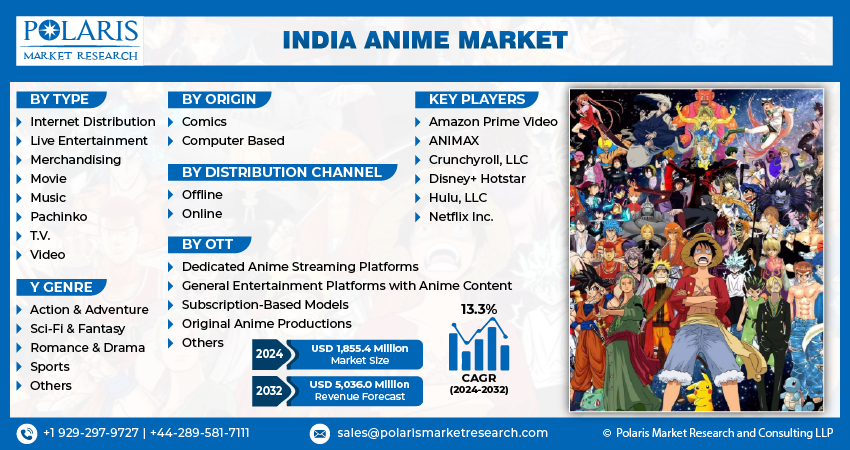
Get Full Segment-Level Forecasts & Insights: Download Sample Report
Report Segmentation
The market is primarily segmented based on type, origin, distribution channel, genre, and OTT.
| By Type | By Origin | By Distribution Channel | By Genre | By OTT |
|
|
|
|
|
Source: Polaris Market Research Analysis
To Understand the Scope of this Report:Request Customization
Category Wise Insights
By Type Insights
Based on type analysis, the market is segmented on the basis of internet distribution, live entertainment, merchandising, movie, music, pachinko, T.V., and video. Merchandising has captured the largest market share in the Indian anime market due to its ability to capitalize on the emotional connection fans have with their favourite anime series and characters. By offering a wide range of merchandise such as figurines, apparel, accessories, and collectibles, merchandising allows fans to express their fandom and engage with the content beyond watching. Additionally, merchandise serves as a tangible reminder of the anime experience, driving repeat purchases and brand loyalty.
By Genre Insights
Based on genre analysis, the market is segmented on the basis of action & adventure, sci-fi & fantasy, romance & drama, sports, and others. In the Indian anime market, the sci-fi and fantasy segment is expected to grow with a significant CAGR over the forecast period since it transports viewers to imaginative worlds filled with futuristic technology, magical powers, and otherworldly beings. Anime series and movies within this genre explore themes of exploration, discovery, and the limitless possibilities of the human imagination. From iconic classics like "Ghost in the Shell" and "Akira" to contemporary favorites like "Sword Art Online" and "Fullmetal Alchemist," Sci-Fi and Fantasy anime push the boundaries of storytelling, blending elements of science fiction, magic, and folklore to create rich and immersive narratives. These series often feature intricate world-building, complex characters, and thought-provoking philosophical themes, captivating audiences with their creativity and imagination. The popularity of Sci-Fi and Fantasy anime continues to grow in the Indian market, appealing to fans who are drawn to the escapism, adventure, and wonder offered by these imaginative and fantastical worlds.
Source: Polaris Market Research Analysis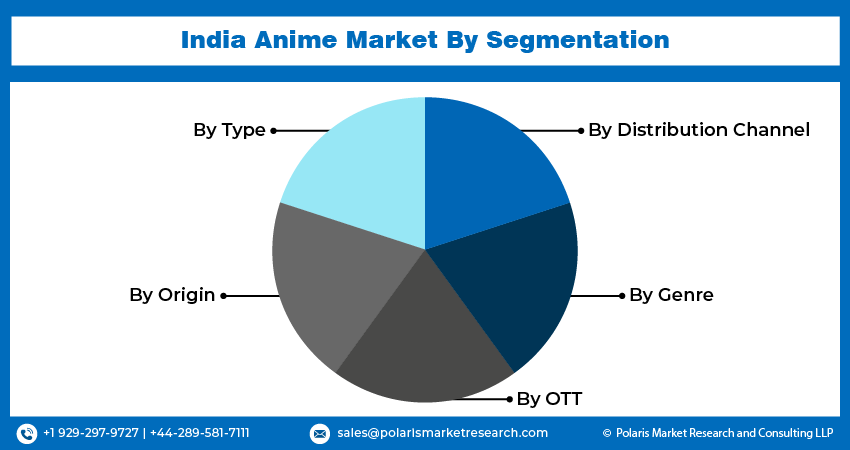
Need Granular Data Across All Market Segments? Request Customization
Competitive Landscape
Anime has experienced a surge in popularity in the entertainment industry, particularly in India, where it is one of the fastest-growing markets for the genre. Its widespread appeal extends beyond metropolitan areas to include smaller towns, with millions of fans across the country. Key Anime OTT platforms in India, such as Netflix, Amazon Prime, and Disney+Hotstar, have contributed to this growth. Currently, popular Anime shows like Naruto Shippuden, One Piece, My Hero Academia, and Haikyuu!!, as well as movies such as Spirited Away, My Neighbor Totoro, and Your Name, have gained significant traction and are widely consumed by fans of the genre.
Some of the major players operating in the India market include:
- Amazon Prime Video
- ANIMAX
- Crunchyroll, LLC
- Disney+ Hotstar
- Hulu, LLC
- Netflix Inc.
Recent Developments
- In August 2025: The Souled Store launched a new Attack on Titan T-shirt collection in India, featuring characters like Levi Ackerman and the Survey Corps. The officially licensed products are available on its website and in select stores, aimed at anime fans across the country.
- In August 2025: Dish TV India introduced Anime Top Active, a special anime channel created with Crunchyroll. Available in Hindi and Tamil, it shows popular series such as Naruto and Black Clover, with more titles planned. The service costs INR 1.67 per day plus GST and can be activated through a missed call.
- In June 2025: AnimationXpress launched Anime Originals, India’s first platform for licensed anime merchandise. It offers official apparel, accessories, cosplay items, and limited-edition products for the growing anime fan community in India.
- In June 2025: Revenant Esports partnered with Sony YAY! to obtain the Naruto merchandise and gaming accessories license in India. This allows Revenant to sell anime-themed gaming products while sharing a royalty from sales with the licensor.
- In March 2024: Animax joins Tata Play Binge to offer Japanese anime content to subscribers. Existing Tata Play Binge subscribers can now access a vast library of anime content from Animax, one of the leading platforms for Japanese animation.
- In October 2023: Crunchyroll announced partnership with Comic Con India as the two team up to bring anime to fans all across India! Crunchyroll will be a "powered by" partner for the iconic pop culture events by Comic Con for the next six months at five upcoming events.
Report Coverage
The India Anime market research report provide a better understanding of the product to the users. Also, the report provides market insights into recent developments and trends and analyzes the technologies that are gaining traction around the globe. Furthermore, the report covers an in-depth qualitative analysis pertaining to various paradigm shifts associated with the transformation of these solutions.
The report provides a detailed analysis of the market while focusing on various key aspects such as competitive analysis, type, origin, distribution channel, genre, OTT, and futuristic growth opportunities.
India Anime Market Report Scope
| Report Attributes | Details |
| Market size value in 2024 | USD 1,855.4 million |
| Revenue Forecast in 2032 | USD 5,036.0 million |
| CAGR | 13.3% from 2024 – 2032 |
| Base year | 2023 |
| Historical data | 2019 – 2022 |
| Forecast period | 2024 – 2032 |
| Quantitative units | Revenue in USD million and CAGR from 2024 to 2032 |
| Segments Covered | By Type, By Origin, By Distribution Channel, By Genre, By OTT |
| Customization | Report customization as per your requirements with respect to countries, regions, and segmentation. |
Source: Polaris Market Research Analysis
India Anime Market FAQ's
India Anime Market Size Worth USD 5,036.0 Million by 2032
The top market players in the market are Amazon Prime Video, ANIMAX, Crunchyroll
India anime market exhibiting a CAGR of 13.3% during the forecast period.
The key segments in the India Anime Market are type, origin, distribution channel, genre, and OTT.
Download Sample Report of India Anime Market
Please fill out the form to request a customized copy of the research report.


