
Mushroom Cosmetics Market Size, Global Research Report,2025-2034
REPORT DETAILS
Market Statistics
Market Overview
The global Mushroom Cosmetics Market was valued at USD 2,000.2 million in 2024 and is anticipated to grow at a CAGR of 5.30% from 2025 to 2034. Rising demand for natural skincare, adaptogenic ingredients, and eco-friendly beauty products is fueling rapid market expansion.
The rise in the popularity of mushrooms in skincare products can be attributed to their beneficial properties, including antioxidants, hydration, and anti-inflammatory characteristics. Consumers are increasingly aware of the advantages offered by natural and organic skincare products, leading to a growing demand for these products. Mushrooms contain specific compounds like beta-glucans, triterpenes, polysaccharides, and polyphenols, which make them desirable ingredients in skincare formulations. These compounds contribute to addressing various skin conditions, including sensitivity, rosacea, acne scarring, and compromised skin barriers. As a result, the inclusion of mushrooms in skincare products aligns with the consumer preference for effective and naturally derived solutions, driving the overall growth of the market.
Source: Polaris Market Research Analysis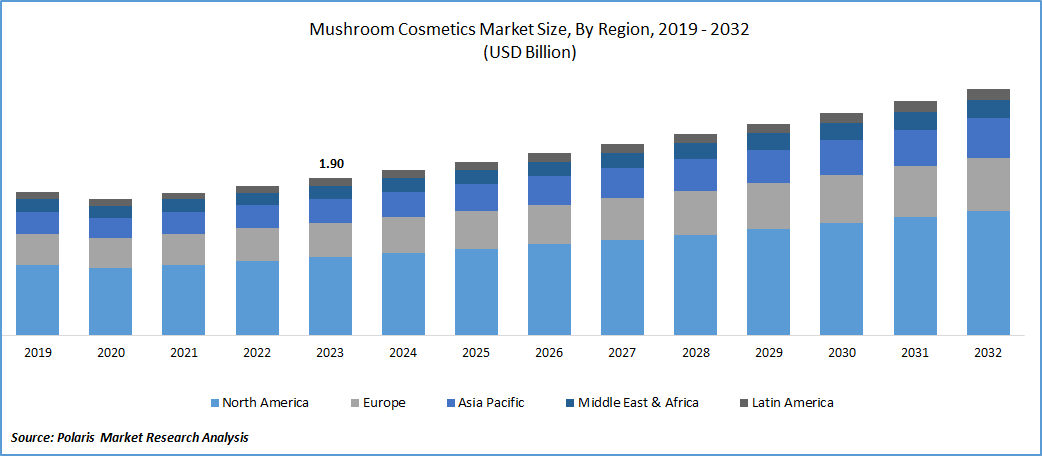
To Understand More About this Research: Download Sample Report
The mushroom cosmetics industry is experiencing growth driven by innovations in extraction methods and the incorporation of fungi-based ingredients into beauty formulations and cosmetics. Jesse Adler has developed a method for extracting the pigments from the fungi, including mushrooms, specifically for use in the make-up products. This innovative approach has the potential to reduce reliance on non-renewable colorants traditionally used in cosmetics.
Adler's collaboration with the formulation chemist resulted in the creation of prototype versions of the products such as lip-sticks, eye shadows, & tinted skin creams. These prototypes, derived from mushroom-based pigments, may pave the way for the development of commercial products in the future. The use of renewable and natural colorants sourced from mushrooms represents a significant shift towards sustainability in the cosmetics industry.
Source: Polaris Market Research Analysis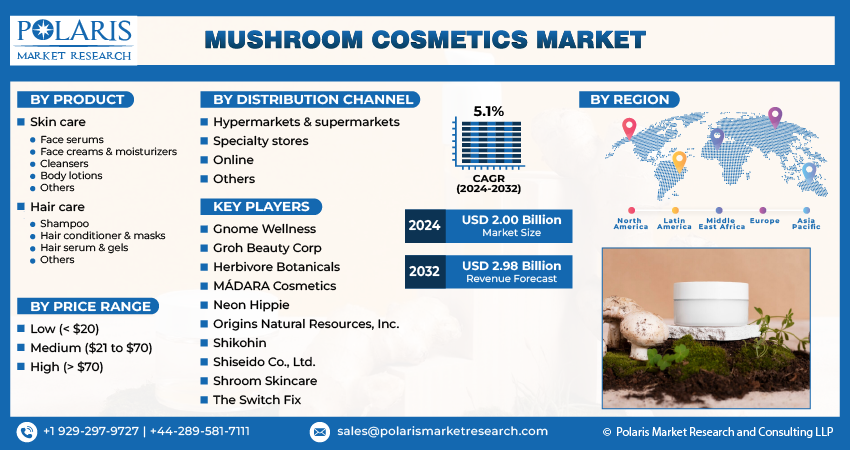
Get Full Segment-Level Forecasts & Insights: Download Sample Report
Industry Dynamics
Growth Drivers
Growing Interest in Natural and Organic Products
Consumers are increasingly seeking natural and organic alternatives in skincare and cosmetics. Mushroom extracts are often perceived as natural and sustainable ingredients, driving the demand for mushroom-based cosmetics.
Dermatologists highlight that certain mushroom, specifically adaptogens like reishi, shiitake, and tremella, offer skin benefits by aiding in the recovery from environmental stressors and exhibiting antioxidant and anti-inflammatory properties. These mushrooms are considered safe and beneficial for all skin types when applied topically. The adaptogenic qualities of these mushrooms mean that they can help the skin adapt and respond to stress, promoting overall skin health and resilience. The antioxidant properties contribute to neutralizing free radicals that can damage the skin, while the anti-inflammatory characteristics may soothe and calm the skin, making mushroom-infused skincare a favorable option for various skin concerns and types.
Report Segmentation
The market is primarily segmented based on product, price range, distribution channel, and region.
| By Product | By Price Range | By Distribution Channel | By Region |
|
|
|
|
Source: Polaris Market Research Analysis
To Understand the Scope of this Report: Request Customization
By Product Analysis
Skin care segment accounted for the largest market share in 2024
Skin care segment accounted for the largest share. A recent study, published in Clinical & Experimental Allergy in February 2023 and encompassing data from 14 countries, revealed that approximately 6% of children and adolescents are presently experiencing symptoms of eczema. The researchers further highlighted a rising trend in eczema prevalence among these age groups over the past decade. Consequently, the heightened occurrence of eczema is expected to boost the demand for mushroom cosmetics featuring functional mushrooms like tremella, chaga, and reishi.
Hair care segment will grow rapidly. Growing concerns related to hair, including issues like hair loss and aging, have fueled the need for solutions that enhance hair well-being. Reishi mushrooms, renowned for their benefits to hair health, contain compounds that can alleviate symptoms of alopecia areata and fortify hair follicles. Moreover, these mushrooms aid in promoting healthy hair growth by stimulating blood circulation to the scalp, thereby reducing the risk of conditions like dandruff.
By Price Range Analysis
Medium-priced ($21 to $70) segment held the significant market share in 2024
Medium-priced ($21 to $70) segment held the significant market share. The industry is marked by the premiumization trend, indicating consumers' increasing willingness to invest in skincare and hair care products that feature natural and clean-label ingredients. This trend is a key driver for the growth of medium-priced mushroom cosmetics as consumers seek products that align with their preferences for quality and natural components.
Low-price range (< $20) segment is expected to gain substantial growth rate. The increasing grooming trend among middle-income consumers in developing regions is a significant contributor to the rising demand for mass cosmetics and personal care products. As grooming routines become more widely adopted in these regions, there is a growing need for affordable and easily accessible skincare and haircare products. Manufacturers, such as The Switch Fix, have introduced mushroom cosmetics priced between $5 to $7, making them accessible to consumers across middle-income, upper-middle-income, and affluent groups. This affordability factor supports the expansion of the mass market for mushroom cosmetics.
By Distribution Channel Analysis
Specialty stores segment held the significant market share in 2024
Specialty stores segment held the significant market share. Consumers frequently opt for offline channels, particularly specialty stores, when purchasing beauty and personal care products. This preference arises from the desire to physically examine, touch, and test products, particularly in the case of cosmetics like skincare items. This hands-on approach allows consumers to evaluate factors such as texture, scent, and compatibility with their skin or personal preferences. Moreover, the market for mushroom cosmetics is expanding and emerging, with most products available through specialty stores rather than mass-market retailers.
Many consumers seek the latest skincare, haircare, and makeup innovations, making company websites a popular platform. These websites introduce and showcase cutting-edge products, providing a diverse range of options. For instance, Ellie Conley in August 2024, Sephora, a retailer that includes mushroom cosmetics in its offerings, has recently incorporated dedicated sections on its website for the launch of new products.
Source: Polaris Market Research Analysis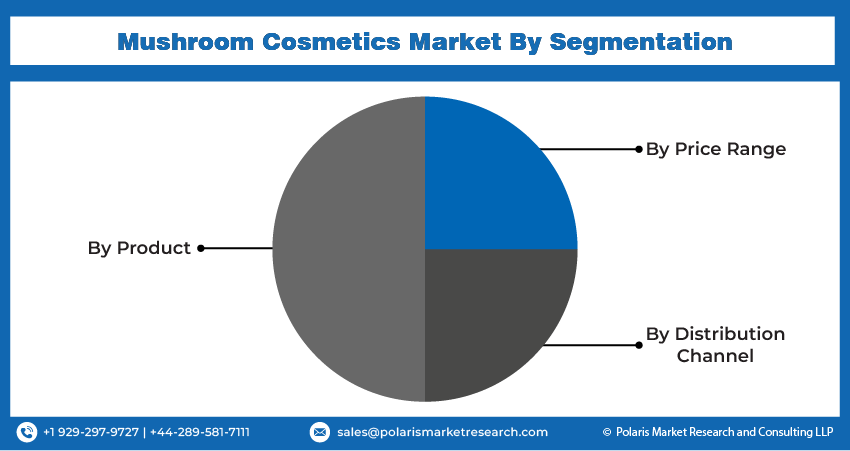
Need Granular Data Across All Market Segments? Request Customization
Regional Insights
North America region dominated the global market in 2024
The North American region dominated the global market. The region’s growth is primarily propelled by heightened consumer interest in natural and organic cosmetic products. Mushrooms, renowned for their antioxidant properties, are increasingly favored ingredients in skincare and hair care formulations. The market's upward trajectory is further fueled by the increasing recognition of mushrooms' skin health benefits, encompassing anti-inflammatory and anti-aging properties. Moreover, the surging preference for clean beauty and sustainable products is contributing significantly to the growing demand for mushroom-based cosmetics
The Asia Pacific will grow with substantial pace. This growth is attributed to the prevalent consumption of mushrooms in Asian countries due to culinary preferences. The increasing popularity and widespread acceptance of mushrooms in cosmetic formulations, particularly for topical applications, have created substantial growth prospects in the mushroom cosmetics market. Furthermore, the rising awareness of the advantages of incorporating mushrooms into skincare products is a key driver fueling growth in the region.
Source: Polaris Market Research Analysis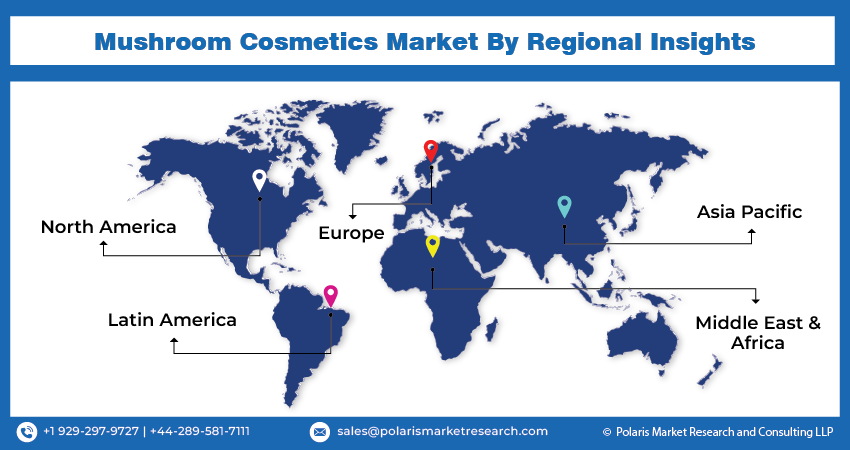
Curious About Regional Market Performance? Request Customization
Key Market Players & Competitive Insights
Major market players are enhancing their product portfolios by introducing new skincare and hair care products that incorporate mushrooms. Additionally, these companies are extending their reach into developing regions.
Some of the major players operating in the global market include:
- Gnome Wellness
- Groh Beauty Corp
- Herbivore Botanicals
- MÁDARA Cosmetics
- Neon Hippie
- Origins Natural Resources, Inc.
- Shikohin
- Shiseido Co., Ltd.
- Shroom Skincare
- The Switch Fix
Recent Developments
- In August 18, 2025: O Boticário launched EGEO Cogu and EGEO Cogu Mellow in the U.S., the world’s first fragrances infused with Boletus Edulis mushroom, developed in collaboration with Symrise. The limited-edition scents emphasize layering and personalization, targeting Gen Z consumers and strengthening the brand’s global presence.
- January 2024:Shroom Skincare launched the Mycelium Glow Brightening Serum using mushroom extracts combined with vitamin C
- In April 2023: Pacifica introduced a fresh body care series named Wake Up Beautiful, showcasing retinoid and mushroom-infused body products designed to rejuvenate the skin. The lineup comprises a body serum and lotion, crafted with sustainable and eco-friendly components. These products include mushrooms to enhance skin hydration.
- In January 2023: Shroom Skincare unveiled its inaugural product, the Mycelium Glow Brightening Serum, integrating mushroom extracts and vitamin C to revitalize and hydrate the skin. This serum provides various advantages, such as shielding against environmental harm, diminishing inflammation, and enhancing the look of aging and uneven skin tone.
Mushroom Cosmetics Market Report Scope
| Report Attributes | Details |
| Market size value in 2025 | USD 3498.9 Million |
| Revenue forecast in 2034 | USD 3498.9 million |
| CAGR | 5.30% from 2025 – 2034 |
| Base year | 2024 |
| Historical data | 2020 – 2023 |
| Forecast period | 2025 – 2034 |
| Quantitative units | Revenue in USD million/billion and CAGR from 2025 to 2034 |
| Segments covered | By Product, By Price Range, By Distribution Channel, By Region |
| Regional scope | North America, Europe, Asia Pacific, Latin America; Middle East & Africa |
| Customization | Report customization as per your requirements with respect to countries, region and segmentation. |
Source: Polaris Market Research Analysis
Explore the market dynamics of the 2025 Mushroom Cosmetics Market share, size, and revenue growth rate, meticulously examined in the insightful reports crafted by Polaris Market Rersearch Industry Reports. The analysis of Garbage Truck Bodies Market extends to a comprehensive market forecast up to 2034, coupled with a retrospective examination. Avail yourself of a complimentary PDF download to sample this in-depth industry analysis.
Browse for Our Top Selling Reports
Brushless DC Motor Market Size & Share
Solar Encapsulation Market Size & Share
Nutraceutical Excipients Market Size & Share
Mushroom Cosmetics Market FAQ's
The global mushroom cosmetics market size is expected to reach USD 3498.9 Million by 2034
Gnome Wellness, Groh Beauty Corp, Herbivore Botanicals are the top market players in the market.
North America region contribute notably towards the global Mushroom Cosmetics Market.
The global mushroom cosmetics market is expected to grow at a CAGR of 5.30% during the forecast period.
Product, price range, distribution channel, and region are the key segments in the Mushroom Cosmetics Market.
Mushroom cosmetics contain beta-glucans, triterpenes, and polysaccharides offering antioxidant, anti-inflammatory, anti-aging, hydration benefits for skin sensitivity, acne scarring, and rosacea treatment.
Key drivers include rising demand for natural skincare, adaptogenic ingredients like reishi and tremella, eco-friendly beauty products, and anti-aging solutions.
Download Sample Report of Mushroom Cosmetics Market
Please fill out the form to request a customized copy of the research report.


