

What is North American Facades Market Size?
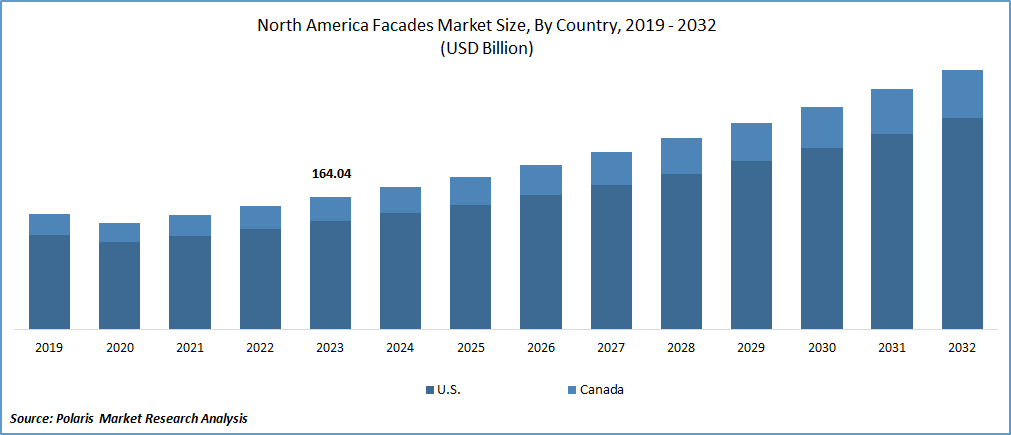
The North American facades market was valued at USD 43.69 Billion in 2025 and is expected to grow at a CAGR of 4.0% during the forecast period.
Market Statistics
- 2025 Market Size: USD 43.69 Billion
- 2034 Projected Market Size: USD 61.81 Billion
- CAGR (2026-2034): 4.0%
- Largest Market: U.S.
The adoption of facades in the North American region is growing due to the increasing demand for energy-efficient buildings, as well as a desire for pleasing architectural designs. The market in North America has seen lucrative growth in recent years, focusing on innovative materials and technologies that offer improved performance and efficiency.
The market is experiencing increased popularity due to the high-performance glazing systems. These systems provide better insulation, reduce energy consumption, and offer superior visual clarity compared to traditional glass products. Also, there is a growing preference for unitized curtain wall systems, which are designed to provide faster installation, reduced labor costs, and improved weather tightness. Another notable factor in the North American facades market is the rising demand for green building practices. Architects and builders are increasingly opting for eco-friendly materials and design solutions that minimize environmental impact while providing cost savings and improving occupant comfort. This has led to an increased adoption of natural ventilation strategies, passive solar design, and vegetated roofs and walls.
To Understand More About this Research: Download Sample Report
Several factors are hindering the growth of the market since the high cost of installing advanced facade systems, which can be a significant barrier for many building owners and developers who are working with limited budgets. Also, the need for more understanding among architects, engineers, and builders about the benefits of modern facade systems is hampering the adoption of these systems in the region. The availability of cheaper alternatives, such as traditional brick-and-mortar facades, is another factor that is limiting the demand for advanced facades in North America.
Growth Drivers
New innovative types and designs fuel the sales of the facades market
The North American market is witnessing significant growth due to increasing demand for attractive building practices. One innovative type of façade that has gained popularity in recent years is the "living wall" or "green wall." This type of facade features a vertical garden or greenery integrated into the exterior walls of a building, providing numerous benefits such as reducing energy consumption, improving air quality, and enhancing aesthetic appeal.
For instance, the Amazon Spheres, located in Seattle, Washington, features a unique living wall system that covers over 65,000 square feet of exterior surface area. The spherical structure is covered in over 40,000 plants, creating a natural oasis in the heart of the city.
This vertical garden not only helps in insulation and minimizes energy expenses, but it also serves as a shelter for nearby fauna, which underlines Amazon's dedication to environmentalism. Such inventive designs not only promote a more sustainable future but also produce a pleasing architectural declaration, establishing a novel benchmark for modern towers in North America.
Key Trends in Facades
|
Trend |
Description |
Examples/Drivers |
|
Sustainable Low-Carbon Materials |
Recyclable, modular panels reducing embodied carbon by up to 80%. |
Ceramics, brick-slips, geopolymers; EU 2050 goals. |
|
Adaptive Smart Facades |
Dynamic shading, sensors for energy optimization and environmental response. |
Automated systems, AI/BIM modeling; Al Bahr Towers. |
|
Green & Biophilic Integration |
Living walls, vegetation for air purification and cooling. |
Urban ecology, occupant well-being. |
|
BIPV Energy Generation |
Building-integrated photovoltaics turning facades into power sources. |
Transparent PV, perovskites; renewable energy mandates. |
|
Digital Fabrication |
3D printing for custom, waste-reducing concrete/ceramic panels. |
BIM, AI design; efficiency in complex geometries. |
Report Segmentation
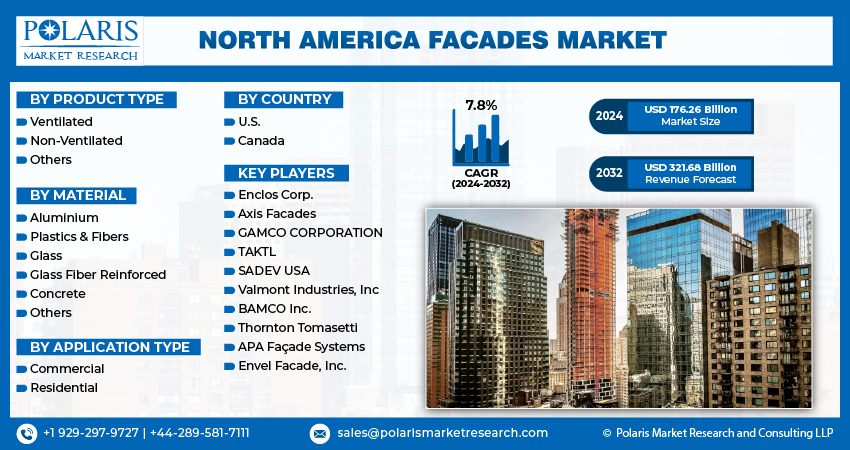
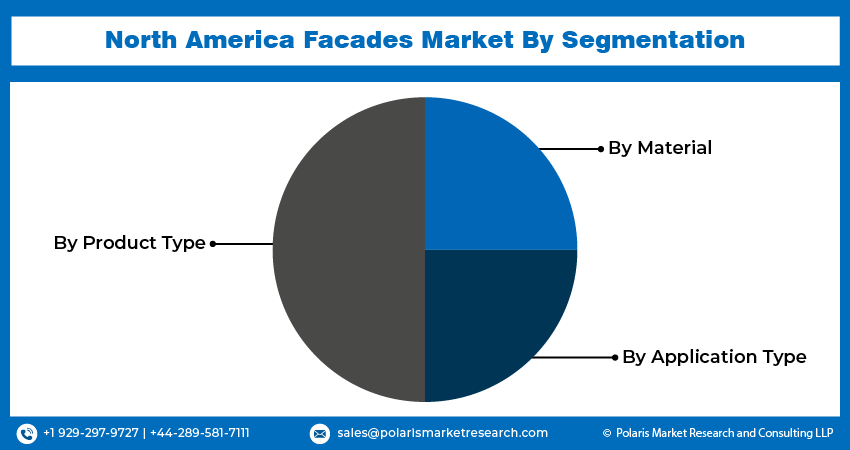
The market is primarily segmented based on product type, material, application type, and country.
|
By Product Type |
By Material |
By Application Type |
By Country |
|
|
|
|
To Understand the Scope of this Report: Request Customization
By Product Type Analysis
The ventilated facades dominated the North American market in 2025.
The ventilated facades market in North America experienced significant growth in 2025, with a dominant share of the overall facades market. This was largely driven by increasing demand for eye-catching and stunning building solutions, as well as growing awareness among architects, builders, and homeowners about the benefits of ventilated facades. These benefits include improved indoor air quality, reduced energy consumption, and enhanced thermal performance.
Also, ventilated facades offer aesthetic appeal and design flexibility, making them an attractive option for both new construction and retrofitting projects. As a result, leading manufacturers of ventilated facades expanded their product portfolios and distribution networks to meet the rising demand, further solidifying their position in the North American market.
By Application Type Analysis
The commercial use of facades led the North American market in 2025
The commercial sector was the leading application type segment in the North American market in 2025, accounting for a significant share of the total revenue. This dominance is attributed to the growing demand for fetching and desirable buildings, as well as the increasing focus on creating visually appealing and functional spaces. Facades played an important role in achieving these goals by providing insulation, natural lighting, ventilation, and weather protection while also contributing to the building's visual appearance. Also, advancements in technology have enabled the development of high-performance facades that offer improved thermal efficiency, air tightness, and solar control, making them an attractive option for commercial properties.
Country Insights
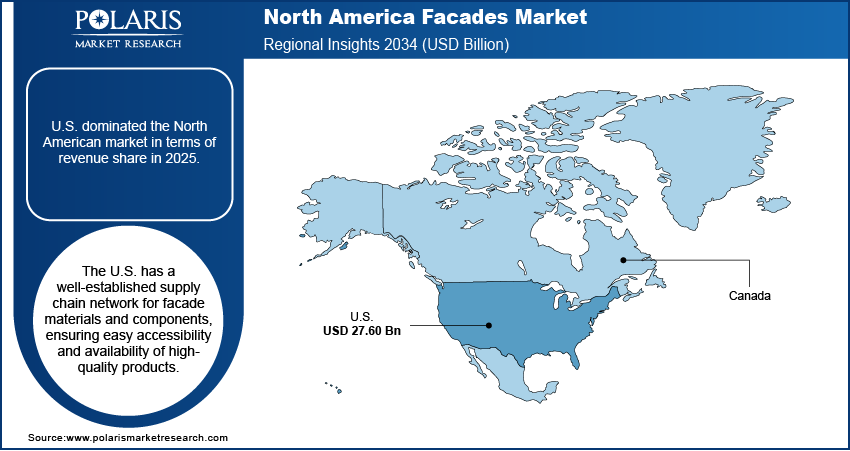
The U.S. dominated the North American market in terms of revenue share in 2025
The United States dominated the North American facade market in terms of revenue share in 2025 owing to the country's large construction industry, increasing demand for unique building solutions, and the presence of prominent architectural companies that promote innovative facade designs. The U.S. has a well-established supply chain network for facade materials and components, ensuring easy accessibility and availability of high-quality products.
Furthermore, government initiatives and policies like the Green Building Initiative (GBI) supporting green building practices and energy efficiency have led to an increased adoption of advanced facade systems in the country. Overall, these factors have contributed to the U.S. emerging as a leading player in the North American facades market.
Key Market Players & Competitive Insights
In North America, manufacturers are continuously innovating and introducing new products and technologies to meet the increasing demand for innovative building solutions. Manufacturers are investing heavily in research and development to create advanced materials and systems that can provide better thermal performance. Also, many manufacturers are adopting digital technologies such as Building Information Modeling (BIM) and computer-aided design (CAD) to enhance their product offerings and improve collaboration with architects, engineers, and contractors.
Some of the major players operating in the North American market include:
- Enclos Corp.
- Axis Facades
- GAMCO CORPORATION
- TAKTL
- SADEV USA
- Valmont Industries, Inc
- BAMCO Inc.
- Thornton Tomasetti
- APA Façade Systems
- Envel Facade, Inc.
Recent Developments
- In August 2023, The Wells Companies, which provides prefabricated building solutions, announced the promotion of Dan Stenzel to Vice President of Facades. In his new role, he is responsible for collaborating with industry partners to implement new facade designs that are revolutionizing the way building envelopes are designed and constructed.
- In July 2021, Lerch Bates Inc., a multidisciplinary technical consultancy company, announced the acquisition of AXIS Facades which is a well-known expert in facades, and curtain wall designs based in San Diego, California.
North America Facades Market Report Scope
|
Report Attributes |
Details |
|
Market size in 2025 |
USD 43.69 Billion |
| Market size in 2026 | USD 45.27 Billion |
|
Revenue Forecast in 2034 |
USD 61.81 Billion |
|
CAGR |
4.0% from 2026 – 2034 |
|
Base year |
2025 |
|
Historical data |
2021 – 2024 |
|
Forecast period |
2026 – 2034 |
|
Quantitative units |
Revenue in USD Billion and CAGR from 2026 to 2034 |
|
Segments Covered |
By Product Type, By Material, By Application Type, By Country |
|
Country scope |
U.S., Canada |
|
Customization |
Report customization as per your requirements concerning countries, regions, and segmentation. |
FAQ's
The North American facades market size is expected to reach USD 61.81 Billion by 2034
Enclos Corp., Axis Facades, GAMCO CORPORATION, TAKTL, SADEV USA, Valmont Industries are the top market players in the market.
U.S region contribute notably towards the global North America Facades Market.
The North American facades market is expected to grow at a CAGR of 4.0% during the forecast period.
Type, material, application type, and country are the key segments in the North America Facades Market.
Page last updated on:
Feb-2024
Research Methodology
A robust system of research, verification, and forecasting designed to ensure reliable and actionable market insights.
Polaris Market Research uses a clear and structured approach to deliver insights that clients can rely on. The process combines detailed primary and secondary research, including direct communication with industry experts. The detailed information helps build a complete picture of market trends and developments. Secondary data is gathered from credible sources such as industry reports, company filings, government source links, and trusted organization databases. It is then cross-checked through discussions with key stakeholders across the value chain. Market size and forecasts are developed using both bottom-up and top-down methods to ensure accuracy and consistency in the final results.
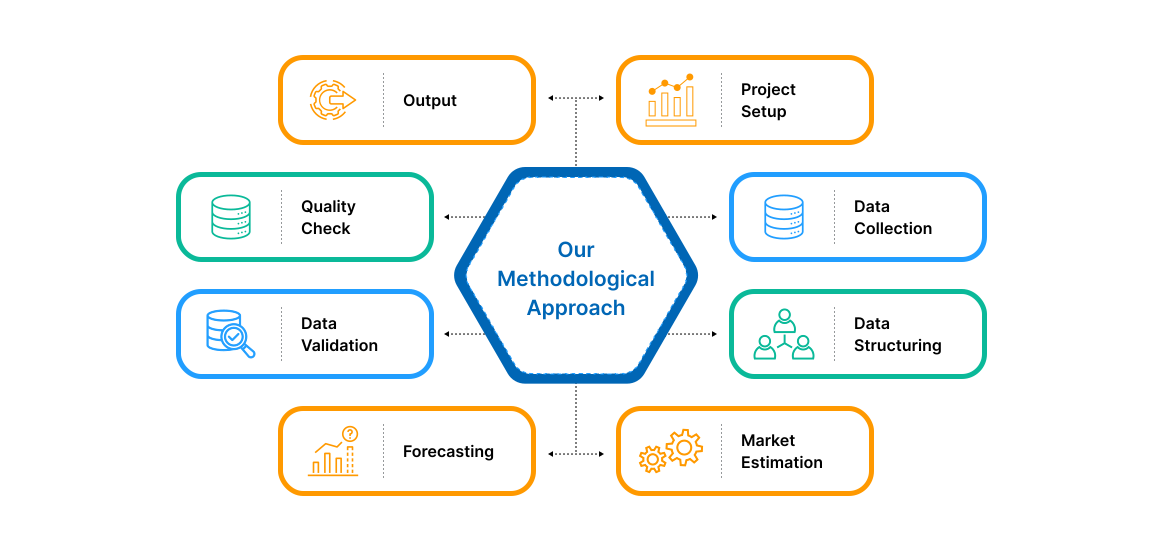
1. Project Setup
Step 1 & 2:
- We start every project by clearly understanding the client’s objective or goal, then defining the market scope, and aligning regions, segments, and timelines.
- Once the foundation is set, we collect data from all-around of sources, including company reports, government databases, and paid industry platforms.
- Our research is based on secondary data, which helps us build a strong understanding of the market across regions and industries. Then we validate this information through primary research by speaking directly with industry experts, companies, and stakeholders.
- By combining secondary and primary research, we ensure that our market insights are accurate, practical, and closely aligned with real market conditions.
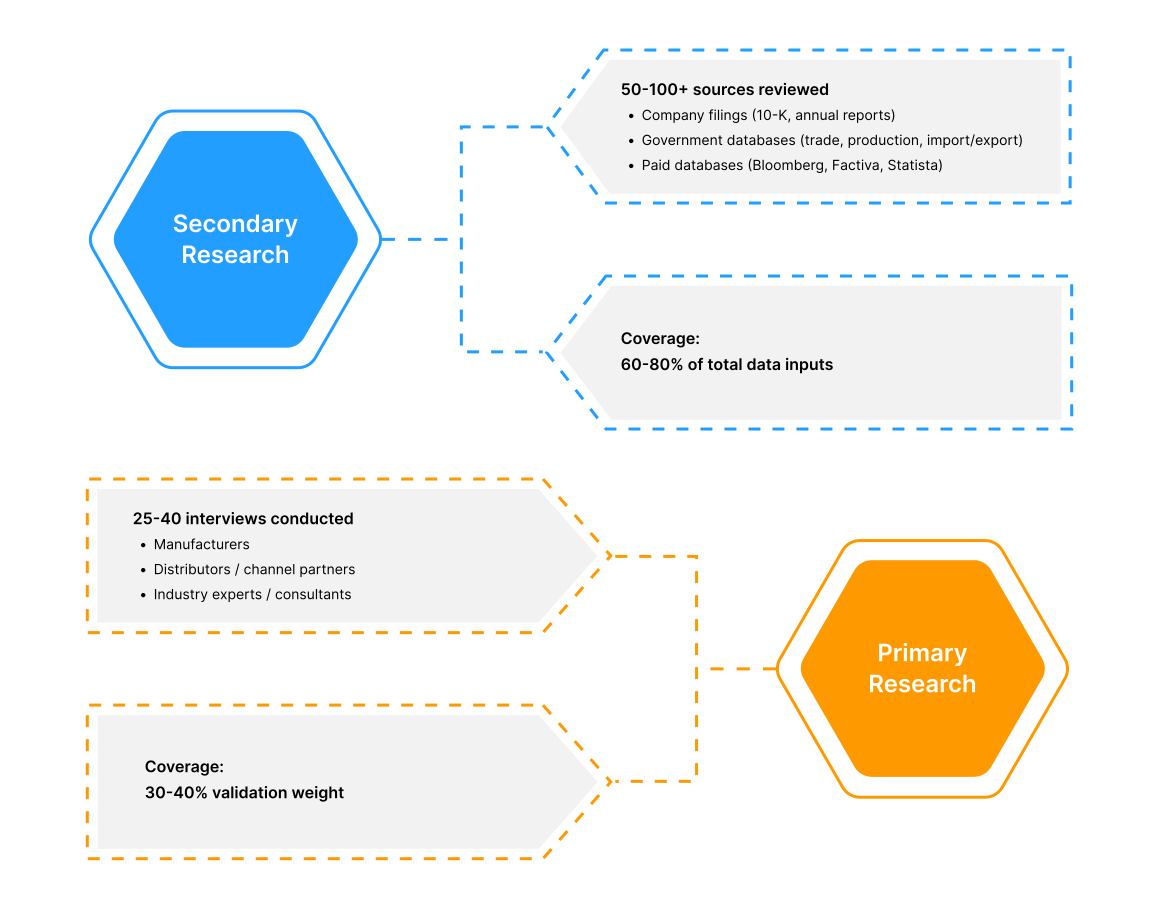
2. Data Collection
We gather information from both public and verified sources:
3. Data Structuring
Step 3:
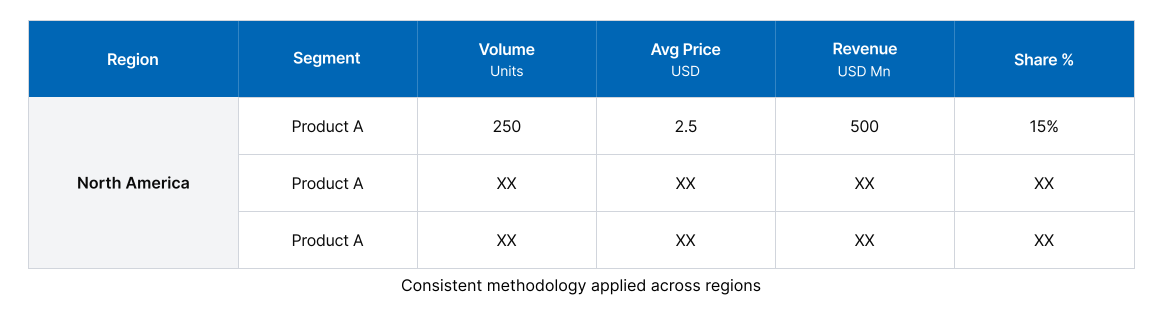
- All collected data is organized into a consistent format to ensure accurate analysis. Since inputs come from multiple sources, they are standardized and aligned before use.
- The data is segmented by product, application, and region, and mapped across a defined historical period (2020–2024). All values are converted into common units (USD Mn/Bn), and volume and pricing are aligned where required to estimate revenue.
- Any overlaps or inconsistencies are reviewed and adjusted to maintain accuracy (<5% variance threshold).
- The result is a structured dataset that allows for clear comparison across regions and supports reliable analysis and forecasting.
Structured Market Dataset, USD Mn/Bn
4. Data Structuring
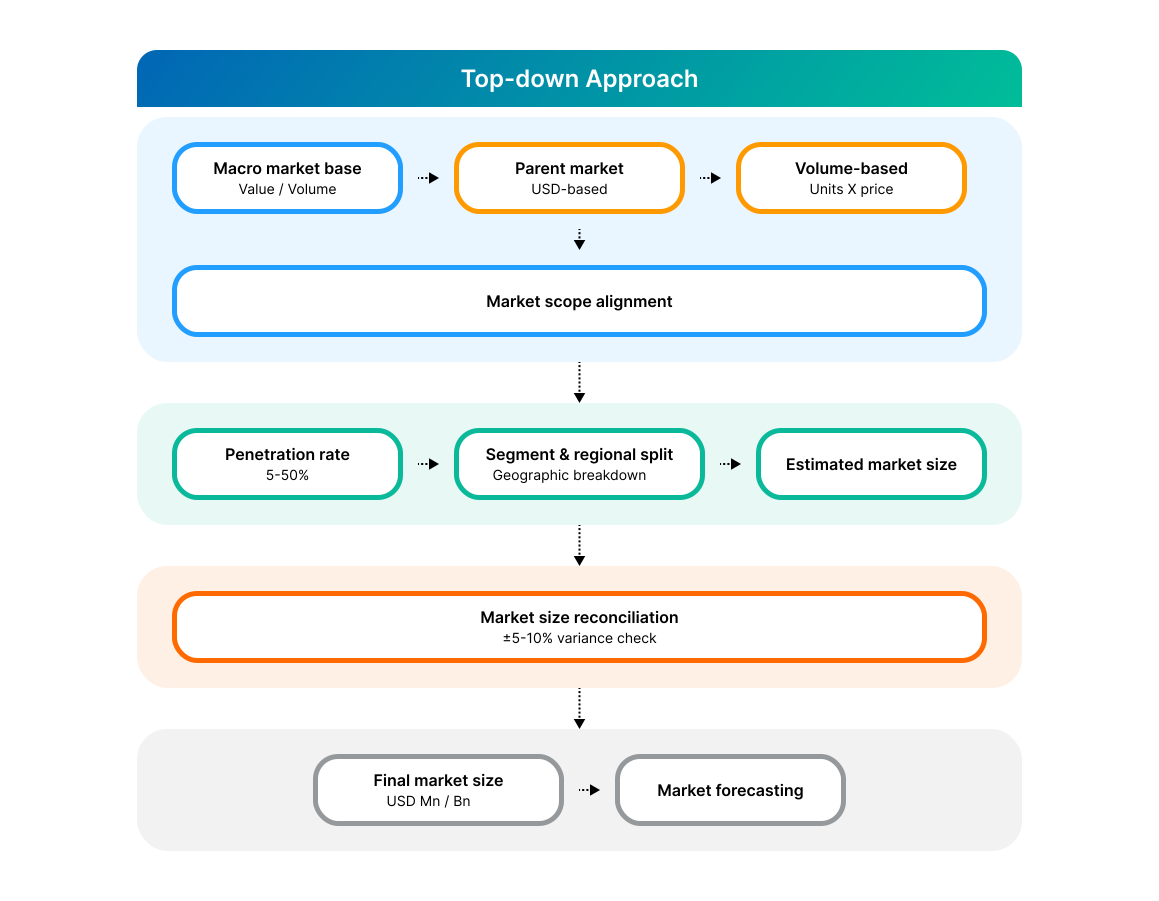
Step 4: TOP-DOWN APPROACH
- We start with the overall market size at a global or macro level.
- The market is then narrowed down based on scope and industry relevance.
- We apply penetration rates and split the data by region and segment.
- This helps us estimate the market size for specific segments.
- The numbers are validated through cross-checks to ensure accuracy.
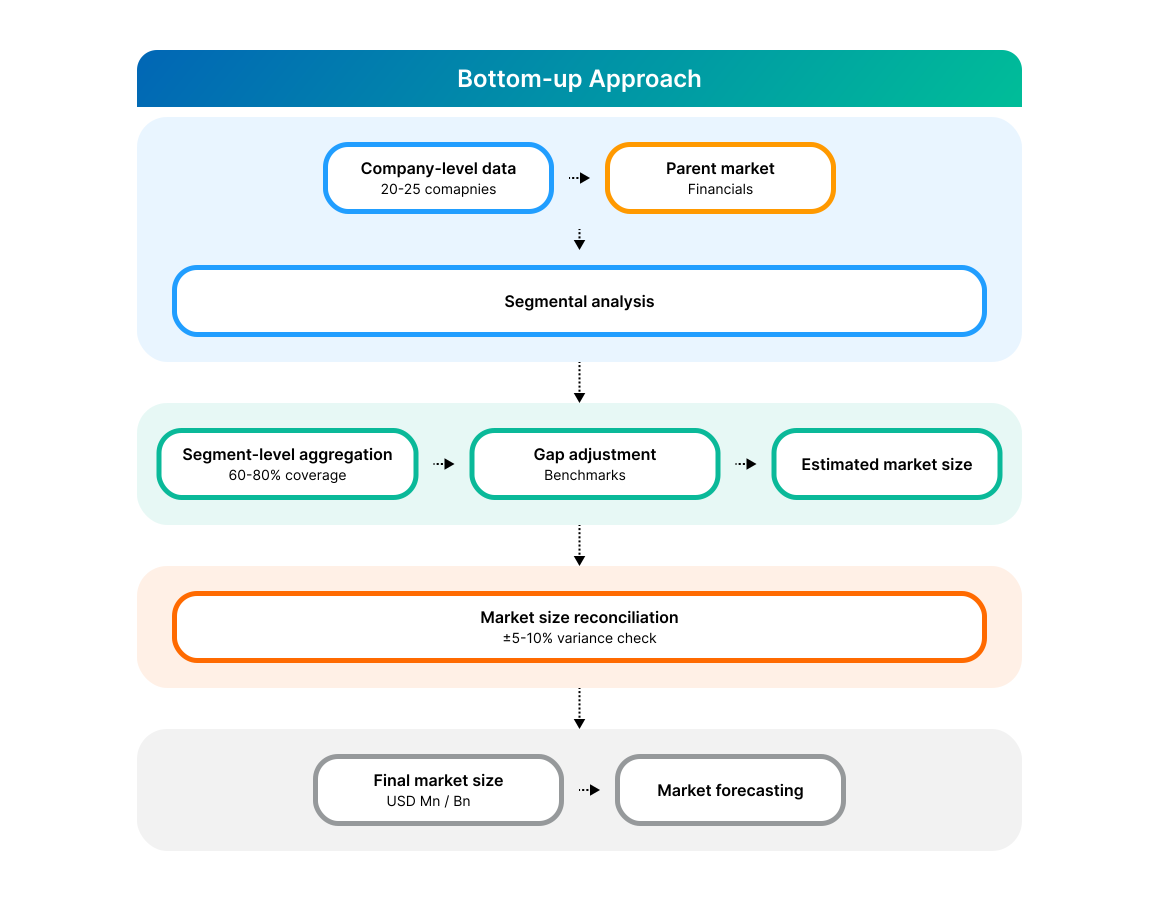
Step 5: BOTTOM-UP APPROACH
- We begin by analyzing data from leading companies in the market.
- Revenue data is collected and mapped across different segments.
- The data is then aggregated to estimate the total market size.
- To fill in any gaps, adjustments are made based on industry standards.
- Validation checks make sure that the results are correct.
5. Data Structuring
Step 6:
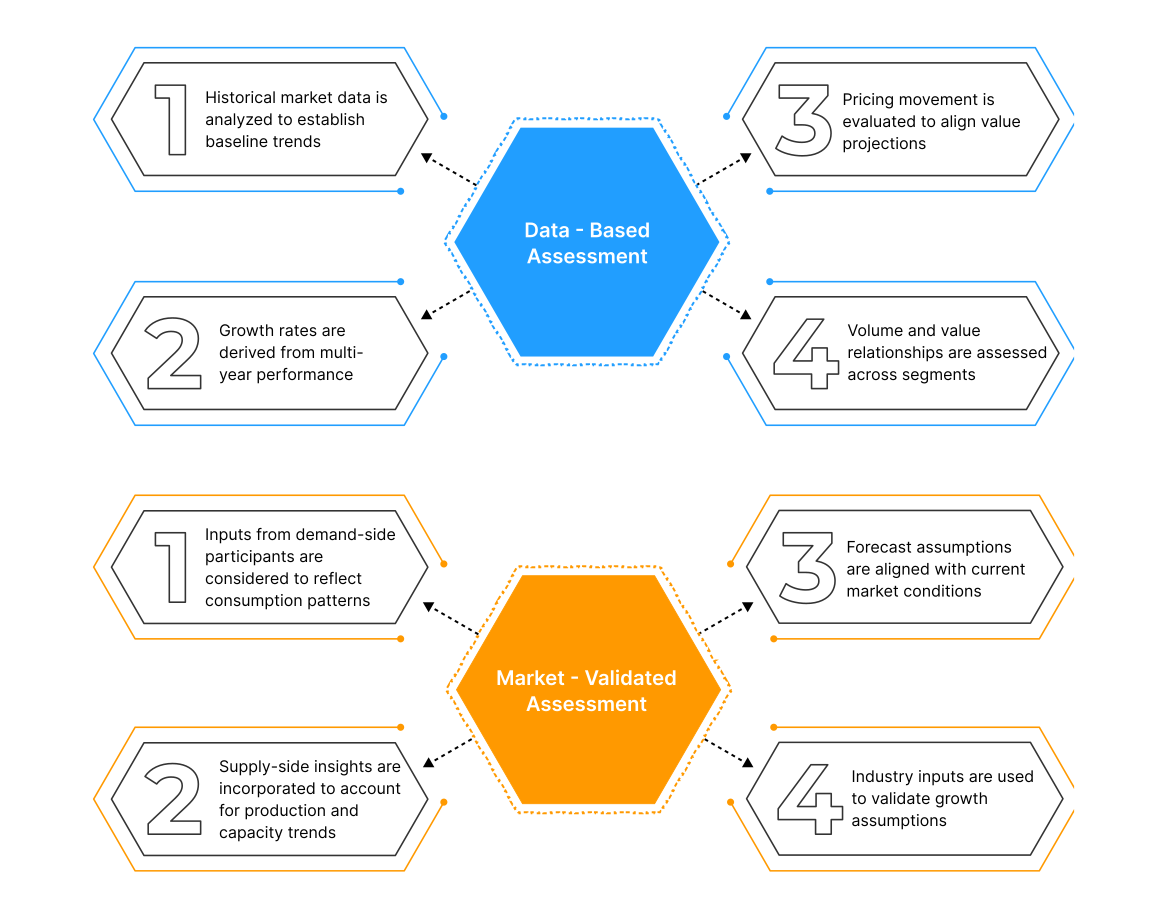
At Polaris Market Research, we employ a methodical forecasting strategy. This approach blends the analysis of historical data with real-time market validation. To forecast future trends with precision, we examine past patterns, pricing fluctuations, and the interplay of supply and demand. To ensure our conclusions reflect the present market landscape, we actively seek input from industry experts and key stakeholders.
To refine our predictions, we carefully consider critical elements such as market drivers and restraints, fluctuations in raw material costs, emerging technologies, and the production capabilities of various regions. Furthermore, we assess regulatory frameworks and potential policy shifts to gauge their potential impact on market expansion.
All this information is synthesized to generate precise forecasts for each segment and region. These forecasts illuminate the current state of the market and highlight forthcoming opportunities.
6. Data Structuring
Step 7:
In the final stage, we validate all our estimates using a triangulation method, where data is cross-checked from multiple reliable sources, like company data, primary interviews, and secondary research. This helps us make sure that our numbers are correct and fit with the rest of the market.
This process involves verifying data consistency across various segments and geographic areas. It also requires comparing historical trends with the assumptions support the forecast. Any discrepancies involve adjustments to ensure everything remains aligned and dependable.
Once the data is finalized, we prepare the final outputs, including market size estimates, segment-wise breakdowns, and growth metrics. These are delivered in structured formats such as tables, charts, and data files for easy analysis and use.
We collaborate closely with clients, ensuring the final products align with their requirements. This includes offering tailored adjustments, supplementary data analyses, and continuous assistance. Furthermore, we monitor market trends post-delivery, providing updates and refinements to maintain the insights' relevance as time passes.
Post-delivery, we continue to monitor market shifts, offering updates and adjustments to ensure the insights remain relevant over time.
Validation
Triangulation Framework
Estimates are cross-verified across three sources:
Company-level data
• Primary inputs from industry participants
• Secondary benchmarks and published data
Variance maintained within +5-10%
Adjustments applied to align estimates
Segment values validated against overall market structure
Quality Check
Data Consistency & Integrity
Segment totals validated to 100%
Regional estimates aligned with global market size
Historical trends compared against forecast outputs
Assumptions reviewed for cross-segment and regional alignment
Output & Delivery
Final Outputs
Market size estimates (USD Mn/Bn)
Segment-wise distribution (%)
Growth metrics (CAGR %)
Final Outputs
Structured tables and charts
Segment-level datasets
Excel-based data files for further analysis
Client Alignment & Support
- Deliverables are aligned with defined client requirements and scope
- Custom data cuts and segment splits are incorporated as required
- Post-delivery queries are addressed through analyst interactions
- Additional clarifications and data support are provided upon request
Client Continuity & Updates
- Market developments are tracked post-delivery to capture changes in key trends
- Updated data and revisions are provided based on new market inputs
- Additional refinements and data cuts are shared as required
- Continued analyst engagement supports evolving client requirements


