

What is the Current Market Size?
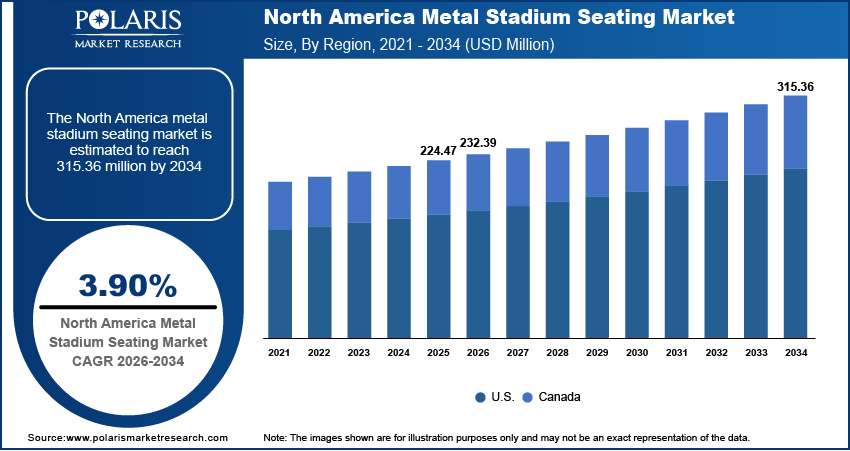
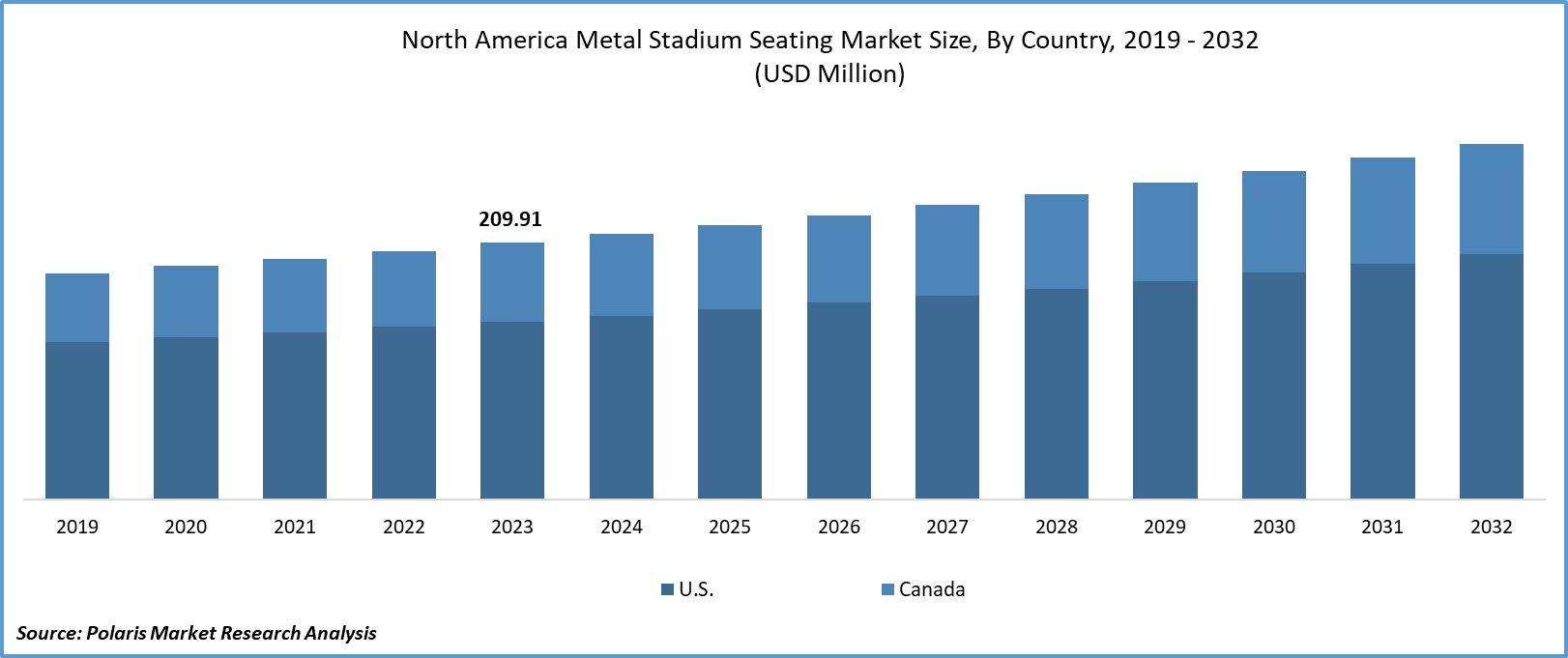
The north america metal stadium seating market size was valued at USD 224.47 million in 2025. The market is anticipated to grow from USD 232.39 million in 2026 to USD 315.36 million by 2034, exhibiting the CAGR of 3.90% during the forecast period.
Market Statistics
- 2025 Market Size: USD 224.47 million
- 2034 Projected Market Size: USD 315.36 million
- CAGR (2026-2034): 3.90%
- U.S.: Largest market in 2025
Market Overview
The growing popularity of sports is gaining a wide range of participants to streamline directly other than online broadcasting. With this enormous interest in live sports streaming, sports leagues are showing interest in enhancing the spectator experience with the incorporation of comfortable and convenient seating solutions. The enormous strength, flexibility, and durability of metal seating, primarily aluminium and steel, is gaining applications in stadium construction and expansion of seating capacity. In addition, these metals are gaining importance in the world due to their sustainability, which can take place in North America in the coming years.
- For instance, in November 2023, BAB Aluminium announced its plan to acquire Super Green Low Carbon Aluminium supplied by Capral Aluminium. This is to offer low-carbon seating with aluminium in the marketplace.
Moreover, the increasing consumer willingness to spend time on entertainment platforms and the rising use of social media with rising internet access are positively driving the entertainment industry, including sports. As more people are posting reels and posts of their visits to sports events on social media, the younger generation is exhibiting their interest in watching live sports. This cycle is encouraging stadium seating management to equip user-friendly seating, facilitating significant demand potential for metal seating in the region.
To Understand More About this Research: Request a Free Sample Report
However, the availability of economical alternatives to metal in stadium seating applications and the development of recyclable plastic seating solutions by the major players are likely to hamper market growth. For instance, in March 2023, Camatic introduced its new development of plastic recycled seats.
Growth Drivers
Rising demand for durable, modern, and pleasant seating solutions
The growing branding initiatives by the sports leagues and stadiums are rising day by day, making the experience of incredible spectators at sports events prominent. These initiatives are, in a way, driving the development of luxurious and comfortable seating solutions, including the integration of metal for lower maintenance costs. For instance, in December 2023, Erie County and Buffalo Bills announced the growth of the New Buffalo Bills Football Stadium Project and signed the Steel Beam installation in the stadium, with the prediction of finishing the 60,000-seat facility by 2026.
Growing stadium construction activities in the United States and Canada
The rising nation's profound interest in the construction of new stadiums is likely to necessitate the need for seating equipment, including metal, in the next few years. For instance, in February 2023, Vancouver FC' announced the construction of its latest 6,600-seat capacity soccer stadium in Langley, Canada. This trend continues further, and there will be significant demand opportunities for metal stadium seating during the forecast period.
Restraining Factors
Technological innovations in broadcasting are likely to impede market growth.
The growing technological advancements in live sports streaming are likely to lower the number of people preferring real-time streaming at the stadium, which can demotivate stadium owners to invest in seating in the long run, negatively impacting the metal seating solutions market in North America.
Technical Specifications & Material Benchmarking
|
Provider |
Frame Material |
Seat/Decking Material |
Finishing/Treatment |
Load Capacity (per linear ft) |
|
Gopher Sport |
Galvanized steel |
Extruded aluminum (10"W x 2"H) |
Corrosion-resistant galvanization |
125 lb |
|
Sport Systems Canada |
Welded steel framework |
Aluminum |
Hot-dip galvanized after fabrication |
- |
|
Sturdisteel |
Galvanized steel (ASTM A36/A572) or Aluminum 6061-T6 |
Varies (planks/boards) |
Hot-dipped galvanized (ASTM A123) |
Varies by design |
Federal & Municipal Procurement (Bid Tabulations)
|
Entity/Provider |
Contract/Bid Details |
Date/Period |
Value/Scope |
|
Gopher Sport (USA) |
GSA Schedule 78 (Sports/Recreation); DoDEA K-12 supplier |
Ongoing (active 2021-2025) |
Federal/state/local access to bleachers |
|
Gopher Sport (TX OMNIA) |
Awarded OMNIA contract 23-SR-020 (athletic equipment incl. bleachers) |
2023 (prev. 2016) |
Cooperative purchasing |
|
City of Roswell, NM |
Bid for temporary bleachers (metal implied) for Air Races |
June 2025 (within period) |
Design/supply/install/dismantle |
|
Sturdisteel (via Farnham) |
Bleachers for Bucyrus City Schools (OH) via TIPS Coop |
2024 |
Home/visitor grandstands |
|
Park District of Oak Park, IL |
CIP improvements incl. spectator seating |
2021-2025 |
Multi-park upgrades (~USD 800k Carroll Park) |
Report Segmentation
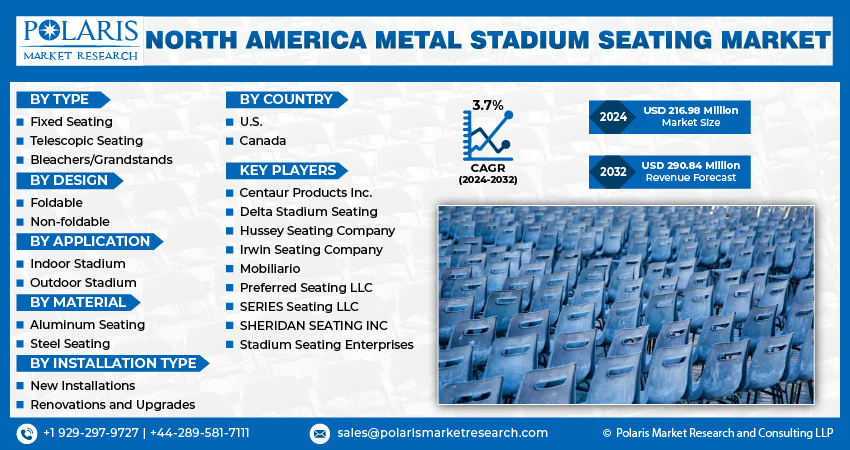
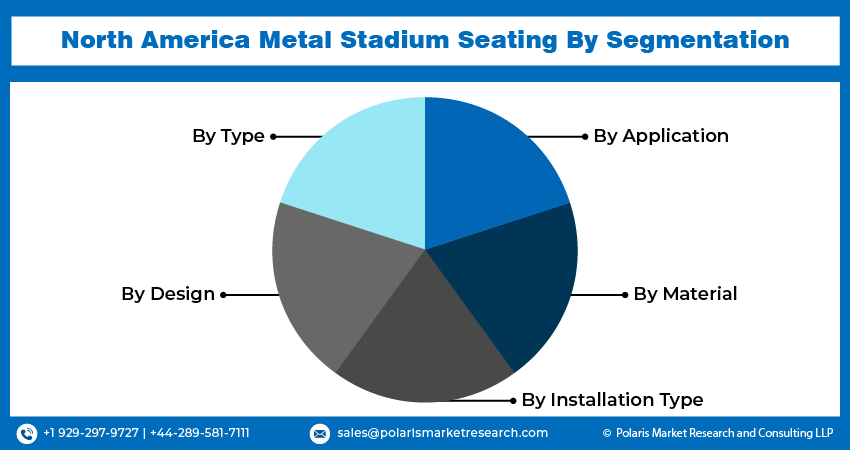
The market is primarily segmented based on type, design, application, material, installation type and region.
|
By Type |
By Design |
By Application |
By Material |
By Installation Type |
By Country |
|
|
|
|
|
|
To Understand the Scope of this Report: Speak to Analyst
By Type Analysis
Telescopic seating segment is projected to grow at the fastest pace
The telescopic segment is anticipated to grow at a higher CAGR in the study period, primarily influenced by its potential to utilize space effectively, in turn assisting in enhancing revenue for the stadium owners. The higher flexibility of telescopic metal chairs is driving their adoption in North America. Furthermore, telescopic seating assists stadium contractors in building and dismantling the stadium quickly, making it a prominent choice in the long run.
However, the fixed seating and grandstands segment is expected to drive significant demand in the marketplace due to its resistance to water and UV rays and its enhanced comfort for viewers.
By Design Analysis
Foldable segment received the largest market share in 2025
The foldable segment accounted for the largest market share in 2025 and is anticipated to boost its market position in the next few years, driven by the rising importance of optimized space utilization among the sports leagues. The rising popularity of foldable seating in the marketplace and lower maintenance costs are likely to stimulate segmental growth during the assessment period.
The non-foldable segment is likely to witness significant growth in the North America metal stadium seating market forecast period, driven by increased convenience for spectators and a lower chance of seating failure, which can lower the repair cost in the long run.
By Application Analysis
Outdoor stadium segment gained the prominent revenue share in 2025
The outdoor stadium segment held the largest share. This is mainly attributable to its higher potential to offer protection from UV rays, rain, and other extreme atmospheric conditions. As outdoor stadiums do not have roofs, there will be a significant need for durable and resistant seating material, contributing to the demand for metal seating equipment over others.
By Material Analysis
Aluminum seating segment received a dominant share in 2025
The aluminium seating segment accounted for the dominant share in the North American metal stadium seating market in 2025, which is highly influenced by its corrosion-resistant and light-weight properties. As outdoor stadiums are more reluctant to get corroded, there will be a significant number of people choosing aluminium over other metals in stadium seating applications.
However, the enhanced durability of steel-based metal stadium seating is likely to regain a certain share in the next few years. With its ability to provide an appealing and robust look in seating, there will be a significant demand for it in the long run.
By Installation Type Analysis
New Installations segment is expected to witness significant share in the study period
The new installation segment is expected to exhibit significant growth during the forecast timeframe, owing to the rising development of new stadiums in the North American region, including Canada, the US, & Mexico. These ongoing developments are likely to facilitate a significant need for the metal seating market in the coming years.
Regional Insights
United States registered the largest share of the North American metal stadium seating market in 2025
The United States accounted for the largest share in the North American metal stadium seating market. This is highly influenced by the presence of a population with a higher disposable income. With a view to promoting the sports industry, countries are investing huge amounts in the sports sector, including the construction and renovation of stadiums. From 1970 to 2020, the government invested USD 33 billion to build major sports stadiums in the United States & Canada. This ongoing trend is likely to boost demand for metal seating solutions in the coming years.
The Canada region is projected to grow at the fastest rate with a healthy CAGR over the forecast period. The rising investments in the sports sector and the growing number of people choosing real-time sports viewing over online streaming are likely to stimulate the expansion of stadiums, in turn driving the adoption of metal stadium seating in the coming years.
Key Market Players & Competitive Insights
Strategic contracts to drive the competition
The North America metal stadium seating market growth is a mix of consolidation and fragmentation, with the presence of several companies offering seating solutions. The market players are investing in research and development activities to innovate superior-quality seating solutions in the marketplace. The rising development of new stadiums is positively driving new demand for the companies. For instance, in 2023, ACS received a contract to construct a new stadium for the Tennessee Titans.
Some of the major players operating in the global market include:
- Centaur Products Inc.
- Delta Stadium Seating
- Hussey Seating Company
- Irwin Seating Company
- Mobiliario
- Preferred Seating LLC
- SERIES Seating LLC
- SHERIDAN SEATING INC
- Stadium Seating Enterprises
Recent Developments in the Industry
-
In May 2025, Kay Park Recreation announced it is now operating 100% on solar energy, highlighting its commitment to sustainability, ESG goals, and improved manufacturing cost control for park and seating solutions.
-
In January 2023, the Cleveland Guardians announced an investment of USD 200 million for the remodeling and renovation of their baseball stadium in the next three years, which was acquired from public funding.
Report Coverage
The North America metal stadium seating market report emphasizes on key regions across the globe to provide better understanding of the product to the users. Also, the report provides market insights into recent developments, trends and analyzes the technologies that are gaining traction around the globe. Furthermore, the report covers in-depth qualitative analysis pertaining to various paradigm shifts associated with the transformation of these solutions.
The report provides detailed analysis of the market while focusing on various key aspects such as competitive analysis, type, design, application, material, installation type, and their futuristic growth opportunities.
North America Metal Stadium Seating Market Report Scope
|
Report Attributes |
Details |
|
Market size value in 2025 |
USD 224.47 million |
| Market size value in 2026 | USD 232.39 million |
|
Revenue forecast in 2034 |
USD 315.36 million |
|
CAGR |
3.90% from 2026 – 2034 |
|
Base year |
2025 |
|
Historical data |
2021 – 2024 |
|
Forecast period |
2026 – 2034 |
|
Quantitative units |
Revenue in USD million and CAGR from 2026 to 2034 |
|
Segments covered |
|
|
Regional scope |
|
|
Competitive Landscape |
|
|
Report Format |
|
|
Customization |
Report customization as per your requirements with respect to countries, region and segmentation. |
FAQ's
key companies in North America Metal Stadium Seating Market are Centaur Products Inc., Delta Stadium Seating, Hussey Seating Company
North America Metal Stadium Seating Market exhibiting the CAGR of 3.90% during the forecast period.
The North America Metal Stadium Seating Market report covering key segments are type, design, application, material, installation type and region.
key driving factors in North America Metal Stadium Seating Market are Growing stadium construction activities in the United States and Canada
The global North America metal stadium seating market size is expected to reach USD 315.36 million by 2034.
Page last updated on:
Feb-2024
Research Methodology
A robust system of research, verification, and forecasting designed to ensure reliable and actionable market insights.
Polaris Market Research uses a clear and structured approach to deliver insights that clients can rely on. The process combines detailed primary and secondary research, including direct communication with industry experts. The detailed information helps build a complete picture of market trends and developments. Secondary data is gathered from credible sources such as industry reports, company filings, government source links, and trusted organization databases. It is then cross-checked through discussions with key stakeholders across the value chain. Market size and forecasts are developed using both bottom-up and top-down methods to ensure accuracy and consistency in the final results.
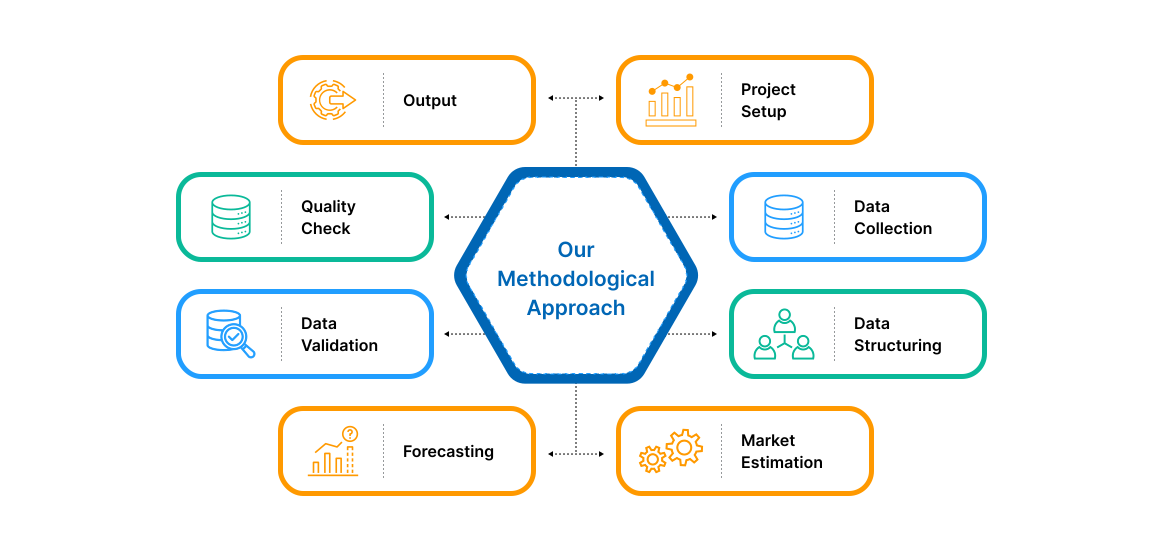
Project Setup
Step 1 & 2:
- We start every project by clearly understanding the client’s objective or goal, then defining the market scope, and aligning regions, segments, and timelines.
- Once the foundation is set, we collect data from all-around of sources, including company reports, government databases, and paid industry platforms.
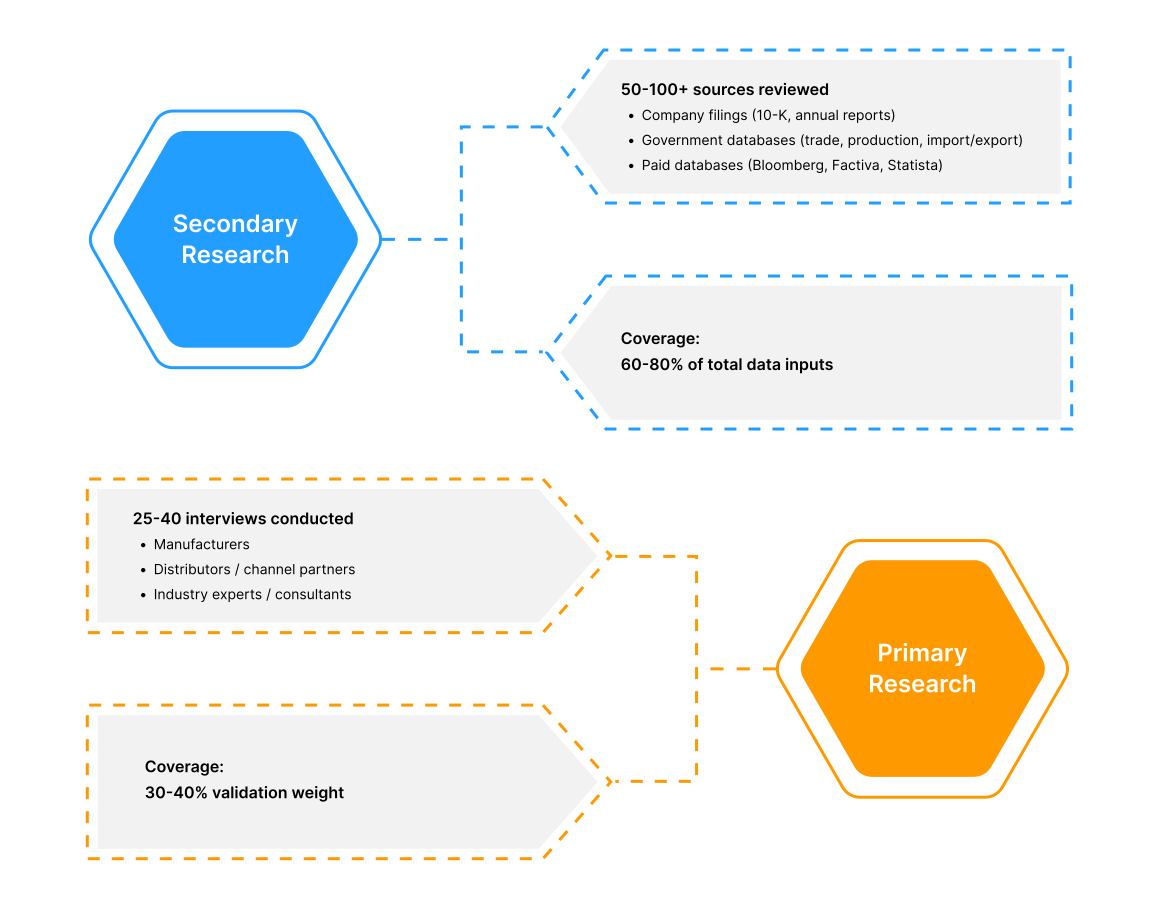
- Our research is based on secondary data, which helps us build a strong understanding of the market across regions and industries. Then we validate this information through primary research by speaking directly with industry experts, companies, and stakeholders.
- By combining secondary and primary research, we ensure that our market insights are accurate, practical, and closely aligned with real market conditions.
Data Collection
We gather information from both public and verified sources:
Data Structuring
Step 3:
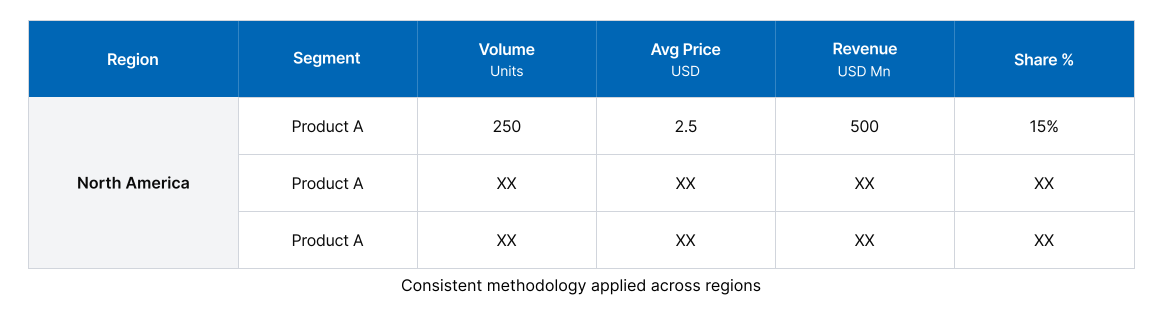
- All collected data is organized into a consistent format to ensure accurate analysis. Since inputs come from multiple sources, they are standardized and aligned before use.
- The data is segmented by product, application, and region, and mapped across a defined historical period (2020–2024). All values are converted into common units (USD Mn/Bn), and volume and pricing are aligned where required to estimate revenue.
- Any overlaps or inconsistencies are reviewed and adjusted to maintain accuracy (<5% variance threshold).
- The result is a structured dataset that allows for clear comparison across regions and supports reliable analysis and forecasting.
Structured Market Dataset, USD Mn/Bn
4. Data Structuring
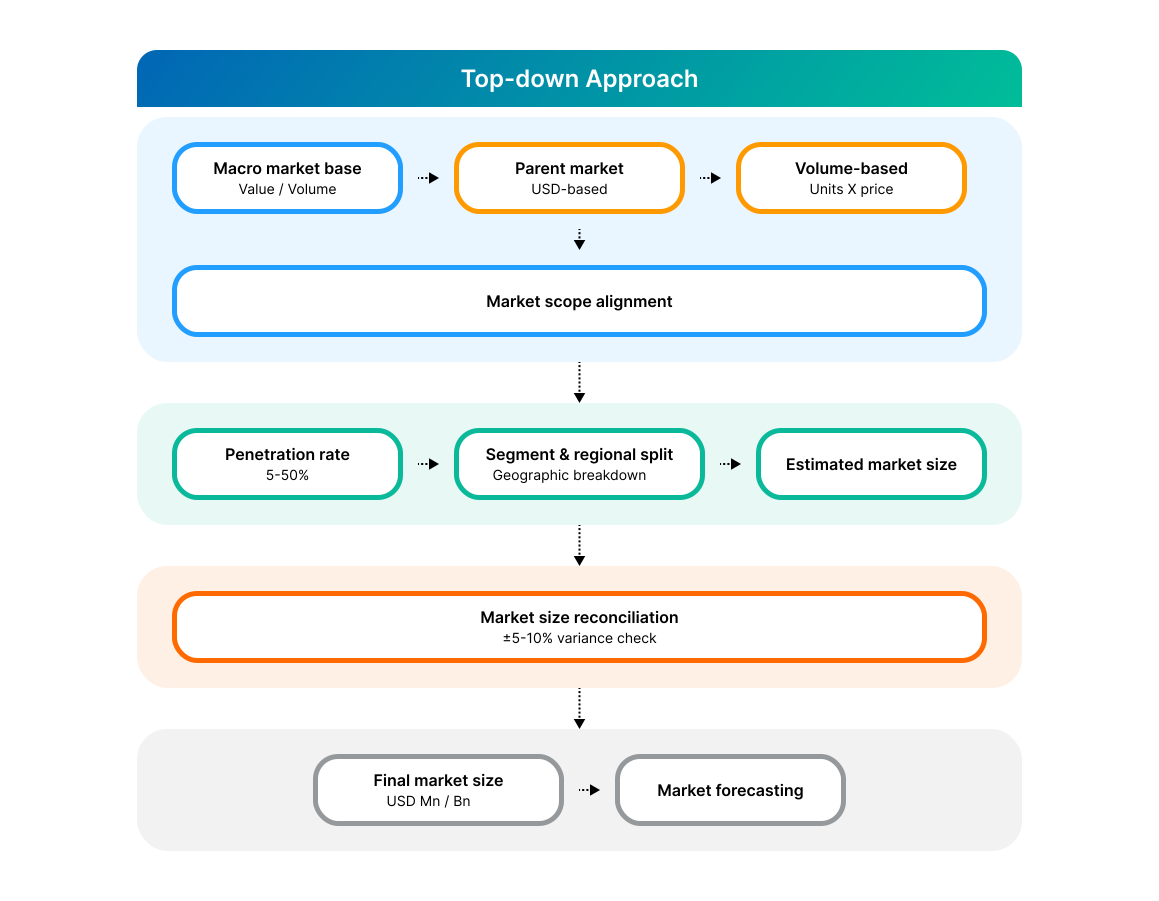
Step 4: TOP-DOWN APPROACH
- We start with the overall market size at a global or macro level.
- The market is then narrowed down based on scope and industry relevance.
- We apply penetration rates and split the data by region and segment.
- This helps us estimate the market size for specific segments.
- The numbers are validated through cross-checks to ensure accuracy.
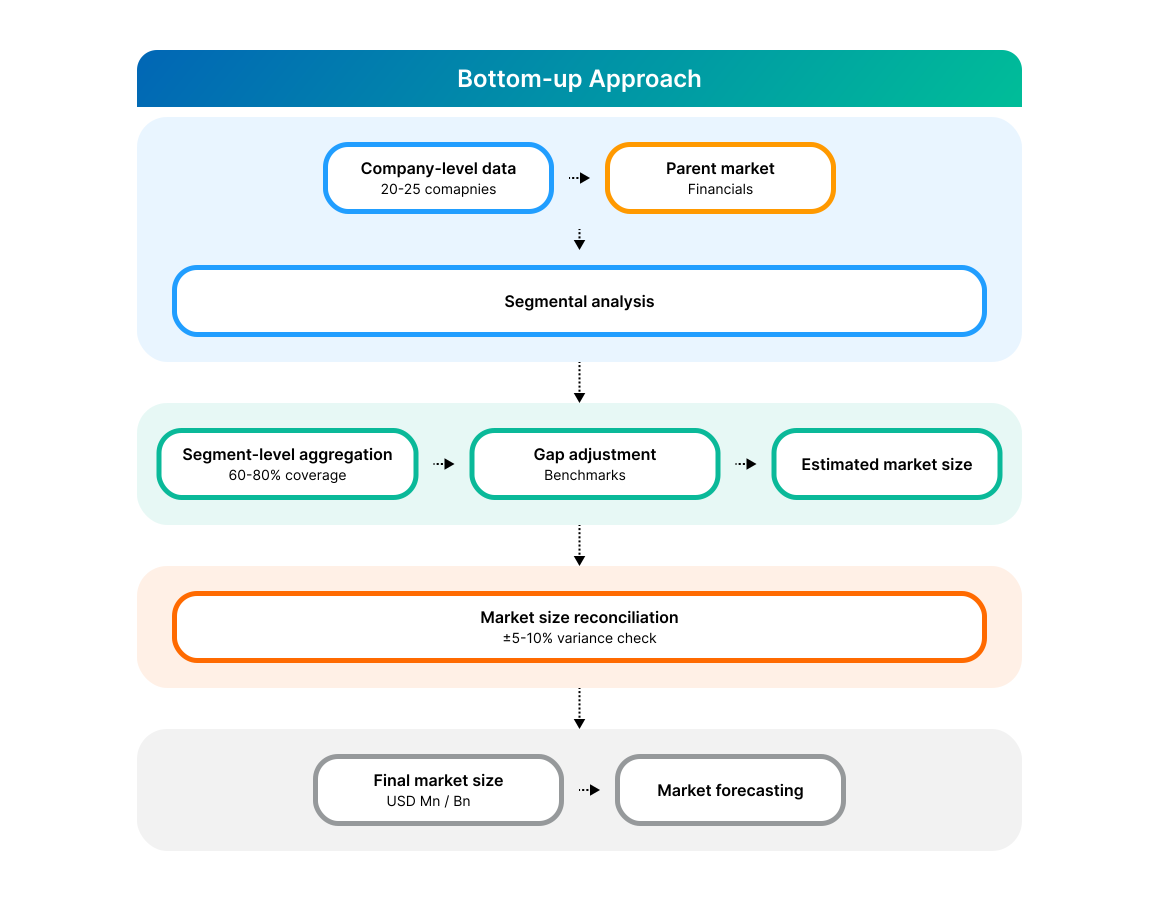
Step 5: BOTTOM-UP APPROACH
- We begin by analyzing data from leading companies in the market.
- Revenue data is collected and mapped across different segments.
- The data is then aggregated to estimate the total market size.
- To fill in any gaps, adjustments are made based on industry standards.
- Validation checks make sure that the results are correct.
5. Data Structuring
Step 6:
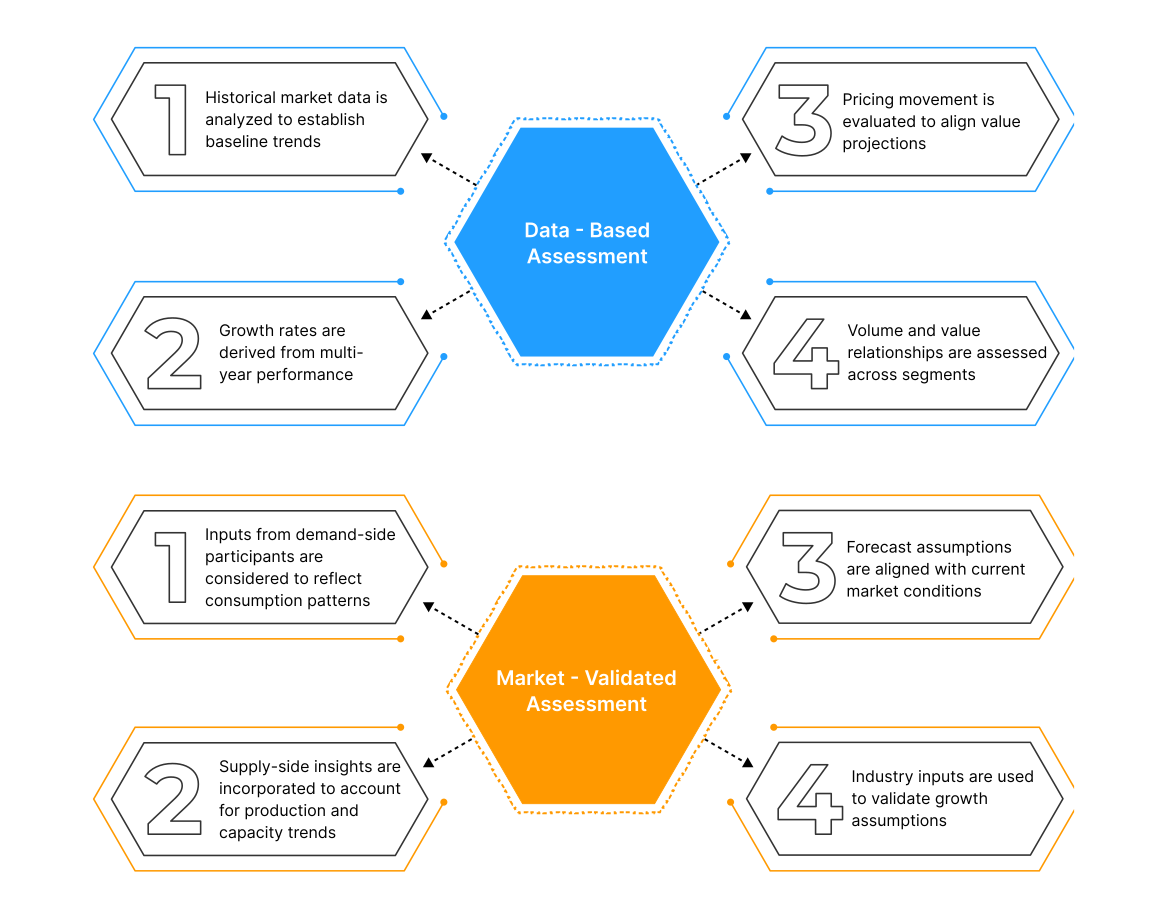
At Polaris Market Research, we employ a methodical forecasting strategy. This approach blends the analysis of historical data with real-time market validation. To forecast future trends with precision, we examine past patterns, pricing fluctuations, and the interplay of supply and demand. To ensure our conclusions reflect the present market landscape, we actively seek input from industry experts and key stakeholders.
To refine our predictions, we carefully consider critical elements such as market drivers and restraints, fluctuations in raw material costs, emerging technologies, and the production capabilities of various regions. Furthermore, we assess regulatory frameworks and potential policy shifts to gauge their potential impact on market expansion.
All this information is synthesized to generate precise forecasts for each segment and region. These forecasts illuminate the current state of the market and highlight forthcoming opportunities.
6. Data Structuring
Step 7:
In the final stage, we validate all our estimates using a triangulation method, where data is cross-checked from multiple reliable sources, like company data, primary interviews, and secondary research. This helps us make sure that our numbers are correct and fit with the rest of the market.
This process involves verifying data consistency across various segments and geographic areas. It also requires comparing historical trends with the assumptions support the forecast. Any discrepancies involve adjustments to ensure everything remains aligned and dependable.
Once the data is finalized, we prepare the final outputs, including market size estimates, segment-wise breakdowns, and growth metrics. These are delivered in structured formats such as tables, charts, and data files for easy analysis and use.
We collaborate closely with clients, ensuring the final products align with their requirements. This includes offering tailored adjustments, supplementary data analyses, and continuous assistance. Furthermore, we monitor market trends post-delivery, providing updates and refinements to maintain the insights' relevance as time passes.
Post-delivery, we continue to monitor market shifts, offering updates and adjustments to ensure the insights remain relevant over time.
Validation
Triangulation Framework
- Company-level data
- Primary inputs from industry participants
- Secondary benchmarks and published data
- Variance maintained within ±5-10%
- Adjustments applied to align estimates
- Segment values validated against overall market structure
Quality Check
Data Consistency & Integrity
- Segment totals validated to 100%
- Regional estimates aligned with global market size
- Historical trends compared against forecast outputs
- Assumptions reviewed for cross-segment and regional alignment
Output & Delivery
Final Outputs
- Market size estimates (USD Mn/Bn)
- Segment-wise distribution (%)
- Growth metrics (CAGR %)
- Structured tables and charts
- Segment-level datasets
- Excel-based data files for further analysis
Client Alignment & Support
- Deliverables are aligned with defined client requirements and scope
- Custom data cuts and segment splits are incorporated as required
- Post-delivery queries are addressed through analyst interactions
- Additional clarifications and data support are provided upon request
Client Continuity & Updates
- Market developments are tracked post-delivery to capture changes in key trends
- Updated data and revisions are provided based on new market inputs
- Additional refinements and data cuts are shared as required
- Continued analyst engagement supports evolving client requirements


