
Nuclear Power Plant Control System Market Opportunities 2026-2034
REPORT DETAILS
Market Statistics
What is the Current Market Size?
Global nuclear power plant control system Market size was valued at USD 665.98 million in 2025. The market is anticipated to grow from USD 688.38 million in 2026 to USD 910.25 million by 2034, exhibiting the CAGR of 5.50% during the forecast period.
Market Statistics
- 2025 Market Size: USD 665.98 million
- 2034 Projected Market Size: USD 910.25 million
- CAGR (2026-2034): 5.50%
- Asia Pacific: Largest market in 2025
Nuclear Power Plant Control System Market Overview
Technological developments in control systems improve nuclear power plants' dependability, efficiency, and safety. One noteworthy trend is the combination of automation and digital control systems. The need for contemporary control systems is being driven by the numerous nations that are investing in modernizing and prolonging the life of their current nuclear power reactors.
- For instance, in November 2023, Fortum and the Swedish nuclear technology company Studsvik have formed a partnership to investigate the potential for new nuclear initiatives in Sweden. This collaboration aligns with Fortum's ongoing feasibility study aimed at examining business prospects in new nuclear ventures in both Finland and Sweden.
Furthermore, many nations still rely heavily on nuclear power to reduce air pollution and climate change, provide energy security, and lessen the impact of variable fossil fuel costs. Nonetheless, the reduced expense of renewable energy sources coupled with their minimal emissions and the challenge of securing funding for nuclear power plant initiatives are anticipated to impede market development over the projected duration.
Source: Polaris Market Research Analysis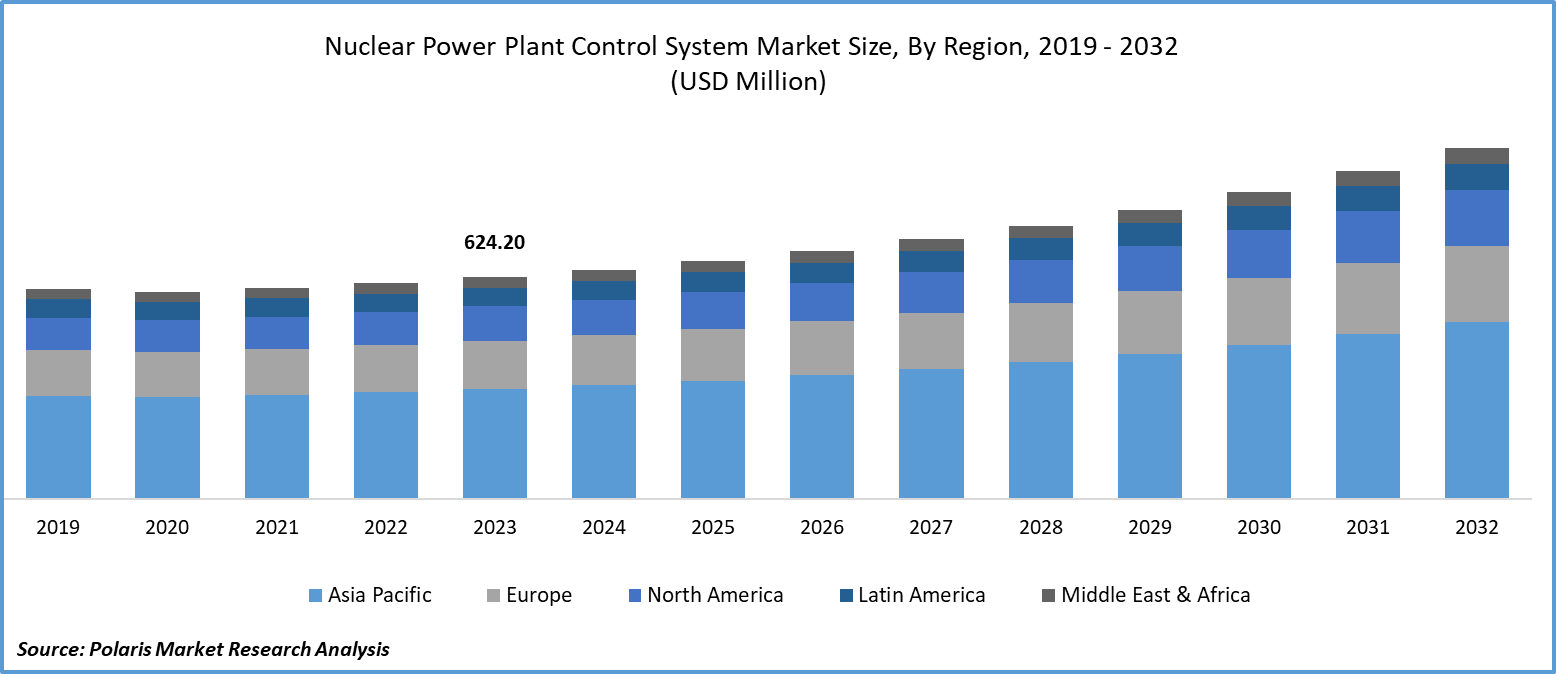
To Understand More About this Research: Download Sample Report
However, lockdowns caused delays in development at several locations, as well as an increase in the overall cost of the projects. However, because to lower electricity usage, a number of reactors had to temporarily close during the pandemic, which had a little impact on the market growth for nuclear power plant control systems. Despite COVID-19, the primary drivers of the industry under investigation include rising global investments in nuclear power facilities, rising energy consumption, and international climate change targets.
Nuclear Power Plant Control System Market Dynamics
Market Drivers
Rising demand of nuclear power all over the globe is projected to spur the product demand.
The market for nuclear power plant control systems is experiencing significant growth due to the global expansion of nuclear power generation. Nuclear energy is regaining prominence as a practical and environmentally friendly solution, particularly as countries worldwide grapple with increasing electricity demands and the imperative to transition to low-carbon energy sources. In light of this resurgence, nuclear power plants require advanced and reliable control systems to ensure safe, efficient, and dependable operation. These control systems encompass a range of components, including safety features, instrumentation and control systems, human-machine interfaces, and reactor protection systems, all of which collaborate harmoniously to uphold the stability and security of nuclear facilities.
The ever increasing demand for electricity is driving the demand for nuclear power plant control system market.
The world's energy consumption is expected to rise significantly in the upcoming years due to factors such as the expanding global population, economy, and urbanization. It is a significant problem to meet the world's rapidly expanding energy demand while cutting greenhouse gas emissions. For many years, the growth in electricity consumption has exceeded the growth in ultimate energy demand. Growing demand for energy is mostly caused by increased electrification of end applications, including major appliances, ICT, transportation, and space cooling. In addition to being a low-emitting source of electricity, nuclear energy emits among the least amounts of carbon dioxide equivalent per unit of energy produced when taking the entire life-cycle emissions into account.
Source: Polaris Market Research Analysis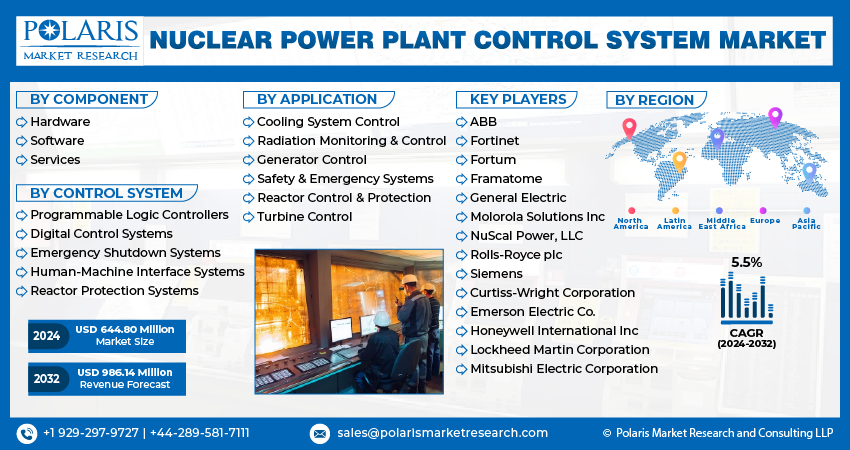
Get Full Segment-Level Forecasts & Insights: Download Sample Report
Market Restraints
The alternative source for energy can restrict the market growth.
The introduction of alternative energy sources is having a big impact on the market growth for control systems for nuclear power plants. Particularly renewable energy sources have grown in importance as the global energy landscape drastically shifts in favor of diverse and sustainable sources. The nuclear power industry and, consequently, the market for control systems used in nuclear power reactors face challenges as a result of this altering dynamic. Consumers, companies, and governments are being drawn to renewable energy sources such as solar, wind, and hydropower due to significant technology advancements and cost reductions. The renewable energy industry presents less perceived risk and more environmentally friendly alternatives than nuclear power.
SMR & Advanced Reactor Native Automation
| Provider/SMR Design | Control System Features | Key Automation/Safety Insight |
| NuScale Power (NPM 77 MWe) | Digital procedures library, tiered notifications, integrated EOPs, automated sequences; E2 Center simulators. | NRC design approval (2025 uprate); passive safety, control room sims boost efficiency. |
| GE Hitachi (BWRX-300) | Simplified I&C from ESBWR basis; digital upgrades for licensing. | NRC pre-application; natural circulation, cyber-secure controls. |
| Rolls-Royce SMR (470 MWe) | Yokogawa data processing/control system; design/validation/commissioning. | Factory-built modules; UK/Czech support for reliable deployment. |
| Westinghouse (AP300) | Proven Gen III+ I&C; advanced passive safety w/o backup power. | Simplified ops/reliability; NRC design cert target 2027. |
Source: Polaris Market Research Analysis
Report Segmentation
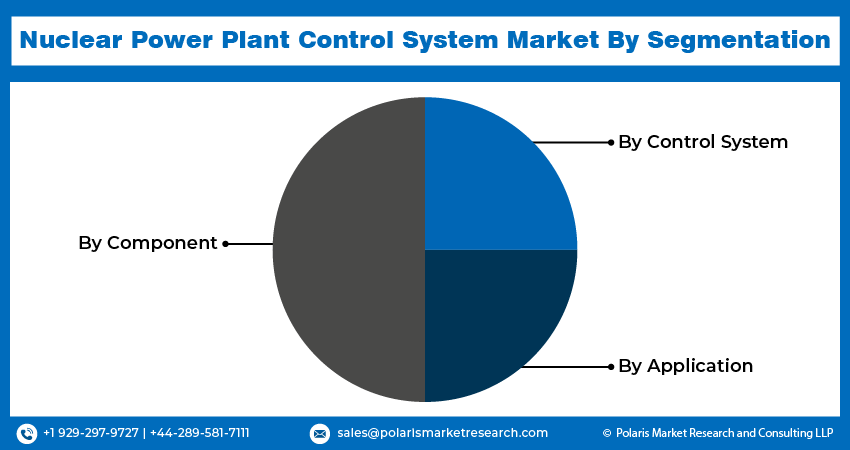
The market is primarily segmented based on component, control system, application and region.
| By Component | By Control System | By Application | By Region |
|
|
|
|
Source: Polaris Market Research Analysis
To Understand the Scope of this Report: Request Customization
Nuclear Power Plant Control System Market Segmental Analysis
By Component Analysis
- The hardware segment is expected to be the dominating segment during the nuclear power plant control system market forecast period. As nuclear power plants expand or encounter shifts in their operational requirements over time, their hardware can seamlessly accommodate these changes by scaling up or down through the addition or removal of modules. This flexibility eradicates the need for costly and disruptive overhauls, thereby ensuring that the control systems remain finely tuned to meet current demands. Embracing modular and scalable hardware solutions allows the nuclear power plant control system market to adeptly cater to the diverse needs of both existing facilities and those planned for the future. This strategic approach guarantees that safety, operational efficiency, and adaptability are upheld in response to the dynamic and ever-changing landscape of the energy sector.
By Application Analysis
- The cooling system control segment accounted for the largest market share in 2025 and is likely to hold its dominance throughout the market forecast period. For nuclear power facilities to sustain operating safety and maintain ideal reactor temperatures, efficient cooling system management is essential. This is made possible by an advanced control system that effectively removes heat from the reactor core by monitoring and controlling the coolant flow, preventing overheating and minimizing potential damage. In addition, generator control systems are essential for transforming turbine mechanical energy into electrical energy. By carefully regulating voltage, frequency, and power output, these systems provide a steady and reliable supply of electricity to the grid.
Source: Polaris Market Research Analysis
Need Granular Data Across All Market Segments? Request Customization
Nuclear Power Plant Control System Market Regional Insights
The Asia Pacific region dominated the global market with the largest market share in 2025
The Asia Pacific region dominated the global market with the largest market share in 2025 and is expected to maintain its dominance over the anticipated period. The growth of the segment market can be largely attributed to the dedication to achieving energy independence via nuclear power is increasingly reinforced by the progress in reactor technologies, safety protocols, and global cooperation. Across the Asia Pacific area, nations are actively pursuing the advantages of nuclear energy while participating in alliances, sharing technological know-how, and fostering collaborations. This collective effort aims to guarantee the careful and accountable progression and utilization of nuclear power plants and their corresponding control mechanisms.
The North America region is expected to be the fastest growing region with a healthy CAGR during the projected period, owing to a considerable quantity of nuclear reactors that are currently operational in the region, and a growing portion of them are undergoing life extension initiatives to prolong their operation beyond their initially intended lifespan. Canada, utilizing its CANDU reactor technology, emphasizes exporting its nuclear expertise and revitalizing its current reactors. In the United States, there is a noticeable preference among customers for technologies that improve the longevity, effectiveness, and safety of nuclear reactors. This preference is bolstered by a regulatory framework that prioritizes stringent safety and environmental impact standards.
Source: Polaris Market Research Analysis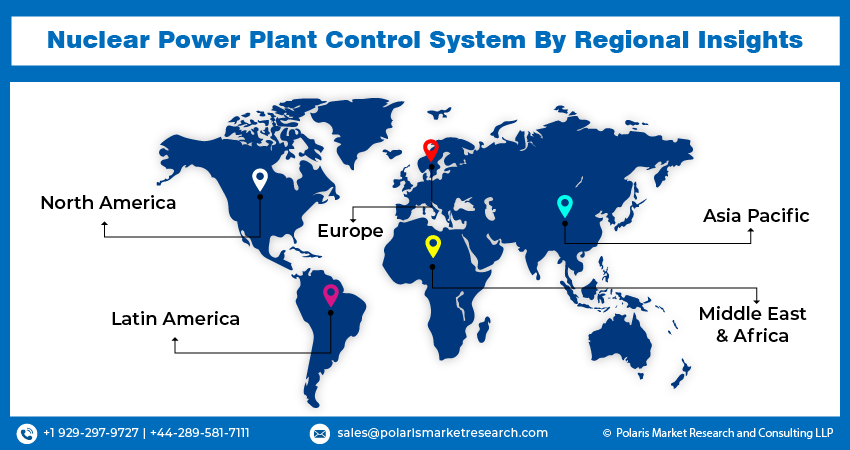
Curious About Regional Market Performance? Request Customization
Competitive Landscape
The Nuclear Power Plant Control System market growth is fragmented and is anticipated to witness competition due to several players' presence. Major service providers in the market are constantly upgrading their technologies to stay ahead of the competition and to ensure efficiency, integrity, and safety. These players focus on partnership, product upgrades, and collaboration to gain a competitive edge over their peers and capture a significant market share.
Some of the major players operating in the global market include:
- ABB
- Curtiss-Wright Corporation
- Emerson Electric Co.
- Fortinet
- Fortum
- Framatome
- General Electric
- Honeywell International Inc
- Lockheed Martin Corporation
- Mitsubishi Electric Corporation
- Molorola Solutions Inc
- NuScal Power, LLC
- Rolls-Royce plc
- Siemens
Recent Developments
- In September 2023, Framatome declared a three-year partnership with AGH University of Krakow (Akademia Górniczo-Hutnicza), Poland, to develop educational programs aimed at nurturing growth prospects for students pursuing careers in nuclear energy. Collaboratively, Framatome and AGH University will champion shared endeavors to bolster the country's nuclear program, equipping graduate and post-graduate engineering students for sustained careers in the field of nuclear energy.
Report Coverage
The nuclear power plant control system market report emphasizes on key regions across the globe to provide better understanding of the product to the users. Also, the report provides market insights into recent developments, trends and analyzes the technologies that are gaining traction around the globe. Furthermore, the report covers in-depth qualitative analysis pertaining to various paradigm shifts associated with the transformation of these solutions.
The report provides detailed analysis of the market while focusing on various key aspects such as competitive analysis, component, control system, application, and their futuristic growth opportunities.
Nuclear Power Plant Control System Market Report Scope
| Report Attributes | Details |
| Market size value in 2025 | USD 665.98 million |
| Market size value in 2026 | USD 688.38 million |
| Revenue forecast in 2034 | USD 910.25 million |
| CAGR | 5.50% from 2026 – 2034 |
| Base year | 2025 |
| Historical data | 2021 – 2024 |
| Forecast period | 2026 – 2034 |
| Quantitative units | Revenue in USD million and CAGR from 2026 to 2034 |
| Segments covered | By Component, By Control System, By Application, By Region |
| Regional scope | North America, Europe, Asia Pacific, Latin America; Middle East & Africa |
| Customization | Report customization as per your requirements with respect to countries, region and segmentation. |
Source: Polaris Market Research Analysis
Nuclear Power Plant Control System Market FAQ's
key companies in Nuclear Power Plant Control System Market are ABB, General Electric, Fortum, Framatome, Emerson Electric Co., Mitsubishi Electric Corporation
Nuclear Power Plant Control System Market exhibiting the CAGR of 5.50% during the forecast period
The Nuclear Power Plant Control System Market report covering key segments are component, control system, application and region.
key driving factors in Nuclear Power Plant Control System Market are Rising demand of nuclear power
Nuclear Power Plant Control System Market Size Worth USD 910.25 Million By 2034.
Download Sample Report of Nuclear Power Plant Control System Market
Please fill out the form to request a customized copy of the research report.


