
Organic Spices Market Growth, Share & Analysis Report, 2025-2034
REPORT DETAILS
Market Statistics
Market Overview
The organic spices market size was valued at USD 1.99 billion in 2024, exhibiting a CAGR of 6.8% from 2025 to 2034. The market is driven by demand for healthier, pesticide-free products, sustainability, R&D advancements, urbanization, and government incentives supporting organic farming.
Key Insights
- The turmeric segment held a major share in 2024 due to its well-known health benefits, especially anti-inflammatory and antioxidant effects.
- The offline segment led the market in 2024 due to traditional shopping habits and strong retail networks.
- In 2024, the Asia Pacific held the largest revenue share, led by India’s rich history of spice cultivation and consumption.
- North America is projected to grow significantly from 2025 to 2034, driven by increasing consumer interest in health and wellness.
Industry Dynamics
- Increasing focus on sustainability and ethical consumption is expected to boost the market.
- Growing urbanization worldwide is driving the organic spices market by increasing access to organic products and boosting consumer preference for sustainable choices.
- Rising government policies and incentives supporting organic farming are expected to drive the growth of the market.
- The market is restrained by higher production costs and limited availability compared to conventional spices.
Market Statistics
2024 Market Size: USD 1.99 billion
Source: Polaris Market Research Analysis
2034 Projected Market Size: USD 3.83 billionSource: Polaris Market Research Analysis
CAGR (2025-2034): 6.8%Source: Polaris Market Research Analysis
Asia Pacific: Largest Market ShareSource: Polaris Market Research Analysis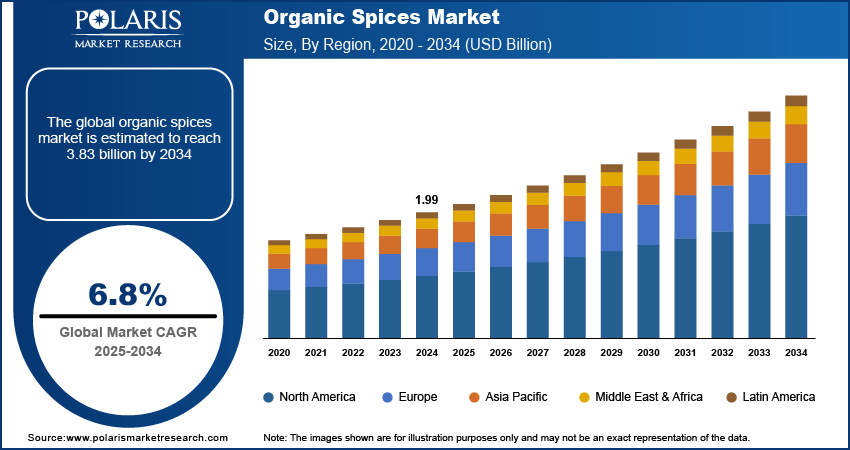
To Understand More About this Research: Download Sample Report
Organic spices are derived from plants cultivated without the use of synthetic fertilizers, pesticides, or genetically modified organisms (GMOs). This cultivation method emphasizes environmental sustainability and promotes healthier food options for consumers.
The growing preference for a healthy lifestyle is driving the organic spices market. Consumers seek natural and organic products as they become more health-conscious, leading to increased adoption of organic spices since they have higher antioxidant levels and a lack of pesticides. Additionally, a rising emphasis on sustainability and ethical consumption is projected to propel the organic spices market. Emphasis on sustainability and ethical consumption encourages people to opt for organic spices as they are cultivated through organic fertilizers, which contributes to soil health, biodiversity, and reduced pollution.
The organic spices market is further driven by the growing investment in R&D activities. R&D drives the creation of new spice blends and formulations that cater to evolving consumer tastes and dietary preferences, expanding the market for organic spices. Moreover, R&D focused on sustainable agriculture enhances the appeal of organic spices by aligning them with environmental goals, attracting eco-conscious consumers.
Market Drivers
Growing Urbanization Worldwide
The market CAGR for organic spices is being driven by growing urbanization across the globe. According to data published by the United Nations, 55% of the world's population lives in urban areas, and the figure is expected to increase to 68% by 2050. Urban areas typically have a wider range of grocery stores, specialty shops, and farmers’ markets that offer organic options, making it easier for consumers to find and purchase organic spices. In addition, urban consumers are more often engaged with sustainability issues and prefer organic spices as part of their commitment to environmentally friendly choices, thereby increasing the adoption of organic spices.
Increasing Government Policies and Incentives
The increasing government policies and incentives aimed at promoting organic farming are projected to fuel the organic spices market. Government subsidies and grants for organic farmers reduce production costs, encouraging farmers to transition to organic methods, which, in turn, increases the supply of organic spices in the market. Additionally, policies promoting organic farming focus on developing new markets for organic products, making organic spices more accessible to consumers and retailers, thereby boosting market growth.
Source: Polaris Market Research Analysis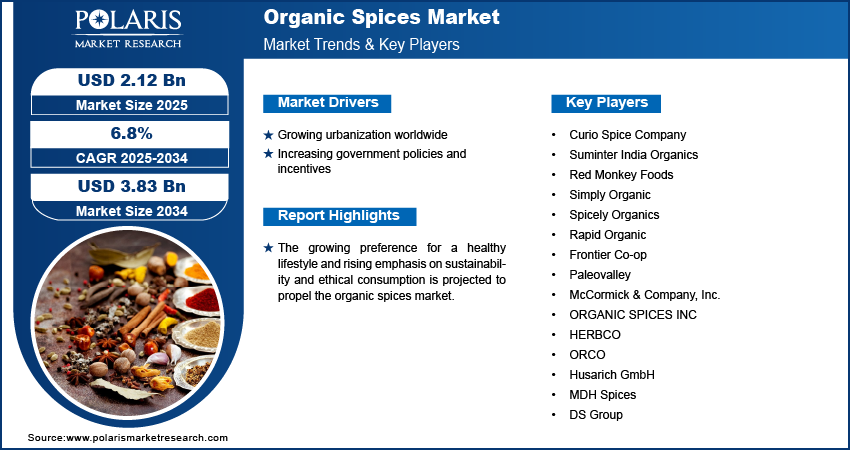
Get Full Segment-Level Forecasts & Insights: Download Sample Report
Segment Insights
Market Breakdown by Product Insights
Based on product, the organic spices market is segmented into turmeric, ginger, chili, pepper, cinnamon, nutmeg, and others. The turmeric segment accounted for a major share of the market in 2024 due to its widespread recognition of health benefits, particularly its anti-inflammatory and antioxidant properties. Consumers increasingly incorporate turmeric into their diets, owing to its potential to support overall wellness and boost immunity. The rising popularity of turmeric-based products, such as supplements and herbal teas, further propels its demand. Additionally, the growth of plant-based diets and natural remedies has reinforced turmeric’s position as a staple ingredient in health-conscious households, contributing to its market dominance.
The pepper segment is expected to grow at a robust pace in the coming years, owing to its versatility and increasing use in diverse culinary applications. Organic pepper stands out as a preferred choice as consumers continue to seek flavorful yet healthy alternatives to enhance their meals. The growing trend of gourmet cooking and the rise of international cuisines in home kitchens have spurred demand for pepper varieties, such as black and white pepper. Furthermore, the health benefits associated with pepper, including its potential to aid digestion and improve metabolism, boost its adoption in households.
Market Assessment by Form Insights
In terms of form, the organic spices market is categorized into powder, whole, and chopped/crushed. The powder segment held the largest market share in 2024 due to its convenience and versatility in cooking. Consumers favor powdered spices for their ease of use, allowing for quick incorporation into a wide range of dishes, from everyday meals to gourmet recipes. The growing trend of home cooking has led to increased demand for powdered spices, as they allow home chefs to experiment with flavors without the need for extensive preparation. Additionally, powdered spices often have a longer shelf life, appealing to consumers seeking value and practicality in their cooking.
The chopped/crushed segment is projected to grow at a rapid pace during the forecast period, owing to the rising popularity of fresh and minimally processed ingredients in culinary practices. Chefs and home cooks increasingly prefer chopped or crushed spices for their ability to provide robust flavors and aromatic qualities that enhance dishes. The surge in interest in international cuisines, which often utilize whole or crushed spices to create authentic flavors, also fuels this trend.
Market Evaluation by Distribution Channel Insights
Based on distribution channels, the organic spices market is segregated into offline and online. The offline segment dominated the market in 2024 due to traditional shopping habits and established retail networks. Many consumers prefer purchasing spices from supermarkets, specialty stores, and local markets, where they physically examine products and consult with knowledgeable staff. This segment benefits from the strong presence of offline stores, which offer a wide variety of options and familiar brand names. Additionally, in-store promotions and tastings encourage impulse purchases, strengthening the dominance of offline channels.
The online segment is estimated to register a significant CAGR from 2025 to 2034, owing to the rapid shift toward e-commerce and changing consumer behaviors. The convenience of online shopping appeals to busy consumers who value the ability to browse a wide selection from home. E-commerce platforms frequently provide detailed product information, customer reviews, and competitive pricing, making it easier for consumers to choose high-quality products. The rise of subscription services and specialty online retailers focusing on organic offerings further fuels the segment growth.
Source: Polaris Market Research Analysis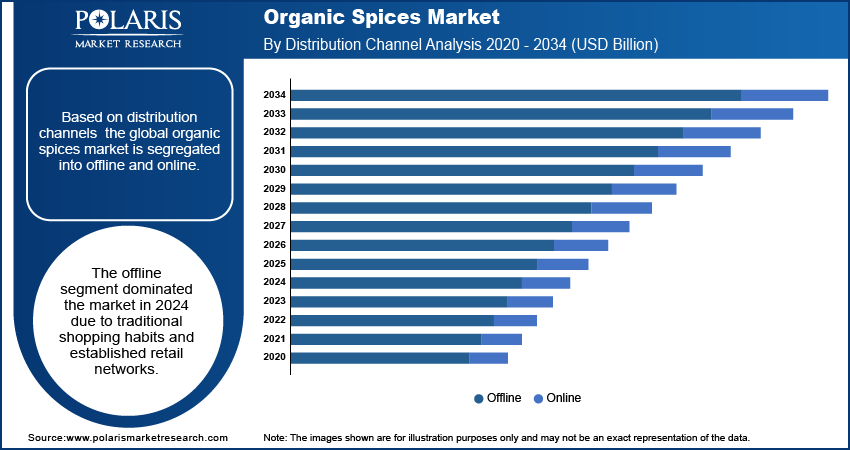
Need Granular Data Across All Market Segments? Request Customization
Market Breakdown by Regional Insights
By region, the study provides the organic spices market insights into North America, Europe, Asia Pacific, Latin America, and the Middle East & Africa. The Asia Pacific organic spices market held the highest revenue share in the market in 2024, with India leading the way due to its long-standing tradition of spice cultivation and consumption. Increased awareness of health benefits associated with organic spices has driven consumers in the region toward these products. Government initiatives promoting organic farming further support the market in the region. For instance, the Government of India has been promoting organic farming as chemical-free farming through dedicated schemes, namely Paramparagat Krishi Vikas Yojana (PKVY) and Mission Organic Value Chain Development for North Eastern Region (MOVCDNER) since 2015-16. Additionally, the robust export market for Indian spices, particularly turmeric and ginger, contributes significantly to the region's dominance.
Source: Polaris Market Research Analysis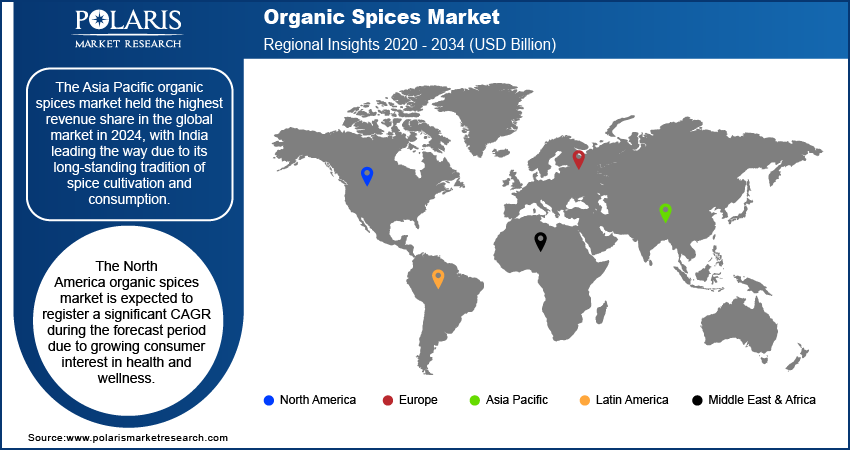
Curious About Regional Market Performance? Request Customization
The North America organic spices market is expected to register a significant CAGR from 2025 to 2034 due to growing consumer interest in health and wellness. The popularity of plant-based diets and the increasing trend of home cooking, especially post-pandemic, have led to a surge in demand for high-quality spices in the region. Furthermore, the convenience of e-commerce and the availability of organic products in grocery chains enhance access for consumers, which supports the expansion of the organic spices market in the region.
Key Players & Competitive Analysis Report
Prominent market players are investing heavily in research and development in order to expand their offerings, which will help the organic spices market grow even more. Market participants are also undertaking a variety of strategic activities to expand their global footprint, with important market developments including innovative launches, international collaborations, higher investments, and mergers and acquisitions between organizations. To expand and survive in a more competitive and rising market environment, the organic spices industry must offer innovative solutions.
The organic spices market is fragmented, with the presence of numerous global and regional market players. Major players in the organic spices market include Curio Spice Company; Suminter India Organics; Red Monkey Foods; Simply Organic; Spicely Organics; Rapid Organic; Frontier Co-op; Paleovalley; McCormick & Company, Inc.; ORGANIC SPICES INC; HERBCO; ORCO; Husarich GmbH; MDH Spices; and DS Group.
MDH, also known as Mahashian Di Hatti, was established in 1919 by Mahashay Chunnilal Gulati. It is a major Indian spice company based in New Delhi, renowned for its extensive range of spices and blends. MDH has become a household name in India and globally, with a significant market share and a commitment to quality. The company is also committed to providing organic options that follow strict agricultural standards. These organic spices are sourced from certified farms that avoid synthetic pesticides and fertilizers, ensuring a product that is both environmentally friendly and health-conscious. In December 2022, MDH purchased two industrial plots in Gurgaon for a total of Rs 120 crore (14.46 million) to expand its production portfolio.
McCormick & Company, Inc., founded in 1889 by Willoughby McCormick in Baltimore, Maryland, is a global player in flavor and seasoning products, known for its extensive range of spices, herbs, extracts, and seasoning mixes. The company has grown significantly over the years and now operates across multiple segments in over 170 countries. McCormick has expanded its portfolio to include a variety of organic spices in response to increasing consumer demand for organic products. In July 2024, the CEO of McCormick & Company, Inc. announced that new product launches are a ‘priority’ for the company to cater to the growing need for a variety of spices.
List of Key Companies
- Curio Spice Company
- Suminter India Organics
- Red Monkey Foods
- Simply Organic
- Spicely Organics
- Rapid Organic
- Frontier Co-op
- Paleovalley
- McCormick & Company, Inc.
- ORGANIC SPICES INC
- HERBCO
- ORCO
- Husarich GmbH
- MDH Spices
- DS Group
Organic Spices Industry Developments
- January 2024: Simply Organic, a major player in organic herbs, spices, flavors, and seasonings, awarded USD 150,000 to five nonprofits to address food insecurity in their communities and to provide access to healthy, organic food options.
- January 2024: McCormick introduced Flavor Maker Seasonings, a new line to inspire and flavor meals from prep to plate. The collection is available online and at Amazon.com, and Walmart.com.
- December 2020: ORCO announced the launch of 32 new products, adding to their vast portfolio of 100% natural, healthy, and certified organic condiments and spices.
Organic Spices Market Segmentation
By Source Outlook (Revenue – USD Billion, 2020–2034)
- Fruits
- Seeds
- Barks
- Flower Buds
- Stigmas
- Arils
- Roots
- Resins
By Product Outlook (Revenue – USD Billion, 2020–2034)
- Turmeric
- Ginger
- Chili
- Pepper
- Cinnamon
- Nutmeg
- Others
By Form Outlook (Revenue – USD Billion, 2020–2034)
- Powder
- Whole
- Chopped/Crushed
By Distribution Chanel Outlook (Revenue – USD Billion, 2020–2034)
- Offline
- Online
By Regional Outlook (Revenue – USD Billion, 2020–2034)
- North America
- US
- Canada
- Europe
- Germany
- France
- UK
- Italy
- Spain
- Netherlands
- Russia
- Rest of Europe
- Asia Pacific
- China
- Japan
- India
- Malaysia
- South Korea
- Indonesia
- Australia
- Rest of Asia Pacific
- Middle East & Africa
- Saudi Arabia
- UAE
- Israel
- South Africa
- Rest of the Middle East & Africa
- Latin America
- Mexico
- Brazil
- Argentina
- Rest of Latin America
Organic Spices Market Report Scope
| Report Attributes | Details |
| Market Size Value in 2024 | USD 1.99 billion |
| Market Size Value in 2025 | USD 2.12 billion |
| Revenue Forecast in 2034 | USD 3.83 billion |
| CAGR | 6.8 % from 2025 to 2034 |
| Base Year | 2024 |
| Historical Data | 2020–2023 |
| Forecast Period | 2025–2034 |
| Quantitative Units | Revenue in USD billion and CAGR from 2025 to 2034 |
| Report Coverage | Revenue Forecast, Market Competitive Landscape, Growth Factors, and Trends |
| Segments Covered |
|
| Regional Scope |
|
| Competitive Landscape |
|
| Report Format |
|
| Customization | Report customization as per your requirements with respect to countries, regions, and segmentation. |
Source: Polaris Market Research Analysis
Organic Spices Market FAQ's
The organic spices market size was valued at USD 1.99 billion in 2024 and is projected to grow to USD 3.83 billion by 2034.
The market is projected to grow at a CAGR of 6.8 % from 2025 to 2034.
Asia Pacific held the largest share of the market in 2024.
The key players in the market are Curio Spice Company; Suminter India Organics; Red Monkey Foods; Simply Organic; Spicely Organics; Rapid Organic; Frontier Co-op; Paleovalley; McCormick & Company, Inc.; ORGANIC SPICES INC; HERBCO; ORCO; Husarich GmbH; MDH Spices; and DS Group.
The pepper segment is projected for significant growth in the global market.
The offline segment dominated the organic spices market in 2024.
Download Sample Report of Organic Spices Market
Please fill out the form to request a customized copy of the research report.


