
Global Pilates & Yoga Studios Market Size, Share & Growth Analysis Report, 2026-2034
REPORT DETAILS
Market Statistics
Market Overview
The Pilates & yoga studios market size was valued at USD 142.30 billion in 2025 and is expected to grow at a CAGR of 14.5% from 2026 to 2034. The growing focus on health and wellness is a major driver of the global market. People are increasingly focusing on their physical and mental wellness, driven by health campaigns, doctors’ advice, and the integration of wellness into their lifestyles. The growing interest in mind-body fitness programs like yoga and Pilates is fueling increased yoga studio memberships, participation in premium classes, and repeat business across age segments and lifestyles.
The market includes revenue from dedicated Pilates and yoga studios generated by in-studio group classes, personal training sessions, and hybrid memberships that include physical classes and digital access. It also covers revenue generated from instructor training programs, merchandise sales, and retreats and wellness events that are a part of studio-led offerings.
The market comprises independent boutique studios, franchise and multi-location chains, gym-based studio concepts, and digital-first or hybrid operators. The competition is becoming more experience-driven, with factors such as community and instructor quality, as well as the offering of group, private, and specialty classes, and studio technology stack, such as booking apps and member engagement platforms.
Key Insights
- In 2025, the yoga classes segment accounted for approximately USD 71.5 billion of the revenue share. It is a foundational segment offering diverse styles and techniques that cater to various skill levels, preferences, and health objectives.
- The Pilates classes segment is projected to register a CAGR of 10.63% during 2026–2034. As consumer interest in functional fitness continues to rise, the Pilates segment remains a significant driver of industry growth.
- In 2025, the North America Pilates & yoga studios market accounted for approximately 56.5% of revenue. It is driven by a strong consumer shift toward general health and functional fitness.
- The Asia Pacific Pilates & yoga studios industry is projected to register a CAGR of 11.02% during the forecast period. The Pilates and yoga studio growth is supported by increasing disposable incomes and rising awareness of non-traditional fitness practices.
Industry Dynamics
- As incomes rise, consumers are ready to spend substantial sums on personal wellness and fitness experiences. Therefore, increased disposable income is contributing to the overall growth of the industry.
- The growing aging population is creating a demand for low-impact exercise formats, making Pilates and yoga extremely attractive options. The increasing demand for senior yoga among the aging population drives the need for Pilates & yoga studios.
- The rising trend of wellness and medical tourism is expected to drive the growth of the industry.
- Competition from alternative fitness options is restricting the growth of the market.
- The industry’s growth is also influenced by rising commercial rents in urban areas, a qualified instructor shortage, the rising cost of insurance, and client retention issues as consumers test different formats. The studios that have a strong sense of community, a clear differentiation strategy, and technology that keeps them connected with their consumers are better positioned to retain their clients.
Market Statistics
2025 Market Size: USD 142.30 billion
2034 Projected Market Size: USD 479.52 billion
CAGR (2026–2034): 14.5%
North America: Largest Market in 2025
Source: Polaris Market Research Analysis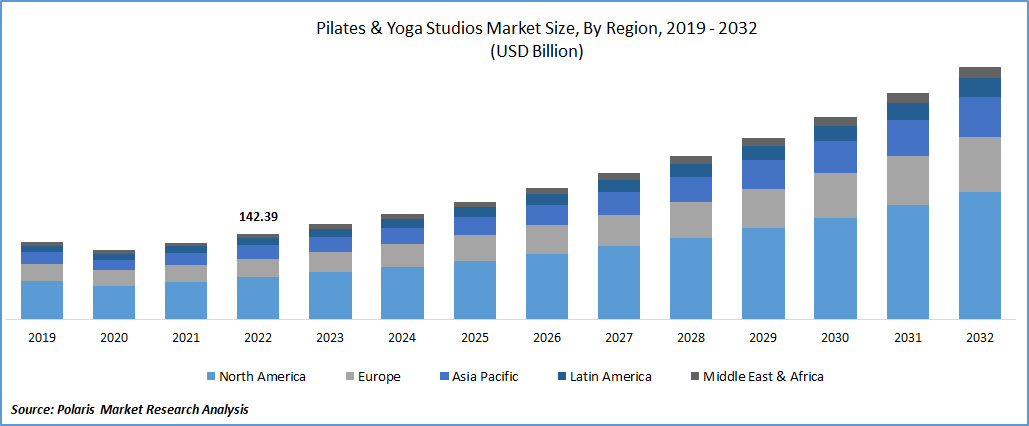
To Understand More About this Research:Download Sample Report
The Pilates & yoga studios market is a segment of the fitness and wellness industry that provides specialized physical exercise and mindfulness services through dedicated studios offering yoga and Pilates classes to individuals. The blending of technology has brought about a significant change in the Pilates and yoga studios industry, allowing studios to reach a wider audience worldwide. Online classes, live streaming, and on-demand content have become an essential part of the industry.
The rising trends of wellness and medical tourism have opened new opportunities for the Pilates and yoga studio industry. Places that offer a combination of fitness retreats and travel experiences are becoming popular among tourists. A new trend is being noticed in the industry where studios are partnering with resorts, wellness centers, and tourism boards to tap into this lucrative market. These partnerships aim to offer innovative experiences that combine traditional practices with cultural experiences. Sustainability has become a key focus area in the industry. This is due to the evolving preferences of environmentally conscious consumers. Studios that adopt sustainability by using eco-friendly materials, reducing energy consumption, and providing sustainable products are gaining a competitive advantage.
Business Model & Studio Economics
Pilates and yoga studios are now competing more on the effectiveness of their business models rather than just the number of classes they offer. Revenue streams include membership model, package rates, drop-in rates, and private sessions. Expenses are rent, teacher salaries, marketing, and software/platform fees. Reformer Pilates classes have a higher average revenue per user, given the pricing. However, they also have high startup costs in equipment and strategic scheduling to maximize studio capacity.
Studios are maximizing profitability by offering loyalty programs, membership packages that include in-studio and online classes, corporate wellness partnerships, and targeted programs for seniors, rehabilitation clients, and prenatal or postnatal clients. Key business metrics such as class utilization, repeat business, member retention rate, and customer acquisition cost are being used to gauge long-term profitability and scalability, whether for independent studios or franchises.
Market Dynamics
Rising Disposable Income
The major factor contributing to the growth of the Pilates & yoga studios market is the increase in disposable income. According to the US Bureau of Economic Analysis, the disposable income in the US has grown by 0.7% in April 2025 over March 2025. The consumers are more open to spending on their personal wellness and fitness experiences, which are more than just a gym membership. This trend has been observed, especially among the urban class and the middle-class population, who are looking for specialized services such as private training, small group training, or boutique studio membership. With the improvement in income levels, there is a growing interest in holistic wellness, which includes physical fitness as well as stress management and mental wellness. The industry is responding to this change by offering value-added services such as nutrition education, meditation instruction, and health seminars. High-end classes such as reformer Pilates and specialized yoga classes are becoming more and more popular. These classes incorporate high-tech elements such as virtual attendance and analysis. This is expected to continue as consumers become increasingly health-conscious and can afford more specialized fitness services.
Growth of Aging Population
The growing number of seniors is driving demand for low-impact exercise alternatives. This has made Pilates and yoga extremely popular alternatives. For example, according to data from the World Health Organization, the world’s population aged 60 years and older is expected to exceed 16.6% by 2030. This is an increase from 1 billion in 2020 to 1.4 billion by 2030. Additionally, by 2050, this number is expected to double to 2.1 billion. This information shows that there are serious implications for health care and social services as the world faces the reality of aging populations. Seniors are actively seeking ways to remain mobile and cope with chronic illnesses. They are also seeking ways to improve their quality of life by participating in organized physical activity. Pilates and yoga provide strength, flexibility, and balance training in a safe and controlled setting. All of this is great for seniors. Fitness studios are also adapting their offerings by providing specialized classes for seniors that target joint health, posture, and injury prevention. Trainers are being certified to teach seniors, creating an ideal setting. Seniors prefer smaller classes and personal training, which boutique studios are well positioned to offer. The healthcare sector is also recognizing the benefits of yoga and Pilates in wellness and rehabilitation programs, making them even more essential and contributing to the rise in senior membership.
Source: Polaris Market Research Analysis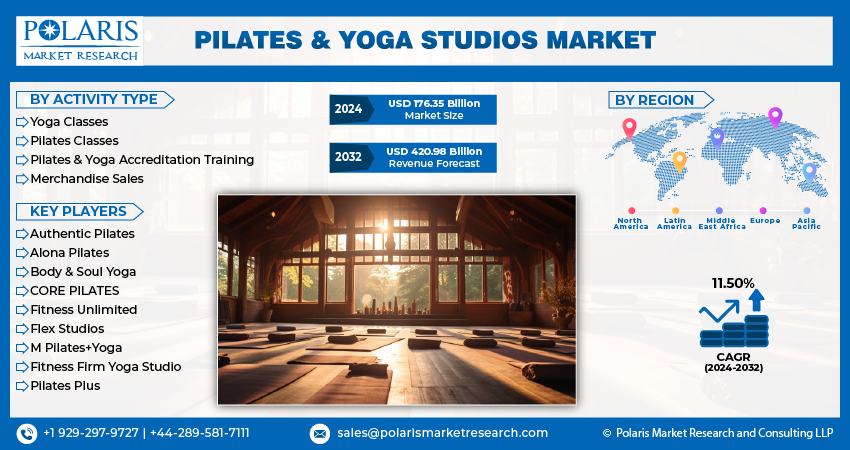
Get Full Segment-Level Forecasts & Insights: Download Sample Report
Segment Insights
Market Assessment by Activity Type
On the basis of activity type, the segmentation is categorized into yoga classes, Pilates classes, Pilates & yoga accreditation training, and merchandise sales. In 2025, the yoga classes segment contributed approximately USD 71.5 billion to the overall Pilates & yoga studios market size. The yoga classes segment is a core segment that offers different types for various skill levels. Starting from the traditional Hatha and Ashtanga yoga to the modern power yoga and aerial yoga, the classes provide customized services for a wide range of people. The choice of yoga is encouraged because of its overall benefits. The benefits, which include stress relief and mental clarity, serve as essential components of global wellness practices. The classes provide additional value to the services through their calm atmosphere and trained instructors and their extra activities, which include meditation classes and sound healing. The popularity of yoga classes has also spread to nontraditional formats such as online classes and outdoor classes. This is because these classes are meant for those who want flexibility and convenience. The application of technology, such as live video streaming, has enabled yoga classes to reach a global audience. As yoga becomes a more popular lifestyle trend, the industry has immense growth potential, owing to its recognition and acceptance by governments and health institutions worldwide.
The Pilates classes category is expected to grow at a CAGR of 10.63% during the forecast period. This is because Pilates is especially popular among those seeking a low-impact exercise routine that improves muscular endurance and corrects posture. The studios offer a range of Pilates classes, including equipment-based sessionsusing reformers and stability balls. These classes are designed for a range of audiences, including fitness enthusiasts and athletes. These classes are also intended for seniors and rehabilitated individuals. The focus on accuracy and customization makes Pilates an attractive choice for clients with special fitness needs or restrictions. The industry has also witnessed innovation with the development of fusion classes that incorporate Pilates with other fitness elements, such as barre or yoga, to provide fresh and interesting experiences. With the increasing awareness about the benefits of Pilates for injury prevention and recovery, studios are working with healthcare professionals to create therapeutic programs. This shift into the wellness and rehabilitation sector has made Pilates more than a fitness trend, attracting a wider clientele and boosting its market appeal. With consumers' continued interest in functional fitness, the Pilates segment is a major contributor to the industry's growth.
In 2025, the Pilates & yoga accreditation training segment contributed around USD 28 billion to total Pilates & yoga studios market revenue, driven by growing demand for fitness and wellness services worldwide, which has encouraged more people to pursue professional training as a career option. In addition, many training centers also provide online certification programs to suit students from different locations. Furthermore, partnerships with international accreditation bodies have ensured that the certifications are recognized globally, thus making them more valuable. With the industry's continued growth, the accreditation training segment is essential for maintaining industry standards and meeting the growing demand for qualified trainers. The Pilates and yoga accreditation training has become a significant segment, which indicates the growing demand for trained professionals. The training centers offer well-rounded courses that equip individuals with the knowledge and skills to qualify as trainers. The training includes anatomy, training methods, and the philosophy of the practice to give a rounded understanding of Pilates and yoga.
Market Assessment by Service Type
Service type segmentation includes group classes, private classes, hybrid memberships that combine physical studio access and online content, and fully on-demand or virtual-only programs offered by studios. Group classes continue to be the largest drivers of volume because they are extremely accessible and community-driven. Private and small group classes are increasing at a faster rate in major cities because of the personalized attention and technique teaching. Hybrid memberships also help with member retention by allowing members to take classes in-studio or online when traveling or busy.
Market Assessment by Studio Size
By studio size, the market can be broken down into single-location boutique studios and multi-location studio chains/franchises. Boutique studios compete on talent, experience design, and unique formats. Multi-location companies utilize standardized programming, performance marketing, and centralized booking/CRM. Secondary market growth is fueling addressable demand, particularly in regions where high-end studios were geographically limited.
Market Assessment by End User
End-user segmentation encompasses professionals looking for stress relief and mobility, sports enthusiasts looking for performance and alignment, seniors looking for balance and joint health, rehabilitation-focused participants (often directed by wellness/therapy professionals), prenatal and postnatal participants, and corporate wellness groups. Studios are now aligning their class schedules, instructor specialization, and intensity level with each end-user segment.
Source: Polaris Market Research Analysis
Need Granular Data Across All Market Segments? Request Customization
Regional Analysis
In 2025, the North America Pilates & yoga studios market accounted for around 56.5 billion in revenue, driven by the growing consumer trend towards overall health and fitness. As per the data published by the Centers for Disease Control and Prevention, 1 out of 6 adults in the US is a yoga practitioner. The consumers in this region are showing a growing trend towards low-intensity workouts that promote overall physical strength and mental wellness. The inclusion of online classes in addition to the existing in-studio classes has made the service more accessible, thus increasing membership. Corporate wellness programs and insurance coverage have also contributed to increased membership. Fitness-minded groups in urban areas, with more disposable income and flexible working hours, are increasingly investing in wellness memberships and personal training. Boutique gyms offering hybrid classes that include Pilates, yoga, and mobility training are also on the rise. This is further increasing retention rates.
Market maturity will differ by city tier and economic segment. Market maturity impacts pricing sensitivity and membership plan, class package, and drop-in pricing. In mature markets, high-end small group and private classes will be key to growth. In emerging markets, membership plans that are affordable, relevant class offerings, and mobile discovery tools will become more significant to new member acquisition.
US Pilates & Yoga Studios Market Trends
In 2025, the US Pilates & yoga studios market was valued at around USD 45.5 billion, owing to the increasing awareness of health and wellness, prioritization of mental wellness, and the need for organized stress relief programs. The fact that the population base, especially in the urban and suburban areas, is now willing to pay for niche fitness experiences rather than generic gym memberships is a major factor. The loyalty of the customers to these fitness studios, which offer smaller class sizes and personalized teaching, has been extremely high. The addition of yoga and Pilates to physical therapy and rehabilitation programs has also contributed to this demand. The marketing efforts that focus on lifestyle branding, influencer marketing, and mobile booking have helped fitness studios reach a wide range of demographics. Pilates & yoga studios, chains, and franchises are now entering underserved regions, including secondary cities, improving geographic coverage.
Asia Pacific Pilates & Yoga Studios Market Assessment
The Asia Pacific Pilates & yoga studios market is expected to grow at a CAGR of 11.02% during the forecast period. The regional market is fueled by urbanization and an increase in disposable income. The market is also fueled by the increasing awareness of non-traditional fitness methods. The major cities are witnessing the entry of boutique fitness clubs catering to the young working class. The trends on social media platforms and the global fitness trend have also led to the popularity of Pilates and yoga. The government's initiatives in wellness and preventive healthcare are also encouraging investment in fitness infrastructure. Startups and franchises in the region are also making efforts to make fitness accessible to the masses. Mobile applications and online workout content are also boosting the visibility of fitness clubs, driving membership and retention in tier-one and tier-two cities.
China Pilates & Yoga Studios Market Insights
In 2025, the China Pilates & yoga studios market in Asia Pacific accounted for around USD 10.7 billion, driven by the integration of wellness culture, online platform integration, and the growing influence of fitness influencers. Consumer behavior in metropolitan areas is undergoing a dramatic shift. There is an increasing demand for organized and mindfulness-based exercise programs that emphasize mental and physical well-being. Yoga and Pilates centers, with live streaming, online booking, and mobile subscription services, are embracing an online-offline convergence strategy. The popularity of social media-based fitness challenges and influencer-led activities has also contributed to the adoption of fitness programs by younger people. Franchises and international brands are aggressively expanding in Shanghai, Beijing, and Shenzhen. They are launching premium services, including reformer Pilates and therapeutic yoga. Wellness and sustainable lifestyle initiatives by local governments are also encouraging adoption. This is particularly among working professionals and women aged mid-20s to late 30s.
Europe Pilates & Yoga Studios Market Overview
The Europe Pilates & yoga studios market accounted for a revenue share of 28% in 2025. This is due to the widespread integration of wellness into public health culture and practices. Consumers in major cities are now investing in mindfulness-based fitness offerings, particularly those that integrate physical fitness with stress relief. The rising awareness of mental health has made low-impact exercise modalities such as Pilates and yoga more appealing. Many Pilates and yoga studios in Europe are now differentiating themselves through specialized offerings. These include prenatal yoga, rehabilitative Pilates, and fusion classes that combine mobility or meditation practices. The rising appeal of wellness retreats and fitness tourism is also fueling the expansion of Pilates and yoga studios. Membership and subscription business models are also undergoing a major shift. They are now combining online access with offline classes to increase client engagement. Eco-friendly studio designs and sustainable business practices are also becoming attractive to eco-conscious consumers. This is particularly true for urban consumers.
Germany Pilates & Yoga Studios Market Evaluation
The Germany Pilates & yoga studios market is expected to grow at a CAGR of 10.69% during the forecast period, driven by the growing demand for organized wellness programs in both urban and rural settings. The growing incidence of lifestyle-related diseases has driven people to preventive fitness programs, and Pilates & yoga are gaining popularity as a result. German consumers are looking for expert-led, technique-oriented instruction. This is encouraging Pilates & yoga studios to hire qualified instructors and develop specialized programs. There is growing interest in therapeutic Pilates & yoga programs for rehabilitation, senior care, and posture correction. Pilates & yoga studios with smaller class sizes, personalized training, and bilingual instruction are attracting people of all ages and expats. The market is also driven by collaborations with health insurance companies that reimburse preventive health programs, making membership more affordable. The market is further driven by the growing number of fitness startups with on-demand class booking and hybrid wellness models.
Source: Polaris Market Research Analysis
Curious About Regional Market Performance? Request Customization
Key Players and Competitive Analysis
The competitive environment of the Pilates & yoga studios market is driven by the changing dynamics of boutique studios, franchises, and online platforms that capitalize on technological advancements to engage and retain customers. Industry research indicates a shift towards hybrid concepts that combine offline and online services, making it more accessible and engaging for customers. Growth strategies include franchising, mobile app development, and wellness products that go beyond the physical studio. Partnerships between fitness platforms and wearable technology companies are facilitating real-time performance tracking and customized workout routines. Mergers and acquisitions are also adding to the network consolidation and geographical expansion, especially in the urban areas. The strategy of post-merger integration is to standardize operations and improve service delivery. It also targets the optimization of the customer experience. Studios are now focusing on loyalty programs and community engagement activities. Emphasis is also on niche offerings like prenatal yoga or reformer Pilates classes to differentiate themselves.
The Pilates & yoga studios market includes franchise and multi-location studio chains that provide large-scale offerings of standardized class formats, independent boutique studios that serve high-end experiences and high-quality instructor-led communities, and digital-first and hybrid operators that extend reach through subscription models. The market also includes gym-integrated formats that bundle yoga and Pilates classes as part of fitness memberships.
Leading operators are using personalized class recommendations and structured progress-based programs to drive retention. Focus is also on qualified teachers, interesting community events, and seamless booking experiences. Partnerships with wearable brands, wellness platforms, resorts, and corporate wellness companies are helping studios bring in new members and maximize customer value.
List of Key Companies
- Authentic Pilates Learning Center
- Breathe Pilates Studio
- CorePower Yoga.
- Fitness Firm Yoga and Pilates Studio.
- Fitness First Ltd.
- Flex Studio Hong Kong
- Harmony Yoga Pilates Studio
- M Pilates+Yoga
- Noris Group GmbH
- Pronto Pilates
- Studio Spring
- Wild Lotus Yoga.
- YogaSix
- YogaWorks
Pilates & Yoga Studios Industry Developments
June 2025: iFIT Inc. joined forces with Xponential Fitness to offer its members access to high-quality Pilates and yoga content from Club Pilates and YogaSix. This partnership adds to iFIT’s Emmy-nominated fitness content library, offering more diverse, high-quality workouts from popular boutique fitness brands.
December 2024: Bintang Capital Partners invested in The Flow Studio through the BCP Asia Fund. According to Bintang, this investment will help Flow achieve its mission of improving community health and wellness through quality fitness.
Pilates & Yoga Studios Market Segmentation
By Activity Type Outlook (Revenue, USD Billion, 2021–2034)
- Yoga Classes
- Pilates Classes
- Pilates & Yoga Accreditation Training
- Merchandise Sales
By Service Type Outlook (Revenue, USD Billion, 2021–2034)
- Group Classes
- Private Sessions
- Hybrid Memberships (Studio + Virtual)
- On-Demand/Virtual-Only Offerings
By Studio Size Outlook (Revenue, USD Billion, 2021–2034)
- Single-Location Boutique Studios
- Multi-Location Studio Chains/Franchises
By End User Outlook (Revenue, USD Billion, 2021–2034)
- Working Professionals
- Fitness Enthusiasts
- Older Adults
- Rehabilitation-Oriented Participants
By Regional Outlook (Revenue, USD Billion, 2021–2034)
- North America
- US
- Canada
- Europe
- Germany
- France
- UK
- Italy
- Spain
- Netherlands
- Russia
- Rest of Europe
- Asia Pacific
- China
- Japan
- India
- Malaysia
- South Korea
- Indonesia
- Australia
- Vietnam
- Rest of Asia Pacific
- Middle East & Africa
- Saudi Arabia
- UAE
- Israel
- South Africa
- Rest of Middle East & Africa
- Latin America
- Mexico
- Brazil
- Argentina
- Rest of Latin America
Pilates & Yoga Studios Market Report Scope
| Report Attributes | Details |
| Market Size in 2025 | USD 142.30 billion |
| Market Size in 2026 | USD 162.47 billion |
| Revenue Forecast by 2034 | USD 479.52 billion |
| CAGR | 14.5% |
| Base Year | 2025 |
| Historical Data | 2021–2024 |
| Forecast Period | 2026–2034 |
| Quantitative Units | Revenue in USD billion, and CAGR from 2026 to 2034 |
| Report Coverage | Revenue Forecast, Market Competitive Landscape, Growth Factors, and Trends |
| Segments Covered |
|
| Regional Scope |
|
| Competitive Landscape | Pilates & Yoga Studios Industry Trend Analysis (2025) Company profiles/industry participants profiling include company overview, financial information, product/service benchmarking, and recent developments |
| Report Format | PDF + Excel |
| Customization | Report customization as per your requirements with respect to countries, regions, and segmentation. |
Source: Polaris Market Research Analysis
Methodology Snapshot & Scope Notes
The Pilates & yoga studios market estimates in this report are generated through a combination of secondary research, data verification from multiple sources, and structured forecasting. The base year for this report is 2025, and the historical data range from 2021 to 2024. The forecast period ranges from 2026 to 2034. The calculations of the revenues are based on studio-driven revenue streams from classes, training, and merchandise, and all data is normalized in USD billion with CAGR.
Pilates & Yoga Studios Market FAQ's
The Pilates & yoga studios market stood at USD 142.30 billion in 2025. The market is projected to reach USD 479.52 billion by 2034.
The market is projected to account for a CAGR of 14.5% during the forecast period.
North America accounted for the largest market share in 2025. This is due to the strong consumer shift toward general health and functional fitness routines.
A few of the key players in the market include Authentic Pilates Learning Center., Breathe Pilates Studio, CorePower Yoga., Fitness Firm Yoga and Pilates Studio., Fitness First Ltd., Flex Studio Hong Kong, Harmony Yoga Pilates Studio, M Pilates+Yoga, Noris Group GmbH, Pronto Pilates, Studio Spring, Wild Lotus Yoga., YogaSix, and YogaWorks.
The yoga classes segment led the market in 2025. This is because yoga classes are a foundational segment that offer diverse styles and techniques that cater to various skill levels.
Download Sample Report of Pilates & Yoga Studios Market
Please fill out the form to request a customized copy of the research report.


