

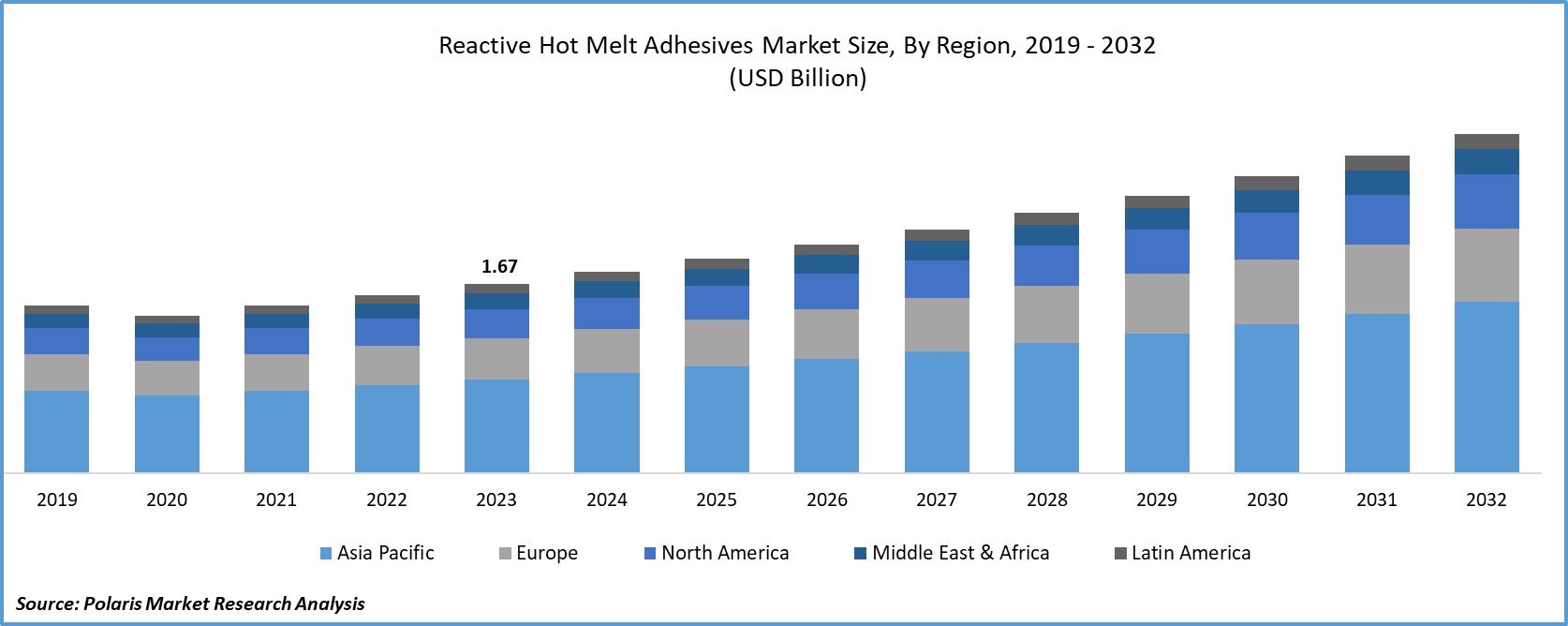
The global reactive hot melt adhesives market was valued at USD 1.67 billion in 2023 and is expected to grow at a CAGR of 6.7% during the forecast period.
Reactive hot melt adhesives are utilized in bonding various substrates, including cardboard, metal, leather, plastic, foam, and rubber, where they need significant permanency & high adherence, such as high-tech devices. This is gaining use in the automotive, electronics, woodworking, textile, and construction industries. After reaction and completion of the drying phase, the bond will become rigid, and it cannot melt again after curing, making it no longer applicable in glue treatment. Rising research studies focusing on exploring the potential of reactive hot melt adhesives are widening the expansion of the market.
- For instance, a 2022 study explored the improvement of mechanical properties and UV resistance of polyurethane reactive hot melt adhesives with the integration of CS–Fe3O4 magnetic nanocomposites.
To Understand More About this Research: Download Sample Report
Moreover, the ability to level out the irregularities in the surface is driving the use of hot melt adhesives in several areas, including furniture, lamination, and textiles. The increasing awareness of the potential benefits of these adhesives is fueling their applications in multiple areas.
However, the higher curing time of reactive hot melt adhesives is a major concern among the users, as it can take several hours, even overnight, to solidify, primarily for the polyurethane resin. The presence of non-compatible temperatures, such as low humidity and low temperatures, makes people try other alternatives to the reactive hot melt adhesives in the marketplace.
Growth Drivers
Rising demand for stronger adhesion in construction activities.
The sturdiness and longer durability of reactive hot melt adhesives are gaining momentum in the construction and automotive industries due to their crosslinking and curing processes after the solidifying stage, which are not possible with traditional hot melt adhesives. In construction, strong bonds are crucial for safety and can lower additional maintenance costs in the future. It is incorporated in the installation of plywood panels, flooring, cladding, furniture assembly, and decoration purposes. The rising adoption of insulation in buildings, coupled with the rising concern for energy efficiency, is showing significant demand for reactive hot melt adhesives, as they enable strong bonding.
Report Segmentation
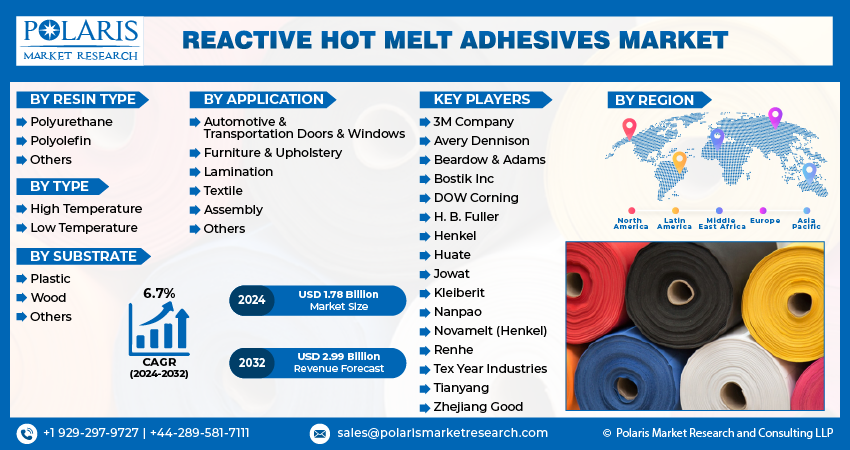
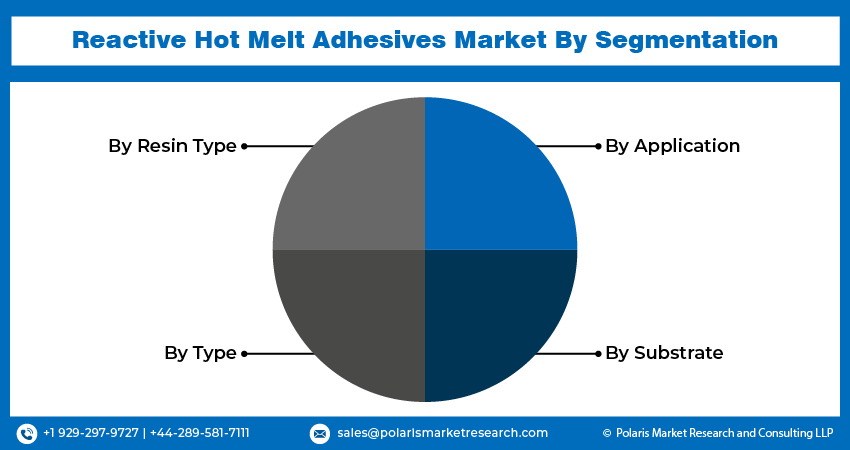
The market is primarily segmented based on resin type, type, substrate, application and region.
|
By Resin Type |
By Type |
By Substrate |
By Application |
By Region |
|
|
|
|
|
To Understand the Scope of this Report: Request Customization
By Resin Type Analysis
Poly-urethane segment is expected to witness the highest growth during the forecast period
The poly-urethane segment will grow rapidly, mainly driven by its prominent strength and flexibility. These adhesives are made up of a combination of polyurethane resins and reactive hotmelt technology. The enhanced resistance to temperature and chemical reactions are vital factors driving its adoption in the market. By adding catalysts, such as antioxidants, to the formulation of reactive hot melt adhesives, we can limit the adhesive from degrading over time. Solventless, ease of handling, and eco-friendly nature are fueling its adoption in the marketplace.
Polyolefin segment is expected to witness significant growth in the coming years owing to its versatility in applications. It is a modified silane-based adhesive that does not contain hazardous reactive chemical compound isocyanates, making it a suitable option for manufacturers of sustainable vehicles.
By Type Analysis
Low temperature segment accounted for the significant growth in 2023
The low-temperature segment held the largest share. The enhanced durability, flexibility, and performance over a range of climatic conditions is driving the demand for reactive hot melt adhesives. The compatibility with heat-sensitive substrates, such as wood and plastic, is one of the leading factors driving the low-temperature segment, as it can protect substrates from damage.
By Substrate Analysis
Plastic segment registered the larger market share in 2023
The plastic segment witnessed the largest share. Reactive hot melt adhesives are formulated efficiently for the purpose of bonding various substrates, primarily plastics, without causing any damage to the material. The growing prevalence of combining plastic in numerous fields, including automotive, packaging, electronics, and more, is fueling the growth of the plastic segment in the reactive hot melt adhesives market.
The wood segment is expected to grow at a significant rate over the next few years on account of the rapid increase in demand for adhesives in the furniture landscape. The rising production of specialised adhesives pertaining to woodworking is further boosting the growth of this segment. For instance, in 2022, Bostic unveiled two hot-melt polyurethane reactive adhesives, SG6518 and SG6520, for woodworking applications.
By Application Analysis
Doors & Windows segment held the significant market revenue share in 2023
Doors & windows segment held a significant market share, which is highly accelerated due to the continuous rise in demand for lightweight and lower greenhouse gas emission vehicles in the market. The automotive industry is undergoing a rapid transformation to reach ongoing consumer preferences towards sustainable vehicles, encouraging them to incorporate eco-friendly auto equipment, including reactive hot melt adhesives, which are essential in assembling the doors and windows of vehicles.
Regional Insights
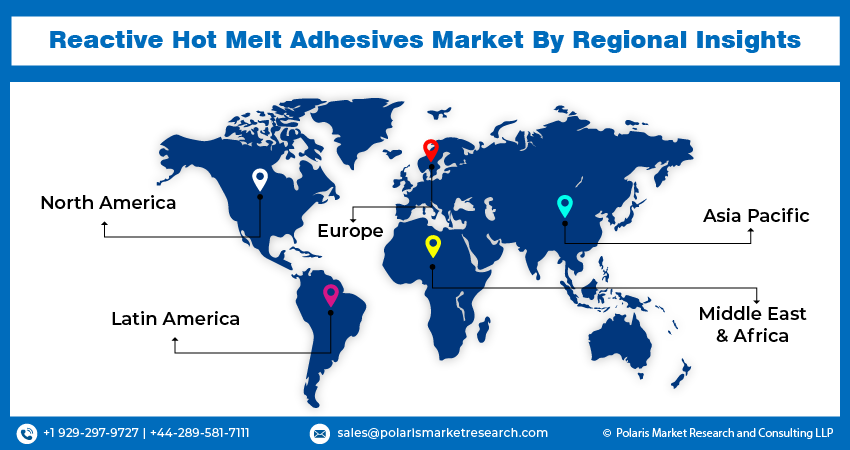
Asia Pacific region registered the largest share of the global market in 2023
The Asia Pacific dominated the market. This is due to the rising urban population in developing countries like India, leading to a housing shortage. According to the Federation of Indian Chambers of Commerce (FICCI), the country's urban population is expected to increase by 900 million by 2025. This trend is driving the expansion of the construction industry, which led to the significant demand for adhesives in the region, contributing to the largest share in the reactive hot melt adhesives market.
North America will grow at the rapid pace, owing to the growing consumption of reactive hot melt adhesives in several areas, such as textile, lamination, medical, packaging, and more end-use industries. The presence of major market players and growing innovations in the adhesives market are bolstering the growth of the market. For instance, in 2023, Henkel introduced an innovation center for the development of adhesive technologies in Bridgewater, US.
Key Market Players & Competitive Insights
The reactive hot melt adhesives market is moderately consolidated, with the existence of fewer key players attributable to the rising collaborative initiatives, mergers, and acquisitions among the global players to gain a competitive edge over their peers. This trend is creating new opportunities for reactive hot melt adhesives, with their increased penetration into several end-use industries. For instance, H.B. Filler acquired Adhezion Biomedical, a US medical adhesives company, which can enhance its footprint in the medical adhesives industry.
Some of the major players operating in the global market include:
- 3M Company
- Avery Dennison
- Beardow & Adams
- Bostik Inc
- DOW Corning
- H. B. Fuller
- Henkel
- Huate
- Jowat
- Kleiberit
- Nanpao
- Novamelt (Henkel)
- Renhe
- Tex Year Industries
- Tianyang
- Zhejiang Good
Recent Developments
In April 2024, H.B. Fuller launched a strategic initiative in South Africa to support industrial and commercial manufacturing with its advanced reactive hot melt adhesive technologies, highlighting its commitment to delivering high-performance, reliable bonding solutions tailored to regional industry needs and expanding its footprint in the global reactive hot melt adhesives market.
In March 2024, Henkel AG & Co. KGaA unveiled a next-generation polyurethane (PU) reactive hot melt adhesive system for automotive and electronics applications, offering stronger bonding, faster curing, and improved heat and chemical resistance to meet evolving industrial requirements.
In July 2023, H.B. Fuller completed the acquisition of XCHEM International, an adhesive manufacturer in the United Arab Emirates (UAE). This will enhance the portfolio of the company with construction adhesives.
Reactive Hot Melt Adhesives Market Report Scope
|
Report Attributes |
Details |
|
Market size value in 2024 |
USD 1.78 billion |
|
Revenue forecast in 2032 |
USD 2.99 billion |
|
CAGR |
6.7% from 2024 – 2032 |
|
Base year |
2023 |
|
Historical data |
2019 – 2022 |
|
Forecast period |
2024 – 2032 |
|
Quantitative units |
Revenue in USD billion and CAGR from 2024 to 2032 |
|
Segments covered |
By Resin Type, By Type, By Substrate, By Application, By Region |
|
Regional scope |
North America, Europe, Asia Pacific, Latin America, Middle East & Africa |
|
Customization |
Report customization as per your requirements with respect to countries, region and segmentation. |
FAQ's
The Reactive Hot Melt Adhesives Market report covering key segments are resin type, type, substrate, application and region.
Reactive Hot Melt Adhesives Market Size Worth $2.99 Billion By 2032
The global reactive hot melt adhesives marketis expected to grow at a CAGR of 6.7% during the forecast period.
Asia Pacific is leading the global market
key driving factors in Reactive Hot Melt Adhesives Market are Rising demand for stronger adhesion in construction activities
Page last updated on:
Mar-2024
Research Methodology
A robust system of research, verification, and forecasting designed to ensure reliable and actionable market insights.
Polaris Market Research uses a clear and structured approach to deliver insights that clients can rely on. The process combines detailed primary and secondary research, including direct communication with industry experts. The detailed information helps build a complete picture of market trends and developments. Secondary data is gathered from credible sources such as industry reports, company filings, government source links, and trusted organization databases. It is then cross-checked through discussions with key stakeholders across the value chain. Market size and forecasts are developed using both bottom-up and top-down methods to ensure accuracy and consistency in the final results.
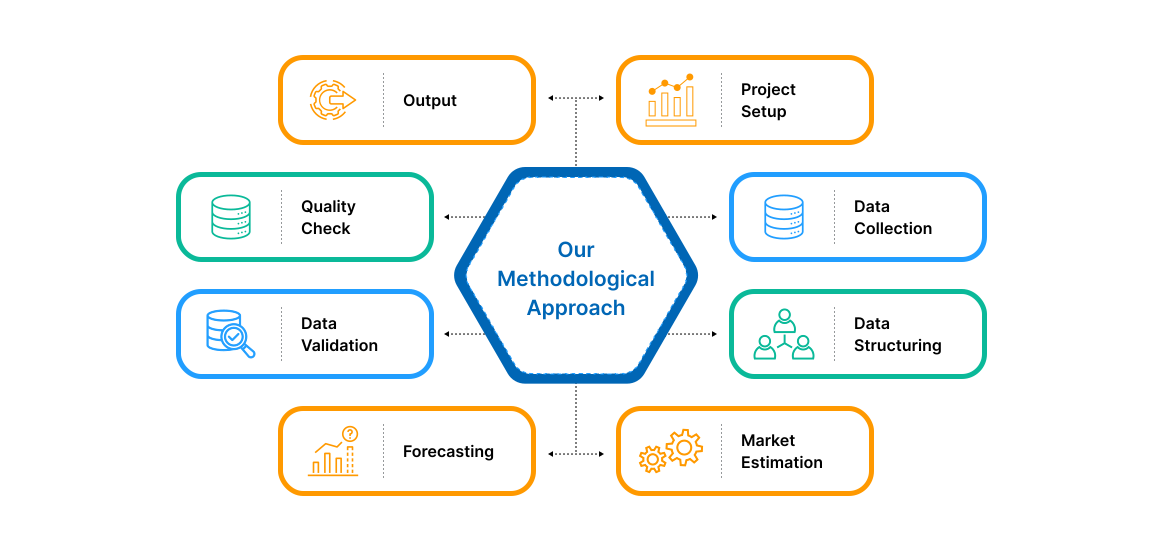
1. Project Setup
Step 1 & 2:
- We start every project by clearly understanding the client’s objective or goal, then defining the market scope, and aligning regions, segments, and timelines.
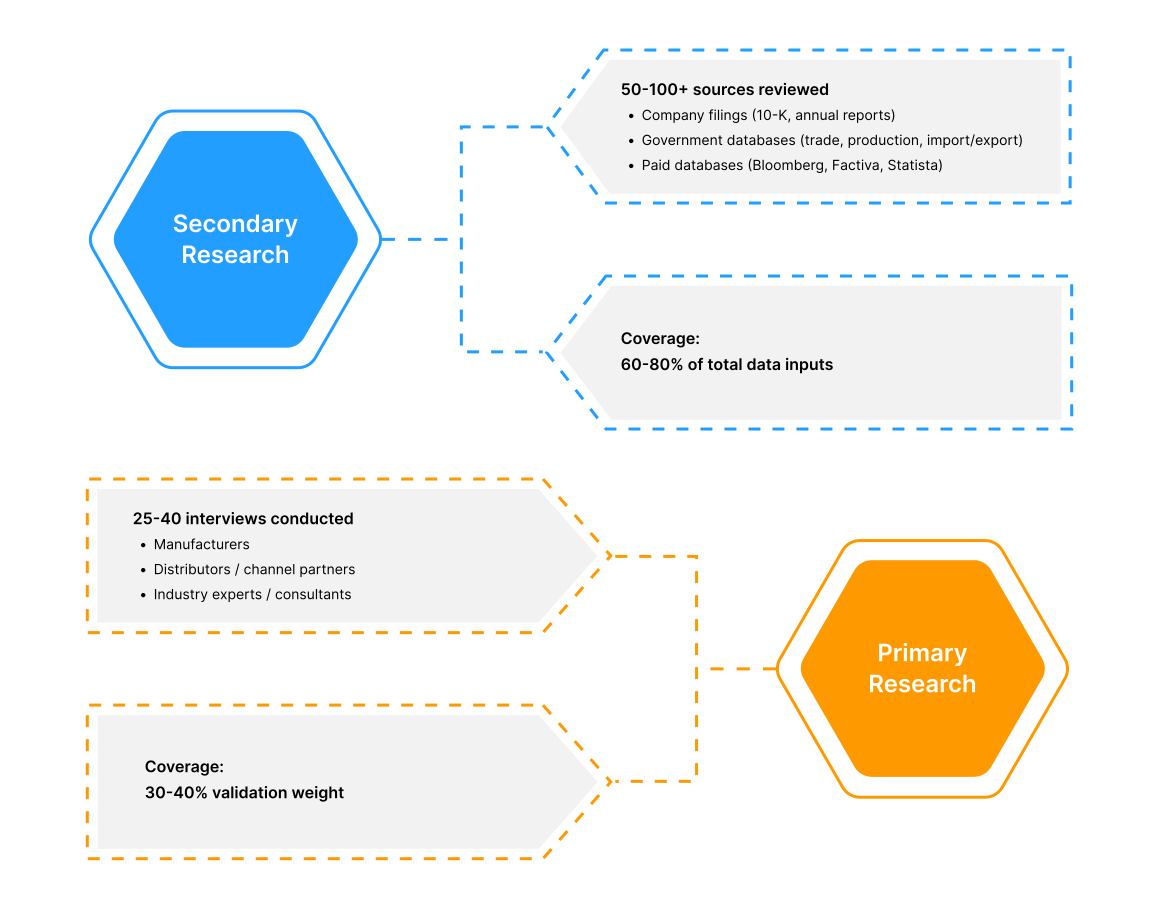
- Once the foundation is set, we collect data from all-around of sources, including company reports, government databases, and paid industry platforms.
- Our research is based on secondary data, which helps us build a strong understanding of the market across regions and industries. Then we validate this information through primary research by speaking directly with industry experts, companies, and stakeholders.
- By combining secondary and primary research, we ensure that our market insights are accurate, practical, and closely aligned with real market conditions.
2. Data Collection
We gather information from both public and verified sources:
3. Data Structuring
Step 3:
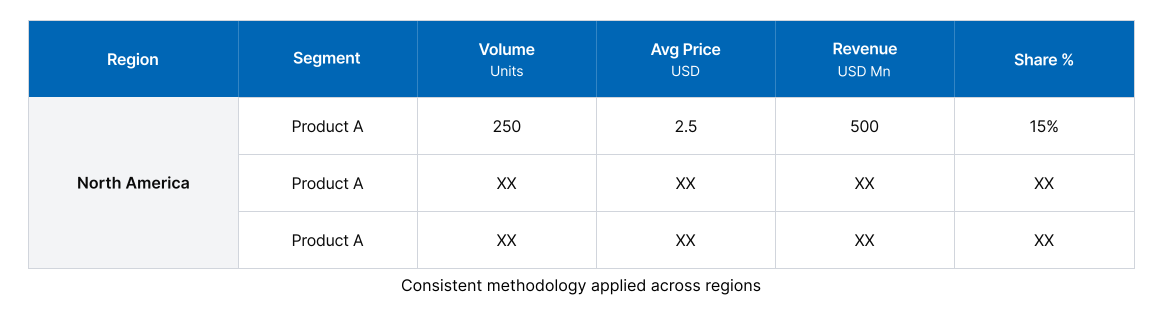
- All collected data is organized into a consistent format to ensure accurate analysis. Since inputs come from multiple sources, they are standardized and aligned before use.
- The data is segmented by product, application, and region, and mapped across a defined historical period (2020–2024). All values are converted into common units (USD Mn/Bn), and volume and pricing are aligned where required to estimate revenue.
- Any overlaps or inconsistencies are reviewed and adjusted to maintain accuracy (<5% variance threshold).
- The result is a structured dataset that allows for clear comparison across regions and supports reliable analysis and forecasting.
Structured Market Dataset, USD Mn/Bn
4. Data Structuring
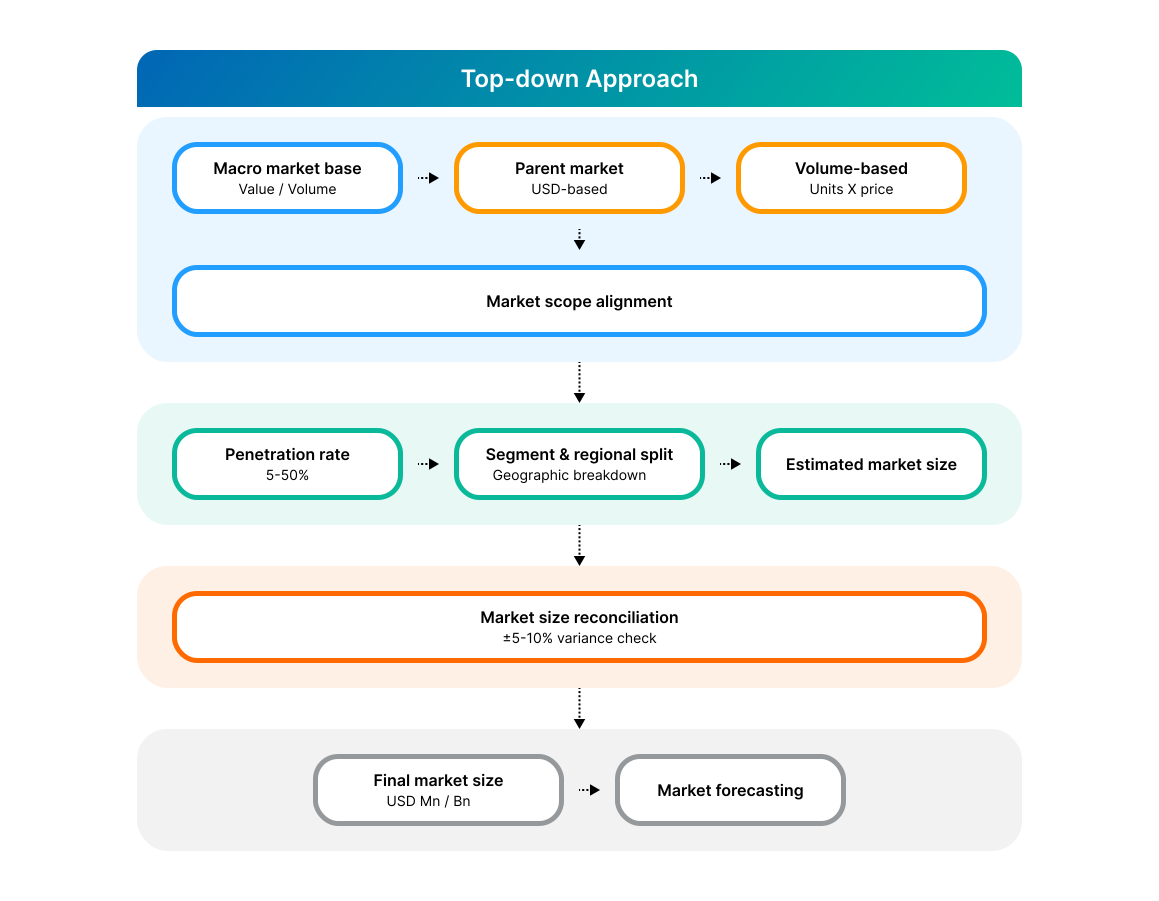
Step 4: TOP-DOWN APPROACH
- We start with the overall market size at a global or macro level.
- The market is then narrowed down based on scope and industry relevance.
- We apply penetration rates and split the data by region and segment.
- This helps us estimate the market size for specific segments.
- The numbers are validated through cross-checks to ensure accuracy.
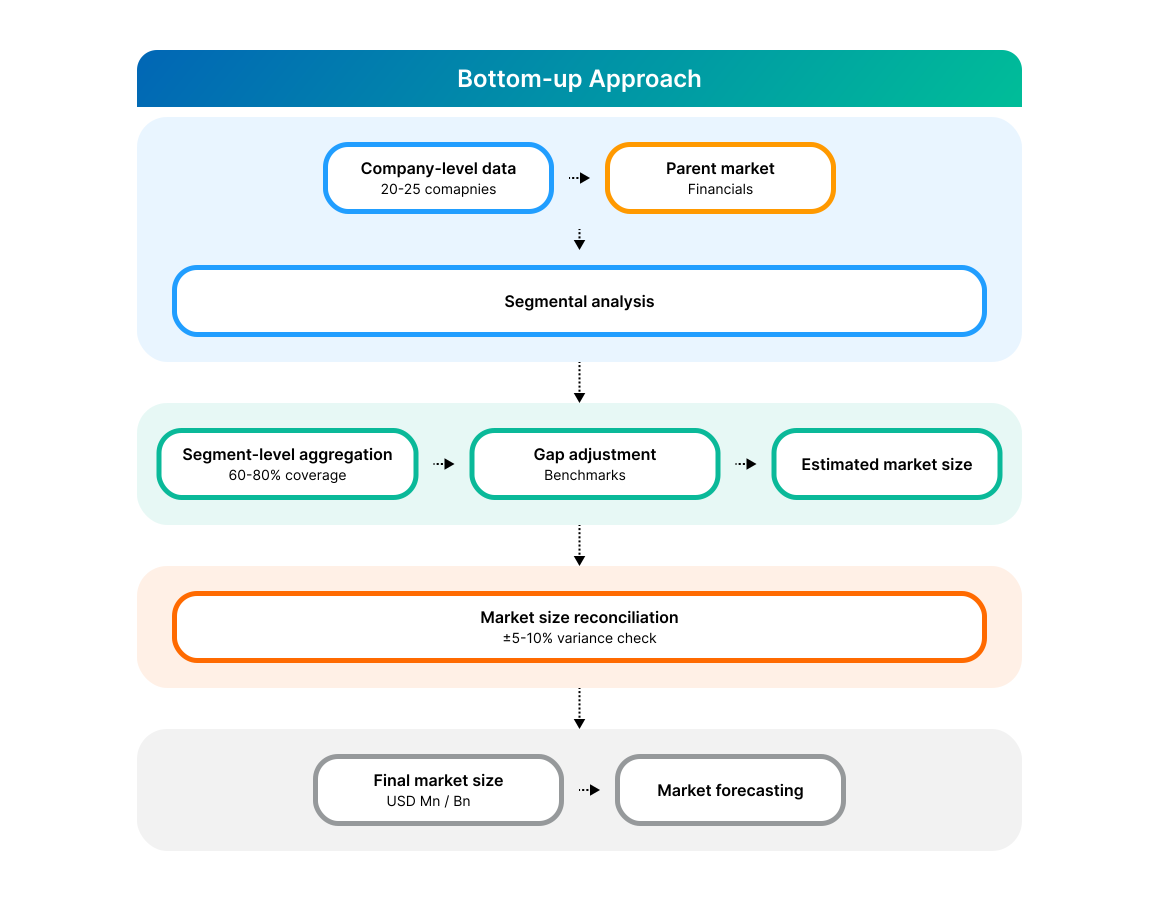
Step 5: BOTTOM-UP APPROACH
- We begin by analyzing data from leading companies in the market.
- Revenue data is collected and mapped across different segments.
- The data is then aggregated to estimate the total market size.
- To fill in any gaps, adjustments are made based on industry standards.
- Validation checks make sure that the results are correct.
5. Data Structuring
Step 6:
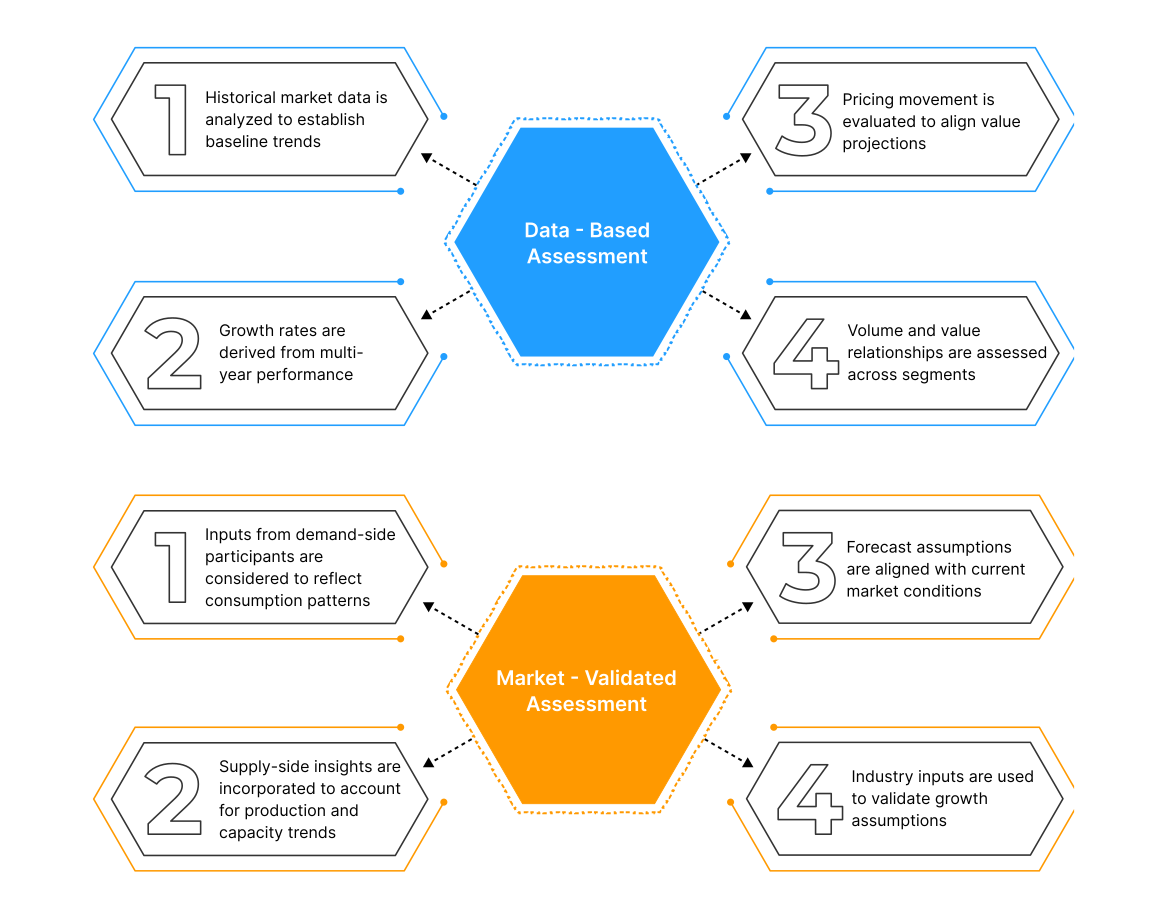
At Polaris Market Research, we employ a methodical forecasting strategy. This approach blends the analysis of historical data with real-time market validation. To forecast future trends with precision, we examine past patterns, pricing fluctuations, and the interplay of supply and demand. To ensure our conclusions reflect the present market landscape, we actively seek input from industry experts and key stakeholders.
To refine our predictions, we carefully consider critical elements such as market drivers and restraints, fluctuations in raw material costs, emerging technologies, and the production capabilities of various regions. Furthermore, we assess regulatory frameworks and potential policy shifts to gauge their potential impact on market expansion.
All this information is synthesized to generate precise forecasts for each segment and region. These forecasts illuminate the current state of the market and highlight forthcoming opportunities.
6. Data Structuring
Step 7:
In the final stage, we validate all our estimates using a triangulation method, where data is cross-checked from multiple reliable sources, like company data, primary interviews, and secondary research. This helps us make sure that our numbers are correct and fit with the rest of the market.
This process involves verifying data consistency across various segments and geographic areas. It also requires comparing historical trends with the assumptions support the forecast. Any discrepancies involve adjustments to ensure everything remains aligned and dependable.
Once the data is finalized, we prepare the final outputs, including market size estimates, segment-wise breakdowns, and growth metrics. These are delivered in structured formats such as tables, charts, and data files for easy analysis and use.
We collaborate closely with clients, ensuring the final products align with their requirements. This includes offering tailored adjustments, supplementary data analyses, and continuous assistance. Furthermore, we monitor market trends post-delivery, providing updates and refinements to maintain the insights' relevance as time passes.
Post-delivery, we continue to monitor market shifts, offering updates and adjustments to ensure the insights remain relevant over time.
Validation
Triangulation Framework
Estimates are cross-verified across three sources:
Company-level data
• Primary inputs from industry participants
• Secondary benchmarks and published data
Variance maintained within +5-10%
Adjustments applied to align estimates
Segment values validated against overall market structure
Quality Check
Data Consistency & Integrity
Segment totals validated to 100%
Regional estimates aligned with global market size
Historical trends compared against forecast outputs
Assumptions reviewed for cross-segment and regional alignment
Output & Delivery
Final Outputs
Market size estimates (USD Mn/Bn)
Segment-wise distribution (%)
Growth metrics (CAGR %)
Final Outputs
Structured tables and charts
Segment-level datasets
Excel-based data files for further analysis
Client Alignment & Support
- Deliverables are aligned with defined client requirements and scope
- Custom data cuts and segment splits are incorporated as required
- Post-delivery queries are addressed through analyst interactions
- Additional clarifications and data support are provided upon request
Client Continuity & Updates
- Market developments are tracked post-delivery to capture changes in key trends
- Updated data and revisions are provided based on new market inputs
- Additional refinements and data cuts are shared as required
- Continued analyst engagement supports evolving client requirements


