Software Defined Security Market Growth & Industry Trend 2026 - 2034
What's Included in Full Report?
PDF Format Report
Industry Dynamics
Market Size and Share Analysis
Industry Trends and Growth Outlook
Major Market Players Detailed Analysis
Key Driving Factors and Analysis by Segments
Regional Analysis (Can be Customized based on Region and Country)
Future Commercial Growth Analysis
Request Sample Report
Request a Sample report to know overview of the
report's scope and coverage.
Your response has been received. Thank You!
Software Defined Security Market Growth & Industry Trend 2026 - 2034
Software Defined Security Market Size, Share, Trends, & Industry Analysis Report By Component, By Deployment, By End-Use Industry and By Region – Market Forecast, 2026-2034
Software Defined Security Market Size, Share, Trends, & Industry Analysis Report By Component, By Deployment, By End-Use Industry and By Region – Market Forecast, 2026-2034
Software Defined Security Market Summery
The global software defined security market is estimated around USD 15.87 Billion in 2025,?with consistent growth anticipated during 2026–2034. Expansion is driven by increasing adoption of cloud computing, rising cybersecurity threats, and growing implementation of zero trust architectures. The market is projected to grow at a CAGR of 14.98% during the forecast period.
Market Statistics
2026 Market Size
USD 18.22 Billion
2034 Projected Market Size
USD 55.74 Billion
CAGR (2026-2034)
14.98%
North America
Largest market in 2025
Key Takeaways
• North America dominated the market, accounting for approximately 38.90% market share, supported by advanced IT infrastructure and strong cybersecurity regulations.
• SDS solutions gained strong traction, accounting for approximately 32.45% market share due to their ability to deliver centralized and policy-driven security across distributed environments.
• Software defined security remains widely used, holding approximately 35.20% market share due to its scalability, automation, and compatibility with cloud-native architectures.
• BFSI dominates demand, contributing approximately 28.75% market share supported by the need for advanced data protection and regulatory compliance.
• Cloud-based deployment remains the largest segment, accounting for approximately 41.60% market share due to rapid migration of workloads to cloud environments.
• Hybrid deployment is witnessing rapid growth and is projected to register a CAGR of approximately 14.85% driven by the need to secure both legacy and cloud infrastructure.
FAQ's
The global market size was valued at USD 15.87Billion in 2025 and is projected to grow to USD 55.74 Billion by 2034.
North America dominated the market due to strong cybersecurity frameworks, advanced IT infrastructure, and early adoption of cloud technologies.
BFSI and telecom sectors account for the largest share due to high security requirements and digital infrastructure expansion.
A few of the key players in the market are Akamai Technologies, Inc., Broadcom Inc., Check Point Software Technologies Ltd., Cisco Systems, Inc., Cloudflare, Inc., CrowdStrike Holdings, Inc., Fortinet, Inc., IBM Corporation, Illumio, Inc., Juniper Networks, Inc., Palo Alto Networks, Inc., Proofpoint, Inc., Trend Micro Incorporated, VMware, Inc. (Broadcom), and Zscaler, Inc.
Growth is driven by cloud adoption, rising cyber threats, and increasing demand for scalable security solutions.
Trends include zero trust adoption, AI-driven security, edge protection, and integration with DevSecOps.
SDS provides centralized control, scalability, automation, and real-time threat response.
Challenges include integration complexity, high implementation costs, and shortage of skilled professionals.
BFSI, telecom, healthcare, and IT sectors are major adopters of SDS solutions.
1. Introduction
1.1. Report Description
1.1.1. Objectives of the Study
1.1.2. Market Scope
1.1.3. Assumptions
1.2. Stakeholders 2. Executive Summary
2.1. Market Highlights 3. Research Methodology
3.1. Overview
3.1.1. Data Mining
3.2. Data Sources
3.2.1. Primary Sources
3.2.2. Secondary Sources 4. Global Software Defined Security Market Insights
4.1. Software Defined Security Market – Market Snapshot
4.2. Software Defined Security Market Dynamics
4.2.1. Drivers and Opportunities
4.2.1.1. Rise of Zero Trust Security Models
4.2.1.2. Increasing Frequency and Sophistication of Cyberattacks
4.2.2. Restraints and Challenges
4.2.2.1. Integration Complexity and Skills Shortage
4.3. Porter’s Five Forces Analysis
4.3.1. Bargaining Power of Suppliers (Moderate)
4.3.2. Threats of New Entrants: (Low)
4.3.3. Bargaining Power of Buyers (Moderate)
4.3.4. Threat of Substitute (Moderate)
4.3.5. Rivalry among existing firms (High)
4.4. PESTEL Analysis
4.5. Software Defined Security Market Trends
4.6. Value Chain Analysis 5. Global Software Defined Security Market, by Component
5.1. Key Findings
5.2. Introduction
5.2.1. Global Software Defined Security Market, by Component, 2021-2034 (USD Billion)
5.3. Solutions
5.3.1. Global Software Defined Security Market, by Solutions, by Region, 2021-2034 (USD Billion)
5.4. Services
5.4.1. Global Software Defined Security Market, by Services, by Region, 2021-2034 (USD Billion) 6. Global Software Defined Security Market, by Deployment
6.1. Key Findings
6.2. Introduction
6.2.1. Global Software Defined Security Market, by Deployment, 2021-2034 (USD Billion)
6.3. Cloud
6.3.1. Global Software Defined Security Market, by Cloud, by Region, 2021-2034 (USD Billion)
6.4. On-Premise
6.4.1. Global Software Defined Security Market, by On-Premise, by Region, 2021-2034 (USD Billion)
6.5. Hybrid
6.5.1. Global Software Defined Security Market, by Hybrid, by Region, 2021-2034 (USD Billion) 7. Global Software Defined Security Market, by End-Use Industry
7.1. Key Findings
7.2. Introduction
7.2.1. Global Software Defined Security Market, by End-Use Industry, 2021-2034 (USD Billion)
7.3. BFSI
7.3.1. Global Software Defined Security Market, by BFSI, by Region, 2021-2034 (USD Billion)
7.4. Healthcare
7.4.1. Global Software Defined Security Market, by Healthcare, by Region, 2021-2034 (USD Billion)
7.5. Telecom
7.5.1. Global Software Defined Security Market, by Telecom, by Region, 2021-2034 (USD Billion)
7.6. Government
7.6.1. Global Software Defined Security Market, by Government, by Region, 2021-2034 (USD Billion) 8. Global Software Defined Security Market, by Geography
8.1. Key Findings
8.2. Introduction
8.2.1. Software Defined Security Market Assessment, By Geography, 2021-2034 (USD Billion)
8.3. Software Defined Security Market – North America
8.3.1. North America: Software Defined Security Market, by Component, 2021-2034 (USD Billion)
8.3.2. North America: Software Defined Security Market, by Deployment, 2021-2034 (USD Billion)
8.3.3. North America: Software Defined Security Market, by End-Use Industry, 2021-2034 (USD Billion)
8.3.4. Software Defined Security Market – U.S.
8.3.4.1. U.S.: Software Defined Security Market, by Component, 2021-2034 (USD Billion)
8.3.4.2. U.S.: Software Defined Security Market, by Deployment, 2021-2034 (USD Billion)
8.3.4.3. U.S.: Software Defined Security Market, by End-Use Industry, 2021-2034 (USD Billion)
8.3.5. Software Defined Security Market – Canada
8.3.5.1. Canada: Software Defined Security Market, by Component, 2021-2034 (USD Billion)
8.3.5.2. Canada: Software Defined Security Market, by Deployment, 2021-2034 (USD Billion)
8.3.5.3. Canada: Software Defined Security Market, by End-Use Industry, 2021-2034 (USD Billion)
8.4. Software Defined Security Market – Europe
8.4.1. Europe: Software Defined Security Market, by Component, 2021-2034 (USD Billion)
8.4.2. Europe: Software Defined Security Market, by Deployment, 2021-2034 (USD Billion)
8.4.3. Europe: Software Defined Security Market, by End-Use Industry, 2021-2034 (USD Billion)
8.4.4. Software Defined Security Market – UK
8.4.4.1. UK: Software Defined Security Market, by Component, 2021-2034 (USD Billion)
8.4.4.2. UK: Software Defined Security Market, by Deployment, 2021-2034 (USD Billion)
8.4.4.3. UK: Software Defined Security Market, by End-Use Industry, 2021-2034 (USD Billion)
8.4.5. Software Defined Security Market – France
8.4.5.1. France: Software Defined Security Market, by Component, 2021-2034 (USD Billion)
8.4.5.2. France: Software Defined Security Market, by Deployment, 2021-2034 (USD Billion)
8.4.5.3. France: Software Defined Security Market, by End-Use Industry, 2021-2034 (USD Billion)
8.4.6. Software Defined Security Market – Germany
8.4.6.1. Germany: Software Defined Security Market, by Component, 2021-2034 (USD Billion)
8.4.6.2. Germany: Software Defined Security Market, by Deployment, 2021-2034 (USD Billion)
8.4.6.3. Germany: Software Defined Security Market, by End-Use Industry, 2021-2034 (USD Billion)
8.4.7. Software Defined Security Market – Italy
8.4.7.1. Italy: Software Defined Security Market, by Component, 2021-2034 (USD Billion)
8.4.7.2. Italy: Software Defined Security Market, by Deployment, 2021-2034 (USD Billion)
8.4.7.3. Italy: Software Defined Security Market, by End-Use Industry, 2021-2034 (USD Billion)
8.4.8. Software Defined Security Market – Spain
8.4.8.1. Spain: Software Defined Security Market, by Component, 2021-2034 (USD Billion)
8.4.8.2. Spain: Software Defined Security Market, by Deployment, 2021-2034 (USD Billion)
8.4.8.3. Spain: Software Defined Security Market, by End-Use Industry, 2021-2034 (USD Billion)
8.4.9. Software Defined Security Market – Netherlands
8.4.9.1. Netherlands: Software Defined Security Market, by Component, 2021-2034 (USD Billion)
8.4.9.2. Netherlands: Software Defined Security Market, by Deployment, 2021-2034 (USD Billion)
8.4.9.3. Netherlands: Software Defined Security Market, by End-Use Industry, 2021-2034 (USD Billion)
8.4.10. Software Defined Security Market – Russia
8.4.10.1. Russia: Software Defined Security Market, by Component, 2021-2034 (USD Billion)
8.4.10.2. Russia: Software Defined Security Market, by Deployment, 2021-2034 (USD Billion)
8.4.10.3. Russia: Software Defined Security Market, by End-Use Industry, 2021-2034 (USD Billion)
8.4.11. Software Defined Security Market – Rest of Europe
8.4.11.1. Rest of Europe: Software Defined Security Market, by Component, 2021-2034 (USD Billion)
8.4.11.2. Rest of Europe: Software Defined Security Market, by Deployment, 2021-2034 (USD Billion)
8.4.11.3. Rest of Europe: Software Defined Security Market, by End-Use Industry, 2021-2034 (USD Billion)
8.5. Software Defined Security Market – Asia Pacific
8.5.1. Asia Pacific: Software Defined Security Market, by Component, 2021-2034 (USD Billion)
8.5.2. Asia Pacific: Software Defined Security Market, by Deployment, 2021-2034 (USD Billion)
8.5.3. Asia Pacific: Software Defined Security Market, by End-Use Industry, 2021-2034 (USD Billion)
8.5.4. Software Defined Security Market – China
8.5.4.1. China: Software Defined Security Market, by Component, 2021-2034 (USD Billion)
8.5.4.2. China: Software Defined Security Market, by Deployment, 2021-2034 (USD Billion)
8.5.4.3. China: Software Defined Security Market, by End-Use Industry, 2021-2034 (USD Billion)
8.5.5. Software Defined Security Market – India
8.5.5.1. India: Software Defined Security Market, by Component, 2021-2034 (USD Billion)
8.5.5.2. India: Software Defined Security Market, by Deployment, 2021-2034 (USD Billion)
8.5.5.3. India: Software Defined Security Market, by End-Use Industry, 2021-2034 (USD Billion)
8.5.6. Software Defined Security Market – Malaysia
8.5.6.1. Malaysia: Software Defined Security Market, by Component, 2021-2034 (USD Billion)
8.5.6.2. Malaysia: Software Defined Security Market, by Deployment, 2021-2034 (USD Billion)
8.5.6.3. Malaysia: Software Defined Security Market, by End-Use Industry, 2021-2034 (USD Billion)
8.5.7. Software Defined Security Market – Japan
8.5.7.1. Japan: Software Defined Security Market, by Component, 2021-2034 (USD Billion)
8.5.7.2. Japan: Software Defined Security Market, by Deployment, 2021-2034 (USD Billion)
8.5.7.3. Japan: Software Defined Security Market, by End-Use Industry, 2021-2034 (USD Billion)
8.5.8. Software Defined Security Market – Indonesia
8.5.8.1. Indonesia: Software Defined Security Market, by Component, 2021-2034 (USD Billion)
8.5.8.2. Indonesia: Software Defined Security Market, by Deployment, 2021-2034 (USD Billion)
8.5.8.3. Indonesia: Software Defined Security Market, by End-Use Industry, 2021-2034 (USD Billion)
8.5.9. Software Defined Security Market – South Korea
8.5.9.1. South Korea: Software Defined Security Market, by Component, 2021-2034 (USD Billion)
8.5.9.2. South Korea: Software Defined Security Market, by Deployment, 2021-2034 (USD Billion)
8.5.9.3. South Korea: Software Defined Security Market, by End-Use Industry, 2021-2034 (USD Billion)
8.5.10. Software Defined Security Market – Australia
8.5.10.1. Australia: Software Defined Security Market, by Component, 2021-2034 (USD Billion)
8.5.10.2. Australia: Software Defined Security Market, by Deployment, 2021-2034 (USD Billion)
8.5.10.3. Australia: Software Defined Security Market, by End-Use Industry, 2021-2034 (USD Billion)
8.5.11. Software Defined Security Market – Rest of Asia Pacific
8.5.11.1. Rest of Asia Pacific: Software Defined Security Market, by Component, 2021-2034 (USD Billion)
8.5.11.2. Rest of Asia Pacific: Software Defined Security Market, by Deployment, 2021-2034 (USD Billion)
8.5.11.3. Rest of Asia Pacific: Software Defined Security Market, by End-Use Industry, 2021-2034 (USD Billion)
8.6. Software Defined Security Market – Middle East & Africa
8.6.1. Middle East & Africa: Software Defined Security Market, by Component, 2021-2034 (USD Billion)
8.6.2. Middle East & Africa: Software Defined Security Market, by Deployment, 2021-2034 (USD Billion)
8.6.3. Middle East & Africa: Software Defined Security Market, by End-Use Industry, 2021-2034 (USD Billion)
8.6.4. Software Defined Security Market – Saudi Arabia
8.6.4.1. Saudi Arabia: Software Defined Security Market, by Component, 2021-2034 (USD Billion)
8.6.4.2. Saudi Arabia: Software Defined Security Market, by Deployment, 2021-2034 (USD Billion)
8.6.4.3. Saudi Arabia: Software Defined Security Market, by End-Use Industry, 2021-2034 (USD Billion)
8.6.5. Software Defined Security Market – UAE
8.6.5.1. UAE: Software Defined Security Market, by Component, 2021-2034 (USD Billion)
8.6.5.2. UAE: Software Defined Security Market, by Deployment, 2021-2034 (USD Billion)
8.6.5.3. UAE: Software Defined Security Market, by End-Use Industry, 2021-2034 (USD Billion)
8.6.6. Software Defined Security Market – Israel
8.6.6.1. Israel: Software Defined Security Market, by Component, 2021-2034 (USD Billion)
8.6.6.2. Israel: Software Defined Security Market, by Deployment, 2021-2034 (USD Billion)
8.6.6.3. Israel: Software Defined Security Market, by End-Use Industry, 2021-2034 (USD Billion)
8.6.7. Software Defined Security Market – South Africa
8.6.7.1. South Africa: Software Defined Security Market, by Component, 2021-2034 (USD Billion)
8.6.7.2. South Africa: Software Defined Security Market, by Deployment, 2021-2034 (USD Billion)
8.6.7.3. South Africa: Software Defined Security Market, by End-Use Industry, 2021-2034 (USD Billion)
8.6.8. Software Defined Security Market – Rest of Middle East & Africa
8.6.8.1. Rest of Middle East & Africa: Software Defined Security Market, by Component, 2021-2034 (USD Billion)
8.6.8.2. Rest of Middle East & Africa: Software Defined Security Market, by Deployment, 2021-2034 (USD Billion)
8.6.8.3. Rest of Middle East & Africa: Software Defined Security Market, by End-Use Industry, 2021-2034 (USD Billion)
8.7. Software Defined Security Market – Latin America
8.7.1. Latin America: Software Defined Security Market, by Component, 2021-2034 (USD Billion)
8.7.2. Latin America: Software Defined Security Market, by Deployment, 2021-2034 (USD Billion)
8.7.3. Latin America: Software Defined Security Market, by End-Use Industry, 2021-2034 (USD Billion)
8.7.4. Software Defined Security Market – Mexico
8.7.4.1. Mexico: Software Defined Security Market, by Component, 2021-2034 (USD Billion)
8.7.4.2. Mexico: Software Defined Security Market, by Deployment, 2021-2034 (USD Billion)
8.7.4.3. Mexico: Software Defined Security Market, by End-Use Industry, 2021-2034 (USD Billion)
8.7.5. Software Defined Security Market – Brazil
8.7.5.1. Brazil: Software Defined Security Market, by Component, 2021-2034 (USD Billion)
8.7.5.2. Brazil: Software Defined Security Market, by Deployment, 2021-2034 (USD Billion)
8.7.5.3. Brazil: Software Defined Security Market, by End-Use Industry, 2021-2034 (USD Billion)
8.7.6. Software Defined Security Market – Argentina
8.7.6.1. Argentina: Software Defined Security Market, by Component, 2021-2034 (USD Billion)
8.7.6.2. Argentina: Software Defined Security Market, by Deployment, 2021-2034 (USD Billion)
8.7.6.3. Argentina: Software Defined Security Market, by End-Use Industry, 2021-2034 (USD Billion)
8.7.7. Software Defined Security Market – Rest of Latin America
8.7.7.1. Rest of Latin America: Software Defined Security Market, by Component, 2021-2034 (USD Billion)
8.7.7.2. Rest of Latin America: Software Defined Security Market, by Deployment, 2021-2034 (USD Billion)
8.7.7.3. Rest of Latin America: Software Defined Security Market, by End-Use Industry, 2021-2034 (USD Billion) 9. Competitive Landscape
9.1. Expansion and Acquisition Analysis
9.1.1. Expansion
9.1.2. Acquisitions
9.2. Partnerships/Collaborations/Agreements/Exhibitions 10. Company Profiles
10.1. Akamai Technologies, Inc.
10.1.1. Company Overview
10.1.2. Financial Performance
10.1.3. Component Benchmarking
10.1.4. Recent Development
10.2. Broadcom Inc.
10.2.1. Company Overview
10.2.2. Financial Performance
10.2.3. Component Benchmarking
10.2.4. Recent Development
10.3. Check Point Software Technologies Ltd.
10.3.1. Company Overview
10.3.2. Financial Performance
10.3.3. Component Benchmarking
10.3.4. Recent Development
10.4. Cisco Systems, Inc.
10.4.1. Company Overview
10.4.2. Financial Performance
10.4.3. Component Benchmarking
10.4.4. Recent Development
10.5. Cloudflare, Inc.
10.5.1. Company Overview
10.5.2. Financial Performance
10.5.3. Component Benchmarking
10.5.4. Recent Development
10.6. CrowdStrike Holdings, Inc.
10.6.1. Company Overview
10.6.2. Financial Performance
10.6.3. Component Benchmarking
10.6.4. Recent Development
10.7. Fortinet, Inc.
10.7.1. Company Overview
10.7.2. Financial Performance
10.7.3. Component Benchmarking
10.7.4. Recent Development
10.8. IBM Corporation
10.8.1. Company Overview
10.8.2. Financial Performance
10.8.3. Component Benchmarking
10.8.4. Recent Development
10.9. Illumio, Inc.
10.9.1. Company Overview
10.9.2. Financial Performance
10.9.3. Component Benchmarking
10.9.4. Recent Development
10.10. Juniper Networks, Inc.
10.10.1. Company Overview
10.10.2. Financial Performance
10.10.3. Component Benchmarking
10.10.4. Recent Development
10.11. Palo Alto Networks, Inc.
10.11.1. Company Overview
10.11.2. Financial Performance
10.11.3. Component Benchmarking
10.11.4. Recent Development
10.12. Proofpoint, Inc.
10.12.1. Company Overview
10.12.2. Financial Performance
10.12.3. Component Benchmarking
10.12.4. Recent Development
List of Tables:
Table 1 Global Software Defined Security Market, by Component, 2021-2034 (USD Billion)
Table 2 Global Software Defined Security Market, by Deployment, 2021-2034 (USD Billion)
Table 3 Global Software Defined Security Market, by End-Use Industry, 2021-2034 (USD Billion)
Table 4 North America: Software Defined Security Market, by Component, 2021-2034 (USD Billion)
Table 5 North America: Software Defined Security Market, by Deployment, 2021-2034 (USD Billion)
Table 6 North America: Software Defined Security Market, by End-Use Industry, 2021-2034 (USD Billion)
Table 7 U.S.: Software Defined Security Market, by Component, 2021-2034 (USD Billion)
Table 8 U.S.: Software Defined Security Market, by Deployment, 2021-2034 (USD Billion)
Table 9 U.S.: Software Defined Security Market, by End-Use Industry, 2021-2034 (USD Billion)
Table 10 Canada: Software Defined Security Market, by Component, 2021-2034 (USD Billion)
Table 11 Canada: Software Defined Security Market, by Deployment, 2021-2034 (USD Billion)
Table 12 Canada: Software Defined Security Market, by End-Use Industry, 2021-2034 (USD Billion)
Table 13 Europe: Software Defined Security Market, by Component, 2021-2034 (USD Billion)
Table 14 Europe: Software Defined Security Market, by Deployment, 2021-2034 (USD Billion)
Table 15 Europe: Software Defined Security Market, by End-Use Industry, 2021-2034 (USD Billion)
Table 16 UK: Software Defined Security Market, by Component, 2021-2034 (USD Billion)
Table 17 UK: Software Defined Security Market, by Deployment, 2021-2034 (USD Billion)
Table 18 UK: Software Defined Security Market, by End-Use Industry, 2021-2034 (USD Billion)
Table 19 France: Software Defined Security Market, by Component, 2021-2034 (USD Billion)
Table 20 France: Software Defined Security Market, by Deployment, 2021-2034 (USD Billion)
Table 21 France: Software Defined Security Market, by End-Use Industry, 2021-2034 (USD Billion)
Table 22 Germany: Software Defined Security Market, by Component, 2021-2034 (USD Billion)
Table 23 Germany: Software Defined Security Market, by Deployment, 2021-2034 (USD Billion)
Table 24 Germany: Software Defined Security Market, by End-Use Industry, 2021-2034 (USD Billion)
Table 25 Italy: Software Defined Security Market, by Component, 2021-2034 (USD Billion)
Table 26 Italy: Software Defined Security Market, by Deployment, 2021-2034 (USD Billion)
Table 27 Italy: Software Defined Security Market, by End-Use Industry, 2021-2034 (USD Billion)
Table 28 Spain: Software Defined Security Market, by Component, 2021-2034 (USD Billion)
Table 29 Spain: Software Defined Security Market, by Deployment, 2021-2034 (USD Billion)
Table 30 Spain: Software Defined Security Market, by End-Use Industry, 2021-2034 (USD Billion)
Table 31 Netherlands: Software Defined Security Market, by Component, 2021-2034 (USD Billion)
Table 32 Netherlands: Software Defined Security Market, by Deployment, 2021-2034 (USD Billion)
Table 33 Netherlands: Software Defined Security Market, by End-Use Industry, 2021-2034 (USD Billion)
Table 34 Russia: Software Defined Security Market, by Component, 2021-2034 (USD Billion)
Table 35 Russia: Software Defined Security Market, by Deployment, 2021-2034 (USD Billion)
Table 36 Russia: Software Defined Security Market, by End-Use Industry, 2021-2034 (USD Billion)
Table 37 Rest of Europe: Software Defined Security Market, by Component, 2021-2034 (USD Billion)
Table 38 Rest of Europe: Software Defined Security Market, by Deployment, 2021-2034 (USD Billion)
Table 39 Rest of Europe: Software Defined Security Market, by End-Use Industry, 2021-2034 (USD Billion)
Table 40 Asia Pacific: Software Defined Security Market, by Component, 2021-2034 (USD Billion)
Table 41 Asia Pacific: Software Defined Security Market, by Deployment, 2021-2034 (USD Billion)
Table 42 Asia Pacific: Software Defined Security Market, by End-Use Industry, 2021-2034 (USD Billion)
Table 43 China: Software Defined Security Market, by Component, 2021-2034 (USD Billion)
Table 44 China: Software Defined Security Market, by Deployment, 2021-2034 (USD Billion)
Table 45 China: Software Defined Security Market, by End-Use Industry, 2021-2034 (USD Billion)
Table 46 India: Software Defined Security Market, by Component, 2021-2034 (USD Billion)
Table 47 India: Software Defined Security Market, by Deployment, 2021-2034 (USD Billion)
Table 48 India: Software Defined Security Market, by End-Use Industry, 2021-2034 (USD Billion)
Table 49 Malaysia: Software Defined Security Market, by Component, 2021-2034 (USD Billion)
Table 50 Malaysia: Software Defined Security Market, by Deployment, 2021-2034 (USD Billion)
Table 51 Malaysia: Software Defined Security Market, by End-Use Industry, 2021-2034 (USD Billion)
Table 52 Japan: Software Defined Security Market, by Component, 2021-2034 (USD Billion)
Table 53 Japan: Software Defined Security Market, by Deployment, 2021-2034 (USD Billion)
Table 54 Japan: Software Defined Security Market, by End-Use Industry, 2021-2034 (USD Billion)
Table 55 Indonesia: Software Defined Security Market, by Component, 2021-2034 (USD Billion)
Table 56 Indonesia: Software Defined Security Market, by Deployment, 2021-2034 (USD Billion)
Table 57 Indonesia: Software Defined Security Market, by End-Use Industry, 2021-2034 (USD Billion)
Table 58 South Korea: Software Defined Security Market, by Component, 2021-2034 (USD Billion)
Table 59 South Korea: Software Defined Security Market, by Deployment, 2021-2034 (USD Billion)
Table 60 South Korea: Software Defined Security Market, by End-Use Industry, 2021-2034 (USD Billion)
Table 61 Australia: Software Defined Security Market, by Component, 2021-2034 (USD Billion)
Table 62 Australia: Software Defined Security Market, by Deployment, 2021-2034 (USD Billion)
Table 63 Australia: Software Defined Security Market, by End-Use Industry, 2021-2034 (USD Billion)
Table 64 Rest of Asia Pacific: Software Defined Security Market, by Component, 2021-2034 (USD Billion)
Table 65 Rest of Asia Pacific: Software Defined Security Market, by Deployment, 2021-2034 (USD Billion)
Table 66 Rest of Asia Pacific: Software Defined Security Market, by End-Use Industry, 2021-2034 (USD Billion)
Table 67 Middle East & Africa: Software Defined Security Market, by Component, 2021-2034 (USD Billion)
Table 68 Middle East & Africa: Software Defined Security Market, by Deployment, 2021-2034 (USD Billion)
Table 69 Middle East & Africa: Software Defined Security Market, by End-Use Industry, 2021-2034 (USD Billion)
Table 70 Saudi Arabia: Software Defined Security Market, by Component, 2021-2034 (USD Billion)
Table 71 Saudi Arabia: Software Defined Security Market, by Deployment, 2021-2034 (USD Billion)
Table 72 Saudi Arabia: Software Defined Security Market, by End-Use Industry, 2021-2034 (USD Billion)
Table 73 UAE: Software Defined Security Market, by Component, 2021-2034 (USD Billion)
Table 74 UAE: Software Defined Security Market, by Deployment, 2021-2034 (USD Billion)
Table 75 UAE: Software Defined Security Market, by End-Use Industry, 2021-2034 (USD Billion)
Table 76 Israel: Software Defined Security Market, by Component, 2021-2034 (USD Billion)
Table 77 Israel: Software Defined Security Market, by Deployment, 2021-2034 (USD Billion)
Table 78 Israel: Software Defined Security Market, by End-Use Industry, 2021-2034 (USD Billion)
Table 79 South Africa: Software Defined Security Market, by Component, 2021-2034 (USD Billion)
Table 80 South Africa: Software Defined Security Market, by Deployment, 2021-2034 (USD Billion)
Table 81 South Africa: Software Defined Security Market, by End-Use Industry, 2021-2034 (USD Billion)
Table 82 Rest of Middle East & Africa: Software Defined Security Market, by Component, 2021-2034 (USD Billion)
Table 83 Rest of Middle East & Africa: Software Defined Security Market, by Deployment, 2021-2034 (USD Billion)
Table 84 Rest of Middle East & Africa: Software Defined Security Market, by End-Use Industry, 2021-2034 (USD Billion)
Table 85 Latin America: Software Defined Security Market, by Component, 2021-2034 (USD Billion)
Table 86 Latin America: Software Defined Security Market, by Deployment, 2021-2034 (USD Billion)
Table 87 Latin America: Software Defined Security Market, by End-Use Industry, 2021-2034 (USD Billion)
Table 88 Mexico: Software Defined Security Market, by Component, 2021-2034 (USD Billion)
Table 89 Mexico: Software Defined Security Market, by Deployment, 2021-2034 (USD Billion)
Table 90 Mexico: Software Defined Security Market, by End-Use Industry, 2021-2034 (USD Billion)
Table 91 Brazil: Software Defined Security Market, by Component, 2021-2034 (USD Billion)
Table 92 Brazil: Software Defined Security Market, by Deployment, 2021-2034 (USD Billion)
Table 93 Brazil: Software Defined Security Market, by End-Use Industry, 2021-2034 (USD Billion)
Table 94 Argentina: Software Defined Security Market, by Component, 2021-2034 (USD Billion)
Table 95 Argentina: Software Defined Security Market, by Deployment, 2021-2034 (USD Billion)
Table 96 Argentina: Software Defined Security Market, by End-Use Industry, 2021-2034 (USD Billion)
Table 97 Rest of Latin America: Software Defined Security Market, by Component, 2021-2034 (USD Billion)
Table 98 Rest of Latin America: Software Defined Security Market, by Deployment, 2021-2034 (USD Billion)
Table 99 Rest of Latin America: Software Defined Security Market, by End-Use Industry, 2021-2034 (USD Billion) List of Figures:
Figure 1. Global Software Defined Security Market, 2021-2034 (USD Billion)
Figure 2. Integrated Ecosystem
Figure 3. Research Methodology: Top-Down & Bottom-Up Price
Figure 4. Market by Geography
Figure 5. Porter’s Five Forces
Figure 6. Market by Component
Figure 7. Global Software Defined Security Market, by Component, 2025 & 2034 (USD Billion)
Figure 8. Market by Deployment
Figure 9. Global Software Defined Security Market, by Deployment, 2025 & 2034 (USD Billion)
Figure 10. Market by End-Use Industry
Figure 11. Global Software Defined Security Market, by End-Use Industry, 2025 & 2034 (USD Billion)
Research Methodology
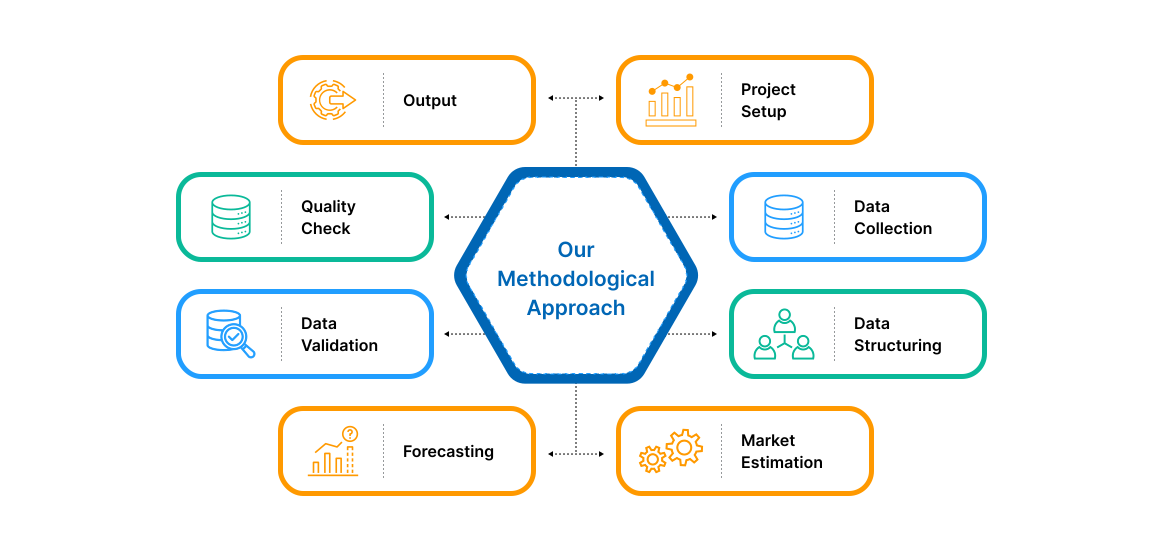
A robust system of research, verification, and forecasting designed to ensure reliable and actionable
market insights.
Polaris Market Research uses a clear and structured approach to deliver insights that clients can rely
on. The process combines detailed primary and secondary research, including direct communication with
industry experts. The detailed information helps build a complete picture of market trends and
developments. Secondary data is gathered from credible sources such as industry reports, company
filings, government source links, and trusted organization databases. It is then cross-checked through
discussions with key stakeholders across the value chain. Market size and forecasts are developed using
both bottom-up and top-down methods to ensure accuracy and consistency in the final results.
1. Project Setup
Step 1 & 2:
We start every project by clearly understanding the client’s objective or goal, then defining the
market scope, and aligning regions, segments, and timelines.
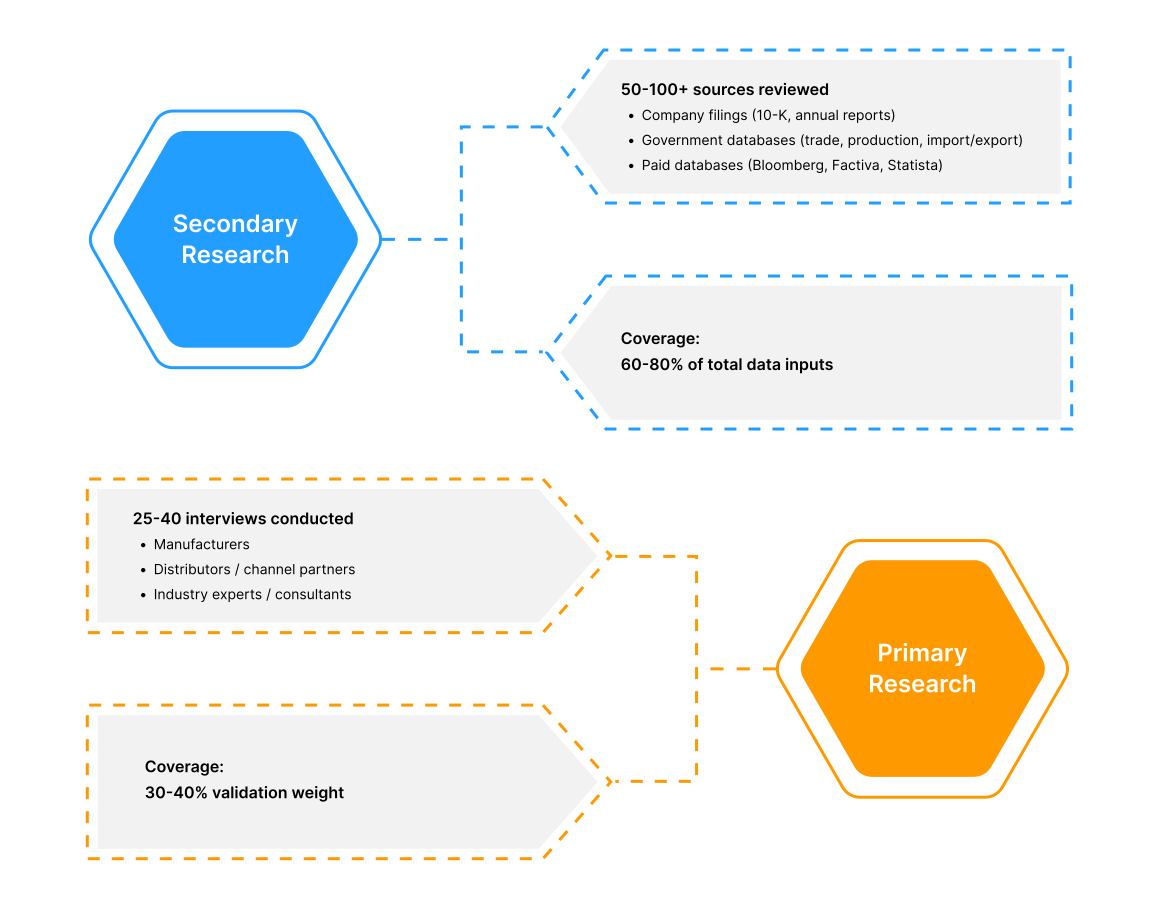
Once the foundation is set, we collect data from all-around of sources, including company reports,
government databases, and paid industry platforms.
Our research is based on secondary data, which helps us build a strong understanding of the market
across regions and industries. Then we validate this information through primary research by speaking
directly with industry experts, companies, and stakeholders.
By combining secondary and primary research, we ensure that our market insights are accurate,
practical, and closely aligned with real market conditions.
2. Data Collection
We gather information from both public and verified sources:
3. Data Structuring
Step 3:
All collected data is organized into a consistent format to ensure accurate analysis. Since inputs
come from multiple sources, they are standardized and aligned before use.
The data is segmented by product, application, and region, and mapped across a defined historical
period (2020–2024). All values are converted into common units (USD Mn/Bn), and volume and pricing are
aligned where required to estimate revenue.
Any overlaps or inconsistencies are reviewed and adjusted to maintain accuracy (<5% variance
threshold).
The result is a structured dataset that allows for clear comparison across regions and supports
reliable analysis and forecasting.
Structured Market Dataset, USD Mn/Bn
Region
Segment
VolumeUnits
Avg PriceUSD
RevenueUSD Mn
Share %
North America
Product A
250
2.5
500
15%
Product A
XX
XX
XX
XX
Product A
XX
XX
XX
XX
Consistent methodology applied across regions
4. Data Structuring
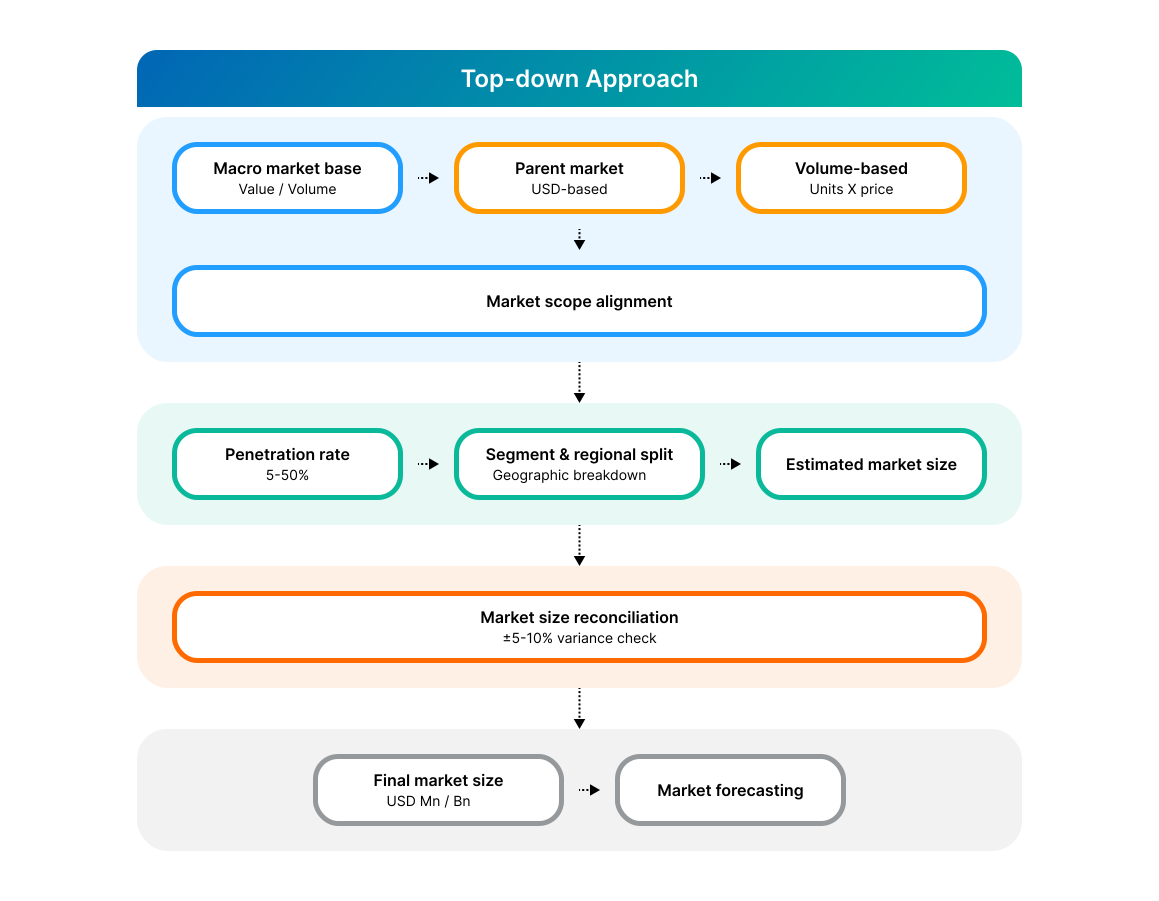
Step 4: TOP-DOWN APPROACH
We start with the overall market size at a global or macro level.
The market is then narrowed down based on scope and industry relevance.
We apply penetration rates and split the data by region and segment.
This helps us estimate the market size for specific segments.
The numbers are validated through cross-checks to ensure accuracy.
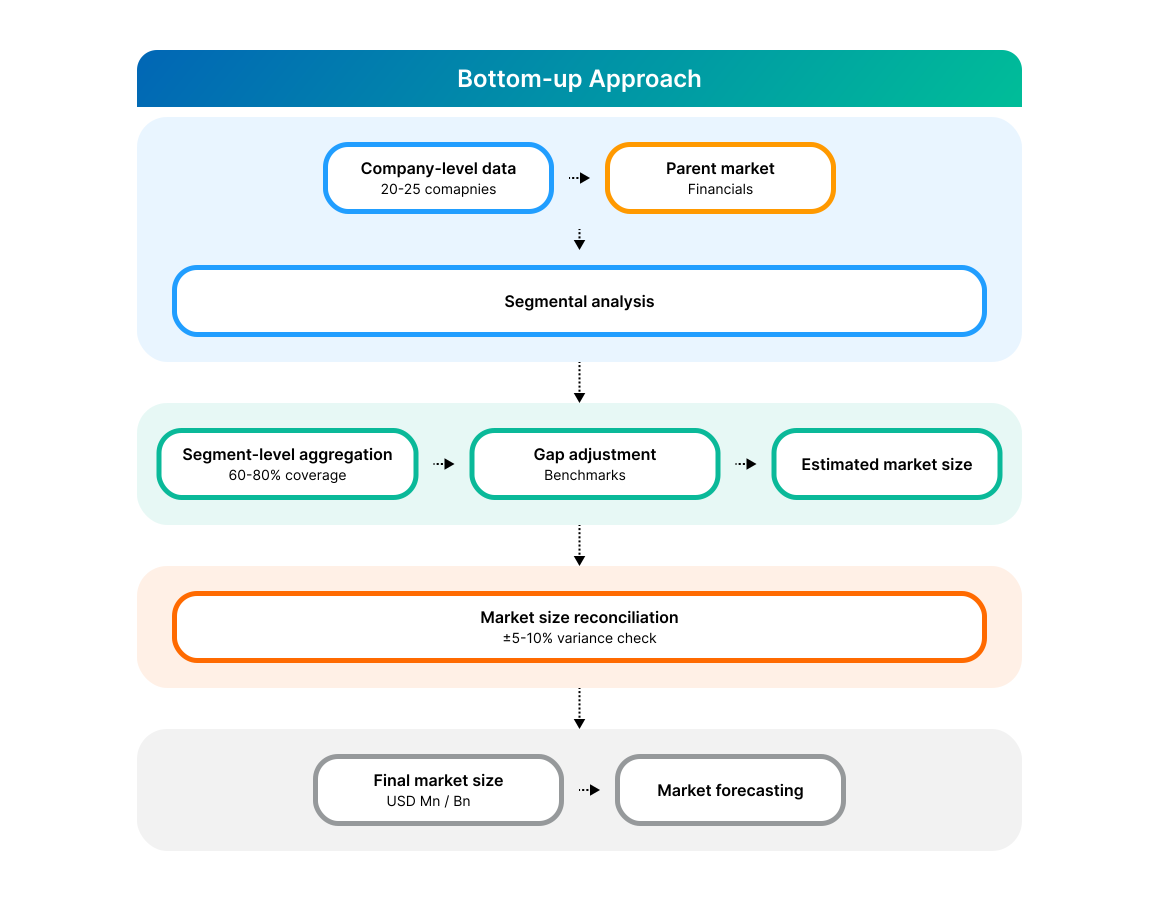
Step 5: BOTTOM-UP APPROACH
We begin by analyzing data from leading companies in the market.
Revenue data is collected and mapped across different segments.
The data is then aggregated to estimate the total market size.
To fill in any gaps, adjustments are made based on industry standards.
Validation checks make sure that the results are correct.
5. Data Structuring
Step 6:
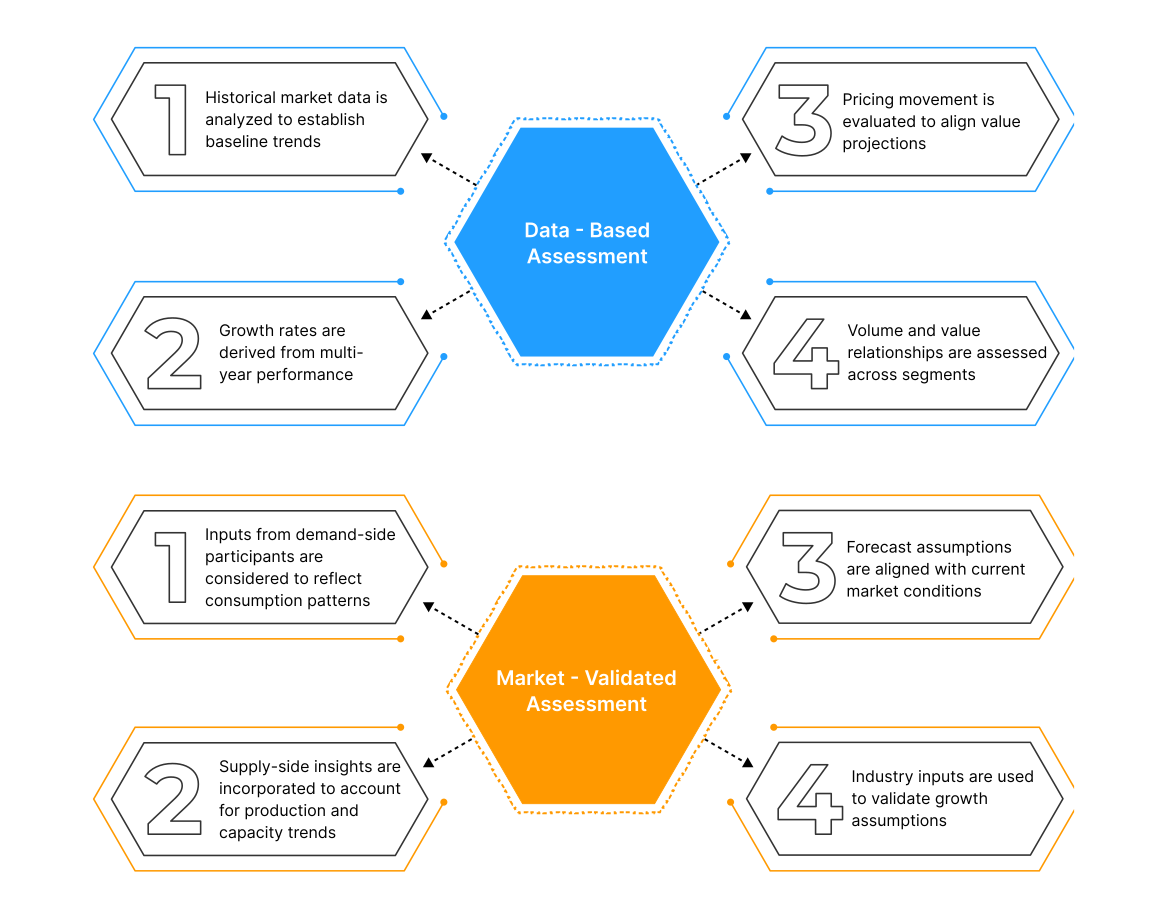
At Polaris Market Research, we employ a methodical forecasting strategy. This approach blends the
analysis of historical data with real-time market validation. To forecast future trends with precision,
we examine past patterns, pricing fluctuations, and the interplay of supply and demand. To ensure our
conclusions reflect the present market landscape, we actively seek input from industry experts and key
stakeholders.
To refine our predictions, we carefully consider critical elements such as market drivers and
restraints, fluctuations in raw material costs, emerging technologies, and the production capabilities
of various regions. Furthermore, we assess regulatory frameworks and potential policy shifts to gauge
their potential impact on market expansion.
All this information is synthesized to generate precise forecasts for each segment and region. These
forecasts illuminate the current state of the market and highlight forthcoming opportunities.
6. Data Structuring
Step 7:
In the final stage, we validate all our estimates using a triangulation method, where data is
cross-checked from multiple reliable sources, like company data, primary interviews, and secondary
research. This helps us make sure that our numbers are correct and fit with the rest of the market.
This process involves verifying data consistency across various segments and geographic areas. It also
requires comparing historical trends with the assumptions support the forecast. Any discrepancies
involve adjustments to ensure everything remains aligned and dependable.
Once the data is finalized, we prepare the final outputs, including market size estimates, segment-wise
breakdowns, and growth metrics. These are delivered in structured formats such as tables, charts, and
data files for easy analysis and use.
We collaborate closely with clients, ensuring the final products align with their requirements. This
includes offering tailored adjustments, supplementary data analyses, and continuous assistance.
Furthermore, we monitor market trends post-delivery, providing updates and refinements to maintain the
insights' relevance as time passes.
Post-delivery, we continue to monitor market shifts, offering updates and adjustments to ensure the
insights remain relevant over time.
Validation
Triangulation Framework
Estimates are cross-verified across three sources:
Company-level data
• Primary inputs from industry participants
• Secondary benchmarks and published data
Variance maintained within +5-10%
Adjustments applied to align estimates
Segment values validated against overall market structure
Quality Check
Data Consistency & Integrity
Segment totals validated to 100%
Regional estimates aligned with global market size
Historical trends compared against forecast outputs
Assumptions reviewed for cross-segment and regional
alignment
Output & Delivery
Final Outputs
Market size estimates (USD Mn/Bn)
Segment-wise distribution (%)
Growth metrics (CAGR %)
Deliverables
Structured tables and charts
Segment-level datasets
Excel-based data files for further analysis
Client Alignment & Support
Deliverables are aligned with defined client requirements and scope
Custom data cuts and segment splits are incorporated as required
Post-delivery queries are addressed through analyst interactions
Additional clarifications and data support are provided upon request
Client Continuity & Updates
Market developments are tracked post-delivery to capture changes in key trends
Updated data and revisions are provided based on new market inputs
Additional refinements and data cuts are shared as required
Continued analyst engagement supports evolving client requirements
Secure Your Competitive Edge With Our Expert-Driven Market Insights
Gain exclusive insights and strengthen your competitive position with our tailored research
solutions. Connect with our research analysts and industry experts to elevate your decision-making.