

What is the Current Market Size?
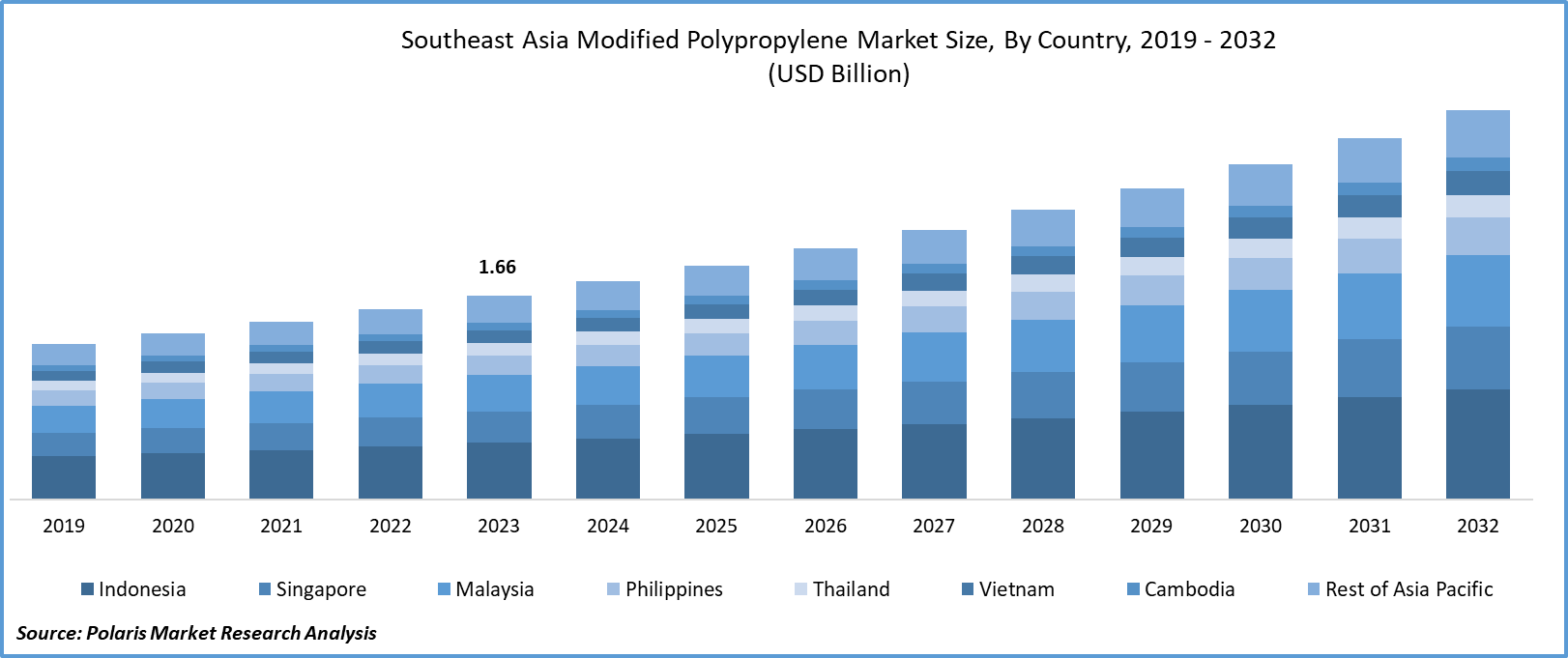
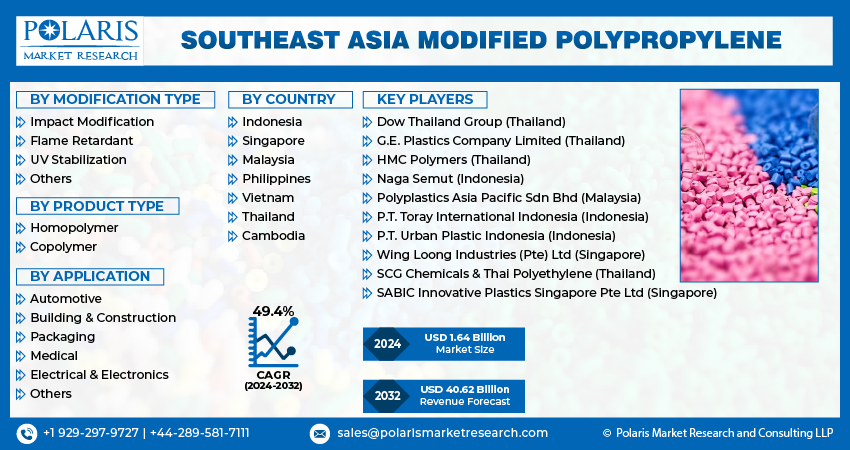
The southeast asia modified polypropylene market size was valued at USD 1.91 billion in 2025. The market is anticipated to grow from USD 2.05 billion in 2026 to USD 3.71 billion by 2034, exhibiting the CAGR of 7.70% during the forecast period.
Market Statistics
- 2025 Market Size: USD 1.91 billion
- 2034 Projected Market Size: USD 3.71 billion
- CAGR (2026-2034): 7.70%
- Indonesia: Largest market in 2025
Market Overview
Rising demand for efficient and sustainable packaging equipment is positively fueling the demand for modified polypropylene in Southeast Asia. This is attributable to the superior performance of modified propylene, such as its lightweight, barrier potential, rigidity, and longevity, which are driving its adoption in the packaging of goods, including food and beverage, consumer utilities, and many more. According to the data published by the World Economic Forum, the Philippines and Malaysia are the top two countries in global e-commerce retail growth, constituting 25% and 23%, respectively. This trend is exhibiting potential demand for modified propylene in the marketplace.
Furthermore, the growing research studies focusing on reviewing the use of modified polypropylene are expected to drive new growth potential in the study period.
- For instance, a 2023 study published in MDPI focused on the development of post-consumer recycled flexible polypropylene (PCPP) with enhanced thermal stability and processability. The study concluded that it has improved processability, crystallinity, and thermal stability.
To Understand More About this Research: Request a Free Sample Report
Moreover, the ongoing growth of automotive vehicle use in the region, specifically Singapore, with the significant uptick in disposable income among the population driven by increasing economic activities, is anticipated to propel demand for modified polypropylene in the foreseeable future.
Growth Drivers
Rising regularity challenges in the marketplace
With the growing number of stringent regulations on polymer usage driven by sustainability as a major concern, there will be enormous opportunities for modified propylene in the coming years. For instance, in July 2023, Eastman unveiled Advantis adhesion promoters, which include modified polypropylene and polyethylene polymers, to assist paint and coating users in complying with the regularity modifications. This is the outcome of regulatory challenges placed on cumene in the European Union.
Increased demand for modified polypropylene in electronics manufacturing
Modified polypropylene is considered a prominent material in the manufacturing of electronic gadgets due to its compatibility with electric components. The presence of countries focusing on developing the manufacturing of electronics in their region is facilitating the need for modified polypropylene. According to the Ministry of Industry and Trade report, Vietnam’s electronic sector reached the export target of over 114 billion USD in 2022, which is growing significantly at 7% annually, leading to a total of 30% of the nation.
Restraining Factors
The higher rate of input costs is expected to impede market growth
The price fluctuations of the raw materials incorporated in the modified polypropylene production process are leading to lower production activity by the manufacturers, causing price volatility in the marketplace, which is likely to encourage users to consider alternatives to the modified propylene on the market.
Southeast Asia Investment & Tariff
|
Year |
Company/Provider |
Country |
Investment/Project |
Capacity/Amount |
|
2019-2022 |
HMC Polymers |
Thailand |
4th PP Line (Spherizone tech) Map Ta Phut |
220 KT/year (total >1M KT) |
|
2023 |
PT Polytama Propindo |
Indonesia |
Pre-bid EPC for PP Plant Balongan (PPB) |
300 KT/year |
|
2024 |
PT Polytama Propindo |
Indonesia |
PPB project funding injection |
USD 160M (of USD 500M total) |
|
2024 |
SABIC, LG Chem, PolyPacific |
Multi (Indonesia, Thailand, Malaysia) |
Capacity expansion (market-wide) |
Market growth to USD 1.6 B |
|
2025-2027 |
PT Polytama Propindo |
Indonesia |
PP Plant Balongan completion target |
USD 500M total investment |
Report Segmentation
The market is primarily segmented based on modification type, product type, application and region.
|
By Modification Type |
By Product Type |
By Application |
By Country |
|
|
|
|
To Understand the Scope of this Report: Speak to Analyst
By Modification Type Analysis
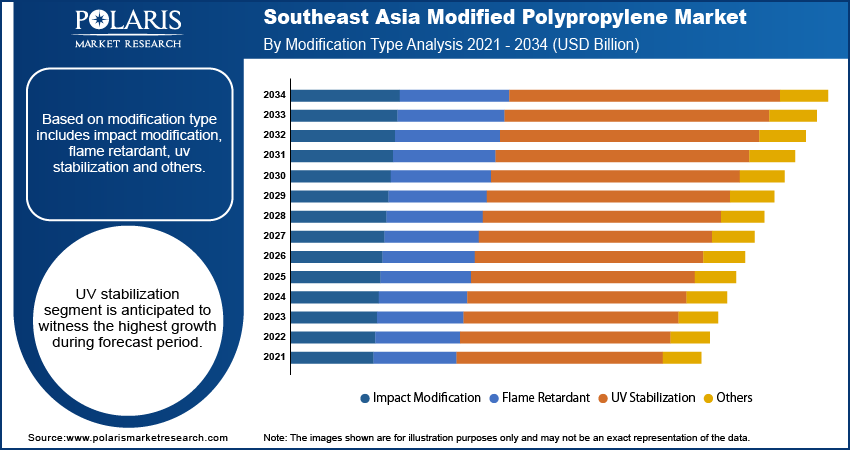
UV stabilization segment is anticipated to witness the highest growth during forecast period
The UV stabilization segment is likely to grow at a higher CAGR during the forecast period, primarily attributable to the need for higher-potential polymers to withstand extreme weather conditions in the automotive industry. A 2020 study published in ResearchGate focused on testing the UV stabilization properties by adding hindered amine light stabilizers (HALSs) & zinc oxide stabilizers to the polypropylene. It concluded that there is an improvement in the UV resistance and power hardness of the polymer.
The impact modification and flame-retardant segment is driven by the problems of utilizing polypropylene in multiple applications due to its intrinsic alkaline structure, leading to the probable catch of fire. A 2023 study tested the properties of polypropylene among modified PET fiber-based polypropylene and pure polypropylene and found that modified polypropylene has higher stiffness, greater impact resistance, and decreased shrinkage at higher temperatures.
By Product Type Analysis
Homopolymer segment held the largest market share in 2025
The homopolymer segment gained the largest market share in 2025 and is anticipated to boost its market position during the forecast timeframe. This is attributable to the wide range of applications in technological processing. The astonishing properties of modified polypropylene homopolymer, such as weldability, corrosion-freeness, rigidity, and chemical resistance, are promoting its adoption across a wider spectrum. It is used in the manufacturing of thermo-farming, blow molding, and sheet extrusion.
The copolymer segment is anticipated to grow at an optimal growth rate in the next few years, driven by its softness and durability in line with the polypropylene homopolymer. The higher rate of toughness and prominent stress crack resistance is gaining application in the production of automotive components, pipes, films, and others, contributing to the significant demand for modified polypropylene homopolymers.
By Application Analysis
Automotive segment registered an incredible revenue share in 2025
The automotive segment witnessed the largest share in revenue of the market in 2025, which is highly influenced by the rising need for environmentally friendly polymers in the marketplace, driven by stringent regulations by the nations. This emphasizes automobile manufacturers adopting recyclable materials in the production process, thereby boosting the demand for modified polypropylene in the coming years. As per 2023 industrial data, Thailand witnessed a rise in the production of cars by 1.78% in June.
Regional Insights
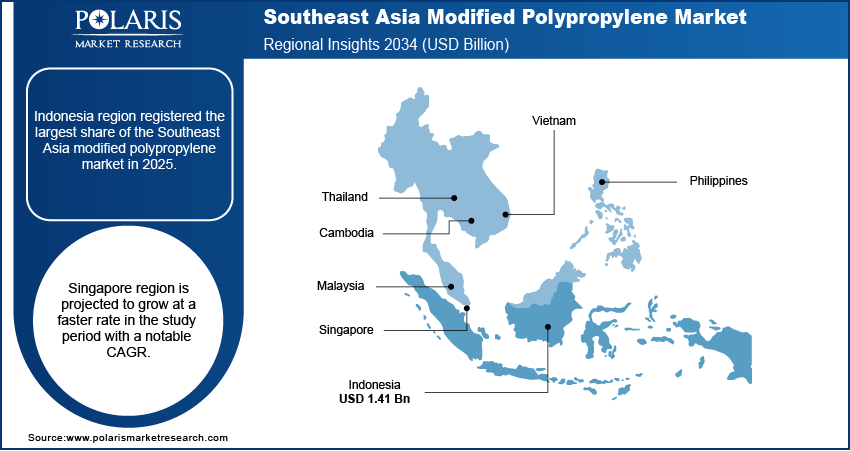
Indonesia region registered the largest share of the Southeast Asia modified polypropylene market in 2025
The Indonesia region received the largest share of the Southeast Asian modified polypropylene market and is projected to continue its growth trajectory in the coming years. This is attributable to the growing demand for sustainable plastics in automotive, construction, packaging, and electronic activities. The ongoing construction boom in the region is encouraging companies to invest a significant amount. For instance, Gravel received $14 million in funding from New Enterprise Associates for the construction sector. These initiatives are expected to promote construction activities in the region, driving demand for modified polypropylene in the long run.
The Singapore region is projected to grow at a faster rate in the study period with a notable CAGR, driven by the significant rise in the demand for polypropylene with flame retardant, UV stabilization, and impact modification properties driven by its necessity in the manufacturing of automobiles and electronics, which are witnessing significant demand from the population with the increased disposable income.
Key Market Players & Competitive Insights
The rising innovations will likely boost the competition
The Southeast Asia modified polypropylene market development is characterized by moderate fragmentation, with the presence of several market players focusing on efficient production with investment in research and development activities, driving competition with new product innovations in the global market.
For instance, in October 2023, Asahi Kasei announced the expansion of 3D printing filaments in North America, including a product portfolio of modified polyphenylene ether (mPPE) resin, XYRON. This is likely to enhance the supply chain in North America and influence Southeast Asia in the long run.
Some of the major players operating in the global market include:
- Dow Thailand Group (Thailand)
- G.E. Plastics Company Limited (Thailand)
- HMC Polymers (Thailand)
- Naga Semut (Indonesia)
- Polyplastics Asia Pacific Sdn Bhd (Malaysia)
- P.T. Toray International Indonesia (Indonesia)
- P.T. Urban Plastic Indonesia (Indonesia)
- Wing Loong Industries (Pte) Ltd (Singapore)
- SCG Chemicals & Thai Polyethylene (Thailand)
- SABIC Innovative Plastics Singapore Pte Ltd (Singapore)
Recent Developments in the Industry
- In November 2023, Pan Era Group and Milliken joined forces to produce recycled polypropylene in Indonesia with a view to promoting productivity by utilizing the additive technology solution of Milliken.
- In July 2023, Repsol, in collaboration with Quimidroga, unveiled its innovations in polypropylene compound, which can replace metal in technical applications, specifically in water treatment facilities.
Report Coverage
The Southeast Asia modified polypropylene market report emphasizes on key regions across the globe to provide better understanding of the product to the users. Also, the report provides market insights into recent developments, trends and analyzes the technologies that are gaining traction around the globe. Furthermore, the report covers in-depth qualitative analysis pertaining to various paradigm shifts associated with the transformation of these solutions.
The report provides detailed analysis of the market while focusing on various key aspects such as competitive analysis, modification type, product type, application, and their futuristic growth opportunities.
Southeast Asia Modified Polypropylene Market Report Scope
|
Report Attributes |
Details |
|
Market size value in 2025 |
USD 1.91 billion |
| Market size value in 2026 | USD 2.05 billion |
|
Revenue forecast in 2034 |
USD 3.71 billion |
|
CAGR |
7.70% from 2026 – 2034 |
|
Base year |
2025 |
|
Historical data |
2021 – 2024 |
|
Forecast period |
2026 – 2034 |
|
Quantitative units |
Volume in Kilo Tons, Revenue in USD billion and CAGR from 2026 to 2034 |
|
Segments covered |
|
|
Regional scope |
|
|
Competitive Landscape |
|
|
Report Format |
|
|
Customization |
Report customization as per your requirements with respect to countries, region and segmentation. |
FAQ's
The Southeast Asia Modified Polypropylene report covering key segments are modification type, product type, application and region.
Southeast Asia Modified Polypropylene Market Size Worth USD 3.71 Billion By 2034.
Southeast Asia Modified Polypropylene Market exhibiting the CAGR of 7.70% during the forecast period.
Indonesia is leading the global market
key driving factors in Southeast Asia Modified Polypropylene Market are Increased demand for modified polypropylene in electronics manufacturing
Page last updated on:
Feb-2024
Research Methodology
A robust system of research, verification, and forecasting designed to ensure reliable and actionable market insights.
Polaris Market Research uses a clear and structured approach to deliver insights that clients can rely on. The process combines detailed primary and secondary research, including direct communication with industry experts. The detailed information helps build a complete picture of market trends and developments. Secondary data is gathered from credible sources such as industry reports, company filings, government source links, and trusted organization databases. It is then cross-checked through discussions with key stakeholders across the value chain. Market size and forecasts are developed using both bottom-up and top-down methods to ensure accuracy and consistency in the final results.
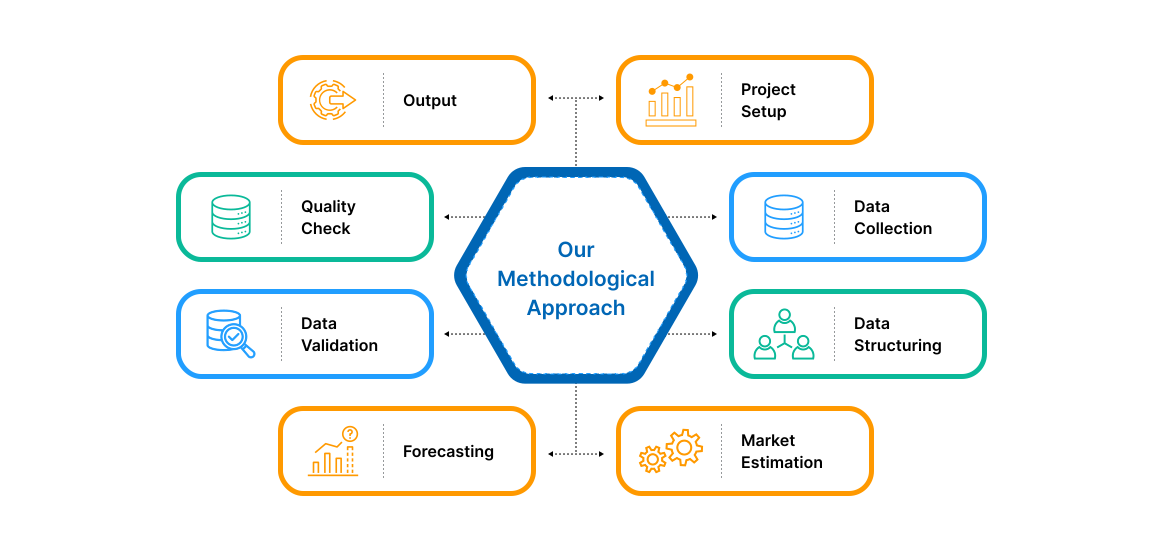
Project Setup
Step 1 & 2:
- We start every project by clearly understanding the client’s objective or goal, then defining the market scope, and aligning regions, segments, and timelines.
- Once the foundation is set, we collect data from all-around of sources, including company reports, government databases, and paid industry platforms.
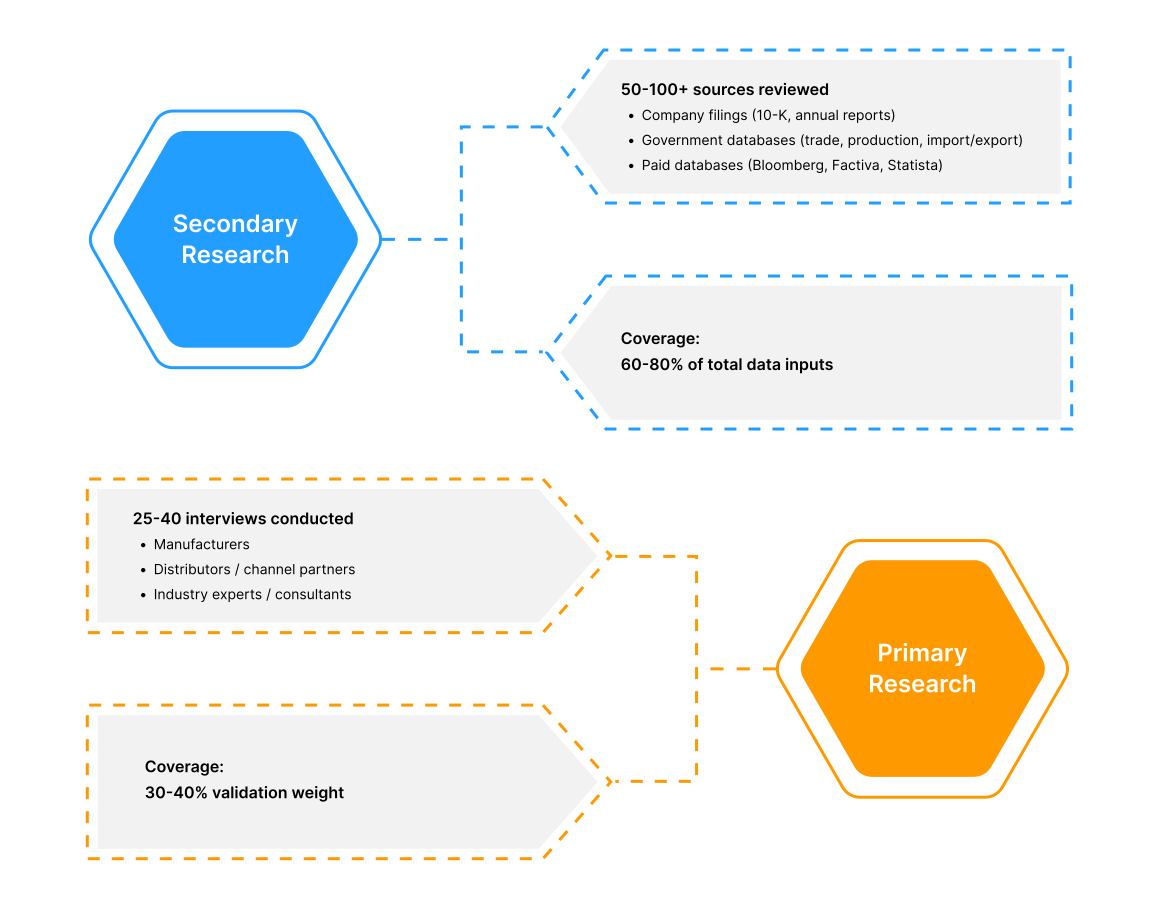
- Our research is based on secondary data, which helps us build a strong understanding of the market across regions and industries. Then we validate this information through primary research by speaking directly with industry experts, companies, and stakeholders.
- By combining secondary and primary research, we ensure that our market insights are accurate, practical, and closely aligned with real market conditions.
Data Collection
We gather information from both public and verified sources:
Data Structuring
Step 3:
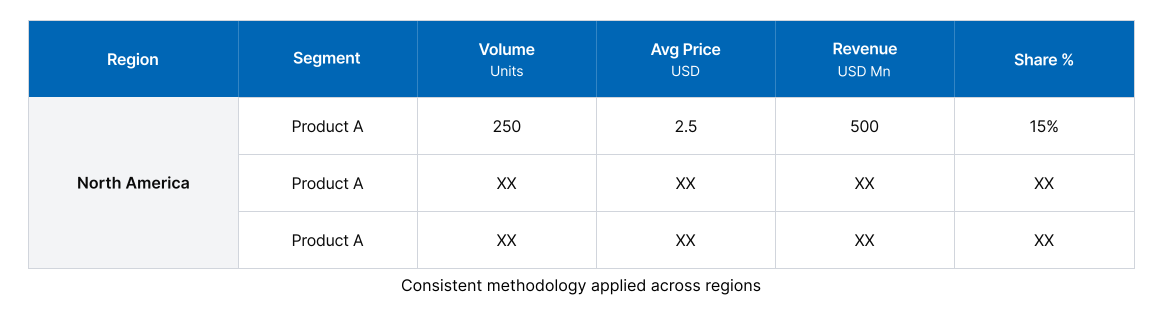
- All collected data is organized into a consistent format to ensure accurate analysis. Since inputs come from multiple sources, they are standardized and aligned before use.
- The data is segmented by product, application, and region, and mapped across a defined historical period (2020–2024). All values are converted into common units (USD Mn/Bn), and volume and pricing are aligned where required to estimate revenue.
- Any overlaps or inconsistencies are reviewed and adjusted to maintain accuracy (<5% variance threshold).
- The result is a structured dataset that allows for clear comparison across regions and supports reliable analysis and forecasting.
Structured Market Dataset, USD Mn/Bn
4. Data Structuring
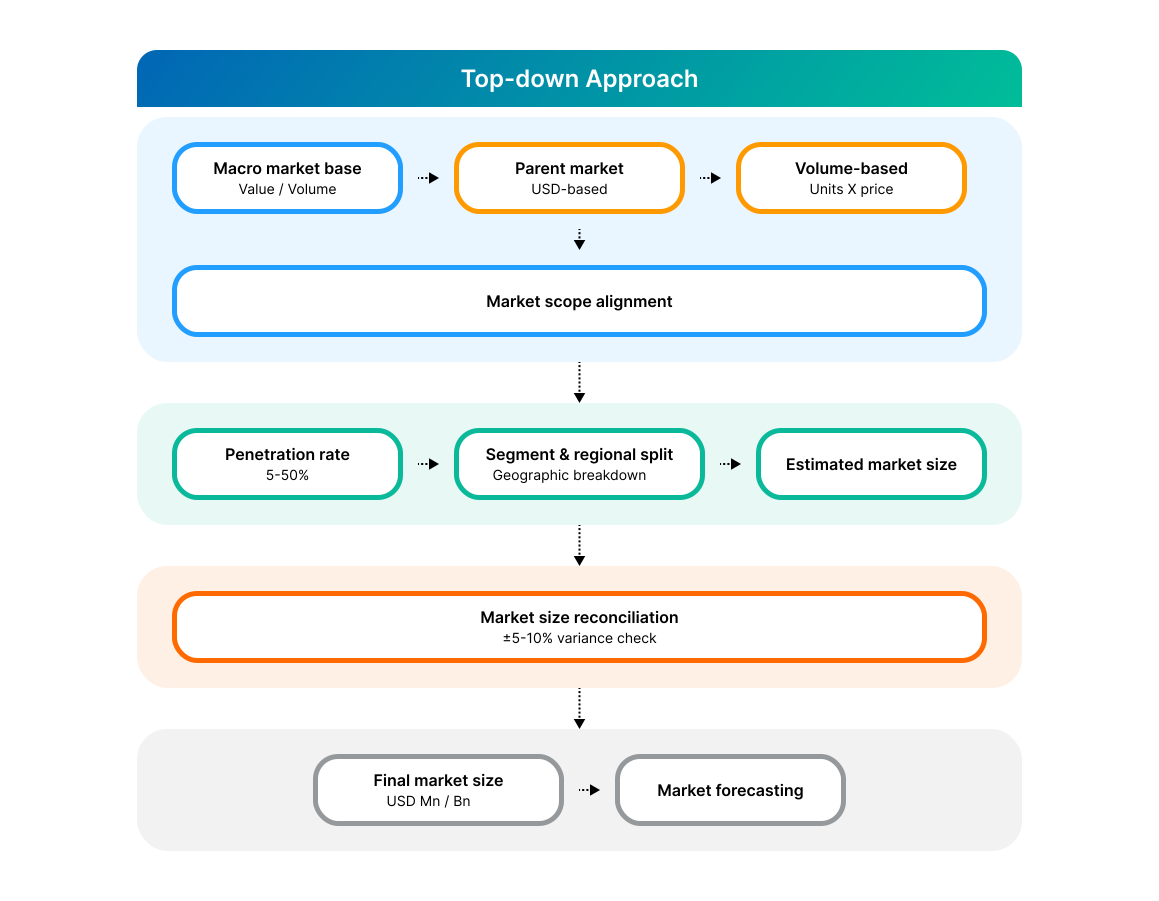
Step 4: TOP-DOWN APPROACH
- We start with the overall market size at a global or macro level.
- The market is then narrowed down based on scope and industry relevance.
- We apply penetration rates and split the data by region and segment.
- This helps us estimate the market size for specific segments.
- The numbers are validated through cross-checks to ensure accuracy.
Step 5: BOTTOM-UP APPROACH
- We begin by analyzing data from leading companies in the market.
- Revenue data is collected and mapped across different segments.
- The data is then aggregated to estimate the total market size.
- To fill in any gaps, adjustments are made based on industry standards.
- Validation checks make sure that the results are correct.
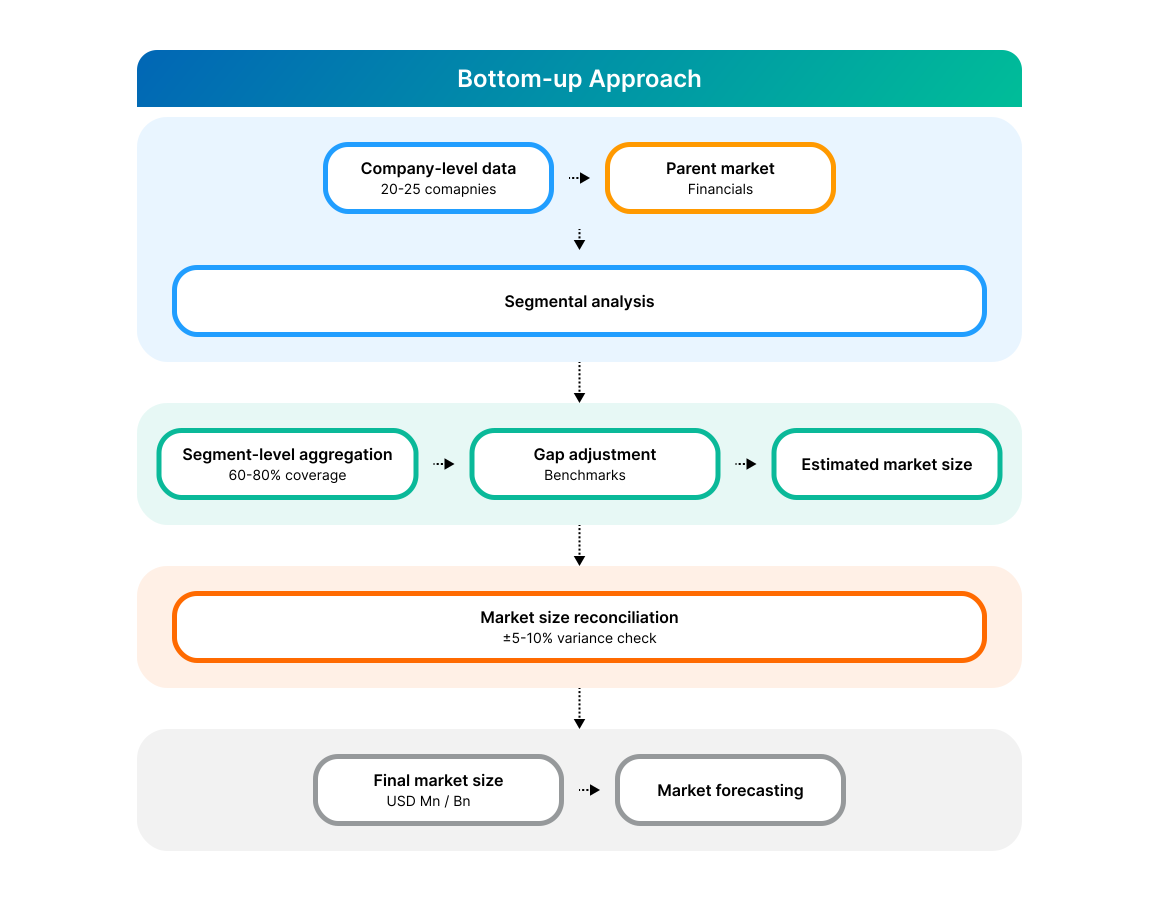
5. Data Structuring
Step 6:
At Polaris Market Research, we employ a methodical forecasting strategy. This approach blends the analysis of historical data with real-time market validation. To forecast future trends with precision, we examine past patterns, pricing fluctuations, and the interplay of supply and demand. To ensure our conclusions reflect the present market landscape, we actively seek input from industry experts and key stakeholders.
To refine our predictions, we carefully consider critical elements such as market drivers and restraints, fluctuations in raw material costs, emerging technologies, and the production capabilities of various regions. Furthermore, we assess regulatory frameworks and potential policy shifts to gauge their potential impact on market expansion.
All this information is synthesized to generate precise forecasts for each segment and region. These forecasts illuminate the current state of the market and highlight forthcoming opportunities.
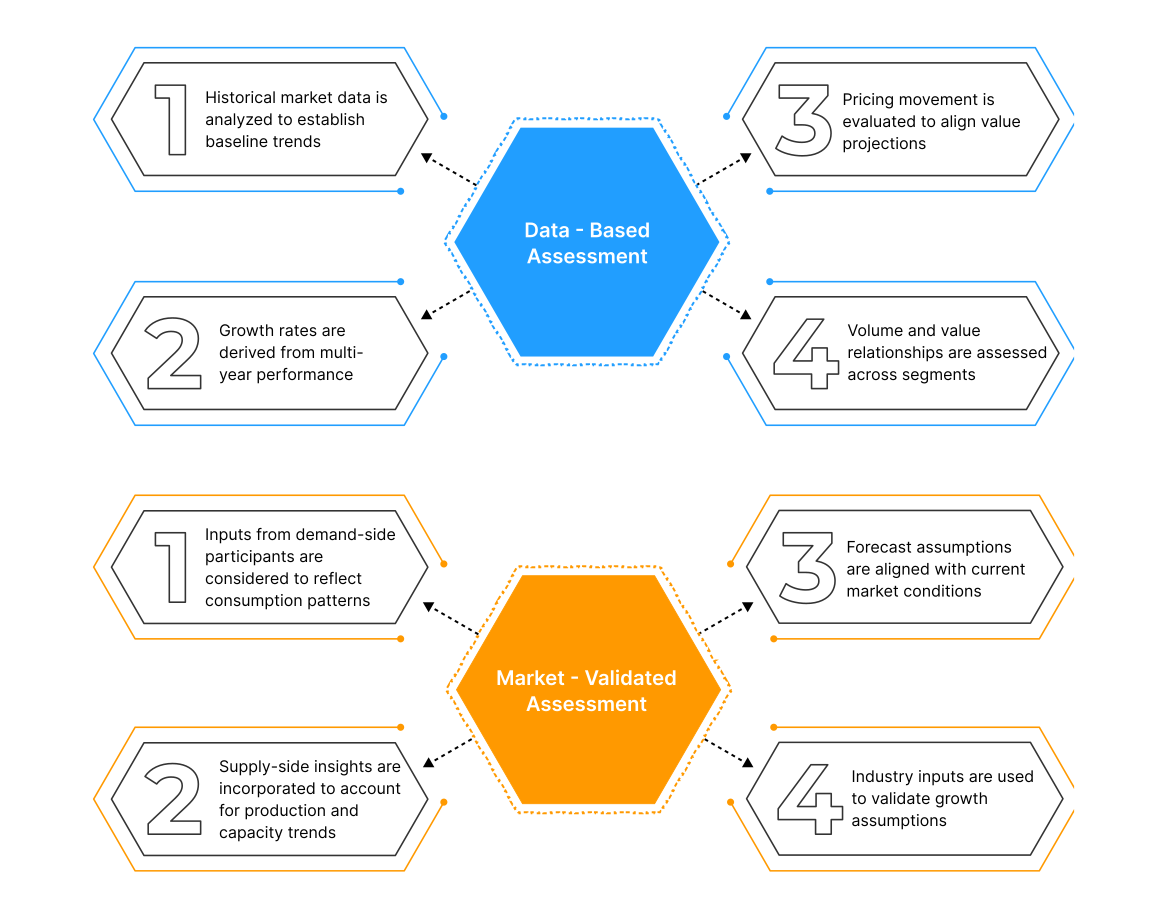
6. Data Structuring
Step 7:
In the final stage, we validate all our estimates using a triangulation method, where data is cross-checked from multiple reliable sources, like company data, primary interviews, and secondary research. This helps us make sure that our numbers are correct and fit with the rest of the market.
This process involves verifying data consistency across various segments and geographic areas. It also requires comparing historical trends with the assumptions support the forecast. Any discrepancies involve adjustments to ensure everything remains aligned and dependable.
Once the data is finalized, we prepare the final outputs, including market size estimates, segment-wise breakdowns, and growth metrics. These are delivered in structured formats such as tables, charts, and data files for easy analysis and use.
We collaborate closely with clients, ensuring the final products align with their requirements. This includes offering tailored adjustments, supplementary data analyses, and continuous assistance. Furthermore, we monitor market trends post-delivery, providing updates and refinements to maintain the insights' relevance as time passes.
Post-delivery, we continue to monitor market shifts, offering updates and adjustments to ensure the insights remain relevant over time.
Validation
Triangulation Framework
- Company-level data
- Primary inputs from industry participants
- Secondary benchmarks and published data
- Variance maintained within ±5-10%
- Adjustments applied to align estimates
- Segment values validated against overall market structure
Quality Check
Data Consistency & Integrity
- Segment totals validated to 100%
- Regional estimates aligned with global market size
- Historical trends compared against forecast outputs
- Assumptions reviewed for cross-segment and regional alignment
Output & Delivery
Final Outputs
- Market size estimates (USD Mn/Bn)
- Segment-wise distribution (%)
- Growth metrics (CAGR %)
- Structured tables and charts
- Segment-level datasets
- Excel-based data files for further analysis
Client Alignment & Support
- Deliverables are aligned with defined client requirements and scope
- Custom data cuts and segment splits are incorporated as required
- Post-delivery queries are addressed through analyst interactions
- Additional clarifications and data support are provided upon request
Client Continuity & Updates
- Market developments are tracked post-delivery to capture changes in key trends
- Updated data and revisions are provided based on new market inputs
- Additional refinements and data cuts are shared as required
- Continued analyst engagement supports evolving client requirements


