Surface Disinfectant Market Share Analysis, Growth Report, 2026-2034
REPORT DETAILS
Market Statistics
What is the Current Market Size?
Global surface disinfectant market size was valued at USD 6.65 billion in 2025. The market is anticipated to grow from USD 7.10 billion in 2026 to USD 12.50 billion by 2034, exhibiting the CAGR of 7.30% during the forecast period.
Market Statistics
- 2025 Market Size: USD 6.65 billion
- 2034 Projected Market Size: USD 12.50 billion
- CAGR (2026-2034): 7.30%
- North America: Largest market in 2025
Market Overview
A disinfectant, a chemical agent or compound, is employed to neutralize or eliminate bacteria on non-living surfaces. Disinfectants act by breaking down the cell walls or disrupting the metabolism of bacteria, resulting in their death. This process, known as decontamination, involves reducing the presence of harmful germs on a surface through physical or chemical methods. Originally associated with eliminating bacteria, the term "disinfectant" is now also applicable to the removal of microorganisms on the skin and mucous membranes.
The global surface disinfectant market is witnessing a substantial resurgence with a heightened emphasis on sanitation and hygiene post-pandemic, leading to increased demand for disinfectants, sanitizers, and cleaning products. This surge in demand reflects a growing awareness of the need to combat germs and viruses on surfaces, driving toward positive surface disinfectant market size.
The research study provides a comprehensive analysis of the industry, assessing the market on the basis of various segments and sub-segments. It sheds light on the competitive landscape and introduces surface disinfectant market key players from the perspective of market share, concentration ratio, etc. The study is a vital resource for understanding the growth drivers, opportunities, and challenges in the industry.
Source: Polaris Market Research Analysis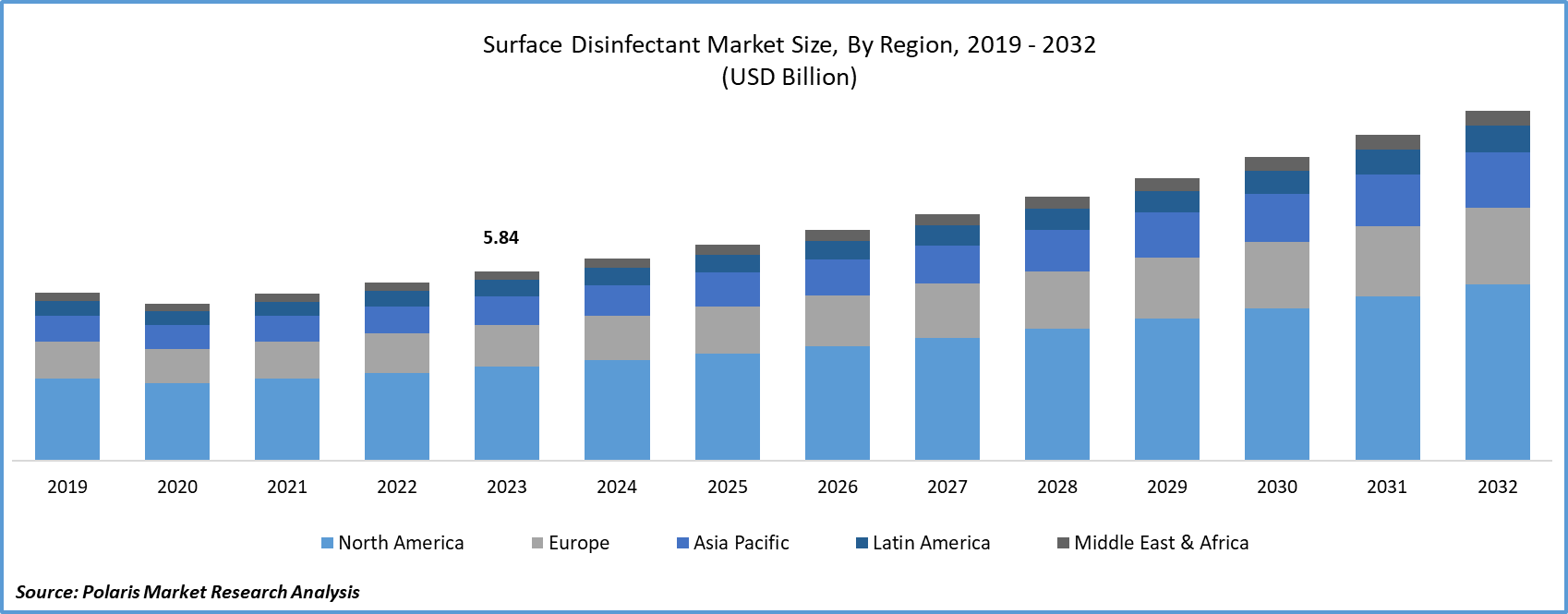
To Understand More About this Research: Download Sample Report
The raw materials utilized in surface disinfectant production primarily derive from the by-products of the petroleum sector. In developed economies like China, Europe, and North America, local manufacturers predominantly source these raw materials. Notably, the industry is witnessing a shift towards the adoption of biodegradable surface disinfectants to mitigate chemical-related toxicity. The raw materials required for biodegradable surface disinfectants are not only cost-effective but also readily available. Consequently, the demand for bio-based surface disinfectants is expected to surpass that of traditional petroleum-based counterparts in the foreseeable future.
The surface disinfectant market for their products has experienced a modest increase in prices after the pandemic. These surface disinfectant market trends, demand for surface disinfectants following COVID-19, along with the growing prevalence of chronic diseases, healthcare-associated infections (HAIs), supportive government initiatives, and stringent regulations on disinfection and sterilization, have contributed to increased demand, particularly in developed economies like North America and Europe.
Source: Polaris Market Research Analysis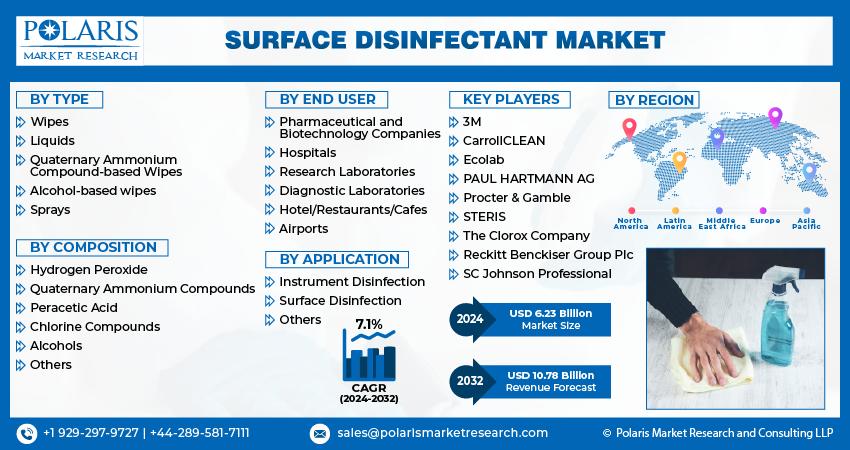
Get Full Segment-Level Forecasts & Insights: Download Sample Report
Market Dynamics
Market Drivers
Increasing Incidence of Disease Outbreaks bolstering the growth of the Surface Disinfectant market share.
Healthcare-associated infections (HAIs) are not present upon admission but are acquired during treatment in healthcare settings. These infections encompass ventilator-associated pneumonia (VAP), surgical site infections (SSI), central line-associated bloodstream infections (CLABSI), and catheter-associated urinary tract infections (CAUTI), as outlined by the Centers for Disease Control and Prevention (CDC).
Inadequate infection control measures typically cause healthcare-associated infections and compromise the presence of infectious organisms and immune systems throughout healthcare facilities. Contributing factors include immunosuppression, prolonged hospital stays, critical care unit admissions, and advanced age. Approximately 20% of these infections are believed to originate in intensive care units (ICUs). Key microorganisms responsible for healthcare-associated infections include Staphylococcus aureus, Escherichia coli, and Clostridium difficile, among others. These infections can spread through continuous contact with contaminated environments or healthcare personnel. However, the prevalence of such infections has significantly decreased due to the ongoing use of various surface disinfectants for hospital surface cleaning and the disinfection of medical instruments. Additionally, the COVID-19 pandemic, which has heightened awareness of contagion, is expected to contribute to surface disinfectant market growth in the near future.
Market Restraints
Management of dangerous chemicals in the manufacturing of disinfectants is likely to hamper the growth of the market.
Substances like peroxides, acetic acid, and hypochlorite are employed in the manufacturing of these disinfectants, posing environmental and human health risks. Sodium hypochlorite, being corrosive and flammable, has the potential to cause burns, complicating its transportation, storage, and handling, leading to increased challenges and expenses. A study by the National Center for Biotechnology Information (NCBI) revealed a heightened incidence of chronic diseases and severe health effects among users. Consequently, these factors serve as constraints for the surface disinfectant market.
Provider Technology & Product Positioning
| Provider | Product / Technology | Core Functional Value | Application Focus / Positioning |
| Ecolab | Ready-to-Use Surface Disinfectants (ethanol or H₂O₂-based) | Frequent use surface disinfection without rinse; minimal residues; quick action. | Designed for both food contact and non-food contact surfaces in production environments with water-sensitive equipment. |
| Ecolab | Actichlor Plus (chlorine tablet) | Combines detergent + chlorine disinfectant in one; broad cleaning + disinfection. | Surface and environmental disinfection with easy dosing & handling in healthcare/industrial settings. |
| Ecolab | Incidin OxyFoam S Spray (H₂O₂ sporicidal) | Hydrogen peroxide foam with broad efficacy including spores; low odour & easy use. | High-efficacy surface disinfection in clinical, cleanroom, and high-risk areas where sporicidal action is critical. |
| Diversey | AHP Accelerated Hydrogen Peroxide Disinfectants (e.g., Oxivir Tb) | Broad-spectrum germicidal action with enhanced cleaning and biodegradable breakdown to water and oxygen. | Hospital grade disinfection for operating rooms, isolation zones, and high-touch surfaces. |
| Diversey | Virex II 5L (Quaternary disinfectant) | Hospital grade quad-based disinfectant; effective against bacteria, viruses, resistant strains. | Hard non-porous surface disinfection in clinical & institutional settings with broad microbial target. |
| Diversey | SURE Surface Disinfectants | Ready-to-use cleaner disinfectants for general surfaces. | General commercial surfaces (e.g., kitchens, floors), typically used where basic disinfection is required. |
Source: Polaris Market Research Analysis
Report Segmentation
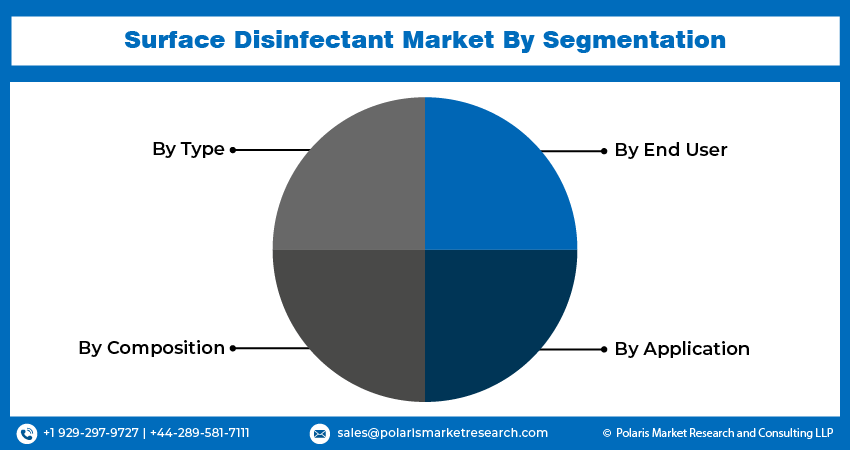
The market is primarily segmented based on type, composition, end user, application, and region.
| By Type | By Composition | By End User | By Application | By Region |
|
|
|
|
|
Source: Polaris Market Research Analysis
To Understand the Scope of this Report: Request Customization
Segmental Analysis
By Type Analysis
- The liquid segment commands a leading position in the global market and is expected to demonstrate the highest CAGR throughout the forecast period. This dominance can be attributed to their versatile applications in both residential and commercial settings, encompassing areas such as glass, outdoor surfaces, kitchen fixtures, glazed ceramic tile, windows, vinyl, and plastics. Liquid surface disinfectants are available in both liquid and gel forms, characterized by their low viscosity. These disinfectants consist of toxic, antimicrobial, or biocidal chemicals that can be applied to contaminated surfaces. Biomaterial-based surface cleaners are often formulated as liquids. Sodium hypochlorite stands out as one of the most commonly used liquid disinfectants in the cattle industry, effectively treating animal illnesses and mitigating the risk of various diseases. With its aqueous solution nature, sodium hypochlorite remains unaffected by water hardness. It is known for its low toxicity levels, affordability, quick action, and extensive antibacterial efficacy. In feed preparation within the cattle industry, liquid disinfectants are typically more diluted to minimize potential negative effects, which helps to boost the surface disinfectant market scope.
By End User Analysis
- In 2025, the Hotel/Restaurants/Cafes segment claimed the majority of the surface disinfectant market revenue, driven by the increasing demand for sanitization and disinfection in swimming pools, bedrooms, common areas, and lobbies to uphold hygiene standards.
- Hospitals, being highly susceptible to infections from viruses, bacteria, and fungi, are crucial end-users. The prioritized and routine disinfection of equipment, surfaces, and personal protective equipment (PPE) kits is a significant factor contributing to market growth.
- The role of air travel in the transmission of infectious diseases is pivotal. The convergence of a large number of passengers from various parts of the world in confined spaces with elevated contact rates increases the risk of infections. An infected individual can efficiently disseminate pathogens to fellow passengers and airport personnel through luggage, direct contact, and touching various surfaces at the airport. Therefore, it is imperative to disinfect airports by spraying disinfectants in gates, airport lounges, common areas, and jet bridges.
Source: Polaris Market Research Analysis
Need Granular Data Across All Market Segments? Request Customization
Regional Insights
The North American region dominated the global market with the largest market share in 2025
This is attributed by the approvals granted by regulatory bodies like Health Canada and the U.S. Environmental Protection Agency (EPA) for the utilization of these disinfectant products within their respective regions. The ongoing changes in heightened awareness of health and hygiene, increased R&D efforts, regulations, and healthcare expenditures among end-user manufacturers, surface disinfectant formulators, and raw material manufacturers are anticipated to sustain the growth of the industry in North America.
Europe experienced a significant increase in demand during the ongoing pandemic. Several prominent international companies are consistently enhancing their footprint by establishing multiple production and manufacturing facilities in the region to meet the growing demand and cater to European healthcare facilities locally. Technological and research and development advancements in production technologies have further propelled the market in the region.
Source: Polaris Market Research Analysis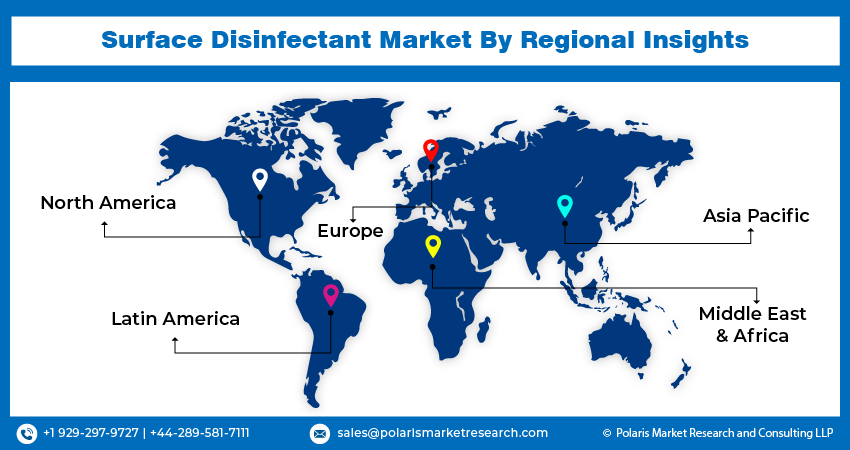
Curious About Regional Market Performance? Request Customization
Competitive Landscape
The Surface Disinfectant market is fragmented and is anticipated to witness competition due to several players' presence. Major service providers in the market are constantly upgrading their technologies to stay ahead of the competition and to ensure efficiency, integrity, and safety. These players focus on partnership, product upgrades, and collaboration to gain a competitive edge over their peers and capture a significant market share.
Some of the major players operating in the global market include:
- 3M
- CarrollCLEAN
- Ecolab
- PAUL HARTMANN AG
- Procter & Gamble
- Reckitt Benckiser Group Plc
- SC Johnson Professional
- STERIS
- The Clorox Company
Recent Developments
In January 2025, Reckitt Benckiser announced the expansion of its research and development capabilities through the establishment of a Global R&D Science and Innovation Centre in Shanghai, China, set to open in 2026. This strategic move underscores the company’s commitment to advancing product innovation and strengthening its localized development capabilities to better serve the Chinese market.
In June 2024, 3M acquired New Zealand-based Aeroqual, a prominent provider of air quality monitoring solutions, enhancing 3M’s product portfolio with a focus on indoor air quality applications.
In March 2024, Diversey, a global leader in cleaning and hygiene solutions, formed a strategic partnership with Microsoft to integrate Microsoft’s Azure IoT and AI technologies into its surface disinfectant equipment.
In June 2023, Lysol, a brand under the Reckitt Benckiser Group PLC, unveiled the introduction of the Lysol Air Sanitizer in the United States. This marks the first approval by the U.S. Environmental Protection Agency (EPA) for an air sanitizer spray.
In March 2022, PDI introduced the Sani-24 Germicidal Disposable Wipe, Sani-HyPerCide Germicidal Disposable Wipe, and Sani-HyPerCide Germicidal Spray. These disinfectants are crafted to support infection prevention professionals in their endeavors to tackle the rising occurrences of healthcare-associated infections (HAIs) and effectively confront the challenges presented by COVID-19 within healthcare environments.
In February 2022, SC Johnson Professional unveiled the Quaternary Disinfectant Cleaner, showcasing a novel, user-friendly squeeze-and-pour bottle design. This product simplifies cleaning procedures by providing an all-in-one solution for cleaning, disinfecting, and deodorizing, thereby significantly cutting down on the labor time and effort previously dedicated to measuring and diluting concentrated chemicals.
Report Coverage
The Surface Disinfectant market report emphasizes key regions across the globe to provide a better understanding of the product to the users. Also, the report provides market insights into recent developments and trends and analyzes the technologies that are gaining traction around the globe. Furthermore, the report covers an in-depth qualitative analysis pertaining to various paradigm shifts associated with the transformation of these solutions.
The report provides a detailed analysis of the market while focusing on various key aspects such as competitive analysis, type, composition, end user, application, and futuristic growth opportunities.
Report Scope
| Report Attributes | Details |
| Market size value in 2025 | USD 6.65 billion |
| Market size value in 2026 | USD 7.10 billion |
| Revenue forecast in 2034 | USD 12.50 billion |
| CAGR | 7.30% from 2026 – 2034 |
| Base year | 2025 |
| Historical data | 2021 – 2024 |
| Forecast period | 2026 – 2034 |
| Quantitative units | Revenue in USD billion and CAGR from 2026 to 2034 |
| Segments covered | By Type, By Composition, By End User, By Application, By Region |
| Regional scope | North America, Europe, Asia Pacific, Latin America; Middle East & Africa |
| Customization | Report customization as per your requirements with respect to countries, regions, and segmentation. |
Source: Polaris Market Research Analysis
In today’s hyper-connected world, running a business around the clock is no longer an option. And at Polaris Market Research, we get that. Our sales & analyst team is available 24x5 to assist you. Get all your queries and questions answered about the surface disinfectant market report with a phone call or email, as and when needed.
Surface Disinfectant Market FAQ's
The Surface Disinfectant Market report covering key segments are type, composition, end user, application, and region.
Surface Disinfectant Market Size Worth USD 12.50 Billion By 2034.
Global surface disinfectant market exhibiting the CAGR of 7.30% during the forecast period
North America is leading the global market
key driving factors in Surface Disinfectant Market are Increasing Incidence of Disease Outbreaks
Download Sample Report of Surface Disinfectant Market
Please fill out the form to request a customized copy of the research report.


