
Temporary Power Market Trends, Growth Analysis Report, 2025-2034
REPORT DETAILS
Market Statistics
Market Overview
The global temporary power market was valued at USD 7.9 billion in 2024 and is projected to grow at a CAGR of 7.50% from 2025 to 2034. The market is expanding due to growing construction activities and rising demand for uninterrupted power supply.
Power source reliability is the growth driver for the temporary power market. During sudden power cuts and blackouts, temporary power is a lifesaver source of energy that provides uninterrupted power. Temporary power promises reliability, sustainability, efficiency, and a continuous source of electric energy. Due to the reliability of electricity and electronic appliances, demand for temporary power is to see a spur in demand. Power infrastructure is improving day by day with the inclusion of temporary power sources.
Growth drivers for the temporary power market primarily involve the constant need for a reliable source of energy, outdated infrastructure, and a continuous source of electricity. The temporary power source provides a helping hand to regions that have poorly planned infrastructure and unreliable power supplies that do not provide any backup. Temporary power provides a step up from traditional sources as it provides an unlimited source of energy and does not require a constant power supply.
Source: Polaris Market Research Analysis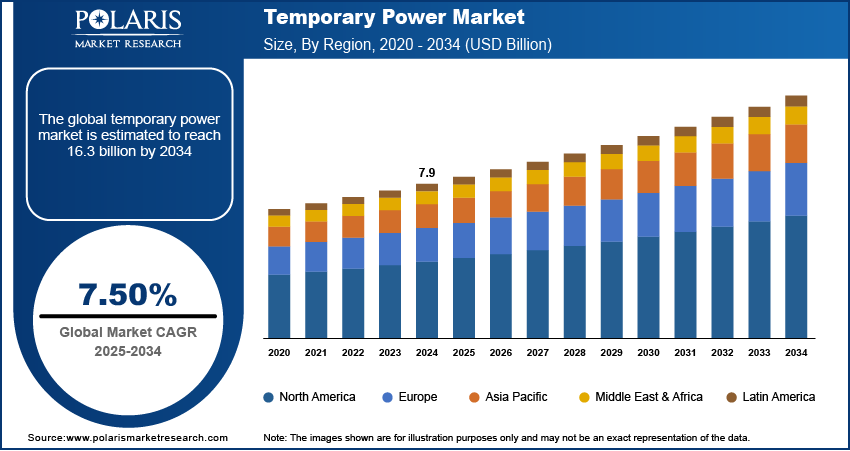
To Understand More About this Research:Download Sample Report
Power cuts and blackouts can be life-threatening in some sectors, such as Hospitals, mining, and sewage treatment plants. The temporary power market creates a huge potential due to its reliability in providing continuous electricity to sensitive sectors. Almost every device requiring an electric power source increases dependability on electricity sources, which are provided by temporary power.
For instance, in May 2022, Dr Baba Saheb Ambedkar Hospital in Rohini faced a power cut due to a fire outbreak, which led to the shifting of patients to different hospitals.
The demand for temporary power solutions has surged, particularly in developing economies, due to inadequate power infrastructure. The rising frequency of sports and corporate events has additionally contributed to the widespread adoption of temporary power solutions. Factors propelling this market include shorter turnaround times, cost reduction in power generation, and advancements in technology. The temporary power industry is committed to substantial growth, fueled by increasing demand in emerging economies, expanding construction activities, and the rapid pace of urbanization and industrialization. These trends are expected to create numerous growth opportunities within the temporary power sector throughout the forecast period.
Market Drivers
Developments in Infrastructure Projects Increasing the Demand for Temporary Power Sources
The reliability of temporary power supply in hospitals is largest due to the nature of work, which requires a continuing source of electricity, which is fulfilled using temporary power supplies that provide a reliable and constant source of electricity. Construction projects are the fastest growing in the utilization of temporary power sources. Construction sites face trouble due to the unreliability of power sources, which cost them a ton due to interruption in work; this increases the dependency on temporary power sources, which provide a constant and uninterrupted source of electricity to carry out all the operations efficiently.
Increase in Demand for Power
Urban market is the largest market for temporary power sources. Infrastructure is growing at a very high pace in urban areas. Increased infrastructure has created a demand for a constant source of electricity for smooth operations. Conventional sources are unreliable which creates a market demand for continuous source of energy which is provided by temporary power suppliers. Rural and undeveloped markets are growing fastest due unavailability of electricity through conventional sources. Rural area faces a huge interruption of power supply due to the unplanned power infrastructure which grows a demand for temporary power supplies.
Market Restraints
Depletion of Fossil Fuels
Temporary power machines use fossil fuels such as diesel to produce electricity, which is limited in nature and can be depleted by overuse. For the functioning of temporary power machines, a huge amount of diesel is utilized. Diesel is derived from the core of the earth, which can be only found in selective places on the earth, causing it to be a limited source. The rising prices of diesel due to depletion can be a concern for temporary power industries. Following the government norms and policies for the utilization of fossil fuels can be a concern for temporary power industries. Some machines emit hazardous gases which can cause harm to the environment.
Source: Polaris Market Research Analysis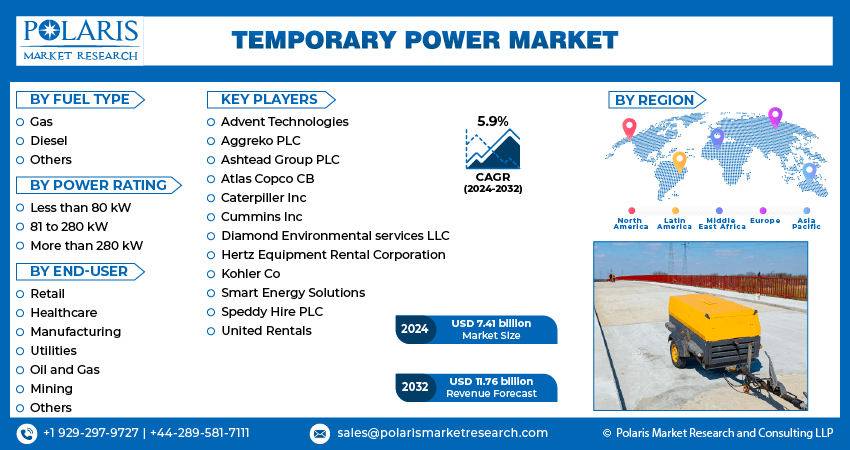
Get Full Segment-Level Forecasts & Insights: Download Sample Report
Report Segmentation
The market is primarily segmented based on fuel type, power rating, end-user, and region.
| By Fuel type | By Power Rating | By End-User | By Region |
|
|
|
|
Source: Polaris Market Research Analysis
To Understand the Scope of this Report:Request Customization
Temporary Power Market Segmental Analysis
By Fuel Type Analysis
- The diesel segment dominated the market with the largest market share among all the other available alternatives. Diesel, being the most used fossil fuel for the generation of electricity by temporary power generators, has created a dominance over the temporary power market. The availability of diesel has been a key reason for its maximum usage and dominance over the temporary power market. Diesel is commonly used for the functioning of other machinery in industries, which makes it a familiar and high-demand fuel.
By Power Rating Analysis
- 80 kW to 280 kW segment holds the largest market share. Its efficiency in handling small as well as medium-sized usages makes it an ideal segment to hold a majority stake in the market. These can be used for residential buildings, small businesses, medium businesses, and other sectors. They are cost-efficient and provide reliability to their users.
- 280 kW and above segment is anticipated to grow at the fastest rate due to the rising requirement in various sectors such as construction, hospitals, and others. The heavy requirement is fulfilled by this segment which is the reason for scope for growing fastest in the temporary power market.
By End-User Analysis
- Based on end-user analysis, the market has been segmented based on retail, healthcare, manufacturing, utilities, oil and gas, mining, and others. The utilities sector has dominated the temporary power market with the largest share due to the constant lack of electricity and aging power infrastructure in developing economies.
- The healthcare sector has recorded the fastest growth in the temporary power market. Healthcare infrastructure and technologies are improving day by day, which makes the requirement of electricity almost 24 hours. The healthcare sector is utilizing temporary power devices for smooth functioning and a sense of reliability.
Source: Polaris Market Research Analysis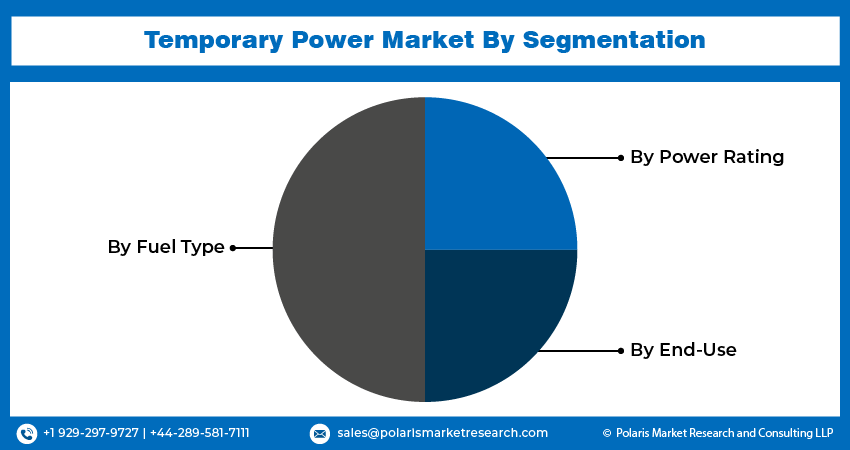
Need Granular Data Across All Market Segments? Request Customization
Regional Insights
North America Region Dominated the Global Market with the Largest Market share
North America region dominated the temporary power market due to the constant advancements in the construction and utilities sector, they demand a continuous supply of electricity to avoid heavy losses due to unexpected power cuts and blackouts. North American region is highly developed and dependent on electricity continuously. Many sectors, such as the healthcare sector, are growing in this region, which demands continuous and reliable sources of power supply.
Asia Pacific region is anticipated to grow at the fastest rate in the temporary power market. The need for temporary power solutions has experienced a significant upswing, especially in developing economies where power infrastructure is lacking. The increasing occurrence of sports and corporate events has also played a role in the widespread acceptance of temporary power solutions. Driving forces behind this market surge encompass reduced turnaround times, decreased costs in power generation, and technological advancements. The temporary power industry is on track for substantial expansion, driven by escalating demand in emerging economies, expanding construction endeavors, and the swift progression of urbanization and industrialization. These trends are anticipated to generate a multitude of growth prospects within the temporary power sector over the forecast period.
Source: Polaris Market Research Analysis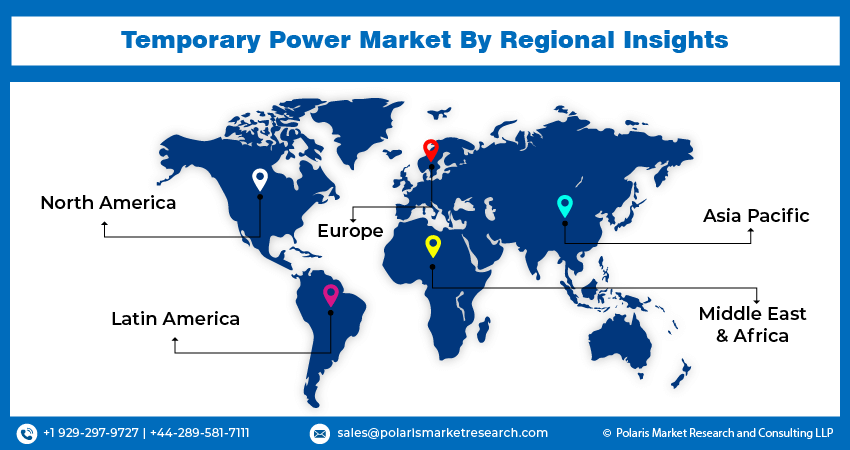
Curious About Regional Market Performance? Request Customization
Competitive Landscape
Temporary power market is fragmented and is anticipated to witness competition due to several players' presence. Major service providers in the market are constantly upgrading their technologies to stay ahead of the competition and to ensure efficiency, integrity, and safety. These players focus on partnership, product upgrades, and collaboration to gain a competitive edge over their peers and capture a significant market share.
Some of the major players operating in the global market include:
- Advent Technologies
- Aggreko PLC
- Ashtead Group PLC
- Atlas Copco CB
- Caterpiller Inc
- Cummins Inc
- Diamond Environmental services LLC
- Hertz Equipment Rental Corporation
- Kohler Co
- Smart Energy Solutions
- Speddy Hire PLC
- United Rentals
Recent Developments
- In February 2024, Infineon partnered with Worksport to supply GaN power semiconductors for portable power stations, improving efficiency and reducing size. The collaboration aims to cut system weight by 33% and costs by 25% while enhancing power density.
- In January 2024, United Rentals unveiled a detailed strategy to help customers lower greenhouse gas emissions at job sites while maintaining productivity and safety. The approach includes deploying cleaner temporary power solutions.
- In December 2023, Aggreko acquired nine community solar projects in New York totaling 59 MW, supporting its energy transition strategy. The move expands its renewable portfolio, strengthens clean energy scale, and positions Aggreko to better serve low- and moderate-income communities.
- In December 2023, Advent Technologies introduced a portable clean power solutions for construction and EV Charging.
- In July 2023, United Rentals introduced rental power solutions for rental companies to expand their power solutions.
Report Coverage
Temporary Power market report emphasizes on key regions across the globe to provide better understanding of the product to the users. Also, the report provides market insights into recent developments, trends and analyzes the technologies that are gaining traction around the globe. Furthermore, the report covers in-depth qualitative analysis pertaining to various paradigm shifts associated with the transformation of these solutions.
The report provides detailed analysis of the market while focusing on various key aspects such as competitive analysis, fuel types, power rating, end-users, and their futuristic growth opportunities.
Temporary Power Market Report Scope
| Report Attributes | Details |
| Market size value in 2025 | USD 8.49 billion |
| Revenue forecast in 2034 | USD 16.3 billion |
| CAGR | 7.50% from 2025 – 2034 |
| Base year | 2024 |
| Historical data | 2020 – 2023 |
| Forecast period | 2025 – 2034 |
| Quantitative units | Revenue in USD billion and CAGR from 2025 to 2034 |
| Segments covered | By Fuel Type, By Power Rating, By End-User, By Region |
| Regional scope | North America, Europe, Asia Pacific, Latin America, Middle East & Africa |
| Customization | Report customization as per your requirements with respect to countries, region, and segmentation. |
Source: Polaris Market Research Analysis
Temporary Power Market FAQ's
The key companies in Temporary Power Market include Advent Technologies, Aggreko PLC, Ashtead Group PLC, Atlas Copco CB, Caterpiller Inc.
Temporary Power Market exhibiting the CAGR of 7.50% during the forecast period
Temporary Power Market report covering key segments are fuel type, power rating, end-user, and region.
The key driving factors in Temporary Power Market are Developments in infrastructure projects increasing the demand for temporary power sources
Temporary Power Market Size Worth $ 16.3 Billion By 2034.
Download Sample Report of Temporary Power Market
Please fill out the form to request a customized copy of the research report.


