
Travel Agency Services Market Size, Future Trends, Strategy, 2025-2034
REPORT DETAILS
What is the Travel Agency Services Market?
The global travel agency services market was valued at USD 565.60 million in 2024 and is expected to grow at a CAGR of 9.4% during the forecast period. The growth of the tourism industry, rising investment in the tourism sector, and rising adoption of digital technologies is fueling the growth.
Key Insights
- The full-service global travel segment dominated in 2024 due to rising demand for convenience in planning trips.
- The online segment is expected to witness fastest growth during the forecast period as it provides convenience to the customers.
- North America dominated with largest share in 2024 due to rising interest in exploring tourist destinations with unique and tailored experiences.
- Asia Pacific is projected to accounted for a significant share in the global market due to growing travel industry in this region.
Industry Dynamics
- The adoption of digital technologies is fueling the growth.
- The growth of the tourism sector is driving the growth.
- The rising government investment in tourism sector is boosting the industry growth.
- High competition and price sensitivity among travelers is limiting the growth of the industry.
Market Statistics
- 2024 Market Size: USD 565.60 Million
- 2034 Projected Market Size: USD 1,383.65 Million
- CAGR (2025-2034): 9.4%
- Largest Market: North America
Source: Polaris Market Research Analysis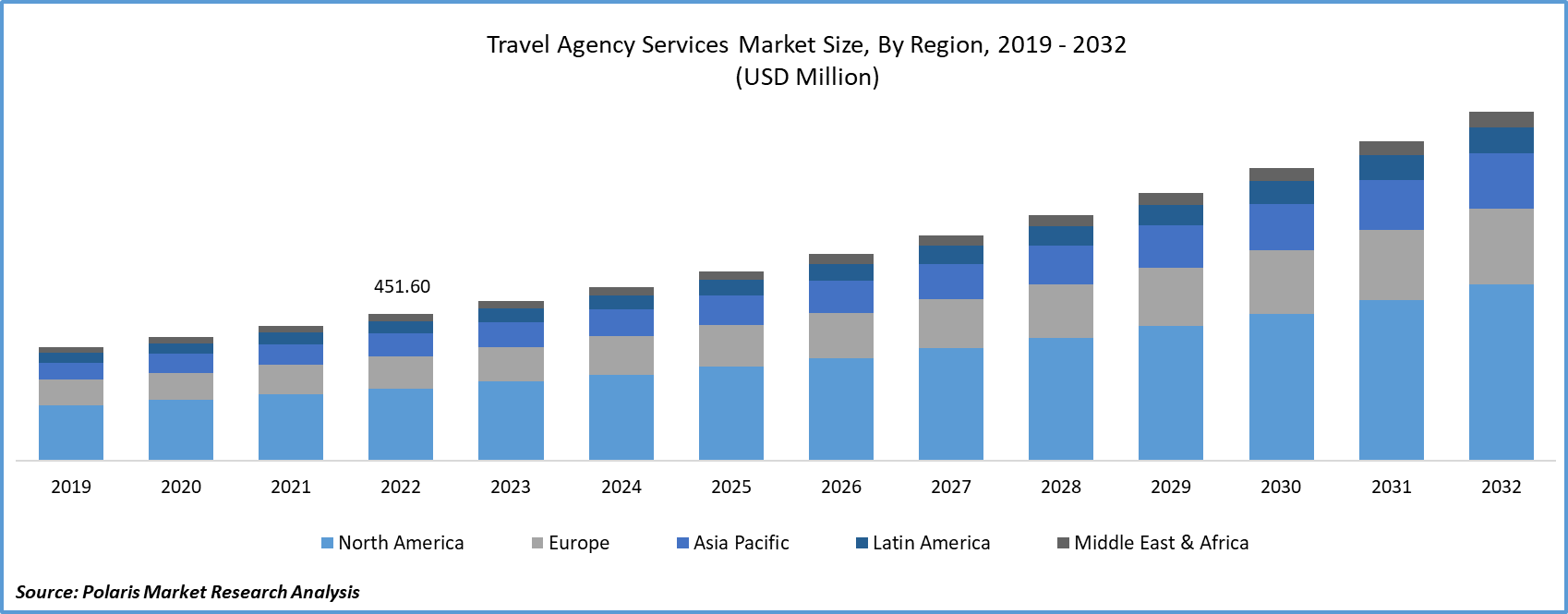
To Understand More About this Research: Download Sample Report
Travel agency services involve planning, organizing, and booking travel arrangements such as flights, hotels, tours, and transportation for individuals or groups. These agencies provide expert advice, customized itineraries, and assistance with visas or travel insurance. Their goal is to ensure a smooth, convenient, and enjoyable travel experience for clients
Adoption of digital technologies is rising worldwide. This rise in adoption is fueled by advancement in technology, increase in the tech savvy population and government initiative for digitalization. This rise in the adoption is driving the usage of mobile apps for online bookings. This has improved the customer reach of the travel agencies in urban as well as rural areas worldwide, which in turn is fueling the growth of the industry. Moreover, rising smartphone penetration globally is further fueling the adoption of digital technologies such as online booking platforms, thereby driving the growth..
Source: Polaris Market Research Analysis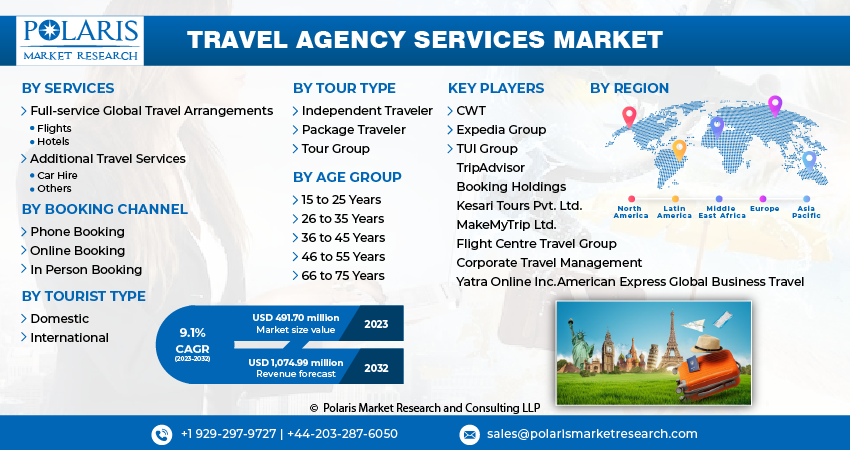
Get Full Segment-Level Forecasts & Insights: Download Sample Report
Industry Dynamics
What Factors are Driving the Industry Growth?
The major factor driving the industry is growth of the tourism sector. The tourism sector worldwide is growing due to rising disposable income in the developing countries such as India, China, and Brazil. This rise in the disposable income is supporting general population to spend on leisure travel domestically and internationally, which is fueling the demand for the travel agency service. Moreover, the air connectivity globally is improving which has expanded the tourism sector to new places that were undisclosed. This expansion is driving the demand for the travel agency services. Governments worldwide are further investing in tourisms sector to attract tourist and to create an income source, which is further driving the demand, thereby driving the growth of the industry.
Report Segmentation
The market is primarily segmented based on services, booking channel, tourist type, tour type, age group, and region.
| By Services | By Booking Channel | By Tourist Type | By Tour Type | By Age Group | By Region |
|
|
|
|
|
|
Source: Polaris Market Research Analysis
To Understand the Scope of this Report: Request Customization
Why Full-Service Global Travel Segment Dominated in 2024?
In 2024, the full-service global travel segment dominated with largest share. This segment includes Hotels and Flights. It prompts the consumer to prefer travel agency services as they provide convenience in planning trips and help in booking flights and arranging accommodation, reducing further work for tourists. Furthermore, these services are mostly accessible by business professionals for their attendance in meetings, conferences, and formal business gatherings on the spot with the travel agency services, saving their time from booking flight tickets, hotels, etc. The presence of experience in booking and planning trips enabled them to optimize traveling routes, driving consumer satisfaction with their services, thereby driving the segment growth.
Source: Polaris Market Research Analysis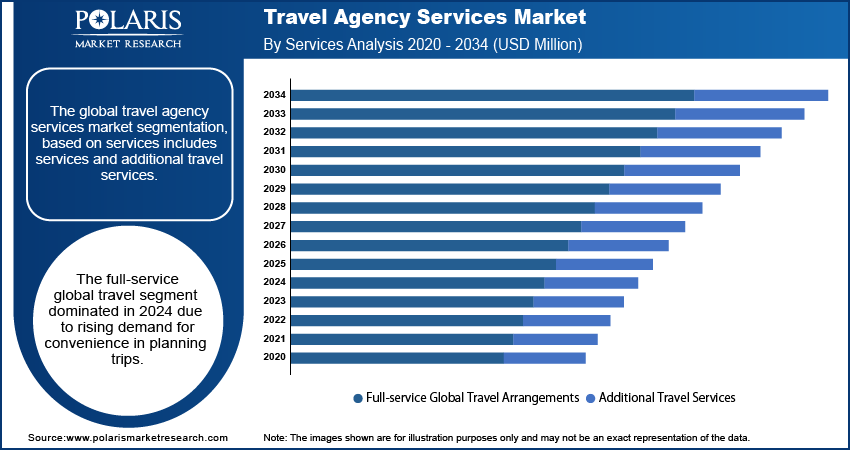
Need Granular Data Across All Market Segments? Request Customization
Which Segment by Booking Channel is Expected to Witness Significant Growth?
The online segment is expected to witness significant growth during the forecast period This booking channel provides convenience to the customers, saving them a huge amount of time going to travel agency offices, queuing time, and transportation costs with the evolution of digitally customized company booking platforms. It provides trust to new customers by enabling reviews of existing trip experiences by users. Additionally, travel agencies are establishing customized websites and apps for high user satisfaction and convenience. This user-friendly interface through online platforms is driving consumers to prefer travel agency services.
Regional Insights
How North America Captured Largest Market Share?
North America accounted for the largest revenue share in 2024. Consumers in the region are showcasing interest in exploring tourist destinations with unique and tailored experiences. Based on the U.S. According to the Travel Association's latest data, demand for summer travel increased by 12% in June compared to the same month last year. United Nations travel spending increased by 0.9%, surpassing June 2022 levels and witnessing 4.9% growth in June 2023. Growing travel spending among individuals is creating demand for travel experiences, fueling demand for flights, hotels, and itinerary planning. It is increasing services to travel agencies as they assist in booking tickets and planning trips for people.
What are the Reasons for Asia Pacific's Fastest Growth?
Asia Pacific is expected to witness fastest growth rate in the forecast period. The growing travel industry in this region is contributing to the growth and demand for travel agency services during the study period. According to Brightsun Travel, the Indian market is projected to surpass 2019 levels by 2023, with the travel market reaching USD 29 billion. The travel industry is projected to reach USD 29 billion by 2026, with a CAGR of 18 percent annually. The growing travel industry in this region is creating new growth potential for travel agency services in the future. A growing travel market drives agencies to expand their reach in global markets, fueling new growth opportunities for travel agencies. It enables consumers to access international tourism with competitive pricing, fostering demand for travel agency services in the coming years.
Source: Polaris Market Research Analysis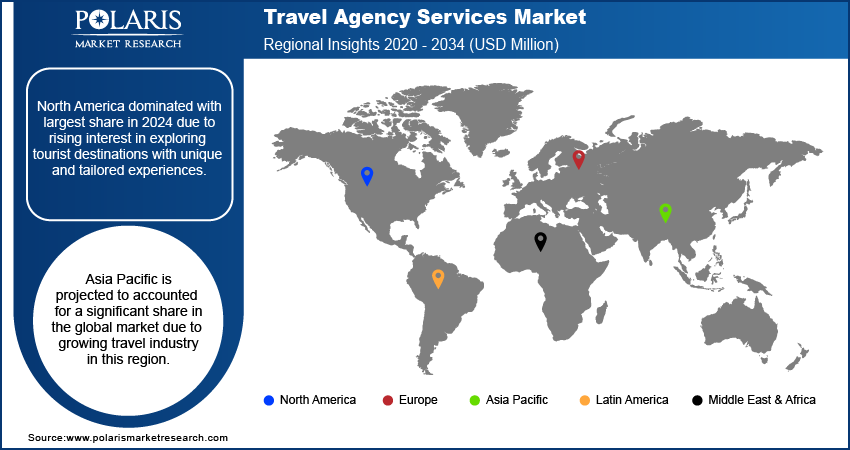
Curious About Regional Market Performance? Request Customization
Key Market Players & Competitive Insights
The key market players in the Travel Agency Services Market continually innovate to meet the evolving needs of travelers and businesses, whether through technological advancements, personalized service offerings, or sustainability initiatives. Competitive insights in the market reveal a strong emphasis on customer experience, convenience, and digital transformation as drivers of success in a dynamic and competitive industry.
Some of the major players operating in the global market include
- American Express Global Business Travel
- Booking Holdings
- Corporate Travel Management
- CWT
- Expedia Group
- Flight Centre Travel Group
- Kesari Tours Pvt. Ltd.
- MakeMyTrip Ltd.
- TripAdvisor
- TUI Group
- Yatra Online Inc.
Recent Developments
- October 2025, Thomas Cook India and SOTC Travel launched private Van Tours for small groups, offering flexible seven-day itineraries across Asian and Middle Eastern destinations. The tours combined group affordability with personalized experiences, catering to growing demand for convenient, value-driven short-haul international travel.
- August 2025, Yatra Online launched its AI travel assistant “DIYA,” enabling users to plan complete trips, manage bookings, and access multilingual, voice-enabled support. The Digital Intelligent Yatra Advisor enhanced personalization and efficiency, marking Yatra’s major step toward AI-driven travel assistance in India.
- October 2024: Hays Travel announced plans to acquire more UK high-street outlets, driven by rising demand for personalized travel services. The company reported £457 million in group revenue, up 8% year over year, and a 43% increase in pre-tax profit to £73 million.
- September 2024: Travel Counsellors surpassed £1 billion in annual sales for the first time, with leisure travel contributing £735 million. The company aims to double revenues over the next five years by expanding its premium leisure and corporate segments.
- March 2023, Expedia Group, a travel booking agent, entered into an API partnership with Wheel the World, a wheelchair booking platform, to increase traveling convenience for people with disabilities.
- January 2023, Mercado Libre, an e-commerce technology platform, extended its partnership with CWT, an Argentine-based company, on corporate travel management services for the next three years.
Travel Agency Services Market Report Scope
| Report Attributes | Details |
| Market size in 2024 | USD 565.60 million |
| Market size in 2025 | USD 617.40 million |
| Revenue forecast in 2034 | USD 1,383.65 million |
| CAGR | 9.4% from 2025 - 2034 |
| Base year | 2024 |
| Historical data | 2020 - 2023 |
| Forecast period | 2025 - 2034 |
| Quantitative units | Revenue in USD million and CAGR from 2025 to 2034 |
| Segments covered | By Services, By Booking Channel, By Tourist Type, By Tour Type, By Age Group, By Region |
| Regional scope | North America, Europe, Asia Pacific, Latin America, Middle East & Africa |
| Customization | Report customization as per your requirements with respect to countries, region, and segmentation. |
Source: Polaris Market Research Analysis
Travel Agency Services Market FAQ's
key companies in travel agency services market are American Express Global Business Travel, Booking Holdings, Corporate Travel Management, CWT, Expedia Group.
The global travel agency services market is expected to grow at a CAGR of 9.4% during the forecast period.
The travel agency services market report covering key segments are services, booking channel, tourist type, tour type, age group, and region.
key driving factors in industrial travel agency services market are Rising Technological Adoption.
The global travel agency services market size is expected to reach USD 1,383.65 Million by 2034
Download Sample Report of Travel Agency Services Market
Please fill out the form to request a customized copy of the research report.


