
Veterinary Endotracheal Tubes Market Size, Share & Growth Analysis Report, 2026-2034
REPORT DETAILS
Market Statistics
What is Veterinary Endotracheal Tubes Market Size?
The global veterinary endotracheal tubes market was valued at USD 10.25 billion in 2025 and is expected to grow at a CAGR of 8.3% during the forecast period. The growth is driven by rise in the surgical procedure, rise in the pet ownership, and technological advancement.
Market Statistics
- 2025 Market Size: USD 10.25 Billion
- 2034 Projected Market Size: USD 20.89 Billion
- CAGR (2026-2034): 8.3%
- Largest Market: North America
One of the primary factors fueling this growth is the substantial increase in the pet population over recent years. More households are opting to adopt pets, recognizing the positive impact on their overall quality of life. The Global Animal Health Association highlighted various factors contributing to the growth of pet ownership in 2022. These include the increased level of physical activity associated with having a pet, the sustained mental health benefits derived from pet companionship, and exposure to germs that can positively influence the gut health of pet owners, contributing to overall well-being.
The trends in pet ownership are indicative of a broader shift in societal attitudes toward the role of companion animals, not just as pets but as integral members of households. This shift has ramifications for the veterinary care industry, driving an increased need for medical interventions, including surgical procedures and critical care, which, in turn, contributes to the growth of markets related to veterinary medical devices such as endotracheal tubes.
Source: Polaris Market Research Analysis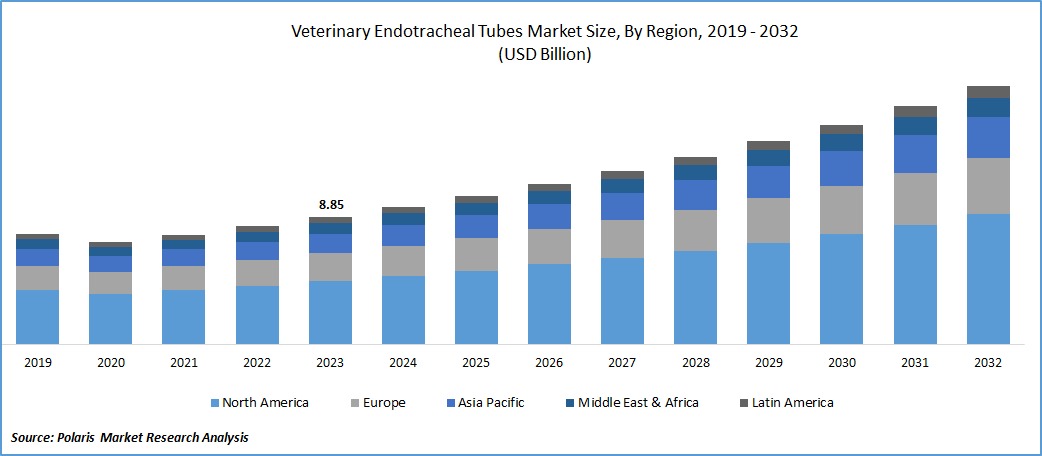
To Understand More About this Research: Download Sample Report
The increasing prevalence of veterinary surgeries and critical care visits has led to a growing utilization of endotracheal tubes in providing respiratory support for animals undergoing surgical procedures. For instance, in 2022, data from the Animal Medical Center in the United States indicates that a substantial number of surgeries, totaling 4,064, were performed on animals. Additionally, approximately 19,399 animals sought emergency and critical care services, with some of these cases requiring surgical interventions.
Endotracheal tubes play a crucial role in veterinary surgeries by ensuring a clear airway and facilitating controlled breathing in animals under anesthesia. This is particularly important for maintaining the animal's respiratory function and overall well-being during surgical procedures. In emergency and critical care situations, where animals may require immediate medical attention and surgical interventions, the use of endotracheal tubes becomes imperative for effective respiratory support.
Industry Dynamics
Growth Drivers
Rise in Veterinary Surgical Procedures
The American Heart Association has acknowledged that owning a dog may play a role in reducing the risk of cardiovascular disease. This recognition of the positive impact of pet ownership on human health contributes to the increasing trend in the pet population. As more people choose to have pets, especially dogs, the demand for veterinary services and medical interventions, including surgeries, rises correspondingly.
Pets, like dogs, can encounter emergencies such as accidents or health issues that may necessitate surgical procedures. In these situations, veterinary professionals may employ medical devices, including endotracheal tubes, to provide necessary respiratory support during surgeries. Endotracheal tubes are crucial in maintaining a clear airway and facilitating proper breathing, especially in anesthesia administration during surgical procedures.
Key Trends in Veterinary Endotracheal Tubes
| Trend | Description | Drivers in practice | Examples / species notes |
| Species‑specific tube design | Development of tubes tailored to canine, feline, avian and small exotic anatomy (smaller diameters, different lengths, more flexible materials). | Wide variation in tracheal size/shape across dogs, cats, birds, rabbits and rodents; need to minimise laryngeal trauma and ensure a reliable seal. | Cats: recommendation for flexible, thin‑walled tubes with low‑profile cuffs; red rubber tubes discouraged due to tracheal injury risk. Small exotics (e.g., hedgehog, chinchilla, squirrel): use 1.0–2.5 mm straight silicone tubes with endoscope‑guided intubation. |
| Safer cuff designs and pressure management | Increased emphasis on low‑pressure, high‑volume cuffs and on measuring cuff pressure to avoid mucosal injury, tracheal stenosis, and post‑extubation complications. | Studies show many veterinary practitioners inflate cuffs by feel, often exceeding recommended pressures, increasing risk of airway damage. | Survey of vets: majority did not routinely use manometers; authors recommend routine monitoring and training on proper inflation techniques. Guidelines for cats highlight cautious use or avoidance of cuffed tubes to prevent tracheal damage and laryngospasm. |
| Shift away from older red‑rubber tubes | Guidance increasingly advises against red‑rubber tubes (especially in cats) because of stiffness, thick walls, and higher risk of tracheal trauma. | Recognition that older materials can obscure laryngeal view, require more force, and increase mucosal damage. | Modern PVC or silicone tubes with clear walls and thinner cuffs recommended for small animals. |
| Growth of supraglottic airway devices (SGADs) | Species‑specific supraglottic devices (e.g., v‑gel®) provide sealed airways without entering the trachea, reducing intubation difficulty and potential trauma. | Difficult laryngoscopy in cats, rabbits and some brachycephalic breeds; desire for faster placement and fewer laryngeal complications. | v‑gel® devices for cats, rabbits and dogs: anatomically shaped cuffs, integrated gastric channel (dogs) for passive/active protection against regurgitation. Studies in rabbits show both endotracheal tubes and SGADs can provide adequate spontaneous ventilation. |
| Advanced airway aids and visualization | Increased use of rigid/semi‑rigid endoscopes, video laryngoscopes and other aids to place very small tubes accurately in exotics and small mammals. | Need to safely intubate very small patients and those with challenging airway anatomy while minimising repeated attempts. | Over‑the‑endoscope intubation using a 1.0 mm fiberscope and 1.5 mm tubes in small exotics like hedgehogs and sugar gliders; similar techniques for rats and squirrels. Human airway tech trends (e.g., video laryngoscopes, non‑inflatable cuffs) are starting to influence veterinary practice. |
| Infection‑control and single‑use focus | Growing preference for single‑use or easily sterilised tubes and SGADs, particularly in referral and wildlife settings. | Concern over cross‑contamination, resistant organisms, and biofilm formation in reusable devices. | v‑gel® and similar devices offered as single‑patient or limited‑reuse with clear reprocessing guidelines to maintain safety. |
Source: Polaris Market Research Analysis
Source: Polaris Market Research Analysis
Get Full Segment-Level Forecasts & Insights: Download Sample Report
Report Segmentation
The market is primarily segmented based on animal type, product type, end use, and region.
| By Animal Type | By Product Type | By End Use | By Region |
|
|
|
|
Source: Polaris Market Research Analysis
To Understand the Scope of this Report: Request Customization
By Animal Type Analysis
Dog segment accounted for the largest market share in 2025
Dog segment accounted for the largest share. The global dog population is on the rise, leading to an increased demand for veterinary check-ups and testing. Pet owners consistently prioritize the health of their dogs, often seeking medical attention, including surgeries, when necessary. In cases where surgeries are required, such as those arising from diseases or accidents, the need for endotracheal tubes becomes crucial. These tubes assist veterinarians in performing surgeries that necessitate general anesthesia. Consequently, these factors contribute to the notable growth of the cat segment in the veterinary endotracheal tubes market.
According to the Global Animal Health Association, the United States is home to approximately 85 million dogs. The association also reports that families in the U.S., Europe, & China collectively own nearly, half a billion cats & dogs. In 2021, 70% of households in the U.S. had a pet, marking an increase from 68% in 2016. The substantial global pet population is a key driver contributing to the growth of the market.
By Product Type Analysis
Cuffed segment held the significant market share in 2025
Cuffed segment held the significant market share. This can be attributed to its widespread adoption, particularly in emergency and critical care surgeries within the veterinary field. Cuffed endotracheal tubes offer several advantages that contribute to their popularity. One notable advantage is their ability to enhance the fractional inspired oxygen percentage (FiO2). The cuff creates a seal, preventing air leakage and enabling better control over the administered oxygen levels, crucial in maintaining adequate oxygenation during surgical procedures. Additionally, cuffed endotracheal tubes facilitate positive pressure ventilation. The cuff acts as a barrier, preventing the escape of gases and allowing controlled ventilation, which is essential in ensuring proper respiratory support during surgeries.
Uncuffed segment is expected to gain substantial growth rate. Uncuffed endotracheal tubes lack the inflatable cuff that characterizes cuffed tubes. The absence of a cuff allows for a simpler design, making them suitable for certain applications and preferences. Companies are recognizing the diverse needs and preferences of veterinary professionals and pet owners, leading them to provide a range of options, including uncuffed tubes.
By End Use Analysis
Hospitals segment held the significant market share in 2025
Hospitals segment held the significant market share. Many veterinary hospitals feature a 24/7 emergency and critical care division, intensifying the demand for veterinary endotracheal tubes. This increased demand is attributed to the fact that a significant proportion of pets visiting the emergency and critical care division typically require surgical interventions or other treatments involving general anesthesia. Consequently, this trend is expected to drive the growth of the hospitals segment within the market.
Clinics segment is expected to gain substantial growth rate. This growth is linked to the global proliferation of clinics, which are increasingly adopting various measures to emulate hospital-like functionalities and offer expanded services for pets and animals. Many clinics are enhancing their infrastructure to provide services like critical care units and surgery rooms for pets.
Source: Polaris Market Research Analysis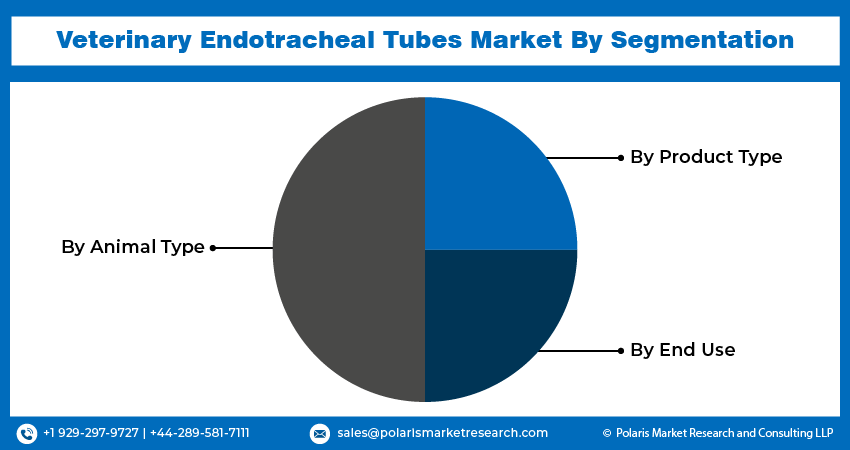
Need Granular Data Across All Market Segments? Request Customization
Regional Insights
North America dominated the global market in 2025
North America dominated the global market. Region’s growth is due to growing pet population, coupled with an increased focus on pet-related expenditures. Additionally, according to the American Veterinary Medical Association (AVMA), there has been a notable increase in pet owners' spending on their dogs and cats between 2020 and 2022. Specifically, the mean annual expenditure on veterinary visits for dogs rose from USD 224 in 2020 to USD 362 in 2022.
The Asia Pacific will grow with substantial pace. This is due to substantial pet population, a rising number of local market players, and an increasing awareness of animal health. Moreover, the region is home to numerous veterinary hospitals and clinics engaged in various surgical procedures on animals. Consequently, this heightened activity in veterinary services is anticipated to drive the demand for veterinary endotracheal tubes in the region.
Source: Polaris Market Research Analysis
Curious About Regional Market Performance? Request Customization
Key Market Players & Competitive Insights
Market players also participate in strategic partnerships, acquisitions, and collaborations to fortify their standing within the industry and enhance their product portfolios. These collaborations allow companies to leverage each other's strengths, explore new markets, and improve the overall quality of their product offerings.
Some of the major players operating in the global market include:
- Medtronic
- Conduct Science
- Harvard Apparatus
- RWD Life Science Co., LTD
- Vetamac, Inc.
Veterinary Endotracheal Tubes Market Report Scope
| Report Attributes | Details |
| Market size in 2025 | USD 10.25 billion |
| Market size in 2026 | USD 11.07 billion |
| Revenue forecast in 2034 | USD 20.89 billion |
| CAGR | 8.3% from 2026 – 2034 |
| Base year | 2025 |
| Historical data | 2021 – 2024 |
| Forecast period | 2026 – 2034 |
| Quantitative units | Revenue in USD million/billion and CAGR from 2026 to 2034 |
| Segments covered | By Animal Type, By Product Type, By End Use, By Region |
| Regional scope | North America, Europe, Asia Pacific, Latin America; Middle East & Africa |
| Customization | Report customization as per your requirements with respect to countries, region and segmentation. |
Source: Polaris Market Research Analysis
Veterinary Endotracheal Tubes Market FAQ's
The global veterinary endotracheal tubes market size is expected to reach USD 20.89 billion by 2034
Medtronic, Conduct Science, Harvard Apparatus, RWD Life Science are the top market players in the market.
North America region contribute notably towards the global Veterinary Endotracheal Tubes Market.
The global veterinary endotracheal tubes market is expected to grow at a CAGR of 8.3% during the forecast period.
Animal type, product type, end use, and region are the key segments in the Veterinary Endotracheal Tubes Market.
Download Sample Report of Veterinary Endotracheal Tubes Market Size, Share & Growth Analysis Report, 2026-2034
Please fill out the form to request a customized copy of the research report.


