

The global Video on Demand Market was valued at USD 98.6 billion in 2024 and is projected to grow at a CAGR of 6.20% from 2025 to 2034. Continued streaming platform penetration and content diversification are sustaining growth.
Video on Demand (VoD) Market Overview
Video on demand (VoD) services provide a range of entertainment, including movies, sports, and educational programs. In contrast to traditional broadcasting, which relies on television and set-top boxes for access, VoD platforms enable users to view content on consumer electronics such as laptops, smartphones, and tablets. The increasing demand for digital media gadgets and the availability of high-speed internet for remote media access, coupled with the widespread use of mobile phones due to the rising popularity of social media platforms, are key drivers of the video-on-demand market's development. Recent technological advancements and the internet's increasing reach in many countries worldwide enable video-on-demand providers to deliver top-notch content. Additionally, the release of new shows and movies on these platforms during the pandemic has further boosted the growth of subscription video-on-demand (SVoD) services.
 Market.png)
To Understand More About this Research: Download Sample Report
- For instance, in February 2024, Netflix has recently announced that Expedia Group would become its first global advertising partner. Expedia Group is planning to run a multi-market campaign on Netflix's ad-supported plan over the next four years until 2024. The partnership is intended to help Expedia Group expand its international reach while also reinforcing Netflix's multi-nation advertising package that it offers to both its members and marketers.
VoD technology is not just limited to entertainment; it is increasingly being used in educational institutions to provide flexible and convenient access to educational resources, lectures, and training materials. Similarly, VoD solutions are utilized in corporate settings for internal training, onboarding, and sharing knowledge. In areas where traditional broadcasting infrastructure is lacking, such as rural or developing regions, VoD services offer a cost-effective and scalable way to deliver content to remote populations. This helps bridge the digital divide and promotes socio-economic development.
 Market New.png)
Market Drivers
Market expansion will be fueled by growing mobile data subscriptions and expanding use of smart devices.
The growing popularity of smart devices has made it easier for people to consume media. Consumers are increasingly seeking convenient access to a variety of entertainment options. The global video-on-demand market is expanding due to factors such as improved affordability, widespread availability of high-speed internet, and increased usage of these services. Rising mobile data subscriptions, expanded high-speed data networks, and advanced features in smartphones and tablets are also driving growth.
Video-on-demand services offered by streaming providers allow users to select and watch videos from a vast library at their convenience without any contractual obligations. Various subscription plans cater to different user needs, offering cost-effective options compared to traditional subscriptions. The market's growth is further fueled by the flexibility and user-friendly experiences provided by these services, as well as the increasing popularity of regional content and online streaming services over traditional ones. Additionally, the trend of streaming live events to avoid large crowds is accelerating the market's expansion.
Growing Industry Demand for Video Content
The Video on Demand (VoD) market opportunity is surging due to the growing demand for video content across industries. Digital platform adoption and technological advancements are key drivers, making VoD services crucial for entertainment and information dissemination. This demand extends beyond traditional media to include education, corporate, and healthcare sectors. As more industries see the value of video for communication and engagement, VoD market demand rises, shaping how information is delivered. The COVID-19 pandemic accelerated this trend, with remote work and virtual events increasing the need for flexible, on-demand video solutions.
Market Restraints
The increasing risk posed by piracy of video content
The Video on Demand (VoD) sector faces a significant challenge in the form of heightened concerns over video content privacy. As on-demand video consumption rises, so do worries about the security and confidentiality of user data. Users trust platforms with sensitive information, but the risk of unauthorized access, data breaches, or misuse is a pressing issue for the VoD market development. Violations of data privacy, unauthorized sharing of personal information, and potential exploitation of user data for targeted advertising or other purposes have raised red flags among consumers. Stricter regulations, such as GDPR and other privacy laws, underscore the need for VoD platforms to implement strong security measures to protect user privacy. However, compliance with these regulations presents operational challenges for service providers and complicates the user experience.
The increasing awareness and concern regarding video content privacy issues could undermine user trust and the adoption of VoD services. Addressing these privacy challenges is crucial for the sustained growth of the VoD market share, requiring a delicate balance between providing personalized content recommendations and ensuring the stringent protection of user data to mitigate the restraint posed by the escalating threat to video content privacy.
Report Segmentation
The market is primarily segmented based on offering type, content type, monetization model, platform type, deployment model, vertical and region.
|
By Offering Type |
By Content Type |
By Monetization Model |
By Platform Type |
By Deployment Model |
By Vertical |
By Region |
|
|
|
|
|
|
|
To Understand the Scope of this Report: Request Customization
Video on Demand (VoD) Market Segmental Analysis
By Content Type Analysis
- The fitness/educational programs segment is projected to grow at the fastest CAGR during the video on demand market forecast period. Educational and fitness program content are key components of the VoD market growth, offering users access to instructional and motivational content for personal development and well-being. VoD platforms provide a wide range of educational programs covering language learning, professional development, academic subjects, and specialized skills training. Users can learn at their own pace and customize their educational experience to their interests and goals.
Accessing exercise classes, workout routines, and wellness content from home is now easier with fitness program content available on VoD platforms. These programs cater to different fitness levels and include cardio, strength training, yoga, Pilates, and mindfulness practices. Users can select from an array of workouts guided by certified trainers, follow organized training plans, and track their progress, which helps them achieve their fitness objectives and lead healthier lives.
By Vertical Analysis
- The media and entertainment industry is poised to dominate the video-on-demand (VoD) market. VoD solutions and services are transforming content delivery and viewer interaction. These encompass technologies and services facilitating efficient management, distribution, and monetization of digital content. Key components include content delivery networks (CDNs) for smooth streaming, digital rights management (DRM) systems for secure access, and analytics tools for understanding viewer behavior. Media companies can provide tailored, on-demand content experiences across various platforms, adapting to evolving consumer preferences. Essential services such as consulting, implementation, and support play a critical role for businesses, guiding strategic decisions, facilitating seamless platform integration, and optimizing technical infrastructure for dependable content delivery.
 Market Seg.png)
Video on Demand (VoD) Market Regional Insights
The North America region dominated the global market with the largest market share in 2024
The North America region dominated the global market with the largest market share in 2023 and is expected to maintain its dominance over the anticipated period. VOD solutions and services are essential in the US, providing a range of content delivery models to suit different consumer tastes. Subscription-based streaming services like Netflix, Amazon Prime Video, and Hulu are prevalent, offering a wide array of on-demand content for a monthly fee. These platforms provide convenience and personalization, allowing users to access movies, TV shows, and original content without traditional broadcast schedules. The rise of subscription-based VOD services has led to a decline in cable TV subscriptions in the US, indicating a change in how audiences consume entertainment.
The Asia Pacific region is expected to be the fastest growing region, with a healthy CAGR during the projected period. The growth in this region can be largely attributed to a large customer base and an increase in mobile internet users across populous countries. Global players in the market are expanding their presence here due to the rising demand from end-users for sports, music, TV entertainment, and other content. For instance, Disney's Hotstar had approximately 39 million active users in 2021, according to a report by Media Partners Asia (MPA). The report also predicts that India will have 1 billion video screens by 2024.
 Market Reg.png)
Competitive Landscape
The Video on Demand (VoD) market development is fragmented and is anticipated to witness competition due to several players' presence. Major service providers in the market are constantly upgrading their technologies to stay ahead of the competition and to ensure efficiency, integrity, and safety. These players focus on partnership, product upgrades, and collaboration to gain a competitive edge over their peers and capture a significant market share.
Some of the major players operating in the global market include:
- Amazon
- Apple
- Comcast Corporation
- Flicknexs
- Fox Corporation
- Indieflix
- Lionsgate
- Netflix
- Paramount Global
- Reliance Jio
- Sony
- The Walt Disney Company
- Warner Bros Discovery
- Webnexs
Recent Developments
In December 2025: Netflix agreed to acquire Warner Bros. Discovery’s studio and streaming businesses for USD 72 billion. The deal included HBO Max and DC Studios but did not include CNN and Discovery networks. Netflix planned to keep theatrical releases for Warner films, expand its content library, and explore bundled subscriptions. However, the deal faced antitrust review over concerns about competition and the impact on cinemas.
In December 2025: Prime Video introduced a dedicated news section on its homepage, allowing U.S. users to watch live local, national, and global news for free. The platform brought together channels such as ABC News Live, CBS News 24/7, CNN Headlines, and NBC News NOW, increasing its total offering to more than 200 channels.
In August 2025: Apple Original Films released F1 The Movie for premium video on demand and digital purchase with Warner Bros. Home Entertainment. Directed by Joseph Kosinski and produced by Jerry Bruckheimer, the film became the highest-grossing original movie of the year, earning over USD 600 million worldwide. The release also aligned with F1 The Album, which crossed one billion streams globally.
In January 2025: Disney’s Hulu + Live TV and Fubo announced a merger, creating the second-largest U.S. pay-TV provider with 6.2 million subscribers. Source: Mordor Intelligence.
In September 2024: LG partnered with Rakuten TV to launch “LG Movies & TV,” a VOD service on LG TVs in Europe, featuring over 6,000 titles and streamlined payments through the new webOS Pay system.
In January 2024: Walt Disney's partnership with Apple Vision Pro symbolizes significant advancements in narrative and entertainment in the future. Disney hopes to transform the way people experience their cherished stories and characters by utilizing Apple's state-of-the-art augmented reality (AR) technology.
Report Coverage
The Video on Demand (VoD) market report emphasizes on key regions across the globe to provide better understanding of the product to the users. Also, the report provides market insights into recent developments, trends and analyzes the technologies that are gaining traction around the globe. Furthermore, the report covers in-depth qualitative analysis pertaining to various paradigm shifts associated with the transformation of these solutions.
The report provides detailed analysis of the market while focusing on various key aspects such as competitive analysis, offering type, content type, monetization model, platform type, deployment model, vertical, and their futuristic growth opportunities.
Video on Demand (VoD) Market Report Scope
|
Report Attributes |
Details |
|
Market size value in 2025 |
USD 104.7 billion |
|
Revenue forecast in 2034 |
USD 168.2 billion |
|
CAGR |
6.20% from 2025 – 2034 |
|
Base year |
2024 |
|
Historical data |
2020 – 2023 |
|
Forecast period |
2025 – 2034 |
|
Quantitative units |
Revenue in USD billion and CAGR from 2025 to 2034 |
|
Segments covered |
By Offering Type, By Content Type, By Monetization Model, By Platform Type, By Deployment Model, By Vertical, By Region |
|
Regional scope |
North America, Europe, Asia Pacific, Latin America; Middle East & Africa |
|
Customization |
Report customization as per your requirements with respect to countries, region and segmentation. |
FAQ's
key companies in Video on Demand (VoD) Market are Netflix, Amazon, Google, The Walt Disney Company, Apple, Warner Bros Discovery, Comcast Corporation
Video on Demand (VoD) Market exhibiting the CAGR of 6.20% during the forecast period
The Video on Demand (VoD) Market report covering key segments are offering type, content type, monetization model, platform type, deployment model, vertical and region.
key driving factors in Video on Demand (VoD) Market are Growing Industry Demand for Video Content
The global Video on Demand (VoD) market size is expected to reach USD 168.2 billion by 2034
Page last updated on:
Mar-2024
Research Methodology
A robust system of research, verification, and forecasting designed to ensure reliable and actionable market insights.
Polaris Market Research uses a clear and structured approach to deliver insights that clients can rely on. The process combines detailed primary and secondary research, including direct communication with industry experts. The detailed information helps build a complete picture of market trends and developments. Secondary data is gathered from credible sources such as industry reports, company filings, government source links, and trusted organization databases. It is then cross-checked through discussions with key stakeholders across the value chain. Market size and forecasts are developed using both bottom-up and top-down methods to ensure accuracy and consistency in the final results.
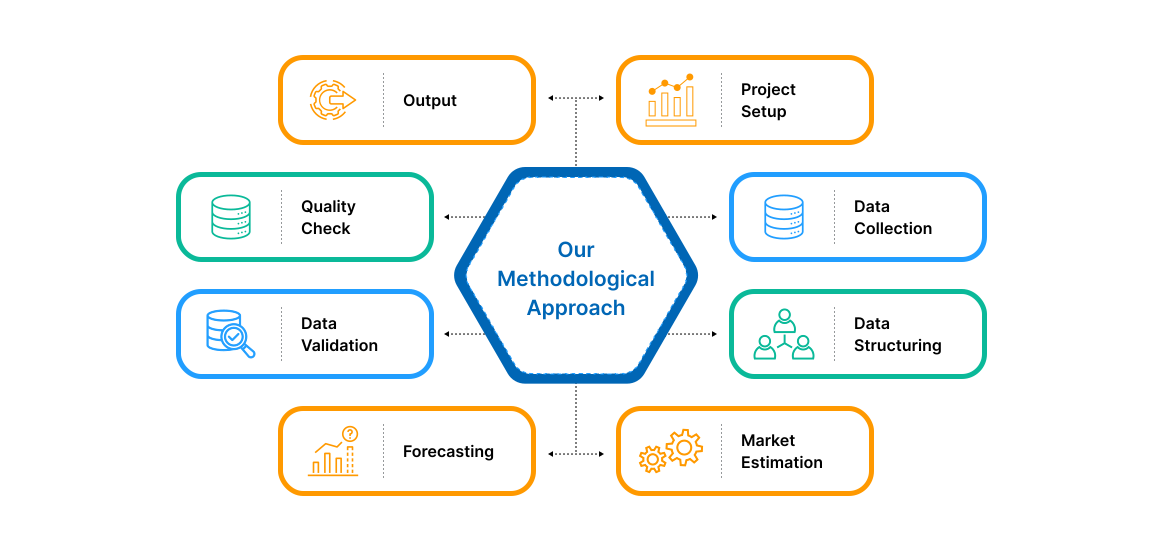
1. Project Setup
Step 1 & 2:
- We start every project by clearly understanding the client’s objective or goal, then defining the market scope, and aligning regions, segments, and timelines.
- Once the foundation is set, we collect data from all-around of sources, including company reports, government databases, and paid industry platforms.
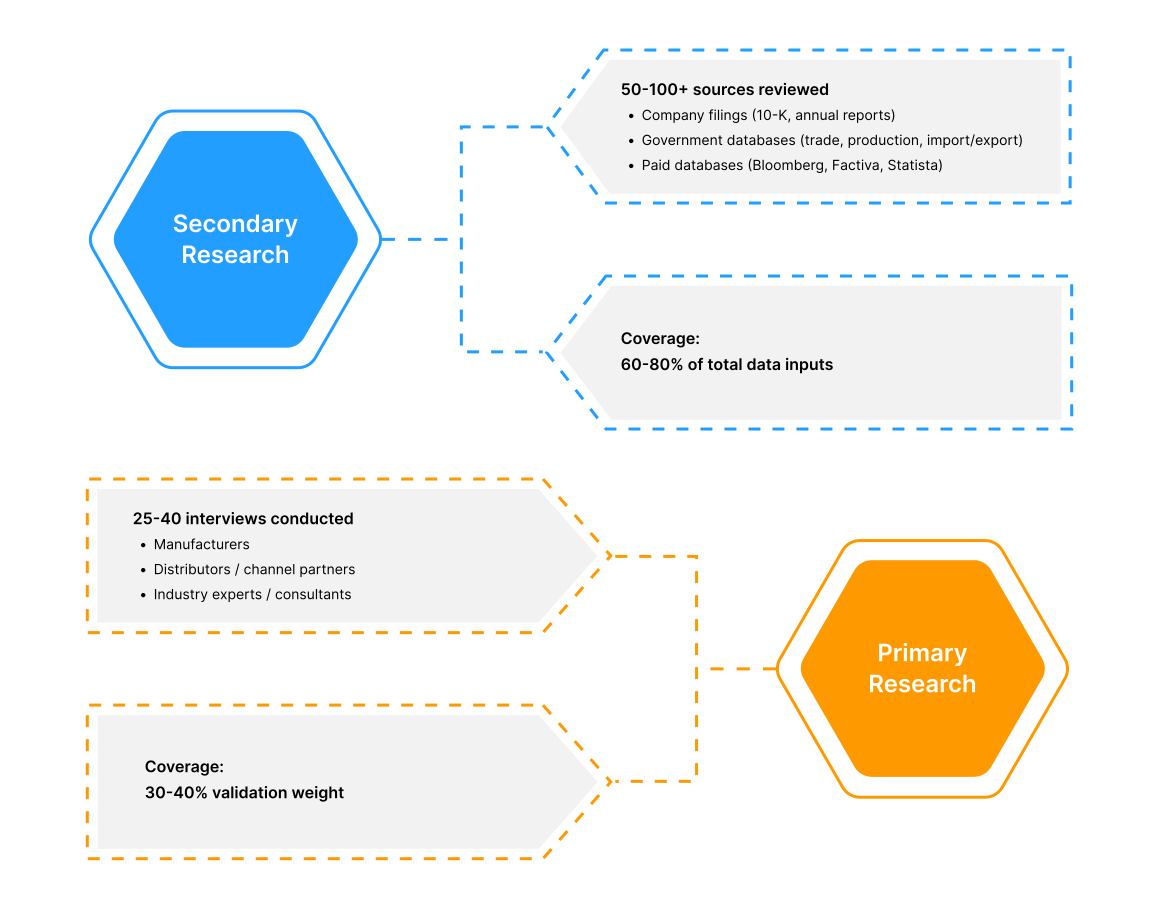
- Our research is based on secondary data, which helps us build a strong understanding of the market across regions and industries. Then we validate this information through primary research by speaking directly with industry experts, companies, and stakeholders.
- By combining secondary and primary research, we ensure that our market insights are accurate, practical, and closely aligned with real market conditions.
2. Data Collection
We gather information from both public and verified sources:
3. Data Structuring
Step 3:
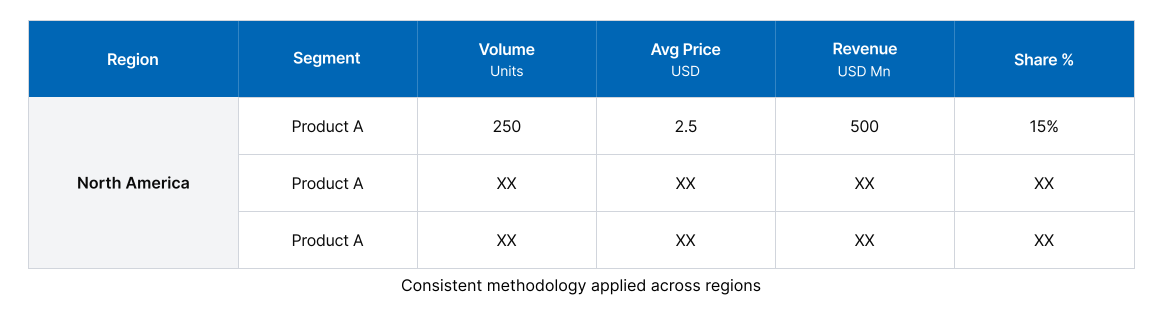
- All collected data is organized into a consistent format to ensure accurate analysis. Since inputs come from multiple sources, they are standardized and aligned before use.
- The data is segmented by product, application, and region, and mapped across a defined historical period (2020–2024). All values are converted into common units (USD Mn/Bn), and volume and pricing are aligned where required to estimate revenue.
- Any overlaps or inconsistencies are reviewed and adjusted to maintain accuracy (<5% variance threshold).
- The result is a structured dataset that allows for clear comparison across regions and supports reliable analysis and forecasting.
Structured Market Dataset, USD Mn/Bn
4. Data Structuring
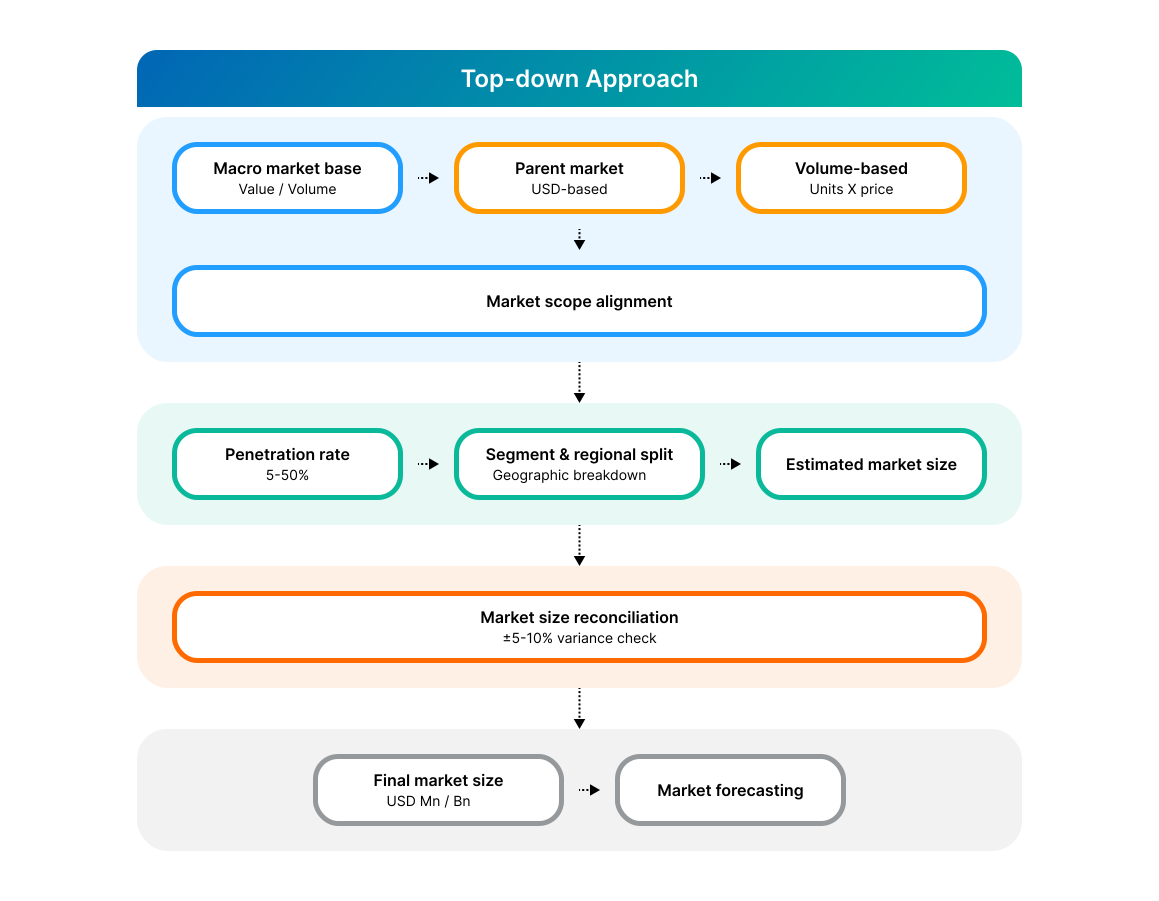
Step 4: TOP-DOWN APPROACH
- We start with the overall market size at a global or macro level.
- The market is then narrowed down based on scope and industry relevance.
- We apply penetration rates and split the data by region and segment.
- This helps us estimate the market size for specific segments.
- The numbers are validated through cross-checks to ensure accuracy.
Step 5: BOTTOM-UP APPROACH
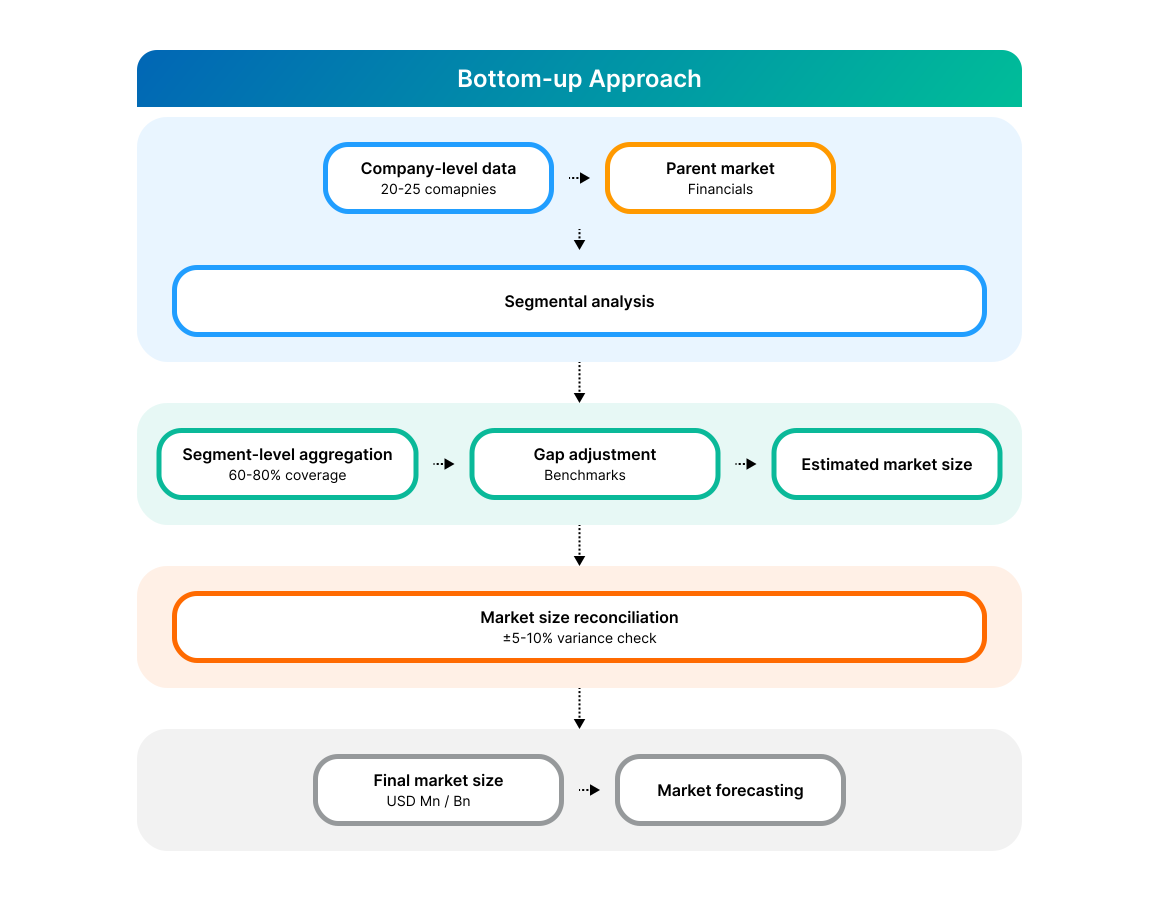
- We begin by analyzing data from leading companies in the market.
- Revenue data is collected and mapped across different segments.
- The data is then aggregated to estimate the total market size.
- To fill in any gaps, adjustments are made based on industry standards.
- Validation checks make sure that the results are correct.
5. Data Structuring
Step 6:
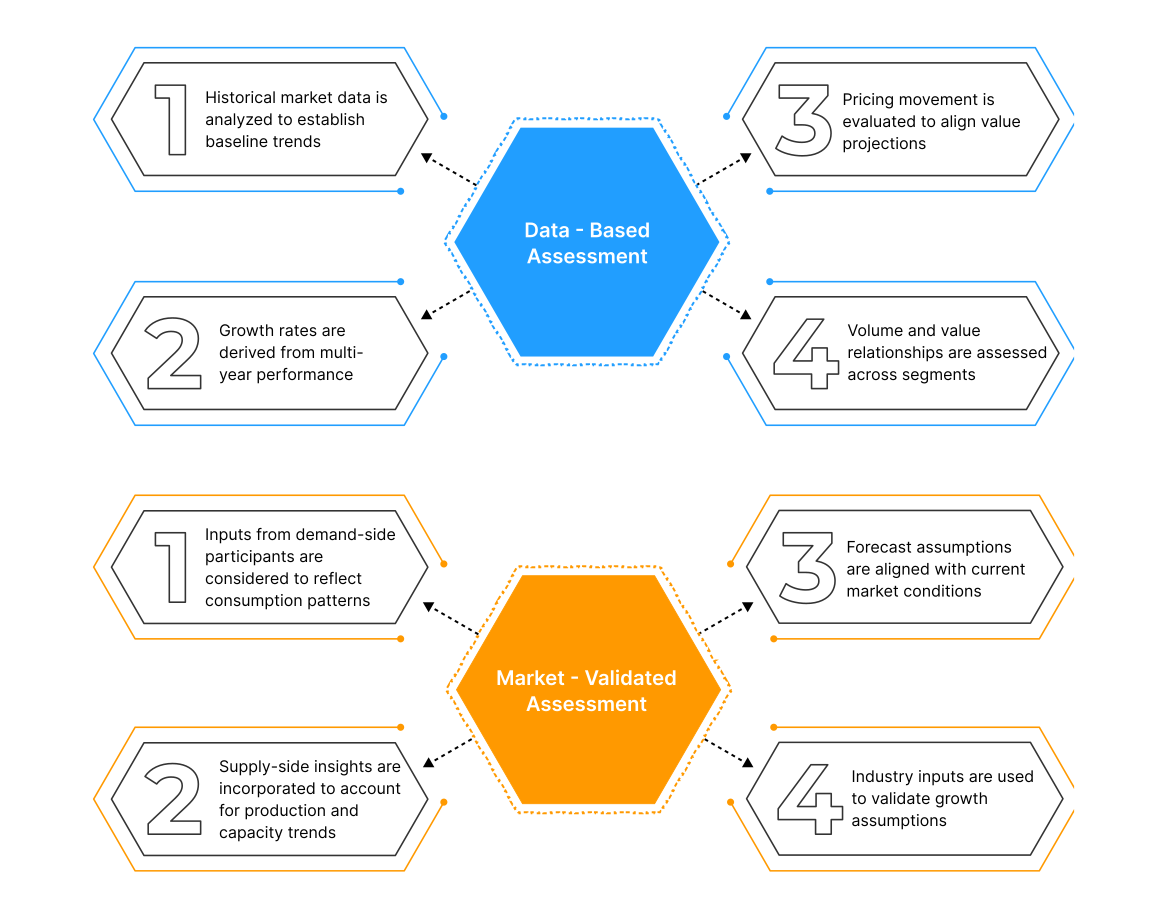
At Polaris Market Research, we employ a methodical forecasting strategy. This approach blends the analysis of historical data with real-time market validation. To forecast future trends with precision, we examine past patterns, pricing fluctuations, and the interplay of supply and demand. To ensure our conclusions reflect the present market landscape, we actively seek input from industry experts and key stakeholders.
To refine our predictions, we carefully consider critical elements such as market drivers and restraints, fluctuations in raw material costs, emerging technologies, and the production capabilities of various regions. Furthermore, we assess regulatory frameworks and potential policy shifts to gauge their potential impact on market expansion.
All this information is synthesized to generate precise forecasts for each segment and region. These forecasts illuminate the current state of the market and highlight forthcoming opportunities.
6. Data Structuring
Step 7:
In the final stage, we validate all our estimates using a triangulation method, where data is cross-checked from multiple reliable sources, like company data, primary interviews, and secondary research. This helps us make sure that our numbers are correct and fit with the rest of the market.
This process involves verifying data consistency across various segments and geographic areas. It also requires comparing historical trends with the assumptions support the forecast. Any discrepancies involve adjustments to ensure everything remains aligned and dependable.
Once the data is finalized, we prepare the final outputs, including market size estimates, segment-wise breakdowns, and growth metrics. These are delivered in structured formats such as tables, charts, and data files for easy analysis and use.
We collaborate closely with clients, ensuring the final products align with their requirements. This includes offering tailored adjustments, supplementary data analyses, and continuous assistance. Furthermore, we monitor market trends post-delivery, providing updates and refinements to maintain the insights' relevance as time passes.
Post-delivery, we continue to monitor market shifts, offering updates and adjustments to ensure the insights remain relevant over time.
Validation
Triangulation Framework
Estimates are cross-verified across three sources:
Company-level data
• Primary inputs from industry participants
• Secondary benchmarks and published data
Variance maintained within +5-10%
Adjustments applied to align estimates
Segment values validated against overall market structure
Quality Check
Data Consistency & Integrity
Segment totals validated to 100%
Regional estimates aligned with global market size
Historical trends compared against forecast outputs
Assumptions reviewed for cross-segment and regional alignment
Output & Delivery
Final Outputs
Market size estimates (USD Mn/Bn)
Segment-wise distribution (%)
Growth metrics (CAGR %)
Final Outputs
Structured tables and charts
Segment-level datasets
Excel-based data files for further analysis
Client Alignment & Support
- Deliverables are aligned with defined client requirements and scope
- Custom data cuts and segment splits are incorporated as required
- Post-delivery queries are addressed through analyst interactions
- Additional clarifications and data support are provided upon request
Client Continuity & Updates
- Market developments are tracked post-delivery to capture changes in key trends
- Updated data and revisions are provided based on new market inputs
- Additional refinements and data cuts are shared as required
- Continued analyst engagement supports evolving client requirements


