

Market Overview
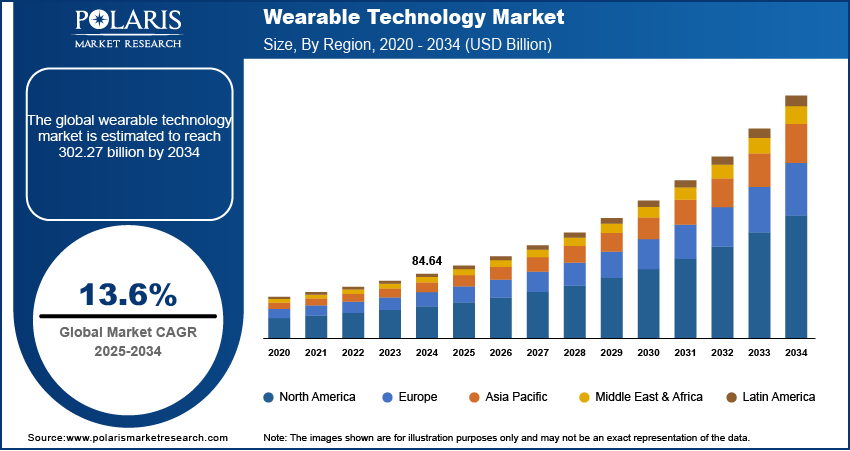
The wearable technology market size was valued at USD 96.48 billion in 2025. According to our wearable tech industry analysis, the market is projected to account for a CAGR of 12.3% between 2026 and 2034. The market for wearable technology has experienced significant growth driven by rising consumer interest in health and fitness tracking. The market also benefits from advancements in miniaturization and sensor technology, as well as rising demand for convenient, connected devices.
The wearable devices market includes smartwatches, fitness trackers, smart rings, smart eyewear, smart clothing, and artificial intelligence-based biosensors. It excludes implantable medical devices or non-connected portable electronic devices. This helps to maintain the boundaries of the wearable devices market for accurate analysis.
Revenue growth is being driven not just by hardware sales, but also by health analytics, artificial intelligence-based coaching, and data integration services. This represents a fundamental change in the business model of the wearable electronics market.
Key Insights
- The wrist-wear segment dominates the market. This is due to increasing demand for smartwatches and fitness trackers offering multifunctional features such as health tracking and smooth integration with smartphones.
- The consumer electronics segment is projected to exhibit the highest growth rate. The segment is driven by the increasing use of wearable devices for remote patient monitoring, chronic disease management, and preventive care.
- North America leads the wearable technology market. The regional market dominance is due to high disposable incomes and robust technology infrastructure. The regional market also benefits from early adoption of advanced electronic devices.
- The market in the Asia Pacific is expected to witness the highest growth rate. The expanding consumer base and rising awareness of health and fitness trends drive the regional market growth.
Industry Dynamics
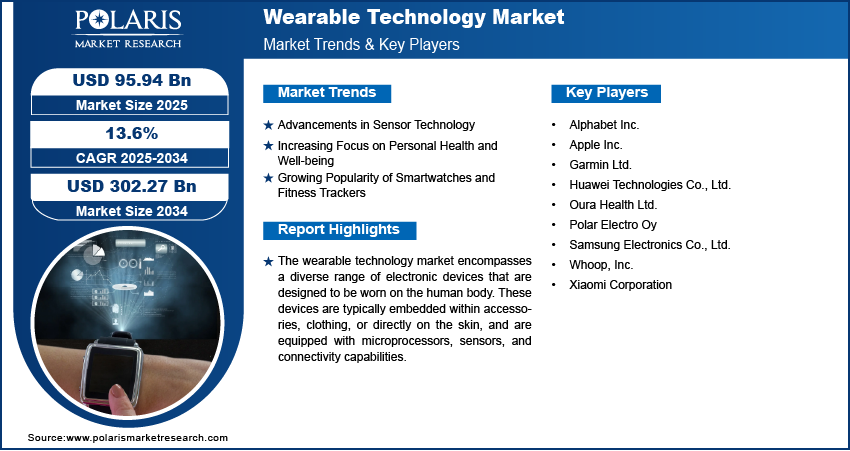
- Advanced sensors are being increasingly used to enable more accurate and comprehensive monitoring of health parameters. This has contributed to increased market demand.
- Advancements in sensor technology have enabled devices to track a broad array of health and environmental information with greater precision.
- The market is also being driven by the rising global concern for individual health. Customers are using products such as smartwatches and fitness trackers to monitor and maintain their well-being in an active way.
- The expensive nature of complex devices could hold them back against price-conscious consumers and decelerate mass-market take-up.
Market Statistics
2025 Market Size: USD 96.48 billion
2034 Projected Market Size: USD 274.17 billion
CAGR (2026–2034): 12.3%
North America: Largest Market Share
To Understand More About this Research:Request a Free Sample Report
AI Impact on Wearable Technology Market
- Wearables are improved through AI, which allows for more intelligent and personalized experiences for the user.
- It allows wearables to analyze real-time data and provide useful insights for health, fitness, and well-being.
- Algorithms driven by AI improve the accuracy of health monitoring, including heart rate, sleep, and stress monitoring.
- AI-powered smart wearables are capable of learning about the user's behaviors and providing useful suggestions for improvement.
- Predictive analytics wearable technology allows for the early detection of health anomalies, behavioral patterns, and adaptations.
- Edge AI reduces the need for connectivity to the cloud and increases battery life, and AI-driven subscriptions increase lifetime customer value (LCV).
The wearable technology market consists of electronic devices that are intended to be worn on the body, often integrated into accessories, clothing, and even implanted or tattooed onto the skin. Wearable devices are often microprocessor-enabled and have connectivity capabilities, making them a large component of the Internet of Things (IoT). The primary purpose of wearable technology is to sense, analyze, and transmit information about the wearer, often providing immediate biofeedback. The growth in the wearable technology market is driven by the increasing use of wearable technology in the healthcare, business, and defense industries, indicating the vast potential of the market.
The increasing awareness of personal health and wellness has fueled the demand for wearable health monitoring devices. The growing integration of advanced sensors also improves the accuracy of health monitoring. Additionally, the increasing demand for smartwatches and fitness trackers, along with the current wearable technology trends of flexible displays and long battery life, is also increasing the market penetration. The market's development is also driven by constant innovation in device features and functionalities, making them increasingly indispensable to a growing number of users. For companies planning to enter the market, the strong market forecast and promising market stats indicate significant growth opportunities. The market is defined by ever-evolving technology and an ever-expanding user base in need of seamless integration of technology into their lives.
Market Dynamics
Advancements in Sensor Technology
The continued advancement in sensor technology is driving the growth of the wearable technology market. This is because wearable devices are becoming more advanced, incorporating the ability to measure a variety of physiological and environmental information. For example, a research article published in the journal RSC Advances in 2025 highlighted the recent developments in flexible sensor design for machine learning-based human-machine interaction. The article emphasizes how innovation in sensor materials and data processing has allowed wearable electronics to be developed to a high level of performance. The advancement from basic wearable sensors, such as motion detectors, to the integration of pressure, gyro, temperature, humidity, and advanced heart rate sensors, as discussed in a 2023 Renesas article, enables a more comprehensive understanding of the wearer's health.
Besides the conventional motion sensor, the use of advanced MEMS sensor technology, optical heart rate monitoring (PPG), an ECG module, SpO2, and a bioimpedance sensor has increased data accuracy and the scope of medical-grade monitoring. Moreover, the use of edge AI processing has helped remove the delay and improve privacy, which is an important aspect of the cybersecurity of wearables.
Increasing Focus on Personal Health and Well-being
The market for wearable technology is experiencing increasing demand driven by rising global health and wellness awareness. People are becoming more proactive about their health and wellness. They are doing so by monitoring their health statistics and engaging in physical activities. They are also focusing on following a healthy lifestyle. Wearable technology helps individuals monitor and analyze their health statistics and activities. 2 out of 5 US/UK smartwatch/fitness tracker owners agree that it helps them feel more in control of their health and proactively manage their well-being.
According to an article published by UCLA Health in 2025, wearable technology helps users in various areas of health management, including physical activity, heart health, workout optimization, and even fall detection. The potential of these devices to provide a personal health snapshot and support early detection of medical issues is a major driving force in the market.
Wearable medical devices are increasingly being integrated with remote patient monitoring, chronic disease management, and preventive care services. This is further strengthening the wearable medical devices market subsegment.
Data Privacy & Regulatory Landscape
Data governance is a major challenge in the wearables market. Data transmission via cloud infrastructure is a key compliance concern under regulations such as the General Data Protection Regulation (GDPR) and the Health Insurance Portability and Accountability Act (HIPAA). It also includes issues regarding the transfer of data across international boundaries.
In this context, there is increased focus on enhancing wearable cybersecurity. Secure boot systems and encrypted Bluetooth communication are emerging as important competitive factors in the smart wearables industry. Over-the-air (OTA) firmware updates are also being focused on for medical device compliance.
Enterprise & Industrial Opportunity
Although consumer electronics dominate in terms of market size, enterprise wearable technology is also being recognized as an emerging market segment with high growth prospects. Industrial wearables are increasingly being used for workforce safety monitoring, AR-based maintenance, logistics management, and fatigue monitoring.
These applications have significant benefits for improving efficiency and reducing workplace hazards, thus making enterprise workforce wearable solutions an essential part of digital transformation initiatives.
Segment Insights
Market Assessment – By Product
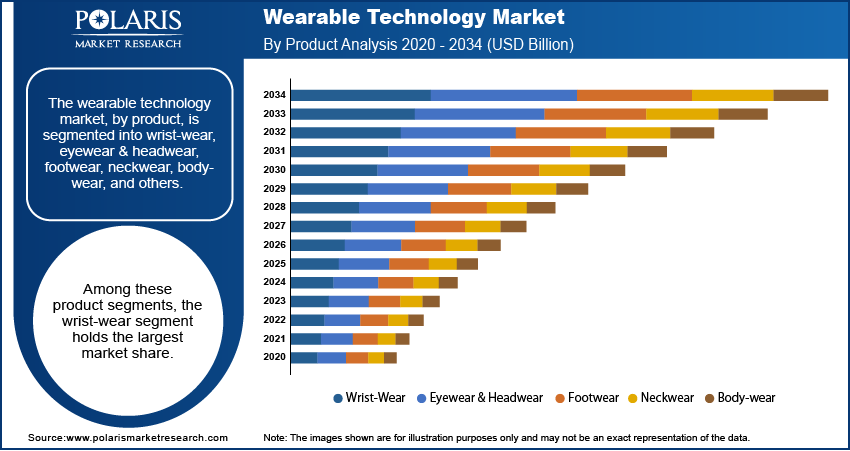
The market, by product, is segmented into wrist-wear, eyewear & headwear, footwear, neckwear, body-wear, and others. The wrist-wear segment holds the largest wearable technology market share. The segment’s dominance stems from the widespread adoption of smartwatches, fitness equipment, and trackers. The devices provide multiple functions. These include health tracking, communication, and smartphone connectivity. Wrist-worn devices have become popular worldwide because they provide practical advantages. The wristwear segment maintains its top market position through ongoing product development. Customers can access new features together with fresh designs and budget-friendly products.
The eyewear & headwear segment is exhibiting the highest market growth rate. The segment's rapid growth is driven by improvements in augmented reality (AR) and virtual reality (VR) technologies. These developments have led to the creation of smarter glasses and head-mounted displays that offer users enhanced functionality. The devices demonstrate significant market potential because they are used across multiple industries, including gaming, enterprise, healthcare, and training. Current research and development efforts in miniaturization, display technology, and user interface design work to enhance both performance and attractiveness of eyewear and headwear products. The combination of these factors drives strong market growth while shaping upcoming market developments.
Market Evaluation – By Application
The market, by application, is segmented into consumer electronics, healthcare, enterprise & industrial applications, and others. The consumer electronics segment dominates the wearable technology market share. The current market position of this segment remains dominant because consumers widely adopt smartwatches, fitness trackers, and other wearable devices. People use these devices to enjoy entertainment content and communicate with others. The devices enable users to track their physical exercise progress. The combination of broad consumer appeal, ongoing product development, and lower average selling prices has created a major market presence for wearable technology in the consumer electronics industry. The market demand from individual users makes consumer electronics the dominant application area.
The healthcare application segment is anticipated to exhibit the highest market growth rate. Wearable devices are being increasingly integrated into healthcare for remote monitoring and control and chronic disease management. These devices are also being used for preventive care. The growing emphasis on personalized healthcare solutions and the potential of wearables to improve patient outcomes and reduce healthcare costs are significant drivers of the segment’s growth. Furthermore, advancements in sensor technology and data analytics are enabling the development of more advanced medical-grade wearable devices. This indicates substantial market potential and drives significant market development.
Regional Analysis
The global market shows different patterns of adoption and development across regions. The markets in North America, Europe, Asia Pacific, Latin America, and the Middle East and Africa display distinct dynamics. The dynamics of these markets depend on various factors, which include technological infrastructure, consumer preferences, healthcare regulations, and economic development. While some regions currently exhibit higher market penetration, others are poised for more rapid expansion. The market potential of different regions, together with changing patterns in global markets, reveals distinct market opportunities. The regional differences across markets require businesses to understand these markets to assess market-entry opportunities for their wearable technology products.
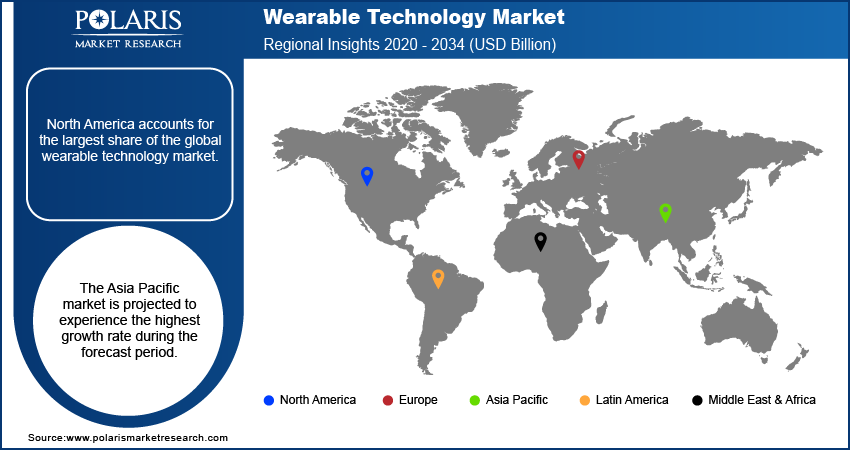
North America accounts for the largest share of the wearable technology market revenue. The region holds this dominant position because of its high disposable income, strong technological infrastructure, and use of advanced electronic devices. The region experiences high demand for wearable devices because people prioritize health and wellness, and major technology companies and strong healthcare systems operate there. The established market drive and developed consumer electronics industry make North America the leading market for wearable products.
The Asia Pacific wearable technology market is expected to register the highest growth rate during the forecast period. The rapid expansion is driven by a large and rapidly growing consumer base and increasing disposable incomes. The market also benefits from the rising awareness of health and fitness trends. The widespread use of smartphones and higher internet access rates across various Asia Pacific nations creates a positive environment that allows people to use connected wearable devices. Governments provide financial assistance to digital health projects and technology research, creating significant market opportunities that will drive future market growth.
Key Players and Competitive Insights
The analysis of the wearable technology market competition shows that the industry has multiple active competitors. The market is highly competitive because multiple companies are competing for market share. Market leaders use their ecosystem strength (Apple ecosystem integration), clinical trustworthiness (Garmin health metrics), AI-driven personalization systems (Google Gemini integration), and subscription-based revenue systems (Whoop, Oura) to compete against each other. The industry's competitive landscape is undergoing major changes through the establishment of strategic partnerships and active collaborations. Various business acquisitions are also shaping the market environment. The industry competition is shifting away from hardware-based product differences towards AI-driven data analysis, data-sharing systems, and compatibility with multiple platforms.
A few key major players currently active in the wearable technology market include Apple Inc.; Samsung Electronics Co., Ltd.; Alphabet Inc. (Fitbit LLC); Garmin Ltd.; Xiaomi Corporation; Huawei Technologies Co., Ltd.; Polar Electro Oy; Oura Health Ltd.; and Whoop, Inc. These companies offer a diverse range of wearable products. Their offerings include smartwatches, fitness trackers, smart eyewear, and other body-worn devices. Their products meet diverse consumer needs and market preferences.
Apple Inc. is headquartered in Cupertino, California, US. Their offerings in the wearable technology market primarily include the Apple Watch. The Apple Watch is a popular smartwatch known for its health and fitness tracking. It seamlessly integrates with the Apple ecosystem and a wide range of applications. The Apple Watch maintains a significant presence in the wrist-wear segment. This makes Apple a relevant player in driving market demand and shaping industry trends.
Garmin Ltd. is located in Schaffhausen, Switzerland. The company provides a wide range of wearable devices. They include smartwatches, fitness trackers, and specialized wearables for running, cycling, and outdoor activities. The excellent build quality and precise GPS tracking capabilities of Garmin products have earned recognition in the market. The company also focuses on detailed performance metrics. The products meet the needs of both casual users and serious athletes who want to achieve their goals.
List of Key Companies
- Alphabet Inc.(Google Pixel Watch)
- Apple Inc.
- Garmin Ltd.
- Huawei Technologies Co., Ltd.
- Oura Health Ltd.
- Polar Electro Oy
- Samsung Electronics Co., Ltd.
- Whoop, Inc.
- Xiaomi Corporation
Industry Developments
- In July 2025, Amazon acquired Bee in order to enter the smart device market with a goal of expanding into AI-based wearables.
- In July 2025, Trinity Biotech released the CGM+ AI-based biosensor for complete metabolic monitoring.
- In May 2025, Google invested USD 150 million into Warby Parker, Kering Eyewear, and Gentle Monster to help develop AI-based smart glasses.
- In May 2025, Google and Samsung unveiled prototypes of AI-based smart glasses with Gemini technology that are capable of providing real-time translations at I/O 2025.
- In December 2024, Cheil India, TVF, and Samsung (South Korea) launched the Galaxy A16 5G as part of a strategic partnership to showcase the device's functionality in real-world settings through TVF storytelling to attract consumers in smaller cities. The campaign demonstrated how the high-performance product is affordable and relevant for users in India.
Wearable Technology Market Segmentation
By Product Outlook (Revenue – USD Billion, 2021–2034)
- Wrist-Wear
- Eyewear & Headwear
- Footwear
- Neckwear
- Body-Wear
- Others
By Operation Outlook (Revenue – USD Billion, 2021–2034)
- AI-based
- Conventional
By Type Outlook (Revenue – USD Billion, 2021–2034)
- Non-Textile Wearables
- Wearable Smart Textiles
By Application Outlook (Revenue – USD Billion, 2021–2034)
- Consumer Electronics
- Healthcare
- Enterprise & Industrial Applications
- Others
By Regional Outlook (Revenue, USD Billion, 2021–2034)
- North America
- US
- Canada
- Europe
- Germany
- France
- UK
- Italy
- Spain
- Netherlands
- Russia
- Rest of Europe
- Asia Pacific
- China
- Japan
- India
- Malaysia
- South Korea
- Indonesia
- Australia
- Vietnam
- Rest of Asia Pacific
- Middle East & Africa
- Saudi Arabia
- UAE
- Israel
- South Africa
- Rest of Middle East & Africa
- Latin America
- Mexico
- Brazil
- Argentina
- Rest of Latin America
Wearable Technology Market Report Scope
|
Report Attributes |
Details |
|
Market Size in 2025 |
USD 96.48 billion |
|
Market Size in 2026 |
USD 108.12 billion |
|
Revenue Forecast by 2034 |
USD 274.17 billion |
|
CAGR |
12.3% |
|
Base Year |
2025 |
|
Historical Data |
2021–2024 |
|
Forecast Period |
2026–2034 |
|
Quantitative Units |
Revenue in USD billion, and CAGR from 2026 to 2034 |
|
Report Coverage |
Revenue Forecast, Market Competitive Landscape, Growth Factors, and Trends |
|
Segments Covered |
|
|
Regional Scope |
|
|
Competitive Landscape |
Wearable Technology Industry Trend Analysis (2025) Company profiles/industry participants profiling include company overview, financial information, product/service benchmarking, and recent developments |
|
Report Format |
PDF + Excel |
|
Customization |
Report customization as per your requirements with respect to countries, regions, and segmentation. |
How is the report valuable for an organization?
Workflow/Innovation Strategy
The wearable technology market has been segmented on the basis of product, operation, type, and application. Moreover, the study provides the reader with a detailed understanding of the different segments at both the global and regional levels.
Market Entry Strategies
Strategies for growth and marketing in this market are multifaceted. Companies continue to innovate product features and functions that meet shifting consumer needs, trends in consumer demand, and to increase growth in the marketplace. Companies increasingly place emphasis on applications related to health and wellness as they utilize advanced sensor data and analytics to provide tailored insights for consumers. The use of strategic partnerships with healthcare providers and fitness platforms will be critical to expanding marketplace penetration. Successful marketing campaigns convey to potential customers the importance of convenience, style, and the health benefits of wearable devices by targeting specific segments and using multiple digital channels to reach a larger audience.
FAQ's
The wearable technology market size was valued at USD 96.48 billion in 2025. The market is projected to reach USD 274.17 billion by 2034.
The wearable technology market is projected to account for a CAGR of 12.3% between 2026 and 2034.
North America accounted for the largest market share in 2025. This is due to the rising disposable income and strong technological infrastructure.
A few key players in the market include Apple Inc.; Samsung Electronics Co., Ltd.; Alphabet Inc. (Fitbit LLC); Garmin Ltd.; Xiaomi Corporation; Huawei Technologies Co., Ltd.; Polar Electro Oy; Oura Health Ltd.; and Whoop, Inc.
The wrist-wear segment led the market in 2025. This is due to the widespread adoption of smartwatches and fitness equipment.
A few of the key market trends and opportunities include advanced health monitoring, integration of artificial intelligence (AI) and machine learning (ML), and growth of smartwatches and smart rings.
Page last updated on:
Jan-2023
Research Methodology
A robust system of research, verification, and forecasting designed to ensure reliable and actionable market insights.
Polaris Market Research uses a clear and structured approach to deliver insights that clients can rely on. The process combines detailed primary and secondary research, including direct communication with industry experts. The detailed information helps build a complete picture of market trends and developments. Secondary data is gathered from credible sources such as industry reports, company filings, government source links, and trusted organization databases. It is then cross-checked through discussions with key stakeholders across the value chain. Market size and forecasts are developed using both bottom-up and top-down methods to ensure accuracy and consistency in the final results.
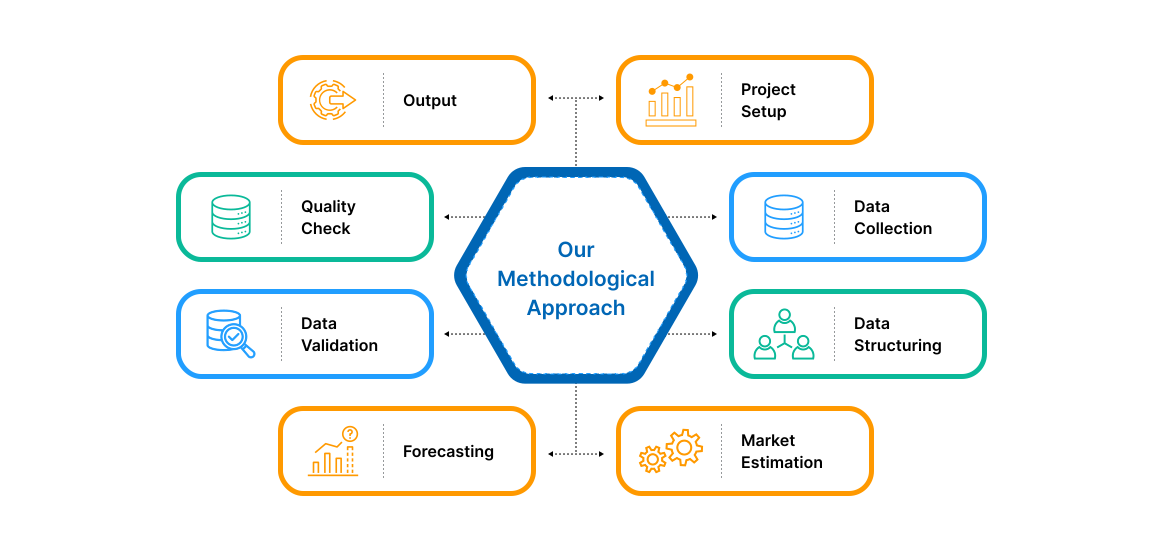
Project Setup
Step 1 & 2:
- We start every project by clearly understanding the client’s objective or goal, then defining the market scope, and aligning regions, segments, and timelines.
- Once the foundation is set, we collect data from all-around of sources, including company reports, government databases, and paid industry platforms.
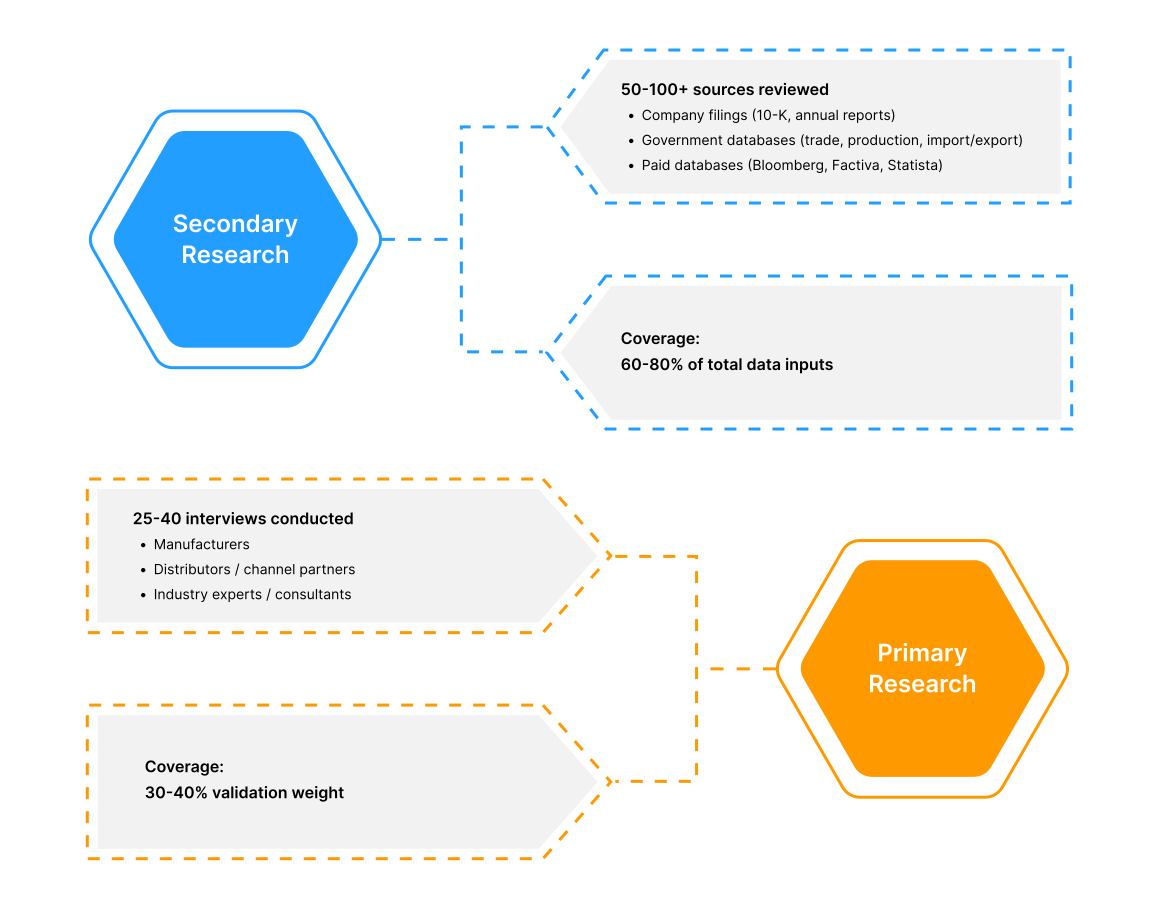
- Our research is based on secondary data, which helps us build a strong understanding of the market across regions and industries. Then we validate this information through primary research by speaking directly with industry experts, companies, and stakeholders.
- By combining secondary and primary research, we ensure that our market insights are accurate, practical, and closely aligned with real market conditions.
Data Collection
We gather information from both public and verified sources:
Data Structuring
Step 3:
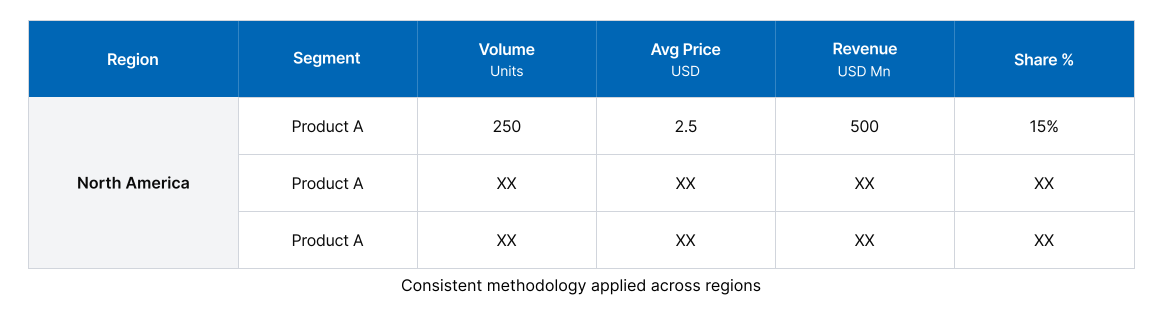
- All collected data is organized into a consistent format to ensure accurate analysis. Since inputs come from multiple sources, they are standardized and aligned before use.
- The data is segmented by product, application, and region, and mapped across a defined historical period (2020–2024). All values are converted into common units (USD Mn/Bn), and volume and pricing are aligned where required to estimate revenue.
- Any overlaps or inconsistencies are reviewed and adjusted to maintain accuracy (<5% variance threshold).
- The result is a structured dataset that allows for clear comparison across regions and supports reliable analysis and forecasting.
Structured Market Dataset, USD Mn/Bn
4. Data Structuring
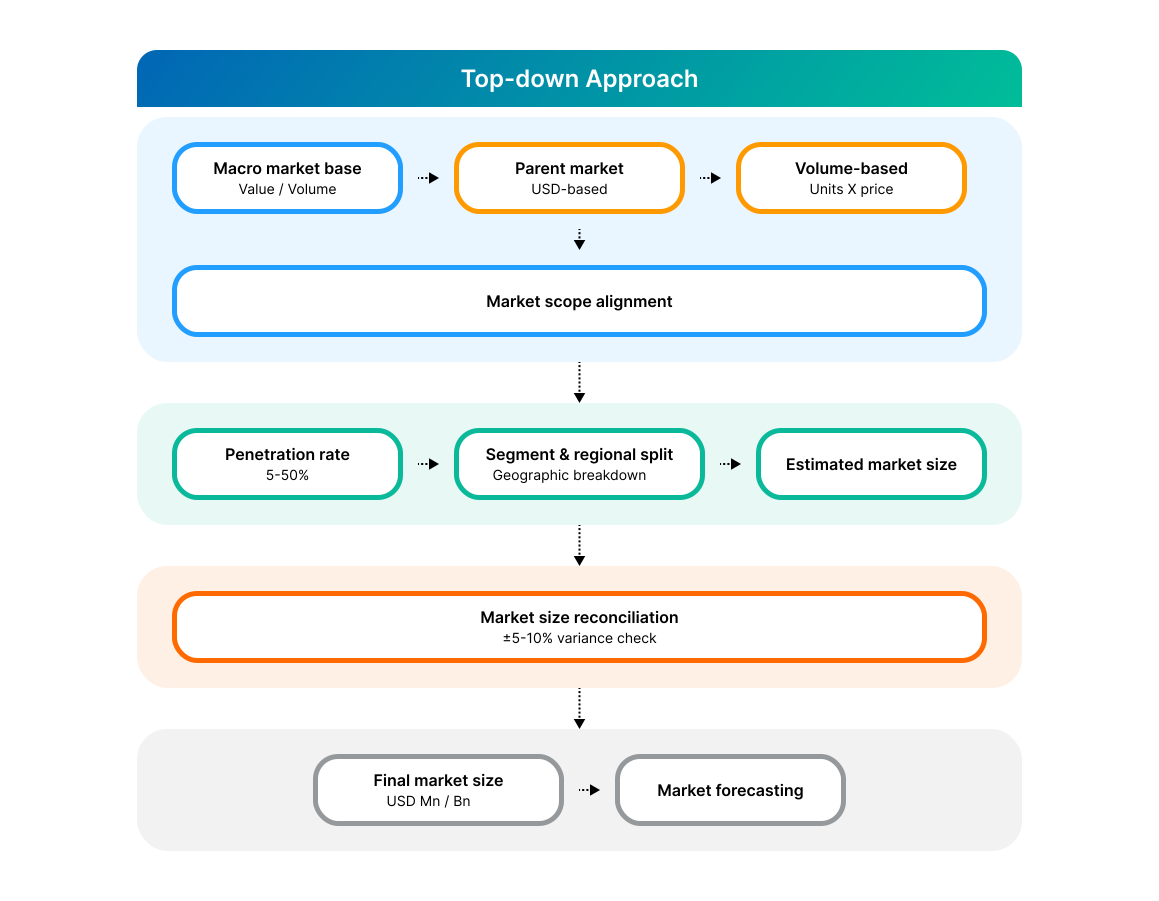
Step 4: TOP-DOWN APPROACH
- We start with the overall market size at a global or macro level.
- The market is then narrowed down based on scope and industry relevance.
- We apply penetration rates and split the data by region and segment.
- This helps us estimate the market size for specific segments.
- The numbers are validated through cross-checks to ensure accuracy.
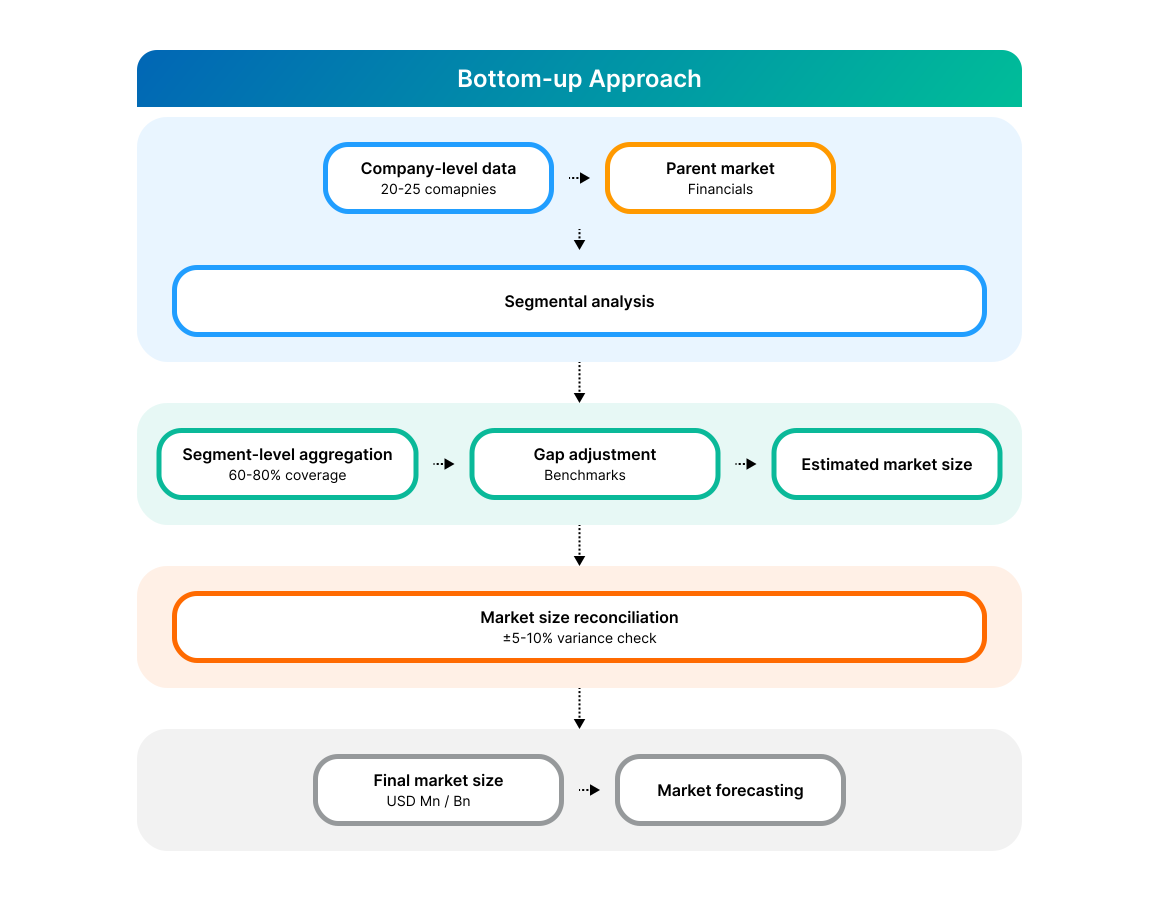
Step 5: BOTTOM-UP APPROACH
- We begin by analyzing data from leading companies in the market.
- Revenue data is collected and mapped across different segments.
- The data is then aggregated to estimate the total market size.
- To fill in any gaps, adjustments are made based on industry standards.
- Validation checks make sure that the results are correct.
5. Data Structuring
Step 6:
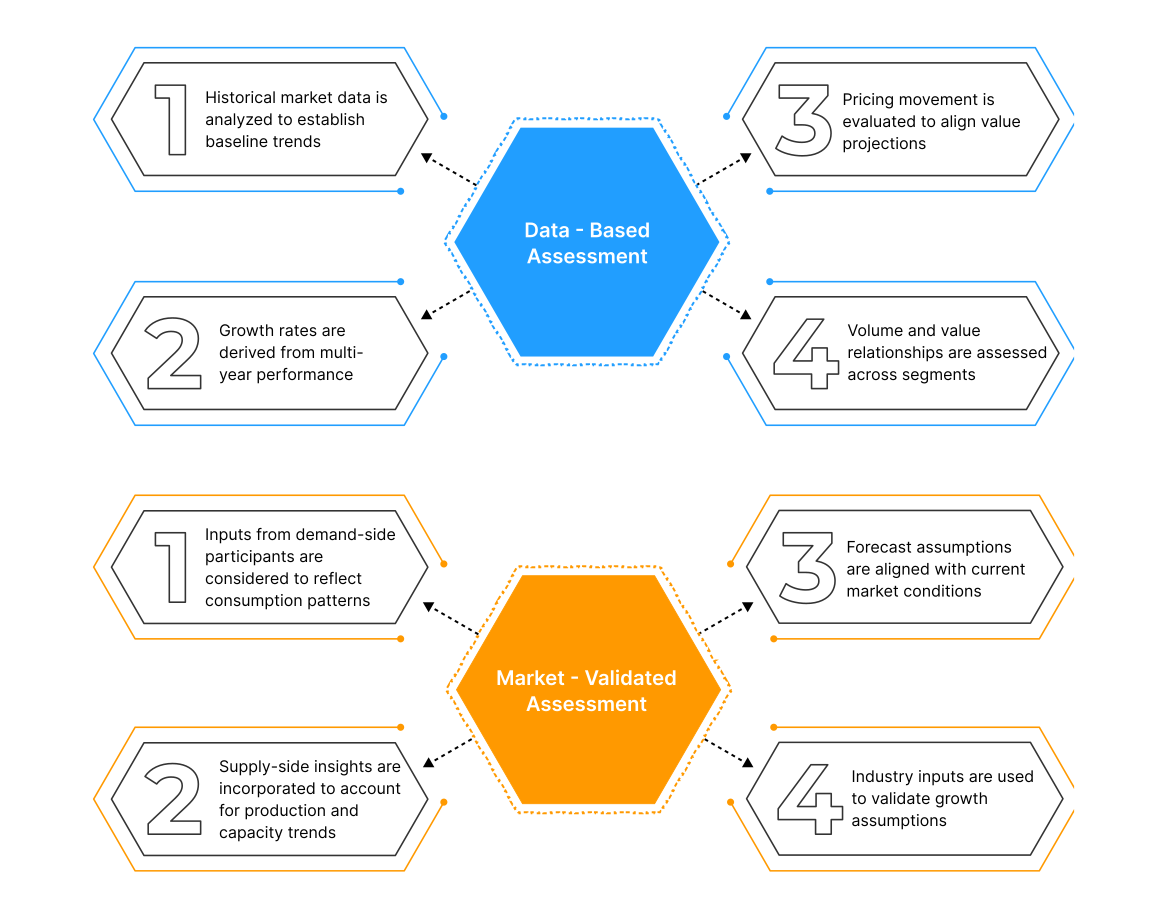
At Polaris Market Research, we employ a methodical forecasting strategy. This approach blends the analysis of historical data with real-time market validation. To forecast future trends with precision, we examine past patterns, pricing fluctuations, and the interplay of supply and demand. To ensure our conclusions reflect the present market landscape, we actively seek input from industry experts and key stakeholders.
To refine our predictions, we carefully consider critical elements such as market drivers and restraints, fluctuations in raw material costs, emerging technologies, and the production capabilities of various regions. Furthermore, we assess regulatory frameworks and potential policy shifts to gauge their potential impact on market expansion.
All this information is synthesized to generate precise forecasts for each segment and region. These forecasts illuminate the current state of the market and highlight forthcoming opportunities.
6. Data Structuring
Step 7:
In the final stage, we validate all our estimates using a triangulation method, where data is cross-checked from multiple reliable sources, like company data, primary interviews, and secondary research. This helps us make sure that our numbers are correct and fit with the rest of the market.
This process involves verifying data consistency across various segments and geographic areas. It also requires comparing historical trends with the assumptions support the forecast. Any discrepancies involve adjustments to ensure everything remains aligned and dependable.
Once the data is finalized, we prepare the final outputs, including market size estimates, segment-wise breakdowns, and growth metrics. These are delivered in structured formats such as tables, charts, and data files for easy analysis and use.
We collaborate closely with clients, ensuring the final products align with their requirements. This includes offering tailored adjustments, supplementary data analyses, and continuous assistance. Furthermore, we monitor market trends post-delivery, providing updates and refinements to maintain the insights' relevance as time passes.
Post-delivery, we continue to monitor market shifts, offering updates and adjustments to ensure the insights remain relevant over time.
Validation
Triangulation Framework
- Company-level data
- Primary inputs from industry participants
- Secondary benchmarks and published data
- Variance maintained within ±5-10%
- Adjustments applied to align estimates
- Segment values validated against overall market structure
Quality Check
Data Consistency & Integrity
- Segment totals validated to 100%
- Regional estimates aligned with global market size
- Historical trends compared against forecast outputs
- Assumptions reviewed for cross-segment and regional alignment
Output & Delivery
Final Outputs
- Market size estimates (USD Mn/Bn)
- Segment-wise distribution (%)
- Growth metrics (CAGR %)
- Structured tables and charts
- Segment-level datasets
- Excel-based data files for further analysis
Client Alignment & Support
- Deliverables are aligned with defined client requirements and scope
- Custom data cuts and segment splits are incorporated as required
- Post-delivery queries are addressed through analyst interactions
- Additional clarifications and data support are provided upon request
Client Continuity & Updates
- Market developments are tracked post-delivery to capture changes in key trends
- Updated data and revisions are provided based on new market inputs
- Additional refinements and data cuts are shared as required
- Continued analyst engagement supports evolving client requirements


