

Market Overview
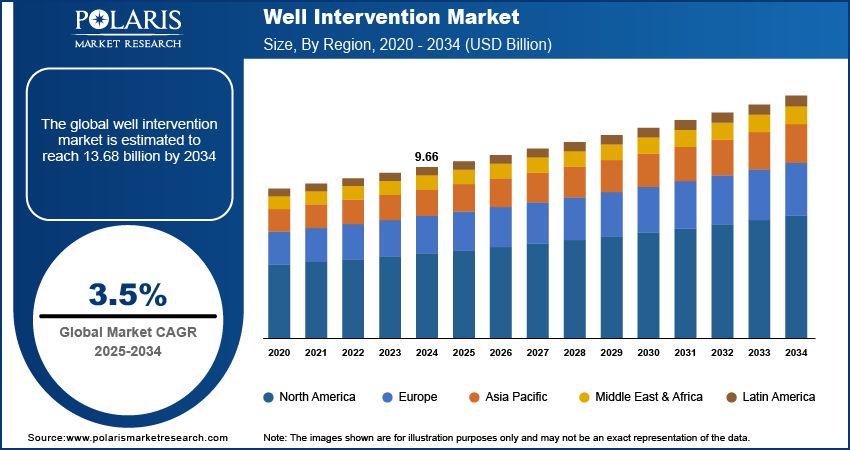
The global well intervention market size was valued at USD 9.95 billion in 2025. The well intervention market CAGR is expected to be 3.5% from 2026 to 2034. The market growth is primarily driven by the expanding offshore exploration & production (E&P) industry and technological advancements in well intervention.
What Is Well Intervention?
Well intervention is a set of operations conducted on existing oil and gas wells to either enhance or simply maintain production, as well as provide well integrity or access to additional reservoir intervals without the need for a full workover. Oil and gas well intervention operations include wireline and slickline operations, coiled tubing, stimulation, zonal isolation, fishing, and remedial cementing. These interventions are carried out onshore over existing fields, as well as in offshore and subsea environments.
Key Insights
- The tubing failure & repair segment had the largest market share in 2025. This is due to the important role of tubing failure repair in well intervention.
- The high intervention segment is expected to grow due to its importance in well life extension and improved well functionality.
- The Asia Pacific well intervention market is growing rapidly due to the rising energy demand and investments in oil & gas infrastructure.
- The Middle East & Africa is expected to dominate the global market. The ongoing operations of major oilfields in the region drive intervention services demand.
Industry Dynamics
- The successful exploration of new oil and gas reserves is one of the major well intervention market drivers.
- The increasing use of advanced technology, which has enhanced oil and gas recovery, is also expected to contribute to market development.
- The growing need for enhanced recovery from existing oil and gas wells is also expected to create significant opportunities for market participants.
- Oil price volatility is expected to pose a challenge to the development of the market.
Well Intervention Market Sizing Scope and Market Definition
In this report, the well intervention market refers primarily to the revenue generated from services used to maintain or enhance the performance and integrity of wells. The services include diagnostics and logging, tubing repair, stimulation, zonal isolation, remedial cementing, sand control, fishing, re-perforation, and artificial lift system interventions. The scope may vary from project to project, based on whether intervention is incorporated into integrated well services or reported separately as standalone intervention service revenue. These differences are taken into account in the triangulation of market estimates.
Market Statistics
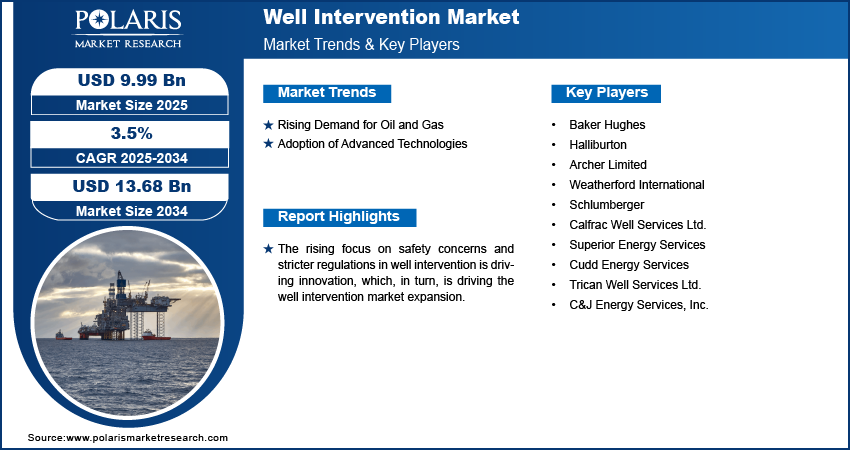
2025 Market Size: USD 9.95 billion
2034 Projected Market Size: USD 13.57 billion
CAGR (2026-2034): 3.5%
Middle East & Africa: Largest Market in 2025
The growth in the offshore exploration & production (E&P) industry fuels the demand for the well intervention market. The offshore E&P industry is essential for meeting energy demand and unlocking resource development. Well intervention operations are critical in the industry as they ensure operational continuity and optimize well production. In addition, advancements in well intervention operations are improving efficiency and reducing costs. They are also assisting in overcoming environmental challenges, thus driving the well intervention market.
The increasing attention to safety and the enforcement of strict regulations related to well intervention management are driving innovation. Organizations are implementing innovative methods to improve safety and meet the latest regulations. The increasing attention to innovative technology is allowing the sector to maintain efficiency while meeting the highest standards of safety.
Since intervention work entails managing pressure and well barriers, service companies are focusing more on well integrity checks, the readiness of pressure-control equipment, and barrier management. This operational discipline ensures safer execution, particularly in offshore and subsea wells where operations are more complex.
Market Dynamics
Rising Demand for Oil and Gas
The exploration of new oil and gas reserves is a significant driver of demand for well intervention. With the discovery of new oil and gas reserves, the demand for effective extraction and production services rises. Apart from offering opportunities for the extraction of oil and gas resources, the discovery of new reserves also encourages the development of drilling and intervention tools. This increases the efficiency and productivity of the industry, allowing it to respond to the dynamic global energy environment. For instance, the USD 18 billion investment in oilfield services by Saudi Aramco is expected to increase oil production by 550,000 BPD, thereby creating a huge demand for well intervention, completion, and offshore drilling services. Therefore, the increasing oil and gas demand is contributing to the growth of the well intervention market.
Introduction of Advanced Technologies
Technological advancements have greatly improved the digital transformation and automation of intervention services, resulting in innovations that enhance the recovery of oil and gas reserves. Moreover, the shift in the upstream companies from conventional methods to digital slackline methods has also contributed to this development. Digital wireline logging (e-line) enables operators to obtain real-time information from downhole operations. This minimizes the costs associated with reruns and improves the success rate of complex operations. Such developments have created new opportunities for market growth. They are offering more efficient and effective solutions for oil and gas extraction.
The applications of well intervention technologies are most prevalent in areas where they assist operators in making informed decisions and reducing non-productive time. This includes real-time logging, simulation for intervention, predictive maintenance for artificial lift, and digital planning. These applications are most useful in complex wells, such as offshore and HPHT wells.
Cost Drivers & Contracting Models
Well Intervention Cost Drivers: The well intervention cost depends on variables such as the complexity of the wells, location, equipment requirements, and downtime. It is also based on mobilization requirements and non-productive time. Offshore and subsea interventions tend to be more costly due to the need for the use of vessels or rigs, pressure control equipment, and the potential for delays due to weather.
Commercial Models: Market demand is also impacted by service contracting arrangements such as day rate, lump sum, and performance-based contracts, especially where intervention services are tied to specific results such as increased production and decreased downtime.
Segment Insights
Outlook by Service Insights
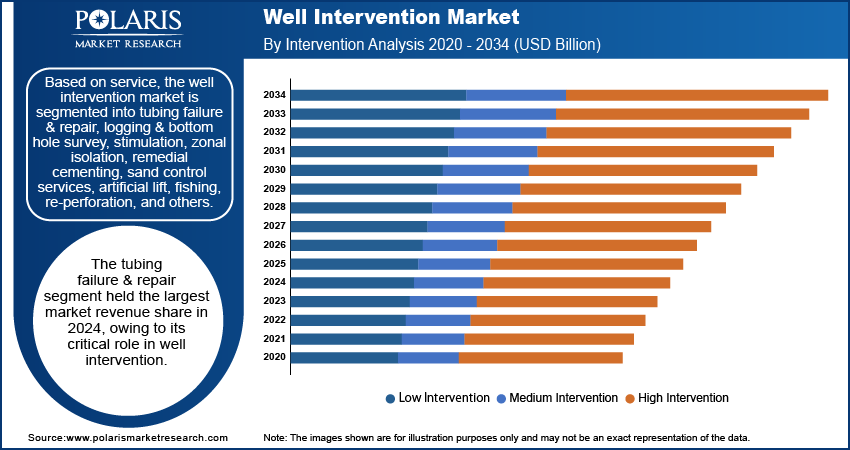
The well Intervention market, based on service, is segmented into logging & bottom hole survey, tubing failure & repair, stimulation, remedial cementing, zonal isolation, sand control services, artificial lift, fishing, re-perforation, and others. The tubing failure & repair segment accounted for the largest revenue share in the well intervention market in 2025. This is because of the essential role of tubing failure repair services in well intervention. Frequent failures in harsh environments require constant repairs to maintain well integrity and prevent production and safety problems.
The stimulation service segment is expected to register the highest growth rate during the forecast period. Stimulation services are employed for hydrocarbon flow improvement from the drainage area, ultimately increasing the production of oil and gas resources.
Outlook by Intervention Insights
The well intervention market, based on intervention, is segmented into low intervention, medium intervention, and high intervention. The high intervention segment is also expected to grow in the future due to its importance in improving well functionality and lifespan. With the growing global demand for oil, there will be a need to optimize production from existing wells. There will be an increased demand for expertise in high intervention for well completion, parts replacement, and integrity maintenance. Also, advances in optimization methods will lead to the growth of this segment as players seek to optimize production from existing resources.
In industrial applications, “high intervention” is typically associated with heavy well intervention, which involves more complex equipment and deeper well access. “Low intervention” is consistent with light well intervention, which is typically associated with lower complexity wireline/slickline operations.
Regional Analysis
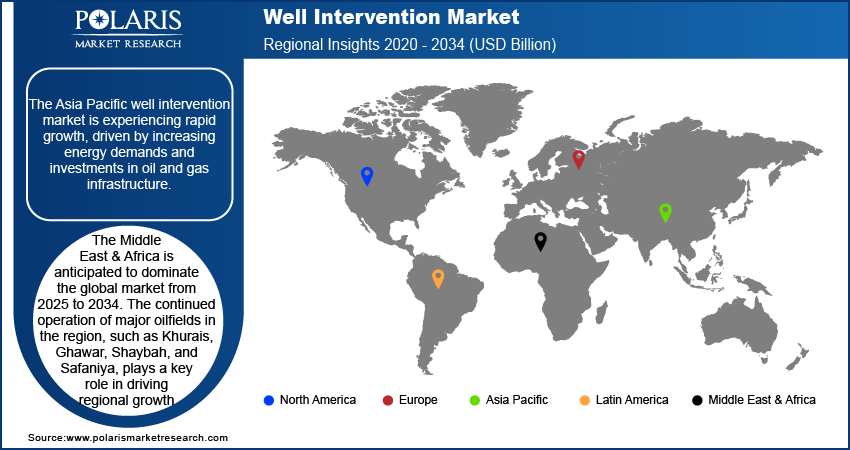
The market report offers well intervention market insights into North America, Europe, Asia Pacific, Latin America, and the Middle East and Africa. The Asia Pacific well intervention market is growing rapidly due to rising energy demand and the development of oil and gas infrastructure. The market in China is expanding due to rising exploration and production activities, increasing energy demand, and the development of new oil and gas fields. The Japan well intervention market is also growing steadily.
The Middle East & Africa is expected to lead the market share globally from 2026 to 2034. The ongoing production from major oilfields in the region, including Khurais, Ghawar, Shaybah, and Safaniya, is a major factor in the region's growth. Qatar is experiencing a surge in the development of natural gas export projects, especially in downstream sectors that consume gas as a feedstock. The well intervention industry in the region will be aided by major LNG projects initiated by industry players such as Total, Shell, ExxonMobil, and ConocoPhillips.
Offshore and subsea well inventories in areas like the Middle East, the North Sea, and the Asia Pacific region remain a driving force for the demand for offshore well intervention services. In these regions, operators are adopting methods such as riserless light well intervention (RLWI) to reduce complexity and costs, particularly for diagnostic and production enhancement activities.
The Europe well intervention market is expected to grow significantly in the coming years. The adoption of innovative, eco-friendly well-intervention technologies drives regional growth. Major contributors such as the UK, Norway, and the Netherlands have extensive offshore drilling operations and innovative technologies. This ensures efficient and environmentally friendly interventions. Moreover, Germany had the largest market share and is also expected to be the fastest-growing country in Europe. The country’s strict environmental regulations support innovative and eco-friendly intervention technologies, mainly for the optimization of onshore oil and gas resources.
Key Players and Competitive Insights
Key market players are making R&D investments expand their offerings, which will further boost the well intervention market. Well intervention market players are also engaged in various strategic initiatives to increase their presence in the global market, including the launch of new solutions, agreements, mergers and acquisitions, increased investments, and collaborations with other organizations. To survive in the market, key market players need to provide innovative solutions.
Major players in the market, including Baker Hughes, Schlumberger, Archer Limited, Weatherford International, and Halliburton, have achieved forward integration by establishing a presence in the manufacturing and service sectors. Service providers such as Calfrac Well Services Ltd., Superior Energy Services, Cudd Energy Services, Trican Well Services Ltd., and C&J Energy Services, Inc. offer well intervention solutions for end-use applications.
For competitive benchmarking, the well intervention market can be divided into three capability segments: integrated oilfield service companies providing end-to-end well intervention and life-cycle services; offshore and subsea intervention companies providing services in deepwater and harsh environments; and regional oilfield service companies providing cost-effective intervention services in key basins. This allows customers to compare companies based on operating conditions, service types, and execution capabilities.
Baker Hughes is a leading energy technology firm. It provides innovative solutions for the oil & gas sector. Its solutions focus on well intervention and emerging markets. The OFSE business unit serves the entire life cycle of wells. The IET segment focuses on improving industrial efficiency and emission reduction. By its dedication to sustainability, it is well-positioned for the energy transition.
Halliburton is an oilfield services company that offers several well intervention services. The company's main focus is to maximize well productivity and extend the life of oil and gas wells. Halliburton well intervention services also focus on technological innovation. The company is dedicated to environmental responsibility through well intervention techniques and the development of low-carbon technologies.
List of Key Companies
- Archer Limited
- Baker Hughes
- C&J Energy Services, Inc.
- Calfrac Well Services Ltd.
- Cudd Energy Services
- Halliburton
- Schlumberger
- Superior Energy Services
- Trican Well Services Ltd.
- Weatherford International
Well Intervention Industry Developments
- April 2024: SLB introduced the Reda Agile ESP and rodless Reda PowerEdge lift systems. The company stated that the new systems offer improved performance and a wider range of oil and gas output. They support its focus on innovation and efficiency.
- February 2024: Baker Hughes entered into a contract with Petrobras to establish its presence in the Brazilian offshore market. The company stated that the contract includes integrated well construction services for the Buzios field, underscoring its growing presence in the region.
- January 2024: Halliburton highlighted its dedication to providing sustainable solutions with the launch of the CorrosaLock Cement System. This new technology addresses the issues associated with CO2 storage through its corrosion-resistant solution. The CorrosaLock Cement System combines Portland cement and Halliburton’s WellLock resin. It provides better resistance to CO2, lower permeability, and flexibility than existing solutions.
- May 2023: TechnipFMC strengthened its presence in the North Sea sector by securing a substantial RLWI services contract from Equinor. As per TechnipFMC, this multi-year contract will be effective from 2024. It focuses on production enhancement, data collection, and pre-abandonment activities for wells on the Norwegian Continental Shelf.
Well Intervention Market Segmentation
By Service Outlook (Revenue, USD Billion, 2021–2034)
- Logging & Bottom Hole Survey
- Tubing Failure & Repair
- Stimulation
- Remedial Cementing
- Zonal Isolation
- Sand Control Services
- Artificial Lift
- Fishing
- Re-Perforation
- Others
By Intervention Outlook (Revenue, USD Billion, 2021–2034)
- Low Intervention
- Medium Intervention
- High Intervention
By Application Outlook (Revenue, USD Billion, 2021–2034)
- Onshore
- Offshore
By Well Outlook (Revenue, USD Billion, 2021–2034)
- Horizontal
- Vertical
By Regional Outlook (Revenue, USD Billion, 2021–2034)
- North America
- US
- Canada
- Europe
- Germany
- France
- UK
- Italy
- Spain
- Netherlands
- Russia
- Rest of Europe
- Asia Pacific
- China
- Japan
- India
- Malaysia
- South Korea
- Indonesia
- Australia
- Vietnam
- Rest of Asia Pacific
- Middle East & Africa
- Saudi Arabia
- UAE
- Israel
- South Africa
- Rest of Middle East & Africa
- Latin America
- Mexico
- Brazil
- Argentina
- Rest of Latin America
Well Intervention Market Report Scope
|
Report Attributes |
Details |
|
Market Size in 2025 |
USD 9.95 billion |
|
Market Size in 2026 |
USD 10.27 billion |
|
Revenue Forecast by 2034 |
USD 13.57 billion |
|
CAGR |
3.5% |
|
Base Year |
2025 |
|
Historical Data |
2021–2024 |
|
Forecast Period |
2026–2034 |
|
Quantitative Units |
Revenue in USD billion, and CAGR from 2026 to 2034 |
|
Report Coverage |
Revenue Forecast, Market Competitive Landscape, Growth Factors, and Trends |
|
Segments Covered |
|
|
Regional Scope |
|
|
Competitive Landscape |
Well Intervention Industry Trend Analysis (2025) Company profiles/industry participants profiling include company overview, financial information, product/service benchmarking, and recent developments |
|
Report Format |
PDF + Excel |
|
Customization |
Report customization as per your requirements with respect to countries, regions, and segmentation. |
FAQ's
The market for well intervention stood at USD 9.95 billion in 2025. It is projected to reach USD 13.57 billion by 2034.
The market is expected to account for a CAGR of 3.5% between 2026 and 2034.
The Middle East & Africa is expected to lead the market share due to the ongoing production from major oilfields in the region.
A few of the key players in the market are Baker Hughes, Schlumberger, Archer Limited, Weatherford International, Halliburton, Calfrac Well Services Ltd., Superior Energy Services, Cudd Energy Services, Trican Well Services Ltd., and C&J Energy Services, Inc.
The tubing failure & repair segment led the market in 2025. This is due to the important role of tubing failure repair in well intervention.
The high intervention segment is projected to grow due to its importance in well life extension and improved well functionality.
Well intervention involves well maintenance and optimization without major wall reconstruction. Workover operations are more invasive and need a rig for repairing or replacing major wall components.
Riserless light well intervention (RLWI) is a subsea intervention operation conducted without the use of a riser. It is usually done using dedicated offshore vessels to provide cost-effective maintenance of subsea wells.
The choice of wireline operations is made for diagnostics and simple tasks. Coiled tubing is chosen for mechanical work, well cleaning, and fluid pumping, depending on the complexity of the intervention.
Page last updated on:
Feb-2023
Research Methodology
A robust system of research, verification, and forecasting designed to ensure reliable and actionable market insights.
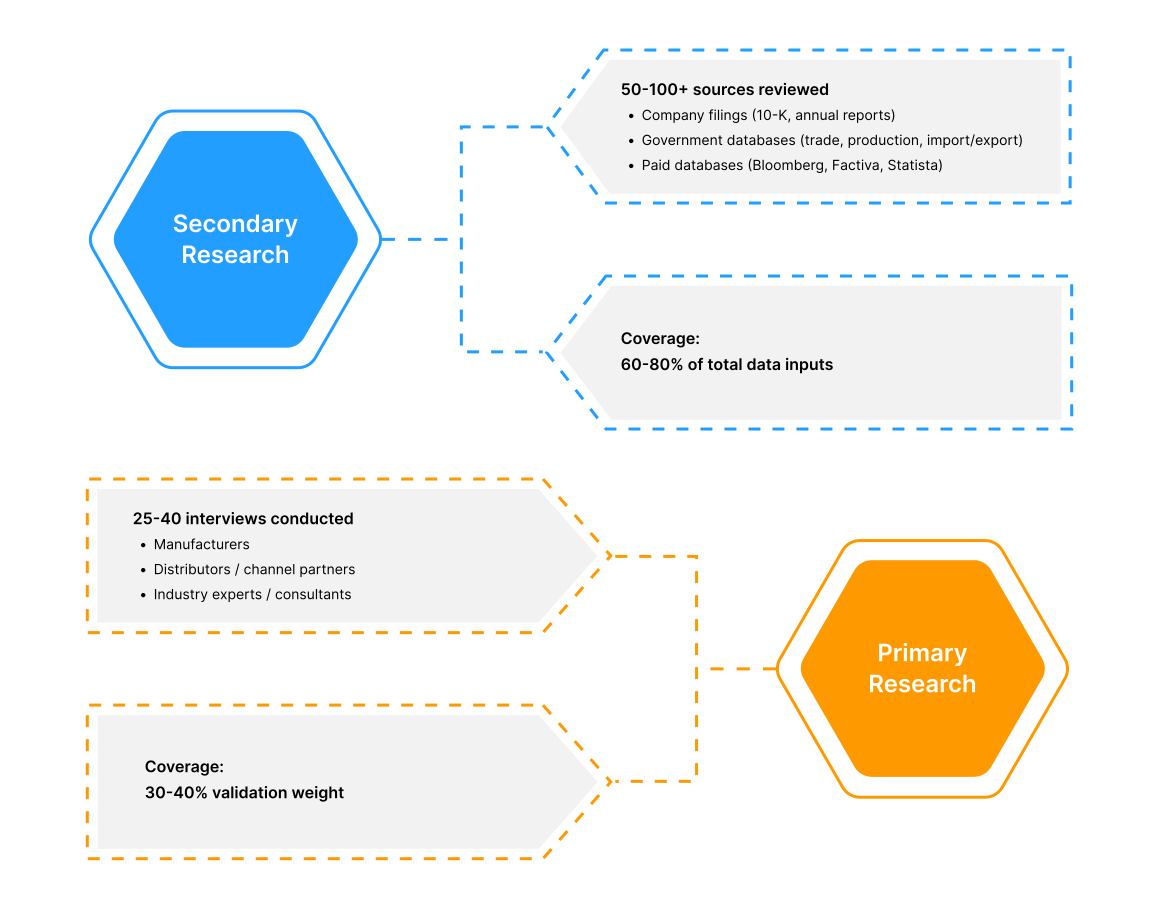
Polaris Market Research uses a clear and structured approach to deliver insights that clients can rely on. The process combines detailed primary and secondary research, including direct communication with industry experts. The detailed information helps build a complete picture of market trends and developments. Secondary data is gathered from credible sources such as industry reports, company filings, government source links, and trusted organization databases. It is then cross-checked through discussions with key stakeholders across the value chain. Market size and forecasts are developed using both bottom-up and top-down methods to ensure accuracy and consistency in the final results.
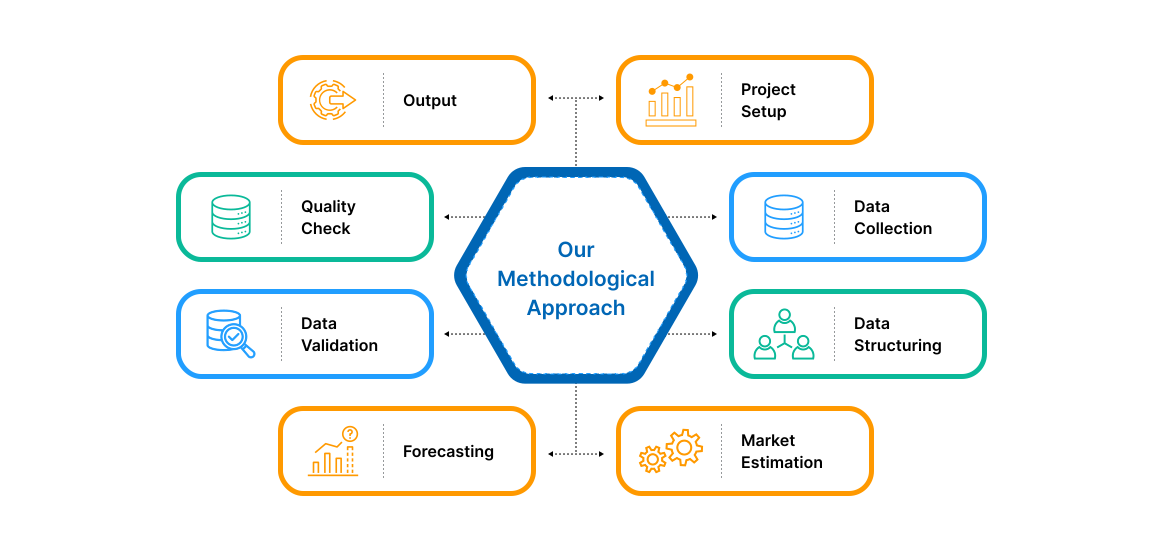
Project Setup
Step 1 & 2:
- We start every project by clearly understanding the client’s objective or goal, then defining the market scope, and aligning regions, segments, and timelines.
- Once the foundation is set, we collect data from all-around of sources, including company reports, government databases, and paid industry platforms.
- Our research is based on secondary data, which helps us build a strong understanding of the market across regions and industries. Then we validate this information through primary research by speaking directly with industry experts, companies, and stakeholders.
- By combining secondary and primary research, we ensure that our market insights are accurate, practical, and closely aligned with real market conditions.
Data Collection
We gather information from both public and verified sources:
Data Structuring
Step 3:
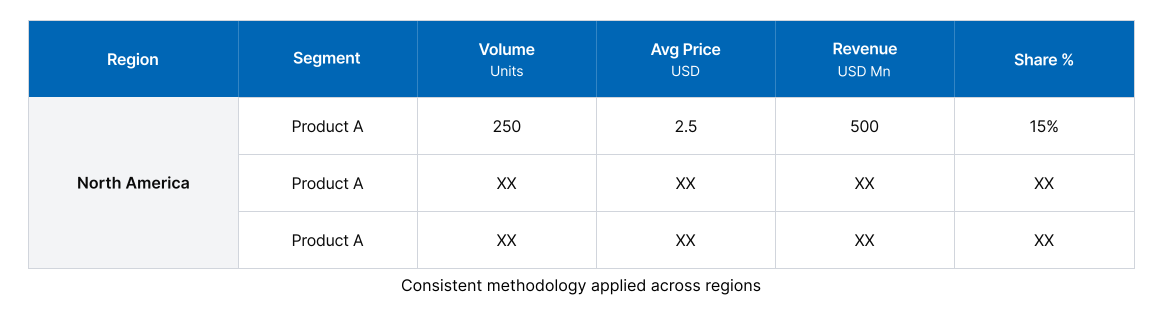
- All collected data is organized into a consistent format to ensure accurate analysis. Since inputs come from multiple sources, they are standardized and aligned before use.
- The data is segmented by product, application, and region, and mapped across a defined historical period (2020–2024). All values are converted into common units (USD Mn/Bn), and volume and pricing are aligned where required to estimate revenue.
- Any overlaps or inconsistencies are reviewed and adjusted to maintain accuracy (<5% variance threshold).
- The result is a structured dataset that allows for clear comparison across regions and supports reliable analysis and forecasting.
Structured Market Dataset, USD Mn/Bn
4. Data Structuring
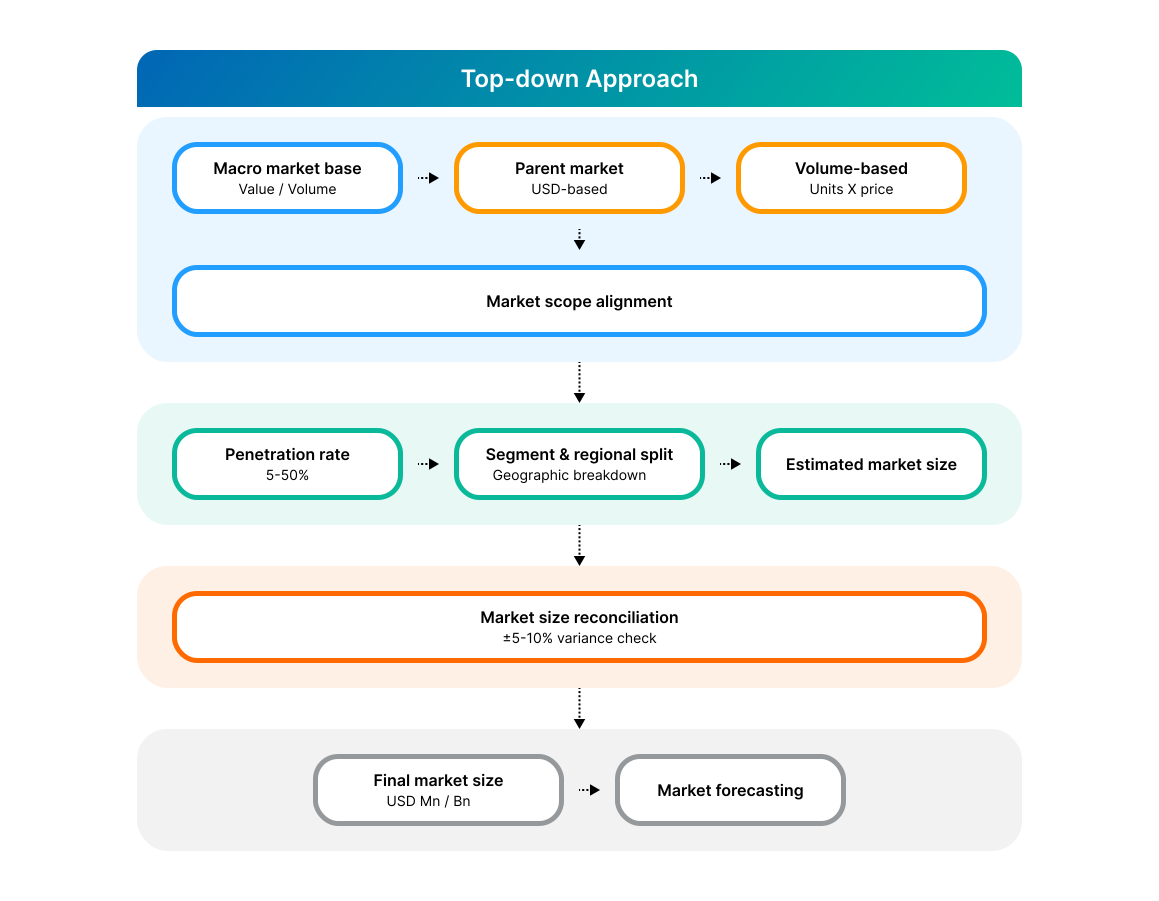
Step 4: TOP-DOWN APPROACH
- We start with the overall market size at a global or macro level.
- The market is then narrowed down based on scope and industry relevance.
- We apply penetration rates and split the data by region and segment.
- This helps us estimate the market size for specific segments.
- The numbers are validated through cross-checks to ensure accuracy.
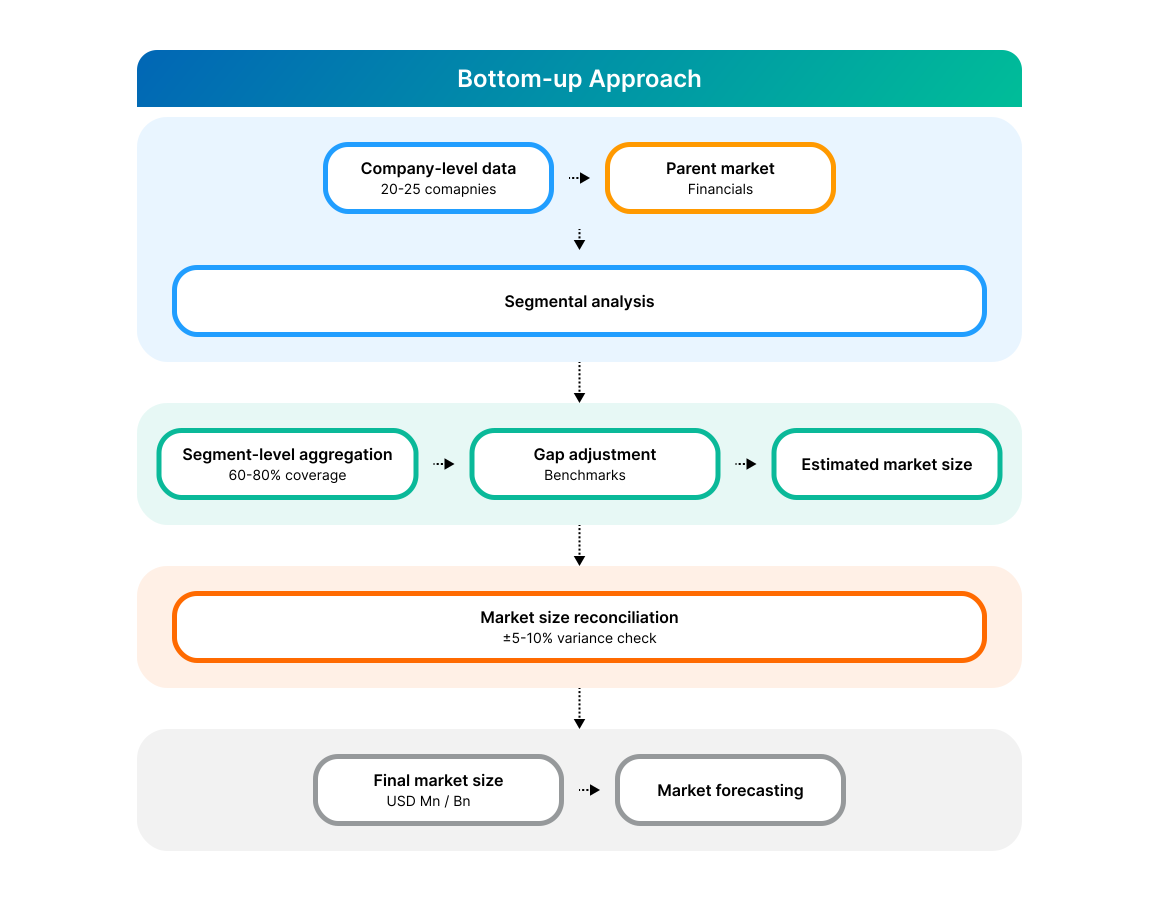
Step 5: BOTTOM-UP APPROACH
- We begin by analyzing data from leading companies in the market.
- Revenue data is collected and mapped across different segments.
- The data is then aggregated to estimate the total market size.
- To fill in any gaps, adjustments are made based on industry standards.
- Validation checks make sure that the results are correct.
5. Data Structuring
Step 6:
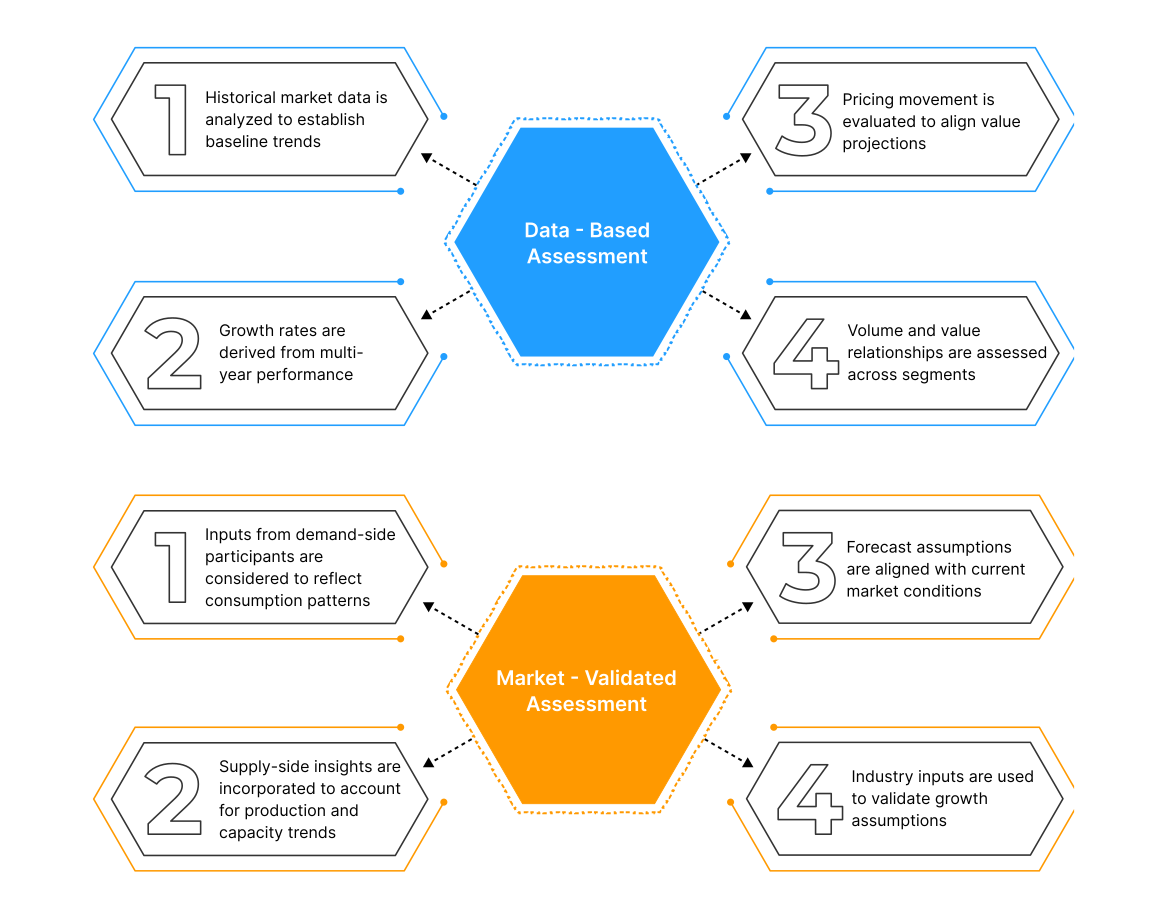
At Polaris Market Research, we employ a methodical forecasting strategy. This approach blends the analysis of historical data with real-time market validation. To forecast future trends with precision, we examine past patterns, pricing fluctuations, and the interplay of supply and demand. To ensure our conclusions reflect the present market landscape, we actively seek input from industry experts and key stakeholders.
To refine our predictions, we carefully consider critical elements such as market drivers and restraints, fluctuations in raw material costs, emerging technologies, and the production capabilities of various regions. Furthermore, we assess regulatory frameworks and potential policy shifts to gauge their potential impact on market expansion.
All this information is synthesized to generate precise forecasts for each segment and region. These forecasts illuminate the current state of the market and highlight forthcoming opportunities.
6. Data Structuring
Step 7:
In the final stage, we validate all our estimates using a triangulation method, where data is cross-checked from multiple reliable sources, like company data, primary interviews, and secondary research. This helps us make sure that our numbers are correct and fit with the rest of the market.
This process involves verifying data consistency across various segments and geographic areas. It also requires comparing historical trends with the assumptions support the forecast. Any discrepancies involve adjustments to ensure everything remains aligned and dependable.
Once the data is finalized, we prepare the final outputs, including market size estimates, segment-wise breakdowns, and growth metrics. These are delivered in structured formats such as tables, charts, and data files for easy analysis and use.
We collaborate closely with clients, ensuring the final products align with their requirements. This includes offering tailored adjustments, supplementary data analyses, and continuous assistance. Furthermore, we monitor market trends post-delivery, providing updates and refinements to maintain the insights' relevance as time passes.
Post-delivery, we continue to monitor market shifts, offering updates and adjustments to ensure the insights remain relevant over time.
Validation
Triangulation Framework
- Company-level data
- Primary inputs from industry participants
- Secondary benchmarks and published data
- Variance maintained within ±5-10%
- Adjustments applied to align estimates
- Segment values validated against overall market structure
Quality Check
Data Consistency & Integrity
- Segment totals validated to 100%
- Regional estimates aligned with global market size
- Historical trends compared against forecast outputs
- Assumptions reviewed for cross-segment and regional alignment
Output & Delivery
Final Outputs
- Market size estimates (USD Mn/Bn)
- Segment-wise distribution (%)
- Growth metrics (CAGR %)
- Structured tables and charts
- Segment-level datasets
- Excel-based data files for further analysis
Client Alignment & Support
- Deliverables are aligned with defined client requirements and scope
- Custom data cuts and segment splits are incorporated as required
- Post-delivery queries are addressed through analyst interactions
- Additional clarifications and data support are provided upon request
Client Continuity & Updates
- Market developments are tracked post-delivery to capture changes in key trends
- Updated data and revisions are provided based on new market inputs
- Additional refinements and data cuts are shared as required
- Continued analyst engagement supports evolving client requirements


